
2023-12-13 23:04
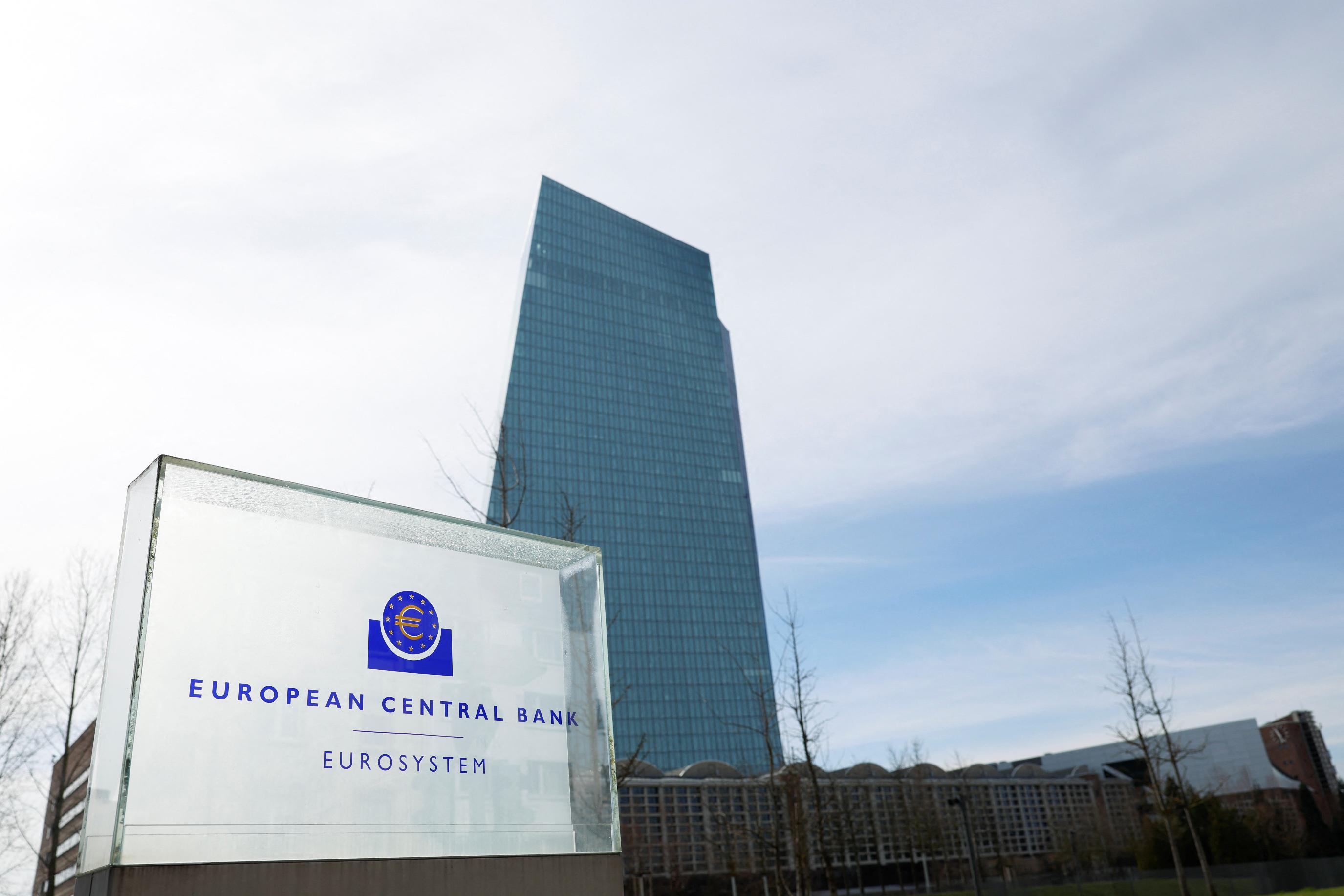
ECB to hold rates at record highs Likely to cut 2024 inflation, GDP forecasts Lagarde seen pushing back against rate cut bets End of bond buys may be brought forward FRANKFURT, Dec 14 (Reuters) - The European Central Bank faces a difficult balancing act on Thursday as it likely slashes its forecasts for growth and inflation while trying to temper speculation about imminent interest rate cuts. The ECB is certain to leave borrowing costs at record highs, with the only possible policy change relating to the end of its last surviving bond-buying scheme - a legacy of the COVID-19 pandemic. But the central bank's last meeting of the year will be anything but dull, with President Christine Lagarde under pressure to defend or ditch her guidance that rates will stay where they are for the next couple of quarters. Investor expectations now point to a first rate cut in the spring, which may make the ECB the first major central bank to reverse course after a global, concerted effort to bring down inflation since mid-2022. Lagarde is likely to push back against rate-cut bets after it took the ECB a year and a half, and 10 straight hikes, to steer inflation onto a convincing downward path. "We expect the ECB to acknowledge that inflation has declined more rapidly than expected but to be coy about declaring victory prematurely," Deutsche Bank economists said. The Federal Reserve also signalled late on Wednesday that lower borrowing costs are coming next year, which may make any ECB pushback even harder. Lagarde will find little support in the ECB's updated economic projections which are expected to downgrade both inflation and GDP forecasts, particularly for next year, bringing them closer to consensus estimates. Economists polled by Reuters see prices in the euro zone growing by 2.5% in 2024, 2.1% in 2025 and 2% in 2026 - closing in on the ECB's target after an outsized 5.5% increase this year. The trouble for Lagarde and her Governing Council colleagues is that the ECB's projections have often been wide of the mark - most significantly in 2021, when the central bank failed to anticipate the surge in inflation. "Given the track record of the last few years, the central bank simply can't afford to anticipate what might happen, it will have to wait until it happens," ING economist Carsten Brzeski said. Influential ECB board member Isabel Schnabel set the tone last week, when she took further interest rate hikes off the table given a "remarkable" fall in inflation. Lagarde is expected to echo her argument that policymakers should not guide for rates to remain steady through mid-2024, but instead focus on economic data. "We expect a clear shift of tone to emerge, with data dependency of any upcoming decision even more stressed than in the past," Natixis economist Dirk Schumacher said. Money-market traders are betting on a possible reduction in borrowing costs as early as March and a slim majority of economists polled by Reuters think it will come by June . The Fed was also expected to cut in March or May at the latest . BOND RALLY Those expectations have been brought forward since November's weaker-than-expected inflation data and Schnabel's comments to Reuters. The ensuing bond rally has eased financing conditions, the opposite effect to the one the ECB has been trying to achieve via higher rates. But there is a silver lining. It should now be easier for the ECB to decide on the future of its Pandemic Emergency Purchase Programme. This was due to run until the end of next year but several policymakers have called for an earlier exit given bond markets show no sign of pandemic-era stresses. The ECB is likely to discuss whether to stop replacing bonds that mature although it could defer a decision until early next year. Anatoli Annenkov, an economist at Societe Generale, said the ECB may cap reinvestment at 10 billion euros ($10.8 billion) from March or April - down from 15-20 billion euros - with a view to ending purchases altogether by mid-year. ($1 = 0.9268 euros) https://www.reuters.com/markets/europe/ecb-has-tough-job-fight-rate-cut-bets-inflation-falls-2023-12-13/
2023-12-13 23:00
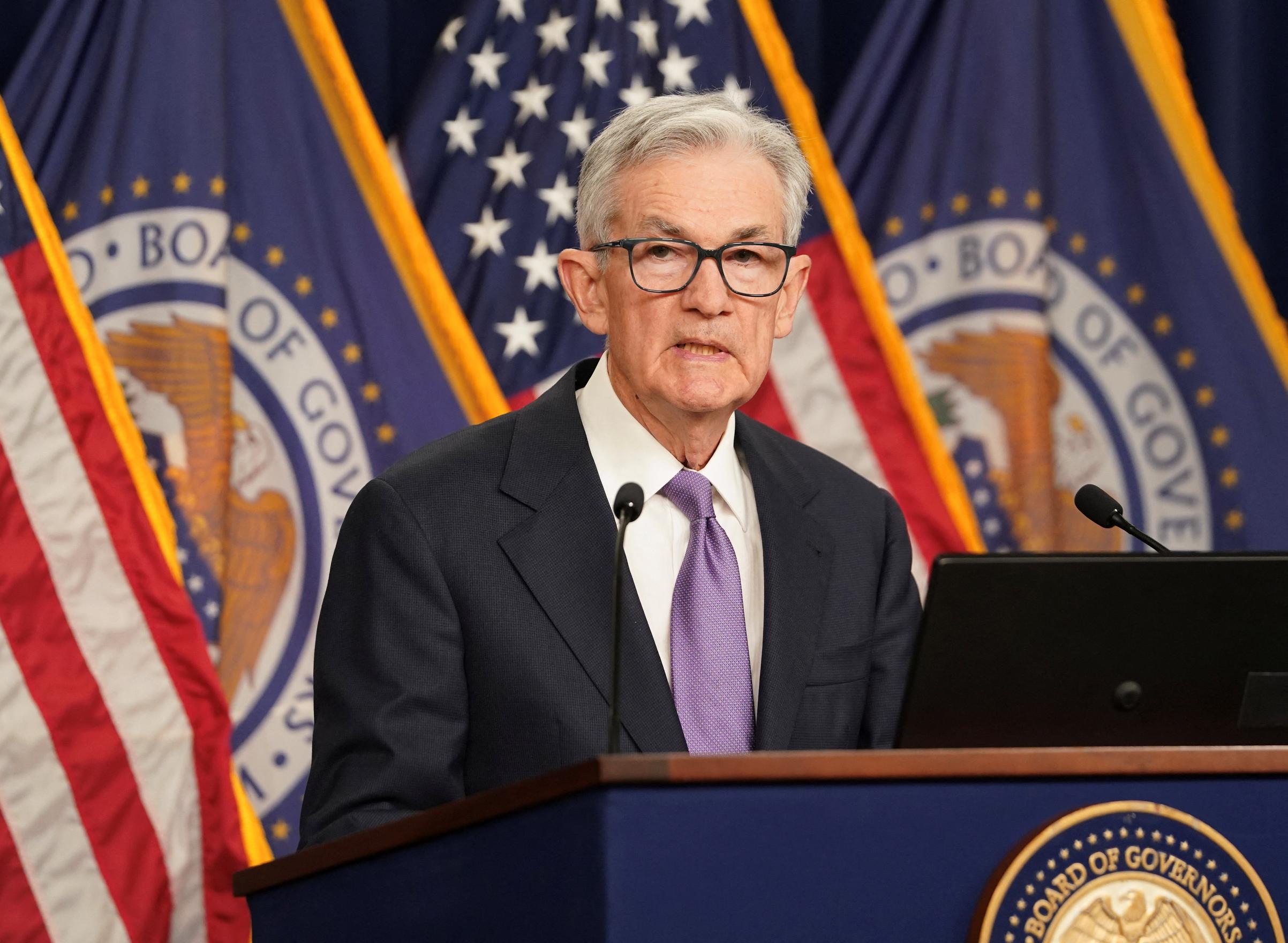
Central bank holds policy rate in 5.25%-5.50% range Officials see 75 basis points of cuts next year Fed's 'soft landing' scenario still on the table WASHINGTON, Dec 13 (Reuters) - The Federal Reserve left interest rates unchanged on Wednesday and U.S. central bank chief Jerome Powell said the historic tightening of monetary policy is likely over as inflation falls faster than expected and with a discussion of cuts in borrowing costs coming "into view." "People are not writing down rate hikes" in their latest economic projections, Fed Chair Jerome Powell said in a press conference following the end of the central bank's final policy meeting of the year. "That's us thinking we've done enough," he said, adding that rate increases were "not the base case anymore." "The Fed is done!" exclaimed Diane Swonk, chief economist at KPMG US, and if economic data continues evolving as it has, with inflation cooling alongside an economy that seems poised to slow but not crash, then "the Fed will be cutting sooner" rather than later in the year. Indeed, the shift in outlook was stark, with 17 of 19 Fed policymakers seeing rates lower by the end of 2024, and none seeing them higher. A measure of policymakers' perceptions of risks facing the economy also moved closer to balance, a point Powell alluded to when he said the central bank was now at the point where "both mandates are important," with officials sensitive to the risk of "overdoing it" and pushing the economy into a faster than necessary slowdown. The Fed is statutorily responsible for maintaining stable prices and maximum employment, two economic goals that are sometimes in conflict. After inflation erupted to a 40-year high last year, Powell said officials thought they now were zeroing in on an elusive "soft landing," with inflation returning to the Fed's 2% target in an economy that is slowing but not crashing, and one in which unemployment remains low. "We are seeing strong growth that ... appears to be moderating. We are seeing a labor market that is coming back into balance ... We're seeing inflation making real progress," Powell told reporters. "These are the things we've been wanting to see ... Declaring victory would be premature ... But of course the question is 'when will it become appropriate to begin dialing back?'" It's a debate that will preoccupy the Fed and investors in the weeks and months to come after two years in which it first scaled back the asset purchases it used to support the economy through the coronavirus pandemic, and then, beginning in March 2022, rapidly raised its benchmark policy interest rate from the near-zero level to the current 5.25%-5.50% range. U.S. stocks jumped after the release of the Fed's latest statement and policymakers' updated quarterly economic projections, continued climbing during Powell's press conference and closed sharply higher, with the S&P 500 index (.SPX) gaining about 1.4% and the Dow Jones Industrial Average hitting a record closing high. The U.S. dollar (.DXY) dropped against a basket of currencies and U.S. Treasury yields fell. Traders of futures contracts that settle to the Fed's policy rate are pricing in a March start to rate cuts and an end-of-2024 policy rate 1.5 percentage points below the current level. 'SO FAR, SO GOOD' For an institution that has been reluctant to declare victory over inflation, the updated projections and Powell's tone marked a notable shift. Headline personal consumption expenditures inflation is seen ending 2023 at 2.8% and falling further to 2.4% by the end of next year, within striking distance of the Fed's 2% target. That comes at little comparative cost in terms of higher joblessness, with the unemployment rate seen rising from the current 3.7% to 4.1%, the same rate projected in September, while economic growth is seen slowing from an estimated 2.6% this year to 1.4% over 2024. "It's so far, so good," Powell said. While officials remain free to raise the Fed's benchmark overnight interest rate again in coming months if there is a resurgence in price pressures, that seems increasingly unlikely given the recent performance of inflation that has edged steadily towards the central bank's target. Some analysts and investors even interpreted Wednesday's events as the effective start of a Fed easing cycle. The bond market took Powell's message and ran with it. The yield on the 2-year Treasury note , which is tied closely to Fed policy rate expectations, plunged by 30 basis points - essentially delivering a rate cut to the open market. Over the last eight weeks, moreover, the yield on the 10-year Treasury note , which is instrumental to setting mortgage rates and other key borrowing costs, has tumbled by roughly 1 percentage point, a move rarely seen outside of economic emergencies. "For a group that prizes the pricing of its policy intentions in the forward markets ... they had to know that moving the median forecast ... would be a bullish signal," Steven Blitz, chief U.S. economist at TS Lombard, wrote in an analysis headlined "The Fed Eases." https://www.reuters.com/markets/us/fed-likely-hold-rates-steady-signal-couple-cuts-2024-2023-12-13/
2023-12-13 22:43
BUENOS AIRES, Dec 13 (Reuters) - Argentina's annual inflation rate hit 161% in November, faster than expected and the highest monthly figure this year, laying bare the daunting challenges new President Javier Milei faces in navigating the country's turbulent economic waters. The data is the first inflation readout since Milei took office last Sunday, promising to right Argentina's flailing economy, including sky-high consumer prices that have sapped residents' purchasing power and fueled rising poverty. Inflation is expected to climb faster in the months ahead after Milei's government devalued the peso over 50% this week, part of a wider shock package he hopes will eventually stabilize the economy that's mired in its worst crisis in decades. "This skyrocketing inflation is going to be tough for people," said 46-year-old bricklayer Eduardo Casado as he worked in a home in Buenos Aires on Wednesday. "Last week I bought two kilos of potatoes for 800 pesos and this week it cost almost 1,200 pesos. I don't know if next week we'll be able to afford to buy the same groceries." The monthly inflation was rate 12.8% in November alone, statistics agency INDEC said on Wednesday, above a Reuters poll that had expected an 11.8% monthly bump. That was a steep jump from an 8.3% rise in October. Milei took office promising a sharp, painful fiscal shock to fix Argentina's economic crisis, and on Tuesday his government announced an initial policy push that includes a more than 50% devaluation of the local peso currency plus sharp spending cuts. Those measures, however, could supercharge inflation even higher in the near-term, with Milei having warned of tough times ahead and monthly inflation of 20-40% in the months ahead. Latin America's No. 3 economy has been battling a prolonged economic crisis that has steadily eroded the value of the local currency while plunging two-fifths of the population into poverty. Casado, the bricklayer, said work was complex because prices of materials were constantly changing and it was hard to get by. "It's been a while since we've been making ends meet," he said, adding though that he was supportive - for now - of the government's austerity measures, which he hoped could help. "I want to believe prices are going to slow down at some point." https://www.reuters.com/world/americas/argentina-inflation-tops-160-spotlighting-challenge-milei-2023-12-13/

2023-12-13 22:29
Dec 13 (Reuters) - Pembina Pipeline (PPL.TO) said on Wednesday it would buy Enbridge's (ENB.TO) interests in the Alliance Pipeline, Aux Sable and NRGreen joint ventures for C$3.1 billion ($2.30 billion). Alliance delivers liquids rich natural gas sourced in Northeast B.C., Northwest Alberta and the Bakken region to Chicago. Aux Sable operates natural gas liquids (NGL) extraction and fractionation facilities in both Canada and the U.S., with extraction rights on Alliance, offering connectivity to key U.S. NGL hubs. Pembina would assume C$327 million of debt as part of the deal, helping Enbridge offload some leverage. Investors fretted over Enbridge's debt load from the $14 billion bid for three of Dominion Energy's (D.N) natural gas distribution companies in September. "The sales proceeds will fund a portion of the strategic U.S. gas utilities acquisitions and be used for debt reduction," Enbridge said in a separate statement. Pembina added the deals are expected to be completed in the first half of 2024. Pembina currently owns 50% of the equity interests in Alliance, Aux Sable's Canadian operations and NRGreen. It also owns about 42.7% of the equity interests in Aux Sable's U.S. operations. ($1 = 1.3504 Canadian dollars) https://www.reuters.com/business/energy/pembina-pipeline-buy-enbridges-jv-interests-230-bln-2023-12-13/

2023-12-13 22:15
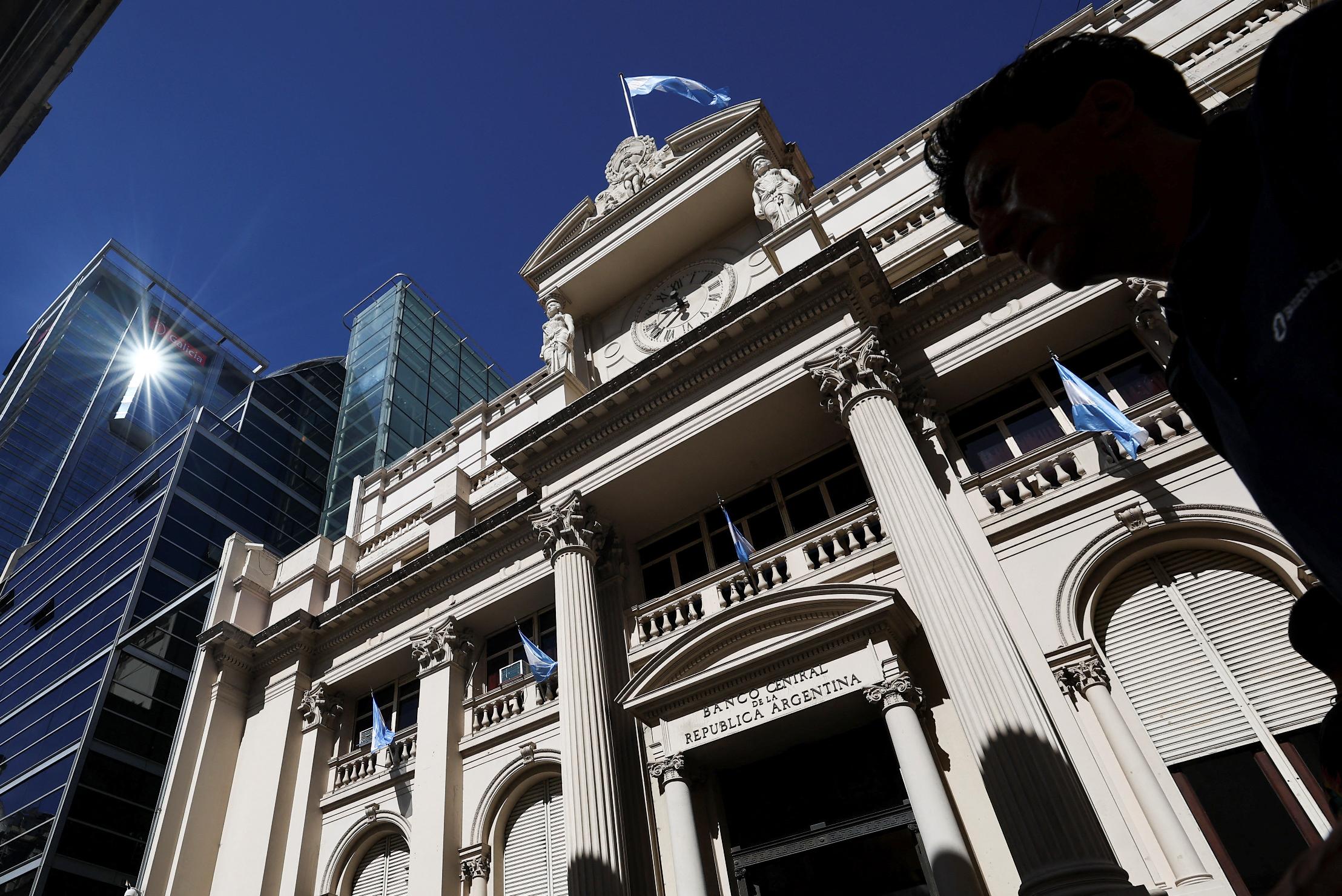
BUENOS AIRES/NEW YORK, Dec 13 (Reuters) - Argentina's economy has many problems, and dealing with a mountain of debt repayments over the next two years could determine whether the new government's economic road map succeeds. The country's total sovereign debt exceeds $400 billion, some $110 billion of which is owed to the International Monetary Fund and to holders of restructured, privately-held eurobonds. With central bank reserves in the red by more than $10 billion and little chance of tapping the market, the country has some $16 billion in debt payments coming due next year. Javier Milei, inaugurated on Sunday with a mandate to straighten out the economy, spoke of a "$100 billion debt bomb" while economy minister Luis Caputo widened it to the $400 billion in total sovereign debt. "Argentina is facing a formidable challenge in terms of FX debt maturities," said Juan Ignacio Paolicchi, chief economist at Buenos Aires-based consultancy firm Empiria. "The need for a debt rollover is imminent." The government on Wednesday weakened Argentina's peso by nearly 55% to 800 per dollar, and earlier said energy subsidies will be cut and tenders of public works canceled. The grains exporter struggled in 2023 to pay back the IMF, resorting to deals with China and with Qatar to make ends meet. Yet the fund said shortly after Caputo's economic measures' announcement that they provide "a good foundation for further discussions to bring the existing Fund-supported program back on track." "Investors would wait for policies to be on a sustainable path, which would take time and political consensus. Against this backdrop, the IMF could play a role, facilitating the adjustment," said Martin Castellano, head of research for Latin America at the Institute of International Finance. Argentina is the largest debtor to the fund, under a $44 billion program. Payments due to the IMF and other creditors total about $4 billion just through January. The government said it aims to keep the current program alive and take uncertainty away from future disbursements. Just this week, Fitch was the most recent name to predict that Argentina will have to restructure its debt in one form or other, a not-so-veiled warning of an impending 10th sovereign default. "It is such a difficult starting point with very high debt and inflation, no foreign currency reserves and nothing like a majority in parliament" for the new government, said Ed Parker, global head of research, sovereigns & supranationals at Fitch. "We think another default is probable - not necessarily next year - but there is a step up in debt payments from next year and then again in 2025, so the government would have to regain market access before then." But again, the bond market has been trading as if Argentina were on default since the current dollar bonds started trading in 2020. Prices have not been above 50 cents since, with all six issuances trading under 30 cents as recently as October. Others do not see restructuring as a done deal. Argentina "is an investment case where we see room for optimism," said Alexis Roach, senior analyst for Latin America at Payden & Rygel. "We're thinking that there is a possibility that they are able to avoid the restructuring conversation. Maybe that is too optimistic, but that is the foundation of our cautious optimism," she said. Same as others, she lays the success of the economic plan at the feet of implementation. With the sharp devaluation many Argentines have seen their savings slashed in half overnight. Annualized inflation is seen peaking above 200% next year, before beginning to fall. "If all of this is successful, you have a mix that is going to be potentially socially volatile," Roach said of the economic reforms. Social unrest "is our principal concern." https://www.reuters.com/markets/argentinas-400-bln-debt-bomb-threatens-default-number-10-2023-12-13/
2023-12-13 22:11
WELLINGTON, Dec 14 (Reuters) - New Zealand's economy unexpectedly contracted in the third quarter as a number of industries including manufacturing and construction saw activity slow and household spending eased. Official data out on Thursday showed gross domestic product (GDP) fell 0.3% in the September quarter, lower than analysts' forecasts of a 0.2% rise. It followed a revised 0.5% increase in the second quarter. Annual GDP decreased 0.6%, Statistics New Zealand data showed. The market had expected an increase of 0.5%. All goods-producing industries were down in the third quarter, led by a fall in manufacturing, said Ruvani Ratnayake, the national accounts industry and production senior manager at Statistics New Zealand. The agency added that despite the overall fall in GDP, eight of the country's 11 industry categories grew in the quarter with the strongest rises seen in healthcare and social assistance, rental, hiring and real estate services. The central bank was forecasting quarterly growth of 0.3%, and the weaker-than-expected GDP will likely please the Reserve Bank of New Zealand (RBNZ), which has repeatedly said it needs slower economic growth to dampen inflation and inflation expectations. The RBNZ has undertaken its most aggressive policy tightening since 1999, when the official cash rate was introduced, lifting it by 525 basis points since October 2021 to 5.50%. In November, the central bank signalled it could hike rates further if it decided inflation and inflation expectations were not heading towards its target band of 1% to 3%. https://www.reuters.com/world/asia-pacific/new-zealand-economy-unexpectedly-contracts-third-quarter-2023-12-13/


