2023-12-13 22:02
NEW YORK, Dec 13 (Reuters) - PGT Innovations Inc (PGTI.N), a U.S. maker of vinyl and aluminum doors and windows, has rejected a new bid worth about $2.2 billion from Miter Brands, a competitor backed by Koch Industries, according to people familiar with the matter. PGT's board of directors has rebuffed an improved $38-per-share all-cash offer from Miter, the sources said. Reuters reported in October that Miter was working on putting together a revised proposal after its $33-per-share bid was turned down by PGT. Miter's latest offer represents a premium of approximately 66% to where PGT shares were trading before the company adopted a so-called poison pill in March to prevent any shareholder from accumulating a stake of 10% or more for a year. The $1.9 billion market-cap company said it did this in response to "a likely accumulation of PGT shares by a strategic investor" that it did not identify. Miter is working with lenders to further raise its offer for PGT, the sources added. There is no certainty that the pursuit will end in a deal, the sources said, requesting anonymity because the matter is confidential. PGT declined to comment, while Miter Brands did not immediately respond to a request for comment. PGT manufactures and supplies windows and doors. The Venice, Florida-based company expanded into the overhead garage door market by acquiring Martin Door Holdings for approximately $185 million in 2022. Its net sales grew 28.5% year on year in 2022 to $1.49 billion and were up 4% in the most recent quarter on an annual basis. PGT rival Miter was formed in 2019 through the combination of MI Windows and Doors and Milgard. The company is led by Matt DeSoto, whose family controls the business together with Koch Equity Development, an investment fund controlled by industrial conglomerate Koch. https://www.reuters.com/markets/deals/pgt-rebuffs-latest-22-bln-bid-koch-backed-miter-brands-sources-2023-12-13/

2023-12-13 21:56
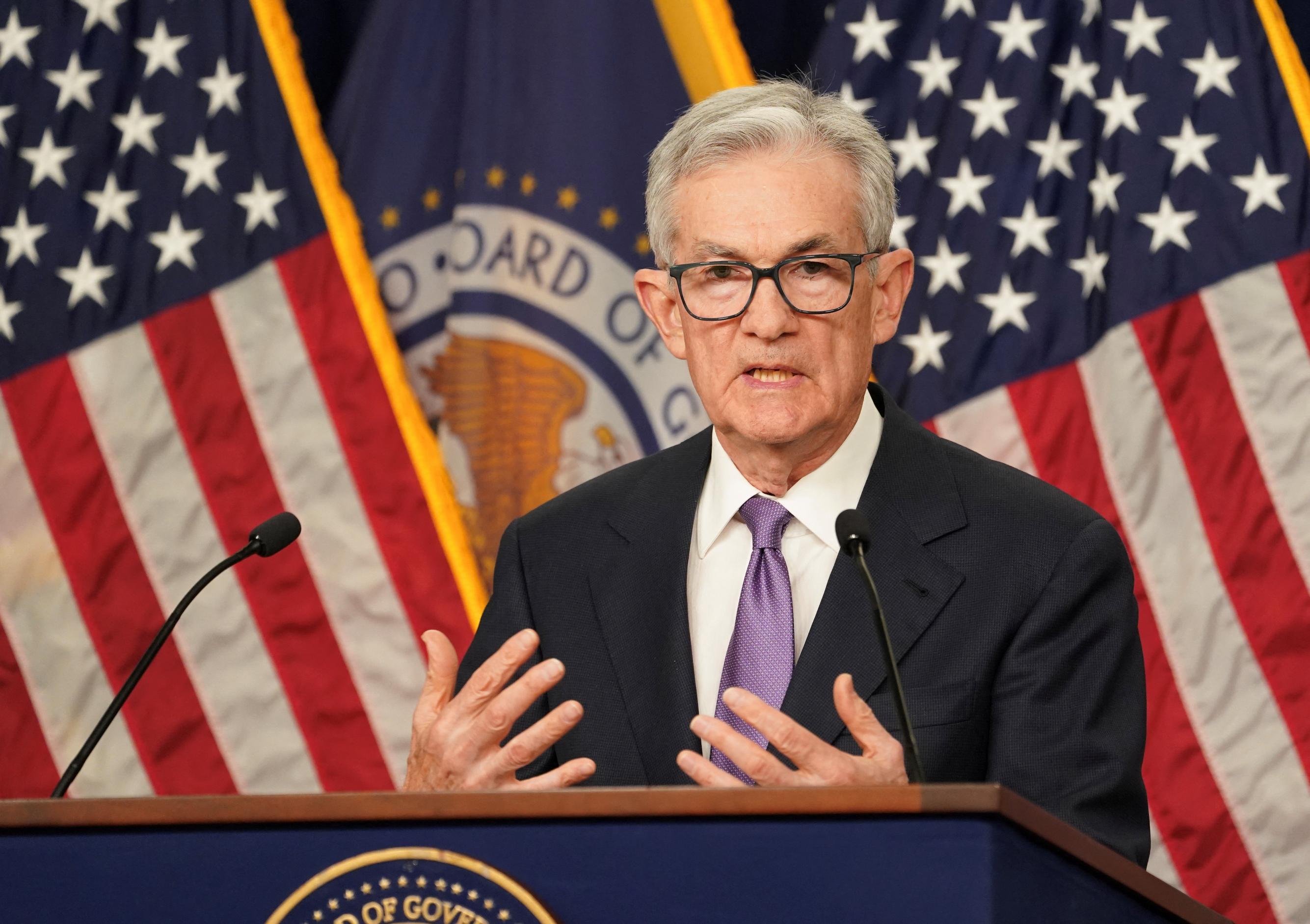
NEW YORK, Dec 13 (Reuters) - Federal Reserve Chair Jerome Powell said on Wednesday that central bank officials have yet to decide when they will end their balance sheet reduction effort even as they are now actively contemplating interest rate cuts next year. "We are not talking about altering the pace of Q.T. right now," Powell said at his press conference following the Fed's policy decision. Q.T. refers to quantitative tightening, or the contraction of the Fed's bond-holdings. Powell spoke after a Fed meeting that kept interest rates steady at between 5.25% and 5.5%, with officials penciling in three quarters of a percentage points' worth of cuts in the new year. The Fed, which targets 2% inflation, is weighing lower rates due to abating inflation pressures. The Fed has been trimming its balance sheet since last year in an effort to complement rate hikes. The Fed has been shedding just shy of $100 billion per month in Treasury and mortgage securities, taking its holdings from just shy of $9 trillion in the summer of last year to $7.7 trillion now. The Fed bought bonds aggressively to stabilize markets and stimulate growth during the pandemic. Taking liquidity back out is part of its process of returning monetary policy to a normal footing. The challenge for markets is that even as rate cuts loom, the Fed's plan to shrink holdings until financial sector liquidity is ample enough for it to retain full control over short-term rates does not say much about when this process might end. At the press conference, Powell noted that interest rate policy and balance sheet actions are operating independently under most scenarios, which means the Fed could lower rates but still press forward on shrinking its balance sheet. Many in markets are looking to the Fed's reverse repo facility as a barometer of the fate of the Q.T. process. This facility, which takes in cash largely from money market funds, is seen as a proxy for excessive liquidity, and has fallen from $2.6 trillion at the end of 2022 to $823 billion Wednesday. Some suspect that when reverse repos hit zero, as some in the Fed reckon is likely, that will be time for the Fed to end Q.T. That Q.T. can go on at a time of rate cuts owes to the reason why monetary policy might ease. Fed rate cuts next year appear to be a bid to keep policy at a steady potency at a time when inflation is falling. https://www.reuters.com/markets/us/feds-powell-not-ready-say-when-balance-sheet-wind-down-ends-2023-12-13/
2023-12-13 21:52
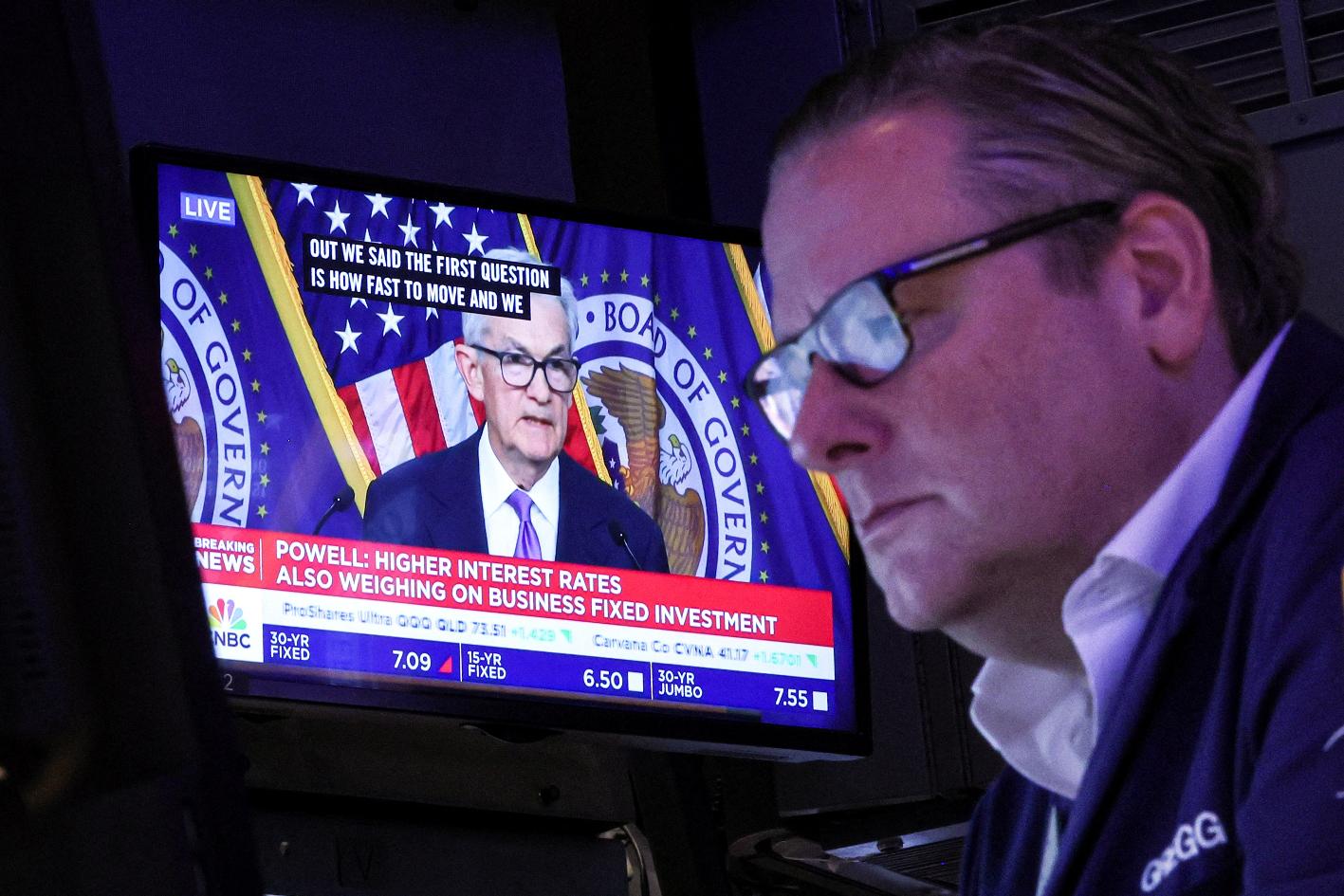
Dec 14 (Reuters) - A look at the day ahead in Asian markets. Asian markets are poised for lift off on Thursday, fueled by the dovish tilt from the Federal Reserve's final policy meeting of the year which lifted Wall Street - the Dow surged to a fresh all-time high - andslammed Treasury yields and the dollar. The Fed kept its key fed funds target range unchanged at 5.25% to 5.50%, as expected, so the real meat for inventors was in the revised Staff Economic Projections and Chair Jerome Powell's press conference. In short, the pivot toward cutting rates next year was clearer than markets had priced - Fed officials' median rate outlook for the end of 2024 is now 50 basis points lower than it was three months ago. Rates futures markets quickly moved to price in a near certain probability that the first move will be a quarter point cut as early as March. The two-year yield plunged more than 25 basis points and the 10-year yield sank as low as 4% - both at their lowest level in months. There's every chance that the 'melt up' in stocks and bonds spills over into Asian markets on Thursday - emerging market assets trading late on Wednesday, like Brazilian and Mexican equities and currencies, rose sharply. Investors in Asia on Thursday also have plenty of local news and events to digest, including central bank policy meetings from the Philippines and Taiwan, Indian wholesale inflation figures, Australian unemployment and New Zealand GDP. Economists polled by Reuters expect the Philippine central bank to keep rates on hold at 6.50% through the first half of next year, and begin easing policy in the third quarter. Taiwan's central bank, meanwhile, is expected to leave its policy rate unchanged at 1.875% for all of next year, only beginning its easing cycle in the first quarter of 2025. Economic growth in New Zealand likely slowed significantly in the third quarter, according to a Reuters poll, while figures are expected to show a sharp slowdown in job growth in Australia in November with the unemployment rate inching up to 3.8% from 3.7%. The annual rate of wholesale price inflation in India, meanwhile, is expected to have climbed to 0.08% last month from -0.52% in October. If any Asian country's markets could do with a bit of relief, it is China, where stocks tanked on Wednesday after investors gave a clear thumbs down to proposals and pledges from Chinese leaders gathered in Beijing to boost the economy and fight off deflation. The CSI 300 index of blue chip shares fell 1.7%, its fifth biggest fall this year, and the benchmark Shanghai index also fell more than 1%. Here are key developments that could provide more direction to markets on Thursday: - Philippines interest rate decision - New Zealand GDP (Q3) - Australia unemployment (November) https://www.reuters.com/markets/asia/global-markets-view-asia-pix-2023-12-13/
2023-12-13 21:51
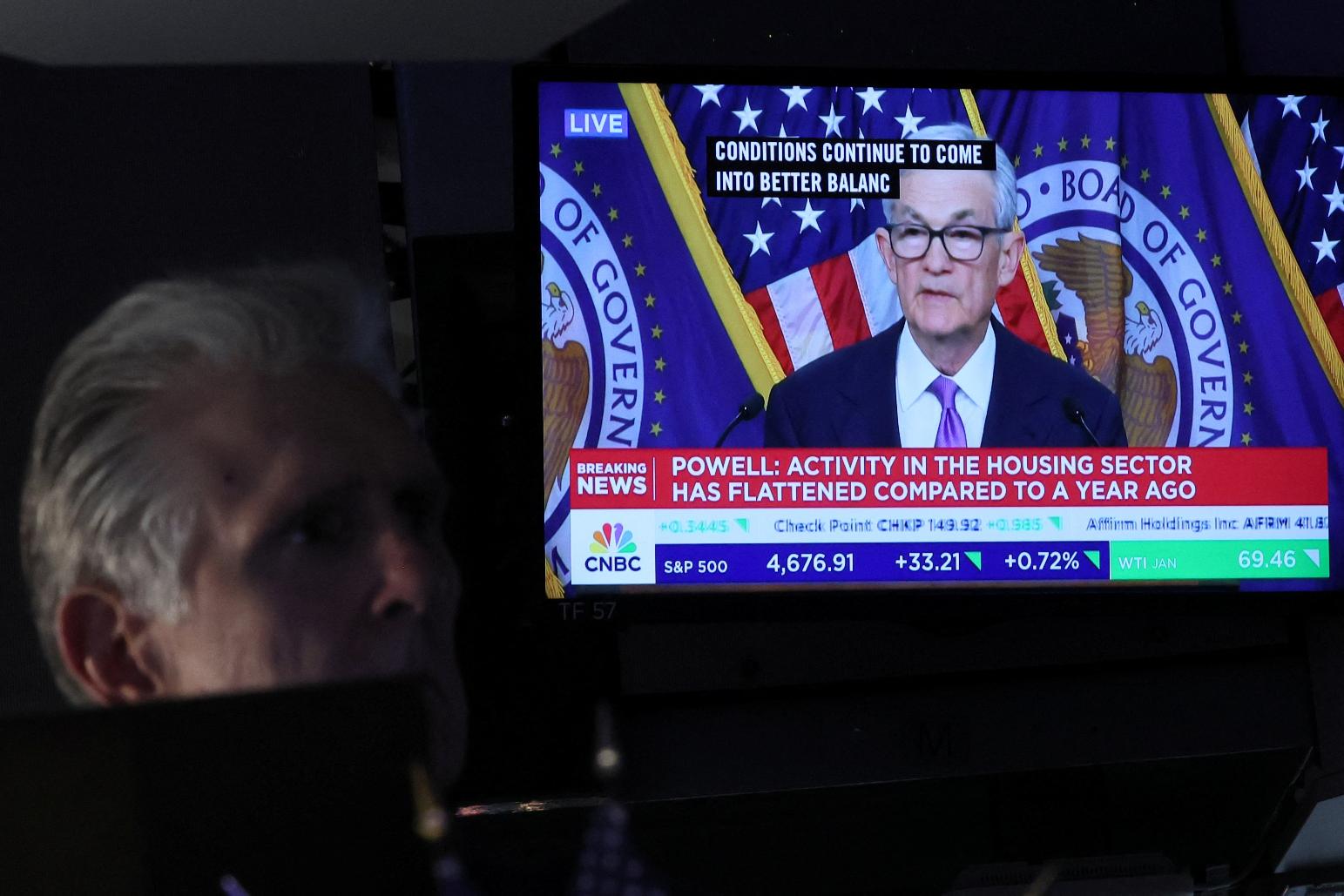
NEW YORK, Dec 13 (Reuters) - U.S. interest rate futures on Wednesday increased the chances of rate cuts by the Federal Reserve starting next March, with a 77%probability after the U.S. central bank's new rate projections signaled the end of its tightening campaign. Before the release of the U.S. central bank's latest policy statement and economic projections, the probability of easing in March was around 40%. Rate futures also priced in more than 100 basis points in cuts next year, according to LSEG's FedWatch. The Fed on Wednesday kept its benchmark overnight interest rate in the 5.25%-5.50% range, but said in its policy statement that inflation "has eased over the past year," and noted that it would watch the economy to see if "any" additional rate hikes are needed. A near-unanimous 17 of 19 Fed officials project that the policy rate will be lower by the end of 2024 than it is now - with the median projection showing it falling three-quarters of a percentage point from the current 5.25%-5.50% range. "The policy statement was relatively little changed from the last two renditions, but the subtle edits carry significant weight," Tom Simons, U.S. economist at Jefferies in New York, said in a note. "The addition of the word 'any' ahead of potential policy firming suggests less confidence that more firming will be needed. Given the recent progress in the data towards the dual-mandate goals, it seems like the writing is on the wall for this hiking cycle." In his press conference after the end of the latest two-day policy meeting, Fed Chair Jerome Powell confirmed what the "dot plot," or the distribution of Fed officials' rate projections, conveyed: that the U.S. central bank was likely done raising rates. Over the last two weeks the rate futures market had mostly faded rate cuts in March after a string of fairly solid economic data, led by a still-robust U.S. jobs report for November. In addition, the U.S. consumer price index last month remained elevated, with the headline CPI edging up 0.1% and the CPI excluding food and energy items rising 0.3%, in line with expectations. The year-on-year core CPI was 4.0%, still too hot for the Fed's comfort. https://www.reuters.com/markets/us/us-rate-futures-lift-march-rate-cut-bets-after-fed-flags-end-tightening-2023-12-13/
2023-12-13 21:19
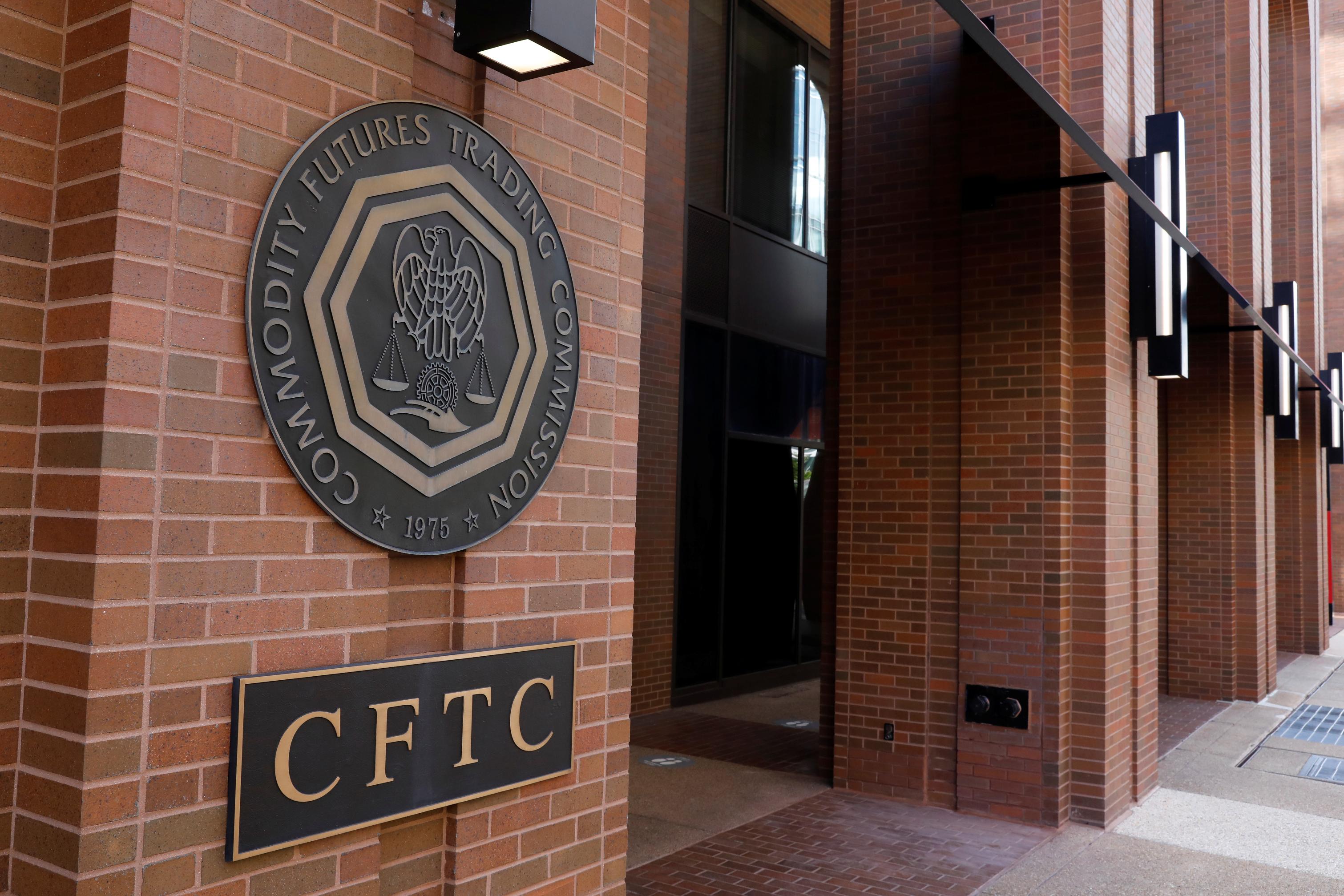
NEW YORK, Dec 13 (Reuters) - The U.S. Commodity Futures Trading Commission on Wednesday voted to approve a plan from a Chicago cryptocurrency derivatives exchange and brokerage to also act as its own registered clearinghouse. The approval of the plan by Bitnomial, an exchange founded in 2014, marks the first time the commodities regulator has voted to allow a vertically-integrated market structure. Bitnomial also has exchange and broker licenses. Two Democratic and two Republican commissioners voted to OK the firm's application, while the third Democratic commissioner dissented. "Now that the licensing process is complete, we can shift our focus to expanding Bitnomial's product offering and customer base," the firm's founder and CEO Luke Hoersten said in a statement. The CFTC approval also marks a win for an industry beset by scandal. Binance, the world's largest crypto exchange, in November agreed to pay over $4.3 billion to settle U.S. charges it violated laws designed to prevent illicit finance. Its former CEO Changpeng Zhao faces up to 18 months in prison. A few weeks earlier, a jury found FTX founder Sam Bankman-Fried guilty of fraud. The White House and a slew of other regulators have criticized vertical integration in the crypto sector for creating potential conflicts of interest. At the same time, federal agencies are facing industries that are quick to turn to the courts when matters are decided against them. Last month, an events betting platform sued the CFTC for rejecting its plan to allow investors to bet on U.S. elections. CFTC Chair Rostin Behnam, who voted in favor of Bitnomial's application, said in Wednesday's meeting: "We have to apply the rules fairly and equally to all registrants. Otherwise, in my view, that is a complete dereliction of duty and a very scary direction of government we would head in." https://www.reuters.com/technology/us-cftc-oks-crypto-firm-bitnomials-vertical-integration-plan-2023-12-13/
2023-12-13 20:58
BUENOS AIRES, Dec 13 (Reuters) - On the streets of Buenos Aires, Argentines were starting to grapple on Wednesday with how they will be impacted by major austerity measures and an over 50% devaluation of the local peso currency, part of a shock plan to stabilize the economy. The government of new libertarian President Javier Milei unveiled plans on Tuesday to slash state spending and turn around a deep fiscal deficit, moves that were cheered by markets. It devalued the peso currency sharply, which will stoke inflation already near 150%. "The measures are good in theory to fix the economy but caught in the middle many people are going to suffer because of it," said Agustina Ferreira, 19, a shop worker in the Argentine capital. Inflation is set to rise sharply in the months ahead, eroding people's savings and spending power. Planned cuts to subsidies will push up energy bills and transport costs, while the spending cuts will drag on economic growth. The devaluation has overnight knocked over half the official value from people's pesos in dollar terms, though in reality tight capital controls already meant access to foreign currency was limited and people paid high rates on parallel markets. Jose Diz, an agronomic engineer, said that tough government measures were "necessary," but the real-life impact would be difficult. "Yesterday I was talking to my children at dinner and it's like being told that my salary is being cut in half," he said, adding that his family were already tightening their belts by buying fewer groceries. He worried about people living on pensions. "I don't know how they're going to get by when costs of everything increase by 30% or 40%, it's very difficult." 'HARSH COSTS IN COMING MONTHS' Milei, a political outsider who rode a wave of voter anger at the worst economic crisis in decades, has warned about likely 20%-40% monthly inflation in the months ahead, but said without tough measures the country could slip into hyperinflation. He has repeatedly said that "there is no money," though he has pledged to protect some social spending in a bid to head off protests, with over four-in-10 people already in poverty. "There will be some harsh costs in the coming months from a deepening of stagflation," said economist Gustavo Ber from consulting firm Estudio Ber, referring to a mixture of high inflation and recession. Analysts say the biggest challenge to Milei will be keeping a lid on social unrest. Many Argentines, weary at years of boom-bust economic crisis, seem willing for now to give him time to turn things around, but their patience likely won't last long. Facundo Marino, a 53-year-old worker in central Buenos Aires, said he backed the plan as necessary to avoid things getting worse. But, he added: "It's a really deep shock for people's pockets, it destroys you." "With the dollar at 800, bus tickets going from 50 to 500 (pesos)... everything increases," he said. "Either you hike salaries or I don't know what's going to happen to the country." https://www.reuters.com/world/americas/people-are-going-suffer-argentines-grapple-with-austerity-shock-2023-12-13/