2023-12-13 20:34
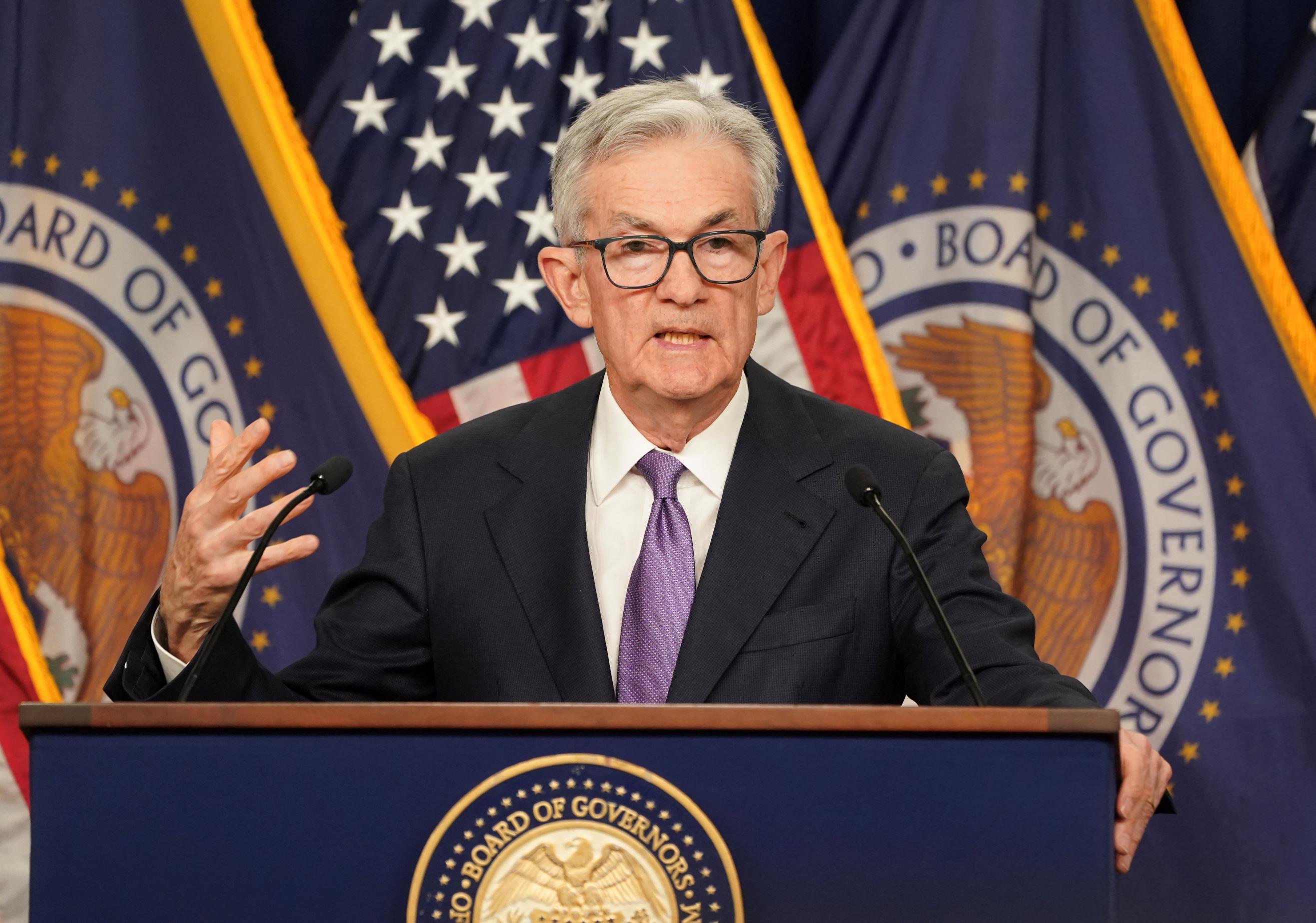
NEW YORK, Dec 13 (Reuters) - The Federal Reserve held interest rates steady on Wednesday and signaled in new economic projections that the historic tightening of U.S. monetary policy engineered over the last two years is at an end and lower borrowing costs are coming in 2024. MARKET REACTION: STOCKS: The S&P 500 (.SPX) extended gains and was recently up 1.01% BONDS: The U.S. Treasury 10-year yield tumbled and recently stood at around 4.041%, after hitting its lowest level since August at 4.007%. The 2-year yield fell and was recently at 4.464%, after touching its lowest level since early-June at 4.431%. FOREX: The dollar index was down 0.75% COMMENTS: ERIC WINOGRAD, SENIOR ECONOMIST, ALLIANCEBERNSTEIN, NEW YORK CITY: “While the committee retains the option of additional hikes, the message from the Fed is pretty clear: the hiking cycle is over unless there is a significant surprise, and the risks of a cut are greater than those of a hike in the next several months.” “While I think the magnitude of the market response is exaggerated, the direction is correct: the Fed for the first time this cycle opened the door to rate cuts across a reasonable forecast horizon, and that is significant.” BLAIR SHWEDO, HEAD OF US SALES AND TRADING, US BANK, CHARLOTTE, NORTH CAROLINA: “The FOMC statement and forecasts were quite dovish and appear to be what the market has eagerly been pricing in over the past few weeks. The Fed's projections affirm the market's expectation for rate cuts in 2024.” “This should be an extremely welcome environment for corporate issuance as the combination of treasury strength and credit spread tightening have led to north of 100 basis points worth of yield reduction in investment grade since early November.” ELLEN HAZEN, CHIEF MARKET STRATEGIST, F.L.PUTNAM INVESTMENT MANAGEMENT, WELLESLEY, MASSACHUSETTS “The Fed was unequivocally dovish. They added that word 'any' in the third paragraph suggesting that maybe there will not be any firming next year, whereas before they had communicated that there might be firming next year. Most importantly if you look at their fed funds rate projections, they took them down by 50 (basis points) next year. So they were looking for two cuts for next year, now they are looking for four cuts. They are attributing this to growth of economic activity slowing and that's what justifies this more dovish stance. I would say that they are basically communicating an immaculate disinflation. I do worry that as good as the economy looks right now, I do hope they're not taking a victory lap prematurely.” "They're saying 'well we're going to cut rates four times next year instead of two times,' which they were saying before. But by the way, we're not changing our forecast for the unemployment rate for any of the next three years - really? You're going to find justification for cutting rates without unemployment rising? I mean, maybe right? Maybe but wow, that's a narrow path that the economy has to follow for their communication today to be warranted.” GINA BOLVIN, PRESIDENT, BOLVIN WEALTH MANAGEMENT GROUP, BOSTON, MASSACHUSETTS "The Fed has given the market an early holiday gift today when, finally, for the first time, they have commented positively about inflation. I’d say we’ve seen a pivot as they acknowledged inflation is falling. It appears that the Fed is moving in the markets direction, rather than the market moving towards the Fed. The Santa Claus rally may continue." JEFFREY ROACH, CHIEF ECONOMIST, LPL FINANCIAL, CHARLOTTE, NC “The big adjustment in the statement is the subtlety of the word ‘any’, meaning not much change in the actual statement other than what we know already. The economy is slowing and Inflation is easing, so the statement alluded to that. I think we’ve seen peak rates. It’s reasonable to assume that the Fed’s next move is a cut, probably not until middle of next year. But after three pauses, they’ve moving from a temporary pause to where we are at: peak rates. "The 2024 growth that was revised downward is consistent with the market view on rates getting lower next year. It was pretty interesting to see how the two-year Treasury yields dropped a couple of basis points. The extent of rates cuts in 2024 really depends on the labor market and the overall general economic activity. But at this point, rates are restrictive with inflation continuing to ease.” MICHAEL BROWN, MARKET ANALYST, TRADERX, LONDON "No surprise in terms of rates with the Fed funds rate remaining unchanged, though a marginally more dovish than expected dot plot doesn’t exactly provide the pushback on market pricing and looser financial conditions that most had been expecting." "The economic assessment remains broadly unchanged with incoming data having done little to materially alter the outlook. Ultimately, while markets have undergone a knee-jerk dovish repricing, this is unlikely to be a game-changer in terms of the outlook, with the debate for 2024 still likely focusing on the reasoning for a cut (soft landing or growth slump?) over the magnitude of such a move." KARL SCHAMOTTA, CHIEF MARKET STRATEGIST, CORPAY, TORONTO "By raising the bar to further tightening and telegraphing at least three rate cuts in 2024, the Fed turned decisively dovish this afternoon, waving a red flag in front of market bulls hoping for an easing in policy." "Perhaps more importantly, officials appear convinced a "soft landing" is in the offing, with inflation subsiding, growth remaining strongly positive, and unemployment remaining essentially changed through the course of 2024. The conditions are in place for a melt-up in financial markets, and a further easing in credit conditions across the economy." TOM MARTIN, SENIOR PORTFOLIO MANAGER, GLOBALT INVESTMENTS, ATLANTA “The statement is telling us that the Fed is seeing what the markets have already started to discount, that you're going to have inflation back to normal without a recession.” “We kind of hoped it was going to be this, but we didn't really think it was. I think there was a lot more tacit expectation that at the least the statement and the dot plot weren’t going to be quite this clear.” BRIAN JACOBSEN, CHIEF ECONOMIST, ANNEX WEALTH MANAGEMENT, MENOMONEE FALLS, WISCONSIN “The FOMC is becoming a motley crew. The divide isn’t so much about whether to cut in 2024, but rather how much and when. The Powell Pause may only last until the May meeting. The critical question is whether the Fed will be cutting because it can or because it has to. If the Fed is only tracking inflation lower, that’s bullish, but the more likely scenario is that they cut because growth stalls and they have to cut.” https://www.reuters.com/markets/us/fed-flags-end-rate-hikes-sees-lower-borrowing-costs-2024-2023-12-13/
2023-12-13 20:27
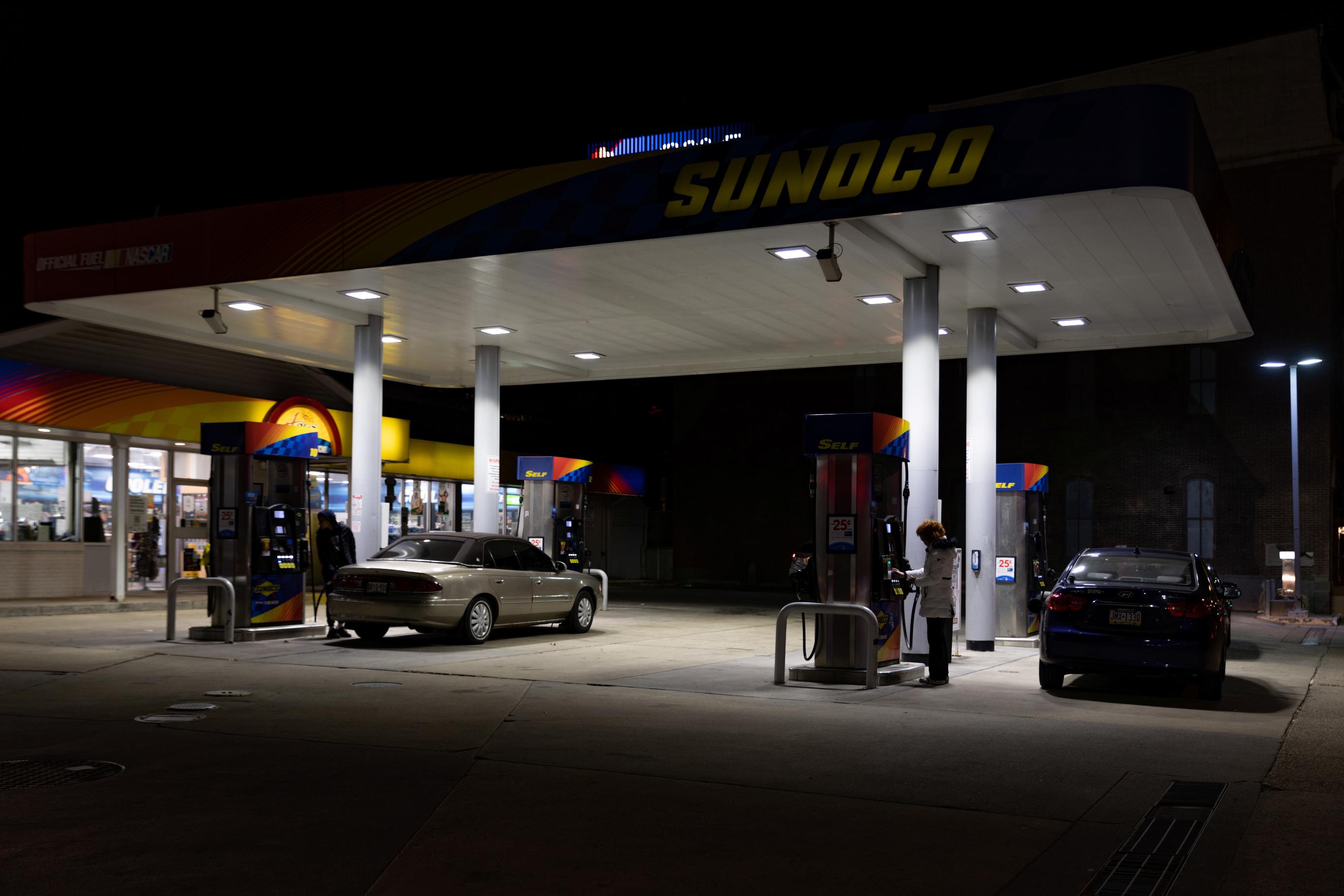
Dec 13 (Reuters) - U.S. natural gas futures edged up about 1% on Wednesday from a six-month low in the prior session on raised demand forecasts for this week, and as record amounts of gas flowed to liquefied natural gas (LNG) export plants. That price increase came despite record output and forecasts for mild weather and lower heating demand next week that should allow utilities to pull less gas from storage than usual through at least late December. Analysts forecast there was currently around 7.8% more gas in storage than usual for this time of year. Front-month gas futures for January delivery on the New York Mercantile Exchange rose 2.4 cents, or 1.0%, to settle at $2.335 per million British thermal units (mmBtu). On Tuesday, the contract closed at its lowest since June 12. Despite the small price increase, the front-month remained in technically oversold territory with a Relative Strength Index (RSI) below 30 for a sixth day in a row for the first time since February. A lack of big price moves in recent weeks has cut historic or actual 30-day close-to-close futures volatility to 45.9%, the lowest since September 2021. Historic daily volatility hit a record high of 177.7% in February 2022 and a record low of 7.3% in June 1991. Historic volatility has averaged 71.5% so far this year, versus a record high of 92.8% in 2022 and a five-year (2018-2022) average of 57.9%. With record production and ample gas in storage, futures have been sending bearish signals for weeks that prices this winter (November-March) likely already peaked in November. Analysts have said they expect prices to climb in coming years as demand for the fuel grows as new LNG export plants enter service in the U.S., Canada and Mexico. But for 2024, some analysts have reduced their U.S. demand forecasts after Exxon Mobil (XOM.N) delayed the start of first LNG production at its 2.3-billion-cubic-feet-per-day (bcfd) Golden Pass export plant under construction in Texas to the first half of 2025 from the second half of 2024. SUPPLY AND DEMAND Financial firm LSEG said average gas output in the Lower 48 U.S. states rose to 108.4 bcfd so far in December from a record 108.3 bcfd in November. Meteorologists projected the weather would remain warmer than normal through at least Dec. 28. With the weather remaining mild, LSEG forecast U.S. gas demand in the Lower 48, including exports, would slide from 125.0 bcfd this week to 122.2 bcfd next week. The forecast for this week was higher than LSEG's outlook on Tuesday, while its forecast for next week was lower. Gas flows to the seven big U.S. LNG export plants rose to an average of 14.6 bcfd so far in December, up from a record 14.3 bcfd in November. The U.S. is on track to become the world's biggest LNG supplier in 2023, ahead of recent leaders Australia and Qatar. Much higher global prices have fed demand for U.S. exports due in part to supply disruptions and sanctions linked to the war in Ukraine. Gas was trading around $11 per mmBtu at the Dutch Title Transfer Facility (TTF) benchmark in Europe and $15 at the Japan Korea Marker (JKM) in Asia . https://www.reuters.com/business/energy/us-natgas-prices-up-1-higher-demand-record-lng-feedgas-2023-12-13/

2023-12-13 20:05
SAO PAULO, Dec 13 (Reuters) - Brazilian privately owned biodiesel producer Binatural aims to boost output by 20% annually until reaching 650 million liters in 2026, CEO Andre Lavor said in an interview on Wednesday, adding the firm will be required to expand capacity to meet demand. Hoping the government will continue to raise the mandatory biodiesel mix, Lavor said the sector will need investment, potentially from foreign players also, to cater to demand for cleaner energy sources. He said given the industry's robust growth projects, it should attract attention "and investments from all fronts." Brazil could raise the biodiesel mix into diesel to 15% from 12% effective in 2024, depending on a meeting next week of the National Energy Council. Lavor said he is "optimistic," noting the 15% threshold should have been implemented in 2023. "A 1% addition in the biodiesel mix corresponds to about 1 billion liters more of consumption," he said. A combination of higher sales volumes and better prices next year should boost Binatural's revenues by some 30% to 3 billion reais ($605 million), Lavor said. Brazil, a farm powerhouse, produces about 70% of its biodiesel from soybeans, as the oilseed is abundant in the country. Binatural's business model, however, dictates the firm's product is mainly produced from alternative sources, including animal fat and recycled cooking oil. Brazil's biodiesel industry operates with average idle capacity of 50%. Binatural, on the other hand, plans to outperform the industry and projects utilizing about 73% of its own next year, making a projected 440 million liters. For now, Brazil's oilseed crusher lobby Abiove predicts roughly 7 billion liters of biodiesel production in 2023. But if policy makers increase the mandatory mix to 25% by 2036, more investment would be needed as it would require Brazil to crush 50 million tons more of soy, he said. Brazil's biodiesel industry could spur mergers or acquisitions too. U.S.-based Cargill, for example, recently acquired Granol, a large soy crusher and biodiesel firm. Bunge and China's Cofco also make biodiesel in Brazil. Binatural itself was courted by suitors for potential "partnerships," Lavor said declining to elaborate. He dismissed any "short-term plans" to close any deals. ($1 = 4.9557 reais) https://www.reuters.com/markets/commodities/brazil-biodiesel-outlier-binatural-set-grow-bright-industry-outlook-says-ceo-2023-12-13/

2023-12-13 19:59
RIO DE JANEIRO, Dec 13 (Reuters) - Oil companies including Elysian along with veterans Petrobras and Chevron snapped up the most blocks up for grabs in Brazil's latest offshore oil auction marked by climate protests, as the South American nation looks to replenish reserves with new discoveries. Oil regulator ANP ran the tender that assigned 192 exploration and production areas out of more than 600 on offer, with newcomer Elysian winning 122 of them. The government will receive nearly 500 million reais ($102 million) from the blocks auctioned, mostly from contracts for areas in the deep water Pelotas Basin along Brazil's southern coast. State-run Petrobras (PETR4.SA) secured 29 blocks in the deep water basin, all as operator with consortium partner Shell (SHEL.L). In three of them, China's state-owned CNOOC (SASACY.UL) also formed part of the winning group. "We achieved a very successful strategy... We entered a border area with little probability of having environmental problems," said Petrobras CEO Jean Paul Prates, describing the area as "very prolific." U.S. major Chevron (CVX.N) also won rights in 15 blocks in the same basin. Elysian is based in Minas Gerais state and was created only in August to compete in the auction. Its winning bids stretched across three other offshore basins - Potiguar, Espirito Santo and Sergipe Alagoas. Outside the Rio de Janeiro hotel where the auction took place, climate activists loudly protested the push to keep pumping more fossil fuels, linked by scientists to catastrophic global warming, demanding an immediate transition to clean energy. "The signals that the Brazilian government is sending to the international community with an oil auction a day after the (the global climate meetings in Dubai) are the worst possible," said Marcelo Laterman, coordinator of Greenpeace's Oceans Front. In his opening speech, ANP head Rodolfo Saboia acknowledged the auction may seem like a contradiction, but he argued the world's dependence on fossil fuels will not be eliminated in five or ten years. He added that new oil and gas exploration is needed to avoid falling oil production over the next decade. Brazil is Latin America's top crude oil producer, followed by Mexico, Colombia and Venezuela. In the offshore Santos Basin, Karoon (KAR.AX) won a pair of blocks, while CNOOC and Norway's Equinor won the other two alone. Five more blocks in Brazil's pre-salt offshore areas were also auctioned under a sharing regime, with BP (BP.L) winning the rights for the only one that received bids in the Santos Basin. ($1 = 4.9256 reais) https://www.reuters.com/business/energy/bp-energy-wins-oil-auction-brazils-tupinamba-block-2023-12-13/

2023-12-13 19:49
Fed officials see 75 basis points of cuts next year U.S. dollar down 0.4% Dec 13 (Reuters) - Gold prices rose more than 1% on Wednesday after the U.S. Federal Reserve flagged an end to its interest rate hike cycle and indicated possible rate cuts next year. Spot gold gained 1.3% to $2,004.79 per ounce as of 2:34 p.m. ET (1934 GMT). U.S. gold futures settled 0.2% higher at $1,997.30. The U.S. central bank held interest rates steady on Wednesday. A near unanimous 17 of 19 Fed officials project the policy rate will be lower by the end of 2024 than it is now, with the median projection showing the rate falling three-quarters of a percentage point from the current 5.25%-5.50%. "The Fed's acknowledgement of inflationary pressures continuing to come down has raised interest rate cut expectations, which is seeing a dramatic drop in yields and dollar, and a subsequent rise in gold and silver," said David Meger, director of metals trading at High Ridge Futures. "We believe the current upward move in gold is a sustained rally." The dollar index (.DXY) slipped 0.6% after the Fed verdict, making gold less expensive for overseas buyers. U.S. 10-year Treasury yields extended its retreat. Traders are now pricing in a near 60% chance of U.S. rate cuts in March 2024, according to the CME Fedwatch tool. Lower interest rates increase the appeal of holding zero-yield bullion. Fed Chair Jerome Powell said inflation has eased without significant rise in unemployment and that full effects of tightening is likely not yet felt. Data showed U.S. producer prices were unexpectedly unchanged in November, indicating inflation at the factory gate continued to subside. Gold's trajectory could also be influenced by policy meetings of the European Central Bank and the Bank of England on Thursday. Silver rose 2.5% to $23.32 per ounce, while platinum rose 0.1% to $930.56, and palladium was up 0.5% to $983.83. https://www.reuters.com/markets/commodities/gold-creeps-higher-weaker-yields-traders-brace-fed-verdict-2023-12-13/
2023-12-13 19:16
Producer price index unchanged in November PPI increases 0.9% year-on-year Core PPI gains 0.1%; rises 2.5% year-on-year WASHINGTON, Dec 13 (Reuters) - U.S. producer prices were unexpectedly unchanged in November amid cheaper energy goods, and underlying inflation pressures at the factory gate were muted. The report from the Labor Department on Wednesday, which also showed services prices flat for a second straight month, strengthened optimism that overall inflation would continue to subside and allow the Federal Reserve to start cutting interest rates next year. The U.S. central bank held rates steady on Wednesday and signaled in new economic projections that the historic tightening of monetary policy engineered over the last two years is at an end and lower borrowing costs are coming in 2024. Since March 2022, the Fed has raised its policy rate by 525 basis points to the current 5.25%-5.50% range. "The good news today is that there are minimal price increases at the lower stages of factory production," said Christopher Rupkey, chief economist at FWDBONDS in New York. "This makes it even more likely they (Fed officials) will bring inflation down for a 'soft-landing' without bringing the economy to its knees." The unchanged reading in the producer price index for final demand in November reported by the Labor Department's Bureau of Labor Statistics followed a revised 0.4% drop in October. Economists polled by Reuters had forecast the PPI gaining 0.1% last month. Goods prices were unchanged in November as a 1.2% decline in the cost of energy products was offset by a 0.6% rebound in food prices. Goods prices dropped 1.4% in October. Food prices, which had dipped 0.1% in October, were last month boosted by a 58.8% surge in wholesale prices of eggs. Cases of avian flu on commercial farms are on the rise, hitting large egg-laying operations in states like Kansas and Ohio. Prices for fresh fruits and melons also rose. Energy costs were pulled down by a 4.1% decline in gasoline prices, as well as cheaper jet fuel and liquefied petroleum gas. Energy prices fell 6.7% in October. In the 12 months through November, the PPI rose 0.9% after advancing 1.2% in October. Data on Tuesday showed consumer prices edged up in November amid stubbornly high rental costs. Stocks on Wall Street were trading. The dollar was steady against a basket of currencies. U.S. Treasury prices rose. SERVICES INFLATION PROGRESS Though inflation remains above the Fed's 2% target, price increases are less broad-based. Financial markets are leaning towards a rate cut in May, according to CME Group's FedWatch Tool. Excluding the volatile food and energy components, goods prices rose 0.2%. The so-called core producer goods prices were unchanged in October. This raises the risk that goods deflation, evident in the consumer price data, could be close to running its course. But most economists were not too concerned with the modest rebound in core producer goods prices, saying the focus should be on the trend, with price increases having not exceeded 0.2% since February. The cost of services was unchanged in November as it was in October. Services have been the main driver of inflation amid strong consumer spending supported by a resilient labor market. Transportation and warehousing services cost less last month. Wholesale prices for hotel and motel rooms, however, rose 4.0%. There were also increases in the costs of deposit services and healthcare. But portfolio management fees, furniture retailing and the cost of transporting freight by road fell. "While consumer spending is still fueling inflation even in service categories such as leisure and hospitality industries, the downward trend among service providers' own costs suggests that if consumer demand cools, consumer price inflation should also then have a path to stability," said Kurt Rankin, senior economist at PNC Financial in Pittsburgh, Pennsylvania. Portfolio management fees, hotel and motel accommodation are components in the calculation of the personal consumption expenditures price indexes, the inflation measures tracked by the Fed for its inflation target. With the CPI and PPI data in hand, most economists expected the core PCE price index to be unchanged, with the risk of rounding up to a 0.1% gain in November, slowing from October's 0.2% rise. That would lower the year-on-year increase in the core PCE price index to 3.2% in November, which would be the smallest gain since April 2021, from 3.5% in October. The narrower measure of PPI, which strips out food, energy and trade services components, edged up 0.1% after rising by the same margin in October. The core PPI increased 2.5% on a year-on-year basis, the smallest gain since February 2021, after rising 2.8% in October. "This report provides another small piece of good news at the margin in the Fed's quest to return inflation to 2%," said Conrad DeQuadros, senior economic advisor at Brean Capital in New York. https://www.reuters.com/markets/us/us-producer-prices-unchanged-november-2023-12-13/