2023-12-13 11:04
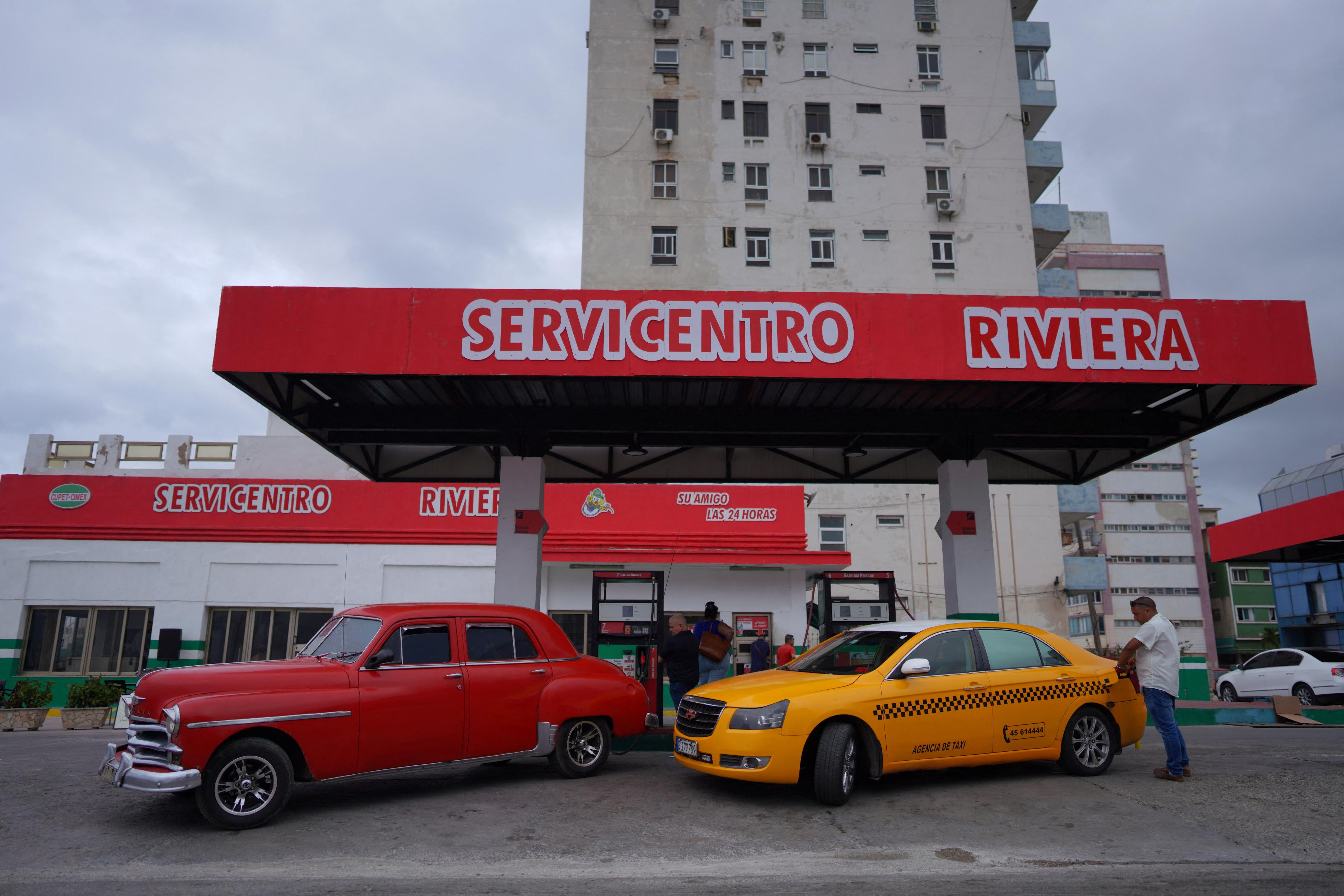
HAVANA, Dec 13 (Reuters) - Cuban gasoline, already one of the world's best bargains, is getting cheaper by the day for those with access to dollars, as the local peso currency continues its freefall against the greenback. "Special" (94 octane) gasoline sells on the Caribbean island nation for 30 pesos, or 11 cents per liter (42 cents/gallon) at the current black market exchange rate, among the world's cheapest fuel, according to online database GlobalPetrolPrices.com. A typical half-liter of bottled water in Cuba, by comparison, sells for between 100 and 200 pesos, more than ten times the price of the same quantity of gasoline. Communist-run Cuba has subsidized gasoline for decades, since early in former leader Fidel Castro's revolution. Meanwhile, the dollar, which Cubans obtain primarily through remittances or tourism, has soared from a value of 170 pesos a year ago to 270 pesos on the black market on Tuesday, giving those who have dollars far more purchasing power for products, like fuel, still tagged in pesos. For a Cuban who lives on pesos alone, however, filling up the typical tank costs more than half the monthly minimum wage of 2,100 pesos. The peso began a sharp decline in 2021 after the Cuban government announced a monetary reform that dumped a complex dual-currency system, spawning a new black market exchange that has contributed to soaring prices on the island. "The situation is paradoxical," said Bert Hoffmann, a Latin America expert at the German Institute of Global and Area Studies. "On the one hand the state's policies try to maintain a minimum of social cohesion. On the other, it is the state's own monetary policies which are driving the widening gap of inequality." Besides subsidizing fuel, Cuba has long compensated for low wages paid to workers in the state sector by providing free healthcare and education, as well as comparatively low rates for utilities. But those services too have suffered in the face of economic crisis on the island, which Cuba blames on a U.S. trade embargo that dates back to the Cold War. Cuba imports most of its crude, primarily from Mexico and Venezuela. But its bargain basement prices are more expensive only than countries like Iran, Libya and Venezuela that boast significant oil reserves. Yadira Carricarte, a Cuban who resides in Italy but was visiting her family in Havana this week, was astounded by the price when she fueled her compact rental car. "With three euros I can fill the tank," she said. "(The price) should be far higher." For analyst Hoffmann, taming growing inequality means bringing the peso back in line with the dollar – but at present the opposite is happening. "There is no easy fix in sight," Hoffmann said. https://www.reuters.com/markets/commodities/cubas-gasoline-is-bargain-least-those-with-dollars-2023-12-13/
2023-12-13 11:03
Dec 13 (Reuters) - A look at the day ahead in U.S. and global markets from Mike Dolan As Wall St waited optimistically for the Federal Reserve's latest nods and winks on future policy, Argentina took a hatchet to its peso while China's stocks resumed sliding after another underwhelming government economic plan. As promised, Argentina's new government late Tuesday slashed government spending, cut whole departments and devalued the official peso exchange rate by more than 50% to 800 per dollar - though it still sits stronger than where informal and black market rates put the unit above 1,000. The long-flagged moves from new President Javier Milei - in office just two days - aimed to cut across a spiral of debt and hyperinflation and were announced by his economy minister Luis Caputo. The International Monetary Fund welcomed the moves and Argentina's sovereign dollar bonds were marginally higher. The drama in Buenos Aires was a distraction from Wednesday's main U.S. event, where Fed policymakers decide policy, publish their latest economic forecasts and Fed boss Jerome Powell speaks to the press. No change is expected in the main rate of course, but markets will be keenly focused on Powell's emphasis and how much easing is included in policymakers' rate projections for next year - the so-called "dot plot". The last update in September had one final hike left in 2023, which is now unlikely to materialise, and then two quarter point cuts from there by the end of next year. Most expect those two cuts to remain - but from current levels. Futures markets, however, have more than 110 basis points of cuts still pencilled in for 2024 - though chances of a first cut as soon as March have slipped back below 50% since the slightly sticky November consumer price readout on Tuesday. Although headline annual inflation rates fell back to 3.1% for the first time since June and core rates stayed at 4.0% as anticipated, higher rent components saw the monthly rate tick 0.1% higher. Producer price inflation data due on Wednesday before the Fed decision should prove more benign - with core annual PPI expected to fall to just 2.2%, its lowest in almost three years and below rates recorded for most of the two years before the pandemic hit. Underscoring the disinflation in input costs, U.S. crude oil prices fell again on Tuesday to their lowest since June - down almost 30% in just 10 weeks and clocking year-on-year declines still close to 10%. All of which has stock and bond markets bulled up again into the Fed meeting. Helping the tone was a well-received 30-year Treasury auction late Tuesday, healing wounds associated with a dire reception for the previous long bond sale in November. A 12-year-high so-called pricing "tail" - where the highest yields at which the bonds are sold top pre-auction indications - disappeared once again. At 4.28%, 30-year yields were almost 10 bp down from Monday's peak. The dollar (.DXY) was higher across the board, touching one-month highs against China's offshore yuan . And Wall St stocks (.SPX) ploughed on - hitting new 20-month highs, up more than 13% in six weeks and less than 4% from all-time highs for the S&P500. Futures were higher again before Wednesday's bell. Implied volatility (.VIX) continued to crater - dropping below 12 at one point for the first time since January 2020. Overseas stocks were more mixed - higher in Europe ahead of the European Central Bank and Bank of England policy decisions on Tuesday, but lower in Asia where storm clouds continue to hover over China. The blue-chip CSI 300 Index (.CSI300) fell back 1.7% and Hong Kong's Hang Seng (.HSI) slipped 0.9% as investors were disappointed by the lack of specific property market supports in the government's latest economic stimulus plans. China's Central Economic Work Conference will next year focus on efforts to spur domestic demand, state media said, but the lack of focus on the smouldering real estate bust is a concern for many. In Britain, data showed the economy contracted more than forecast in October, raising the risk of a recession and testing the BoE's resolve to stick to its tough anti-inflation line. And representatives from nearly 200 countries agreed at the COP28 climate summit on Wednesday to begin reducing global consumption of fossil fuels to avert the worst of climate change, a first-of-its-kind deal signalling the eventual end of the oil era. Key developments that should provide more direction to U.S. markets later on Wednesday: * Federal Reserve's Federal Open Market Committee decides policy and publishes latest quarterly economic projections; press conference from Fed Chair Jerome Powell * U.S. Nov producer price index * U.S. corporate earnings: Adobe, Nordson https://www.reuters.com/markets/us/global-markets-view-usa-2023-12-13/

2023-12-13 11:00
LONDON, Dec 13 (Reuters) - What if the "last mile" is a breeze? Despite what seems like euphoria about disinflation and interest rate easing, it's also fashionable to speak of the hard yards of that final sticky trudge of inflation back to 2% goals. - even if the finishing line is already in sight. Tuesday's news of a surprising, if modest, tick up in the monthly U.S. consumer price inflation reading last month - even as annual rates fell back to June levels and six-month annualised core rates dropped below 3% for the first time in two years - once again gave vent to some of that commentary. What's more, the Federal Reserve - and most likely the European Central Bank and Bank of England - will likely this week harp on about the difficult final furlong too. Keeping the rhetorical pressure of caution is part of their strategy of containing expectations, so no one wants to sound all clear. But there's an argument that this may be misplaced and central banks will soon find themselves grappling with an inflation undershoot - perhaps explaining some of the high octane interest rate pricing now in financial markets. The main reason cited for thinking of a muddy slog through the final percentage point or so of disinflation is that historically there have been aftershocks in inflation spikes due to a variety of catch-up waves in wage claims, rent and corporate pricing. And yet this inflation spike was unique in origin - seeded by supply chain and energy disruptions as the world rebooted following unprecedented pandemic lockdowns in 2020 and 2021 and then spurred by oil and gas price surges after the Ukraine invasion in 2022. In some respects, we've had the aftershock. The speed of the disinflation, for many economists, is staggering and sides with the dogged insistence the problem was mostly related to supply distortions and not excess demand - with central banks' credit tightening merely a credibility-enhancing shot across bows to keep expectations in check. Euro zone inflation, having spiked over a percentage point more than the U.S. equivalent to a peak of 10.6% a little over a year ago, has collapsed since to within half a point of the ECB's target - in just 13 months. Currency hedge fund manager Stephen Jen at Eurizon SLJ - who's been warning of the risk of a rapid disinflation and a potential undershoot all year - puzzles over why people think the decline will magically stop at 2% thresholds, especially as demand wanes next year just as supply pressures dissipate. "There was so much opportunistic price gouging in the past two years that a small change in the pattern of demand could lead to sharp price corrections," Jen wrote, pointing to deep discounting around Thanksgiving sales as an early example. But eye-balling the collapse of euro zone inflation - and the equally rapid shift in ECB tone it inspired - Jen's key point is that the bulk of the inflation scare was caused by global supply crunches for all major economies, whose untangling will be as disinflationary for all major economies as it was inflationary to begin with. "If inflation in the US and Europe has indeed been dominated by 'global' or 'common' factors, then why should inflation in these two economies not trend downward together in the coming months?" he asked, pressing readers to squint at a chart of both and point out how much 'local factors' mattered between the two. LOOSENING CHAINS His conclusion is that most U.S. disinflation to date has been due to these global factors and not Fed tightening per se. And so if the full force of Fed hikes has yet to hit hard through next year, the central bank should be extremely worried it has not 'overtightened' just to cut across a temporary global supply quirk. For all the reasonable worries about the sticky "last mile", the case is pretty compelling. Where the Fed has been successful in its brutal, if late, hiking cycle has been is containing inflation expectations. In the U.S. alone over the past week, surveys showed households inflation outlook has fallen back to some of its lowest levels in more than two years. Many market-based inflation expectations UJSBEI10YT=RR> are already back close to target. And that's despite a sub-4% U.S. jobless rate. What's more, there's ample evidence of post-lockdown bottlenecks having been unjammed. The so-called 'big quit' distorting the U.S. labor market seems to have vanished - with labor force participation rates at post-pandemic highs and just half a point off pre-COVID levels. A global supply chain pressure gauge compiled by the New York Fed has firmed up this year but it's basically back to pre-pandemic levels near zero - having collapsed from record highs of late 2021 over the 18 months through the Spring of this year. And one feature of those pressures, soaring used-car prices due to new auto assembly problems and ship shortages, is rapidly unwinding too. The Mannheim used-vehicle index is down about 25% from its peaks and is still falling at a year-on-year rate close to 6% last month. Annual oil prices too are also still running in negative territory, with spot prices at almost 6-month lows near 30% below this year's peaks and half post-Ukraine highs. Global food prices are also running at deflation rates of over 10%. And wherever a global demand pulse may come from next year, fears all year that it would emanate from a recovering China proved far wide of the mark. Suffering domestic demand problems and a mega property bust, China outright consumer price deflation is deepening if anything and may be a warning to West and its central bankers about the danger of pushing ahead with a battle that's over. In the end, so many of economic mega trends evident before the pandemic - not least ageing demographics, productivity issues and safe-asset demand - may not have changed that much. In an updated paper presented to different economic forums this year, former International Monetary Fund chief economist Maurice Obstfeld suspected recent seismic changes in interest rates and inflation might not be durable and the opposite problem may yet return. "Low equilibrium interest rates may well continue periodically to bedevil monetary policy and financial stability." The opinions expressed here are those of the author, a columnist for Reuters https://www.reuters.com/markets/speeding-through-last-mile-disinflation-mike-dolan-2023-12-13/
2023-12-13 10:54
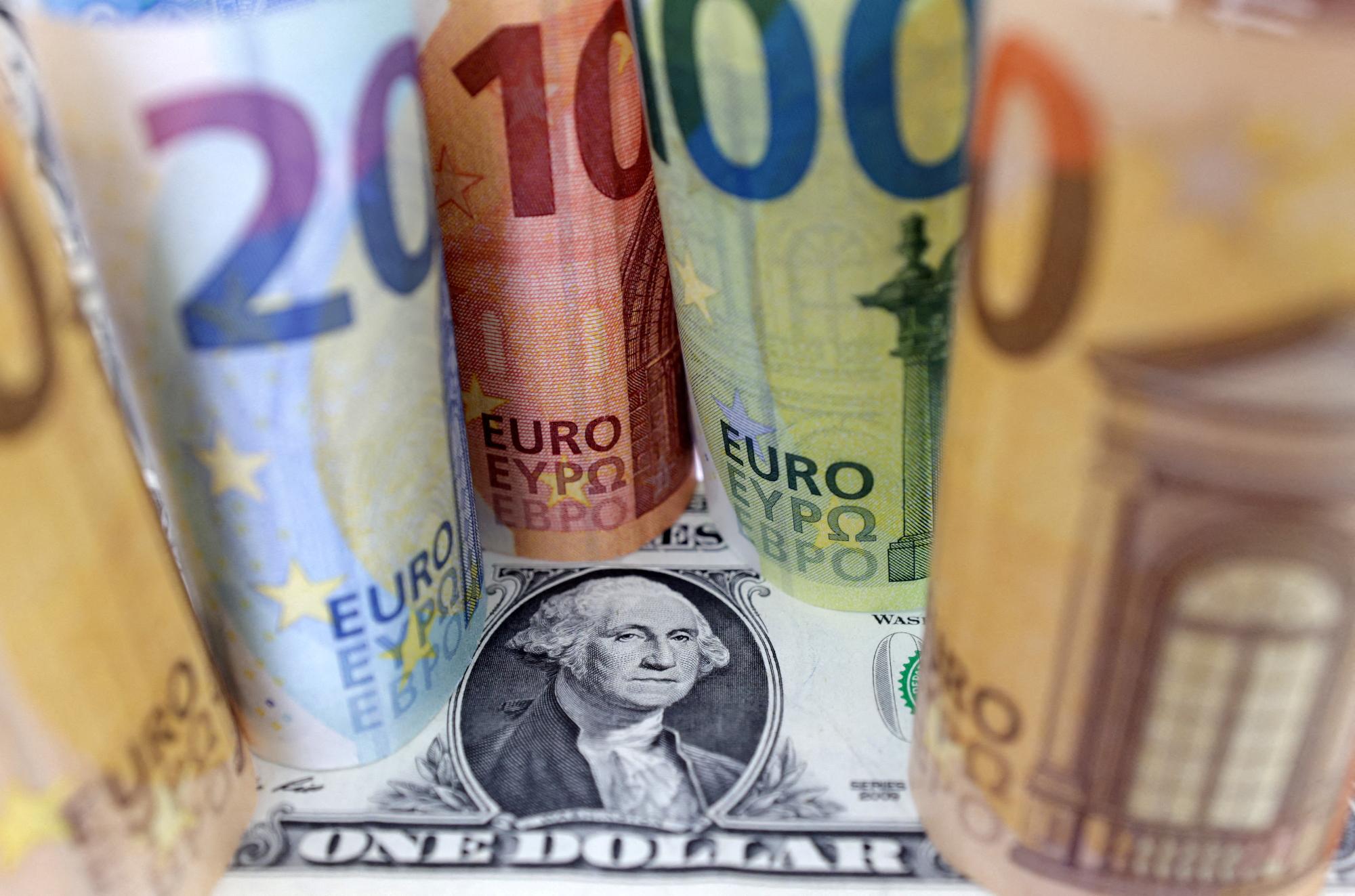
LONDON/BUENOS AIRES, Dec 13 (Reuters) - Argentina's government allowed the peso currency to plunge over 50% to 801 per dollar on Wednesday as markets cautiously welcomed the first details of President Javier Milei's plans to shock Argentina's beleaguered economy back on track. The libertarian president's administration swept to office with promises of drastic economic reforms to tackle negative net foreign currency reserves, entrenched capital controls, inflation racing towards 200% and years of economic stagnation. The rapid devaluation is part a raft of measures announced late on Tuesday by new Economy Minister Luis Caputo, which also include slashing energy subsidies, cutting down the size of government and halting public works tenders in an attempt to cut the deficit to zero. "The news is positive," said Argentina expert Bruno Gennari at KNG Securities. "It is a massive fiscal effort, with 3 ppts of GDP of spending cuts and 2.2% of additional revenues." International sovereign dollar bonds gained more than 2 cents to trade between 35.7-41.25 cents on the dollar, many at their highest level since 2021. On average bonds were up 3%. U.S.-listed shares of Argentine firms were mixed in early trading, with state oil firm YPF up 1.3%, while financials such as Grupo Supervielle and Grupo Financiero Galicia slid 2.7% and 1.7% respectively. "Non-deliverable" FX forwards moved sharply, showing bets that the peso's value would continue to dive. One-year forwards hit a level of 1,687 . Analyst Salvador Vitelli said the devaluation was "a little more than what the market expected," and a long way from the 2002 exit from convertibility, before which the peso had been one-to-one with the dollar for a decade. The black market peso - a popular benchmark for the currency's true value after years of capital controls that tightly limit access to official exchange markets - dropped around 7% to 1,150 per dollar. However, the gap with the official rate narrowed sharply to 44% from 191% on Tuesday. Argentina has artificially controlled the peso since 2019, creating a wide gap between the black-market rate and the official exchange rate, which was at 366 per dollar before Caputo's announcement that it would move to 800, with further plans for a monthly 2% devaluation. 'TOUGH PILL TO SWALLOW' The IMF, which had previously hardened its view on the state of its $44 billion program with Argentina, welcomed the "bold" changes that it said could help stabilize the economy and spur growth. Jimena Blanco, chief analyst with Verisk Maplecroft, said the government was trying to temper an otherwise guaranteed crash-landing. "He promised a very tough pill to swallow and he's delivering that pill," she said. "The question is how long will popular patience last in terms of waiting for the economic situation to change." In a note, Barclays said the "governability" of the reforms would be the key challenge, as they could sharply accelerate inflation and spark a recession. The central bank on Wednesday said it would hold interest rates at 133% and put the peso on a 2% monthly crawling peg devaluation path. Caputo also unveiled a 2.9% of GDP cut to government spending, with nearly 1 percentage point of it coming from cuts to energy and transport subsidies, and outlined some new taxes. "This government has not been left with a patient with a toothache. We have found a patient in intensive care on the verge of dying," presidential spokesman Manuel Adorni told a press conference on Wednesday. "We are going to do everything we can not only to bring down the fever, but to save him from the disease that is killing him." https://www.reuters.com/markets/markets-greet-argentinas-tough-pill-fix-economy-with-cautious-optimism-2023-12-13/

2023-12-13 10:47
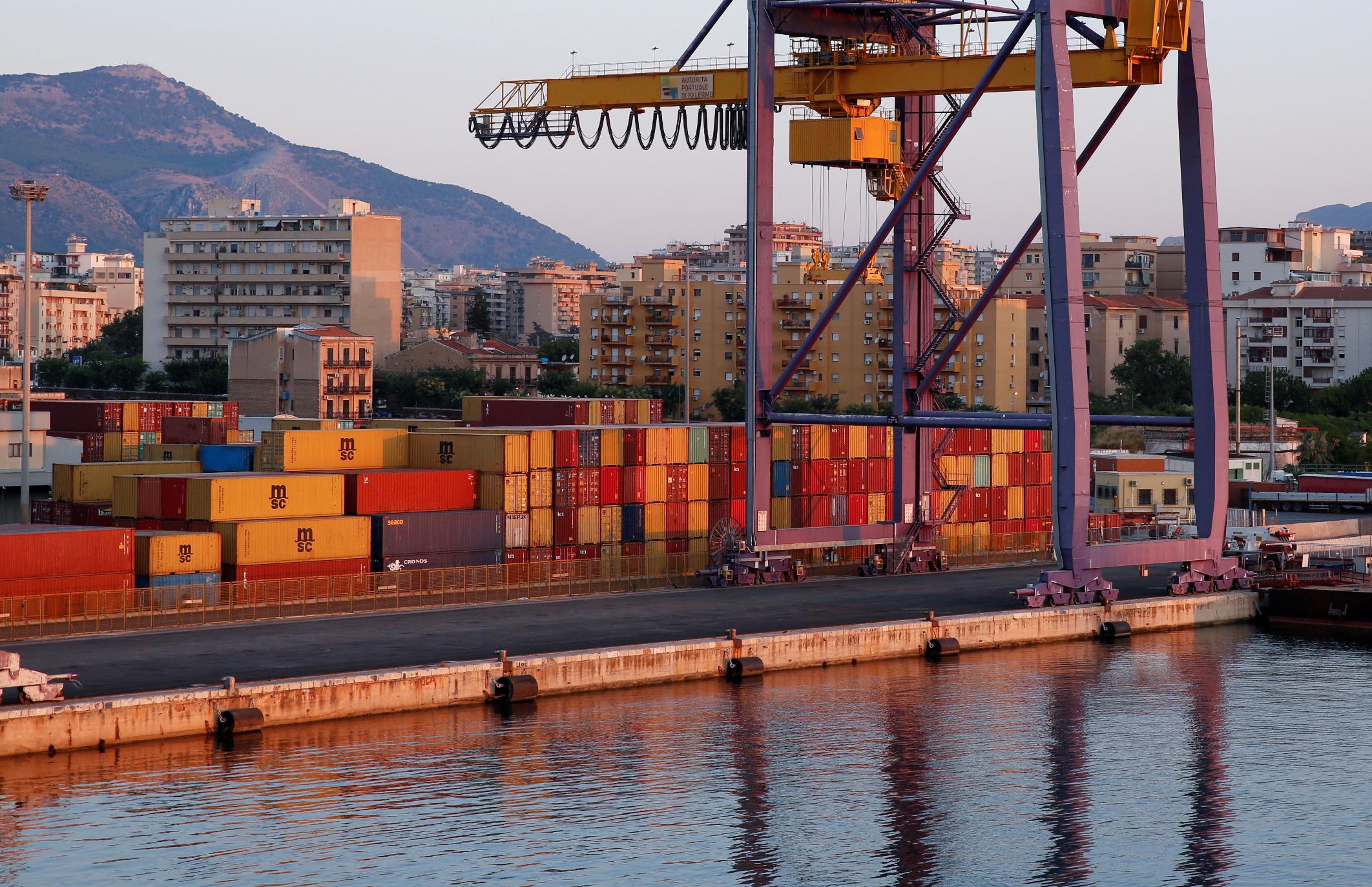
SAO PAULO, Dec 13 (Reuters) - Italy's exports to Latin America's largest economies are expected to grow by about 5% in 2024 even as it pushes for a landmark European Union trade pact with several South American countries that could turbocharge trade growth, according to Italian export credit agency SACE. Italian companies' shipments to Brazil are slated to grow 4.5% in 2024 from the previous year to an all-time high of 5.3 billion euros ($5.38 billion), while exports to Mexico would jump 5.5% to 6.4 billion euros, multiple SACE documents shared with Reuters showed. The agency believes a re-industrialization push by Brazil will represent a chance for firms to sell it more machinery after an export slump in the last decade, while environmental-friendly initiatives related to the energy transition are also seen as an opportunity. Export growth could be more accentuated if the European Union and the Mercosur bloc of Brazil, Argentina, Paraguay and Uruguay finalize their long awaited trade agreement. Italy and Germany are among major EU economies to have voiced support for the deal, while France is against it. "It would be obviously very good," SACE's Americas head Pauline Sebok told Reuters, noting companies often complain about the tax barriers they face in Brazil, which the agency describes as "one of the champions of trade protectionism." Machinery represents the bulk of Italian exports to Brazil but lost some ground in the last decade due to a slowdown in Brazil’s industrial production. That also hurt trade, with Italian exports to Brazil - its second-largest trade partner in the Americas behind the U.S. - only recovering last year to 2013 levels before Brazil's economic crisis. But Brazil's seventh-largest goods supplier now thinks the South American country's ambition to re-industrialize and be a leader in the energy transition will help the EU member's exports grow an average of 3.6% in 2025 and 2026, SACE said. Brazilian President Luiz Inacio Lula da Silva's government has pledged to boost industrialization by incentivizing "green" projects including flex-fuel and electric vehicles, renewable power and biofuels, although factory output remained roughly stagnant this year. SACE, which offers credit insurance aimed at boosting the country's exports, recently signed off on a 300 million-euro "green" loan led by BNP Paribas (BNPP.PA) to Raizen (RAIZ4.SA) as the Brazilian company develops second-generation ethanol plants. "We will be looking at all types of ESG-related investments," Sebok said. "But also traditional equipment for the manufacturing industry, which is part of our core business." Italian companies with major operations in Latin America include power giant Enel (ENEI.MI), telecom operator Telecom Italia (TLIT.MI), Stellantis-onwed (STLAM.MI) automaker Fiat and industrial conglomerate Leonardo (LDOF.MI). In Mexico, according to SACE, the recent boom of industrial investments driven by the so-called "nearshoring" trend of relocating businesses closer to the U.S. would contribute to higher Italian exports, driven by factory machine tools. On top of the 5.5% growth next year, the agency estimates increases of 3.6% in 2025 and 4% in 2026, which would take the value of shipments close to 7 billion euros. https://www.reuters.com/markets/italy-upbeat-latam-exports-mercosur-pact-would-do-more-2023-12-13/
2023-12-13 10:44
CAPE TOWN, Dec 13 (Reuters) - Mozambique has signed an accord with a consortium led by French power giant EDF to build the new $5 billion Mphanda Nkuwa hydropower project, the government said on Wednesday, as it seeks to harness energy from one of Africa's largest rivers. The dam and hydropower plant will be built along the Zambezi River in Tete province to the north of Mozambique, and will generate 1,500 megawatts of power in the first phase. "This is the first concrete step for Mozambique to capitalise on the immense hydropower potential of the Zambezi River and the country's other energy resources," Mozambique Energy Minister Carlos Zacarias said in a statement. The new dam will provide low-cost electricity to the southern African country and help position it as a regional exporter of clean, renewable energy, he added. The dam will link Tete to capital Maputo via a transmission line of around 1,300 kms (800 miles). The first turbine is expected to operate by 2031, officials said during a signing ceremony attended by senior French and Mozambican government officials, including President Filipe Nyusi. Mozambique's larger Cahora Bassa Dam, also located on the Zambezi river, already supplies neighbouring country South Africa with power as Africa's most industrialised country battles with its worst power outages in living memory. The winning consortium led by EDF consists of TotalEnergies (TTEF.PA) and Sumitomo Corporation (8053.T), and will develop, build and operate the Mphanda Nkuwa hydropower project. The Franco-Japanese consortium is the majority shareholder, with a 70% stake in the venture, while Mozambique's power utility EDM and Hidroeléctrica da Cahora Bassa (HCB) will take the remaining 30%. https://www.reuters.com/world/africa/mozambique-signs-5-bln-hydro-project-accord-with-edf-led-consortium-2023-12-13/