2023-12-13 06:46
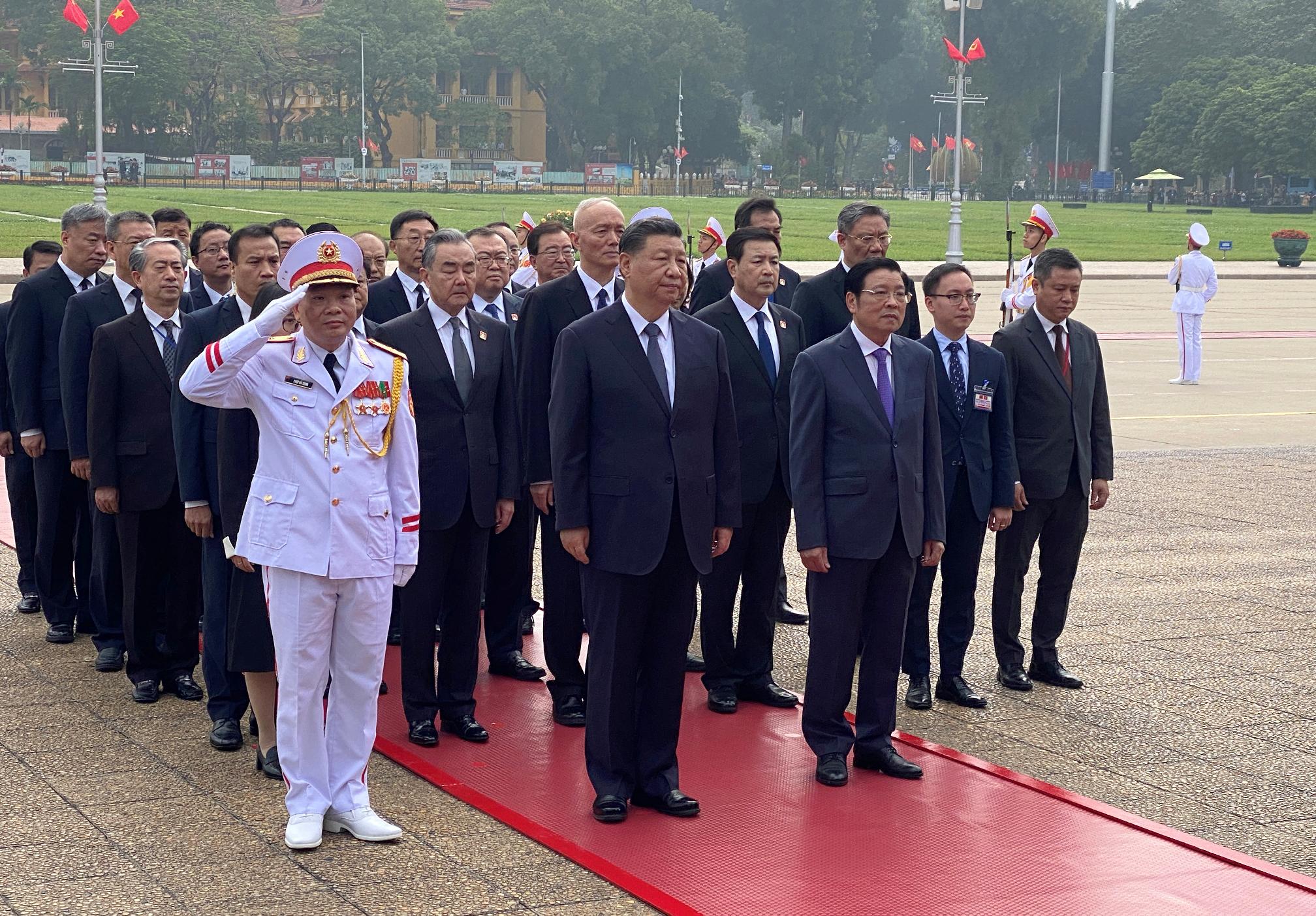
Hanoi, Beijing agree on building 'shared future' Xi's visit is his first this year to an Asian nation Deals reached on rail, telecoms, but not rare earths Both commit to closer security, intelligence ties HANOI, Dec 13 (Reuters) - China and Vietnam agreed to step up co-operation on security matters in their move towards becoming a community with a "shared future", they said on Wednesday, as Chinese President Xi Jinping wrapped up a visit to Hanoi. On Xi's two-day trip, the Communist-ruled neighbours, close in economic areas but at odds over boundaries in the South China Sea, signed dozens of co-operation pacts and agreed to set up more hotlines to defuse any emergencies in the contested waters. In a 16-page joint statement, the countries, which share a millennia-long history of conflict, vowed to work more closely to strengthen defence industry ties and intelligence exchanges. They said their aim was partly to avert the risk of what they called a "colour revolution" promoted by hostile forces, using a term for popular uprisings that have shaken former Communist nations. They "announced the establishment of a strategic China-Vietnam community of 'shared future' to promote the upgrading of China-Vietnam relations," Xi told the chairman of Vietnam's parliament, Vuong Dinh Hue, at a meeting earlier. The decision was a historic milestone, and joining such a community was a "strategic" choice, Prime Minister Pham Minh Chinh said when he met Xi, who was making his first visit this year to an Asian nation. The warm comments followed months of talks on how best to describe ties. In Chinese, the "shared future" phrasing uses a word meaning "destiny", but is translated in Vietnamese and English as the more prosaic "future". Xi has pushed hard for the upgrade in ties, especially after Vietnam elevated the United States in September to the highest tier of its diplomatic ranking, the same as China's. As China and the United States vie for influence in the strategic nation, the pacts mark an achievement for Vietnam's "Bamboo" diplomacy, although analysts and diplomats said the improvement in relations could be more symbolic than real. Xi's visit to Vietnam, which is home to a growing number of Chinese manufacturers, is only his fourth overseas this year after trips to Russia, South Africa and the United States. FOCUS ON DATA, RARE EARTHS The pacts signed cover possible investments in rail links and security, as well as three on telecoms and "digital data co-operation", a list from Vietnamese authorities showed. Details of the deals have not been revealed, but experts and diplomats said digital economy pacts could pave the way for Chinese support to build a 5G network in Vietnam and investments in undersea infrastructure. The deals reflect the interests of both sides, said Hung Nguyen, a specialist in supply chain issues at RMIT University Vietnam, as China has recently built an undersea data centre off its southern island of Hainan, while Vietnam wants to develop its infrastructure. Key targets for investment could be areas such as telecoms infrastructure, satellite ground tracking stations and data centres, he added. But some significant items were missing from the lengthy list of deals. No pact was unveiled on rare earths, for example, although Xi, in an article in a Vietnamese state newspaper, urged broader co-operation on critical minerals. In the joint statement both agreed to seek ways to co-operate on key minerals, however. Vietnam is estimated to have the world's second largest deposits of rare earths after China, with its biggest mines located in an area where the rail network is set to benefit from this week's deals. China dominates the supply of the minerals crucial for electric vehicles and wind turbines, and is usually loath to share its technology. Vietnam has strict rules on the export of rare earth ores, which it wants to process at home, but often lacks the technology to do so. To boost trade and investment, both agreed to set up a zone focusing on farming, infrastructure, energy, digital economy and green development, the statement said. Plans for special economic zones to boost investment had to be shelved after they sparked protests in 2018 by Vietnamese who feared the move could favour Chinese firms. https://www.reuters.com/world/chinas-xi-meets-vietnam-leaders-second-day-state-visit-hanoi-2023-12-13/
2023-12-13 06:36
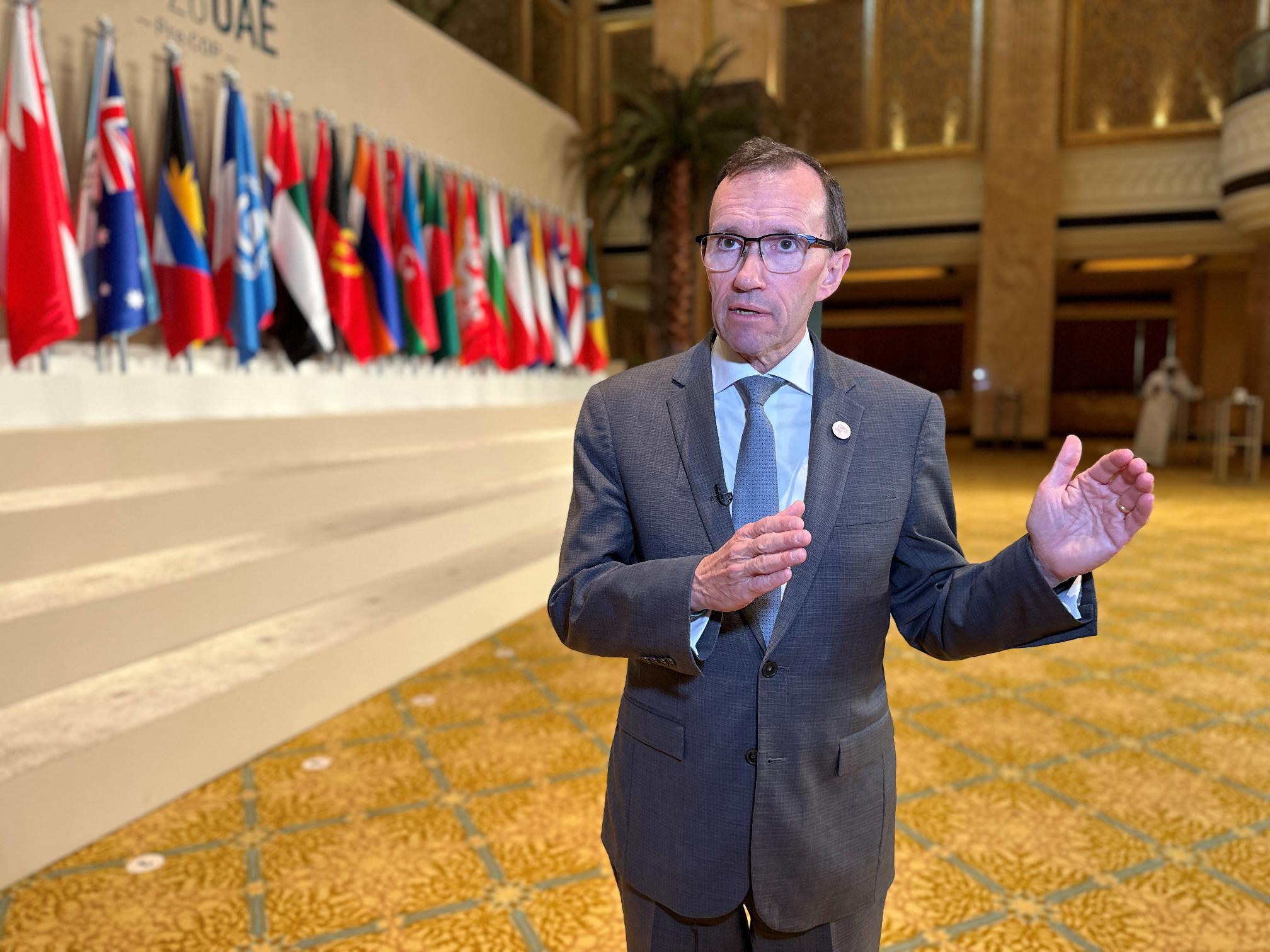
COP28 reaches deal to reduce fossil fuels consumption Summit President Sultan al-Jaber calls accord 'historic' Small island states say deal does not do enough OPEC wanted focus on emissions not fuels DUBAI, Dec 13 (Reuters) - Representatives from nearly 200 countries agreed at the COP28 climate summit on Wednesday to begin reducing global consumption of fossil fuels to avert the worst of climate change, signalling the eventual end of the oil age. The deal struck in Dubai after two weeks of hard-fought negotiations was meant to send a powerful message to investors and policy-makers that the world is united in its desire to break with fossil fuels, something scientists say is the last best hope to stave off climate catastrophe. COP28 President Sultan al-Jaber called the deal "historic" but added that its true success would be in its implementation. "We are what we do, not what we say," he told the crowded plenary at the summit. "We must take the steps necessary to turn this agreement into tangible actions." Several countries cheered the deal for accomplishing something that until now eluded decades of climate talks. "It is the first time that the world unites around such a clear text on the need to transition away from fossil fuels," Norway's Minister of Foreign Affairs Espen Barth Eide said. More than 100 countries had lobbied hard for strong language in the COP28 agreement to "phase out" oil, gas and coal use, but came up against powerful opposition from the Saudi Arabia-led oil producer group OPEC, which said the world can cut emissions without shunning specific fuels. That battle pushed the summit a full day into overtime on Wednesday, and had some observers worried the negotiations would end at an impasse. Members of the Organization of the Petroleum Exporting Countries control nearly 80% of the world's proven oil reserves along with about a third of global oil output, and their governments rely heavily on those revenues. Small climate-vulnerable island states, meanwhile, were among the most vocal supporters of language to phase out fossil fuels and had the backing of major oil and gas producers such as the United States, Canada and Norway, as well as the European Union and scores of other governments. "This is a moment where multilateralism has actually come together and people have taken individual interests and attempted to define the common good," U.S. climate envoy John Kerry said after the deal was adopted. The lead negotiator for the Alliance of Small Island States, Anne Rasmussen, criticised the deal as unambitious. "We have made an incremental advancement over business as usual, when what we really need is an exponential step change in our actions," she said. But she did not formally object to the pact, and her speech drew a standing ovation that lasted nearly two minutes. Danish Minister for Climate and Energy Dan Jorgensen marvelled at the circumstances of the deal: "We're standing here in an oil country, surrounded by oil countries, and we made the decision saying let's move away from oil and gas." EMISSIONS REDUCTION The deal calls for "transitioning away from fossil fuels in energy systems, in a just, orderly and equitable manner ... so as to achieve net zero by 2050 in keeping with the science." To some extent, that language describes what has already begun to happen, with some governments enacting policies in recent years to transition to a greener economy. Europe and the U.S. have retired fleets of coal-fired power plants; global installation of renewable power capacity is at record levels and many countries have policies to encourage sales of electric vehicles. The deal calls on governments to accelerate that - specifically by tripling of renewable energy capacity globally by 2030, speeding up efforts to reduce coal use, and accelerating technologies such as carbon capture and storage that can clean up hard-to-decarbonise industries. A source familiar with Saudi Arabia's position described the deal as "a menu where every country can follow its own pathway," saying it "shows the various tracks that will allow us to maintain the objective of 1.5 (degrees Celsius) in accordance with the characteristics of every nation and in the context of sustainable development." Several other oil producer countries, including the summit host UAE, had advocated for a role for carbon capture in the pact. Critics say the technology remains expensive and unproven at scale, and say it can be used to justify continued drilling. Former U.S. Vice President Al Gore also welcomed the deal, but said: "The influence of petrostates is still evident in the half measures and loopholes included in the final agreement." Now that the deal is struck, countries are responsible for delivering through national policies and investments. China, the world's biggest carbon polluter today, suggested that industrialised countries should lead the way. "Developed countries have unshirkable historical responsibilities for climate change," the country's vice environment minister Zhao Yingmin said after the pact was approved. In the United States, the world's top producer of oil and gas and the biggest historical emitter of greenhouse gases, climate-conscious administrations have struggled to pass laws aligned with their climate vows through a divided Congress. U.S. President Joe Biden scored a major victory last year with passage of the Inflation Reduction Act, which contained hundreds of billions of dollars in clean energy subsidies. Mounting public support for renewables and electric vehicles from Brussels to Beijing in recent years, along with improving technology, sliding costs, and rising private investment have also driven rapid growth in their deployments. Even so, oil, gas, and coal account for about 80% of the world's energy, and projections vary widely about when global demand will finally hit its peak. Rachel Cleetus, policy director at the Union of Concerned Scientists, praised the climate deal, but said it does not commit rich countries to offer more financing to help developing countries pay for the transition away from fossil fuels. "The finance and equity provisions... are seriously insufficient and must be improved in the time ahead in order to ensure low- and middle-income countries can transition to clean energy and close the energy poverty gap," she said. For daily comprehensive coverage on COP28 in your inbox, sign up for the Reuters Sustainable Switch newsletter here https://www.reuters.com/business/environment/countries-push-cop28-deal-fossil-fuels-talks-spill-into-overtime-2023-12-12/

2023-12-13 06:29
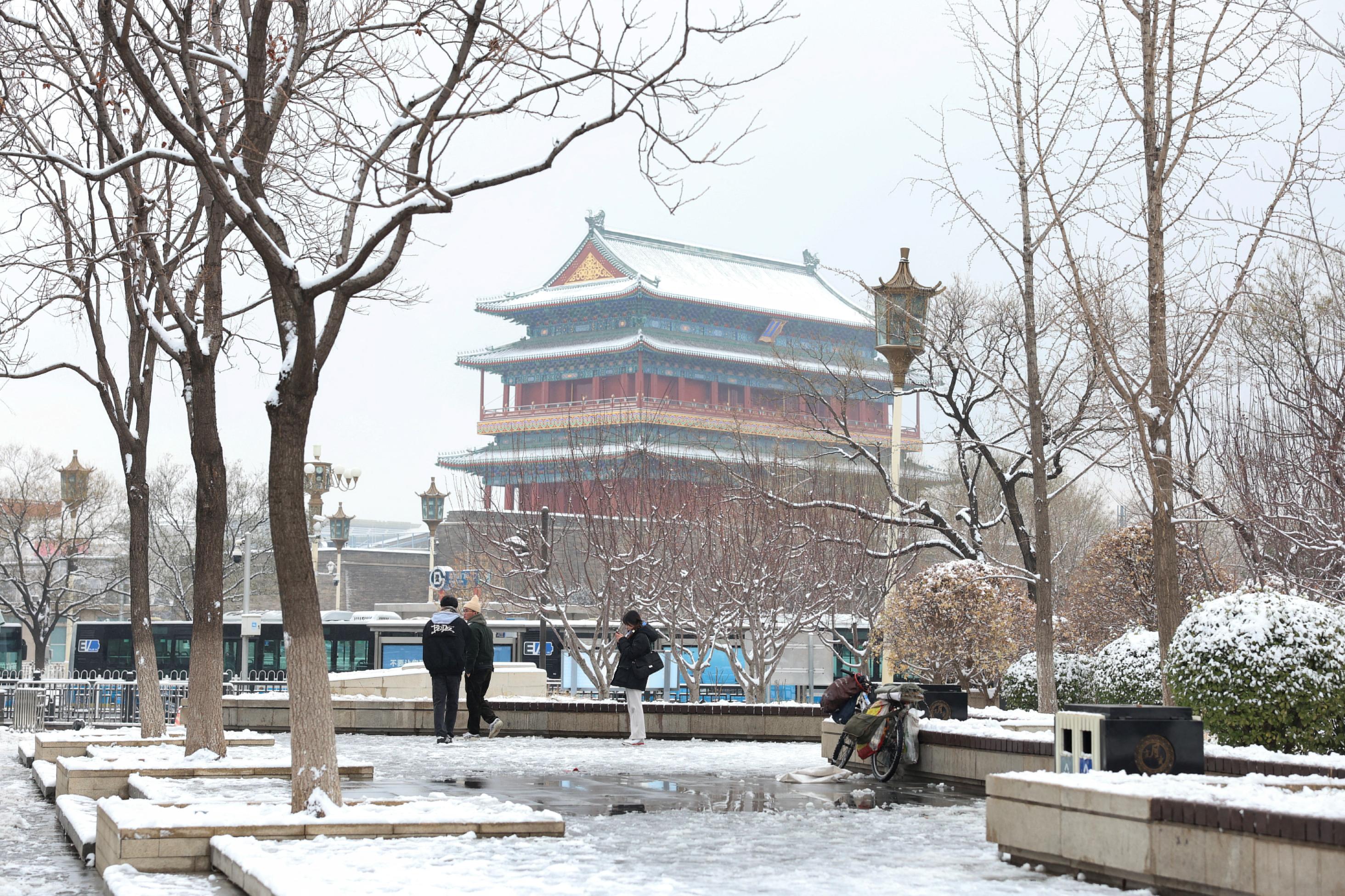
Blizzard and heavy snow forecast in Beijing Wed to Thu China issues first freezing alert since 2013 Cumulative snowfall in some areas by Fri could be highest in 10 yrs BEIJING, Dec 13 (Reuters) - Snow, blizzards and plunging temperatures swept northern China in what could be one of its most severe cold snaps in December, spurring authorities in the capital to halt train services, shut schools and tell people to stay home. A mass of cold air drifted into Beijing from the west, the second cold wave this week. City officials have issued the second-highest alert for blizzards through Thursday, the only such warning yet in the country. "When enjoying the snow, you also need to pay attention to keeping warm and ensuring safe travel," Beijing's observatory said, as snow fell in the city for the second time since Monday. To avert chaos threatened by what was expected to be a "long-lasting" round of snowfall, the city of nearly 22 million shut all schools from Wednesday and moved classes online. Businesses were told to offer employees flexible working conditions and staggered commutes. Scenic spots in the mountainous north and west have been temporarily shut in anticipation of extreme weather. Some railway services with key cities such as the commercial hub of Shanghai, Hangzhou and Wuhan were suspended. Trains that still operated travelled at slower speeds, causing delays. Beijing's Capital Airport continued to operate. Beijing could face temperatures as low as minus 18 degrees Celsius (minus 0.4 degrees Fahrenheit) this weekend, compared to the mid-December average of about minus 8 C (17.6°F). Even Shanghai in the south, now experiencing balmy weather of 20 degrees Celsius (68°F), is forecast to be buffeted by weather as frigid as minus 4 C (24.8°F) on Saturday and Sunday. More than 6,000 rescuers have been put on call for road emergency rescues and more than 5,800 sets of snow-removal equipment and machinery are on standby. About 32,000 metric tons of snow-thawing agent has been readied for use on icy roads and motorways. City officials canvassed volunteers to clear snow and shovel ice, in addition to 73,000 people on duty to tackle these tasks, and ordered indoor heating stepped up. Beijing last experienced such cold weather on Jan. 7, 2021, when the temperature fell to minus 19.6 C (-3.28°F). The city's all-time low of minus 27.4 C (-17.32°F), was recorded on Feb. 22, 1966. This week's cold snap, compared with the autumn-like conditions of a week ago, reflects recent sharp temperature swings. October was one of Beijing's warmest in decades, in a year of weather extremes. While northern China grappled with chillier-than-normal conditions, Hangzhou will officially enter winter only on Dec. 16 - two weeks behind schedule and the latest since records began in 1951. The city, near Shanghai, had to log five straight days of sub-10 C temperatures to declare the arrival of winter. FROZEN RIVERS Temperatures could drop more than 14 C, across swathes of northern, northwestern and southern China, along with parts of Inner Mongolia, Guizhou province and even regions south of the Yangtze River, weather officials have said. Issuing its first alert since 2013 against freezing temperatures, the National Meteorological Centre (NMC) urged local governments to take precautions, along with measures to protect tropical crops and aquatic produce. It has forecast wide rain and snowfall in central and eastern regions until Friday, with as much as 30 mm (1.2 inches) of precipitation in snowstorms in parts of Shaanxi, Henan and Shandong provinces. The cumulative snowfall could be the highest in the corresponding period in a decade, it added. Many rivers have already frozen over in the vast northeastern province of Heilongjiang bordering Russia. Since Dec. 10, daily precipitation has exceeded December "extremes" at nearly 130 weather stations in provinces such as Shanxi, Henan, Shaanxi and Hebei, the NMC said. https://www.reuters.com/world/china/china-braces-blistering-cold-this-week-2023-12-12/
2023-12-13 06:27
DUBAI, Dec 13 (Reuters) - The COP28 climate summit adopted a final deal on Wednesday that for the first time calls on nations to transition away from fossil fuels to avert the worst impacts of climate change. Here are some reactions to the deal: U.S. special climate envoy John Kerry: "I am in awe of the spirit of cooperation that has brought everybody together." Denmark's Minister for Climate and Energy Dan Jorgensen: "We're standing here in an oil country, surrounded by oil countries, and we made the decision saying let's move away from oil and gas." Samoa representative Anne Rasmussen on behalf of the Alliance of Small Island States: "We didn't want to interrupt the standing ovation when we came into the room, but we are a little confused about what happened. It seems that you just get on with the decisions and the small island developing states were not in the room." "We have come to the conclusion that the course correction that is needed has not been secured. We have made an incremental advancement over business as usual, when what we really need is an exponential step change in our actions." Bangladesh climate envoy Saber Hossain Chowdhury: "Adaptation is really a life and death issue ... We cannot compromise on adaptation; we cannot compromise on lives and livelihoods." Canadian Environment Minister Steven Guilbeault: "COP28 reached a historic agreement ... It provides opportunities for near term action and pushes for a secure, affordable, 1.5C compatible and clean transition. The text has breakthrough commitments on renewable energy, energy efficiency, and the transition away from fossil fuels." Senegal's climate minister, Madeleine Diouf, on behalf of the bloc of Least Developed Countries: "It reflects the very lowest possible ambition that we could accept rather than what we know, according to the best available science, is necessary to urgently address the climate crisis." The agreement "highlights the vast gap between developing country needs and the finance available, as well as underscoring rapidly dwindling fiscal space due to the debt crisis. Yet it fails to deliver a credible response to this challenge." China's vice environment minister, Zhao Yingmin: "Developed countries have unshirkable historical responsibilities for climate change." Marshall Islands' head of delegation, John Silk: "I came here from my home in the islands to work with you all to solve the greatest challenge of our generation. I came here to build a canoe together for my country. Instead we have built a canoe with a weak and leaky hull, full of holes. Instead we have put it in the water." Brazil's Environment Minister Marina Silva: "We've been working very seriously in order to reach these results ... After 31 years of debates, and for the first time, we have a result that takes into consideration a trajectory of transitioning away from these fossil fuels." "Obviously this road map is an effort we will have to pursue from now on. Brazil's position is based on the idea that developed countries and developing countries must all be committed to having a common responsibility, however ... developed countries should take that lead." Singapore's environment minister, Grace Fu "I think we have to take the outcome as part of a deal that has been negotiated all round." "Very often in a negotiation, parties are too hunkered down in their respective positions. And words like 'phase out' became a problem. ... The important part is to look at the content and the intentions." Colombia's environment minister, Susana Muhamad: "There were two positive things - first, having this discussion at the heart of the oil production system, and also that it was led by somebody that could speak to those countries and that sector." Former U.S. vice president Al Gore: "The decision at COP28 to finally recognize that the climate crisis is, at its heart, a fossil fuel crisis is an important milestone. But it is also the bare minimum we need and is long overdue. The influence of petrostates is still evident in the half measures and loopholes included in the final agreement." "Whether this is a turning point that truly marks the beginning of the end of the fossil fuel era depends on the actions that come next and the mobilization of finance required to achieve them." A source familiar with Saudi Arabia's position: The deal is "a menu where every country can follow its own pathway" and "shows the various tracks that will allow us to maintain the objective of 1.5 (degrees) in accordance with the characteristics of every nation and in the context of sustainable development." "We must use every opportunity to reduce emissions regardless of the source. We must use all technologies to this effect." https://www.reuters.com/business/environment/reaction-uns-final-proposal-cop28-deal-2023-12-13/
2023-12-13 06:10
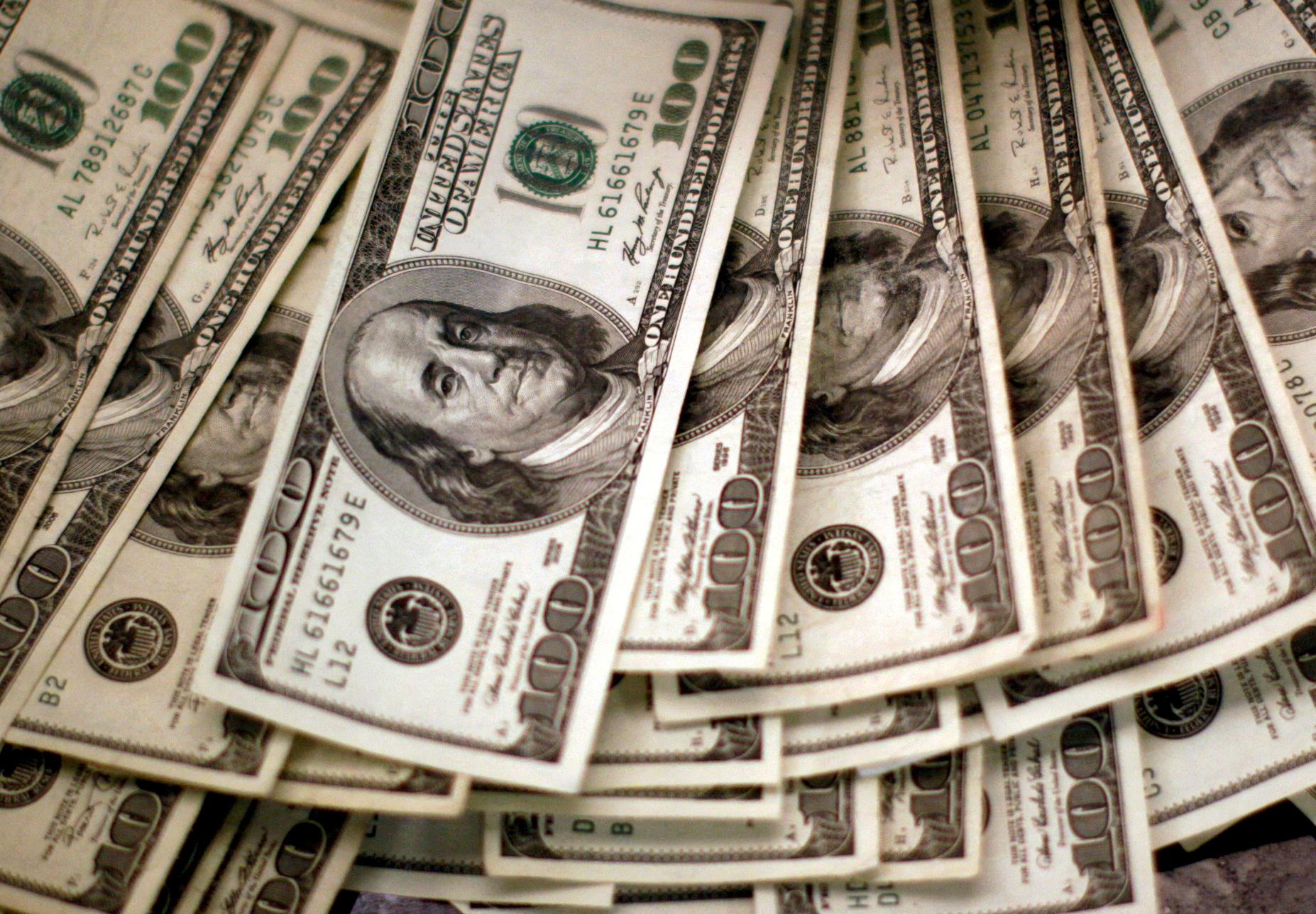
NEW YORK, Dec 13 (Reuters) - The dollar tumbled against the euro and yen on Wednesday after the Federal Reserve signaled in new economic projections that U.S. interest rate increases have come to an end and lower borrowing costs are coming in 2024. A near unanimous 17 of 19 Fed officials project that the policy rate will be lower by the end of 2024, with the median projection showing the rate falling three-quarters of a percentage point from the current 5.25%-5.50% range. No officials see rates higher by the end of next year. The Fed kept interest rates steady for the third meeting in a row, as was widely expected. "The Fed turned decisively dovish this afternoon, waving a red flag in front of market bulls hoping for an easing in policy," said Karl Schamotta, chief market strategist at Corpay in Toronto. Traders are now pricing in a 72% probability of a rate cut in March, up from 49% earlier on Wednesday, and a 94% likelihood by May, according to the CME Group's FedWatch Tool. The U.S. dollar index dropped to 102.89, down 0.83% on the day, and the lowest since Nov. 30. The euro rose 0.80% to $1.0882 and hit $1.08970, the highest since Dec. 1. The single currency is on track for its largest one-day percentage gain since Nov. 14. The greenback fell 1.67% to 143.03 Japanese yen, the lowest since Dec. 8. . Some analysts had expected that Fed Chairman Jerome Powell would push back against market pricing, and indicate that a rate cut would be unlikely in the first half of the year. Powell said the central bank was likely done raising interest rates, but kept open the option to act again if needed, noting that "the economy has surprised forecasters." He also noted that the question of when it will be appropriate to cut rates is coming into view. "The Powell Pause may only last until the May meeting. The critical question is whether the Fed will be cutting because it can or because it has to," said Brian Jacobsen, chief economist at Annex Wealth Management in Menomonee Falls, Wisconsin. With inflation ebbing but still above the Fed's 2% target and a resilient labor market many analysts see the economy remaining solid for months to come. However, the U.S. central bank may also cut rates to maintain the level of restrictive policy it is aiming for. If the Fed holds rates steady as inflation eases the gap between the two rates, known as the real interest rate, can make monetary conditions more restrictive than policymakers intend. With the Fed meeting now concluded, investors will turn to a host of international central bank meetings on Thursday. These include the European Central Bank, Bank of England, Norges Bank and Swiss National Bank. The Norwegian central bank is considered to be the only one that could potentially raise rates. There is also a risk the SNB could dial back its support for the franc in currency markets. The Bank of Japan also meets next week. The yen has been volatile on speculation that the BOJ is drawing close to ending its negative rate policy. But hopes this may occur next Tuesday were dashed after Bloomberg reported this week that BOJ officials see little need to rush to the exit. In cryptocurrencies, bitcoin was last up 2.87% at $42,642. ======================================================== Currency bid prices at 3:20PM (2020 GMT) https://www.reuters.com/markets/currencies/dollar-back-foot-traders-look-fed-cut-timing-clues-2023-12-13/
2023-12-13 06:03
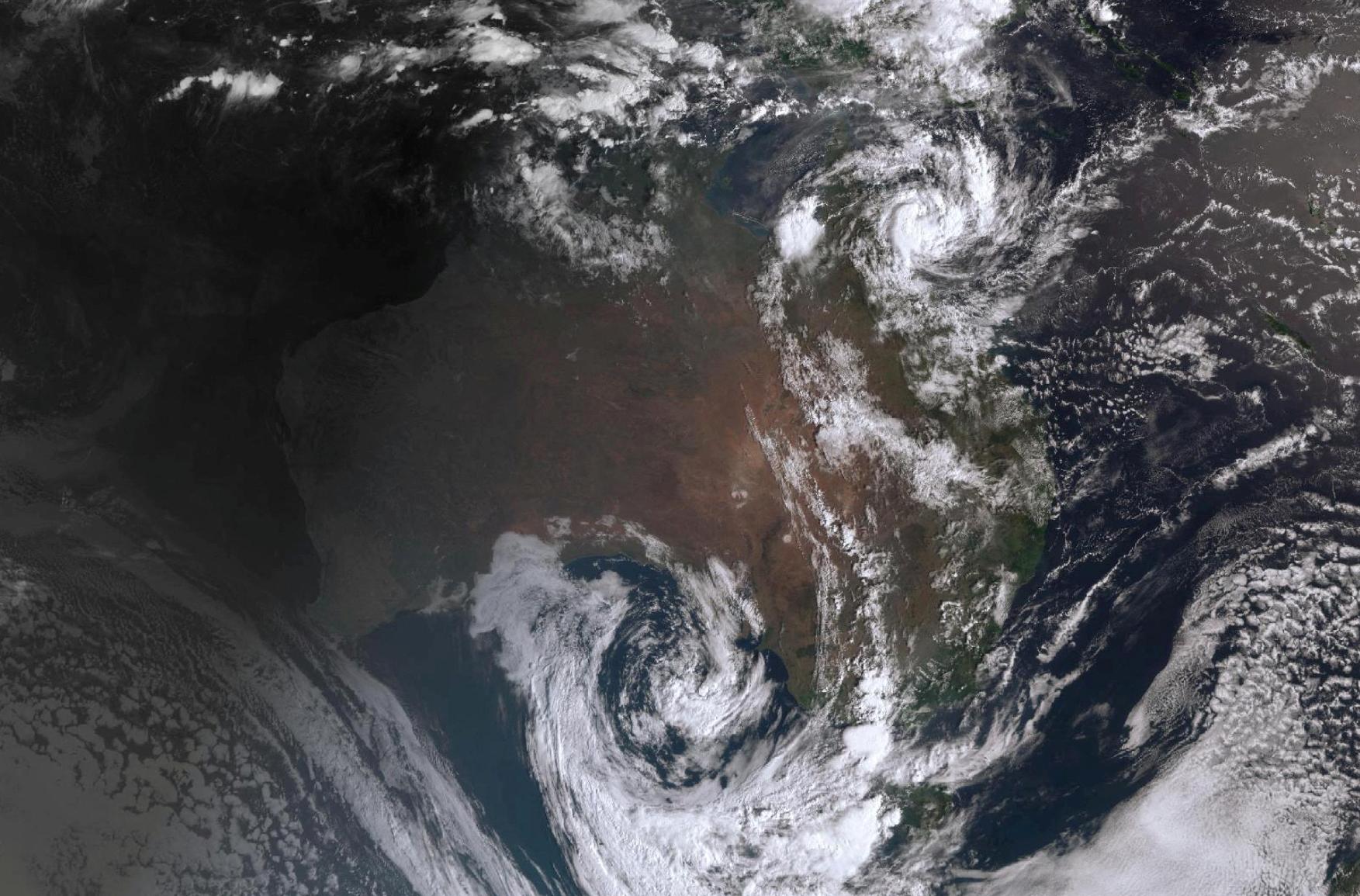
SYDNEY, Dec 13 (Reuters) - Thousands of people in coastal towns along Australia's Great Barrier Reef are without power and sheltering within their homes as the epicentre of a tropical cyclone nears Queensland on Wednesday afternoon. Tropical Cyclone Jasper was slowly making landfall around the town of Wujal Wujal, roughly 115 km (72 miles) northeast of the popular tourist destination of Cairns at 3 p.m. (0500 GMT), bringing wind gusts of up to 140 kph (87 mph), large waves and the risk of life-threatening flash flooding, the bureau of meteorology said on Wednesday. Authorities upgraded the storm to Category 2, the second lowest of five categories, on Wednesday afternoon. The cyclone is pounding hundreds of kilometres of northern coastline popular with tourists looking to visit the Great Barrier Reef. Cairns resident Rob Lattimore told ABC News all the boats had been pulled out of the marina and he, his wife and two daughters were sheltering at home as the winds picked up outside. "The girls are a little apprehensive, they've never seen a cyclone before, but they're in good spirits," he said. The Royal Australian Navy said on Wednesday it had evacuated four bureau of meteorology staff stationed on a remote offshore weather station roughly 480 km offshore as the storm approached over the weekend. Along the coast more than 90 people were in evacuation centres and thousands were without power according to an outage map from provider Ergon Energy. Jasper is expected to weaken as it crosses land although authorities warn there is a moderate chance it could strengthen again next week as it crosses over the Gulf of Carpentaria and heads towards Darwin. Australia is under the influence of the El Nino weather phenomenon this summer, which can provoke extreme weather from wildfires to tropical cyclones and prolonged droughts. In neighbouring New South Wales, authorities warned temperatures could rise above 40 degrees Celsius (104 Fahrenheit) as a heatwave likely to last until Friday swept across the state. https://www.reuters.com/world/asia-pacific/australian-resort-towns-along-great-barrier-reef-brace-cyclone-2023-12-13/