2023-12-12 22:21
MADRID, Dec 12 (Reuters) - Temperatures across Spain smashed records for December as a mass of hot air swept over the Iberian Peninsula on Tuesday, pushing the mercury close to 30 degrees Celsius (86 Fahrenheit) in the south and delaying the start of the ski season. While the Northern Hemisphere gears up for the arrival of winter, Spaniards' hopes of a "white" Christmas are waning after a summer with four heatwaves amidst the hottest year on record, part of a global pattern of rising temperatures that is widely attributed by scientists to human activity. "It's one of the warmest masses of air to have ever overflown Spain at this point in December," Ruben del Campo, a spokesperson for the national weather agency AEMET, said. Del Campo pointed to cities on the sunny Mediterranean coast such as Valencia, which recorded temperatures of at least 27C, two degrees higher than the previous record for the last month of the year. He added that the unseasonable heat, coupled with predictions of sparse rainfall until the end of February, heralded a "not very good" season for winter sports that depend on abundant snow, which once melted is also a crucial water resource for the spring and summer months. The exceptional warmth is likely to end after Wednesday when AEMET forecasts cooler air from higher latitudes will bring temperatures down to more normal values for December. At the popular ski resort of Navacerrada outside Madrid, visitors bemoaned the lack of snow. "It's a terrifying feeling because this should really be covered in snow or frozen over, but instead it's green and lush for this time of the year," Tania, a 32-year-old marine biologist who only gave her first name, told Reuters. Vicente Solsona, a 66-year-old retired university professor from eastern Castellon province, said that Navacerrada should have at least one metre (3.3 feet) of snow on such a date. "We're calmly destroying everything," he added. "The problem is that there's no going back." https://www.reuters.com/business/environment/spain-sees-record-december-temperatures-endangering-ski-season-2023-12-12/

2023-12-12 21:52
Dec 13 (Reuters) - A look at the day ahead in Asian markets. Asian markets will likely tread water on Wednesday ahead of the U.S. Federal Reserve's latest interest rate decision, guidance and economic projections later in the day, and they appear to be up to the task. Stocks rose across the board on Tuesday, including Asian and emerging indexes, while bond yields, the dollar and key measures of volatility fell. This should support risk appetite in Asia on Wednesday as investors await the signals from Washington. The regional economic calendar highlights include Japan's quarterly 'tankan' business sentiment survey, Indian trade, South Korean unemployment, New Zealand current account data and the minutes from the Bank of Thailand's last policy meeting. Japan's manufacturers' business sentiment likely edged higher in the three months to December and service-sector sentiment is also seen firm, supported by upbeat inbound demand, according to a Reuters poll. The closely watched survey comes as the Bank of Japan figures out when and how to move away from decades of ultra-loose policy, end 'yield curve control', and finally raise interest rates. It's a tricky path, and for markets, a volatile one. Japanese bond yields on Tuesday had one of their biggest falls this year, while the yen rose. If the yen has been rising lately, China's yuan is back on the slide, as expectations mount that China will have to inject more stimulus into the flagging economy. Whether that is lower interest rates, lower reserve requirements or fiscal support, it will weigh on the currency, at least initially. Beijing will take steps to boost domestic demand and drive an economic recovery next year, state media said on Tuesday, citing the annual Central Economic Work Conference held from Dec. 11-12. Top leaders gathered at the forum to set economic targets for 2024. They don't have their challenges to seek - the huge property sector is in crisis, local government debt is soaring, growth is flagging, and the economy is flirting with deflation. Hopes for policy stimulus may be weighing on the yuan, but they're lifting stocks - the blue chip CSI 300 share index rose on Tuesday for a third day, its best run since late October and only the second time in six months it is up three days in a row. Asian markets may also draw support on Wednesday from Tuesday's slide in the Wall Street 'fear index', the options-based VIX index of implied volatility on the S&P 500. It fell below 12.00 for the first time since January 2020. It may not be the cleanest gauge of investors' perception of upcoming risk for U.S. stocks and global stocks more broadly, but as long as it languishes at these levels, broader risk appetite should remain fairly well-supported. Here are key developments that could provide more direction to markets on Wednesday: - Bank of Thailand minutes - Japan tankan survey (Q4) - India trade (October) https://www.reuters.com/markets/asia/global-markets-view-asia-pix-2023-12-12/
2023-12-12 20:40
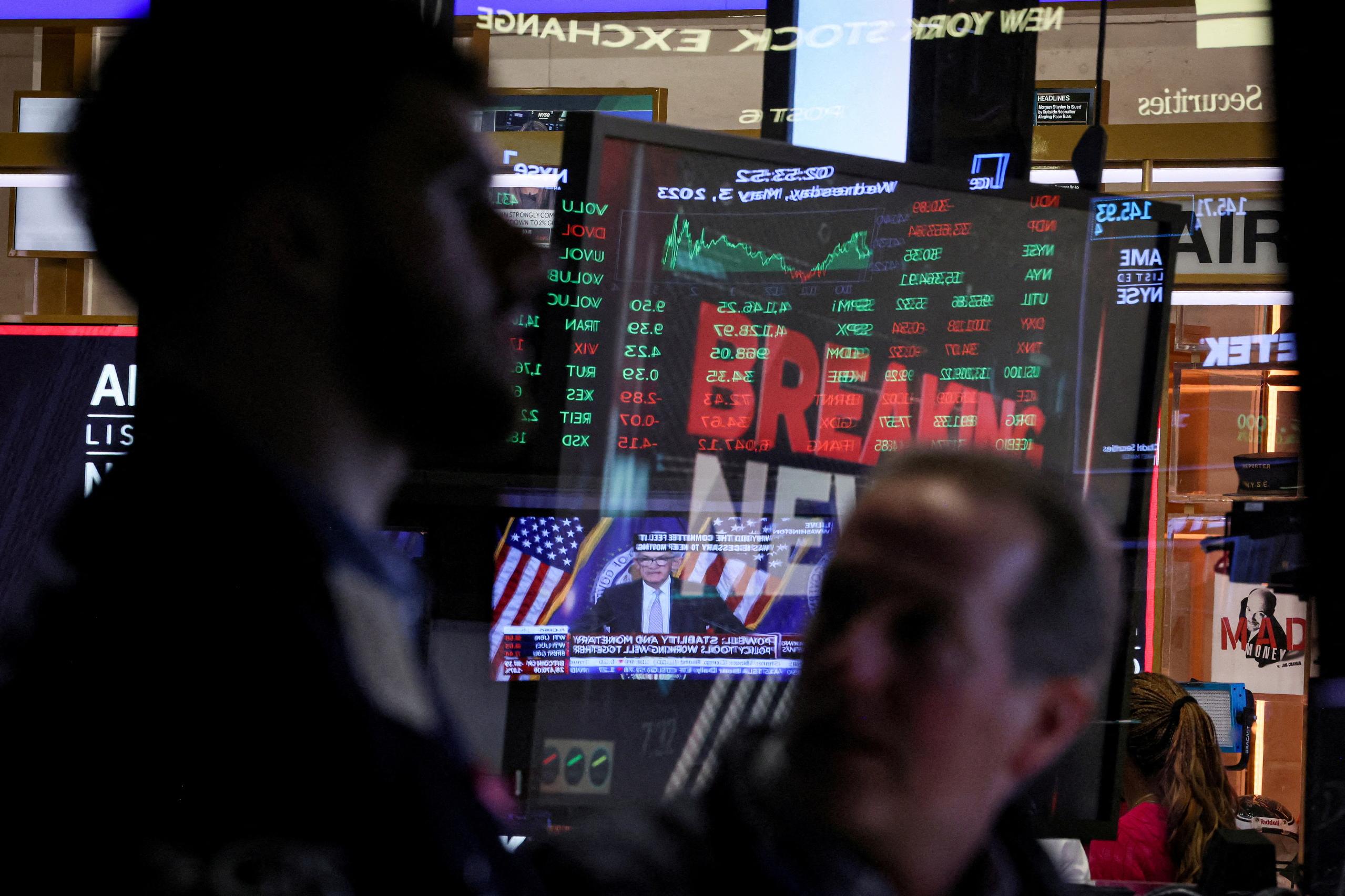
Consumer price index increases 0.1% in November CPI advances 3.1% on year-on-year basis Core CPI rises 0.3%; up 4.0% on year-on-year basis WASHINGTON, Dec 12 (Reuters) - U.S. consumer prices unexpectedly rose in November as a decline in the cost of gasoline was more than offset by increases in rents, further evidence that the Federal Reserve is unlikely to pivot to interest rate cuts early next year. The report from the Labor Department on Tuesday also showed prices for used cars and trucks rebounded last month after five straight monthly decreases, helping to boost underlying inflation. U.S. consumers also paid more for healthcare and motor vehicle insurance. The slightly firmer inflation readings followed data last Friday showing job gains accelerated in November and the unemployment rate fell to 3.7% from nearly a two-year high of 3.9% in October. Officials from the U.S. central bank began a two-day policy meeting on Tuesday. "Ongoing housing price pressures and their outsized influence on inflation overall tell a large part of the story of why calls for early and rapid Fed monetary policy easing should be viewed with significant scrutiny," said Kurt Rankin, senior economist at PNC Financial in Pittsburgh, Pennsylvania. "The Fed will not cut rates until inflation's drivers are well and truly tamed." The consumer price index (CPI) edged up 0.1% last month after being unchanged in October, the Labor Department's Bureau of Labor Statistics said. Gasoline prices decreased 6.0% after dropping 5.0% in the prior month. But natural gas cost more as did electricity. Food prices rose 0.2% after gaining 0.3% in October. Grocery food prices ticked up 0.1% amid rises in the costs of cereals and bakery products as well as fruits and vegetables. Meat, fish and eggs, however, cost less. In the 12 months through November, the CPI increased 3.1% after rising 3.2% in October. Economists polled by Reuters had forecast the CPI would be unchanged on the month and gain 3.1% on a year-on-year basis. The annual increase in consumer prices has slowed from a peak of 9.1% in June 2022. Inflation remains above the Fed's 2% target. Following the data, financial markets continued to push back expectations of a rate cut to May from March, according to CME Group's FedWatch Tool, a process that was set in motion following last week's upbeat news on the labor market. The Fed is expected to leave rates unchanged on Wednesday, with economists confident that its policy tightening campaign is over. The central bank has raised its policy rate by 525 basis points to the current 5.25%-5.50% range since March 2022. "Watch for (Fed Chair Jerome) Powell to indicate the Fed is not yet ready to definitively rule out further hikes and to reiterate the Fed will keep rates higher for longer," said Will Compernolle, a macro strategist at FHN Financial in New York. Stocks on Wall Street were trading higher while the dollar slipped against a basket of currencies. U.S. Treasury prices were mixed. SERVICES STICKY Excluding the volatile food and energy components, the CPI increased 0.3% in November after climbing 0.2% in the prior month. The so-called core CPI was lifted by rents, which increased 0.5% after rising 0.3% in the prior month. Owners' equivalent rent, a measure of the amount homeowners would pay to rent or would earn from renting their property, also rose 0.5% after increasing 0.4% in October. Rental inflation, however, could moderate considerably next year as the rental vacancy rate increased to more than a two-year high in the third quarter, and there is a large stock of apartment buildings in the pipeline. Independent measures also point to slower rental price growth. With the cost of rent marching higher, services inflation is becoming sticky. Services prices shot up 0.5% after rising 0.3% in October. Stripping out rents, services inflation jumped 0.6% after advancing 0.3% in the prior month. Underlying inflation was also lifted by a 1.6% surge in prices of used cars and trucks, which is likely temporary. Wholesale prices for used motor vehicles briefly rose amid worries about the impact of the 1-1/2-month United Auto Workers strike that began in September and ended in late October. Healthcare costs accelerated 0.6% after climbing 0.3% in October, boosted by increases in the cost of physicians' services and prescription medication. Health insurance costs increased 1.1% after recent changes to the methodology the government uses to calculate prices. Consumers, however, got relief from cheaper apparel, with prices declining 1.3%, likely the result of deep holiday discounting. Prices for household furnishings and operations fell, as did those of new motor vehicles. That contributed to the continuation of goods price deflation. Goods prices tumbled 0.7% after declining 0.4% in October. Core goods prices dropped 0.3% after dipping 0.1% in the prior month. Communication, recreation and airline fares were cheaper. The core CPI increased 4.0% on a year-on-year basis in November after advancing by the same margin in October. Shelter costs, which advanced 6.5%, accounted for nearly 70% of the year-on-year rise in the core CPI. Despite some firmer details in the CPI, economists were heartened by the overall trend in inflation and expected cooler readings next year. High inflation has contributed to a sharp drop in President Joe Biden's approval ratings and threatens his reelection prospects in 2024. But consumers' inflation views are improving. A report on Monday from the New York Fed showed consumers' inflation expectations softened considerably in November. That was reinforced by a survey from the University of Michigan last week showing near-term inflation expectations dropped sharply in December. The National Federation of Independent Business reported on Tuesday that the share of small business owners raising prices fell in November. But the share planning to increase compensation rose to the highest level in nearly two years, a function of persistent labor shortages. "While we are still encouraged that inflation will be significantly lower by the end of the coming year, the data is still telling us that the path in getting there might not be as smooth as the market seems to be anticipating," said Richard de Chazal, macro analyst at William Blair in London. https://www.reuters.com/markets/us/us-consumer-prices-unexpectedly-rise-november-2023-12-12/

2023-12-12 20:06
MADRID, Dec 12 (Reuters) - Spanish police in the northwestern port of Vigo seized 7.5 tonnes of cocaine from South America hidden inside frozen tuna fish due to be distributed across Europe, it said on Tuesday. It was the biggest drugs bust by volume in the history of Galicia, the Atlantic region whose rough coastline - Spain's longest - has been used to smuggle drugs for decades, police said. In a second operation, police also found 3.5 tonnes of cocaine hidden in shipping containers in the Eastern port of Valencia. A total of 20 people belonging to two organisations of Balkan origin have been arrested, police said, in what they described as a "major blow" to one Europe's most powerful distribution networks. An import company was set up by the smuggling network to trade frozen fish and seafood internationally as well as investing in real estate, police said. It said that during months of surveillance, its officers determined that the firm was covering up its involvement in drug smuggling by sending a voluminous flow of containers by sea from a variety of companies at origin with the Iberian Peninsula always as the destination. https://www.reuters.com/world/europe/spanish-police-seize-75-tonnes-cocaine-hidden-frozen-tuna-fish-2023-12-12/

2023-12-12 20:05
NEW YORK, Dec 12 (Reuters) - Dealers squaring their books ahead of an options expiration that is set to be the largest on record for S&P 500-linked derivatives may be helping to tamp down swings in U.S. stocks, market participants said. Some $5 trillion in U.S. stock options are set to expire on Friday, 80% in S&P 500-linked contracts - the largest such expiration in at least 20 years - according to Asym500 MRA Institutional, a unit of derivatives strategy and execution firm Macro Risk Advisors. While such events can exacerbate volatility, strategists say market participants’ behavior ahead of the upcoming expiration has been muting stock gyrations and may be one reason equities have traded in a tight range over the last few weeks. The S&P 500 (.SPX) is up 21% this year, following a nearly 13% rally from its October lows. More recently, however, market moves have been subdued. The benchmark index has not logged a greater than 1% move in either direction for 19 straight sessions, the longest such streak since early August. At the same time, the Cboe Volatility Index (.VIX) stands at 12.07, a near 4-year low. Another example of the market's sluggish trading can be found in the 10-day realized volatility for the S&P 500, which is how much the index has swung over the last 10 sessions. That measure stands at 6.8%, after touching a low of 4.5% in late November. By comparison, it stood as high as 22.5% in March, when a regional banking crisis rocked markets. The positioning of options dealers who act as intermediaries between buyers and sellers of derivatives has been one factor in keeping stock swings in check. Options trading volume is on pace for a record year with average daily volume of 44 million contracts, according to data from clearing house OCC. That volume has been boosted in part by the popularity of exchange-traded funds (ETFs) that sell options to generate income that have doubled in size in 2023 and now control about $60 billion, according to a Nomura analysis. Robust options selling activity by these ETFs has left dealers loaded with options contracts going into the last expiration of the year. In market parlance, the dealers are net long "gamma," and must continuously sell stock futures when equities rally and buy futures when markets sell off to keep their position neutral. With the huge amount of options set to expire, that buying and selling has had a knock-on effect of keeping stocks in a tighter trading range, market participants said. The dealers' positioning "is more than likely to arrest any deeper selloff between now and year-end," Nomura strategist Charlie McElligott said in a note on Tuesday. Market participants have pinned the muted stock moves on other factors as well, including volatility targeting funds and commodity trading advisers, as well as the VIX's historical tendency to stay subdued once it hits the bottom of its trading range. The lull in volatility could extend to Wednesday's Federal Reserve meeting. While the central bank is expected to leave rates unchanged, investors are keen for hints on whether policymakers are pivoting towards cutting rates sooner, an expectation that has fueled the rally in stocks this quarter. Expiration is likely to loosen the options market's vice-like grip on stocks, said Brent Kochuba, founder of options analytic service SpotGamma. Markets faced a similar situation two years ago, when a similarly large options expiration reined in volatility for part of the fourth quarter, only to give way to a 3% rally in the last two weeks of the year following the December expiration, he said. "All that positive gamma is really crunching the market," Kochuba said. "The lid has been kept on volatility." https://www.reuters.com/markets/us/why-are-us-stocks-sluggish-blame-record-5-trillion-options-expiration-2023-12-12/

2023-12-12 19:23
GENEVA, Dec 11 (Reuters) - About a quarter of all freshwater fish species are at risk of extinction due to threats from climate change and pollution, the latest Red List of Threatened Species showed on Monday. One of the main threats is the havoc climate change is wreaking on water cycles, such as falling water levels and rising sea levels causing seawater to move up rivers, according to the International Union for Conservation of Nature (IUCN), which compiles the list several times a year. In its first exhaustive analysis of freshwater fish, IUCN said that over 3,000 species out of nearly 15,000 were at risk. Also at risk is Atlantic Salmon, which swims in both freshwater and saltwater. It slid down a category from 'Least Concern' to 'Near Threatened' on evidence its global population fell by 23% between 2006 and 2020, IUCN said. It cited mortality due to salmon lice from farms as well as the rise of invasive species as some of the factors. "Ensuring freshwater ecosystems are well-managed, remain free-flowing with sufficient water, and good water quality is essential to stop species declines and maintain food security, livelihoods and economies in a climate-resilient world," said Kathy Hughes, co-chair of the IUCN Species Survival Commission Freshwater Fish Specialist Group. Another fish now in danger is the 'Large-toothed Robber' found in Kenya in the world's largest desert lake, Lake Turkana. The species has fallen two categories to 'Vulnerable' due partly to habitat dehydration due to climate change as well as depleted water flows caused by damming, IUCN said. On a positive note, the Scimitar Oryx is no longer extinct in the wild thanks to a successful reintroduction project in Chad where hundreds of calves have been born, IUCN said. https://www.reuters.com/business/environment/quarter-freshwater-fish-risk-extinction-study-2023-12-11/