2023-12-12 19:15
ORLANDO, Florida, Dec 12 (Reuters) - It is that time of year when lists of quirky, semi-serious market forecasts of unpredictable "Black Swan" events and surprises are compiled, but perhaps the biggest tail risk for investors is reality itself. Who would have said at the end of 2019 that a once-in-a-century global pandemic would hit the world the following year, kill millions of people, shut down the global economy and yet stocks would end the year 15% higher? And who would have said oil prices would turn negative for the first time in history, with a barrel of Brent crude for a brief moment in April 2020 'costing' minus $37.00? These are extreme events, but they happened. Are they any more outlandish than the surprises and outrageous predictions suggested by Saxo Bank, Standard Chartered and others? Before COVID and pre-2008, during the 'Great Moderation' years of low inflation and macro volatility, investors might have looked at these wildcard scenarios more closely to get a better sense of the potential tail risks in the year ahead. But reality has proven to be stranger than fiction, which blunts the shock value of these scenarios. The far-fetched calls are now no more extreme than what has actually happened, and the surprises that were at the more realistic end of the spectrum to begin with are even less surprising. That said, many key consensus macro and market forecasts since the pandemic have turned out to be way off beam - in no particular order: the U.S. economy, the Federal Reserve, 'year of the bond', inflation, China, 'higher for longer' interest rates and most markets' and economies' ability to withstand them. So surprises do happen. And since the pandemic, links between economics, policy and markets that have for decades established the models and rules of thumb that investors rely on are now being questioned. Familiar anchors are maybe a little less secure than they once were, leaving investors more open to being sideswiped by events. PUSHING THE BOUNDARIES Analysts at Saxo Bank have been publishing their annual 'Outrageous Predictions' for many years, "a series of unlikely but underappreciated events which, if they were to occur, would send shockwaves across the financial markets." Of their eight Outrageous Predictions for next year, their Japan call is perhaps the least far-fetched - the extraordinary stimulus finally sparks a growth boom, the Bank of Japan abandons yield curve control, huge repatriation flows suck the life out of world bond markets, and dollar/yen slides below 130. Analysts at Standard Chartered go further and speculate the dollar could go below 120 yen. Even then, would a dollar decline of around 18%, in a world where the BOJ is raising rates and the Fed is easing, really be that outlandish? Another of Standard Chartered's more plausible surprises next year is the Fed being forced into a 25 basis point rate hike because inflation accelerates. Inflation is still above the Fed's 2% target, so why wouldn't policymakers act if it picked up again? Morgan Stanley's emerging markets team, meanwhile, posit that Argentina could be the best-performing emerging market in the world if the domestic and international stars align for newly-elected hard-right, libertarian President Javier Milei. Could the country's battered bonds return 100%? The scenarios below are not official forecasts, and it may be that not one pans out. But as Saxo says, at the very least they are a reminder for investors "to consider all potential outcomes, including those that seem far-fetched ... a deliberate effort to push the boundaries of market participants' imaginations and prepare them for any eventuality." SAXO: - With oil at $150, Saudis buy Champions League franchise - World hit by major health crisis as obesity drugs make people stop exercising - US heralds the end of capitalism with tax-free government bonds - Generative AI deepfake triggers a national security crisis - Deficit countries form 'Rome Club' to negotiate trade terms - Robert F. Kennedy Jr. wins the 2024 U.S. presidential election - Japan's 'lucky 7%' GDP growth rate forces BOJ to abandon yield curve control - Luxury plunges as EU goes Robin Hood, introducing wealth tax STANDARD CHARTERED: - Brent crude oil falls to $40/bbl on recession fears - USD/JPY falls below 120 on Bank of Japan rate hikes and repatriation flows - The Fed hikes rates by 25 bps in Q1 on resurgent inflation - S&P 500 falls 20% on a string of profit warnings from large cap tech - USD/CNH falls to 6.50 on a big-bang stimulus program from China - Emerging markets stage the best rally in over 10 years - Gold falls 20% as the Fed shocks markets with an additional rate hike - Joe Biden steps down as U.S. president before the election; Donald Trump wins MORGAN STANLEY (EMERGING MARKETS TEAM) - EM sovereign credit returns 0% in 2024 - The year of local over sovereign debt - EM inflows return in size - Egypt restructures its debt - Copper production in Panama - Argentina bonds return 100% - Saudi Arabia reverses all oil supply cuts - Colombian peso outperforms EM FX peers again - China's policy pivot (The opinions expressed here are those of the author, a columnist for Reuters.) https://www.reuters.com/markets/market-reality-can-be-more-outlandish-than-wildcard-forecasts-mcgeever-2023-12-12/

2023-12-12 19:10
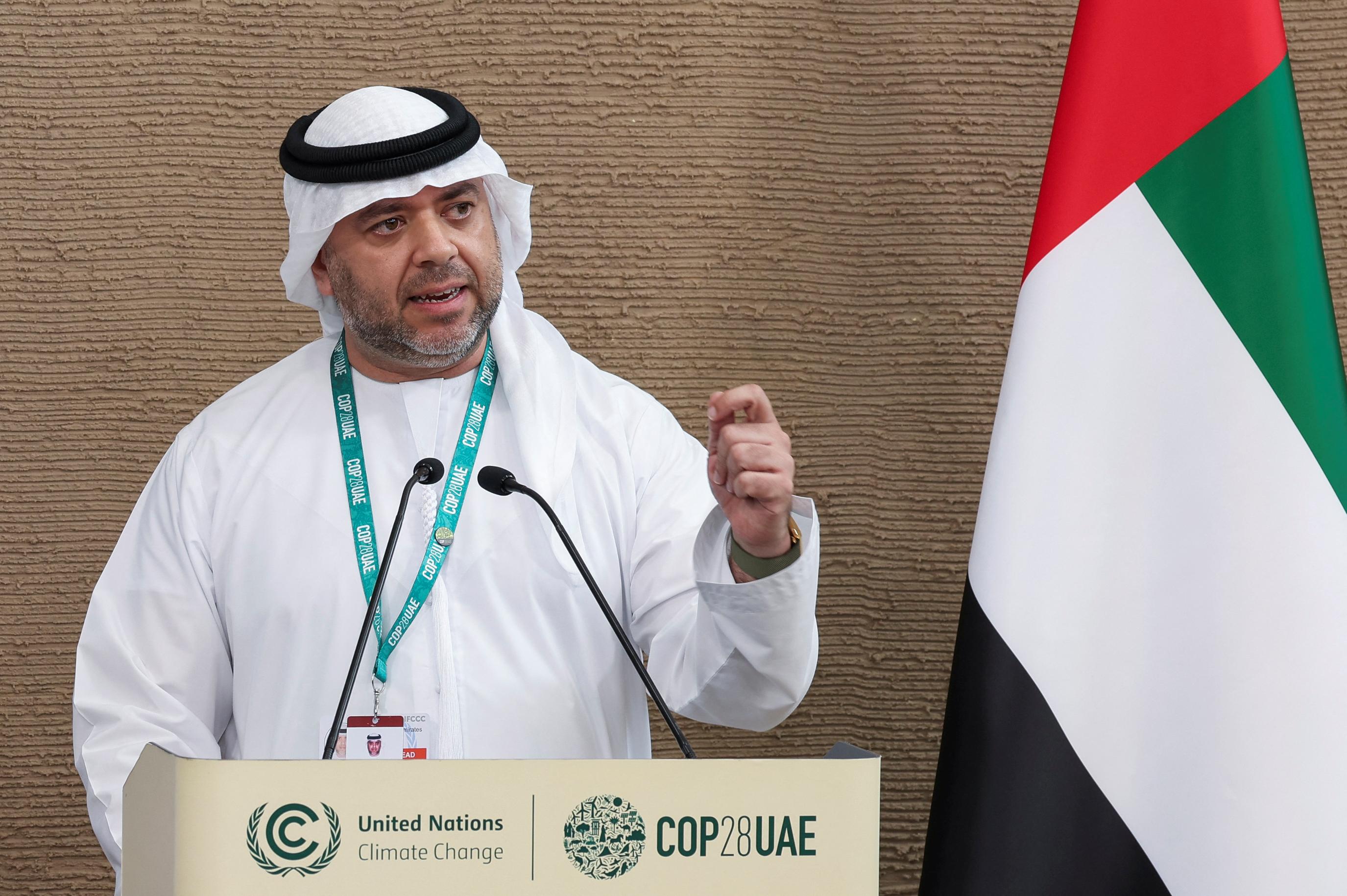
COP28 climate summit runs into overtime New draft text of final deal expected on Wednesday COP28 host UAE says draft aimed to reveal 'red lines' DUBAI, Dec 12 (Reuters) - The COP28 climate talks went into overtime on Tuesday as countries engaged in shuttle diplomacy to bridge deep international divisions over how to deal with fossil fuels in the summit's final text. Where the conference lands on the issue will send a powerful message to global investors and markets about the ambition of governments around the world to end the use of oil, or preserve a future place for it. Many nations had criticised a deal draft released on Monday for failing to call for a "phase-out" of fossil fuels, which scientists say are by far the biggest source of the greenhouse gas emissions driving global warming. More than 100 countries ranging from the United States and the EU to tiny island nations had pushed for the language, but came up against strong resistance from members of the OPEC oil producer group and its allies. The United Arab Emirates' COP28 Director General Majid Al Suwaidi said the aim of the Monday text was to draw negotiators from the nearly 200 countries at the Dubai summit to reveal their demands and move the discussion forward. "By releasing our first draft of the text, we got parties to come to us quickly with those red lines," he told reporters. Al Suwaidi said the COP28 presidency was aiming for a "historic" result that included mentioning fossil fuels - but that it was up to countries to agree. Deals at U.N. climate summits must be passed by consensus, at which point individual countries are responsible for delivering the deal through national policies and investments. Germany's Climate Envoy, Jennifer Morgan, said the talks had now entered a "critical, critical phase". "There is a lot of shuttle diplomacy going on," she said on X, formerly known as Twitter, referring to fast-paced meetings between countries to hunt for compromise. U.S. Special Climate Envoy John Kerry popped out of one meeting with representatives from several other delegations late on Tuesday and said he believed the fossil fuel language in the COP28 deal text was getting stronger. "I think there’s progress and moving in the right direction. And you know, we’re going to keep working through the night," he told reporters. A new draft text for a final deal was expected in the early hours of Wednesday, with a potential plenary meeting to finalise a deal later in the day. The draft released on Monday had suggested eight options countries "could" take to cut emissions. One was "reducing both consumption and production of fossil fuels, in a just, orderly and equitable manner so as to achieve net zero by, before, or around 2050". That would be the first time in history that a U.N. climate summit has mentioned reducing use of all fossil fuels. But it would fall short of the "phase-out" of coal, oil and natural gas scientists say must happen soon to avoid climate change escalating. The COP presidency had hoped to wrap the two-week summit up by Tuesday morning, but clashes over the deal text forced negotiations into overtime. COP summits rarely finish on schedule. A COP28 spokesperson said UAE's COP President Sultan Al Jaber would be taking meetings until 2300 GMT as he searched for a compromise deal. 'WORRIED' Sources familiar with the discussions said Al Jaber had faced pressure from Saudi Arabia, de facto leader of the OPEC oil producers' group to which UAE belongs, to drop any mention of fossil fuels. Saudi Arabia's government did not respond to requests for comment on Tuesday. In a Dec. 6 letter seen by Reuters, OPEC Secretary General Haitham Al Ghais urged members to reject any COP28 deal that targeted fossil fuels. Negotiators and observers in the COP28 talks told Reuters that while Saudi Arabia has been the strongest opponent of anti-fossil fuel language in the text, other OPEC and OPEC+ members, including Iran, Iraq and Russia, have also resisted a fossil fuel phase-out deal. "I'm worried ... because it's very obvious that we need more ambition," Denmark's Global Climate Minister Dan Jorgensen told Reuters. "I haven't given up yet of course, we still think this is possible." The Monday draft was criticised as too weak by many participants such as Australia, Canada, Chile, Norway, the European Union and the United States - among the 100-strong group demanding a firm commitment to wean the world off coal, oil and gas. Despite the rapid growth of renewable energy in recent years, oil, gas, and coal still produce about 80% of the world's energy. Some African nations said any deal must require wealthy countries, who have long produced and used fossil fuels, to quit first. "The transition should be premised on differentiated pathways to net zero and fossil fuel phase-down," said Collins Nzovu, Minister of Green Economy for Zambia, which chairs the African Group of countries in U.N. climate talks. "We should also recognise the full right of Africa to exploit its natural resources sustainably," he added. It was unclear if China, the world's top greenhouse gas emitter, supported Monday's draft. Its veteran climate change envoy, Xie Zhenhua, said progress was being made in the talks, but it was "hard to say" whether agreement could be reached by the end of Tuesday. Representatives of small island nations said they would not approve a deal that was a "death warrant" for vulnerable countries hit hardest by rising sea levels. https://www.reuters.com/sustainability/climate-energy/cop28-presidency-wants-historic-mention-fossil-fuels-text-up-nations-2023-12-12/
2023-12-12 19:06
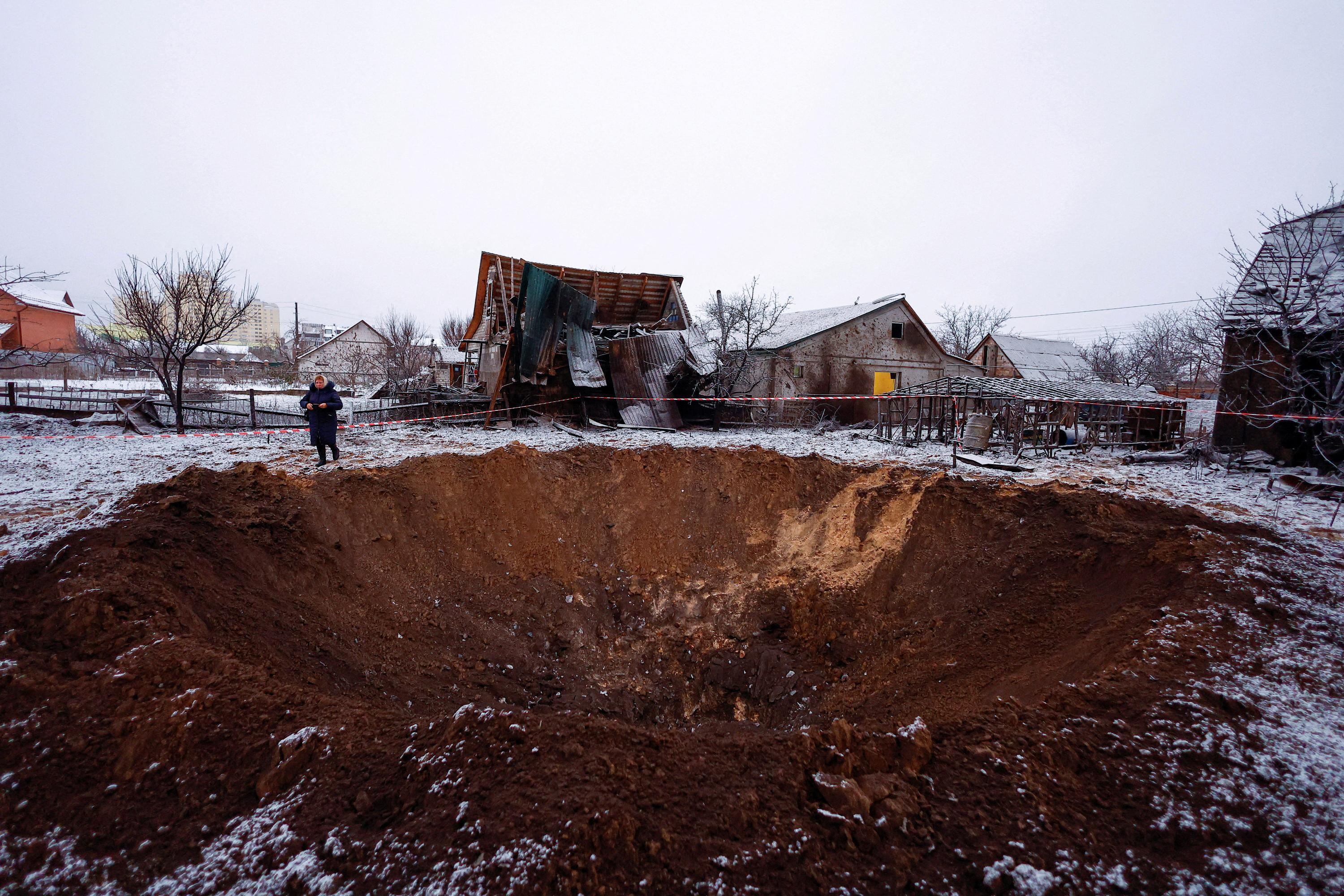
WASHINGTON, Dec 12 (Reuters) - The United States on Tuesday imposed sanctions on hundreds of people and entities, including in China, Turkey and the United Arab Emirates, as it targets Russia's sanctions evasion, future energy capabilities, banks and its metals and mining sector. The U.S. Treasury and State departments targeted more than 250 individuals and entities in Washington's latest action attempting to crack down on Russia and its evasion of sanctions imposed by the U.S. and its allies over the war in Ukraine. "We will continue to use the tools at our disposal to promote accountability for Russia’s crimes in Ukraine and those who finance and support Russia’s war machine," U.S. Secretary of State Antony Blinken said in a statement. The Treasury said it imposed sanctions on a network of four entities and nine people based in China, Russia, Hong Kong and Pakistan over the facilitation and procurement of Chinese-manufactured weapons and technologies to Russia. It said the network sought to circumvent U.S. sanctions and Chinese controls on the export of military-related materials. It also targeted Turkey, United Arab Emirates and China-based companies over the shipment of technology, equipment and inputs, including ball or roller bearings, aircraft parts and X-ray systems. The China-based firms targeted included commercial satellite imagery companies that Treasury said provided high-resolution observation imagery to Russian mercenary firm Wagner. The State Department also targeted Chinese entities in an action against a network it said was involved in procuring microelectronic components for Russian state conglomerate Rostec, which itself is under U.S. sanctions. It said the microelectronics were being used to develop electronic warfare systems. Companies in Russia, Turkey and Hong Kong were also targeted as part of action against the network. Washington has stepped up diplomatic pressure on countries and private companies globally to ensure enforcement of the sanctions it, the European Union and other Western nations have imposed on Moscow over its invasion of Ukraine. Russia's embassy in Washington did not immediately respond to requests for comment. Russia dismisses Western sanctions as illegal, and says they will not impede the development of its economy. Liu Pengyu, spokesperson for the Chinese embassy in Washington, said China regulates military and dual-use exports responsibly and opposes the United States' use of sanctions, which he called "unilateral" and "illegal." "(W)e firmly oppose the U.S. side sanctioning relevant companies under groundless pretext," Liu said in an emailed response to questions about Tuesday's sanctions. UAE's embassy did not immediately respond to a request for comment. Its foreign ministry did not immediately reply to a request outside usual working hours. A Turkish official, speaking on condition of anonymity, told Reuters that while Turkey only imposed sanctions endorsed by the United Nations Security Council and opposed unilateral measures, Ankara took measures to minimize any circumvention of sanctions. "Strict monitoring and prevention of efforts to skirt sanctions through Turkey is an integral part of our non-abidance policy," the official said, and added the Turkish financial and commercial sector dealt primarily with Western markets. "Inevitably, there are evasion attempts by obscure and insignificant entities that are uneducated about or indifferent to sanctions," the person said. "Such entities will unavoidably incur the consequences of unilateral restrictive measures." Turkish authorities are taking regulatory actions if the circumventions amount to a pattern breaching Turkey's policy, the official told Reuters. FUTURE ENERGY The U.S. targeted three companies developing the Ust-Luga liquefied natural gas (LNG) terminal, a facility at a Baltic seaport in northwest Russia to be operated by Gazprom and RusGazDobycha. The yet-to-be-built complex is part of Gazprom's strategy to shift focus to processing and is poised to become Russia's largest gas processing plant, and one of the world's largest in terms of production volumes. The sanctions were put on Russian-based companies Limited Liability Company Northern Technologies, Joint Stock Company Kazan Compressor Machinery Plant, and Limited Liability Company Gazprom Linde Engineering. Washington is seeking to interfere with Russia's future energy production and fuel export capacity. The move came a little over a month after Washington put sanctions on an entity developing another LNG project, Arctic-2 LNG in Siberia. It was not immediately clear how Russia's future LNG exports would be affected. The U.S. is the world's largest LNG exporter. German company Linde (LIN.DE) stopped work at Ust-Luga in 2022 due to Western sanctions. This year Russia has been talking with China to involve Chinese companies in construction of the plant. Gazprom did not immediately reply to a request for comment. The State Department also targeted Russian businessman Vladislav Sviblov and Highland Gold Mining Ltd, a UK-registered company owned and controlled by him that it said is Russia’s seventh-largest gold producer, as well as other companies connected to Sviblov following action Britain took in November. A representative for Sviblov declined to comment. The State Department also designated three shipping companies and three Russian-flagged commercial vessels it said have been used to transfer munitions between North Korea and Russia. North Korea's mission to the United Nations in New York did not immediately reply to a request for comment. Washington also targeted four Russian financial institutions - including Expobank, the proposed buyer of HSBC's Russian business - and dozens of Russia-based entities involved in the import, production, modification and sale of defense-related and industrial technology, including drones. The State Department also listed former telecoms CEO Ivan Tavrin and a network of companies he runs. It said Tavrin "has become one of Russia’s biggest wartime dealmakers since the beginning of Russia’s illegal war against Ukraine." A representative for Kismet, owned by Tavrin, did not immediately respond to a request for comment on the sanctions. New Towers, one of the companies in Tavrin's empire, declined to comment. https://www.reuters.com/world/us/us-issues-sweeping-sanctions-targeting-russia-over-ukraine-war-2023-12-12/
2023-12-12 18:23
NEW YORK, Dec 12 (Reuters) - Bankrupt trucking company Yellow Corp received court approval on Tuesday to sell most of its shipping centers and real estate to multiple buyers for $1.88 billion, ending a bidder's long-shot effort to keep the company intact. U.S. Bankruptcy Judge Craig Goldblatt approved the sale at a court hearing in Wilmington, Delaware, saying that the purchase price was a "tremendous outcome" for the trucking company and its creditors. The sale, which will parcel out 130 of the company's shipping centers to multiple buyers, generated enough cash to pay off the company's $1.2 billion in pre-bankruptcy debt, including $700 million owed on a U.S. Treasury Department COVID-19 pandemic relief loan approved by former President Donald Trump's administration in 2020. Yellow is still seeking buyers for its remaining owned and leased real estate, including 46 shipping terminals, as well as its fleet of trucks. Yellow chose to break up its assets rather than keeping the company intact for an outside buyer, despite pressure from U.S. Senators from both parties who argued that the company should remain intact as a way to save jobs. Sarah Riggs Amico, the executive chair of trucking company Jack Cooper Transport, led a bid to buy Yellow through a new company called Next Century Logistics, and she had urged the U.S. Treasury Department to support that effort by modifying its loan to the company. Amico's bid would not involve any merger with Jack Cooper, which would remain a separate company. Amico said Tuesday that she remained interested in bidding on Yellow's remaining terminals and trucks, which would allow her to re-hire 12,000 to 15,000 of the workers who lost their jobs when Yellow shut down. "We look forward to working with the debtor to save thousands of jobs that don't need to be permanently lost," Amico said. In the sale approved Tuesday, trucking company XPO Inc (XPO.N) was the largest buyer, acquiring 28 shipping centers for $870 million. Yellow's attorney Allyson Smith said in court Tuesday that the auction was an unqualified success, greatly exceeding the $1.1 billion appraised value of Yellow's real estate and an early offer of $1.525 billion for all of its shipping centers. Yellow, formerly known as YRC, filed for Chapter 11 bankruptcy protection in August, blaming a labor dispute with the International Brotherhood of Teamsters union for its demise. https://www.reuters.com/business/autos-transportation/bankrupt-trucking-co-yellow-approved-188-bln-real-estate-sale-2023-12-12/
2023-12-12 18:04
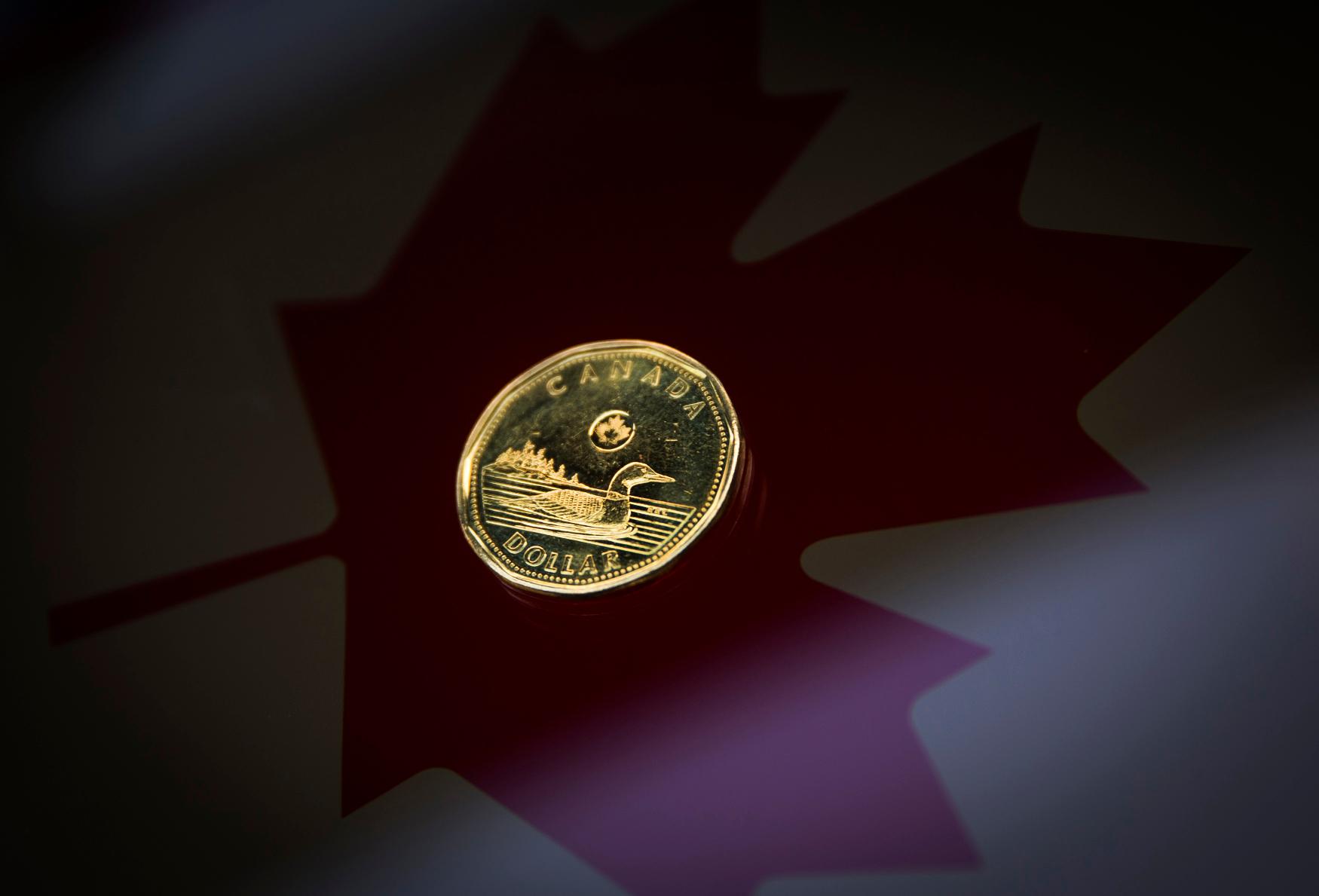
Canadian dollar weakens 0.3% against the greenback Trades in a range of 1.3546 to 1.3618 Price of U.S. oil falls nearly 4% Canadian bond yields were mixed across the curve TORONTO, Dec 12 (Reuters) - The Canadian dollar weakened against its U.S. counterpart on Tuesday as oil prices fell and investors weighed prospects that the Bank of Canada could be among the first major central banks to lower interest rates in the coming months. The loonie was trading 0.3% lower at 1.3610 to the greenback, or 73.48 U.S. cents, marking the biggest decline among G10 currencies. It moved in a range of 1.3546 to 1.3618. The U.S. dollar (.DXY) pared losses against a basket of major currencies and the price of oil, one of Canada's major exports, fell to a 5-1/2-month low as investors weighed the potential impact of U.S. inflation data on the Federal Reserve's policy outlook. U.S. crude prices were down nearly 4% at $68.5 a barrel. The move lower for the Canadian dollar is partly due to the drop in oil but also the market's perception of likely future moves by the Bank of Canada, said Marc Chandler, chief market strategist at Bannockburn Global Forex LLC. "Just like they were one of the first central banks to tighten in the G10, they seem to be one of the first central banks to ease in 2024," Chandler said. Money markets expect the BoC to lower its benchmark rate from its current setting of 5%, a 22-year high, as soon as April. Still, analysts say that the recent easing of financial conditions will likely make it more difficult for the central bank to tame inflation and could delay a shift to rate cuts if it leads to a reheating of activity in the housing market. Canadian government bond yields were mixed across the curve. The 10-year fell 1.1 basis points to 3.411% but was holding above the 5-month low it hit last Wednesday at 3.264%. https://www.reuters.com/markets/currencies/canadian-dollar-lags-g10-peers-oil-prices-tumble-2023-12-12/
2023-12-12 17:45
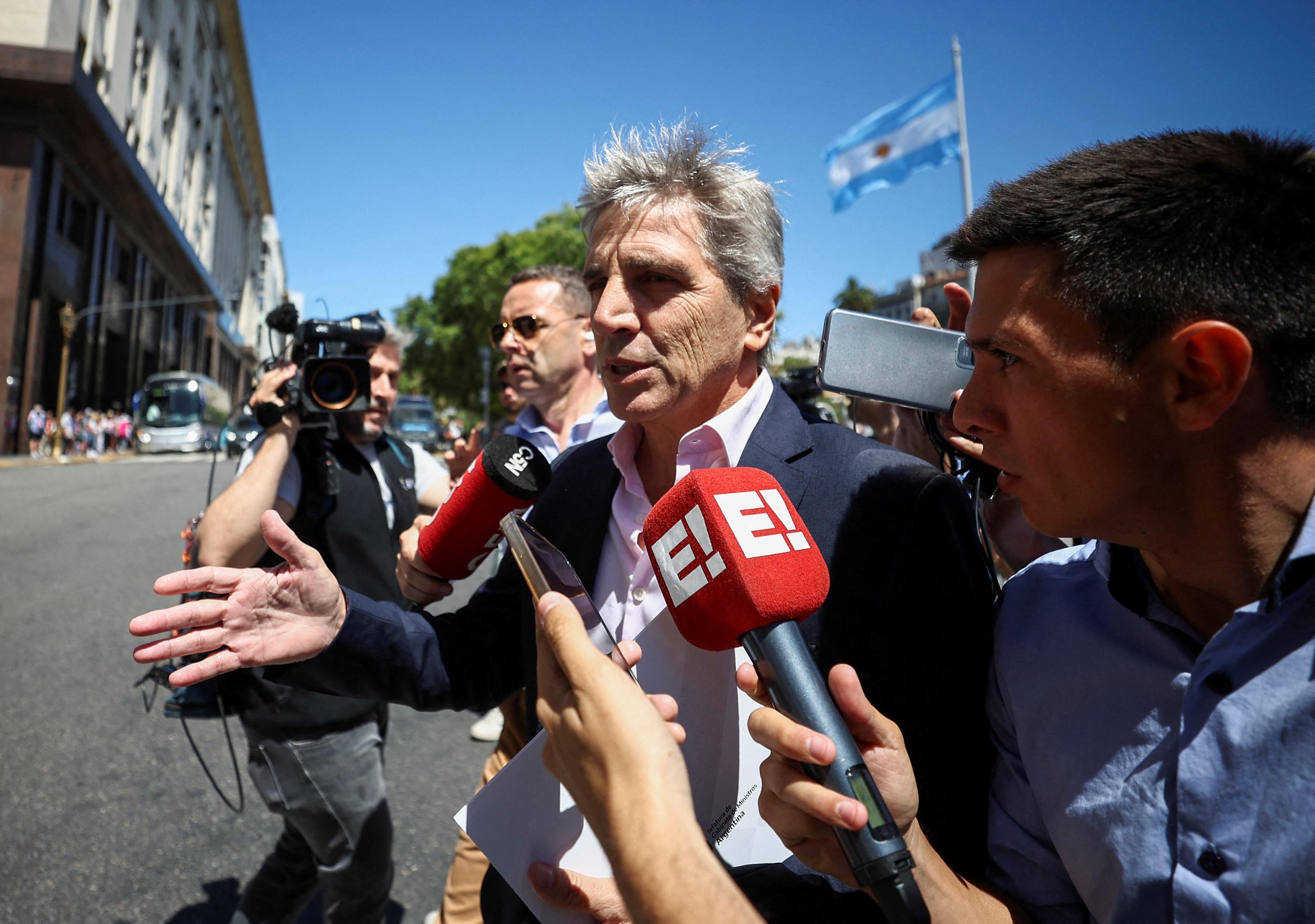
BUENOS AIRES, Dec 12 (Reuters) - Argentina will weaken its peso over 50% to 800 per dollar, cut energy subsidies, and cancel tenders of public works, new Economy Minister Luis Caputo said on Tuesday, economic shock therapy aimed at fixing the country's worst crisis in decades. Caputo said the plan would be painful in the short-term but was needed to cut the fiscal deficit and bring down triple-digit inflation, as he unveiled a package of measures after libertarian President Javier Milei took office on Sunday. "The objective is simply to avoid catastrophe and get the economy back on track," Caputo said in a recorded speech. He said the country needed to tackle a deep fiscal deficit he put at 5.5% of GDP, adding Argentina had a fiscal deficit for 113 of the last 123 years - the cause of its economic woes. "We're here to solve this problem at the root," he said. "For this we need to solve our addiction to a fiscal deficit." The South American country, a major grains producer, is battling inflation nearing 150%, central bank reserves deep in the red and two-fifths of the population in poverty. It has a wobbling $44 billion loan with the International Monetary Fund. "I welcome the decisive measures," IMF chief Kristalina Georgieva said, calling it "an important step toward restoring stability and rebuilding the country's economic potential." The IMF called the measures "bold" and said in a statement they would "help stabilize the economy and set the basis for more sustainable and private-sector led growth" following "serious policy setbacks" in recent months. The country's foreign exchange and grains markets had been locked down on Tuesday as traders awaited the new government's economic plan. Banks had already anticipated a sharp devaluation, with some weakening their FX rate to 700. Since 2019, Argentina's peso currency has been kept artificially strong by strict capital controls which create a wide gap between the official exchange rate of 366 per dollar and parallel rates as high as 1,000 per dollar. 'THE SITUATION IS CRITICAL' Milei, a wild-haired political outsider, had campaigned with pledges for major spending cuts, often wielding a chainsaw at rallies as a blunt symbol of his plans to trim back the state. "The situation is critical with 45% poverty and 200% annualized inflation," presidential spokesperson Manuel Adorni earlier told a press conference. "We are heading towards hyperinflation and the objective is to avoid it. Milei's tough fiscal rhetoric - with a new mantra "there is no money" - has buoyed markets since his election win, with the S&P Merval stock index (.MERV) hitting a record high on Tuesday and sovereign bonds up nearly 4%. Analysts said the new measures sent a strong message. "The devaluation announced exceeded market expectations," said Shamaila Khan, Head of Fixed Income for Emerging Markets and Asia Pacific at UBS Asset Management. "Some details were announced on the fiscal adjustment that will be needed such as reduction of subsidies and decrease in public expenditure. Implementation will be key." Caputo, echoing previous pledges by Milei, said the government would look to gradually erase export tariffs, something farmers have long sought. Argentina is a top exporter of processed soy oil and meal, and the no. 3 for corn. The grains sector is expected to meet with the government late on Tuesday, Reuters reported earlier citing sources. 'THE ADJUSTMENT WILL BE PAINFUL' The key doubt is whether Milei, whose libertarian coalition is only the third largest bloc in Congress, can implement the sharp cuts needed to undo the deep fiscal deficit without pushing the South American country towards turmoil and unrest. "The adjustment will be painful, and the path forward is laden with economic, political and social risks," Fitch Ratings said in a report. "Milei's party has little representation in the legislature and controls no provincial governorships, alliances with more influential parties and power-brokers remain in flux, and the social situation is fragile." The central bank, which had new president Santiago Bausili confirmed overnight in the official gazette, said it would undo "transition" checks on FX trades from Wednesday morning that had only allowed priority trades through this week. The Economy Ministry posted on Twitter that the central bank would announce measures on Wednesday related to the interest rate, debt and monetary policy to complement its own measures. https://www.reuters.com/markets/argentina-braces-economic-shock-package-peso-shackled-2023-12-12/