2023-12-12 13:19
NEW YORK, Dec 12 (Reuters) - U.S. small business sentiment edged down in November to the lowest level in six months, stoked by continued difficulties in hiring skilled labor and concerns about inflation. The National Federation of Independent Business (NFIB) said its small business optimism index fell to 90.6 last month from 90.7 in October. The index remained below its 50-year average of 98 for a 23rd straight month. Optimism has fallen since peaking this year in July as businesses report difficulties finding labor and battling inflation. A net negative 32% of businesses reported higher profits in November, unchanged from October. While difficulties filling open positions persist, the percentage of businesses describing few or no qualified job applicants fell to 50%, the lowest since January 2021. The fall brings it below the average of about 52 in the two years before the coronavirus pandemic. Fewer owners also reported difficulty filling open positions, with the figure falling three points from October to 40%, though the current pace of hiring remains weak. "The net percent of NFIB firms increasing employment has been negative since March, with more firms decreasing jobs than adding them," the report said. "Openings remain elevated, but the surge in the economy did not bring a strong wave of workers to fill open positions." As the Federal Reserve nears the close of its interest rate hiking cycle, 25% of owners surveyed paid a higher rate on their most recent loan, down three points from October. The outlook on business conditions has also been impacted by widespread economic uncertainty, according to the report. The portion of owners expecting better business conditions on a six-month basis rose one point to a net negative 42% in November. https://www.reuters.com/markets/us/us-small-business-sentiment-falls-slightly-nfib-says-2023-12-12/

2023-12-12 11:53
SAO PAULO, Dec 12 (Reuters) - Brazilian power company Eletrobras (ELET6.SA) said on Tuesday it has reached a deal to pay state-run oil firm Petrobras (PETR4.SA) 1.16 billion reais ($234.88 million) in order to settle a legal dispute over so-called compulsory loans. Eletrobras added in a securities filing the agreement puts an end to every judicial dispute related to that lawsuit. ($1 = 4.9386 reais) https://www.reuters.com/markets/commodities/eletrobras-reaches-235-mln-deal-settle-legal-dispute-with-petrobras-2023-12-12/

2023-12-12 11:35
NEW DELHI, Dec 12 (Reuters) - The average price of Russian oil delivered to top buyer India in October rose to $84.20 per barrel, way above the $60 price cap set by the Group of Seven nations in December last year, preliminary Indian government data showed. India paid the highest prices for Russian oil in October since the price cap was imposed, providing a boost to Moscow's revenues despite efforts by western nations to curb the producer's income and funding for the Ukraine war. India, the world's third-biggest oil importer and consumer, has emerged as the biggest buyer of seaborne Russian crude as western nations cut purchases after Moscow's invasion of Ukraine more than a year ago. India purchased Russian oil at an average price of about $81.24 per barrel in September, according to Reuters' calculations based on the latest data posted on the Indian Trade Ministry's website. India's intake of Russian oil could rise on softening prices, a government official said last week. The price of Russia's flagship grade Ural in Baltic ports has plunged since late November below the $60/barrel ceiling. New Delhi wants to cut its crude import bill and the average cost of Russian oil is lower than that from Iraq and Saudi Arabia, the second and third-biggest oil suppliers to India. The price of a barrel of oil from Iraq and Saudi Arabia in October averaged $85.97 and $98.77, respectively, the data showed. Apart from direct supplies from Russia, Indian refiners also get Russian oil supplied from ports in Greece, Spain and Korea. Refiners in India largely buy Russian oil on a delivered basis, with sellers arranging for shipping and insurance. Adherence to the G7-fixed ceiling allows the use of Western services such as shipping and insurance in transactions involving Russian oil. The Indian government data does not specify freight, insurance, or other charges paid by Indian refiners but it is significantly higher than the $60 per barrel price cap. To curtail Moscow's revenue and close loopholes in the mechanism designed to punish Moscow for invading Ukraine, the United States last month imposed sanctions on maritime companies and vessels for shipping Russian oil sold above the $60 price cap. India depends on imports to meet more than 80% of its overall oil needs and rarely bought Russian oil in the past due to high transportation costs. https://www.reuters.com/markets/commodities/india-bought-russian-oil-842bbl-october-highest-since-december-2023-12-12/

2023-12-12 11:33
Companies pledge to curb methane, some carbon emissions ESG investors say not enough without 'Scope 3' emissions Sustainable fund exposure to oil and gas is dropping - data DUBAI, Dec 12 (Reuters) - A COP28 pledge by energy majors to reduce their emissions is not enough to convince many sustainable fund managers to include the companies in their portfolios because it omits pollution from the use of oil and gas, six interviews with Reuters show. The pledge by 50 of the biggest oil and gas companies at the U.N. climate talks in Dubai commits to reaching near-zero methane emissions by 2030 as well as net-zero carbon emissions in their energy use and production by 2050. Those Scope 1 and 2 emissions from the companies' own operations account for about 15% of the total associated with the companies. The pledge does not address Scope 3 emissions caused by the use of the fuels the companies produce that account for 85%. Although some of the energy companies had already made promises ahead of the COP28 announcement, several state-owned firms have newly joined in. Investors in socially responsible, often known as ESG (environmental, social and governance), funds, said the commitments were overdue and not enough. Asset manager Candriam said it would stick to excluding major oil and gas companies from its socially responsible funds because none was aligned with their preferred scenario for meeting the objectives of the Paris Agreement on climate change. The agreement calls for limiting global warming to within 2 degrees Celsius (3.6 Fahrenheit), and aims for a 1.5C limit. Meeting that goal requires cutting global emissions by 43% by 2030 and to net-zero by 2050. "The transition to a low-carbon world does not mean producing the same volume of oil and gas in a more carbon efficient manner. It means shifting away from fossil fuels as the main energy source towards low-carbon energy," Alix Chosson, lead ESG analyst at Candriam, said. The COP28 talks, hosted by OPEC-member the United Arab Emirates, have attracted a record attendance from the oil and gas industry while delegates are divided over wording on the future of fossil fuels. 'STEP FORWARD' BUT NOT FAR ENOUGH ESG funds have long wrestled with how to approach conventional energy producers. Some exclude them out of scientific principle. Others say divesting has no impact and it is better to try and persuade them to pollute less, which means making them responsible for Scope 3 emissions. Kamal Bhatia, global head of investments at Principal Asset Management, said fossil fuel companies without energy transition strategies do not "environmentally 100% meet the definition" to be included in pure ESG funds. At an industry dinner in Dubai last week, Leon Kamhi, head of responsibility at asset manager Federated Hermes, said the companies' pledge announced at the talks was a "big step forward", but not enough. Only one - Italy's Eni (ENI.MI) - of the 25 biggest oil and gas companies is aligned with the Paris Agreement, according to Carbon Tracker's assessment. SHIFTING ECONOMICS As war in Ukraine sent fossil fuel prices soaring, ESG fund holdings in the sector increased. At the same time, a cost of living crisis in many parts of the world shifted the focus away from sustainable investment and back towards the most easily achieved shareholder returns. The proportion of U.S.-domiciled sustainable open-ended funds and exchange traded funds that owned oil and gas stocks hit 49% in September, against 43% three years earlier, Morningstar data show. Among conventional funds, the share with oil and gas holdings rose to 68% from 45% over the same period. But as energy prices weaken, funds' exposure to oil and gas is also shrinking. The average exposure to oil and gas stocks for the U.S.-domiciled funds hit 1.86% in September, versus 2% in late 2022, a faster rate of decline than for conventional funds, which had 5.3% exposure in September, according to the data. Funds marketed as sustainable in the European Union saw average exposure to oil and gas fall to 2.43% in September, from a peak of 3.33% in late 2022, the data show. Sustainability-minded investors have achieved little when trying to influence oil giants as stakeholders, U.S. billionaire environmentalist Tom Steyer told Reuters in Dubai. "A bunch of people have bought into Exxon to try and change it, and Exxon's response was to spend [on buying a rival]," he said, referring to ExxonMobil's (XOM.N) $60 billion deal to acquire Pioneer Natural Resources. "It's very important to recognise how hard it is to change 100-year-old corporate cultures," he said. MISSING RENEWABLES For some ESG investors, the case for investing in the energy giants has been weakened by the realisation "oil and gas companies are not going to become renewable energy companies", Global Head of Sustainability and Transition Strategy at U.S. bank Jefferies Aniket Shah said. Oil and gas companies have cut spending on production in favour of shareholder payouts. Of every $10 in cash spent in 2022, less than $5 went into capital expenditure, compared with $8.6 in 2008, the International Energy Agency calculates. By comparison, the amount spent on low-carbon capital expenditure last year was 10 cents of every $10. That has created credibility issues the COP28 commitments are unlikely to dispel. "If a certain energy provider is communicating 'we are now really going for a different form of source and delivery', then the trust really has to still develop," said Gunther Thallinger, chair of the U.N.-convened Net-Zero Asset Owners Alliance and board director at Germany's Allianz. https://www.reuters.com/business/energy/big-oils-bid-woo-esg-investors-fails-impress-2023-12-12/

2023-12-12 11:29
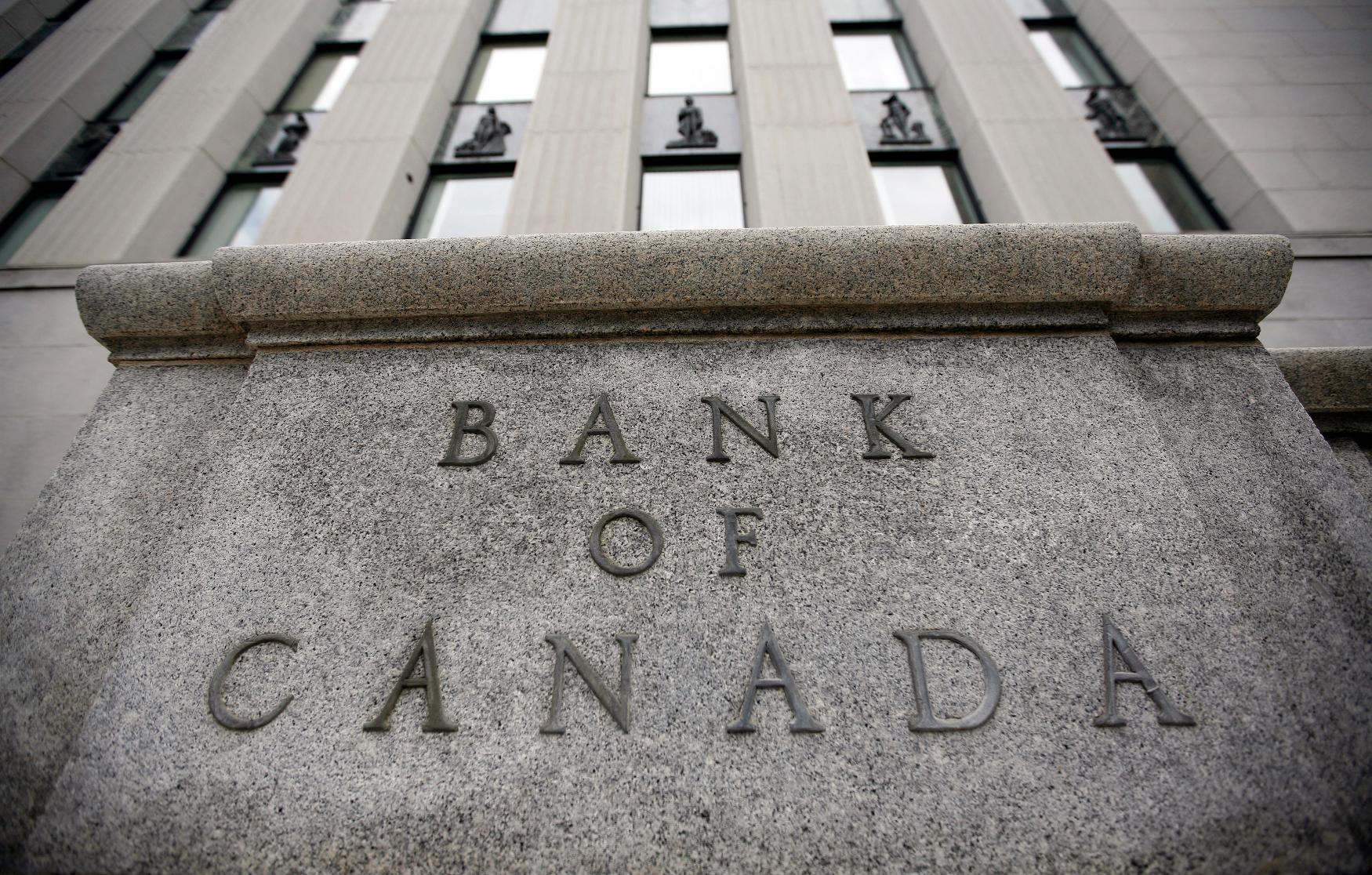
TORONTO, Dec 12 (Reuters) - The recent drop in long-term borrowing costs will likely make it more difficult for the Bank of Canada to tame inflation and could delay a shift to interest rate cuts if it leads to a reheating of activity in the housing market, analysts say. Bond yields, along with the stock market and credit spreads, help determine financial conditions, or the cost and availability of credit to households and businesses. Central banks, including the BoC, rely on shifts in financial conditions to transmit monetary policy to the economy. "It's an argument to believe that they (BoC policymakers) are going to wait longer before cutting rates because financial markets are already doing some of the easing for them," said Doug Porter, chief economist at BMO Capital Markets. The Canadian five-year yield is down about 90 basis points from its October peak and the Toronto stock market (.GSPTSE) has rallied as much as 9.6% in recent weeks, as investors globally bet that slower economic growth will prod central banks to abandon the higher for longer interest rate path that policymakers say is required to subdue inflation. Consumer borrowing costs such as mortgage rates tend to follow moves in the bond market with a lag. "A loosening of financial conditions usually helps improve economic growth," BoC Deputy Governor Toni Gravelle said on Thursday. Canadian households are particularly sensitive to the interest rate outlook due to a shorter mortgage renewal cycle in Canada than in the United States and after they borrowed heavily during the pandemic to participate in a red-hot housing market. Canadian home sales fell in October for the fourth straight month but analysts say that record levels of immigration and the prospect of rate cuts could spur demand in 2024. Money markets expect the BoC to begin easing as soon as April and for rates to fall 90 basis points in 2024. The central bank has said it is too soon to be considering rate cuts. Financial markets "are on the path toward reigniting housing imbalances, tamping down how monetary policy works through mortgage resets, inflaming further government spending and driving concomitant inflationary pressures," Derek Holt, head of capital markets economics at Scotiabank, said in a note. In January, the BoC's signaling of a rate-hike pause reignited the housing market, which added to inflation and the need to resume tightening in June and July. Canada's recent record of declining productivity and the pace of wage growth are other reasons to be cautious about the inflation outlook, say analysts. Headline inflation dropped to 3.1% in October, moving closer to the BoC's 2% target, but underlying price pressures have been slower to ease. "Wage growth is soaring and collective bargaining agreements are cementing wage gains at rates well above the 2% inflation target for years to come," Holt said. BoC Governor Tiff Macklem is due to speak on Friday. Last Wednesday, the central bank left its benchmark interest rate on hold at a 22-year high of 5% but left the door open to another hike, saying that financial conditions have eased and it was still concerned about inflation. "It may well be that they are trying to gently push back on this big rally that we've seen in financial markets," BMO's Porter said. "The more the markets rally, it's less likely the bank is going to ease." https://www.reuters.com/markets/rates-bonds/bank-canada-seen-pushing-back-rate-cut-bets-financial-conditions-loosen-2023-12-12/
2023-12-12 11:13
MOSCOW, Dec 12 (Reuters) - Russia's Sibur, the largest petrochemical producer in eastern Europe, said on Tuesday it plans to start issuing carbon credits outside Russia after reaching a deal at the COP28 climate summit to register a solar project with a new international programme. The agreement was struck with the Qatar-registered Global Carbon Council (GCC), which announced the launch of its carbon credit registry during the conference. Sibur, which already trades carbon credits in its home market on a local exchange, will become the first Russian firm to issue carbon credits under an international programme since Russia established its own system for emissions trading in 2022. The company plans to issue around 18,000 carbon credits - permits representing emissions cuts from climate action projects that allow the owner to offset their own discharges. It said its solar power plant with 10,080 solar panels has a capacity of 4.9 megawatts and takes up an area of more than 8 hectares. https://www.reuters.com/business/environment/russias-sibur-strikes-deal-issue-carbon-credits-solar-project-2023-12-12/