2023-12-12 09:37
KAMPALA, Dec 12 (Reuters) - The Ugandan shilling was little changed on Tuesday but traders said it was still vulnerable to losses on the back of appetite for hard currency from merchandise importers. At 0910 GMT, commercial banks quoted the shilling at 3,810/3,820, compared to Monday's close of 3,815/3,825. https://www.reuters.com/markets/currencies/ugandan-shilling-little-changed-still-vulnerable-2023-12-12/

2023-12-12 08:59
LONDON, Dec 12 (Reuters) - The pound struggled for direction on Tuesday after data showed U.S. inflation slowed slightly in November and that British wage growth cooled in October. Sterling was last up 0.07% at $1.2563, having traded at around that level for most of the day. The euro was last up 0.22% at 85.93 pence. U.S. consumer prices rose 3.1% in the year to the end of November, data showed on Tuesday, down slightly from a 3.2% rate in October. Month-on-month, prices rose 0.1%. Currencies bounced around but ended up broadly where they were before the release, with the data almost completely in line with analyst expectations. The pound fell slightly in the morning session in Europe after data showed that British earnings excluding bonuses were 7.3% higher than a year earlier in the three months to October, down from 7.8% in September. Economists expected a fall to 7.4%. The Bank of England sets interest rates on Thursday and the data opened up "the risk that some of the three hawks who voted for a hike in November switch to favouring a hold now," said Chris Turner, global head of markets at lender ING. Economists and traders think the bank will almost certainly hold interest rates at 5.25%. But they will be listening closely for hints about when borrowing costs might start to fall. The Federal Reserve is due to set interest rates on Wednesday, before the European Central Bank on Thursday. Both institutions are also expected to hold rates steady. Sterling touched a three-month high of $1.2733 per dollar at the end of November as U.S. bond yields fell sharply on hopes the Fed will start cutting rates early next year. The euro fell to a three-month low against the pound on Monday at 85.5 pence. Market players think the BoE is likely to hold rates a little longer than both the Fed and the ECB, raising the appeal of sterling. Yet Ashley Webb, UK economist at Capital Economics, said Tuesday's wage data would likely boost bets that the BoE may cut rates "as soon as the middle of next year". He said the data "leaves our forecast for rate cuts to start late in 2024 looking a bit more challenging". The dollar index , which tracks the greenback against six peers, was last down 0.14% at 103.92. https://www.reuters.com/markets/currencies/sterling-flatlines-uk-wage-growth-slows-focus-us-inflation-2023-12-12/
2023-12-12 06:59
Yemen's Houthis claim attack on Norwegian tanker Draft COP28 climate deal drops call to 'phase out' fossil fuels EIA lowers 2024 Brent price forecast API data shows crude inventories fell last week -market sources NEW YORK, Dec 12 (Reuters) - Oil prices fell more than 3% on Tuesday to their lowest level in six months on concerns of oversupply and after U.S. economic data showed an unexpected rise in consumer prices. Brent crude futures for February settled down $2.79, or 3.7%, to $73.24 a barrel. U.S. West Texas Intermediate crude futures for January slipped $2.71, or 3.8%, to $68.61 a barrel. In the U.S., the consumer price index unexpectedly rose in November, further bolstering the view the Federal Reserve was unlikely to cut interest rates early next year. Higher rates for longer could slow economic growth and speaks to a softening oil demand picture, said John Kilduff, partner with Again Capital LLC. Global oil demand growth is expected to slow in 2024 with OPEC and the International Energy Agency split on the extent. OPEC and the IEA both update their forecasts this week. "Negative sentiment towards the oil complex is still overpowering at the moment," Kpler analyst Matt Smith said. Weak demand and concerns that the OPEC+ deal to curb supplies will not do enough to balance the market weighed on prices, he added. OPEC+ agreed to limit supplies by 2.2 million barrels per day in the first quarter. Investors are now awaiting the outcome of Wednesday's Federal Reserve meeting. The central bank is widely expected to keep rates on hold. The U.S. Energy Information Administration (EIA) lowered its 2024 price forecast for Brent crude by $10 a barrel. Brent would average $83 per barrel, the administration forecast in a monthly report, versus an estimate published last month of $93 per barrel. Still, the administration expected supply cuts from the OPEC+ deal would help lift Brent prices in the first half of 2024. U.S. crude oil production is expected to rise by 1.02 million bpd to 12.93 million bpd in 2023 and by 180,000 bpd to 13.11 million bpd in 2024, the EIA said. U.S. crude output hit a current all-time high of 12.31 million bpd in 2019. U.S. crude stocks fell by 2.3 million barrels in the week ended Dec. 8, according to market sources citing American Petroleum Institute figures on Tuesday. U.S. government data on stockpiles due on Wednesday is expected to show a 1.5 million-barrel drop in crude stocks. In the Middle East, Yemen's Houthis said they attacked a Norwegian commercial tanker in their latest protest against Israel's bombardment of Gaza, escalating the risk of supply disruptions in the region. At the COP28 climate summit, negotiators are awaiting a new draft deal after many countries criticised a previous version as too weak because it did not include an agreement to phase-out fossil fuels. https://www.reuters.com/business/energy/oil-steady-ahead-interest-rate-decisions-opec-supply-cut-doubts-2023-12-12/
2023-12-12 06:49
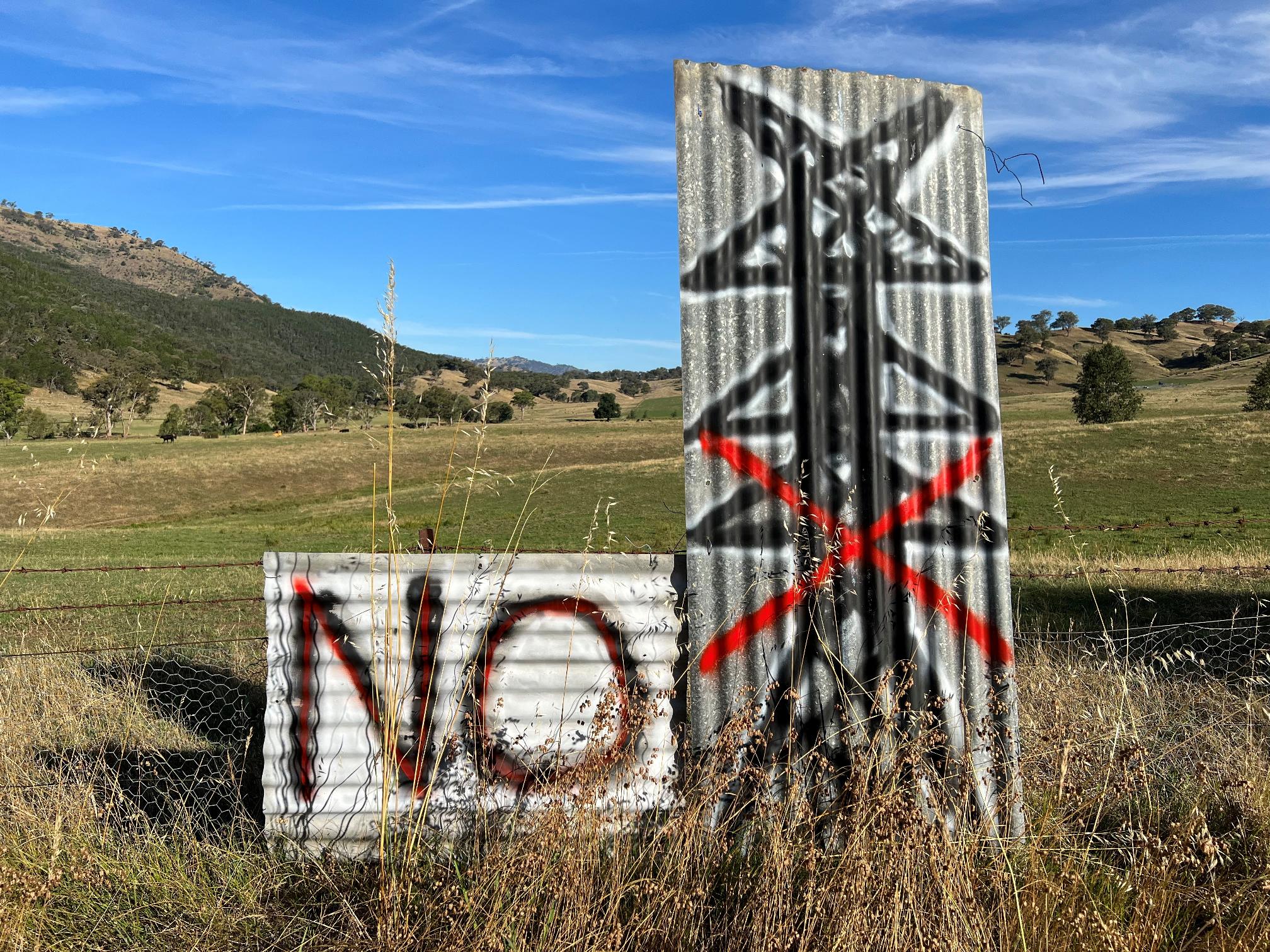
CANBERRA, Dec 12 (Reuters) - Hundreds of farmers are refusing to allow high-voltage overhead power lines to pass through their land, opposition that is threatening Australia's plans to increase renewable generation and reduce emissions by 43% from 2005 levels by 2030. Australia intends to build 10,000 km (6,200 miles) of power lines by 2050 to connect wind, solar and hydro projects to the grid. Without them, fewer renewables can be brought into the power supply, and emissions targets are unlikely to be met. A faltering energy transition would be a setback for Australia's net zero ambitions at a time when it is seeking to fix its image as a climate laggard and is pitching to host the COP climate conference in 2026. The protests in Australia are part off a wave of pushback against solar and wind farms and grid expansions in countries like the U.S. and UK that threatens to slow the rollout of cleaner power. Landowners - despite many of them wanting more renewables - say cables suspended on metal towers up to 80 metres (262 feet) tall will scar their land, inhibit farming and create a fire hazard in areas prone to bushfires, demanding that they be buried underground or, in some cases, abandoned. Putting more power lines underground would raise their cost and longer construction times could worsen supply shortages, making power more expensive, analysts said, but they added that transmission in some form is essential. "We're not on track," said David Dixon, an analyst at Rystad Energy in Sydney, adding that coal supplies 60% of Australia's power, and the country needs one of the world's fastest energy transitions to meet its climate goals. "There's no point moving ahead with solar and wind if there's no transmission capacity to plug them into," Dixon said. "If we can't sort this out, we'll have to extend the life of coal facilities." The federal and New South Wales state governments said they were increasing investment in renewables and grid infrastructure to meet their climate goals and were stepping up efforts to win over landowners. The government is "making overdue improvements to the community consultation process for transmission lines and energy infrastructure," said a spokesperson for Australia's climate change and energy minister, Chris Bowen. HOLD THEM UP Harry Lucas's farm near Tumut, at the foot of the Snowy Mountains in southeastern Australia, is on the proposed route of HumeLink, a 385-km stretch of 500 kilovolt (kV) power line needed to handle power from Australia's biggest renewables project, the Snowy 2.0 hydro scheme. Grid companies can obtain compulsory acquisition orders for a 70-metre-wide strip of land to host the line, but Lucas said he could block construction equipment from passing through his farm to reach it. "It's going to hold them up for a long, long time," he said, condemning the environmental destruction he believed the line would cause. A little over 55% of the private landowners affected by HumeLink have agreed to the project, said Transgrid, the company building it. The remainder - around 160 - are opposed to it unless it is buried underground, said Bill Kingwill, who lives near Lucas, adding that he supported renewables and was erecting a wind farm on his property. Other power line projects face similar opposition. The government and grid companies say putting a line like HumeLink underground is expensive and technically unfeasible. Transgrid says it would more than double the cost of HumeLink to A$11.5 billion ($7.5 billion), an estimate landowners and some politicians dispute, and delay its construction. The company, which aims to complete HumeLink in late 2026, said the line was "urgently required to avoid rolling blackouts and secure the supply of electricity to millions of Australians." It said it had changed line routes as a result of landowner feedback and would continue to engage with communities to minimise the impact on them. PROLONGING COAL While the Australian government says emissions are set to fall by 42% by 2030, in September a government-commissioned report found that significantly less renewable energy was entering the grid than needed to reach the 43% target. The share of renewables in Australia's power supply is on track to rise to 60% in 2030, up from around 38% now but below the government's 82% goal, said Oliver Nunn at Endgame, a specialist consultancy, adding that lack of transmission was a key impediment. Emissions of carbon dioxide-equivalent from power generation will be 12 million to 30 million metric tons higher in 2030 than targeted, he said. And if coal plants close, a shortfall of energy means consumer bills will rise - a cost that could add up to tens of billions of dollars across the economy over the next few years, he added. The New South Wales state government said in September it was considering keeping the country's largest coal power plant open beyond its planned closing date of 2025 to ensure energy supply. Its planning and environment department declined to comment further on the plant but said it was committed to its climate goals. BUSHFIRE FEARS The New South Wales government has offered landowners A$200,000 per kilometre of power line on top of other compensation, which it says will cost A$786 million. Other states have offered similar payments. Rebecca Tobin, another farmer on the HumeLink route, said she wanted that money invested in burying the lines and if that happened, construction could start tomorrow. Pointing across the valley to the place where a huge bushfire erupted four years ago, she said overhead lines can spark fires and hinder firefighting, given that it is unsafe to be near active lines during a blaze. Transgrid and other grid companies said they take fire safety very seriously and overhead transmission presents a very low risk. But Tobin said they would inflict greater danger on the community and the cables must go underground. "We have to succeed," she said. "Lives depend on it." ($1 = 1.5154 Australian dollars) https://www.reuters.com/sustainability/climate-energy/farmer-fury-australia-signals-tough-road-renewable-energy-2023-12-12/
2023-12-12 06:28
NEW YORK, Dec 12 (Reuters) - U.S. stocks advanced Tuesday and the dollar dipped after a report showed sticky U.S. inflation meandering lower as the Federal Reserve convened to assess policy and investors awaited a sign on when to expect interest rate cuts. Oil prices tumbled to their lowest in more than six months, with WTI crude prices diving 3.8% on worries of softening global demand. Wall Street's three major indexes notched their highest closing prices of 2023. The Labor Department's Consumer Price Index (CPI) unexpectedly inched higher on a monthly basis in November, but edged lower on an annual basis, stoking concerns that inflation is taking longer to return to the Fed's 2% target than many had hoped and raising the possibility that the central bank will keep policy rates in restrictive territory longer. "There's something for everyone in this release," said Scott Ladner, chief investment officer at Horizon Investments in Charlotte, North Carolina. "If you want to believe that inflation is reigniting, there are elements of the report that support that." Ladner added. "If you want to believe inflation is cooling, you can find things in there to support that too. "We’re getting a middling reaction to a middling number." The Federal Open Markets Committee (FOMC) gathered for its two-day monetary policy meeting, which is expected to culminate in a decision to leave the Fed funds target rate at 5.25%-5.50%. The Fed is also expected to release its Summary Economic Projections and dot plot, which should shed light on the central bank's path forward. "I’m expecting a steady-as-she-goes, a 'we’ll rely on the data' kind of message from the Fed," said Peter Tuz, president of Chase Investment Counsel in Charlottesville, Virginia. "Anything indicating too much strength in the economy or unexpected weakness will be a surprise to me." "It's a tightrope that (Federal Reserve Chair) Jay Powell's been on for a while and I don't think he's going to step off of it for several more months," Tuz added. In a busy week for central banks elsewhere, the European Central Bank and the Bank of England are also due to issue interest rate decisions on Thursday. The Dow Jones Industrial Average (.DJI) rose 173.01 points, or 0.48%, to 36,577.94, the S&P 500 (.SPX) gained 21.26 points, or 0.46%, to 4,643.7 and the Nasdaq Composite (.IXIC) added 100.91 points, or 0.7%, to 14,533.40. European shares reversed course to close lower following the CPI report, after Germany's DAX (.GDAXI) and France's CAC-40 (.FCHI) touched record highs. The pan-European STOXX 600 index (.STOXX) lost 0.21% and MSCI's gauge of stocks across the globe (.MIWD00000PUS) gained 0.39%. Emerging market stocks rose 0.40%. MSCI's broadest index of Asia-Pacific shares outside Japan (.MIAPJ0000PUS) closed 0.51% higher, while Japan's Nikkei (.N225) rose 0.16%. Treasury yields edged lower after the core CPI number landed largely in line with expectations, bolstering views that the Fed will hold its key policy rate steady on Wednesday. Benchmark 10-year notes last rose 8/32 in price to yield 4.2082%, from 4.239% late on Monday. The 30-year bond last rose 9/32 in price to yield 4.3151%, from 4.33% late on Monday. The dollar lost ground against a basket of world currencies in anticipation of the Fed's updated economic and interest rate projections expected on Wednesday. The dollar index (.DXY) fell 0.26%, with the euro up 0.33% to $1.0796. The Japanese yen strengthened 0.42% versus the greenback at 145.55 per dollar, while Sterling was last trading at $1.2568, up 0.12% on the day. Oil prices tumbled as concerns about excess supply and slowing demand overshadowed supply risks due to escalating tensions in the Middle East. U.S. crude slid 3.80% to settle at $68.61 per barrel, while Brent settled at $73.24 per barrel, down 3.67% on the day. Gold reversed its gains following the inflation data, and was last slightly lower. Spot gold dropped 0.1% to $1,978.91 an ounce. https://www.reuters.com/markets/global-markets-wrapup-1-2023-12-12/

2023-12-12 06:24
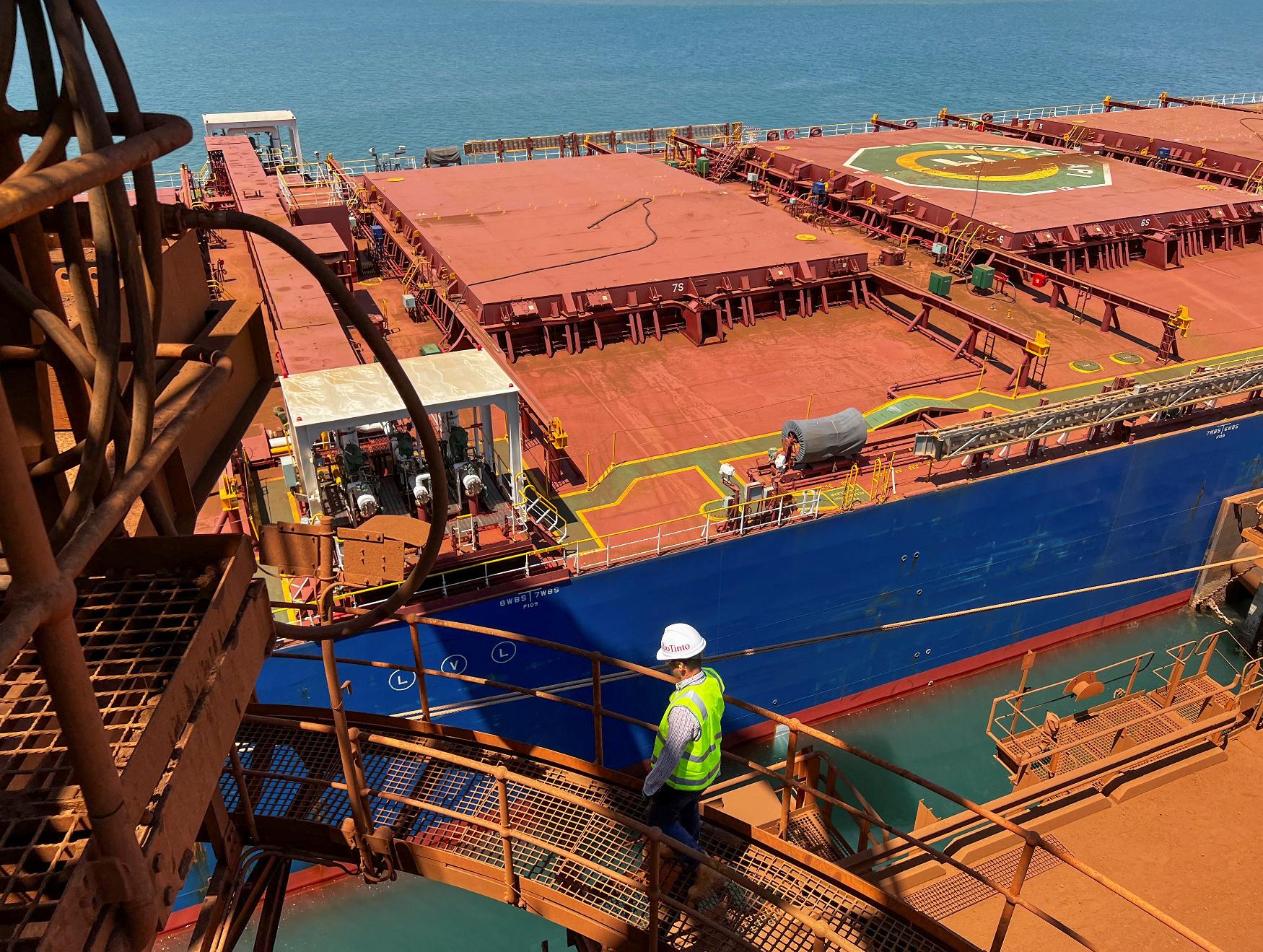
MELBOURNE, Dec 12 (Reuters) - Western Australia said on Tuesday it will overhaul its environmental permit system, aiming to speed up the development of new businesses critical to the transition to greener forms of energy. As part of the reforms, the state environment minister will be able to fast-track decisions on projects of state significance, while government approvals processes will be able to run concurrent to environmental approvals instead of afterwards. The state government is also looking to specify timeframes for decisions more broadly and will also take steps to reduce duplication of approvals with other departments, it said. "Today’s announcement is a massive step forward to remove the green tape that has been holding back our industry and the State economy for years," the Association of Mining and Exploration Companies CEO Warren Pearce said. The reforms come as the global push to cut carbon emissions boosts demand for metals like lithium and nickel, used in electric vehicle batteries, and green steel, while supply chain concerns redraw the map on where they are processed. Mining CEOs including BHP BHP.AX boss Mike Henry have called on Australia to streamline regulation or risk being left behind as the United States, Europe, Canada offer wide-ranging support to develop their own industries, Lithium miners such as Mineral Resources (MIN.AX) have hesitated to set up local processing plants, given more attractive policy settings elsewhere. Western Australia supplies more than half of the world's seaborne iron ore and half of its lithium. Its resources sector delivered A$254 billion ($167 billion) in sales in the past fiscal year. In contrast to Tuesday's announcement, reforms to Australia's national environmental regulation have been delayed to next year. The Conservation Council of Western Australia said it had not been consulted about the changes, adding that they posed further risks to the environment in the state. The reform agenda, it said, "appears to be a Trojan Horse to enable the big end of town to wield even more influence. It’s business as usual on steroids." The Grattan Institute, a think tank, estimates the critical minerals industry could add more than $400 billion to Australia's economy by 2050 with the right policy settings, a bigger contribution than the country's no. 2 export coal. ($1 = 1.5195 Australian dollars) https://www.reuters.com/markets/commodities/western-australia-seeks-speed-up-mining-project-approvals-2023-12-12/