2023-12-12 04:40
Houthis say they hit Norwegian tanker Group says STRINDA was carrying crude to Israel Owner says ship was headed to Italy with biofuel feedstock DUBAI/OSLO Dec 12 (Reuters) - Yemen's Houthis said on Tuesday they hit a Norwegian commercial tanker with a missile in their latest protest against Israel's bombardment of Gaza, underlining the risks of a conflict that has shaken the Middle East. The Iran-aligned group attacked the tanker, the STRINDA, because it was delivering crude oil to an Israeli terminal and after its crew ignored all warnings, Houthi military spokesperson Yehia Sarea said in a statement. But the tanker's owner, Norway's Mowinckel Chemical Tankers, said the vessel was headed to Italy with a cargo of biofuel feedstock, not crude oil. But it did acknowledge a tentative Israeli port call scheduled for January, details it had not offered in the immediate hours after the attack in the Red Sea. "Upon the recommendation of our security advisors, it was decided to withhold this information until the vessel and her crew were in safe waters," the company said in a statement. Following the attack, Israel’s military said it had deployed one of its most advanced warships, a Sa'ar 6 class corvette, in the Red Sea. The U.S. Navy destroyer Mason responded to the STRINDA's distress calls and assisted the crew, which was grappling with a fire, the U.S. military said. It said the STRINDA was struck on Monday night by a land-based cruise missile fired from Houthi-controlled Yemen. "The actions that we've seen by these Houthis forces are destabilizing, they're dangerous," Pentagon spokesperson Major General Patrick Ryder told a press conference on Tuesday. "So, this is an international problem that requires an international solution," Ryder said. U.S. Defense Secretary Lloyd Austin would be travelling to the Middle East next week, including to Israel, Qatar and Bahrain, he said. The Houthis have waded into the Israel-Hamas conflict - which has spread around the region - attacking vessels in vital shipping lanes and firing drones and missiles at Israel more than 1,000 miles from their seat of power in the Yemeni capital of Sanaa. On Saturday, they said they would target all ships heading to Israel, regardless of their nationality, and warned international shipping companies against dealing with Israeli ports. GAZA WAR RIPPLES THROUGH REGION The Gaza conflict has already spread to other parts of the region, with Israel and Lebanon's Hezbollah trading fire and Iranian-backed militias attacking bases of U.S. forces in Iraq. French frigate FREMM Languedoc intercepted and destroyed a drone that was threatening the STRINDA in a complex aerial attack originating from Yemen, the French defence ministry said in a statement on Tuesday. The STRINDA had loaded vegetable oil and biofuels in Malaysia and was headed for Venice, data from shiptracking firm Kpler showed. Italian energy firm Eni confirmed the ship was carrying 15 thousand tons of residues and waste from vegetable oil processing destined for Eni's biorefineries in Italy. Houthi officials did not immediately respond to a request for comment. There was no immediate comment from the Israeli government. The Houthi spokesman said the group would continue blocking ships heading to Israeli ports until Israel allows the entry of food and medical aid into the Gaza Strip. Israel denies restricting the entry of food, water, medicines and shelter into the Gaza Strip, which its forces have bombarded in retaliation against Hamas for the Oct. 7 attack. US SHIP RESPONDS TO STRINDA Norway's deputy foreign minister Eivind Vad Petersson said in a statement: "Norway condemns in the strongest possible terms all attacks on civilian shipping." The attack took place about 60 nautical miles (111 km) north of the Bab al-Mandab Strait connecting the Red Sea and the Gulf of Aden at about 2100 GMT, a U.S. official told Reuters. A second U.S. official said the STRINDA was able to move under its own power in the hours after the attack. "There were no U.S. ships in the vicinity at the time of the attack, but the (U.S. Navy destroyer) USS MASON responded to the M/T STRINDA's mayday call," the U.S. military's Central Command, which oversees American forces in the Middle East, said in a statement posted on social media platform X. The attack caused damage but no casualties, the U.S. military said. The Houthi spokesman said that the group had managed to obstruct the passage of several ships in recent days, acting in support of the Palestinians. The Houthis are one of several groups in the Iran-aligned "Axis of Resistance" that have been taking aim at Israeli and U.S. targets. During the first week of December, three commercial vessels came under attack in international waters, prompting a U.S. Navy destroyer to intervene. Last month the Houthis also seized a British-owned cargo ship that had links with an Israeli company. The United States and Britain have condemned the attacks on shipping, blaming Iran for its role in supporting the Houthis. Tehran says its allies make their decisions independently. Saudi Arabia has asked the United States to show restraint in responding to the attacks. https://www.reuters.com/world/middle-east/cruise-missile-yemen-strikes-tanker-ship-us-officials-2023-12-12/

2023-12-12 03:59
Xi embarked on first Vietnam trip in six years China, Vietnam committed to "shared future" Countries sign 37 deals, including on railways HANOI, Dec 12 (Reuters) - Old foes China and Vietnam, at odds over claims in the South China Sea, declared on Tuesday they want to boost ties and build a community with a "shared future", just three months after Hanoi upgraded its formal relations with the United States. As Chinese President Xi Jinping visited Hanoi on his first trip as China's leader to Vietnam in six years, the two countries signed 37 cooperation deals in what can be seen as a triumph of Vietnam's "Bamboo diplomacy" as both China and the United States vie for influence. After China's push, Vietnam agreed to "support the initiative of building of a shared future community for human kind", according to a joint statement shown to reporters. The countries' diplomats had debated the "shared future" phrase for months, following Hanoi's initial reluctance to use it, say officials and diplomats. The Chinese term literally means "common destiny", but its translation in English and Vietnamese is "common future", which may be seen as less demanding. "One declaration, many translations," said a diplomat based in the Vietnamese capital, commenting on the interpretation of the term. However, the upgrade in diplomatic ties would just be symbolic, said Le Hong Hiep, a specialist in Vietnamese strategic and political issues at Singapore's Iseas–Yusof Ishak Institute. "Vietnam's mistrust of China runs deep, and from the Vietnamese people's viewpoint, there is little to no 'shared destiny' between the two countries, as long as China continues to claim most of the South China Sea," he said. Despite their existing close ties on the economic front, the neighbours have been at odds over boundaries in the South China Sea and have a millennia-long history of conflict. The two countries signed a memorandum of understanding for joint patrols in the Tonkin Gulf in the South China Sea, according to one of the agreements. THIRTY-SEVEN DEALS Beyond taking ties to a level Beijing may see as being above those with the United States, the upgraded status came with the signing of 37 cooperation deals, according to reporters who witnessed the signing ceremony. Deals included a memorandum of understanding on cross-border rail development. Top officials in both countries had urged a boost to a rail link between the southern Chinese city of Kunming and the northern Vietnamese port of Haiphong, which crosses regions in Vietnam rich in rare earths. China's ambassador to Vietnam Xiong Bo said earlier this week Beijing was ready to offer grants to develop rail connections, though the volume and terms of possible loans are not clear. Boosting transport links would allow Vietnam to export more to China, especially farm products, while Beijing wants to further integrate the country's north with its southern supply chain networks. Chinese firms have moved some operations to Vietnam quicker this year than before the COVID pandemic, looking to be closer to Western clients there, to lower risks from U.S.-China trade tension and cut exposure to China's weakened economy. Stronger rail networks would speed import of components from China for assembly in Vietnam, effectively expanding China's Belt and Road Initiative (BRI). Currently the Hanoi metro is Vietnam's only project to have received BRI loans, but it has not been labelled as such in a country where anti-Chinese sentiment is still widespread enough that such moves could be viewed as getting too close to Beijing. The two countries agreed to jointly promote the "two corridors, one belt" initiative, which is the Vietnamese term for infrastructure projects supported by China. Xi has also urged wider co-operation on security, connectivity, green energy and critical minerals, in a reference to the rare earths, of which China is the world's leading refiner while Vietnam has the second largest estimated reserves after its neighbour. Not all deals have yet been made public. https://www.reuters.com/world/chinas-xi-visits-vietnam-after-biden-seeks-boost-ties-2023-12-12/
2023-12-12 02:07
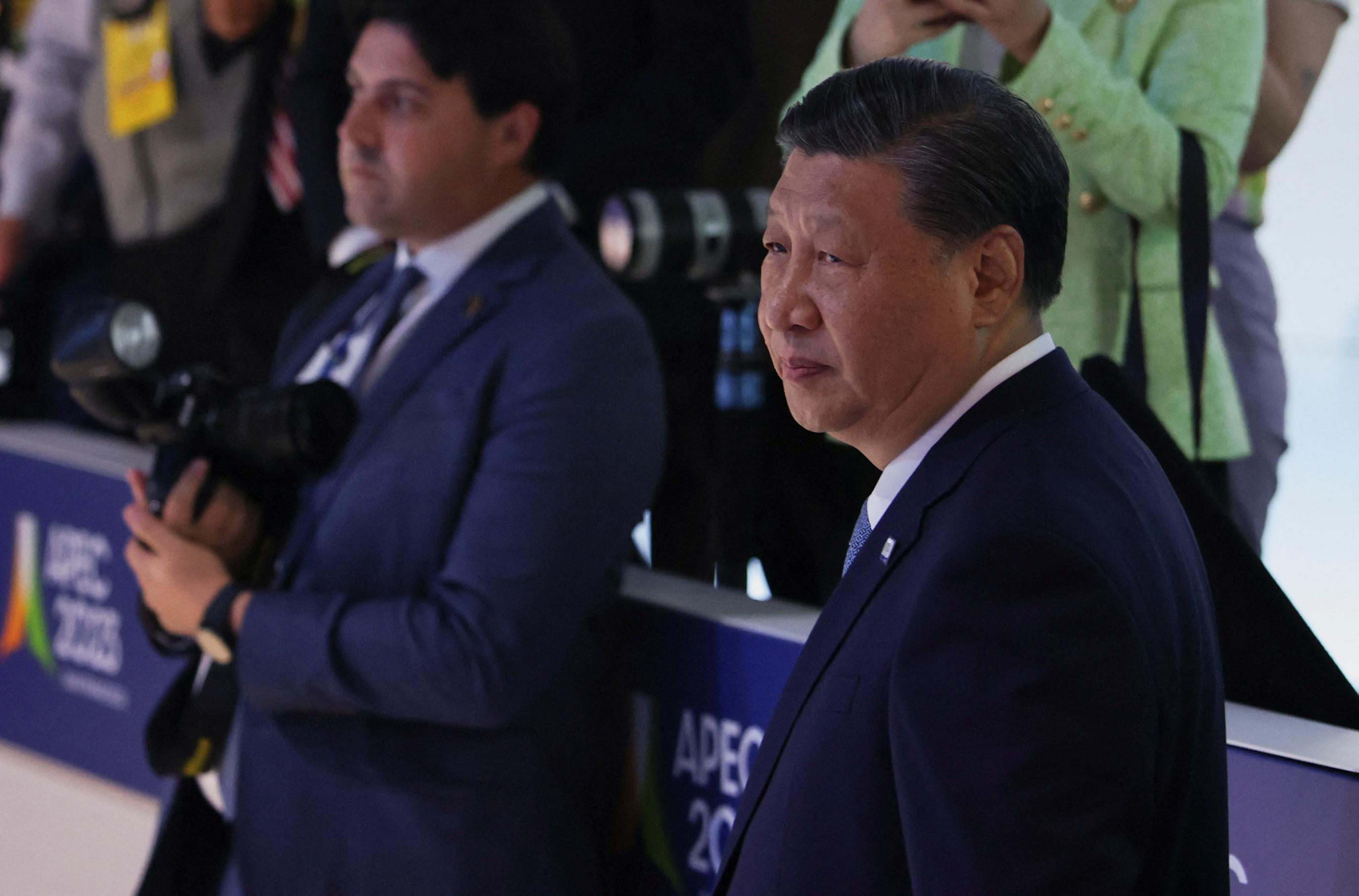
23 of 24 economists expect rates to remain unchanged at 6.50% on Dec. 14, one expects 25 bps hike BENGALURU, Dec 12 (Reuters) - The Philippine central bank will leave its key interest rate unchanged at 6.50% for a second time on Thursday thanks to cooling inflation and an improving currency, according to a Reuters poll that showed it would remain steady through Q2 2024. While inflation eased to a 20-month low in November near the Bangko Sentral ng Pilipinas' (BSP) 2%-4% target, the peso posted its best monthly performance in a year last month following an off-cycle 25 basis-point hike at the end of October, lifting pressure for another increase. However, amid risks inflation could rise again the BSP said monetary policy would need to be "sufficiently tight" until there was evidence of a sustained downtrend. That hawkish outlook meant rate cuts would not materialise until the third quarter of 2024. All but one of the 24 economists in the Dec. 5-11 poll expected the central bank to leave its overnight borrowing rate (PHCBIR=ECI) unchanged at 6.50% on Dec. 14. One predicted a quarter-point hike. "Barring significant upside surprises to inflation and a re-tightening in external financial conditions, the policy tightening cycle is likely complete," said Jin Tik Ngai, EM Asia economist at J.P. Morgan. "We expect growth to soften next year on the back of slower global growth and private investment. However, the BSP ... is more sensitive to headline inflation instead of growth so unless a global recession or significant deflationary headwinds kick in, the central bank's rate cuts will likely be measured." Median forecasts showed interest rates on hold until end-Q2 2024, followed by 50 basis points of cuts in each of the remaining two quarters of the year, the same as the U.S. Federal Reserve. However, there was no consensus among those who provided expectations for the third quarter of next year with about half - 9 of 20 - expecting rates at 6.00%, four seeing them at 6.50% and three each at 6.25% and 5.75%. One predicted the policy rate at 5.50% by end-Q3. "With risks to inflation still heavily tilted to the upside, it may still be too early to put rate cuts on the table. The economy will need time to pause to ensure that the BSP's tight monetary stance filters through to the economy," noted Aris Dacanay, ASEAN economist at HSBC. "That being said, we expect the BSP to gradually begin its easing cycle after the Fed does its first rate cut in Q3 2024. Cutting at the same rate as the Fed will also mitigate the volatility of the USD-PHP given how wide the current account deficit still is for the Philippine economy." The peso has gained around 0.1% against the U.S. dollar so far this year while most other Asian currencies were still in negative territory. (For other stories from the Reuters global economic poll:) https://www.reuters.com/markets/rates-bonds/philippine-central-bank-done-with-rate-hikes-first-cut-seen-q3-2024-same-fed-2023-12-12/
2023-12-11 23:58
Dec 11 (Reuters) - The North American Electric Reliability Corp (NERC) anticipates that "freezing conditions" still remain a reliability concern for power generators, it said in a report released on Monday. "Low temperatures and freezing conditions also caused generators to derate units and in some cases caused forced outages due to equipment failure in the freezing conditions," the North American grid regulator said in the report dated Nov. 6. Referring to Winter Storm Uri in February 2021, it said that higher-than-expected demand and forecasting errors led to grid operators implementing rolling blackouts to prevent cascading outages which "may result in major disruptions and have very real human consequences." In May, NERC had issued its highest severity level alert for the first time to increase the readiness of operators and users of power grids ahead of winter. In response, around 62 operators of power plants said their capacity was susceptible to the same issue this winter that sent it offline last winter. Most of these were wind farms referring to the issue of blade icing. "Quantification of the risk presented by wind farms in winter months warrants additional investigation," NERC said. Last month, NERC said in its winter outlook that more than half of the U.S. and parts of Canada, home to around 180 million people, could fall short of electricity during extreme cold again this winter due to lacking natural gas infrastructure. Along with the Federal Energy Regulatory Commission, NERC also urged lawmakers to fill a regulatory blind spot to maintain reliable supply of natural gas during extreme cold weather that was highlighted by an inquiry into power outages during Winter Storm Elliott in December 2022. https://www.reuters.com/business/energy/extreme-cold-still-poses-reliability-challenge-n-american-power-generators-nerc-2023-12-11/
2023-12-11 23:46
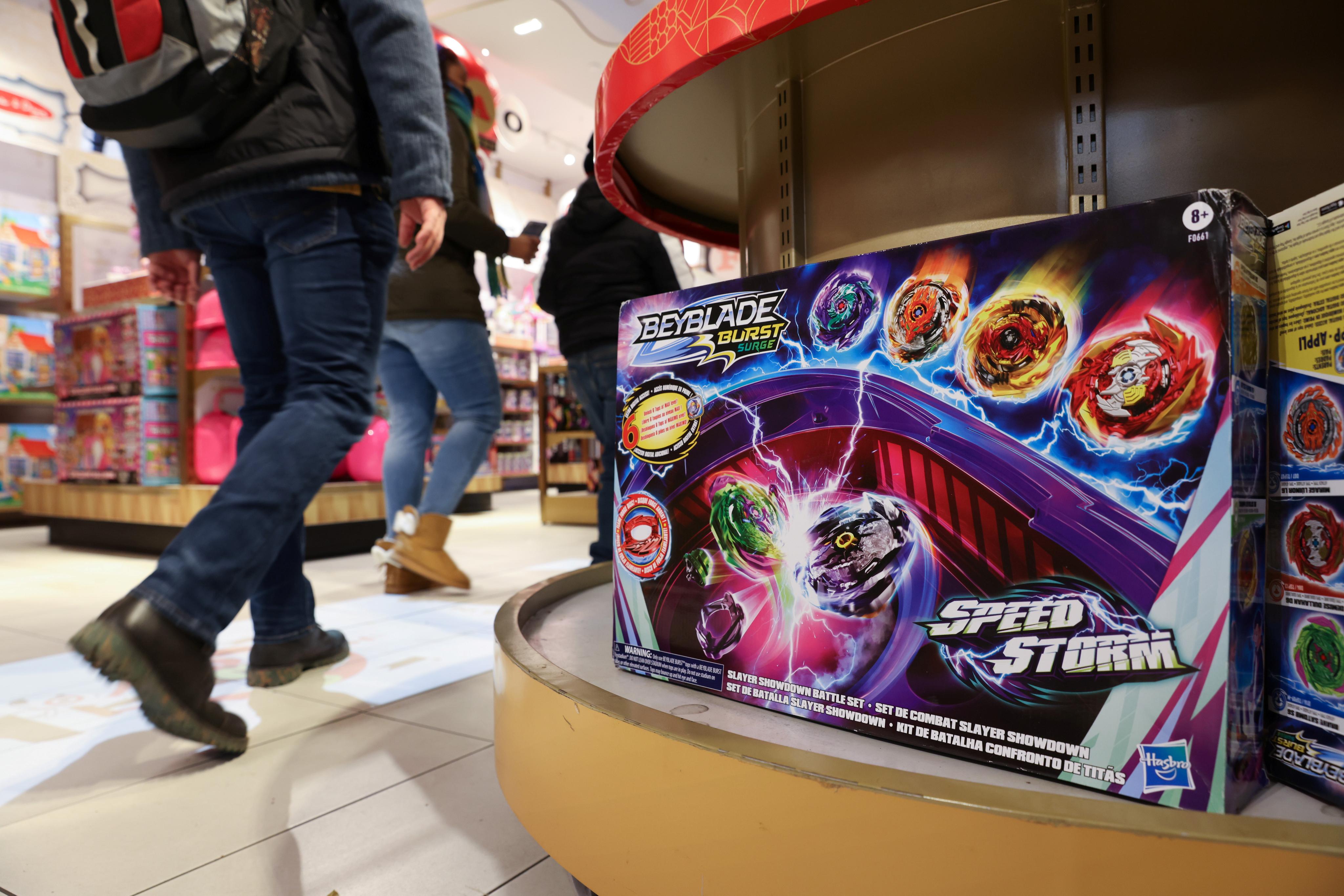
Dec 11 (Reuters) - Hasbro (HAS.O) said on Monday it would cut another 900 jobs globally, nearly a year after the toymaker announced it would reduce 15% of its workforce amid weaker sales. Hasbro had said in January it would cut about 1,000 full-time positions. On Monday, the company said it had already cut 800 jobs. At the end of 2022, Hasbro had employed about 6,490 people worldwide, according to a regulatory filing. The job cuts announced on Monday take the total layoffs to 1,900, or 29% of its workforce. Shares of the company were down about 6% in extended trading, while Barbie maker Mattel (MAT.O) also slipped more than 1%. "Market headwinds we anticipated have proven to be stronger and more persistent than planned," CEO Chris Cocks said in an email to employees on Monday. Consumers worldwide have struggled to cope with persistently high inflation, forcing them to cut back on discretionary spending including toys and focus more on buying essentials. In October, the company joined rival Mattel in warning of a weak holiday season and indicating that consumers were being frugal heading into the most important period for retailers. "The headwinds we saw through the first nine months of the year have continued into holiday and are likely to persist into 2024," Cocks added. The maker of "Transformers" action figures and Monopoly on Monday said that majority of its employees would be notified over the next six months, while the balance would occur over the next year. Hasbro also said its Providence, Rhode Island office was not being used to its full capacity and the company had decided to exit it at the end of its lease term in January 2025. Hasbro now expects to deliver gross annual run-rate cost savings of about $350 million to $400 million by the end of 2025, up from its previous estimate of $250 million to $300 million. https://www.reuters.com/business/retail-consumer/hasbro-lay-off-20-workforce-wsj-2023-12-11/
2023-12-11 23:44
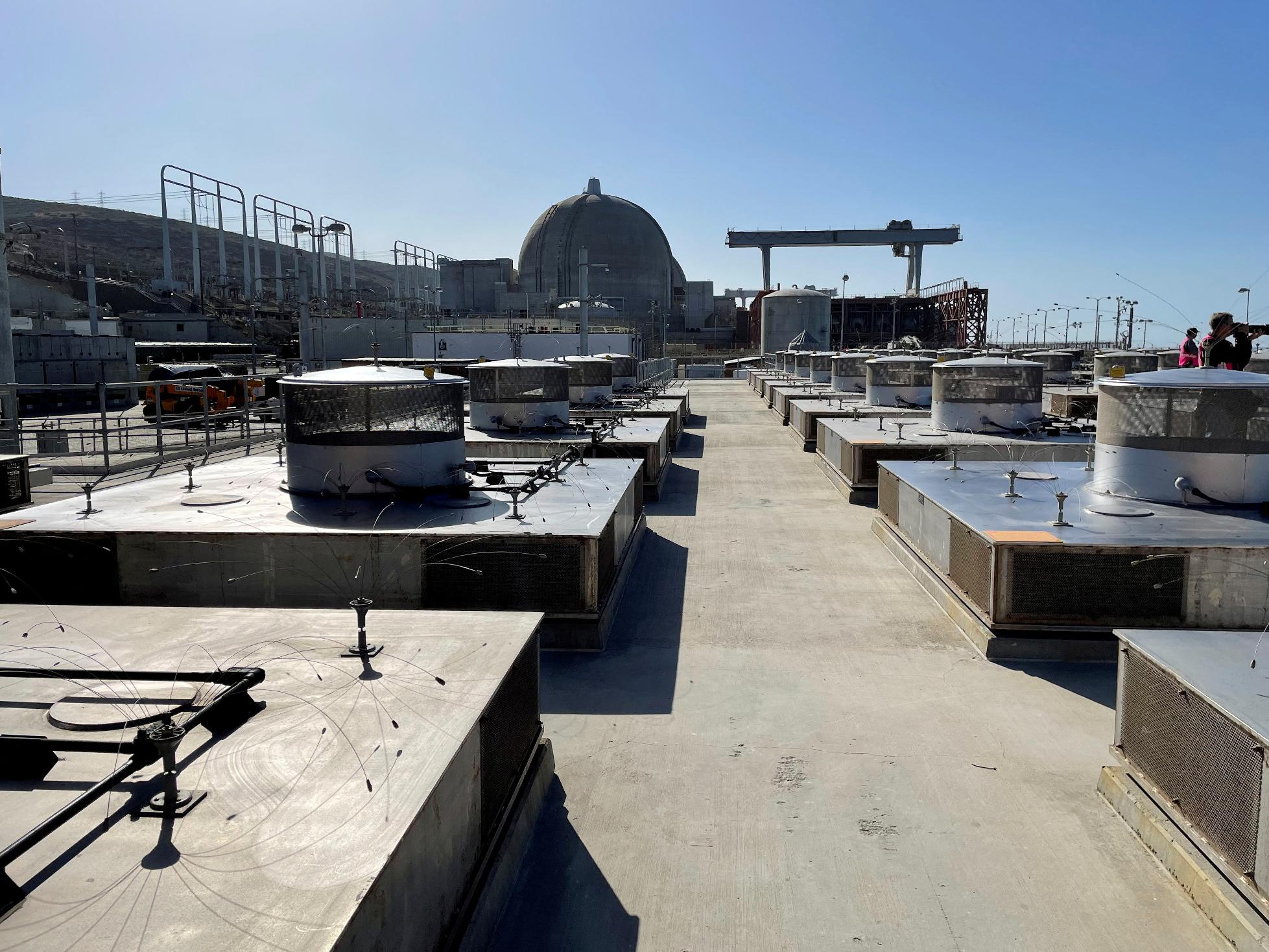
WASHINGTON, Dec 11 (Reuters) - The U.S. House of Representatives on Monday passed a ban on imports of Russian uranium as lawmakers seek to add pressure on Moscow for its war on Ukraine, though the measure has waivers in case of supply concerns for domestic reactors. The bill must pass the Senate and be signed by President Joe Biden before becoming law. It is uncertain whether there will be enough time in the Senate schedule for it to be voted on this year. The bill, passed by voice vote in the House after the chamber suspended usual voting rules on the measure, would ban the imports 90 days after enactment, subject to the waivers. The House bill contains waivers allowing the import of low-enriched uranium from Russia if the U.S. energy secretary determines there is no alternative source available for operation of a nuclear reactor or a U.S. nuclear energy company, or if the shipments are in the national interest. "The risks of continuing this dependence on Russia for our nuclear fuels are simply too great," said Republican Representative Cathy McMorris Rodgers before the vote. "It's weakening America's nuclear fuel infrastructure, which has declined significantly because of reliance on these cheap fuels." The United States banned imports of Russia oil after the invasion of Ukraine last year and imposed a price cap with other Western countries on sea-borne exports of its crude and oil products, but it has not banned imports of its uranium. U.S. nuclear power plants imported about 12% of their uranium from Russia in 2022, compared to 27% from Canada and 25% from Kazakhstan, according to the U.S. Energy Information Administration. The United States was the source of about 5% of uranium used domestically that year, the EIA said. Allowed imports of Russian uranium under the waiver would be gradually reduced to 459 metric tons in 2027 from about 476.5 tons in 2024. https://www.reuters.com/world/us/us-house-passes-bill-banning-uranium-imports-russia-2023-12-11/