2023-12-11 11:18
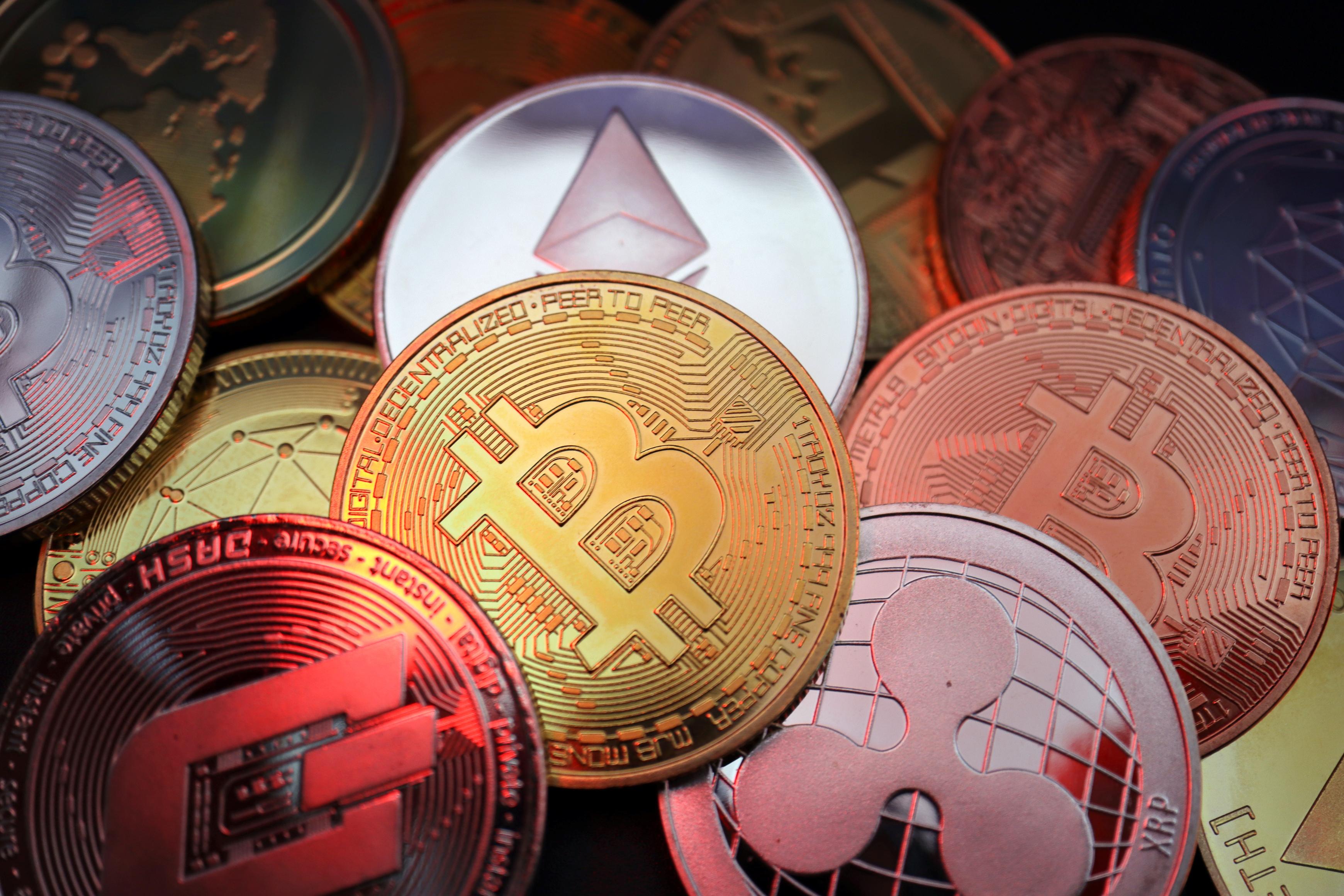
Dec 11 (Reuters) - After ending 2023 on a high, crypto investors will be watching central bank interest rates and a U.S. regulatory decision on new bitcoin products as they decide how to place their bets next year. Cryptocurrencies staged a recovery this year after a torrid 2022 in which a market meltdown and a string of scandals, including the collapse of FTX and fraud charges against its CEO, Sam Bankman-Fried, undermined the credibility of the industry. The price of bitcoin , the biggest cryptocurrency and the market's chief barometer, has more than doubled this year, reaching a 20-month high in November of $42,000 per token. As of Friday, 2023 was its best year since 2020 in terms of percentage gains. The market has been buoyed by expectations that cooling inflation will allow central banks globally to forgo further rate hikes and start easing next year, making risk assets more attractive. A long-anticipated move by the U.S. Securities and Exchange Commission(SEC) to approve a spot bitcoin exchange-traded fund (ETF) has also been a boost. Those themes, along with bitcoin's expected April "halving" - a process that reduces token supply - will continue to be positives for the market next year, said analysts, although some cautioned the market is unlikely to rescale its 2021 record highs. "There's quite a few different factors that are likely to fall in line for 2024," said James Butterfill, head of research at asset management firm CoinShares, particularly the end of the rate cycle. "What popped the bitcoin bubble was rising interest rates, and what will probably help spur the next rally ... will be interest rates being cut," he said. The U.S. Federal Reserve held its benchmark overnight interest rate steady in the 5.25%-to-5.50% range at the end of its Oct. 31-Nov. 1 policy meeting - and analysts overwhelmingly expect the same outcome this week. Bitcoin hit a record high of $69,000 in 2021, thanks to retail investors flush with spare cash amid the early days of the COVID-19 pandemic and historically low interest rates. While the end of rate hiking is a positive for risk assets, Andrea Filtri, the co-head of research at Italy's Mediobanca, noted crypto market conditions are still far from where they were in 2021. Fed officials have signaled rates will not be dropping soon, while strong Friday employment data suggested market expectations of a rate cut early next year were probably premature. "It was easy at the time to have proliferation with easy money," said Filtri. "I am not so sure that, as interest rates go down, you will have the mirror trajectory." ETF HYPE The crypto industry endured more damaging scandals this year. Most notably, Binance and its CEO, Changpeng Zhao, pleaded guilty to breaching U.S. rules on money laundering. The launch of a bitcoin ETF, however, could help legitimize the industry, some say. Several major financial firms, including BlackRock (BLK.N), have filed applications with the SEC to launch a spot bitcoin ETF which, if approved, could potentially draw several billions of dollars of institutional money into the cryptocurrency. Reuters reported this week that industry talks with the SEC have advanced ahead of a key January deadline when the SEC is expected to give some products the green light. That has kept traders bullish, although a sell-off on the news is possible. "The price could go through a correction immediately after their approvals since the market has been pricing in the event, but in the long run spot bitcoin ETFs could rake in several hundred billion dollars a year to the bitcoin market," said Yuya Hasegawa, a crypto market analyst at bitbank, a Japanese-based crypto exchange. Many crypto watchers are also eyeing the next bitcoin "halving," expected in April. That process is designed to slow the release of bitcoin, whose supply is capped at 21 million tokens - of which 19 million have already been created. Bitcoin rallied on the previous three halvings, the most recent of which was in 2020. But, given the different market conditions, it's unclear whether it will cause a rally again this time, said CoinShares' Butterfill. "If we combine it with the high demand from an ETF in the United States and reducing new supply coming in, it could have an impact, but I'm not holding my breath." https://www.reuters.com/markets/currencies/crypto-market-eyes-interest-rates-expected-bitcoin-etfs-2024-2023-12-11/
2023-12-11 11:15
BENGALURU, Dec 11 (Reuters) - The Swiss National Bank will hold its key policy rate until at least the third quarter of next year, longer than the European Central Bank, despite price pressures having eased, according to the forecasts of a majority of economists polled by Reuters. Despite a downward trend in inflation, which was within the SNB's target range of 0-2% for a sixth consecutive month in November, SNB Chairman Thomas Jordan recently said it would not hesitate to tighten monetary policy further if necessary. Markets have ignored Jordan's comments and are pricing in the first rate cut to come as soon as March, in tandem with what they expect from the ECB. But most economists in the Dec. 5-11 Reuters poll said rates would remain higher for longer. While all 31 predicted the Swiss central bank would keep its key policy rate at 1.75% on Dec. 14, after a surprise pause in September, nearly 70% of them, 21 of 31, said the SNB would keep the rate untouched until at least the third quarter. A significant 45% minority of economists, 13 of 29, predicted the first SNB rate cut would be delayed to December 2024 or later. That compares with around 57% of economists who forecast the ECB to go for at least one rate cut by end-June, according to a separate Reuters survey last week. "The SNB is likely on a longer pause than the ECB now," said Evelyn Herrmann, European economist at Bank of America. "Given the more robust real economy backdrop than in the euro area... We doubt the SNB will be eager to rush into cuts from here. "Given the central bank's 'below 2%' inflation target remains firmly asymmetric, a broadly unchanged inflation forecast would signal they are nowhere near cuts yet." Swiss inflation, currently at 1.4% and one of the lowest among major economies, was expected to average 1.5% and 1.3% in 2024 and 2025, respectively, down from 2.2% this year. If survey medians were realised, the SNB would not only hold rates longer than the ECB but also start cutting after the U.S. Federal Reserve, which was expected to remain on hold until at least July by a slim majority in a separate Reuters poll. Also, the predicted 50 basis points of cuts next year from the SNB was less than how much the Fed and the ECB were expected to ease policy. Higher-for-longer rates could help the Swiss central bank to maintain its bias towards a stronger currency, especially against the euro, as the European Union is its largest trading partner. The Swiss franc has gained nearly 5% against the euro this year and on Dec. 7 touched its strongest rate of 0.9401 per euro since the SNB discontinued its minimum exchange rate policy in January 2015. The central bank said in September it was "willing to be active in the foreign exchange market as necessary". But, given easing inflation, some analysts expect a change in the SNB's view regarding its FX intervention. "Due to the further appreciation of the Swiss franc and weaker inflation out-turns, we think a softening of this language is likely. Perhaps the SNB will suggest FX sales are no longer necessary or at a reduced pace," said George Moran, European economist at Nomura. The Swiss economy, which expanded 0.3% last quarter from the previous quarter, was forecast to grow 1.2% and 1.4% in 2024 and 2025, respectively, after growing 0.7% in 2023. (For other stories from the Reuters global economic poll:) https://www.reuters.com/markets/europe/snb-hold-rates-through-least-september-longer-than-ecb-2023-12-11/

2023-12-11 11:13
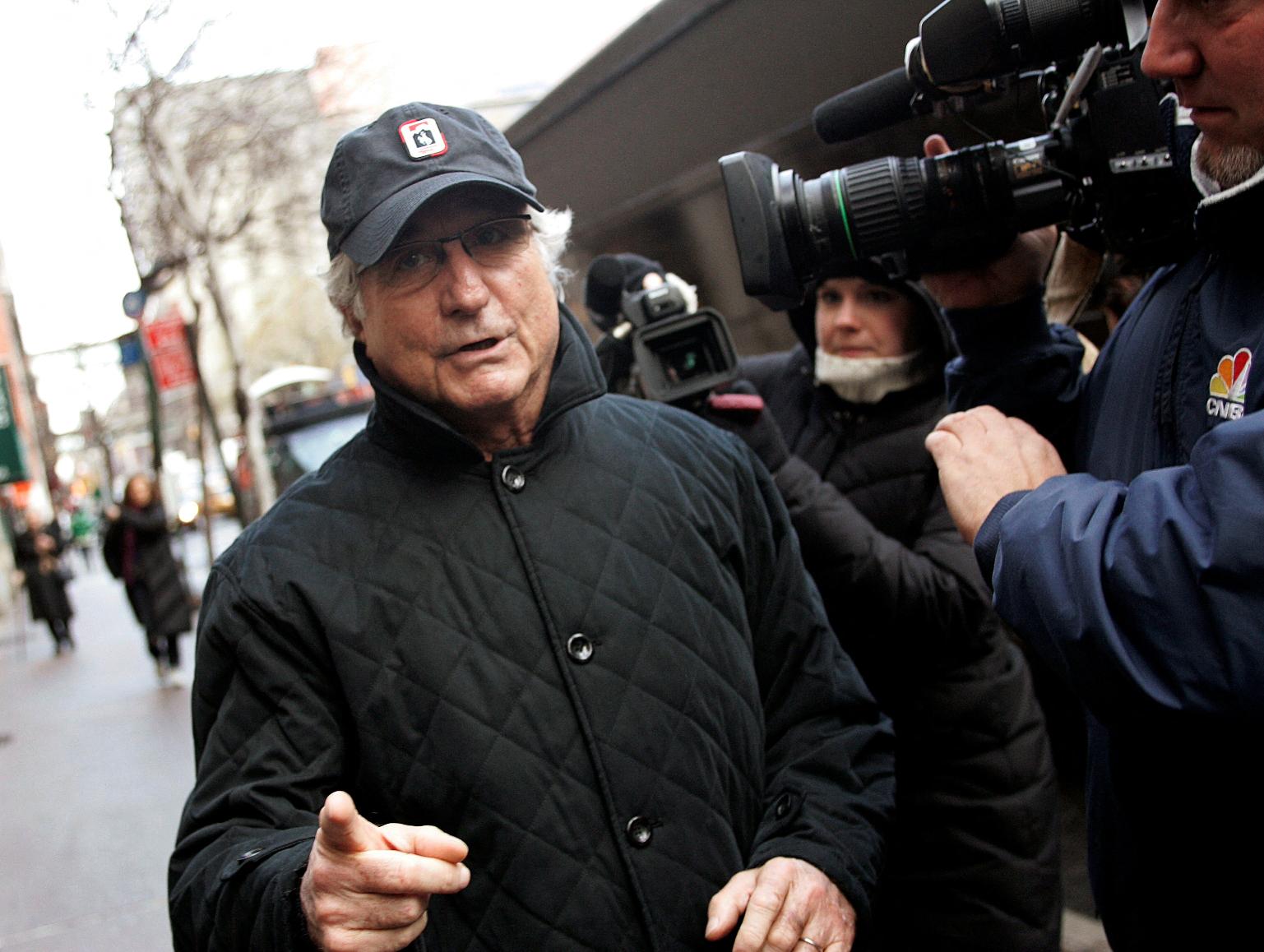
Dec 11 (Reuters) - Long before cryptocurrency and Sam Bankman-Fried, the biggest name in corporate fraud was Bernie Madoff. Fifteen years after the FBI arrested Madoff on Dec. 11, 2008 for running a massive Ponzi scheme — and two years after his death in a federal prison — lawyers are still sifting through the fallout of his nearly $65 billion fraud. More than $14.6 billion has been recovered for Madoff's victims so far by Irving Picard, the court-appointed trustee overseeing the liquidation of Madoff's firm, and his legal team. Picard has estimated that Madoff's fraud cost his customers $17.5 billion. Another recovery came Friday, when Picard announced he was poised to distribute $45 million more to Madoff investors. The case has been a windfall for Picard, 82, and his law firm, 1,000-lawyer Baker & Hostetler. Since Picard's appointment 15 years ago, they have been awarded more than $1.5 billion in fees, court records show. The fees through November 2022 have amounted to nearly 17% of Baker & Hostetler's revenues in that time, according to a Reuters analysis of court records and law firm data from the American Lawyer — an unusually large proportion from one case for a firm its size. Picard and Baker & Hostetler declined to comment. Their latest request for fees to the U.S. bankruptcy court in Manhattan seeks $37.9 million for more than 68,000 hours of work by 190 lawyers and professionals from April through July. Picard decided early on to bring cases against "feeder funds" that funneled investor money to Madoff, and "net winners" — investors who took more money out of Madoff's firm than they put in. About half of his recoveries came from a 2010 settlement with the estate of Madoff's longtime friend Jeremy Picower, which forfeited $7.2 billion. In recent years, Picard's attention has turned to recovering money that was transferred overseas. Marc Litt, who helped convict Madoff as a Manhattan federal prosecutor and is now at law firm Wachtel Missry, called Picard's recoveries "a remarkable result." Usually, he said, victims' money in a major fraud is spent in ways that can't be clawed back. 100 CASES TO GO Picard's and Baker & Hostetler's fees are paid by the Securities Investor Protection Corporation, a nonprofit that Congress created in 1970 to assist investors with accounts at failed brokerage firms. The fees come from assessments paid by SIPC's member broker-dealers, not from Picard's recoveries, said Josephine Wang, SIPC's president and CEO. It's not uncommon for law firms to reap massive fees from complex corporate collapses involving fraud. The lawyers that represented investors in Enron Corp received about $688 million in fees in 2008 for recovering $7.2 billion from its lenders, auditors and directors over seven years. U.S. law firm Sullivan & Cromwell has already received a judge's approval to collect more than $77 million in fees for its work since last year overseeing the bankruptcy estate of cryptocurrency exchange FTX, court records show. Like the Madoff case, the FTX bankruptcy will likely stretch for years. The exchange collapsed in November 2022, and its CEO Bankman-Fried was convicted last month of stealing $8 billion from FTX customers. Meanwhile, Picard's work goes on. Wang said the trustee is still waging about 100 recovery lawsuits, down from 1,000 at the start of the Madoff liquidation. "Yes, the trustee and SIPC are working hard to bring a close to the liquidation, but that will happen only after the maximum recovery has been realized for customers," Wang said. Jumpstart your morning with top legal news delivered straight to your inbox from The Daily Docket. https://www.reuters.com/legal/bernie-madoff-is-long-gone-lawyers-are-going-strong-2023-12-11/
2023-12-11 11:04
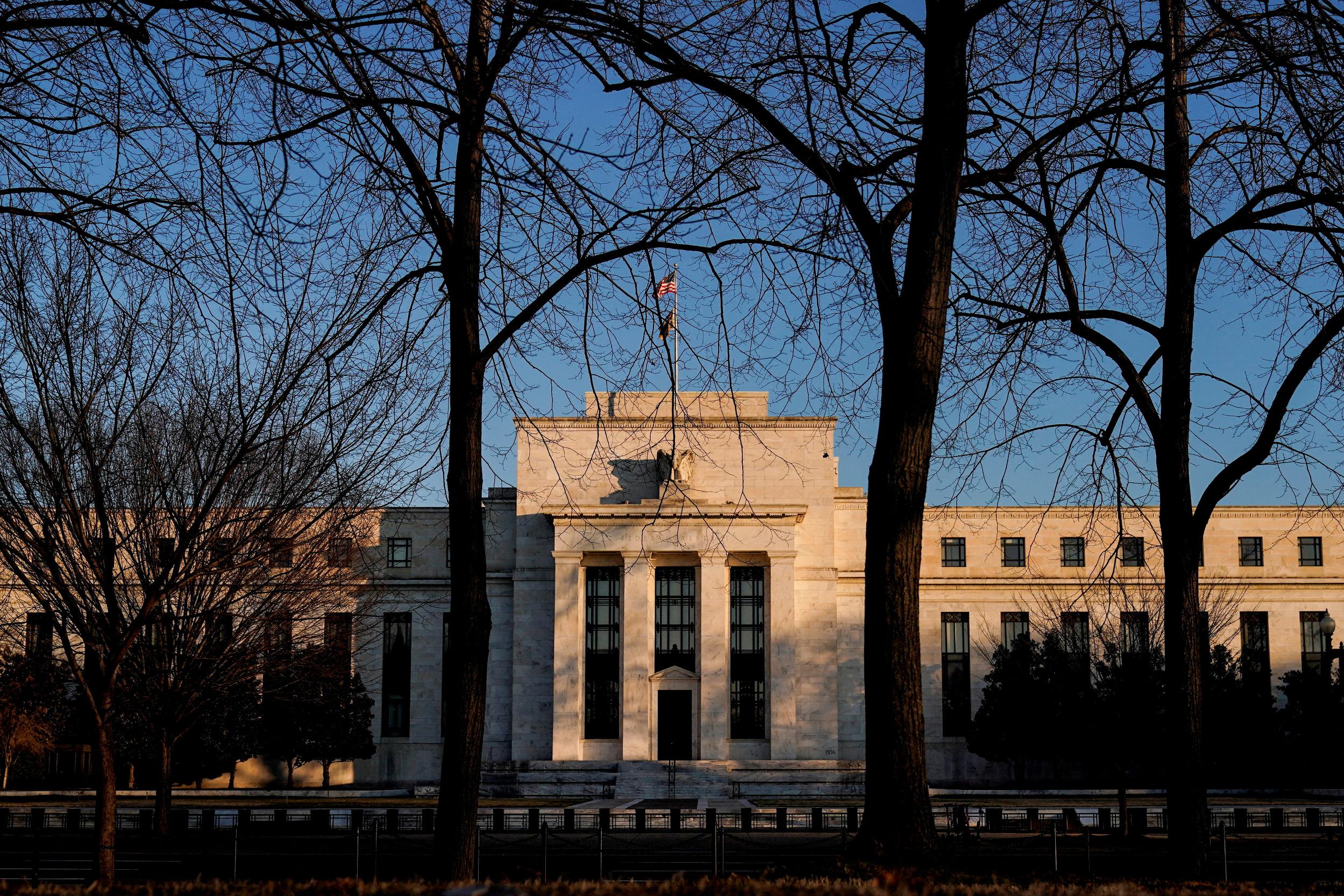
NEW YORK, Dec 11 (Reuters) - A key threshold markets link with an end to the Federal Reserve’s wind-down of its asset holdings could be hit sooner than expected, pointing to fresh uncertainty over the endgame for the central bank’s balance sheet normalization process. According to the most recent New York Fed survey of Wall Street’s biggest banks, the Fed is expected to end the contraction of its holdings of cash and bonds when balances in its reverse repo facility fall to $625 billion. At the same time, banks in the survey also say quantitative tightening, or QT, is likely to stop in the third quarter of next year. But reverse repos have been shrinking fast and could hit the level Wall Street associates with an end to QT well ahead of the expected end date, raising questions about whether that could mean an earlier-than-expected halt or whether markets and officials again need to reset their outlook. A key part of the Fed’s rate control toolkit, reverse repos have fallen rapidly this year from a peak of more than $2.5 trillion last December to around $821 billion at the end of last week. Recently the slide is being driven by cash moving off the Fed’s book and into higher-yielding government securities, a process likely to continue given large federal deficits, in the view of market participants. The Fed has cut its Treasury and mortgage-backed securities holdings by nearly $1.2 trillion since June 2022, a reduction that has occurred alongside its aggressive rate rises, which are its main tool to influence the economy. Fed officials have said repeatedly the effort of cutting their holdings will take quite a bit more time as they seek to withdraw just enough liquidity from the financial system to still keep firm control over short-term rates. Hitting that point is “well off in the future,” New York Fed President John Williams told reporters last month, adding “it's hard to predict exactly where” that level of liquidity will need to be. The reverse repo facility is widely viewed as a proxy for excess liquidity that can be easily removed. Closely watched alongside it is the level of bank reserves on deposit at the Fed, and while reverse repos have been diving, reserves have not. As of Wednesday, in fact, they were the highest since April 2022 at nearly $3.5 trillion. FUZZY ENDGAME For market participants the reverse repo facility has become closely linked to the end of the balance sheet drawdown, although - the NY Fed's primary dealer survey notwithstanding - some observers believe its usage needs to go to zero before the Fed will end QT. Some inside the Fed, such as Dallas Fed President Lorie Logan - whose views on the matter are influential as the former chief of New York Fed market operations - lean more to the idea of a full reverse repo drawdown being in the cards before discussion of an end to QT is warranted. That in theory gives the Fed more runway to run down its holdings than the market now sees. Not everyone agrees. “We think a strong argument can be made for ending the Fed’s balance sheet runoff before the [reverse repo] facility is fully drained,” analysts at Wrightson ICAP said. That’s because the liquidity parked there can help steady periods of money market volatility, the firm said. Analysts at TD Securities wrote in a recent note QT will stop in June with a positive reverse repo balance, although they still expect all the cash to eventually come out, presumably on the back of market forces rather than Fed action. Goldman Sachs economists told clients, meanwhile, they see reverse repos at $400 billion by the middle of next year and at zero by the end of 2024, while noting “one possible consequence of a faster-than-expected decline in [reverse repo] balances is that the Fed may consider winding down QT a quarter or so ahead of our baseline.” Derek Tang, an economist at research firm L.H. Meyer, said in contrast with the Fed’s view, if there’s some structural level of demand for the facility that keeps money in it, “the Fed needs to revisit its plan” and the level of financial sector liquidity needed to allow the Fed to stop QT could arrive sooner than thought. https://www.reuters.com/markets/us/sharp-fed-liquidity-drain-hints-early-end-balance-sheet-runoff-2023-12-11/
2023-12-11 11:02
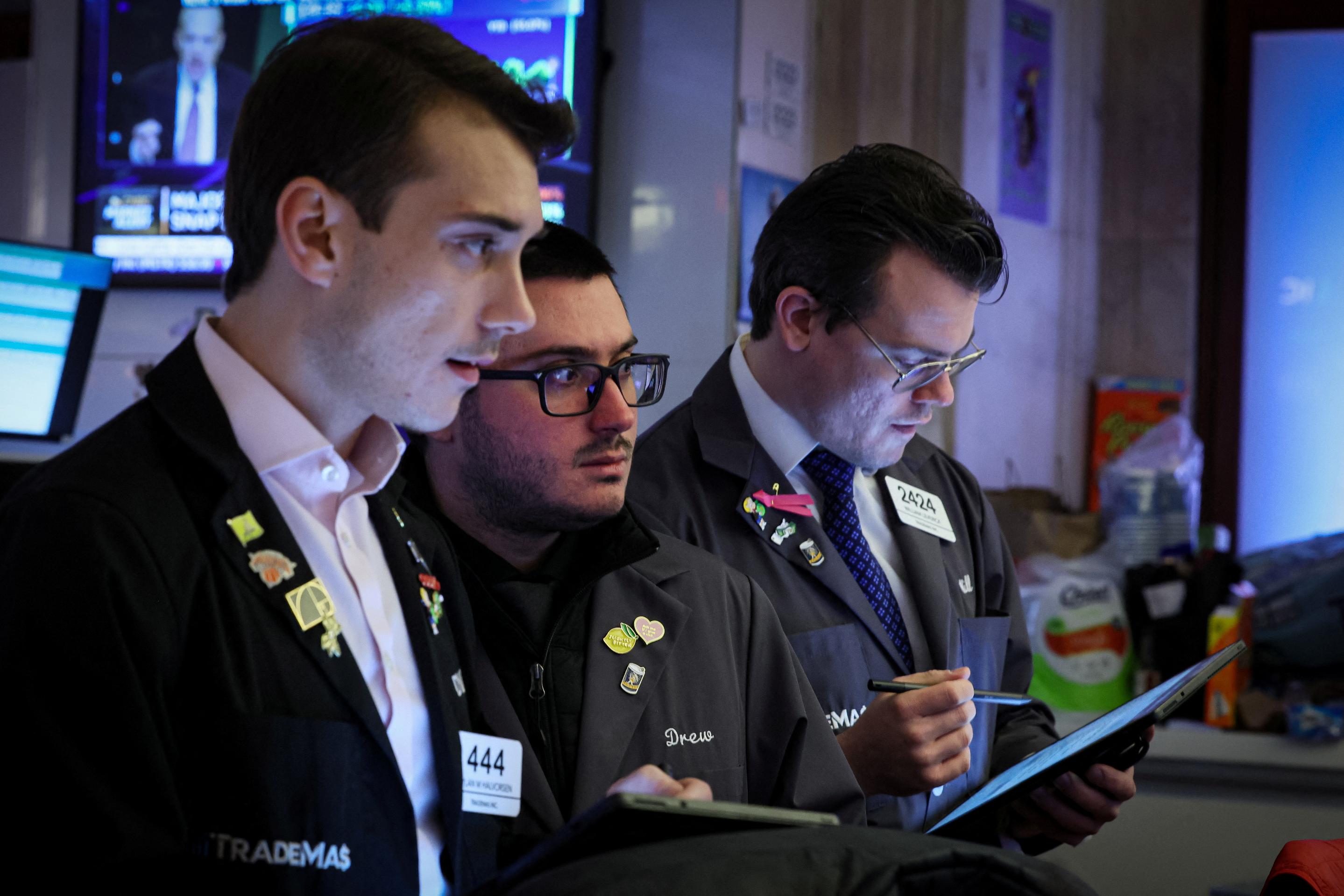
A look at the day ahead in U.S. and global markets from Mike Dolan The final sweep of major central banks meetings of 2023 this week is unlikely to involve any change of policy rates but may act as a reality check for markets' prevailing rate cut euphoria. And before we even get to the Federal Reserve's latest decision on Wednesday, there's a lot to digest. With Friday's surprisingly robust U.S. employment report for November cutting across other softer labor market indicators and still reverberating on Monday, the picture was colored by news of deepening deflation in China and reports of a pushback against recent speculation about imminent Bank of Japan tightening. The European Central Bank, Bank of England and Swiss National Banks all meet on Thursday. In what's proving a difficult moment to parse for global policymakers and investors alike, the Fed meeting will be preceded and likely influenced by the November consumer price inflation report on Tuesday. Consensus sees that ebbing another notch to 3.1%, though annual 'core' may be stuck at 4.0%. Despite the punchy jobs number, disinflation momentum and inflation expectations continue to impress. The University of Michigan's latest survey on Friday showed consumers' one-year inflation expectations plunged more than a point to 3.1% in December, the lowest reading since March 2021, and the 5-year view fell back below 3%. The New York Fed survey of consumer inflation expectations is due on Monday. The upshot has been that markets have taken a pretty benign view overall of the latest sweep of numbers running into the Fed meeting. The labor market dampens recession fears without shifting the disinflation picture unduly. With some $87 billion of 3- and 10-year U.S. Treasuries up for auction later on Monday too, 10-year yields backed up about 12 basis points to 4.24% after the jobs report on Friday and have held the line there today. The Fed futures market has sobered up a little too since the employment report, with the chances of quarter-point cut as soon as March slipping back below 50% and two cuts not fully priced now until July. That said, there's still almost 110bps of easing priced through the end of 2024. But Wall St stocks (.SPX) saw Friday's news as a glass as half full, with both the S&P500 and Nasdaq (.IXIC) clocking closing highs for the year - and corporate junk bond spreads tightening to their lowest in three months. The VIX (.VIX) volatility gauge closed at its lowest since the before the pandemic, although it crept back a little higher on Monday. Stock futures more generally show markets holding those gains before the bell later. The dollar (.DXY) perked up on the higher Treasury yields - but also spurred against the yen on the BOJ reports and against China's yuan on the weekend data on deflation there. The euro and sterling were actually both a touch higher ahead of the ECB and BOE meetings. As to the Fed meeting, thinking centres around degrees and nuance as so often. Key may be the publication of policymakers final quarterly economic projections of 2023 - including the so-called 'dot plot' of policy rate views. Unless the Fed shocks with another hike this week, the median rate projection from September for one more rate rise will likely have proved a bum steer - and will encourage markets betting the Fed's rhetorical caution on inflation will be trumped by reality. Of more importance, however, will be how it reshapes the 2024 view - where the median view is currently pencilled in at 5.1% - just a quarter point cut from here. Elsewhere, oil prices held steady as U.S. efforts to replenish strategic reserves provided support, though concerns persist about oversupply and softer fuel demand growth next year. Argentina's markets will react later to the weekend pledges from newly inaugurated President Javier Milei - who promised a 'shock' to fiscal policy and scrapping of the central bank. In corporate news, U.S. health insurer Cigna (CI.N) ended its attempt to negotiate an acquisition of rival Humana (HUM.N) after the pair failed to agree on price and the company announced plans to buy back $10 billion worth of shares. And an investor group consisting of Arkhouse Management and Brigade Capital has made a $5.8 billion offer to take department store chain Macy's (M.N) private. Key developments that should provide more direction to U.S. markets later on Monday: * New York Fed's survey of consumer inflation expectations. * U.S. Nov employment trends * U.S. Treasury auctions 3- and 10-year notes, 3- and 6-month bills * U.S. corporate earnings: Oracle, Blue Bird, Inotiv, Caseys General Stores https://www.reuters.com/markets/global-markets-view-usa-2023-12-11/
2023-12-11 10:46
DUBAI, Dec 11 (Reuters) - With the COP28 climate talks entering crunch time on Monday, U.N. climate chief Simon Stiell urged countries to come together to reach a final deal for the summit - where they were facing off over whether to call for an end to fossil fuels. Stiell said there had been progress in resolving some disagreements over the last day, but warned that "each step back from the highest ambition will cost countless millions of lives". Countries at the U.N. climate summit in Dubai were waiting on Monday for the COP28 Presidency, held by the United Arab Emirates, to release a new draft text of what would be the hoped-for final agreement. "Clear the unnecessary tactical blockades out of the way. And there have been many along this journey," Stiell said at a press conference Monday morning. He said two key issues were still in debate: how ambitious nations were willing to be in tackling climate change, and how much funding and support they would provide to back up that aim. A coalition of more than 80 countries including the United States, the European Union and small island nations are pushing for an agreement that includes language to "phase out" fossil fuels, a feat not achieved in 30 years of the U.N. summits. They are coming up against some strong opposition. Negotiators and observers inside the COP28 talks told Reuters that Saudi Arabia, de facto leader of the OPEC oil producers' group, was among the main opponents of a deal to phase out fossil fuels. Saudi Arabia's government did not respond to a request for comment on Monday morning. Deals at U.N. climate summits must be passed by consensus among the nearly 200 countries present. COP28 President Sultan al-Jaber has given negotiators until Tuesday to agree on what could be the world's first deal to phase out the use of fossil fuels, the main source of greenhouse gas emissions that cause global warming. As the COP28 summit headed into its endgame, U.N. Secretary General Antontio Guterres flew back to the conference on Sunday afternoon. "I am here to renew my urgent appeal to leaders: Recommit to the 1.5°C warming limit. End the fossil fuel age. Deliver climate justice," he said in a post on X, formerly known as Twitter. Speaking in a gathering of ministers and negotiators on Sunday, a representative for Saudi Arabia's delegation said a COP28 deal should not pick and choose energy sources, but should instead focus on cutting emissions. "We have raised our consistent concerns over the attempts to attack energy sources instead of emissions," the representative said. That position echoes a call made by oil producers' club OPEC in a letter to its members earlier in the COP28 summit, seen by Reuters, which asked them to oppose any language targeting fossil fuels directly. While greenhouse gas emissions from fossil fuels are by far the main cause of climate change, the burning of coal, oil and gas remains the world's main source of energy, powering many nations' economies. Despite the rapid growth of renewable energy, today, fossil fuels produce around 80% of the world's energy. Negotiators told Reuters other OPEC and OPEC+ members including Russia, Iraq and Iran have also resisted attempts to insert a fossil fuel phase-out into the COP28 deal. Singapore's environment minister Grace Fu said on Monday that the talks had progressed in some areas, but there still was "significant" work to do. "We have more or less narrowed down the crucial and critical issues. Having said that, there are still some gaps to finding the solution," Fu told reporters on the COP28 sidelines. https://www.reuters.com/business/environment/cop28-enters-crunch-time-with-countries-odds-over-fossil-fuels-2023-12-11/