2023-12-08 23:17
NEW YORK, Dec 8 (Reuters) - The Federal Reserve’s last monetary policy meeting of 2023 and a U.S. inflation report in coming days should test a stock market rally that some view as stretched following weeks of gains. Bets the Fed will begin cutting interest rates sooner than expected have fueled a surge in U.S. equities, which received a tailwind from a rapid decline in Treasury yields. The S&P 500 (.SPX) up nearly 20% in 2023 after a monthly gain in November that was its biggest of the year. Yet some investors believe the rise in stocks has left markets more vulnerable to reversals if consumer prices do not keep cooling or the Fed is less dovish than expected. The S&P 500 rose 0.2% this week, marking its sixth-straight weekly increase, the longest such winning streak in about four years. The index stands at its highest closing level since March 2022. "There is some optimism priced in on earnings and the economy and the Fed, so that has taken us to this level,” said Scott Wren, senior global market strategist at the Wells Fargo Investment Institute (WFII). With the S&P 500 near the top of its trading range, "we think there is a lot more potential for downside than upside." The WFII has a 2024 price target for the S&P 500 of about 4,700, or about 2% above current levels. While the Fed is expected to keep rates steady on Wednesday for a third straight meeting, investors will watch for signs from policymakers that confirm the market’s view for rate cuts as early as March 2024. The Fed will also release its summary of economic projections, which will show officials’ rate expectations for next year. Friday's stronger-than-expected jobs and consumer sentiment data, combined with a rise in yields, bolstered the case for those betting the Fed “could lean more hawkish” next week, said Quincy Krosby, chief global strategist for LPL Financial. The federal funds futures market on Friday was pricing in a 46% chance of a cut at the Fed's March meeting, and a nearly 80% chance of a cut in May, according to the CME FedWatch tool. Many investors believe stocks can continue rising in the weeks and months ahead, with the S&P 500 just 4% from making a fresh all-time high. Past rate cycles have shown that stocks tend to climb during the period when monetary policy is “on hold.” The S&P 500 has gained an average of 5.1% in periods that the Fed has paused its rate-hiking cycle and before the central bank’s first cut, according to an analysis of nine such periods by ClearBridge Investments. The S&P 500’s rally has brought it back to around where it stood when the central bank last raised rates in July, "suggesting there could be upside" from current levels, ClearBridge strategists said in a Dec 4 blog post. At the same time, a period of strong gains often sees stocks continuing to push ahead for months, according to Ryan Detrick, chief market strategist at The Carson Group. The S&P 500’s 8.9% gain in November put it in the 20 best-performing months since 1950, Detrick wrote in a recent report. The index was higher a year later 80% of the time after those exceptional months, rising 13.3% on average, according to Detrick. Still, the market’s recent gains could warrant caution. Angelo Kourkafas, senior investment strategist at Edward Jones, said a hotter-than-expected number in consumer price data due out on Tuesday could drive a short-term pullback. Stocks jumped last month after the October consumer price index was unchanged for the first time in over a year, boosting expectations the Fed was done tightening. Investors will weigh the latest CPI data against recent numbers showing economic softening, including moderation in another key inflation gauge, the personal consumption expenditures price index. “There are enough data points that we have a trend established that we are moving in the right direction,” Kourkafas said. https://www.reuters.com/markets/us/wall-st-week-ahead-year-end-rally-us-stocks-faces-twin-tests-fed-inflation-data-2023-12-08/

2023-12-08 22:42
HOUSTON, Dec 8 (Reuters) - (This Dec. 8 story has been refiled to remove the extraneous word 'not' in paragraph 2) Tellurian (TELL.A) ousted its chairman and co-founder Charif Souki as an executive officer, the U.S. liquefied natural gas (LNG) developer said on Friday, weeks after auditors raised doubts about the company's ability to cover future expenses. Souki helped create the U.S. LNG export market in 1996 after seizing on discoveries of vast amounts of shale gas. He turned Cheniere Energy from an LNG importer into a major exporter, but has been unable to repeat the same success at Tellurian. Souki was pushed out of Cheniere Energy and co-founded Tellurian in 2016 with Martin Houston, who will replace him as chairman. Souki will remain on the company's board, Tellurian said. Shares of company rose 4% in extended trading to 78 cents. The stock had traded as high as $11.19 in 2019 but fell after initial backers of its crucial Driftwood export project, including LNG traders Vitol and Shell, withdrew as potential customers. Tellurian has changed its Driftwood strategy several times over the years, never attracting enough potential clients for the first, $14.5 billion phase of the 27.6 million metric ton per annum facility. Last month, auditors put a going concern warning on its financial statements. It had begun construction on the first phase using cash from selling equity and from a small gas-production unit. The management change is "an indication of change in direction and arguably a sign of greater discipline in the company and greater focus on profitability," said Ben Dell, managing partner at Kimmeridge, a private equity firm. Dell has been critical of Souki's spending and strategic flip-flops. Tellurian has lost potential customers for Driftwood over the years. In August, Tellurian revealed that trader Gunvor Singapore Pte Ltd terminated its contract to take cargoes. Souki's ouster shows Tellurian needed to do something big to salvage the company's prospects, with so much tied to the success or failure of its Driftwood LNG project, said Alex Munton, director of global gas and LNG research at consulting firm Rapidan Group. "The company is still very focused on executing on its plan to complete construction of Driftwood LNG, and Souki recently said it had all but resorted to the tried and tested method of U.S. LNG projects, which he, Souki, was never in favor of," said Munton. https://www.reuters.com/business/energy/tellurian-says-co-founder-souki-step-down-chairman-2023-12-08/
2023-12-08 21:45
Dec 8 (Reuters) - Two Japanese energy companies, oil and gas producer Inpex Corp (1605.T) and power utility JERA, urged a U.S. energy regulator to give prompt approvals for Venture Global to begin construction on its CP2 LNG project in Louisiana. JERA's letter to the U.S. Federal Energy Regulatory Commission (FERC) dated Friday, which followed Inpex's letter on Thursday, reiterated the role of the CP2 LNG project in securing Japan's energy supply. Both companies have signed 20-year agreements to each buy 1 million metric tons per annum (MTPA) of liquefied natural gas (LNG) from CP2 LNG, and JERA said it had also bought spot cargoes from Venture Global's first project, Calcasieu Pass LNG. Inpex said that CP2 LNG's final investment decision (FID) is important for Japan's energy security, a position it said was supported by the country's economy ministry which owns 21.19% of Inpex shares. The CP2 LNG project is awaiting approval from the FERC, followed by export authorization from the Department of Energy, before construction can commence. Inpex hoped for construction to begin early next year. "The slowing of U.S. government authorizations for new U.S. LNG export facilities is concerning," said JERA, which has purchased U.S. LNG since 2017 and also invested in the Freeport LNG export plant in Texas. Venture Global LNG, which started early site work on CP2 in the spring of 2023, has contracts for nearly half that plant's 20 MPTA capacity and expects the rest to be sold out before the end of 2023. That includes a deal with Germany's Securing Energy for Europe GmbH (SEFE) to supply 2.25 million MTPA and a long-term agreement with Chevron (CVX.N) for the purchase of another 1 million MPTA from the CP2 project. The U.S. LNG developer is embroiled in contract arbitration cases with several customers over its insistence it does not have to provide contracted cargoes while its Calcasieu Pass export plant is undergoing commissioning. https://www.reuters.com/business/energy/two-japan-energy-companies-seek-us-approvals-venture-globals-cp2-lng-2023-12-08/

2023-12-08 21:42
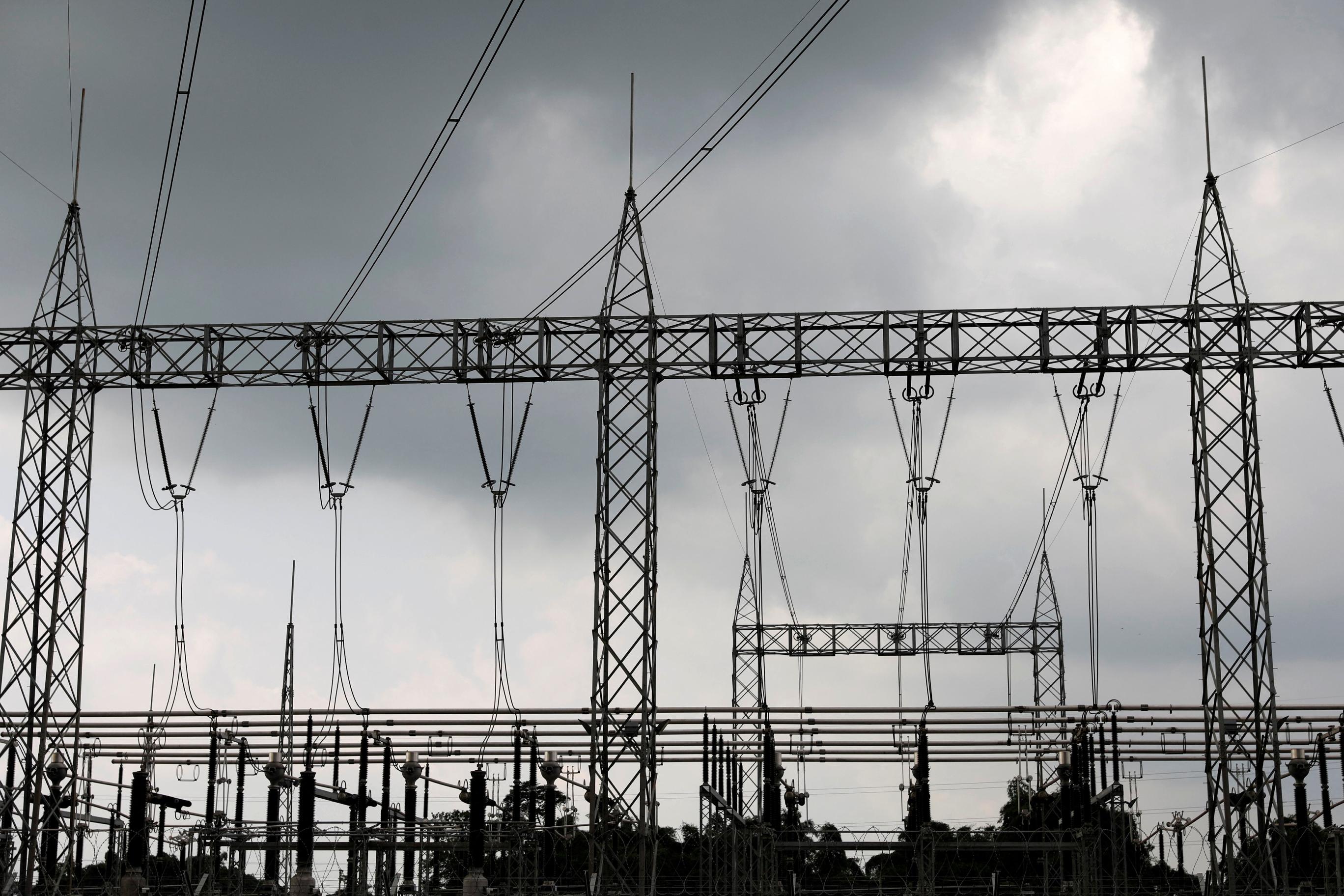
LAGOS, Dec 8 (Reuters) - Nigeria's government is considering handing over its stake in 11 power utilities to state governments to improve oversight and address the country's chronic power shortages, the minister of power said on Friday. The federal government holds a 40% interest in 11 power distribution companies (DISCOs) that were privatised a decade ago, each of which operates a franchise spanning three or more states. Nigeria's Minister of Power Adebayo Adelabu said the federal government is open to swapping its shares in the DISCOs for shares in the privately managed Niger Delta Power Holding Co, a separate power firm it jointly owns with the states and local governments. "We are committed to collaborating closely with the state ministries of power to tackle challenges in the distribution segment, considering its retail nature,” Adelabu said in a post on X. Nigeria, Africa's most populous nation of more than 200 million people, produces a fraction of its installed power generation capacity of 12,500 megawatts, leaving millions of households and businesses reliant on generators for electricity. President Bola Tinubu, who has embarked on Nigeria's boldest reforms in decades, signed a new law that allows state governments to generate and distribute power, replacing a previous law that gave only the federal government exclusive rights. https://www.reuters.com/world/africa/nigeria-mulls-handing-over-power-utilities-state-governments-2023-12-08/
2023-12-08 20:58
WASHINGTON, Dec 8 (Reuters) - The push for more nuclear power to help fight climate change must come with strengthened safeguards to fight proliferation of fissile nuclear materials, one of a group of bipartisan U.S. senators attending the COP28 talks in Dubai said on Friday. Promotion of nuclear power has played a big role in the COP28 talks with little discussion of safeguards for uranium and plutonium that can be used in nuclear weapons. More than 20 countries vowed on Dec. 2 to triple nuclear power capacity by 2050, with U.S. climate envoy John Kerry saying the world cannot achieve "net zero" emissions without building new reactors. Senator Edward Markey, a Democrat, said there needs to be standards "to guarantee that we don't add to the climate crisis with a nuclear nonproliferation crisis." "Any steps forward ... have to be accompanied by the very strongest, full-scope safeguards, or else we will see North Koreas, and Irans and Iraqs all across the planet," Markey told reporters in a call. North Korea continued developing nuclear weapons in 2023 and evading U.N. sanctions that aim to sever funding for Pyongyang's nuclear program, according to the UN. The U.S. says Iran is close to making a nuclear weapon, but Tehran says the program is for peaceful purposes. Iraq never built the bomb and dismantled its nuclear program after the 1991 Gulf War. The U.S. and eight other countries possess nuclear weapons. "If we want to prevent localized, intense forms of global warming - nuclear explosions in the world's military hot spots - we're going to have to tighten our controls over 'peaceful' nuclear technology that can be easily swapped out to make bombs," said Henry Sokolski, head of the Nonproliferation Policy Education Center. The Senate delegation attending COP28 includes Democrats Tom Carper and Ben Cardin, and Republican Lisa Murkowski. The group worked on the plane trip on legislation to support safeguards for smaller nuclear plants that could be built in factories called small modular reactors, Carper said. The measure is in the Senate's version of the National Defense Authorization Act and Carper said the group was working to ensure it could survive in the U.S. House's defense policy bill. Cardin said lawmakers were working with many countries interested in nuclear power "to make sure that we have he best arrangement using U.S. technology and U.S. companies, we think that's the safest way forward." Saudi Arabia is seeking to build nuclear power. Its de facto leader Mohammed bin Salman has said if Iran gets a nuclear arsenal the kingdom will seek one too. https://www.reuters.com/sustainability/climate-energy/nuclear-push-cop28-must-come-with-proliferation-safeguards-us-senator-2023-12-08/
2023-12-08 20:52
Dec 8 (Reuters) - The U.S. Food and Drug Administration (FDA) on Friday approved two gene therapies for sickle cell disease, making one of them the first treatment in the United States based on the Nobel Prize-winning CRISPR gene editing technology. Casgevy, developed by partners Vertex Pharmaceuticals (VRTX.O) and CRISPR Therapeutics (CRSP.BN), and bluebird bio's (BLUE.O) Lyfgenia were approved for people aged 12 years and older. Sickle cell disease (SCD) is a painful, inherited blood disorder in which the body makes flawed, sickle-shaped hemoglobin, impairing the ability of red blood cells to properly carry oxygen to the body's tissues. The disease, which can be debilitating and lead to premature death, affects an estimated 100,000 people in the United States, most of whom are Black. The Vertex-CRISPR therapy has a U.S. list price of $2.2 million, while bluebird's is $3.1 million. Both therapies, pitched as one-time treatments, will be available in early 2024. Two Wall Street analysts said bluebird's higher price and safety warning would hinder its sales in comparison to Casgevy. Shares of bluebird fell 40% on Friday, while U.S.-listed shares of CRISPR Therapeutics fell 8% and those of Vertex dropped 0.5%. Casgevy is based on CRISPR, discovered by Jennifer Doudna and CRISPR Therapeutics co-founder Emmanuelle Charpentier, that uses molecular "scissors" to trim faulty parts of genes that can then be disabled or replaced with new strands of normal DNA. Bluebird's gene therapy, on the other hand, is designed to work by inserting modified genes into the body through disabled viruses. "The approval of the first gene therapies for SCD represent a tremendous step forward for the SCD community, which has been historically overlooked and underfunded," said American Society of Hematology President Robert Brodsky. In separate clinical trials, both the treatments helped reduce painful episodes in patients with the disease, with 29 of 31 patients receiving Casgevy, and 28 of 32 patients on Lyfgenia showing improvement. "Today's actions follow rigorous evaluations of the scientific and clinical data needed to support approval, reflecting the FDA's commitment to facilitating development of safe and effective treatments for conditions with severe impacts on human health," said FDA official Peter Marks. The FDA has added a warning to Lyfgenia's label on the risk of blood cancer after acute myeloid leukemia was found in two patients in bluebird's trial. FDA officials said it had not seen such cases in Vertex patients, but would watch for side effects. Data on lasting effect of the therapies is limited, so the companies plan to assess potential long-term safety risks through a 15-year follow-up study after approval. The FDA said patients would be monitored throughout their lives for cancer malignancies. Treatment with the gene therapies can take several months and involve high-dose chemotherapy, with a potential risk of infertility. While fertility preservation methods like freezing eggs and sperm banking are covered under commercial insurance, bluebird CEO Andrew Obenshain said the company is seeking coverage in government-supported plans. The only longer-term treatment for sickle cell disease is a bone marrow transplant, but that requires matching donors. Other standard care for sickle cell patients have been chemotherapy drug hydroxyurea, or once-daily drugs such as Pfizer's (PFE.N) Oxbryta, which aim to slow the breakdown of red blood cells. For Vertex's therapy, patients must have stem cells harvested from their bone marrow. The cells are then sent to manufacturing facilities where they are edited using CRISPR/Cas9 technology. Once the cells are incubated, they are infused back into the patient during a month-long hospital stay. Vertex's CRISPR therapy is also under FDA review for another blood disease, transfusion-dependent beta thalassemia, with a decision expected by March 30. https://www.reuters.com/business/healthcare-pharmaceuticals/us-approves-two-gene-therapies-sickle-cell-disease-2023-12-08/