2023-12-08 19:09
WASHINGTON, Dec 8 (Reuters) - More U.S. commercial property owners are expected to turn to commercial mortgage-backed security (CMBS) lenders next year instead of banks, according to a new Moody's report. Elevated interest rates, volatility in property values and weakened cash flows have led to tightened lending standards by banks and other commercial real estate (CRE) lenders through 2023. Many new and existing borrowers are instead turning to CMBS, which pool individual loans and which have seen continued demand from investors focused more on the overall credit quality and yields of those securities' loan pools, according to a Moody's report published Wednesday. Multi-loan (conduit) and single-asset, single-borrower (SASB) CMBS loan issuance has declined overall this year from 2022 levels. But the second half of the year has seen a spike in SASB and CRE collateralized loan obligation (CLO) issuance, Moody's found. About 19% of $42.3 billion in performing CMBS conduit loans maturing next year carry high default risk. But CMBS investors, attracted by 10% or greater yields on these loans, will help them achieve refinancing even as lenders have gradually required lower outstanding loan balances as a percentage of property value. Landlords have struggled this year to keep up with rising coupon rates on mortgages, which most recently averaged 7.21%. That is double the average rate of 3.62% in 2020, according to Moody's. The hardest-hit commercial properties have been offices, which have experienced rising vacancies since more employees began working from home during the coronavirus pandemic. About $12 billion in CMBS conduit loans maturing this or next year have already entered delinquency or special servicing, in which a third party helps the borrower work out a solution to avoid default. While overall CMBS property yields will remain elevated in 2024, roughly $14.7 billion in SASB CMBS carries yield less than 8% and faces greater challenges to refinancing. In the event of trouble refinancing, these and other CRE loans will face low interest from buyers. Moody's expects transaction levels to remain low, matching 2021 levels, as wide bid-ask spreads between buyers and sellers have led to lower sales prices. Borrowers' debt service coverage ratios - their ability to make debt payments - have also declined closer to one-for-one. This has led to an uptick in interest-only loans as CMBS and other lenders continue putting capital to work, according to Moody's. https://www.reuters.com/markets/us/more-us-commercial-property-owners-tap-securities-market-2024-moodys-2023-12-08/

2023-12-08 19:03
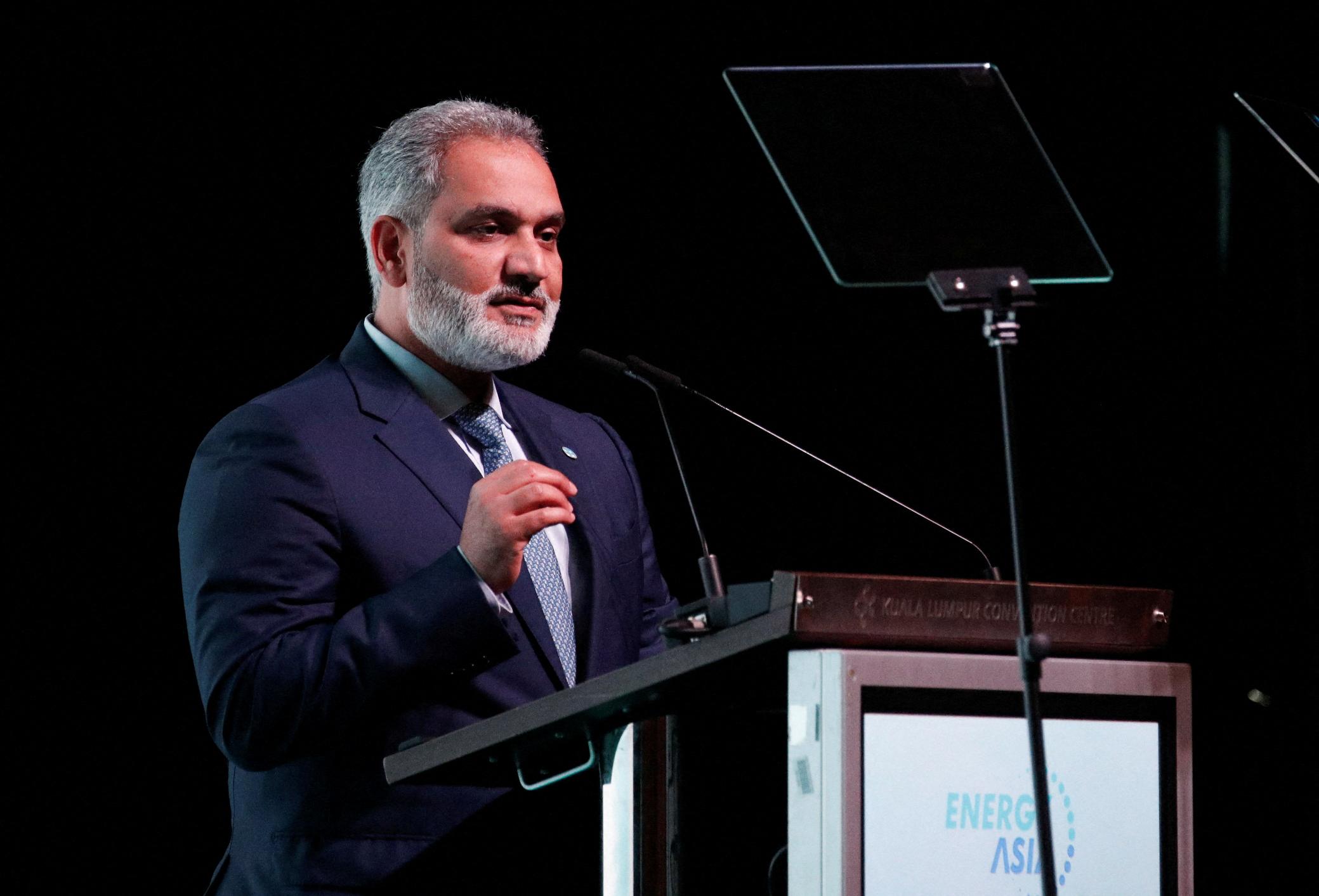
DUBAI, Dec 8 (Reuters) - OPEC Secretary General Haitham Al Ghais has urged OPEC+ members to reject proposals for any text under negotiation at the COP28 climate summit that targeted fossil fuels rather than emissions, a letter dated Wednesday and seen by Reuters on Friday showed. The language used to describe the future of fossil fuels in a final agreement is the most contentious issue at the U.N. summit hosted this year by the United Arab Emirates. Three sources confirmed the letter's authenticity to Reuters. OPEC said in a statement to Reuters it did not comment on official communication with member countries but that it continues to advise them and its partners. The letter referred to a draft of the COP28 text under negotiation that was published by the U.N. climate body on Tuesday. A different draft was published on Friday. The new draft deal includes a range of options from agreeing to a "phase out of fossil fuels in line with best available science", to phasing out "unabated fossil fuels", to including no language on them at all. "It seems that the undue and disproportionate pressure against fossil fuels may reach a tipping point with irreversible consequences, as the draft decision still contains options on fossil fuels phase out," the letter said. The letter urged delegations at COP28 to "proactively reject any text or formula that targets energy i.e. fossil fuels rather than emissions." Members of the Organization of the Petroleum Exporting Countries already hold positions largely opposing strong language on phasing out fossil fuels. The UAE, the second Arab country to host the climate summit after Egypt in 2022 and an OPEC member, has alongside other Gulf energy producers called for what they consider a more realistic energy transition in which fossil fuels would keep a role in securing energy supplies while industries decarbonise. "While OPEC Member Countries and Non-OPEC Countries participating in the Charter of Cooperation (CoC) are taking climate change seriously and have a proven record on climate actions, it would be unacceptable that politically motivated campaigns put our people's prosperity and future at risk," the letter seen by Reuters said. Countries are expected over the next few days to focus on the language around fossil fuels in hopes of reaching a consensus before the summit ends on Dec. 12. "The inclusion of some options that focus on the need for action toward phaseout of all fossil fuels this critical decade is a step in the right direction," said Nikki Reisch, climate and energy program director at the Center for International Environmental Law. "But language calling for the massive scale-up of risky and speculative carbon capture and removal technologies risks blowing a gaping loophole through the energy package and must be struck," she said. OPEC's Ghais said in a reply to Reuters questions over its Wednesday letter that it would continue to advocate reducing emissions, not choosing energy sources. "The world requires major investments in all energies, including hydrocarbons, all technologies, and an understanding of the energy needs of all peoples," the secretary general said in the reply. Li Shuo, director of China Climate Hub at the Asia Society Policy Institute, said of the new draft COP28 agreement: "This is the beginning of the end." He said the first version included options from "two extreme sides of the political spectrum" and the new options were filling in "the empty field in the middle". https://www.reuters.com/sustainability/climate-energy/opec-chief-urges-members-reject-any-cop28-deal-that-targets-fossil-fuels-2023-12-08/
2023-12-08 18:55
Dec 8 (Reuters) - Endeavor Energy Partners is exploring a sale that could value the largest privately-held oil and gas producer in the Permian basin, the top U.S. oilfield, at between $25 billion and $30 billion, according to people familiar with the matter. The sale would come almost 45 years after Texas oilman Autry Stephens started the company that would become Endeavor. The 85-year-old wildcatter has decided to capitalize on a wave of mega deals sweeping the sector, the sources said. Stephens has asked JPMorgan Chase (JPM.N) bankers to prepare to launch a sale process for Endeavor in the first quarter of 2024, the sources said, cautioning no transaction is certain and asking not to be identified because the deliberations are confidential. Stephens has considered offers from suitors for Endeavor in the past, including in 2018, Reuters has reported. He now wants to settle the company's future rather than let his estate decide after his death who it should sell it to, the sources said. Endeavor and JPMorgan declined to comment. Endeavor's operations span 350,000 net acres (1,416 square kilometers) in the Midland portion of the Permian shale basin that straddles West Texas and eastern New Mexico. The universe of potential deep-pocketed buyers for a company the size of Endeavor is limited. However, the consolidation wave hitting the industry, as producers seek to boost scale and lock up the best acreage, shows there would be appetite among the few. In October, Exxon Mobil (XOM.N) clinched a $60 billion deal to buy Pioneer Natural Resources (PXD.N) and Chevron (CVX.N) announced a $53 billion agreement to buy Hess (HES.N). In these transactions, the acquirers are using their stock as currency, rather than tapping into their cash piles. This leaves them with sufficient financial firepower to bid for Endeavor, even as they try to complete and integrate these acquisitions. Exxon is familiar with Endeavor's operations because the two companies teamed up to drill on some of the latter's land until 2022. ConocoPhillips (COP.N) completed in October a $2.7 billion deal to buy out a 50% stake in the Surmont oil sands project in Canada. It has also shown an interest in CrownRock, which is majority-owned by private equity firm Lime Rock Partners and led by another Texas wildcatter, Timothy Dunn, Reuters has reported. The sale process for CrownRock is ongoing. It is unclear whether Exxon, Chevron or Conoco will pursue a bid for Endeavor. Exxon and Chevron declined to comment. There has been outreach from multiple interested parties in recent times, which helped influence the decision to explore a sale of Endeavor, two of the sources said. Stephens, a former appraisals engineer who became more known through his appearances on the TV documentary series Black Gold, grew Endeavor by acquiring the unloved acreage of his competitors and managing to extract oil and gas profitably. To lower his production costs, Stephens created and used his own fracking, construction, trucking and other services companies. Endeavor produced 331,000 barrels of oil equivalent in the second quarter of 2023, up 25% from the corresponding period in 2022, according to Fitch Ratings. The credit ratings agency projected last month that Endeavor will generate about $1 billion of free cash flow in 2024. https://www.reuters.com/business/energy/endeavor-energy-explores-sale-much-30-billion-sources-2023-12-08/

2023-12-08 18:12
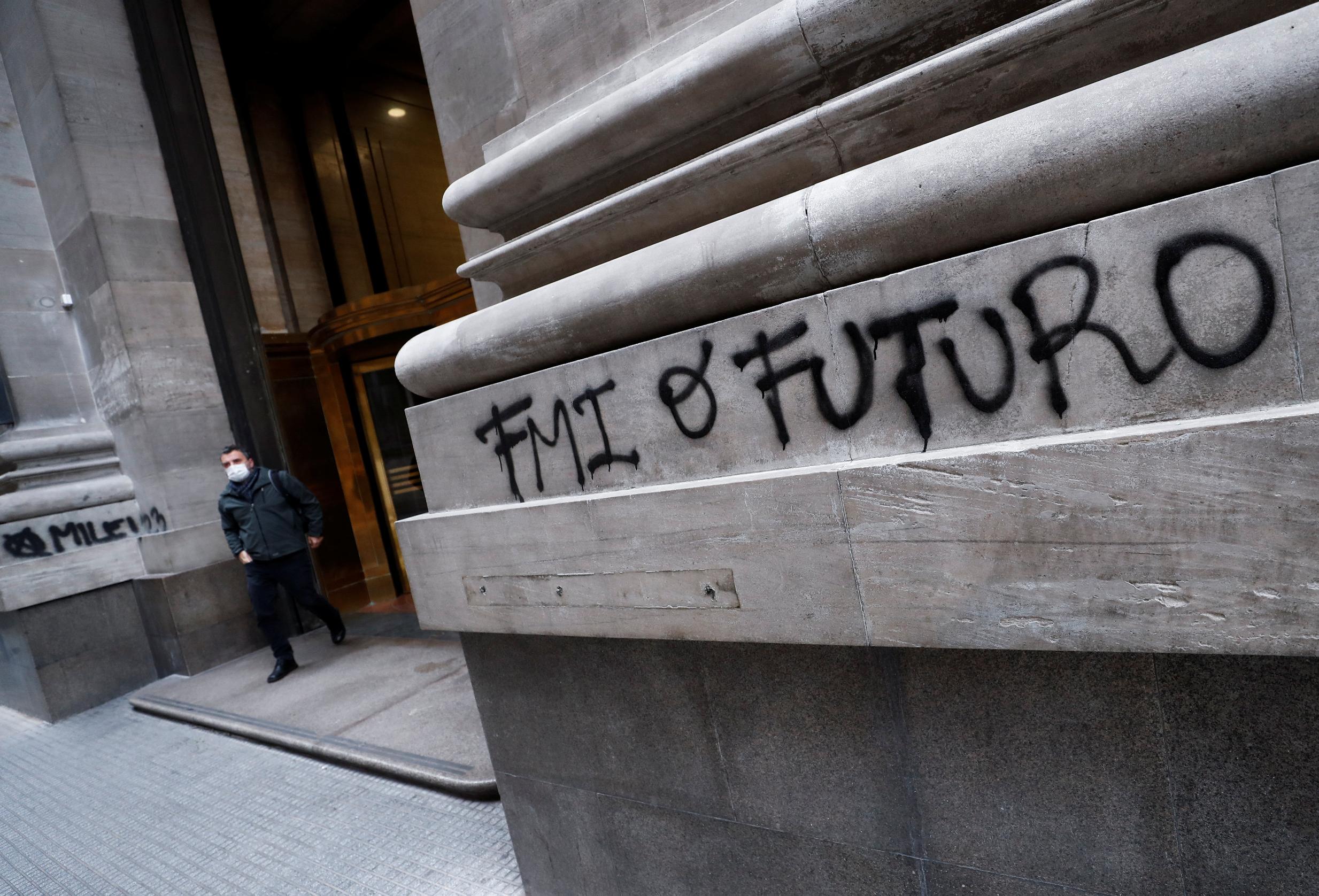
BUENOS AIRES, Dec 8 (Reuters) - Argentina's Leonardo Madcur, a top adviser under outgoing Economy Minister Sergio Massa, is set to be named the country's representative at the International Monetary Fund (IMF), three people familiar with the matter told Reuters. Madcur resigned from his position as Massa's chief of advisers in the ministry on Dec. 7, according to a decree published in the official gazette. As a top adviser in the ministry, Madcur was part of the Argentina delegation who negotiated with IMF officials overseeing the nation's $44 billion programme. The role of country representative will be key over coming months as the programme is now off track after missing several targets. Argentina is the IMF's biggest borrower. He was also part of the team that worked on the transition from Massa to Luis Caputo, who will take over the economy ministry on Dec. 10 when Argentina's president-elect Javier Milei will take office. A spokesperson for Milei said Madcur's position has not been confirmed nor published in official statements. Madcur did not reply to a request for comment. Incoming minister Caputo met with IMF officials at the end of November during a trip to Washington. Milei needs to get the country's IMF deal back on track urgently with support from the U.S. - the IMF's largest shareholder. The 2022 program with the Fund is used mostly to pay the Fund back for a failed $57 billion loan from 2018. There is a pending November review under the loan that would unlock over $3.2 billion in disbursements if it is approved by both IMF staff and the Fund's executive board, but it is unclear if the review will be completed before the year-end. It is also unclear if the new administration intends to request a new program with the IMF. Argentina has payments to the Fund for $900 million in December, with almost $2 billion due in January. Faced with deeply negative reserves in the central bank, the previous administration has tapped repeatedly a currency swap with China's central bank to pay the IMF. The position of representative to the IMF is one that has seen few personnel changes from Argentina in recent years. https://www.reuters.com/world/americas/argentina-set-name-madcur-countrys-imf-representative-sources-2023-12-08/
2023-12-08 16:16
Dec 8 (Reuters) - U.S. consumer sentiment perked up much more than expected in December, snapping four straight months of declines, as households saw inflation pressures easing, a development likely to be welcomed by Federal Reserve officials, a survey showed on Friday. The University of Michigan's preliminary reading of its Consumer Sentiment Index shot up to 69.4, the highest since August, from November's final reading of 61.3. The median expectation among economists in a Reuters poll had been for the index to edge up to 62.0. "Consumer sentiment soared 13% in December, erasing all declines from the previous four months, primarily on the basis of improvements in the expected trajectory of inflation," survey Director Joanne Hsu said in a statement. The survey's preliminary gauge of current conditions rose to 74.0 from last month's final level of 68.3, while the expectations index climbed to 66.4, the highest since July, from 56.8 in November. Consumers' outlook for inflation in the year ahead plunged to 3.1% - the lowest since March 2021 - from November's final expectation of 4.5%. The 1.4 percentage point decline was the largest monthly drop in one-year inflation expectations in 22 years. Over a five-year horizon, consumers expect inflation to average a three-month low of 2.8%, down from 3.2% in November, which had been the highest since March 2011, when it reached the same level. Officials at the Fed, who have raised interest rates by 5.25 percentage points since March 2022 to lower inflation from four-decade highs, keep close tabs on consumers' attitudes about price trends. They are keen to see inflation expectations trend lower so as not to alter consumption behavior that could reverse the gains they have made in slowing the pace of price increases. The Fed meets next week for the last time this year and is expected to leave rates unchanged at 5.25% to 5.50% amid growing evidence that inflation pressures are subsiding. Prices rose by 3.0% in the 12 months through October by the measure the central bank uses to set its inflation target of 2%. That is down from a peak in June 2022 of 7.1% and was the lowest since March 2021. Thanks largely to persistent inflation, American households have held a broadly sour view of the U.S. economy and their own prospects ever since the COVID-19 pandemic struck in early 2020, even though overall employment is back to record highs, jobless rates are near historic lows, wages have been rising faster than before the health crisis, and overall economic growth has been running well above trend. Researchers at the Federal Reserve Bank of Chicago recently examined this historic disconnect between strong labor market conditions and consumer and business sentiment. "While part of these gaps appears to be driven by newly persistent pessimism after the COVID-19 recession in the U.S., consumer and small business sentiment are also clearly not reacting to strong labor market conditions in the same manner that they used to," research authors Jacob Herbstman and Scott Brave wrote. https://www.reuters.com/markets/us/us-consumers-moods-brighten-inflation-worries-subside-umich-2023-12-08/

2023-12-08 15:45
Dec 8 (Reuters) - A stronger-than-expected U.S. labor market won't keep the Federal Reserve from pivoting to a series of interest-rate cuts next year, but it could take until May for it to deliver the first reduction, traders bet on Friday. Employers added 199,000 workers to their payrolls in November, the Labor Department's monthly jobs report showed, more than the 180,000 that economists had expected, and the unemployment rate unexpectedly fell to 3.7%, from 3.9% in October. Hourly earnings ticked up 0.4% from a month earlier, more than expected and an acceleration from the prior month. But the labor force participation rate also rose, to 62.8%, easing the prospect that an overheated job market will short-circuit progress on the Fed's inflation battle. A separate report Friday showed U.S. consumer sentiment improved more than expected in December as households saw inflation pressures easing. The U.S. central bank is expected to keep rates in the current 5.25%-5.50% range when it meets next week, leaving policy on hold since July. Traders before Friday's jobs report had put about a 60% probability on a March start to Fed rate cuts, but after the data reduced that to just under 50%, with a first reduction seen as more likely to come in May. Further rate cuts are priced in for the rest of 2024, with the policy rate seen ending the year in the 4%-4.25% range as the Fed adjusts borrowing costs downward not as an antidote to a weaker labor market but rather to keep pace with an expected continued cooling in inflation. The pace of that improvement in inflation will help determine the timing of the Fed's pivot to rate cuts, analysts said. "We maintain our call for the Fed to start cutting rates by mid-year, but it is contingent on inflation continuing to trend lower and further weakening in economic activity," wrote Nationwide economist Kathy Bostjancic after the report. Fed policymakers will release their own views of where the economy, inflation, and interest rates will go next year when they wrap up their last meeting of the year on Wednesday. https://www.reuters.com/markets/rates-bonds/traders-see-march-start-fed-rate-cuts-less-certain-after-jobs-data-2023-12-08/