2023-12-08 15:28
MOSCOW, Dec 8 (Reuters) - Russians have enjoyed a dramatic increase in living standards over the course of President Vladimir Putin's nearly 24 years at the helm of Russian politics. On Friday, Putin said he would run again for the presidency. High prices for oil, Russia's main export, boosted Putin's standing as the country emerged from the chaotic 1990s, raising incomes and purchasing power for millions of its citizens. But the 2008 financial crisis, followed by repeated bouts of Western sanctions following Moscow's annexation of Crimea in 2014 all the way through to restrictions in the wake of its full-scale invasion of Ukraine, have changed the calculus for the Kremlin. Russian authorities have battled rouble depreciation and often high inflation in recent years as the economy has moved from consistent growth to an era of stagnation. Here are some charts telling the economic story behind Putin's time in power. Buttressed by high commodity prices in the early years of Putin's presidency, the rouble traded largely steady, but following the imposition of sanctions over Russia's annexation of Crimea, which Ukraine demands it hand back, the currency has depreciated and become more volatile. It reached a record low in the weeks after Moscow's February 2022 invasion of Ukraine, following which the authorities introduced currency controls to stem capital outflows. Russians have become used to rouble fluctuations and the general weakening trend in the last decade in particular. Real incomes also grew steadily in the first few years but wage growth has become more stagnant since the sanctions era began. Inflation and interest rates have often been elevated, with Russia's central bank using monetary policy to try and keep a lid on price rises. In the last decade, Russia's budget spending priorities have also shifted, with a rising focus on defence spending that will culminate in almost a third of all budget expenditure going to the military in 2024. Spending on other areas, such as healthcare and education, has barely increased in real terms in over a decade. https://www.reuters.com/markets/europe/rise-stagnation-russias-economy-during-putins-tenure-2023-12-08/

2023-12-08 14:58
JOHANNESBURG, Dec 8 (Reuters) - South Africa's rand weakened against the dollar on Friday after a surge in U.S. payrolls gains dampened hopes of an early interest rate cut by the Federal Reserve. At 1439 GMT, the rand traded at 18.9250 against the dollar , about 0.9% weaker than its previous close. The dollar index was last trading up 0.4% at 104.1 against a basket of major currencies. Data on Friday showed U.S. job growth accelerated in November while the unemployment rate fell to 3.7%, signs of underlying labour market strength that suggested financial market expectations of a rate cut early next year were probably premature. Like most emerging market currencies, the rand tends to take cues from global factors such as U.S. monetary policy in addition to local events. Investors in South Africa are still on the lookout for an announcement on the appointment of a new chief executive officer at struggling utility Eskom after Bloomberg reported that Dan Marokane was set to be appointed CEO. On the stock market, the Top-40 (.JTOPI) index was down over 1.5%. https://www.reuters.com/markets/currencies/south-african-rand-slips-against-dollar-2023-12-08/

2023-12-08 14:33
ORLANDO, Florida, Dec 8 (Reuters) - Hedge funds look to be scaling down their record short position in U.S. Treasury futures, marking the beginning of the end of the so-called 'basis trade' - an unwind that regulators have warned could pose severe financial stability risks. With the Federal Reserve expected to begin cutting interest rates next year, perhaps as early as March, attention will intensify on the reversal of the lucrative trade for hedge funds when rates were rising. The basis trade is a relative value trade where hedge funds exploit the small price difference between cash Treasuries and futures contracts. They "short", or sell the bond future, and go "long", or buy the cash bond. The trade is funded in overnight repo markets and highly leveraged. If the unwind is now underway, the question for authorities - and financial markets at large - is whether the $1 trillion position can be unwound in an orderly manner. A 'soft landing', if you like. The Bank of England this week was the latest financial authority to warn that a rapid unwind of such a large and highly leveraged position could lead to unwanted market volatility. "Sharp increases in volatility in market interest rates could lead to increases in margin required on the futures positions, or hedge funds may find it harder to refinance their borrowing in the repo market," the BoE warned. "This, combined with any breaches of risk- or loss-limits, could force funds rapidly to unwind their positions ... which could amplify the market volatility," it said. 'DASH FOR CASH' But an orderly unwind is possible, assuming overnight funding markets remain calm, funds' margin requirements aren't suddenly raised, and there is no unforeseen liquidity crunch or market shock that forces the Fed into emergency action. If the Fed's rate cutting path is smoother this time around and financial market plumbing under the hood doesn't clog up, funds' exit from the basis trade should be smoother too. "As long as we don't have an event that would compel the Fed to cut rates by 50 or 100 basis points, I don't think we will get a repetition of March 2020," Christoph Schon, senior principal of applied research at Axioma, said. The BoE and others, including the Fed and the Bank for International Settlements, point to the March 2020 'dash for cash', when worries about the Fed's balance sheet, banking system reserves and the pandemic collided, as a warning of where it can lead. But as an Office of Financial Research paper in July that year found, there was no evidence funds bailing out of basis trades due to margin calls and repo rate volatility actually added to stress in Treasury markets at that time. CHIPPING AWAY Schon points to the second half of 2019, when funds began reducing their then-record short position in Treasuries futures. Although repo market stress bubbled up late that year, the hedge fund unwind was fairly orderly, for the most part. It only really became disorderly in March the following year when the pandemic hit. Commodity Futures Trading Commission data show that the aggregate short position in Treasury futures held by leveraged accounts, the hedge funds most involved in the basis trade, recently reached record levels. But they are starting to fall, most notably at the short end of the curve. Funds have cut their gross short position in two-year futures three weeks in a row, and it increasingly looks like the record short of 2.65 million contracts in the week to Nov. 7 will prove to be the peak. In net terms, the move has been even greater - the record net short of 1.716 million contracts on Nov. 7 has since been cut by more than 10%. Leveraged funds trimmed their short position in the five-year space last week by 95,000 contracts, the biggest reduction in three months and one of the biggest this year. The record short aggregate position worth a notional $1.008 trillion across two-, five- and 10-year futures in the first week of November has been chipped away, and is now worth $968 billion. Javier Corominas, director of global macro strategy at Oxford Economics, believes the arbitrage opportunities in the repo market and the 'cash vs futures' bond spread that made the basis trade profitable have faded. "(This) suggests that financial stability risks emanating from forced selling of U.S. Treasuries in an adverse bond market scenario have diminished," he wrote last month. (The opinions expressed here are those of the author, a columnist for Reuters.) https://www.reuters.com/markets/us/praying-soft-landing-1-trln-basis-trade-mcgeever-2023-12-08/
2023-12-08 14:12
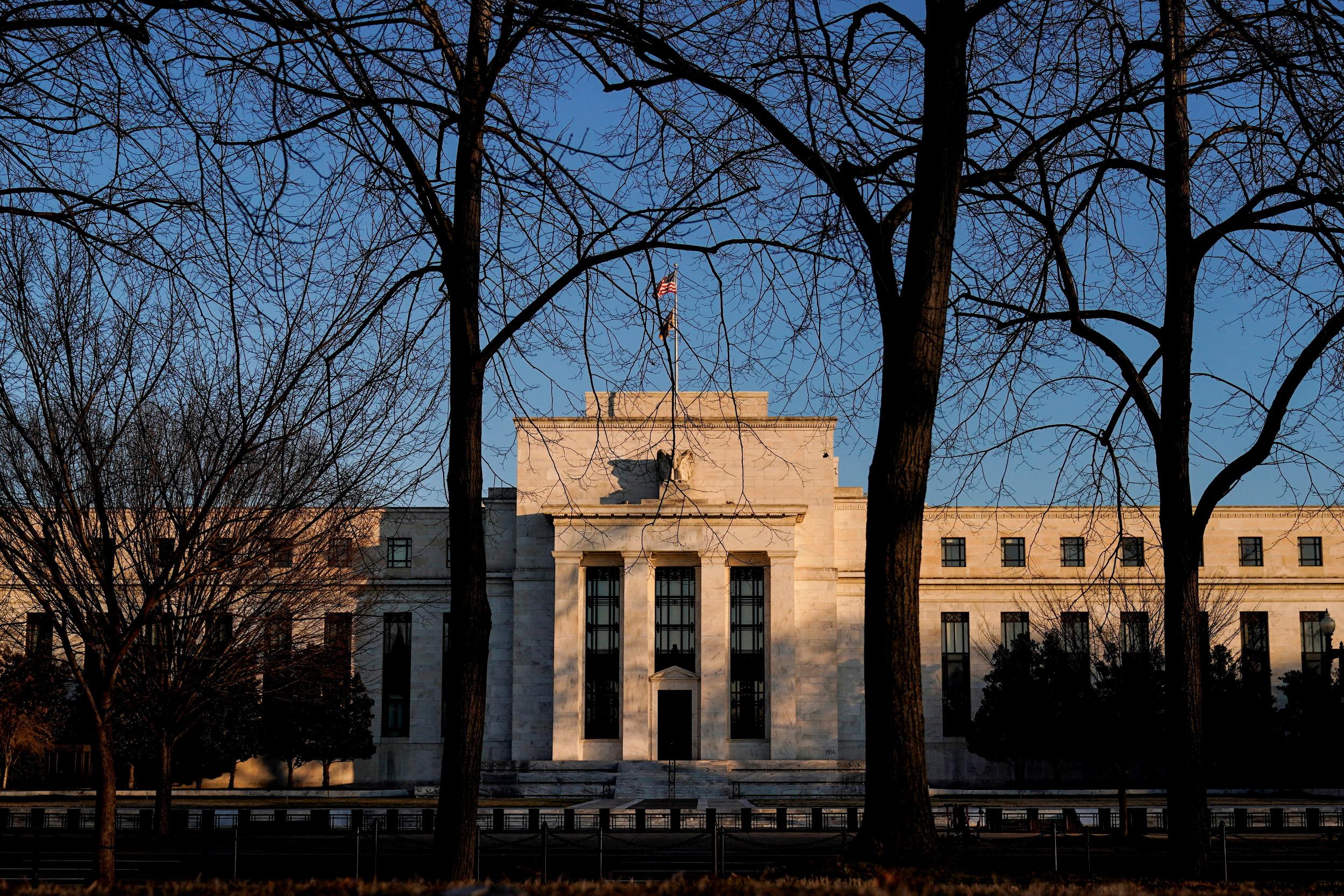
NEW YORK, Dec 8 (Reuters) - U.S. job growth accelerated in November and the unemployment rate dropped to 3.7% even as more people entered the labor force, pointing to underlying strength in the labor market. Nonfarm payrolls increased by 199,000 jobs last month, the Labor Department's Bureau of Labor Statistics (BLS) said on Friday. Economists polled by Reuters had forecast 180,000 jobs created. About 25,300 members of the United Auto Workers (UAW) union ended their work stoppages against Detroit's "Big Three" car makers on Oct. 31, the BLS strike report showed, while 16,000 members of the SAG-AFTRA actors union returned to work. The employment report suggested that financial market expectations that the Federal Reserve could pivot to cutting rates as soon as the first quarter of 2024 were premature. read more MARKET REACTION: STOCKS: U.S. stock futures (.SPX) added to a slight loss then steadied to stand 0.14% easier BONDS: U.S. Treasury 10-year yield rose to 4.241% after the report. Two-year yields rose to 4.708% FOREX: The dollar index was up 0.376%, up a bit more than just before the data COMMENTS: MATTHEW MISKIN, CO-CHIEF INVESTMENT STRATEGIST, JOHN HANCOCK INVESTMENT MANAGEMENT, BOSTON "It's a relatively strong report. The unemployment rate is ticking down a little bit. The headline number is solid near 200,000. You saw a return from the strike on the manufacturing side which helped to put manufacturing jobs back into positive territory. There was a bit more wage growth and I think that's causing the 10-year Treasury yields to rise, which equity markets aren't going to be too happy about." "I don't think this gives the Fed the ability to pivot. It's not weak enough ... Powell's going to push back on the market's pricing of rate cuts. He's likely to communicate that the Fed's got to stay steady in restrictive territory for the time being." STUART COLE, HEAD MACRO ECONOMIST, EQUITI CAPITAL, LONDON "Today’s employment report has come in hotter than expected, with the payrolls number and monthly average earnings figure printing above expectations and the unemployment rate unexpectedly falling. The picture being painted as far as the Fed is concerned will likely be one of a labour market that remains strong and showing no real signs yet of buckling under the weight of the interest rates rises that it has so far delivered." "The drop in the unemployment rate in particular will assuage any concerns of a recession, and with payrolls and earnings both rising it keeps the ‘soft landing’ narrative very much in the ascendancy." "The report will likely see some of those forecasting an early Fed cut next year re-evaluating their positions, and unless we get a surprisingly large fall in the CPI numbers next week, those Q1 rate cut expectations will probably now be priced out." "However, this is only one month’s numbers, and as such is not likely to impact the outcome of next week’s FOMC meeting, and particularly so if the CPI numbers next week continue to trend lower. As such, the Fed is unlikely to be unduly concerned about the strength of the labour market being reported today – we would need a run of similar reports before concerns would be expressed." TONY ROTH, CHIEF INVESTMENT OFFICER AT WILMINGTON TRUST, PHILADELPHIA "These numbers today are inflationary and it doesn't mean that from a fundamental standpoint that this isn't totally consistent with the soft landing because I believe that it is. But from a short term technical market standpoint, this is going to weigh on both stocks and bonds." "There's been increasing pressure around the Fed to pivot to a more accommodative message, and these numbers are going to give the Fed cover to continue that very hawkish approach." ALEX COFFEY, SENIOR TRADING STRATEGIST, TD AMERITRADE, CHICAGO “There was a pretty big move in the bond market to the downside, sending yields higher, so that's why we've seen the reaction that we have in the equity market. But I wouldn't be surprised if intraday we saw that kind of work its way towards unchanged or even higher, just because there was just so much fear post that JOLTS number earlier in the week and the disappointing ADP, that this was going to be a weaker number." "This complicates the recent market narrative of Fed rate cuts as early as March, and you do see some of that repricing. It did move down a little bit and I don't think that's a surprise, as for us to actually get a rate cut in March, you're going to need to start seeing data that confirms a worsening situation. Hard to leave this report feeling that way." JAMIE COX, MANAGING PARTNER, HARRIS FINANCIAL GROUP, RICHMOND, VA “It’s a good report. The Fed has to be happy with this report because the labor market is remaining strong even as inflation is coming down. There’s been a lot of questions about the Fed’s ability to bring down inflation by keep rates higher for longer without affecting the labor market. With this report, they might even cut rates. There might be an initial major reaction in markets. But I think the calculus of not having to raise rates further is more important than not having to cut them.” BRYCE DOTY, SENIOR PORTFOLIO MANAGER, SIT INVEST, MINNEAPOLIS "Continued robust jobs data will continue to bring inflation down as open positions get filled. However, the knee jerk reaction is for higher yields out of fear that the Fed may do an about face hint about raising rates again. More labor supply reduces the cost of labor which is keeping wage growth at a tame 4%. Given a 2% growth rate in productivity, companies only need to raise prices 2% to cover increased wages." "Solid job increases combined with wages growing faster than CPI also helps the soft landing scenario." PETER CARDILLO, CHIEF MARKET ECONOMIST, SPARTAN CAPITAL SECURITIES, NEW YORK "This is a fairly good report, a strong report, not overly strong but strong enough to perhaps deflate the talk of a early rate cut.” "I don't think this report changes the fact that the Fed is going to say on hold in December. They're done raising rates, but it certainly is a pushback in terms of the bond markets' expectations of an early rate cut in end of the first quarter next year." THOMAS HAYES, CHAIRMAN, GREAT HILL CAPITAL LLC, NEW YORK "If you look at average hourly earnings year on year up 4% was in line with expectations, that's okay." "The headline number of unemployment going down to 3.7% it just keeps the Fed on higher alert that maybe things are running a little bit on the warm side and certainly it pushes out any type of cuts, the question will be whether it keeps any hikes on the table." "Average hourly earnings is largely going to be skewed by the UAW strike and resolution to the upside, meaning these people went back to work and they went back to work at much higher wages with signing bonuses." "So that may have skewed some of the data that the market is probably overreacting to a little bit this morning, but it's worth keeping an eye on." "The nonfarm payrolls number (is) not really a problem coming in excessively hot." BRIAN JACOBSEN, CHIEF ECONOMIST, ANNEX WEALTH MANAGEMENT, MENOMONEE FALLS, WISCONSIN “Good news is good news for the economy, but it’s bad news for what it might mean for the Fed. It was a slightly warmer than expected labor market report, but it isn’t exactly too hot to handle. The biggest surprise was probably in the wage gains, but with auto workers coming back onto payrolls it really shouldn’t be too surprising that we saw a big pop in average hourly earnings. The labor market isn’t too hot so much as it is thawing-out from the COVID freeze. Wages aren’t stoking the flames of inflation, so the Fed should just ignore this and focus on inflation.” STEPHEN MIRAN, CO-FOUNDER, AMBERWAVE PARTNERS, NEW YORK “Taken at face value, today's report is basically indicating that the slowdown in the labor market is slow and gradual and not falling off a cliff. So, there's some reassurance in that, which of course, the market is taking as indicating less likelihood or less need for the Fed to pivot aggressively to the dovish side after this.” https://www.reuters.com/markets/us/view-us-november-payrolls-growth-hurts-case-early-24-fed-cuts-2023-12-08/
2023-12-08 12:47
LONDON, Dec 8 (Reuters) - Cash funds saw a mammoth $93.2 billion of inflows in the week to Wednesday, Bank of America Global Research strategists said in a report, the largest inflow since March 2023, as high yields on short-dated debt continue to attract investors. BofA's weekly 'Flow Show' showed equity funds saw $6.2 billion of inflows, led by U.S. equity funds, which saw $5.5 billion of inflows. Japanese equity funds saw outflows of $500 million, the fifth straight week, as markets bet that the Bank of Japan's ultra-loose monetary policy could be close to an end. The yen has strengthened over 1.5% against the dollar in the latest week, while Japan's main stock index, the Nikkei 225 (.N225) has fallen almost 3.5%. Bank of America's bull and bear indicator, a measure of investor sentiment, rose to 3.8 from 2.7. This was the indicator's biggest weekly jumps since February 2012, driven by the biggest six-week high yield bond inflow since August 2020 and high emerging market stock inflows. "Bear sentiment flipping to speculative animal spirits," BofA strategists said. "Sentiment no longer contrarian positive for risk assets." https://www.reuters.com/markets/asia/global-markets-flows-bofa-urgent-2023-12-08/
2023-12-08 11:50
KYIV, Dec 8 (Reuters) - Ukrainian energy consumption hovered near record highs on Friday, increasing strains on the fragile power sector as nearly 500 settlements faced blackouts due to Russian shelling, air strikes and bad weather, officials said. Ukraine, an exporter of electricity before Russia's February 2022 invasion, has been forced to turn to emergency power imports from neighbouring Romania and Poland this week to meet demand, grid operator Ukrenergo said. "The power system remains in a difficult situation. At the moment, there is no free capacity at power plants." The energy system is entering a second winter at war in a much shakier condition after months of Russian missile and drone attacks pounded critical infrastructure last winter. Those strikes plunged cities into darkness and forced people to go for long periods without water or heating in the bitter cold. Though the power system is now weakened, Ukrainians hope better air defences provided by the West will help them prevail. Ukrenergo urged residents to economise on the use of electricity in the face of continued Russian attacks almost two years into Moscow's full-scale invasion in which it has occupied swathes of the east and south, about a fifth of the country. "This morning Ukrenergo again recorded a high level of consumption, which is almost equal to yesterday's record," the grid operator said in a statement, adding that consumption was at its highest levels so far this heating season. Consumption had risen 4% on Thursday compared with the day before, it said. The Kyiv government said in a statement that 492 settlements across Ukraine were without electricity due to bad weather, shelling, strikes and combat actions. Russia has so far kept up its strikes on the energy system this winter, sending dozens of drones on an almost nightly basis to hit power-generating facilities and distribution networks across the country. Ukrenergo said a thermal power plant in the east had again again been damaged by systematic and prolonged shelling. Also, a power facility in another region had been shut down for emergency repairs, it said. Dense cloud cover over the country means that solar power plants cannot work. https://www.reuters.com/world/europe/ukraine-says-500-settlements-without-power-energy-consumption-hits-record-2023-12-08/