2023-12-08 11:50
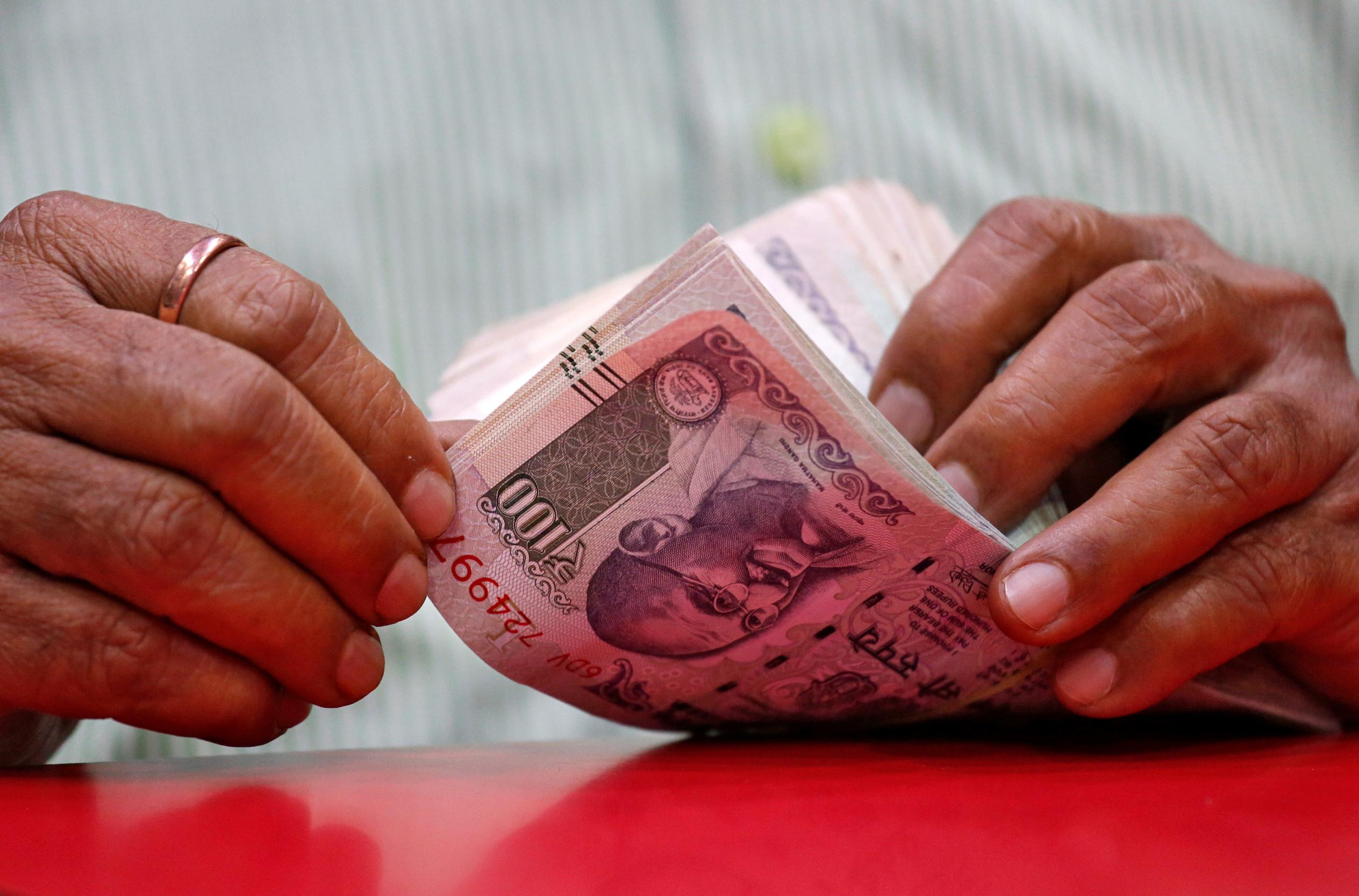
MUMBAI, Dec 8 (Reuters) - India's foreign exchange reserves (INFXR=ECI) rose for a third straight week and stood at a more than four-month high of $604.04 billion as of Dec. 1, data from the Reserve Bank of India (RBI) showed on Friday. The reserves rose by $6.1 billion in the reporting week, the highest gain since the week ended July 14. Reserves had risen by a total of $7.6 billion in the prior two weeks. Changes in foreign currency assets are caused by the RBI's intervention as well as the appreciation or depreciation of foreign assets held in the reserves. Foreign exchange reserves include India's reserve tranche position in the International Monetary Fund. India's foreign exchange reserves are providing a cushion against external shocks, RBI Governor Shaktikanta Das said earlier in the day, while announcing the monetary policy decision. "We remain confident of meeting our external financing requirements comfortably," Das said. For the week the forex reserves data pertains, the rupee traded in a narrow range of 83.2475 to 83.3950 against the dollar and logged marginal weekly gains. The currency settled at 83.3850 on Friday, down 0.1% for the week. FOREIGN EXCHANGE RESERVES (in million U.S. dollars) --------------------------------------------------------- Dec 01 Nov 24 2023 2023 --------------------------------------------------------- Foreign currency assets 533,610 528,531 Gold 47,329 46,338 SDRs 18,250 18,218 Reserve Tranche Position 4,853 4,848 ---------------------------------------------------------- Total 604,042 597,935 ---------------------------------------------------------- Source text: (https://www.rbi.org.in/scripts/BS_PressReleaseDisplay.aspx) https://www.reuters.com/markets/currencies/indias-forex-reserves-rise-third-week-hit-over-four-month-high-2023-12-08/
2023-12-08 11:40
LONDON, Dec 8 (Reuters) - Global commodities trader Trafigura posted a record net profit of about $7.4 billion for the 12 months to the end of September, up 5% from a year earlier, saying it expected more "normal", less volatile conditions ahead. The impact of an energy price surge last year driven by supply disruption linked to Russia's invasion of Ukraine led to a surge in the profits for many companies, but makets have since eased. The Geneva-based private company's results marked the fourth successive year of record profits, but the bulk of its profit - $5.5 billion - was in the first half of the financial year, which doubled profits compared with the 2021-2022 first half. Its executives said in the company's annual report the company's slower performance in the second half of this year was a better indicator of the result it expects for 2024. As supply chain disruptions eased in the second half of Trafigura's financial year, it said future conditions would be more "normalised". "We expect to see reduced volatility in the year ahead, however, we face uncertain times," CEO Jeremy Weir said in a statement. "Low inventories, geopolitical threats, elections in nearly two thirds of the democratic world in 2024 and brittle supply chains mean markets are fragile and vulnerable to spikes driven by sudden changes in supply and demand." https://www.reuters.com/markets/commodities/trafigura-2023-net-profit-hits-record-74-billion-2023-12-08/

2023-12-08 11:37
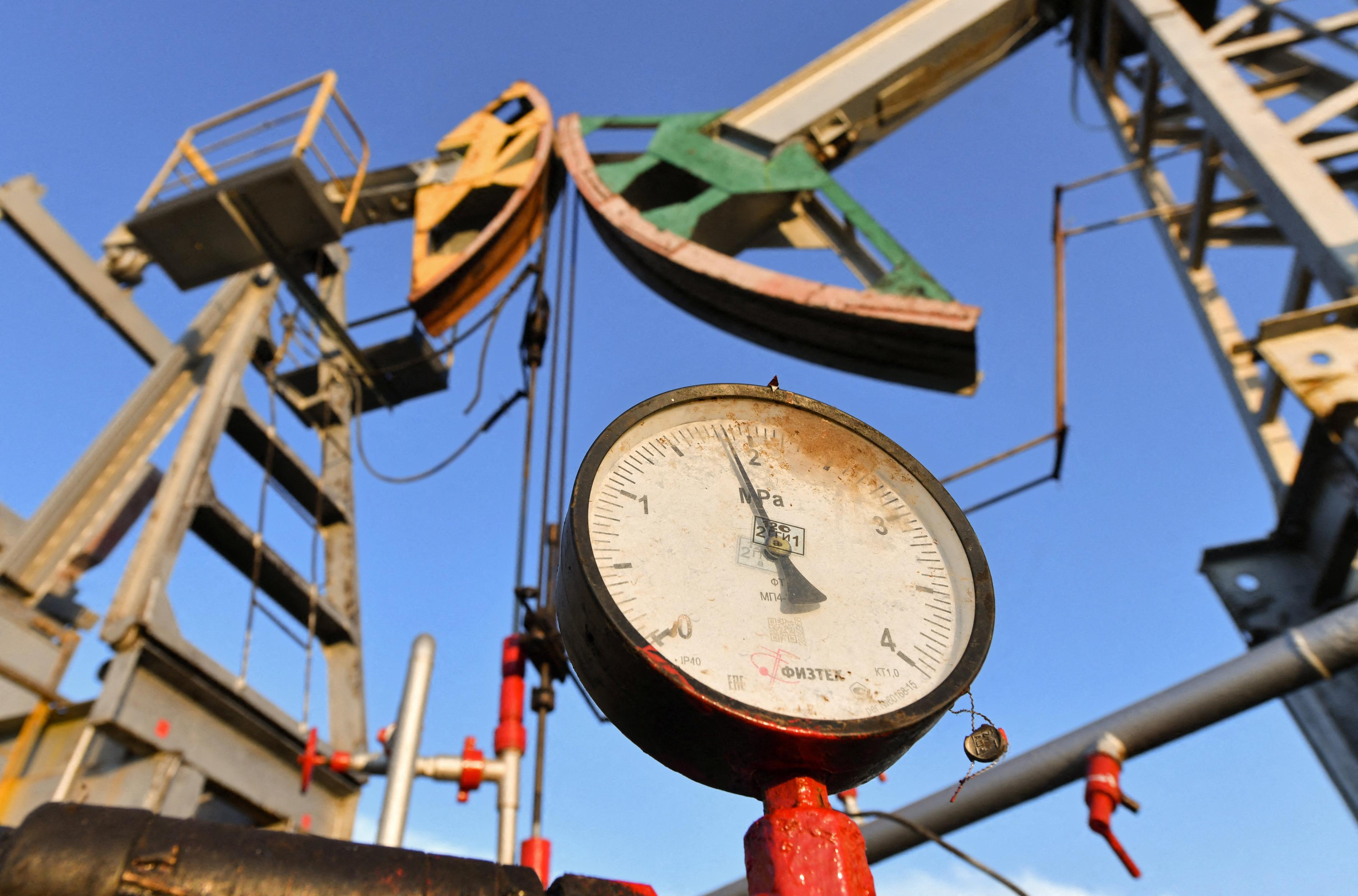
NEW DELHI, Dec 8 (Reuters) - Easing global oil prices would help India boost imports from Russia, a senior government official said on Friday, as a lower than $60 a barrel price of Russian oil will enable buyers to use Western services such as insurance and ships. The Group of Seven large economies known as G7 and some other nations have imposed a ceiling of $60 per barrel for oil at Russian ports to cut Moscow's revenue seen as funding its war in Ukraine. Russia's flagship grade Ural in Baltic ports has plunged since late November below that level, reflecting subdued global oil prices that are headed for a seventh straight weekly decline. India, the world's third biggest oil importer and consumer, emerged as the biggest buyer of Russian seaborne oil, shunned by the West over Moscow's invasion of Ukraine last year. The United States last month imposed sanctions on maritime companies and vessels for shipping Russian oil sold above the G7's $60 price cap, in an attempt to close loopholes in the mechanism designed to punish Moscow for invading Ukraine. The three sanctioned vessels - Kazan, Ligovsky Prospect and NS Century - regularly supplied oil to India. The Indian official, who spoke on condition of anonymity, said there would not be any impact on India's intake of Russian oil due to Western sanctions on ships as enough vessels were available in the market. He also said India buys Russian oil on delivered basis and refused to comment on the likely destination of NS Century. NS Century was on its way to India when the sanctions were imposed. The vessel has since then floated near Colombo. https://www.reuters.com/business/energy/indias-russian-oil-imports-seen-rising-lower-prices-official-2023-12-08/
2023-12-08 11:36
Dec 8 (Reuters) - U.S. equity funds witnessed outflows for a second straight week in the seven days to Dec. 6 on some investor caution ahead of economic data which could provide more insights about the Federal Reserve's interest rate trajectory. Investors exited a net $577 million worth of U.S. equity funds during the period, although this was substantially less than the $3.26 billion worth of net selling in the previous seven days. The non-farm payrolls report for November is set to test whether recent market optimism on lower rates is premature. Some analysts forecast a so-called Santa Claus rally, anticipating an equity rebound from a projected mid-December low, often driven by tax loss harvesting where investors sell underperforming stocks for tax benefits. Large-cap equity funds reported their first weekly outflow in seven weeks, totalling $450 million. Mid-cap funds had outflows of $1.03 billion, while small and multi-cap funds saw net buying of $1.2 billion and $651 million respectively. U.S. equity sector funds still received about $2.89 billion worth of inflows with financials, real-estate, and communication services securing $1.32 billion, $884 million and $550 million, respectively. Investors, meanwhile, continued accumulating money market funds for a seventh straight week as they poured roughly $54.58 billion into these funds. Elsewhere, investors pulled out $2.56 billion from U.S. bond funds, extending net selling into a third successive week. They sold U.S. short/intermediate government & treasury, and general domestic taxable fixed income funds of $3.94 billion and $1.51 billion respectively, while securing high yield, and short/intermediate investment-grade funds of $1.93 billion and $572 million, respectively. https://www.reuters.com/markets/us/us-equity-funds-see-outflows-investors-eye-economic-data-2023-12-08/
2023-12-08 11:34
CAIRO, Dec 8 (Reuters) - Egypt holds a presidential election on Dec. 10-12 in which Abdel Fattah al-Sisi is set to secure a third term amid an economic crisis that has seen the Egyptian pound tumbling, foreign currency drying up and inflation soaring. WHAT CAUSED EGYPT'S ECONOMIC WOES? Some causes date back decades such as failed industrial development due to poor planning and heavy bureaucracy, and export policies that created a persistent trade deficit. An over-valued currency, weak property rights and institutions, and an overbearing state and military have deterred investment and competition. A borrowing spree under Sisi has left Egypt with heavy foreign debt. Foreign creditors have been shying away from Egyptian debt, pushing the Cairo government to finance its widening deficit by borrowing domestically even as interest rates surge, spawning even bigger deficits. This, and an expansion of the money supply, have led to currency depreciation and higher inflation. The government has sought to get its deficit under control by raising the price of subsidised goods and services, only for inflation to eat into much of the gain. Foreign investment outside the oil and gas sector has been paltry. Remittances in 2022-23 fell 30% to $22 billion as workers abroad backed away from transfers at the overvalued official exchange rate. Increasing Suez Canal transit fees and tourism revenue play a crucial role, although the Israel-Hamas war in the neighbouring Gaza Strip threatens to slow tourism growth. Sisi often blames Egypt's economic struggles on turmoil following the 2011 popular uprising as well as rapid population growth - the World Bank put annual population growth at 1.7% in 2021. Authorities have also pointed to external shocks including the COVID-19 pandemic and the war in Ukraine. HOW BAD HAVE THINGS BECOME? The economy has been growing steadily but at a slowing pace. It grew by an annual 3.9% in the last quarter of 2022 as well as the first quarter of 2023, down from 6.7% in fiscal 2021-22, according to the central bank. Rising population has blunted growth, and many Egyptians say their standard of living has eroded. An acute dollar shortage suppressed imports and caused a backlog of goods at ports amid restrictions on letters of credit, with a knock-on effect on local industry. Prices for many staple foods have risen much faster than headline inflation, which accelerated to a record 38% in September. The pound has fallen by half against the dollar since March 2022. Despite repeated devaluations, a dollar fetches about 49 Egyptian pounds on the black market compared to an official rate of 31 pounds. The repayment schedule on foreign debt is onerous. At least $42.26 billion is due in 2024 alone, including $4.89 billion to the International Monetary Fund (IMF). Rising interest rates and the weakening currency have raised the cost of servicing debt. Interest payments swallowed up more than 45% of all revenue in the year to end-June, according to finance ministry data. Official data classified about 30% of the population as poor before COVID-19 struck, and analysts say numbers have risen since then. As many as 60% of Egypt's 104 million citizens are estimated to be below, or close to the poverty line. Unemployment has fallen to just over 7%, but labour market participation also dropped steadily in the decade to 2020. Parts of the public education system are in a state of collapse. Many graduates with the opportunity to do so seek work abroad. HOW HAS THE MONEY BEEN SPENT? Beyond outlays on regular costs, Egypt has spent heavily on infrastructure under Sisi. This includes housing, a number of new cities, and rapid road building. The most prominent mega-project is a $58 billion new capital in the desert east of Cairo. Egypt's arms imports also surged over the past decade, making it the third-largest importer globally, according to the Stockholm International Peace Research Institute. Officials say they have upped spending on social programmes for the poor, including a cash handout scheme that covers some five million families, though critics say the welfare is insufficient to protect living standards. WHAT SUPPORT CAN EGYPT DRAW ON? Both Western and Gulf states have broadly viewed Egypt under Sisi as a lynchpin of security in a volatile region. Cairo received billions in deposits and investments from Gulf allies including Saudi Arabia and the United Arab Emirates after the shock touched off by Russia's invasion of Ukraine. But Gulf Arab states have toughened conditions for injecting new money, increasingly seeking investments that provide a return. Though they have expressed solidarity with Egypt since the outbreak of the Gaza crisis, no new aid has been announced. The IMF is in talks with Egypt to expand a $3 billion, four-year financial support package signed in December 2022. It had halted disbursements after Egypt fell behind on pledges to adopt a flexible exchange rate and to shrink the state and the military's role in the economy. https://www.reuters.com/world/middle-east/how-deep-are-egypts-economic-troubles-2023-03-03/
2023-12-08 11:29
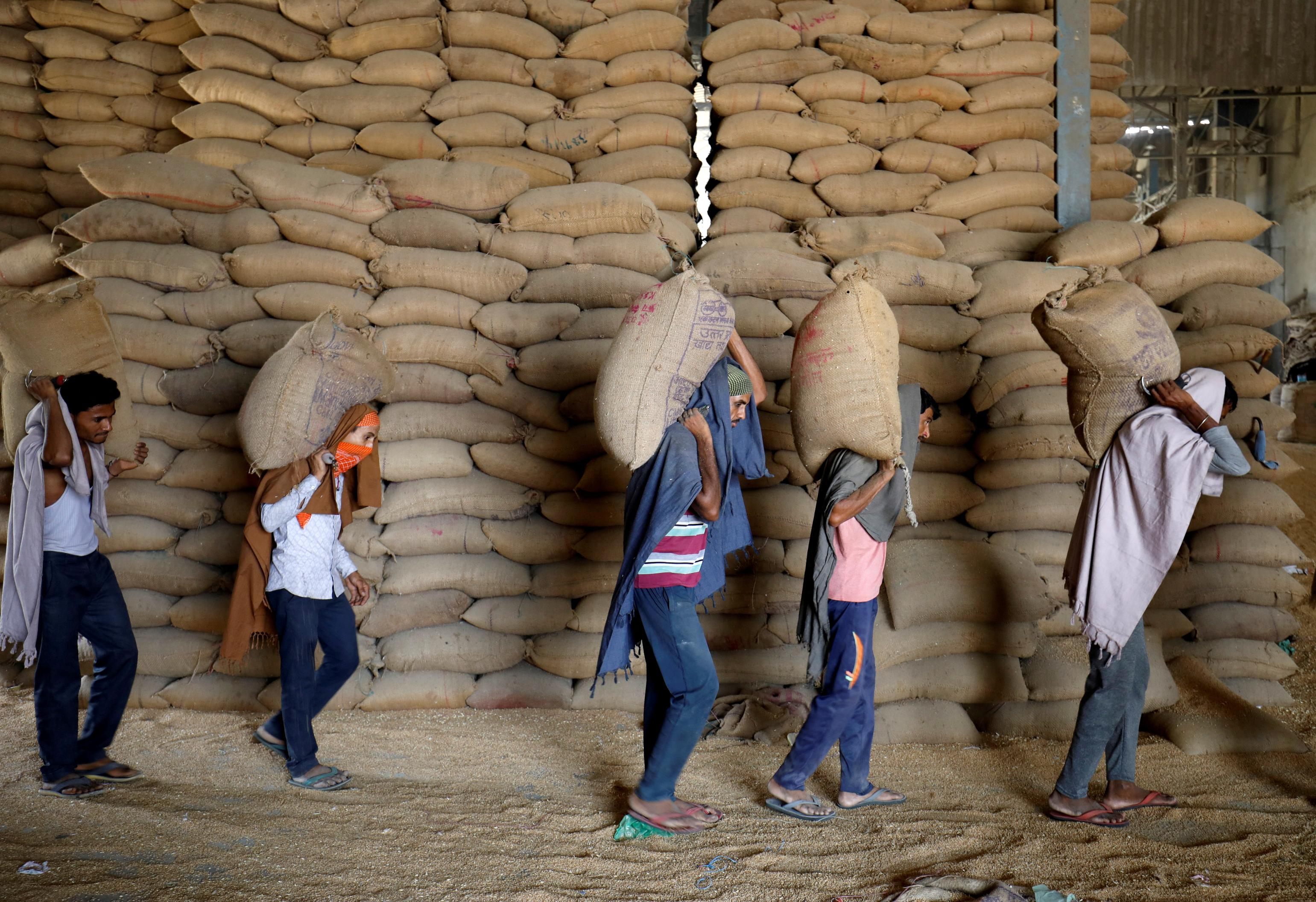
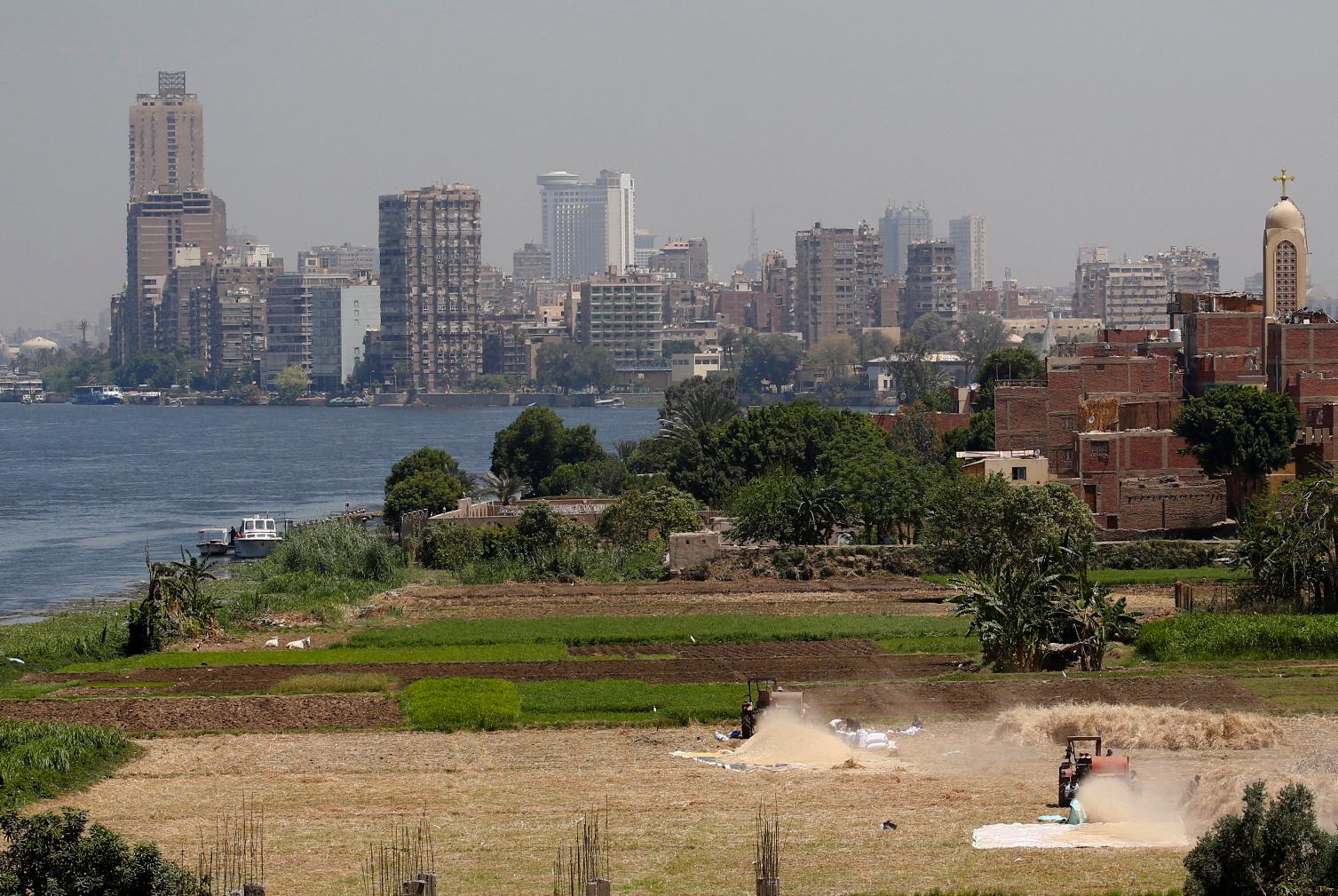
NEW DELHI, Dec 8 (Reuters) - India's wheat inventories at state warehouses have dropped to 19 million metric tons, the lowest in seven years, two government sources said on Friday, as two years of falling production forced state-run agencies to sell more grain to private players. Last year, India, the world's second-biggest wheat producer, banned exports after output was curtailed due to a heat wave and overseas sales picked up as Russia's invasion of Ukraine sent global prices to multi-year highs. While U.S. wheat prices have corrected more than 35% so far in 2023, prices in India have leapt more than 20% in the past few months, despite the ban. That, according to trade and industry officials, is because this year's domestic wheat output is at least 10% less than the farm ministry's estimate of record production of 112.74 million metric tons. Another indicator of low output is that the government has bought only 26.2 million metric tons of wheat from local farmers this year, compared with its target of 34.15 million tons. But, despite the tight supply, the government has resisted calls to facilitate imports by either lowering or abolishing the current 40% tax or by directly buying from top suppliers such as Russia. Instead, it has dipped into state reserves to sell wheat to bulk consumers, such as flour millers and biscuit makers, to cool domestic prices. "Stocks are lower, but the government still has sufficient stocks to ensure that prices do not rise sharply. The government can still offload more wheat in the market if there's a requirement," said one of the sources. "The government has adequate stocks until the next crops arrive in the market," the source said. The sources declined to be named as they are not authorised to speak to the media. Farmers have sold their stocks and flour mills' inventories have depleted, traders said. "Mills are buying from auctions conducted by the Food Corporation of India to run their operations. But this will soon force the government to sell more stocks to stabilize prices," said a Mumbai-based dealer with a global trade house. And that, the deal said, will pull stocks below 6 million tons when the new marketing year starts on April 1, against the norm of a buffer of 7.46 million tons. "To counter this, the government must initiate imports to secure enough stocks for market intervention. The correction in global prices presents a good opportunity to make purchases," he added. Indian farmers are currently planting wheat, with the harvest to start by March. Trade and industry officials believed higher prices would encourage farmers to plant more wheat, but planting is still lower than last year as dry weather conditions have sapped the soil of moisture and dragged down water levels at reservoirs. The other threat that looms over the crop is that of any abnormal rise in temperatures during harvest time. https://www.reuters.com/world/india/indias-wheat-stocks-hit-7-year-low-govt-sells-more-calm-prices-2023-12-08/