2023-12-08 11:28
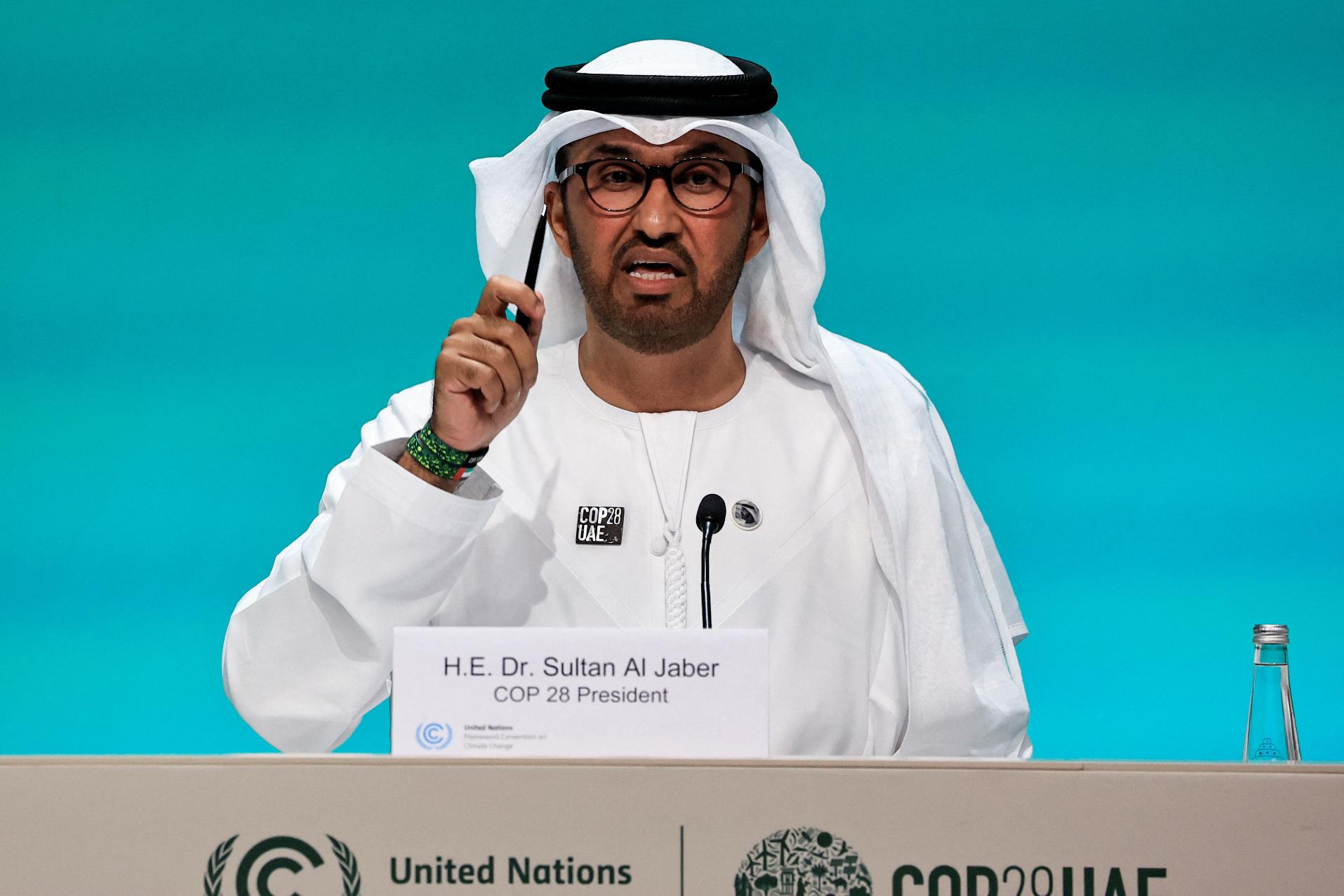
DUBAI, Dec 8 (Reuters) - OPEC is rallying its members and oil producing allies to veto a proposed deal to phase out fossil fuels at the COP28 climate summit, highlighting deep divisions over the future of oil and gas. At least 80 countries are demanding a COP28 deal that calls for an eventual end to fossil fuel use, as scientists urge ambitious action to avert the worst impacts of climate change. The latest draft of what could be a final COP28 agreement, which was released on Friday, included options to do so. "It seems that the undue and disproportionate pressure against fossil fuels may reach a tipping point with irreversible consequences," OPEC Secretary General Haitham Al Ghais wrote in a letter to members of the group, including COP28 host the UAE. In the letter, dated Dec. 6, he called on them to reject any language that targeted fossil fuels in a final summit deal. OPEC said in a reply to Reuters questions about the letter that it would continue to advocate reducing emissions, not choosing energy sources. "The world requires major investments in all energies, including hydrocarbons, all technologies, and an understanding of the energy needs of all peoples," OPEC's secretary general said in the statement. Earlier, COP28 President Sultan al-Jaber urged delegates from nearly 200 countries to work hard to reach a consensus before the scheduled end of the two-week summit on Dec. 12. "Let's please get this job done," he said on Friday before the release of the draft. "I need you to step up, and I need you to come out of your comfort zones." Even though fossil fuels are the top source of planet-warming emissions, three decades of U.N. climate summits have never addressed their future head on and a decision to phase out them out would be unprecedented. OPTIONS COP28's draft deal includes a range of options - from agreeing to a "phase out of fossil fuels in line with best available science", to phasing out "unabated fossil fuels", to including no language on them at all. France's climate ambassador Stephane Crouzat said countries such as Saudi Arabia feel they can go on producing fossil fuels while cleansing emissions with new carbon capture technologies. "We feel it's just not realistic," Crouzat told Reuters. Canadian environment minister Steven Guilbeault said he was confident the final text would include agreement on fossil fuels. "Even if it's not as ambitious as some would want, it will still be an historic moment." Other countries said they were insisting that any fossil fuel phase-out should be led by the wealthy countries which have exploited their resources for decades. "Every country cannot be put on the same standard when it comes to the transition," Malaysian Climate Minister Nik Nazmi Nik Ahmad told Reuters. With countries still divided, a representative of the powerful G77+China bloc of developing countries said the "phase-down/phase-out" language needed to be rewritten. "The whole issue would have to be rephrased," said Paulo Pedroso, a Cuban diplomat representing the group of 134 developing countries. "The issue is more complex," said Pedroso, adding that countries with fewer means should be given more time to shift to clean energy, while richer ones should move faster. A compromise must also include increasing financial and technological support for developing and poorer nations to build the necessary infrastructure, he said. "When you just refer to phase-down, phase-out, that looks a little bit out of context to me," Pedroso said. "Because people don't understand what you mean." 'BEYOND HUMAN LIMIT' Meanwhile, the U.N. climate agency's chief reminded countries that the science behind the world's goal of holding warming to within 1.5 degree Celsius (2.7 degrees Fahrenheit) of pre-industrial temperatures is clear. "From the planet's perspective 1.5 is a tangible limit. It is not simply a choice," said Simon Stiell, a Grenadian national who is executive secretary of the United Nations Framework Convention on Climate Change. Breaching the 1.5C threshold would mean that "2 billion people will live in areas ... beyond the human limit," he said. In other debates, eastern European countries are working to resolve an impasse over where to hold next year's COP29 summit after Russia said it would block any EU member as COP president. As of Friday, diplomats said Azerbaijan was likely to win in its bid to host the event. Bulgaria and Moldova have also offered to take on the rotating presidency. https://www.reuters.com/business/environment/cop28-president-tells-nations-get-out-comfort-zones-search-final-deal-2023-12-08/
2023-12-08 11:27
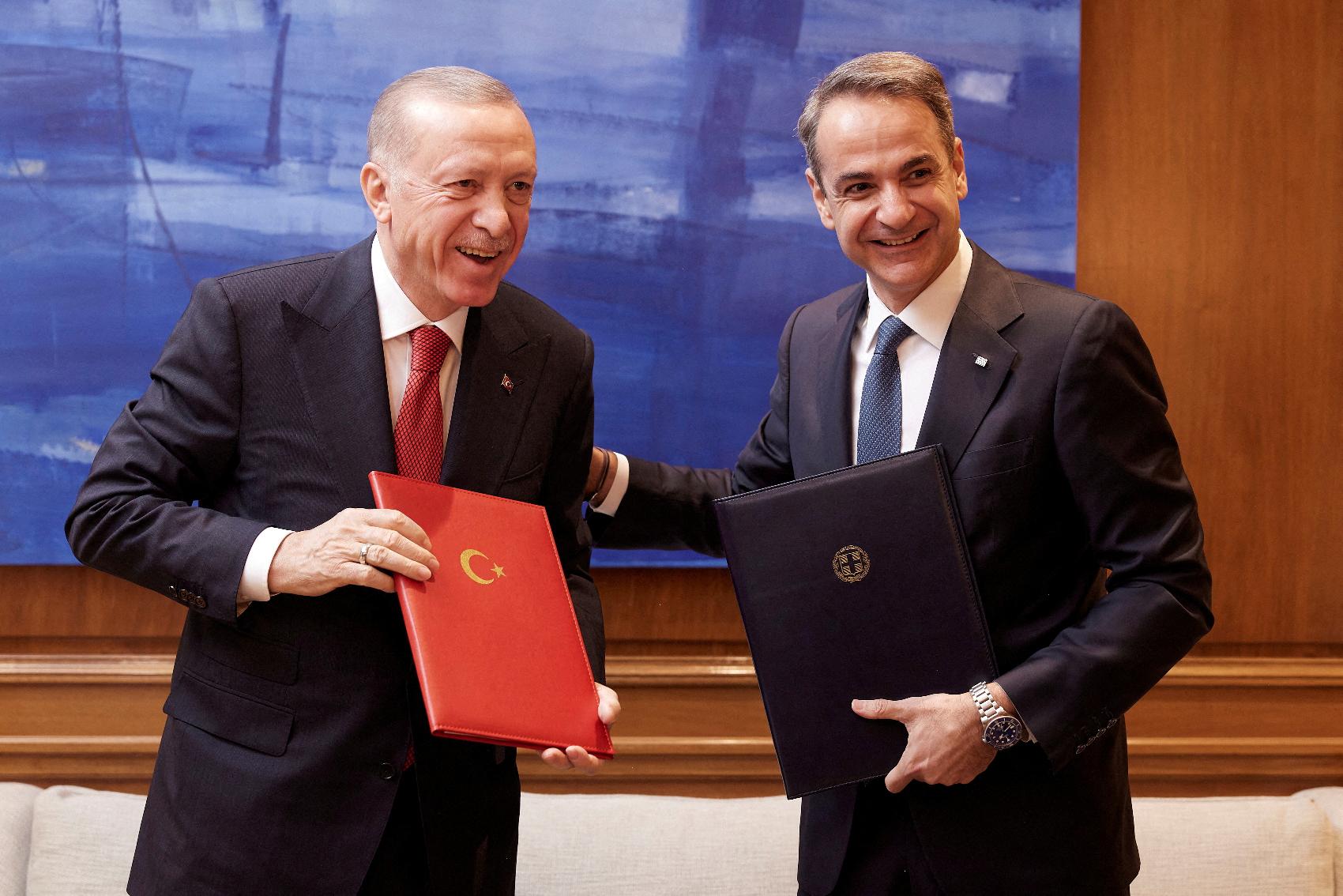
ANKARA, Dec 8 (Reuters) - Turkey wants to develop cooperation with Greece on nuclear energy, Turkish President Tayyip Erdogan was cited as saying on Friday after meetings in Athens, adding he hoped his visit would help improve ties between the NATO allies, but historic rivals. Turkey and Greece agreed during a landmark visit by Erdogan on Thursday to establish a roadmap designed to usher in a new era of closer relations. Speaking to reporters on his flight back from Greece, where he met Prime Minister Kyriakos Mitsotakis and several ministers, Erdogan said the meetings were held in a "very positive" atmosphere. "We are trying to expand, develop this cooperation not just to energy, but all areas including nuclear energy. For example, we may provide an opportunity to Greece from the nuclear power plant we will build in Sinop," Erdogan said, without elaborating, according to his office. He said Mitsotakis was "warm" to the idea. Ankara and Athens have long been at loggerheads over issues including where their continental shelves start and end, energy resources in the eastern Mediterranean, flights over the Aegean Sea, and the ethnically partitioned island of Cyprus. The two countries came to the brink of war in the 1990s, and in recent years have repeatedly argued about such issues. Asked about resolving outstanding maritime disputes with Greece, Erdogan said Turkey's stance on protecting its rights in the region had not changed, but that a fair sharing of energy resources was possible. "A comprehensive and fair sharing in the eastern Mediterranean is possible. So long as we build the basis to make this happen, form correct roadmaps, and don't give provocations an opportunity," he said, adding a regional conference of littoral states that Ankara is proposing would be a "correct step" in forming this basis. https://www.reuters.com/world/europe/erdogan-says-turkey-greece-could-cooperate-nuclear-energy-2023-12-08/
2023-12-08 11:12
LONDON, Dec 8 (Reuters) - The EU should go beyond banning aluminium wire, foil, tubes and pipes produced in Russia by sanctioning Russian aluminium metal for a greater impact, industry group European Aluminium said. European Union members are looking at a proposed 12th package of sanctions, including bans on aluminium wire, tubes and pipes, a small proportion of Russian aluminium imports. "We regret the fact that the vast majority of Russian aluminium exports to the EU (more than 85% of the total), in particular primary metal, look set to remain outside of the scope of the measures," European Aluminium said in a letter sent to European Commission President Ursula von der Leyen. In the first nine months of 2023, the EU imported almost 500,000 metric tons of Russian aluminium and aluminium products worth 1.26 billion euros ($1.37 billion), Eurostat data shows. When Russia invaded Ukraine in February 2022, the EU took a cautious approach due to the region's reliance on Russian supplies of aluminium, a key material for European industry. "However, 21 months later, circumstances have changed considerably. The European aluminium industry has accelerated its decoupling from Russia," the industry group said. Trade Data Monitor says the EU in total imported more than 2.4 million tons or $6.3 billion worth of unalloyed and unwrought primary aluminium between January and September this year of which 11% came from Russia. This compares with 20% in the same period last year and in 2021. "The scope of the sanctions must be much broader to have a substantial impact. It should include primary aluminium from Russia," said Pål Kildemo, chief financial officer at Norwegian aluminium producer Hydro (NHY.OL) "We need strict anti-circumvention rules to ensure that sanctions are not circumvented by shipping Russian aluminium to third countries and making it into a product that's sold to Europe," Kildemo said. Russian aluminium is produced by Rusal, which last year accounted for 4 million tons or 6% of global supplies. In July, European Aluminium sent a letter to its members saying it had discussed the possibility of "actively calling for EU sanctions on Russian aluminium", but not on Rusal (RUAL.MM). https://www.reuters.com/markets/commodities/industry-group-says-eu-should-go-much-further-bans-russian-aluminium-2023-12-08/

2023-12-08 11:11
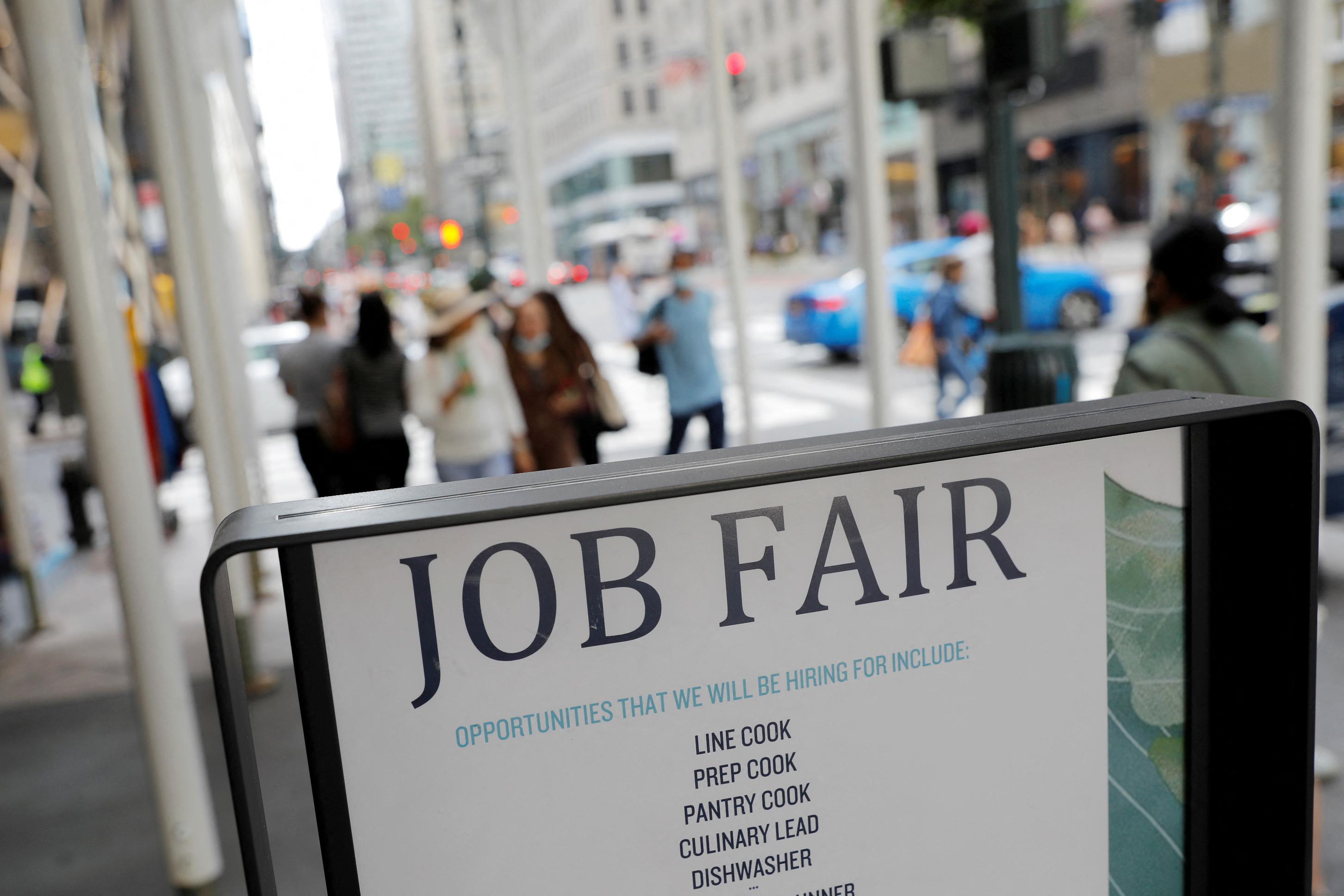
A look at the day ahead in U.S. and global markets from Mike Dolan With investors trying to read recessionary warnings from softening U.S. labor market signals all week, the outsize importance of the November payrolls report to next week's Federal Reserve meeting has frozen frenetic markets in advance. It's hard to imagine the numerous employment soundings this week showing a loosening of the labor market will be contradicted by the overall employment report. However, the extent of markets' rate cut euphoria means it will all be a matter of degrees. The standing consensus forecasts are for a 180,000 rise in non-farm payrolls last month, an unchanged jobless rate at 3.9% and a cooling of annual wage growth to 4.0%. But this week's private sector jobs report for the same month was below forecast, weekly jobless crept higher, layoffs are rising sharply, job openings fell faster than expected for October and employment costs were revised down. But a curious twist this month centres the closely-watched 'Sahm rule' threshold, that has historically shown recession is underway when the three-month rolling average unemployment rate rises half a point above the low of the prior 12 months. Developed by Fed economist Claudia Sahm before the pandemic as a potential rule of thumb for triggering benefit payments - the gauge hit 0.33% last time out for the first time since March 2021 and could sound the alarm if November's jobless rate tops 4%. An added complication reading the report is the ending of the autoworkers and actors' strikes that have distorted jobless readings somewhat. About 25,300 members of the United Auto Workers union ended their strikes against Detroit's "Big Three" car makers on Oct. 31, which had depressed manufacturing payrolls that month. Payrolls also likely got a lift from 16,000 members of the SAG-AFTRA actors union going back to work. All of which has markets consolidate the week's strong bond and stock gains on Friday, driven largely by headlong market bets on Fed easing next year. Fed futures now see more than a 50% chance of the first Fed rate cut in the cycle coming by March, two quarter point cuts by June and 125 bps of easing by the end of next year. While two-year Treasury yields have been a bit more reserved this week, 10-year yields tested 4.1% for the first time since June - before backing up about 7 bps today ahead of the jobs report. But the big swings in Treasuries have spurred volatility gauges (.MOVE) to the highest since October. Wall St stock futures were steady before the bell after a strong rally on Thursday led by tech stocks and a 5% surge in Alphabet (GOOGL.O) after it said its new artificial intelligence model could help narrow the gap in a race with Microsoft-backed OpenAI. The dollar (.DXY) perked up a bit on Friday too, even against the electrified Japanese yen - which soared almost 4% at one point on Thursday on a sudden bout of speculation that the Bank of Japan could tighten monetary policy again as soon as this month. However, that chatter was dampened by a sharp downward revision to Japanese economic growth data for the third quarter. Japan's economy contracted 2.9% - faster than the 2.1% drop first estimated as the household sector faced growing headwinds and complicating the central bank's efforts to phase out its super easy monetary policy. Dollar/yen pushed back above 144, having hit a low of 141.70 at one point on Thursday. Tokyo's benchmark Nikkei (.N225) underperformed largely firmer world stocks and lost more than 1% on Friday. The waning U.S. crude oil price - now down 27% since the peaks of September and encouraging disinflation and rate cut hopes - steadied and tried to get a toehold back above $70 per barrel. Key developments that should provide more direction to U.S. markets later on Friday: * U.S. November employment report, University of Michigan Dec consumer sentiment and inflation expectations survey * ECOFIN EU finance ministers meet on blocs fiscal rules, attended by European Central Bank board member Luis de Guindos * U.S. corporate earnings: Hello Group, Johnson Outdoors, HashiCorp https://www.reuters.com/markets/us/global-markets-view-usa-2023-12-08/
2023-12-08 11:06
NEW YORK, Dec 8 (Reuters) - The Biden administration's infrastructure spending blitz has put more construction laborers on the road for work this year, fueling a race by extended-stay hotel operators to win their business. Data from Navan, a corporate travel management company, shows construction industry extended-stay lodging bookings are up 120% in the two years through the end of November. More broadly, the industry has outspent all other sectors on work travel overall by 9.2% in the 12 months through August as more workers temporarily relocate to live around project sites. “If you look at the infrastructure bill and reshoring of American jobs, there's a huge amount of new business coming in - 50 million to 100 million room nights over the next decade that really are going to feed the extended-stay profile,” Scott Oaksmith, chief financial officer of Choice Hotels, said during a recent third-quarter earnings call. The Infrastructure Investment and Jobs Act passed in 2021 had targeted $1.2 trillion of transportation and infrastructure spending over five years and has been credited in part for helping construction employment weather a homebuilding downturn caused by rising interest rates. Construction employment has risen by 2.2% so far this year, outpacing the 1.55% increase in overall employment. From the end of 2019 through the end of June, Choice Hotels experienced 73% growth in revenue per available room in the South Atlantic and a 400% increase in the Mountain West, a spokesperson for the chain said, areas that have seen a raft of project announcements under the IIJA. Expansion of Choice Hotels' extended-stay brands, which include Everhome Suites and MainStay Suites among others, has involved tracking large-scale infrastructure project announcements in order to cater to construction workers and related trades, said Anna Scozzafava, chief strategy officer and senior vice president for technology at Choice Hotels. "We can follow the funding, and see where these jobs and investment dollars are going," said Scozzafava. This year and 2022 were among the strongest years for demand growth for Choice's extended-stay brands, she said. "We're getting construction crews, but also some trades that go along with construction as well. We had a big win ... with a steel company in Georgia that needed rooms for six to seven months." REMOTE AREAS Choice is not alone in looking to grow the category and in fact faces competition from Wyndham Hotels & Resorts, for which it has launched an unsolicited $7.8 billion takeover bid. Wyndham has expanded investment in hotel-level marketing and its loyalty program in an effort to boost infrastructure-related bookings and capture a windfall from the IIJA, Wyndham Chief Executive Officer Geoffrey Ballotti said in the company's third-quarter earnings call. While less than 10% of hotel rooms are extended-stay units, the category is fast-growing with extended-stay hotels representing 37% of lodging under development, according to Patrick Scholes, managing director of lodging and leisure equity research at Truist Securities. “Wyndham Hotels is the biggest winner,” Scholes said. “Wyndham was a hotel company starved of new brands, and then about two years ago they started to introduce this Echo brand, which has been strong out of the gate.” The construction industry has historically seen high rates of itinerant labor, according to Greg Sizemore, vice president of health, safety, environment and workforce development at Associated Builders and Contractors, a trade association based in Washington. “I worked post-Katrina on the Mississippi Gulf Coast when everyone was installing trailers down there for people to take up temporary housing. But there was nowhere for us to stay. We had men and women sleeping in their cars until the hotels opened back up," said Sizemore, who traveled as a construction worker for 30 years. Demand for construction workers remains strong, with the industry's vacancy rate of 5% as of October being roughly twice the historic job openings rate over the two decades preceding the pandemic, according to Bureau of Labor Statistics data. That often means the employer foots some or most of the cost of lodging workers in remote areas where local housing options are limited, said Brandon Mabile, strategic development manager at Performance Contractors. The Baton Rouge-based industrial construction company employs about 700 workers on 20 current projects. “We’ve got crews in some pretty remote areas at the moment,” said Mabile. “In Montana, you're going to have to pay a little more than in Oklahoma or Texas." As project funding pours into less densely populated areas, the cost of housing employees rises and demand for extended-stay properties and other alternatives like recreational vehicle parks spikes as employers seek acceptable lodging at affordable rates, according to Sizemore. "Options are everything," he said. https://www.reuters.com/markets/us/us-infrastructure-building-boom-revs-up-extended-stay-market-2023-12-08/

2023-12-08 11:00
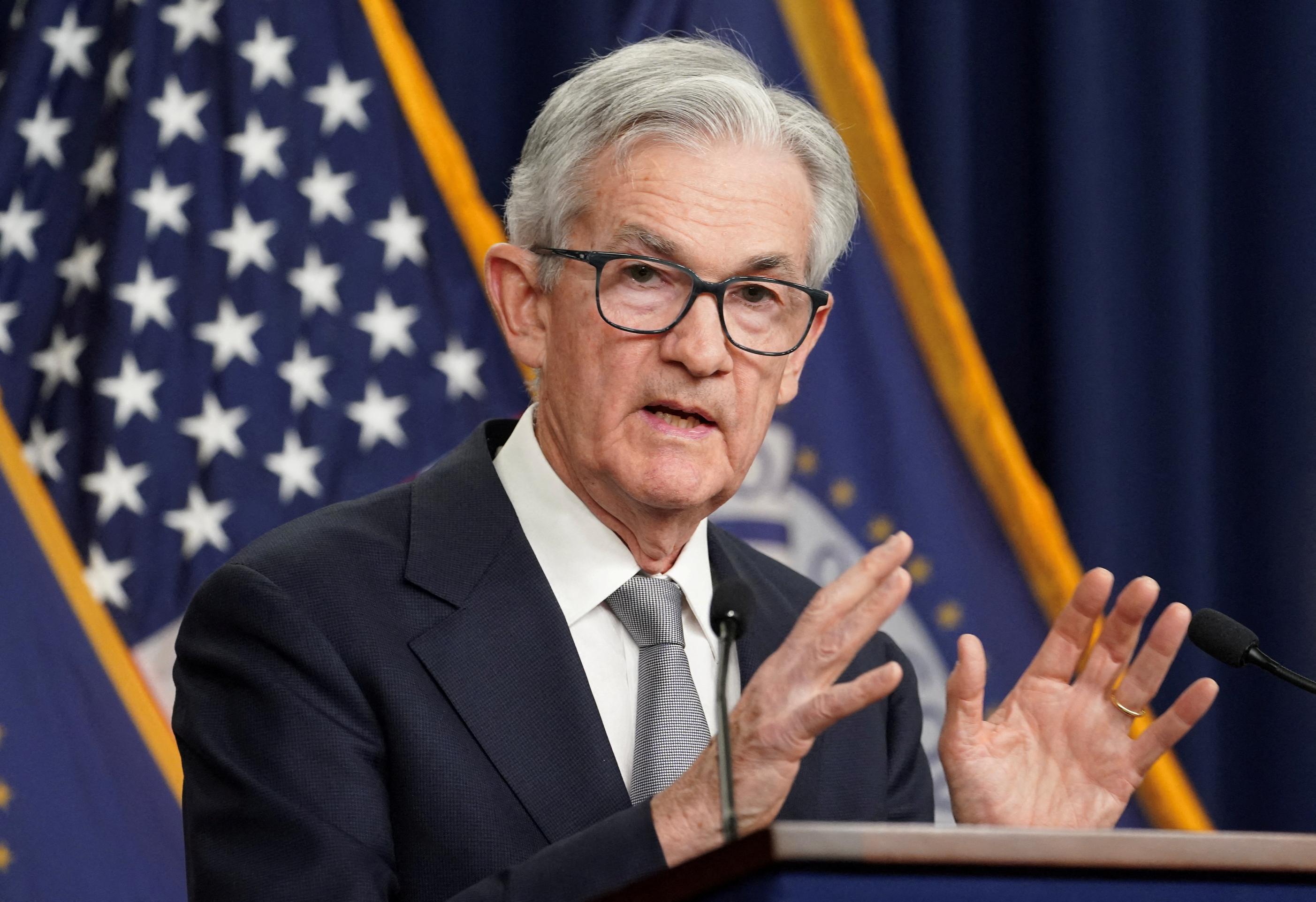
LONDON, Dec 8 (Reuters) - Hold on to your hats. Central banks appear in no mind to rehabilitate the forward policy guidance prevalent before the pandemic and that's forcing investors to wing it alone, injecting greater market dispersion into next year and a possible boom in more active portfolio trading. When Federal Reserve boss Jerome Powell effectively stopped formal signalling on the long-term path of interest rates last year, there was an assumption it merely reflected the thick fog central banks faced in reading COVID-related supply disruptions and Ukraine-related energy spikes. But it may not be coming back, if the latest central bank pronouncements around the world are anything to go by. The quiet shelving of the tactic - frequently used over the past 20 years to keep markets in check and suppress excess volatility - is not solely down to lack of visibility. Rather, it looks like a deliberate attempt to keep markets guessing, in part to prevent excessive one-way risk taking. On one level it merely acknowledges a less predictable global economic regime. On another it's a return to an old familiar 'normal'. This feels much more like the 1990s, when central banks reserved the right to surprise, switch direction, lean back and forth against the economy and markets and take incoming high frequency data at face value. And if you think rates are on a glide path in any one direction, or even stuck where they are, you may have to think again. Rates may stay technically 'restrictive' as befits the 'higher for longer' mantra while still being cut nominally by a percentage point or more - depending on which of the blizzard of differing forecasts you sympathise with. And the possibility of another round of hikes after a cut or two may not yet be off the table either. This week was a classic case in point when long-standing European Central Bank hawk Isabel Schnabel told Reuters she'd changed her mind about the likely persistence of inflation on the back of the latest impressive monthly price updates. But, just as importantly, she doubted she could give any confident steer on the state of play into next year. "We have been surprised many times in both directions," Schnabel said. "So we should be careful in making statements about something that is going to happen in six months' time." That's less of an ECB quirk than a mirror of central bank thinking at large. It's already evident in Treasury bond volatility gauges (.MOVE) some 50% above historic averages - with the mean over the past four years some 30% above that of the prior 10 years. The swings are everywhere, not least in UK money markets that were pricing in 6% peak Bank of England rates just three months ago but are now pencilling in cuts of up to 100 basis points to 4.25% in 2024. 'DISPERSION IS BACK' This packs a very big punch for many investors trying to parse portfolio management over the coming years. In their annual outlook for 2024 this week, strategists at the world's biggest asset manager BlackRock stressed that they saw this topsy turvy world as a macro environment that's here to stay for the foreseeable. "Dispersion is back," said Wei Li, chief investment strategist at the BlackRock Investment Institute. "After the GFC (Global Financial Crisis of 2008) central banks took out a lot of macro uncertainty with their forward guidance," she said. "But now as they themselves are uncertain what they will do in six months time, the room for having more differentiated views is greater." The BlackRock team pointed to the rising dispersion of U.S. equity analysts' corporate earnings estimates, the median of which was almost 50% higher in the three years since the pandemic than over the previous 25 years. And it also showed how hypothetical 'buy-and-hold' strategies on U.S. equities over the past four years would have more deeply underperformed those with annual or semi-annual portfolio rebalancing than in the four years prior to 2020. Underlining that, BlackRock said it was unwise to take simple blanket positions globally or even by asset class or sectors, with geographical variations and even subsectors possibly at odds and moving in different directions. For example, they said they are underweight fixed income but like investment grade credit in Europe and not in the United States. They like bank stocks in Europe, but in 'less competitive' markets like Italy, Spain and Ireland rather than the UK or Nordics. And an underweight position on U.S. stock benchmarks overall masked their overweighting of technology and those stocks within the artificial intelligence theme. It may beg the question why equity market volatility measures (.VIX) are still so low. But these are hinged on indexes rather than the churn under the bonnet, and the alternative 'hedge' is average 8% cash levels in wealth management portfolios, twice levels seen in 2020-21. Of course, predictions of such ebb and flow and switching may partly be wishful thinking among active fund managers, long in the shadow of cheaper and sweeping passive index plays that rode the indiscriminate liquidity waves of the past 15 years. It certainly nods to banks and brokers who will no doubt benefit from the extra investor churn and trading income. But there's little doubt that markets are prone to turning on a dime right now. Today's credit easing euphoria could shift quickly again. "Markets can be very short term in nature and they will just focus on what's coming around the corner," said Ed Hutchings at Aviva Investors. "But it can take a long time to tame the levels of inflation we've seen." How long that battle will take has become anyone's guess and policymakers are no longer willing to commit. The message from central banks is loud and clear, according to BlackRock's fundamental fixed income head in EMEA Michael Krautzberger. "You're on your own now." The opinions expressed here are those of the author, a columnist for Reuters https://www.reuters.com/markets/prep-churn-central-banks-leave-runway-unlit-mike-dolan-2023-12-08/