2023-12-07 11:04
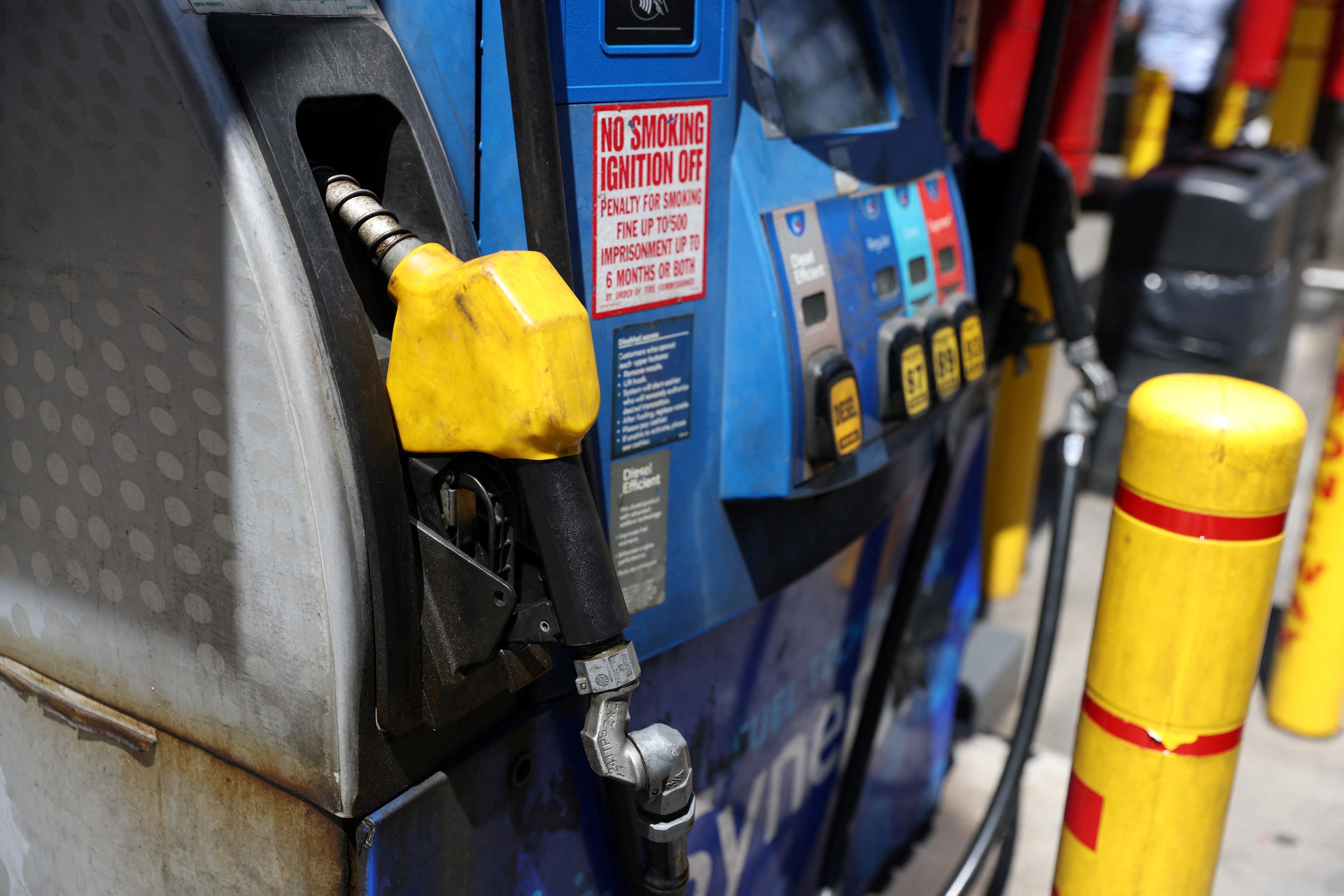
A look at the day ahead in U.S. and global markets from Mike Dolan Plummeting bond yields and oil prices clawed back some of the week's dramatic falls on Thursday, while a burst of speculation about a Bank of Japan policy tightening this month cut across the interest rate optimism and catapulted the yen higher. The size and slightly erratic nature of this week's macro market moves may speak a little to yearend markets both squaring off books and jockeying for position for 2024. But a stream of softer labor market and inflation news - not least an oil price plunge to 6-month lows on booming U.S. crude supplies - has been relentlessly positive for bonds along with clear signs of central bank policy shifts going into next year. Too far, too fast? Ten-year Treasury yields plumbed three months lows near 4.1% on Wednesday and money markets are pricing well over 100 basis points of central bank rate cuts next year. Ten-year U.S. yields recaptured about 6bp of the 25bp drop over the past week early on Thursday - although ten-year German bund yields continued to fall to their lowest since May. Cutting across the global rates euphoria, however, were Bank of Japan comments that spurred markets into upping chances of another tightening of monetary policy there as soon as this month. That saw 10-year Japanese government bond yields jump more than 10bps and the yen jump almost 2% to its best level since September 1. BOJ Governor Kazuo Ueda said on Thursday the central bank - the lone holdout over the past two years of G7 tightening - has several options on which interest rates to target once it pulls short-term borrowing costs out of negative territory. The five-year JGB yield leapt 10.5 bps to 0.34% - the biggest increase in a single day since April 2013. And yet, it was hard to ignore the latest oil price fall to its lowest since June as another major disinflationary force - while trade news from China continued to show worrying demand signs from the world's second biggest economy despite some rebound in overall exports. China's crude oil imports in November fell 9.2% year-on-year, the first annual decline since April, as high inventory levels and poor manufacturing activity took their toll. U.S. retail gasoline pump prices have now fallen to their lowest since January. All of which switches Wall St traders back to demand signals at home, with another round of labor market updates on weekly jobless and November layoffs due later ahead of Friday's official employment report. The private-sector jobs reading from ADP on Wednesday came in below forecast, chiming with the previous day's news of a surprising drop in job openings in October. The frenetic macro market activity - which saw bond market volatility gauges jump back to their highest since October this week - has stopped benchmark stock markets in their tracks. The S&P500 (.SPX) closed slightly in the red on Wednesday and futures were flat ahead of today's open. Asia and European bourses fell back too, with Japan's Nikkei (.N225) underperforming with losses of almost 2% on the rate speculation and yen surge. Key developments that should provide more direction to U.S. markets later on Thursday: * U.S. November layoffs, weekly jobless claims. U.S. Oct consumer credit * Federal Reserve issues quarterly financial accounts of the United States. European Central Bank President Christine Lagarde attends euro group meeting of euro finance ministers in Brussels, focussed on 2024 budget plans * EU-China Summit in Beijing * U.S. Treasury auctions 4-week bills * U.S. corporate earnings: Broadcom, Cooper Companies, Lulumelon Athletica, Dollar General https://www.reuters.com/markets/us/global-markets-view-usa-2023-12-07/
2023-12-07 10:50
LONDON, Dec 7 (Reuters) - The pound edged up against the dollar and the euro on Thursday, but sank against the yen, as investor expectations mounted that the Bank of Japan could signal an end to its ultra-easy monetary policy next week. Sterling lost 1.3% in value against the yen , its largest one-day drop against the Japanese currency in nearly five months. The pound has held firm this month, after its biggest monthly rally in a year in November. Investors are gaining confidence the major central banks will cut rates early next year. But the Bank of England is likely to be an exception. Futures markets show investors believe the first cut from the BoE might not happen until June, compared with March for both the European Central Bank and the Federal Reserve, which has helped limit any profit-taking on November's rally. The catalyst for the yen's broad-based rally on Thursday was comment from Bank of Japan Governor Kazuo Ueda, who told the Japanese parliament the central bank has several options on which interest rates to target once it pulls short-term borrowing costs out of negative territory. "The choice of wording – 'once', not 'if' – suggests the BOJ remains committed to normalising policy, most likely around the start of the fiscal year in April," City Index analyst David Scutt said in a note. "But with markets bringing forward the expected timing and scale of rate cuts from other major central banks, such a move would be incredibly risky, creating a scenario that could send the Japanese yen sharply higher against currencies of its major trading partners." The pound was last up 0.2% against the dollar at $1.2587 and up 0.1% against the euro at 85.65 pence. Against the yen, it was down 1.45% at 182.31 yen, its lowest since late October. The BoE also meets next week. Markets expect it to leave UK rates unchanged, but they will scrutinise the post-meeting statement for evidence of how Monetary Policy Committee members voted and the central bank outlook on inflation and growth. Futures markets show traders think UK rates could fall by around 80 basis points next year to below 4.40%, in contrast to the European Central Bank, which traders expect to implement around 140 bps in cuts, and the Federal Reserve, which could cut U.S. rates by around 120 bps. Yields on 10-year UK gilts are trading below 4% at their lowest in seven months, having fallen 75 bps in the last six weeks. German 10-year yields , the benchmark for the euro zone, have dropped 80 bps and 10-year U.S. Treasury yields have fallen 90 bps. The "higher for longer" scenario for the BoE has given sterling some support. "When it comes to euro/sterling, the drop appears to be overdone, and we expect a gradual dovish repricing in Bank of England rate expectations to favour a rebound above 86.00, although that may not happen in the very short term," ING strategist Francesco Pesole said in a note this week. https://www.reuters.com/markets/currencies/sterling-sinks-vs-supercharged-yen-steady-vs-dollar-2023-12-07/
2023-12-07 10:04
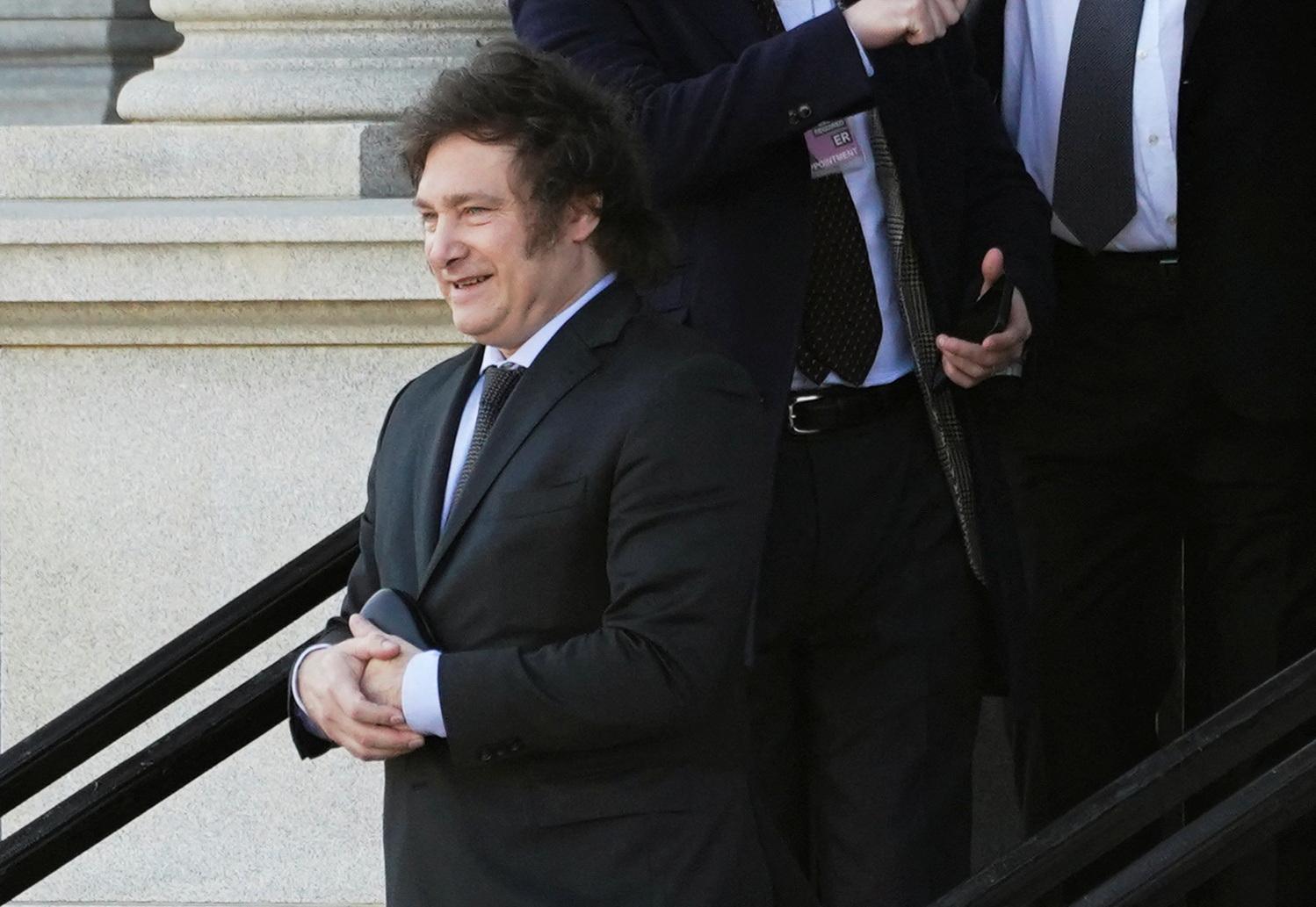
BUENOS AIRES/BEIJING, Dec 7 (Reuters) - Argentina's President-elect Javier Milei has a China conundrum. The libertarian economist insulted communist-run China in a fiery campaign, but takes office on Sunday needing the country's second-largest trade partner more than ever as a recession looms and foreign currency reserves run dry. Since he won the Nov. 19 election, Milei's team have taken a more diplomatic tone, reflecting complex ties with China, the top buyer of Argentine soybeans and beef, a key investor in its lithium, and the provider of an $18 billion currency swap - effectively, a form of credit provision that has helped Argentina avoid default. Miguel Schiariti, president of the local CICCRA meat industry chamber, is hopeful of a "cordial" relationship, pointing to recent comments by incoming foreign minister Diana Mondino. China buys over three-quarters of Argentina's beef exports. Mondino told Reuters in a Dec. 2 interview that the new government would review "secret" state-to-state deals to ensure they were all above-board, but emphasized Argentina would not cut ties with China, and would look in fact to bolster private trade. "The private sector is the one that makes the deals," she said, adding that Argentina wanted to "export as much as possible to everyone." The new government will be keen to overturn trade deficits, she said, including with China - around $10 billion last year. "We have a lot of debt... so we need a positive surplus." 'PROJECTS WILL BE REVIEWED' Not everyone is convinced that things will be so easy, with sensitive mega-projects including hydroelectric and nuclear needing solid state-to-state relations. In the southern province of Santa Cruz, Chinese-made turbines are set to arrive early next year for a $5 billion hydropower dam project, which the outgoing Peronist regional governor Alicia Kirchner said could be held up by the change in government. "Those dams are at risk with Milei," Kirchner said in an October interview, citing his public criticism of China during the campaign. "(Milei) says we can be an island," Kirchner said. "I don't think the country has a future that way." Milei's campaign has not spoken specifically about the dams. China is providing financing for around a dozen ongoing infrastructure projects in Argentina, government data show, which range from railways and solar farms to space stations and fertilizer facilities. It also has a dozen mining investments, especially in electric-vehicle battery metal lithium. Some projects are already facing big delays or are "paralyzed," said Patricio Giusto, director of the Sino-Argentina observatory based in Buenos Aires, citing poor management, regulatory hurdles and domestic economic issues. That could worsen if diplomatic ties are strained, he said. Cross-cancellation clauses in some contracts could allow Beijing to stop loans to projects if another one was canceled, he added. "If Milei attempts to cancel any of these public works contracts, China would simply ask for the money back from any number of projects," Giusto said. "That's money Argentina simply doesn't have." Construction of the two Santa Cruz hydropower plants, the biggest Chinese investment yet in Argentina and funded by the China Development Bank, began in 2015 but remains less than half complete, two provincial sources close to the work said. Chinese investors would likely be practical, a senior diplomat in Buenos Aires said. "There won't be confrontation with Argentina but projects will be reviewed." China's embassy in Buenos Aires did not immediately respond to a request for comment. 'OTHER PROBLEMS TO SOLVE FIRST' China also gobbles up Argentina's soybeans and other grains, buying over 93% of the country's soy exports so far this year, official data show. It rises to almost 100% for barley and sorghum. Overall, China accounts for some 10% of Argentine exports, and over a quarter of its imports. "We believe that the foreign ministry will maintain relations and negotiations with China," said Gustavo Idigoras, president of CIARA-CEC, which represents major grains exporters and crushing companies like Bunge and Cargill. Meanwhile, China's Gangfeng Lithium (002460.SZ), Tsingshan Holding Group, and Zijin Mining (601899.SS) have major investments in Argentina's lithium sector, the world's no. 4 producer of the "white gold" metal. In China, experts saw a likely pragmatic relationship. "Milei will view Argentina's political relationship with China in economic terms. He used to be an economist, after all," said Beijing-based Hu Yukun, a Chinese international relations commentator. Hu predicted Milei would at most downgrade the relationship, but would, like previous governments, treat China as a crutch for the country's economic woes, flagging the currency swap, which cash-strapped Argentina has used to pay back the International Monetary Fund (IMF). The swap - of which some $11.5 billion has already been activated - could come into the crosshairs of Milei's government, an Argentine central bank source said. "It is now an issue for the next administration. The swap was useful to the current government because it avoided defaulting on payments with the IMF," the source said. Milei's recently appointed economic team has not spoken about the currency swap but has had initial meetings with the IMF that Milei described as "collaborative." The swap "could be (impacted) because of what he has said about not having relations with China at the state level," the source said. "But in recent weeks his speech has moderated and he has many other problems to solve first." https://www.reuters.com/world/americas/with-soy-lithium-trade-balance-argentinas-milei-has-china-conundrum-2023-12-07/
2023-12-07 09:27
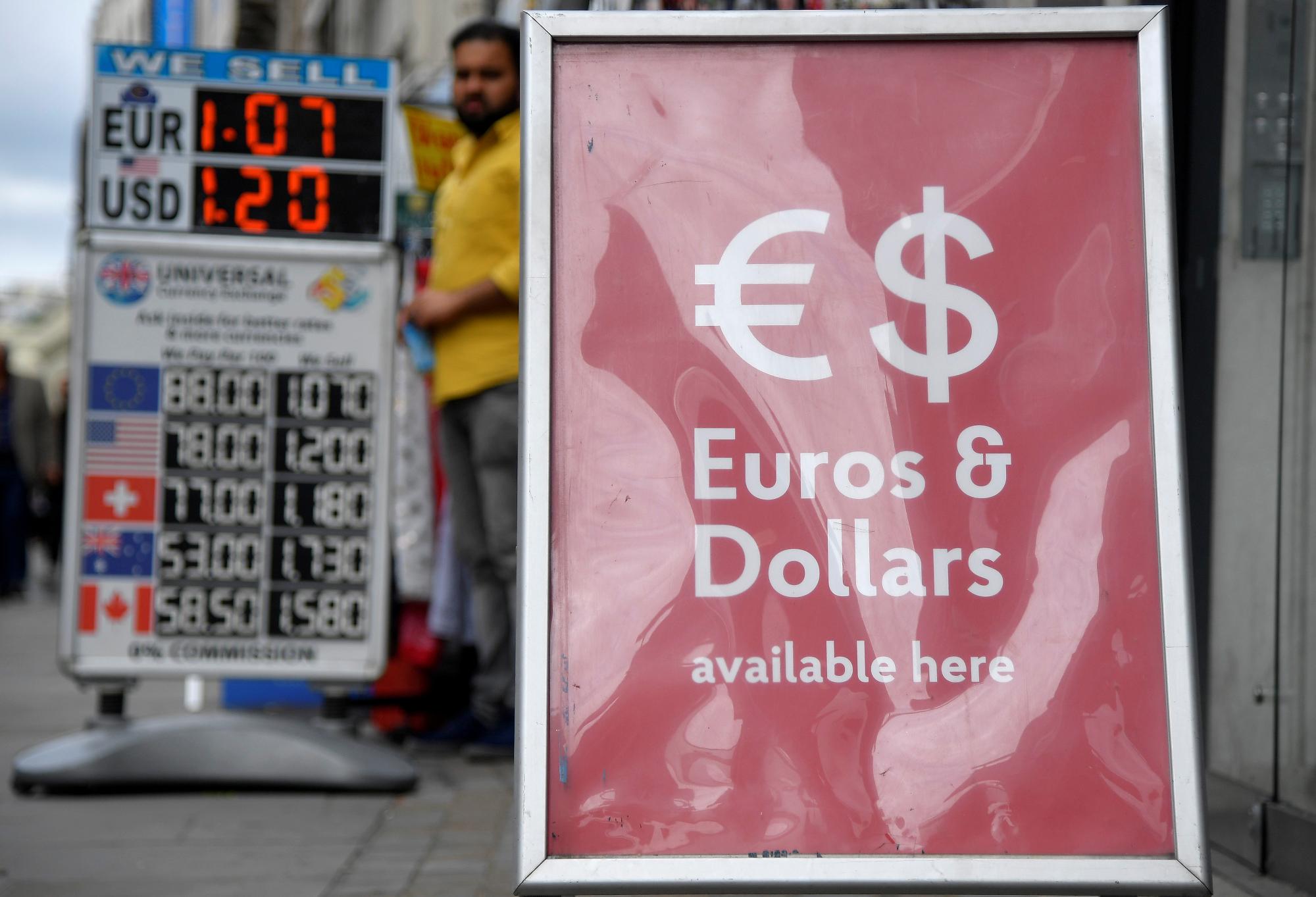
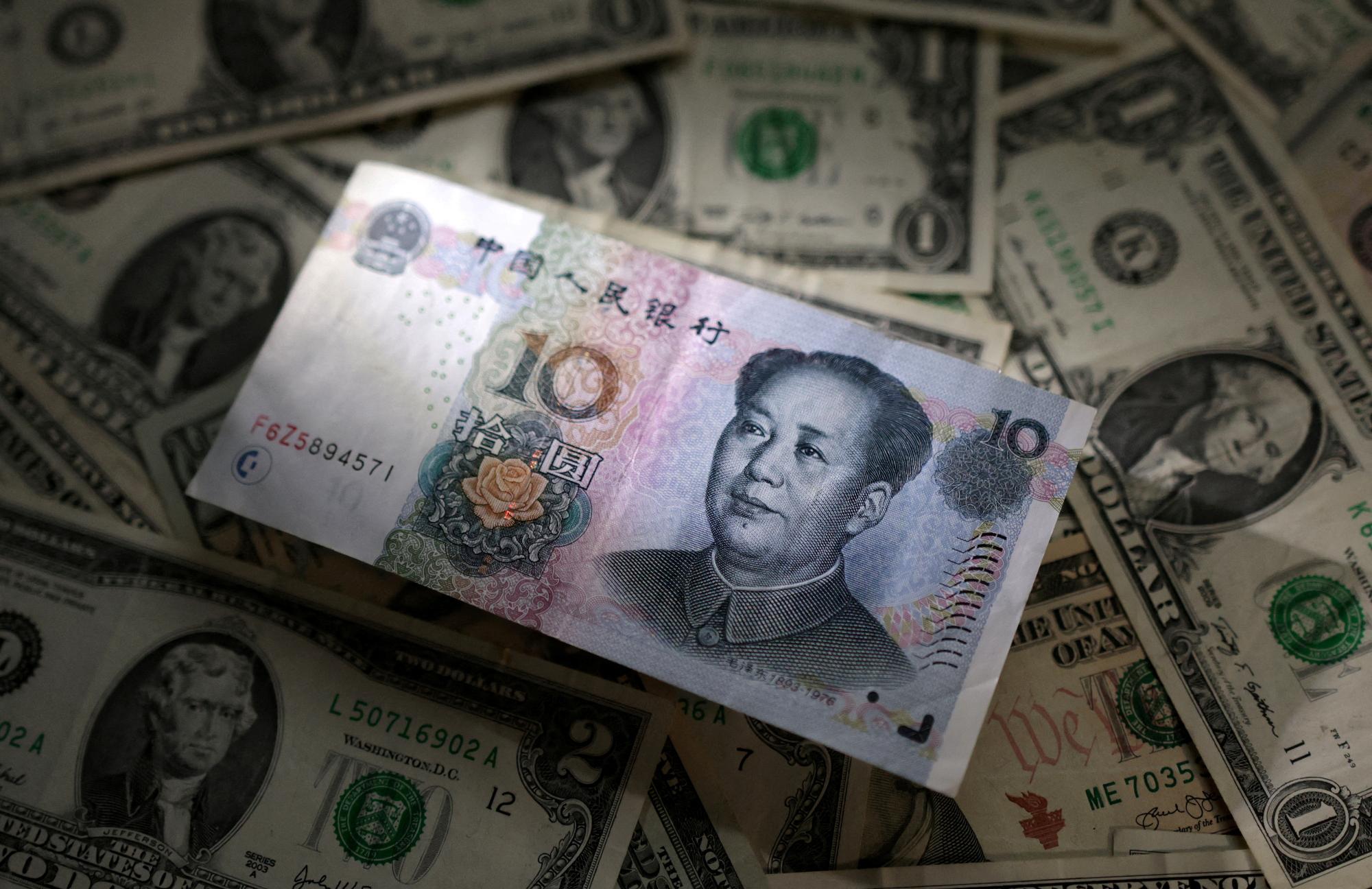
SHANGHAI, Dec 7 (Reuters) - Global investment banks see the yuan facing continued downside pressure in the first half of 2024 before turning around over the following six months on views that the U.S. Federal Reserve will begin to cut interest rates by then, forecasts show. With China's economic recovery sputtering and the U.S. dollar surging until recently, the yuan has had a volatile year, having weakened 6.14% to the dollar at one point before giving back much of the losses. The onshore yuan last traded at 7.1505 per dollar on Thursday and was down 3.5% so far this year. Here is a summary of some forecasts for the Chinese currency: KEY COMMENTS: ** GOLDMAN SACHS "While we view the strong policy-driven daily fixes of CNY as a clear indication of policymakers' desire to reduce depreciation expectations and manage capital outflow pressures, we think a more sustained CNY appreciation would require a more convincing pickup in Chinese growth and improved prospects of asset market outperformance, which seems hard to envisage amid mixed activity data, continued property price declines, and negative inflation. "Such a tepid macro environment in China in contrast to the strong activity picture we envisage in the U.S., combined with the continued interest rate differential between the two countries, will eventually limit the scope of CNY strength, in our view." ** STANDARD CHARTERED BANK "We see CNY staying supported into Lunar Year, but will likely give up some gains subsequently. Near term, seasonality is positive into the Lunar New Year holidays." "But the yuan may face renewed challenges in H1-24. We see USD/CNY testing higher in the range of 7.15-35 in H1-24 ... Rate differential will remain wide with developed market (DM) rates staying higher and CNY rates lower for longer. "Given difference in economic fundamentals, China inflation will likely stay structurally lower while DM inflation may stay sticky, resulting in persistent policy rate difference - even if the Fed starts cutting next year, USD rates will stay materially higher than CNY rates by end-2024." ** SOCIETE GENERALE "The policy effort of containing CNY depreciation became a permanent factor in People's Bank of China's (PBOC) policy toolkit. However, extended monetary policy divergence would keep pushing the USD/CNY higher until there is a clear sign of a U.S. Fed pivot. Policy balancing between local rates and FX is likely to be slightly tilted toward lower local rates at the expense of a slightly higher USD/CNY." ** ANZ "We expect a turnaround in 2024 to result in a stronger CNY. The cumulative effects of the stimulus measures that have been announced, including the recent ones around the property sector, should start to reflect in better economic data in early 2024. "With the Fed expected to start cutting interest rates by mid-2024, the USD should continue to correct from overvalued levels. This will see a return of portfolio flows into the onshore bond and equity market. The repatriation of past retained earnings by multinationals should also ease off and exporters are likely to increase their conversion rate." ** COMMERZBANK "China's economy has yet to gain a firm footing and this will continue to pose downside pressure on the yuan in the near term. Also, even though the negative interest rate differentials between China and the U.S. have narrowed somewhat recently, they are likely to persist given the divergent policy directions for the Fed and PBOC. "The yuan will unlikely strengthen substantially as structural headwinds, including the real estate troubles, will continue to pose risks to China's growth outlook." https://www.reuters.com/markets/currencies/global-investment-banks-see-yuan-recovery-second-half-2024-2023-12-07/
2023-12-07 09:04
MOSCOW, Dec 7 (Reuters) - Russian banks' profits will reach record levels around 3.3 trillion roubles ($36 billion) this year, the central bank said on Thursday, before dropping off by about 1 trillion roubles in 2024 as high interest rates cool lending growth. Profits slumped by almost 90% in 2022 as the West imposed sweeping sanctions on Russia's financial sector over Moscow's actions in Ukraine, but banks have recovered this year through strong lending growth and high net interest margins, particularly thanks to the state's burgeoning defence budget. "Lending accelerated in all segments in the third quarter, however a slowdown is possible at the end of the year," the central bank said. Corporate lending growth of 5.9% year on year in the quarter was driven by demand for loans from state contracts, the replacement of external debt and growth in housing construction, the bank said. The bank's 750 basis points of monetary tightening since July is expected to reduce demand for credit in the economy. Widening interest margins, in spite of higher rates, have boosted profits, the bank said. It forecast banks' 2024 profits at 2.1-2.6 trillion roubles. "We are assessing 2024 as a little more challenging because the central bank's policy is aimed at fighting inflation and the rate is therefore very high, and the central bank has taken measures to restrict lending," said German Gref, CEO of dominant lender Sberbank (SBER.MM), in an interview broadcast on state television on Thursday. "Nevertheless, we in our forecasts believe that we will be able to earn more next year than this year." Sberbank accounted for over half of the entire sector's profits in 2021. ($1 = 92.5900 roubles) https://www.reuters.com/business/finance/russian-central-bank-sees-banks-profits-shrinking-next-year-record-high-2023-12-07/

2023-12-07 06:54
China November crude oil imports down 13.3 % from October Moody's cuts Hong Kong, Macau and bank rating outlooks Russia, Saudi Arabia urge all OPEC+ countries to join deal NEW YORK, Dec 7 (Reuters) - Oil prices fell on Thursday to six-month lows, as investors worried about sluggish energy demand in the United States and China while output from the U.S. remains near record highs. Brent crude futures dropped 25 cents to $74.05 a barrel. U.S. West Texas Intermediate crude futures fell 4 cents to $69.34. Both benchmarks posted their lowest prices since late June. Front-month prices for Brent began trading this week at a discount to prices in a half year for the first time since June, a signal that traders believe the market may have become oversupplied. "With the largest global importer of oil (China) shuttering its thirst for crude, pressure remains on prices as the largest producer, the United States, continues with headline output," said PVM Oil analyst John Evans. U.S. output remained near record highs of over 13 million barrels per day, U.S. Energy Information Administration data showed on Wednesday. U.S. gasoline stocks (USOILG=ECI) rose by 5.4 million barrels last week to 223.6 million barrels, the EIA said, more than quintuple the 1 million barrel build that had been expected. Concerns about China's economy also put a lid on oil's price gains. Chinese customs data showed that crude oil imports in November fell 9% from a year earlier as high inventory levels, weak economic indicators and slowing orders from independent refiners weakened demand. While China's total imports dropped on a monthly basis, exports grew in November for the first time in six months, suggesting an uptick in global trade flows may be helping the manufacturing sector. Ratings agency Moody's put Hong Kong, Macau and many of China's state-owned companies and banks on downgrade warnings on Wednesday, a day after it put a downgrade warning on China's sovereign credit rating. Oil prices have fallen by about 10% since OPEC+, the Organization of the Petroleum Exporting Countries (OPEC) and allies, announced a combined 2.2 million barrels per day (bpd) in voluntary output cuts for the first quarter of next year. "The market seems to be suggesting that they don't believe OPEC+ has the ability to follow through on their cuts," said Phil Flynn, an analyst at Price Futures Group in Chicago. Saudi Arabia and Russia, the two biggest oil exporters, on Thursday called for all OPEC+ members to join an agreement on output cuts for the good of the global economy. Russian President Vladimir Putin and Saudi Crown Prince Mohammed bin Salman met on Wednesday to discuss further oil price cooperation, while OPEC+ member Algeria said it would not rule out extending or deepening oil supply cuts. On Tuesday Russian Deputy Prime Minister Alexander Novak on Tuesday said the producer group stood ready to strengthen oil supply cuts in the first quarter of 2024. Russia has pledged to disclose more data on the volume of its fuel refining and exports after OPEC+ asked Moscow for more transparency on classified fuel shipments from the many export points across the country, sources at OPEC+ and ship-tracking companies told Reuters. https://www.reuters.com/business/energy/oil-prices-regain-ground-after-falling-six-month-lows-2023-12-07/