2023-12-07 06:49
Dec 7 (Reuters) - Asian equities attracted substantial foreign investment in November, signalling the prospects of continued inflows next year, bolstered by a decrease in U.S. Treasury yields and rising optimism for potential Federal Reserve rate cuts. According to data from stock exchanges across Taiwan, South Korea, India, Indonesia, the Philippines, Thailand, and Vietnam, foreign investors bought a net $11.16 billion in stocks last month, the most since May. The inflows were underpinned by cooler-than-expected U.S. October inflation data and dovish comments from Federal Reserve officials, which led to sharp declines in both U.S. Treasury yields and the dollar last month. The yield on 10-year notes fell by 52.5 basis points in November, marking the steepest monthly drop since August 2011, while the dollar index saw a decrease of about 3%, its largest monthly decline in a year. "Foreign investors may have more risk appetite for EM assets subject to lower USD interest rates and/or weaker USD," said Jason Lui, head of APAC equity derivatives strategy at BNP Paribas. So far this year, Asian equities have received a net $14.03 billion, a significant turnaround from the approximately $57.52 billion in net selling in 2022. In the last month, Taiwanese stocks attracted foreign inflows of $7.58 billion, the highest since at least 2008. South Korean shares attracted $3.26 billion, while Indian equities received net inflows of $1.08 billion. "The strong inflows into Korea and Taiwan recently may be more related to the global excitement on AI and semiconductor demand," he said. Philippine stocks saw a slight $19 million in foreign inflows after three months of outflows. However, Thai and Vietnamese shares saw outflows of $598 million and $146 million, respectively, with foreigners remaining net sellers since February and April. Amid concerns about a global economic slowdown due to high interest rates and inflation, analysts predict Asia may show resilience in the coming year and outperform other regions. "Despite a weak global backdrop, we believe growth in most Asian economies will outperform U.S. and European growth in 2024 amid a semiconductor-led export tailwind, steady domestic demand, and stronger fundamentals," Sonal Varma, chief economist at Nomura, said in a note. "Over the medium term, Asia's strong fundamentals and growth prospects mean the region is well-placed to attract large capital inflows." https://www.reuters.com/markets/asia/robust-nov-foreign-inflows-asian-equities-signal-positive-outlook-2024-2023-12-07/

2023-12-07 06:26
LONDON, Dec 6 (Reuters) - British American Tobacco's (BATS.L) admission that its U.S. cigarette brands will be worthless within decades has ramped up pressure on the company to prove it can better compete in alternatives like vapes. Earlier on Wednesday, BAT put a 30-year lifetime on some U.S. tobacco brands' value, taking a $31.5 billion noncash impairment. The move marked the first time a tobacco company has acknowledged that hugely profitable brands have no economic future. While the maker of Lucky Strike and Dunhill cigarettes has been investing in alternatives like vapes to counter the decline, it lags behind rival Philip Morris International (PM.N) in the transition, leaving its shares trading at a vastly lower price-earnings ratio than those of its main competitor. "What really matters to the stock is how quickly you can replace (cigarettes) with alternative routes for consumers to get a nicotine hit and how profitable that will be," said Chris Beckett, head of equity research at Quilter Cheviot, a BAT shareholder. BAT says its newer products will break even years ahead of schedule. Its vape business is growing, along with its oral nicotine product, Velo, the market leader in Europe. However, it faces key challenges. In the critical U.S. market, authorities have rejected its application to sell some key vape products and illegal disposable vapes have flooded the market, denting sales of those products BAT is able to market. The company is also under pressure from investors to catch up with rival PMI in another alternative, heated tobacco. Heated tobacco devices heat up sticks of tobacco resembling cigarettes but do not burn them in an attempt to avoid harmful chemicals released during combustion. PMI's IQOS product dominates this category with some 70% market share. BAT's rival proposition, meanwhile, lost market share in 2023 in terms of volume, to stand at 18.2% in key markets, the company said, adding that its volume and revenue growth decelerated in the second half in a "disappointing" performance. LATE ENTRY It is harder for companies to generate profit from vapes due to intense competition, said Orwa Mohamad, analyst at Third Bridge. BAT's late entry into heated tobacco had left it at a disadvantage and an aggressive pricing strategy aimed at winning share from IQOS had yet to bear fruit, he added. Where PMI expects two-thirds of its net revenue to come from smoke-free products by 2030, BAT's ambition, announced on Wednesday, envisages only 50% of its revenue from new categories by 2035. Its slower progress versus PMI means BAT's shares have gained little value so far from its commitment to transition, trading at a price-earnings ratio only slightly above that of rival Imperial Brands (IMB.L). Unlike the others, Imperial has in recent years pulled back from heavy investments in new products to refocus on its traditional cigarette business, leaving a question mark over its longer-term sustainability. At the same time, BAT is now falling short of Imperial on something investors have long expected from highly cash-generative cigarette businesses: healthy dividends and share buybacks. Cigarette businesses are so profitable they do not need to last beyond 30 years to make worthwhile investments, Beckett said, adding Imperial's share buybacks are evidence of that. Imperial's delivery on this core element of tobacco companies' investment case has helped its shares outperform rivals in recent years, rising 17% since the start of 2022. That compares with 1% for PMI's stock, and a decline of 13% for BAT. BAT, meanwhile, disappointed the market on Wednesday when it said it would need to reduce its leverage ratio further before buybacks could resume. A buyback would be "amazingly enhancing" to the stock, Beckett said. https://www.reuters.com/markets/commodities/bats-us-writedown-puts-tobacco-transition-spotlight-2023-12-06/
2023-12-07 06:25
Steel division made a loss in four of the past five years Thyssenkrupp and EPH remain in discussions over 50:50 steel JV Talks focus on funding, JV set-up, German budget crisis -sources Shares fall as much as 4.8% FRANKFURT/DUESSELDORF, Dec 7 (Reuters) - Thyssenkrupp (TKAG.DE) may need to hand over cash or keep hold of some pension liabilities to win over Czech billionaire Daniel Kretinsky as a co-owner of its steel business, two people familiar with the matter said. Thyssenkrupp has been in talks with Kretinsky's EPH, the energy division of his investment empire, on a 50:50 joint venture (JV) to finally rid the German industrial conglomerate of a business that dates back more than 200 years and has become tied to Germany's economic identity. For the past decade efforts to merge the division with, or sell it to, a rival, or list the business or spin it off have all failed. Kretinsky remains the last serious contender in Thyssenkrupp's latest divestment efforts, giving him an advantage in ongoing talks over timing and conditions, the people said. The company wants a deal partly because of the challenging prospects facing the steel industry, including cost inflation, Asian competition and the capital-intensive nature of the business. Thyssenkrupp Steel Europe has made operating losses in four of the past five years, but at 3.2 billion euros ($3.5 billion), or 39% of total group investments, it swallowed most of its parent's capital expenditure. "It hinges on a financial commitment," a person familiar with the discussions said, adding that Thyssenkrupp Steel Europe could have a negative equity value without a cash injection from its parent, meaning its liabilities would be bigger than its assets. The sources did not quantify any potential financial contribution. Shares in Thyssenkrupp fell as much as 4.8% on the news and still traded 3.6% down by 1104 GMT. A trader said that even though a financial contribution had to be expected it could scare off some investors. Part of the problem is 2.6 billion euros in steel-related pension liabilities, which Jens Muenstermann, senior investment analyst at LBBW, reckons are a hurdle in talks with EPH. The pension liabilities, which relate to the steel business pension scheme, have also played a role in why past efforts to divest the business, including a planned JV with the European unit of India's Tata Steel (TISC.NS), have failed. Thyssenkrupp's net financial assets are 4.3 billion euros, but bolstering the steel arm's balance sheet would still be a stretch given the company's other capital-intensive divisions, the people said, including submarines and car parts. Another problem is Germany's budget crisis, the result of a landmark court ruling in November, which could threaten future investments in hydrogen fuel, a key element in efforts to cut CO2 in steel production, a separate source said. "Kretinsky is in no hurry to do a deal," this person said, noting, however, the strategic rationale behind a tie-up, in which EPH would provide Thyssenkrupp with green electricity to help the steelmaker decarbonise production. That relies on Kretinsky's plan to invest around 10 billion euros to turn EPH's German lignite activities, which it acquired from Vattenfall (VATN.UL) in 2016, into a group based on renewables, batteries and hydrogen-ready power plants. EPH has said this will rid it of almost all its coal assets by 2025 and completely phase out the polluting energy source by 2030 - green merits that Thyssenkrupp CEO Miguel Lopez also highlighted last month. Negotiations are also focusing on whether all of Thyssenkrupp's roughly 11 million tonnes of annual steelmaking capacity will still be needed in a potential joint-venture structure, the people said. In the meantime, there are doubts, too, over whether Kretinsky is the best partner for Thyssenkrupp. "Thyssenkrupp should not sell steel for the sake of selling it," said Christian Obst of brokerage Baader Bank. He said that to his knowledge Kretinsky had no recognisable track record in steel. "Nor does he have any extensive expertise in the field of renewable energy," Obst added. The people said that while both sides are committed to sealing a deal, there is still a chance talks could collapse. Thyssenkrupp declined to comment, referring to Lopez's comments saying that talks with EPH were constructive. EPH declined to comment and a spokesperson for Kretinsky said he had no comment. Lopez, who has accelerated Thyssenkrupp's overhaul since taking over in June, has a plan B if that happens, he said last month without elaborating. Scenarios discussed in the past include asking North Rhine-Westphalia, the state where Thyssenkrupp is based, to take a stake, similar to a structure at rival Salzgitter (SZGG.DE), in which Lower Saxony holds a blocking minority. Thyssenkrupp could also seek to revive talks to team up with German rivals to create a German steel champion, a long-standing idea that never bore fruit because of differing ideas about Thyssenkrupp's role in such a structure. ($1 = 0.9252 euros) https://www.reuters.com/markets/deals/thyssenkrupp-may-have-pay-up-forge-steel-business-deal-2023-12-07/
2023-12-07 06:23
WASHINGTON, Dec 7 (Reuters) - The yen staged its biggest one-day rally in almost a year on Thursday after Japanese monetary authorities offered a surprisingly clear hint at a shift in policy, while the euro pared some losses from earlier in the week. The dollar index eased ahead of Friday's U.S. non-farm payrolls report, under pressure mostly from the yen, which rose by more than 2% to its strongest in three months. Bank of Japan (BOJ) Governor Kazuo Ueda said on Thursday the central bank has several options on which interest rates to target once it pulls short-term borrowing costs out of negative territory. Markets took this as a potential sign that change may be imminent and pushed the yen higher. Tighter monetary policy from the BOJ would be in contrast to other central banks, which have indicated that they are near the end of their rate hiking cycles. "The comments last night sort of poured rocket fuel into bets on an eventual move back into positive rates territory for the Bank of Japan," said Karl Schamotta, chief market strategist at Corpay in Toronto. The dollar was last down 2.62% against the yen at 143.465, after briefly falling as low as 3.8% earlier in the session. The BOJ has been the lone holdout among central banks, by maintaining a policy of ultra-low rates that sent the yen to its weakest in decades against the dollar and sparked speculation that monetary authorities could intervene to prop up the currency. "The market is very, very heavily short the yen and we’ve got a heavy consensus in for 2024 that this is going to be the year that they bring negative rates to an end. So it shows the market is ready to latch on absolutely anything that it can in light of that," TraderX strategist Michael Brown said. The euro was last at 1.07980, up 0.32% after a dramatic repricing of interest rate expectations for 2024, although caution around Friday's U.S. non-farm payrolls has kept trading volatility subdued. Against the Swiss franc, the euro was up 0.3% at 0.945 francs, above an earlier low of 0.9404, its weakest since early 2015, when the Swiss National Bank removed its peg between the two currencies. Falling inflation, a slowdown in major economies such as Germany and softness in the labour market have prompted traders to assume euro zone rates will fall to 3%, from 4% currently, by September, down from an expectation of 3.4% just two weeks ago. As a result, the euro has hit eight-year lows against the Swiss franc and three-month lows against the pound this week. The European Central Bank (ECB) holds its final meeting of 2023 next Thursday. The dollar index , which shed 3% last month, was down 0.586% at 103.54 with Friday's payrolls the main focus. "I think we're going to see a slightly softer number relative to expectations, but that this is not going to meaningfully impact expectations for the Fed's policy map," said Schamotta. "Where I see the volatility term structure should be probably more elevated is around Wednesday's policy meeting." The Fed is widely expected to maintain rates at the current level when it meets next week. Futures markets are pricing in a 60% chance of a Fed rate cut by March, up from 50% a week ago, according to the CME's FedWatch tool. https://www.reuters.com/markets/currencies/dollar-steady-euro-near-three-week-low-rate-cut-bets-rise-2023-12-07/
2023-12-07 06:20
Dec 7 (Reuters) - Trading app operator Robinhood Markets Inc (HOOD.O) said on Thursday it has launched commission-free crypto trading to customers in the European Union. "It is the only custodial crypto platform where customers will get a percentage of their trading volume back every month, paid in Bitcoin (BTC)," Robinhood said in a blog post. The app will allow European investors to buy and sell more than 25 cryptocurrencies, including Bitcoin, Ether and Solana's SOL. The launch comes a week after Robinhood announced it will roll out brokerage services in the UK as part of an international expansion plan to "democratise finance" and increase access to markets. Bloomberg News first reported the move earlier on Thursday, citing an interview with its crypto general manager Johann Kerbrat. https://www.reuters.com/business/finance/robinhood-launch-commission-free-crypto-trading-eu-bloomberg-news-2023-12-07/

2023-12-07 06:18
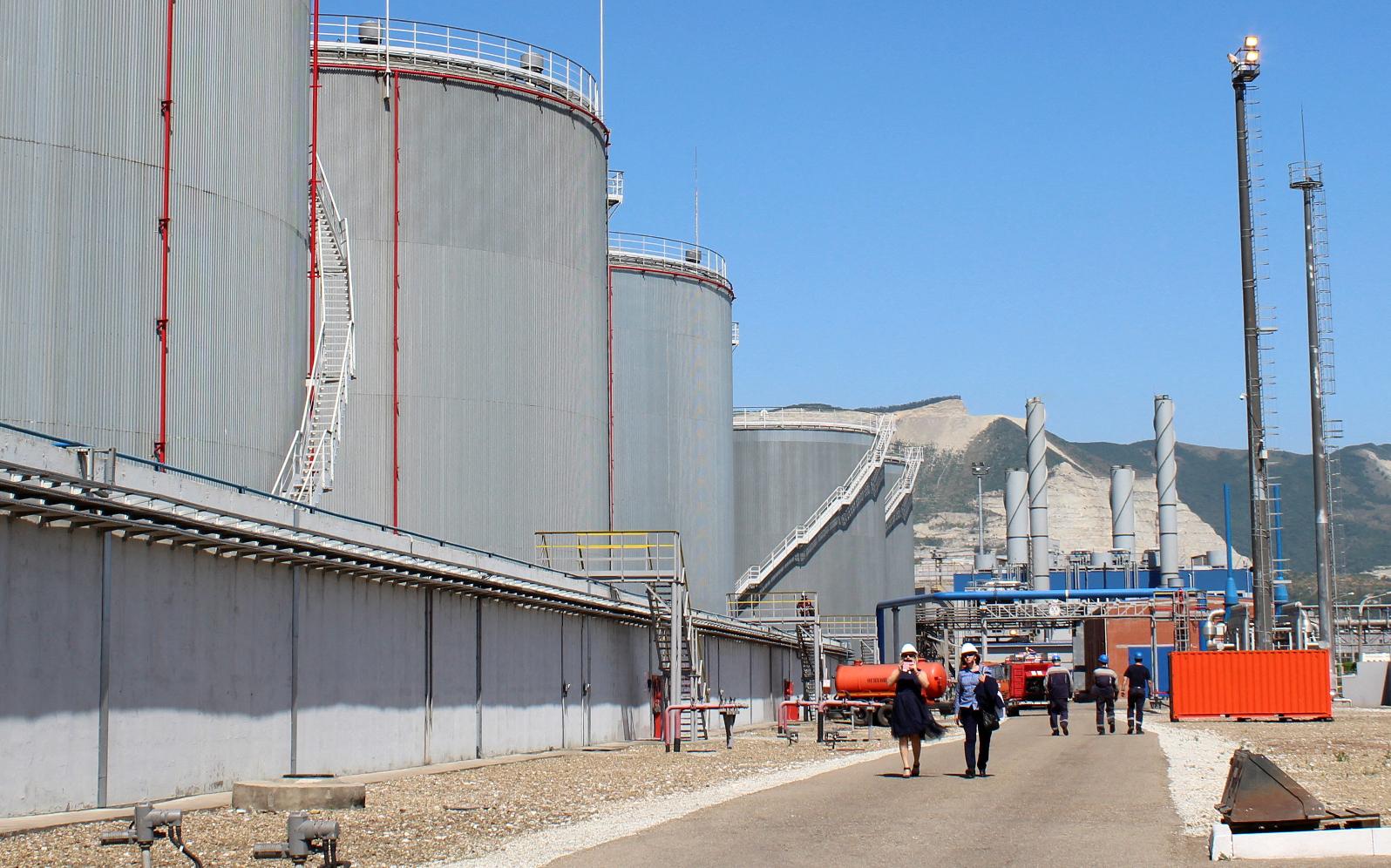
Dec 7 (Reuters) - Russia has pledged to disclose more data about the volume of its fuel refining and exports after OPEC+ asked Moscow for more transparency on classified fuel shipments from the many export points across the vast country, sources at OPEC+ and ship-tracking firms told Reuters. Russia is the only member of OPEC+ which contributes to export cuts rather than production cuts as part of its participation in the group's agreement to curb supplies. Market analysts have struggled to verify the exact volumes of cuts achieved by Moscow. Deputy Energy Minister Pavel Sorokin made the offer to provide more information last week in a call with six ship-tracking consultancies and price reporting agencies tasked by OPEC+ to work with Moscow on the issue, three sources told Reuters. Sorokin told the firms - S&P Global Platts, Argus Media, Energy Intelligence, Wood Mackenzie, Rystad and Kpler – Moscow would provide more data on crude production, inventories and refinery fuel output to give a more comprehensive picture on its compliance, according to the sources, one of whom attended the meeting. "Sorokin was trying to persuade the trackers that Russia fully complied with the deal," one of the sources said. Details of the call, which took place on Nov. 28, have not been previously reported. Sorokin did not respond to a request for comment. Rystad said it was one of the secondary sources chosen by OPEC and its estimates were available for OPEC's research organization. Argus, Woodmac and Kpler declined to comment, while Energy Intelligence and S&P Global Platts have not immediately replied to requests for comment. Russia has made its oil production and exports data classified since the West imposed sanctions on Moscow following the start of the conflict in Ukraine in February 2022. Russian officials have said the country should not reveal information that would make it easier for its foes in the West to monitor and sanction Russian shipments. Russia is the world's second-largest oil and fuel exporter after Saudi Arabia with overall volumes of around 6-7 million bpd. TOUGH TASK Russian fuel exports were complex to tally even before they became a state secret as the country uses dozens of ports, rail terminals and border crossings to export many different fuels. Russia has around 30 large and 80 small refineries, which together process over 5 million barrels per day (bpd) of crude. OPEC+ delayed its meeting last week by several days to November 30 due to what sources said were disagreements over production levels by some members, including Nigeria and Angola. The group finally agreed to deepen cuts to around 6 million bpd or 6% of global output. Under an earlier deal with OPEC+, Russia pledged to reduce its oil exports by 300,000 bpd until the end of 2023. The latest deal calls on Russia to additionally cut its fuel exports by 200,000 bpd in the first quarter of 2024. Saudi Energy Minister Prince Abdulaziz bin Salman said in an interview with Bloomberg that OPEC+ wanted more assurances from Moscow it would deliver on its pledge. He said Russia would be meeting with the ship tracking firms every month to provide data but gave no further detail. Prince Abdulaziz said he would have preferred to see Russia cutting oil output rather than exports. But he added he understood the challenges Russia was facing with cutting oil output in winter months because doing so in freezing temperatures can damage reservoirs. The idea of export rather than production cuts was first publicly floated by Igor Sechin, the powerful head of Russian energy giant Rosneft (ROSN.MM) and a long-standing ally of President Vladimir Putin, in June. "OPEC itself had a poor track record of production discipline in the 1980s and 1990s," BCS Global Markets analyst Ronald Smith said, adding that Saudi had traditionally "bore an outsized share of the burden of cutting production". "It is unsurprising that Saudi Arabia would be concerned with confirming that Russia, the second-largest member in OPEC+ by production, is producing and exporting the amount of oil it says it is," he added. According to Reuters calculations, Russia's total oil products exports stood at 98.8 million metric tons, or round 2 million barrels per day, in January-November 2023. After the European Union banned Russian fuel imports, Russia diverted Europe-bound exports of diesel and other fuels to Brazil, Turkey, North and West Africa and the Middle East. Turkey and the Middle East, which have their own major refineries, have since become Europe's top fuel suppliers, often blending their own fuels with those from Russia or with refined products made from Russian oil. https://www.reuters.com/business/energy/russia-pledges-more-oil-data-ship-trackers-soothe-opec-sources-2023-12-07/