2023-12-06 06:22
WASHINGTON, Dec 6 (Reuters) - The U.S. dollar was at a two-week high on Wednesday, while the euro was weak across the board as markets ramped up bets that the European Central Bank (ECB) will cut interest rates as early as March. Although markets are still pricing at least 125 basis points of interest rate cuts from the U.S. Federal Reserve next year, the dollar was able to hold steady as rate cut bets for other central banks intensified. The dollar index , which measures the currency against six other majors, was last up 0.19% at 104.16. The euro was down 0.29% to $1.0764. Traders are betting that there is around an 85% chance that the ECB cuts interest rates at the March meeting, with almost 150 basis points worth of cuts priced by the end of next year. Influential ECB policymaker Isabel Schnabel on Tuesday told Reuters that further interest rate hikes could be taken off the table given a "remarkable" fall in inflation. The euro also touched a three-month low against the pound , a five-week low versus the yen and a 6-1/2 week low against the Swiss franc . "It's a reasonably sized sell-off and the market is trying to digest, is it just a correction? Did the market get over-exuberant in the previous weeks? I think there is definitely an element of that," said Amo Sahota, director at FX consulting firm Klarity FX in San Francisco. 'A BIT OVERBOARD' The ECB will set interest rates on Thursday next week and is all but certain to leave them at the current record high of 4%. The Fed and Bank of England are also likely to hold rates steady next Wednesday and Thursday respectively. The Bank of Canada on Wednesday held its key overnight rate at 5% and, in contrast to its peers, left the door open to another hike, saying it was still concerned about inflation. Traders have priced around a 60% chance of the U.S. central bank cutting rates in March, according to CME's FedWatch tool. "Markets have aggressively priced in rate cuts, without any kind of confirmation from central banks," said Adam Button, chief currency analyst at ForexLive in Toronto. "As December continues, we need either a change in tune from central bankers or a repricing in markets." If the Fed were to cut rates as markets expect, it could result in the dollar loosening its grip on other G10 currencies next year, dimming the outlook for the greenback, according to a Reuters poll of foreign exchange strategists. The spotlight in Asia was on China, as markets grappled with rating agency Moody's cut to the Asian giant's credit outlook. The offshore Chinese yuan was flat at $7.1728 per dollar, a day after Moody's cut China's credit outlook to "negative". China's major state-owned banks stepped up U.S. dollar selling forcefully after the Moody's statement on Tuesday, and they continued to sell the greenback on Wednesday morning, Reuters reported. Elsewhere in Asia, the Japanese yen weakened 0.15% versus the greenback at 147.38 per dollar. The Australian dollar fell 0.02% to $0.65495. In cryptocurrencies, bitcoin eased 0.06% to $44,049, still near its highest since April 2022. The world's largest cryptocurrency has gained 150% this year, fueled in part by optimism that a U.S. regulator will soon approve exchange-traded spot bitcoin funds (ETFs). https://www.reuters.com/markets/currencies/dollar-steady-traders-weigh-labour-data-rate-outlook-2023-12-06/
2023-12-06 06:21
DUBAI, Dec 5 (Reuters) - U.S. special climate envoy John Kerry on Tuesday launched an international engagement plan to boost nuclear fusion, saying the emissions-free technology could become a vital tool in the fight against climate change. Kerry said the plan involved 35 nations and would focus on research and development, supply chain issues, and regulation, and safety. "There is potential in fusion to revolutionize our world," Kerry told the COP28 climate summit in Dubai. Fusion, which powers the sun and other stars, can be replicated on Earth with heat and pressure using lasers or magnets to smash two light atoms into a denser one, releasing large amounts of energy. The nascent technology could have an important advantage over today's nuclear fission plants by producing huge amounts of unlimited power without long-lasting radioactive waste. But there are big hurdles to fusion's producing commercial electricity. For one, scientists have so far only achieved scattered instances where fusion experiments produce more energy than is required to make them happen. There are also regulatory, construction and siting hurdles in creating new fleets of power plants to replace parts of existing energy systems. Britain and the United States on Nov. 8 signed a cooperation agreement on fusion. Other countries pursuing fusion include Australia, China, Germany and Japan. In August, scientists using laser beams at a U.S. national lab in California repeated a fusion breakthrough called ignition where for an instant the amount of energy coming from the fusion reaction surpassed that concentrated on the target. Scientists estimated, however, that the net energy output of that experiment was only about 0.5% of the energy that went into firing up the lasers. Of the two main types of fusion, one uses lasers to concentrate energy on a gold pellet containing hydrogen. The other uses powerful magnets to trap plasma, or gaseous hydrogen heated to about 100 million degrees Fahrenheit (55 million degrees Celsius). (This Dec. 5 story has been corrected to remove a reference to electricity in paragraph 4) https://www.reuters.com/business/energy/us-envoy-kerry-launches-international-nuclear-fusion-plan-cop28-2023-12-05/

2023-12-06 06:11
LONDON, Dec 6 (Reuters) - Any real economy crunch from the U.S. Federal Reserve's balance sheet rundown may have been softened to date, but the air is rapidly escaping from one of its key cushions. Whether last week's rhetorical shift by the Fed acknowledges this potential crunch is an open question, but credit and liquidity watchers are calling time on how long 2023's commercial bank reserves at the Fed can remain so stable. Debate centers on the spaghetti of financial liquidity management related to the Fed's 'quantitative tightening', where it has been gradually offloading its still $7.8 trillion balance sheet hoard of bonds and bills over the past 18 months. That stash, which more than doubled to a peak of almost $9 trillion last year after the pandemic shock, effectively bought bonds from banks and credited them with commercial bank reserves held at the Fed, against which those banks could then go on and lend on to business and households. Since mid-2022, QT has been rolling these securities off the Fed's balance sheet at a pace of $95 billion a month. But the Fed has also been soaking up what Atlanta Fed boss Raphael Bostic once described as "pure excess liquidity", via its daily reverse securities repurchase facility (RRP) - which at its peak in January hit £2.4 trillion. Attractive as a parking lot for money market funds and banks as the Fed hiked the returns on these 'reverse repos' in line with its policy rates, the money tucked away there is now exiting at breakneck pace - scrambling to lock into a flood of new longer maturity bills and bonds before Fed rates fall. Daily reverse repo totals have now dropped by about $1.6 trillion to just $768 billion last week. And at the pace at which the RRP has deflated over the past three months alone, it will be gone by March - perhaps coincidentally the month in which Fed futures are now more than two-thirds priced for the central bank's first policy rate cut. Maybe just the swings and roundabouts of the money market playground, but these moves may matter an awful lot: both to U.S. bank credit going into next year's economic slowdown as well as asset prices that many reckon feed directly off funding liquidity shifts in the system. Societe Generale's Solomon Tadesse says the crux to how QT affects lending to the economy at large hinges on how it erodes bank reserves and this has been extremely muted so far due to all the excess cash piled into the reverse repo buffer zone. Tadesse points out that during the only other prior example of Fed QT in action - 2017-2019 - bank reserves fell in lockstep with overall Fed balance sheet rundown. But not this time. BUMPY RIDE WITH NO CUSHION "Bank reserves at the Fed, the main channel of QT's liquidity impact, remain unchanged despite asset shrinkage from QT as the financing of the growing government debt obligations were mostly absorbed by drawdowns in the Fed's reverse repo facility," Tadesse said. In the less than two years of the previous QT campaign through 2019, the Fed's overall balance sheet was cut by more than $600 billion and bank reserves fell by over $800 billion. Over the past 18 months, however, bank reserves are still where they were in the middle of 2022, even though some $1.1 trillion has been lopped off the Fed's balance sheet. "In the 2017-19 QT, the Fed balance sheet asset sell-off came almost one-to-one from drawdowns in the Bank Reserves, thus draining liquidity from the system much faster...and leading to the liquidity squeeze of Sept 2019," Tadesse said. "It is not currently like that as the RRP cushion is absorbing the expected liquidity drain from QT." His key point is that as the RRP depletes further, QT will hit reserves and start to bite much more sharply into already deteriorating loan growth - which to date is largely down to falling demand for credit as borrowing costs rise and the investment horizon weakens from here. And from there it will sap asset prices, he says, in a way liquidity analysts have puzzled all year that it hasn't done. Presumably, the Fed can see this coming too. But whether it's now changing policy tack to get across it is a moot point. Last week, New York Fed chief John Williams claimed the depletion of the RRP was as designed, had some ways to go and reserve scarcity was some way off. Earlier in November, the three newest Fed governors, including Vice Chair Philip Jefferson, told a U.S. senator it was unclear how much further the balance sheet wind-down will run but there was no fixed target and it faced no imminent end. But left unchecked, the marriage of falling credit demand and supply could pack a greater punch to the U.S. economy next year than seen in the tightening process to date. That may be just another version of the long and variable lags associated with the impact of monetary policy, but it may also underscore why the Fed is starting to prepare the way for a turn. The speed with it now shifts may dictate the fallout. As to the impact on markets, other liquidity experts would insist that is more a function of global liquidity. The latest weekly updates from CrossBorder Capital, chiming with the U.S. bank reserves tune and ongoing credit easing in China, show nominal global liquidity levels actually picking up steam to just below the highest levels of the year. And that's before accounting for what now looks like an early pivot from the European Central Bank. But for the U.S., next year may be a bumpier ride without a 'QT cushion'. The opinions expressed here are those of the author, a columnist for Reuters. https://www.reuters.com/markets/us/deflating-qt-cushion-may-have-raised-red-fed-flag-mike-dolan-2023-12-06/

2023-12-06 06:07
LUSAKA, Dec 6 (Reuters) - Rescue workers in Zambia have pulled out the first survivor of a Dec. 1 landslide that inundated a open-pit copper mine and trapped at least 25 people who were working there without a permit, the disaster management unit said on Wednesday. The rescue team also retrieved one body which had yet to be identified, the Disaster Management and Mitigation Unit said in a statement posted on Facebook. "A 49-year-old man has been rescued from the collapsed mine slug dump site in Chingola after being trapped with several other miners," it said, adding that he was being treated in hospital. Zambia's president Hakainde Hichilema said on Tuesday he was still hopeful that the trapped miners were still alive, as rescue efforts continued. The miners at Seseli Mine in Chingola, about 400 km (250 miles) northwest of Lusaka, were trapped in three locations and heavy rains had flooded the pit, the government said. The mine was previously owned by Vedanta's Konkola Copper Mines (KCM) but is now in the hands of a local company that is yet to start mining operations as it awaits safety and environmental approvals. It was still not clear how many miners had been trapped but Mines Minister Paul Kabuswe said on Monday 25 families had so far come forward to claim missing relatives who were working when the accident happened. Rescue workers, including military personnel and others from large-scale mining companies, were being cautious due to soft ground, slowing down the operation. https://www.reuters.com/world/africa/rescuers-pull-out-first-survivor-zambia-landslide-that-trapped-25-miners-2023-12-06/
2023-12-06 06:07
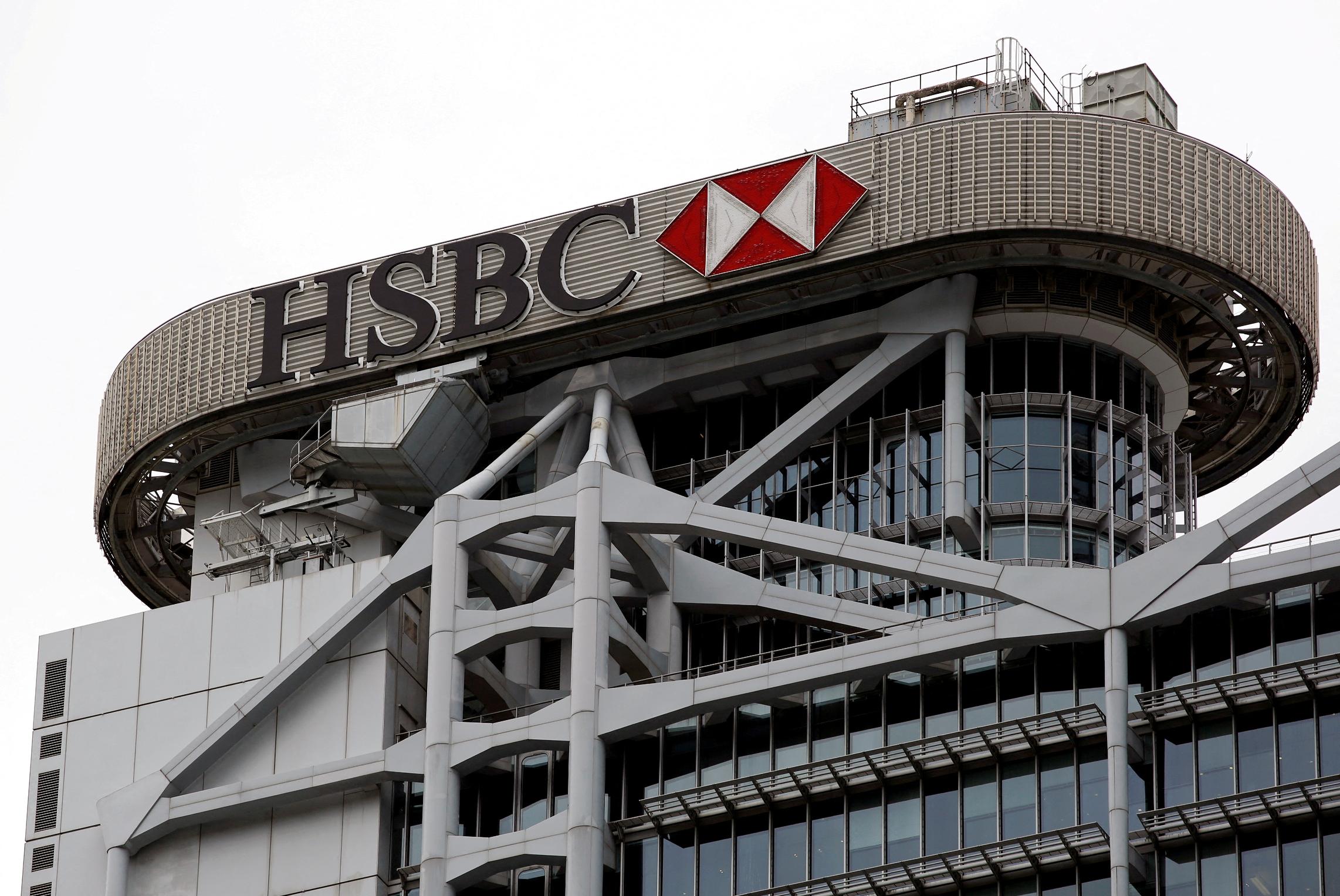
LONDON, Dec 6 (Reuters) - HSBC (HSBA.L) has completed what it says is the world's first trial of a tool designed to protect highly sensitive financial data from cyber criminals seeking to harness the power of next-generation quantum computers to launch future attacks. The British bank said it used the tool to safeguard a trade on its proprietary platform, HSBC AI Markets, exchanging 30 million euros for U.S. dollars. The test, details of which are reported here for the first time, shows how banks are trying to get ahead of cyber criminals who could use advances in computing to access trading data in global financial systems such as the $7.5 trillion per day foreign exchange market. "While we take the view that we are some distance away from quantum computers being able to break traditional encryption, the time to prepare for this is now," Colin Bell, CEO of HSBC Europe, told Reuters. HSBC's test ran on a network created by British telecommunications company BT (BT.L) and using devices developed by Toshiba as well as support from Amazon Web Services. The test is an important step in showing the commercial applications of the technology using currently available fibre networks, said Andrew Shields, head of quantum technology, Toshiba Europe. Howard Watson, Chief Security and Networks Officer, BT Group, said it was critical that digital infrastructure remained secure against new quantum-based threats. HSBC said the test helped it plan how it could roll out to some of its trading systems a form of encryption known as quantum key distribution (QKD). QKD uses particles of light to deliver secret keys between parties that can be used to encrypt and decrypt sensitive data, the bank said. "The protection of both the bank's data and our clients' data is something that we take with the utmost seriousness," said Richard Bibbey, global head of foreign exchange, emerging market rates and commodities at HSBC. "Were someone to be able to eavesdrop on the flows that go across the largest foreign exchange institutions, they will have a significant amount of information, the capacity to manipulate the market and to understand what trades have been executed before they have been risk-managed." Quantum computers promise to be millions of times faster than today's most powerful supercomputers, potentially revolutionizing everything from medical research to battling climate change. Banks worldwide are working on how to take advantage, as well as how to protect themselves against any risks. "Bringing quantum key distribution to a trading scenario is a real-world example of how this technology ... establishes a model for even more use cases to help customers stay secure," Simone Severini, general manager, quantum technologies at Amazon Web Services (AMZN.O), said. Some 297 patents for so-called Post Quantum Cryptography, or systems resistant to quantum computing attacks, have been filed in the United States alone since 2015, according to John Egan, CEO of independent BNP Paribas research subsidiary L'Atelier. Some experts are sceptical of the immediate practical implications of the QKD technology for financial markets. Authorities say its specialist hardware requirements make QKD impractical for many potential end users, said Martin Albrecht, professor of cyber security at King's College London. https://www.reuters.com/technology/cybersecurity/hsbc-tests-protecting-fx-trading-quantum-computer-attacks-2023-12-06/
2023-12-06 05:48
10-year Treasury yields hit 3-month low Focus shifts to US non-farm payroll on Friday U.S. private payrolls rise less than expected in Nov Dec 6 (Reuters) - Gold firmed on Wednesday as Treasury yields eased, stabilizing after a rapid retreat from a record high hit earlier this week, while investors braced for the U.S. jobs report for further clues on how soon interest rate cuts may materialize. Spot gold rose 0.4% to $2,027.48 per ounce by 3:10 p.m. ET (2010 GMT). U.S. gold futures settled 0.6% higher at $2,047.90. Benchmark 10-year Treasury yields hit a more than three-month low. Gold scaled an all-time peak of $2,135.40 on Monday on elevated bets for a Fed cut, before dropping more than $100 on uncertainty over the timing of the reductions. Further direction could come from the U.S. non-farm payrolls data due on Friday, coming ahead of the U.S. central bank's policy meeting next week. "Gold and silver traders are sitting on a tinderbox, and this payroll Friday could spark the flames ... While we expect macro headwinds to weigh on precious metals short positions in the medium term, the current set-up is ripe for a squeeze," analysts at TD Securities said in a note. Traders are pricing in about a 60% chance of a rate cut by March next year, CME's FedWatch Tool showed. Safe-haven inflows driven by wars in Ukraine and the Middle East, coupled with the rate cut bets, have driven a more than 10% rise in bullion prices. Lower interest rates make zero-yield gold more attractive than competing assets such as bonds and the dollar. Anticipation of monetary easing is the biggest driver of gold now and prices should move higher into next year, said Daniel Pavilonis, senior market strategist at RJO Futures. "Geopolitics can play an important role in moving gold up, for the remainder of this year and next year." Silver fell 0.9% to $23.92 per ounce, while platinum dropped 1% to $890.35, both down for a third straight session. Palladium climbed 1.3% to $946.31, snapping a six-session losing streak from last session's five-year low. https://www.reuters.com/markets/commodities/gold-ticks-up-dollar-slips-investors-await-us-jobs-data-2023-12-06/