2023-12-05 19:10
YAKUTSK, Russia, Dec 5 (Reuters) - Arctic weather enfolded swathes of Russia on Tuesday, with temperatures in the wilds of Siberia falling to minus 58 degrees Celsius (minus 72 degrees Fahrenheit). Yakutsk, one of the world's coldest cities which lies some 5,000 km (3,100 miles) east of Moscow, was covered in freezing clouds and fog, drone footage showed. "I specially came here to Yakutsk to experience such weather - so I am lucky as in December you don't usually get it," said Danila, whose beard, hat and scarf were caked in ice. "I am actually not that cold as I prepared properly," he said. "If I had not got the right clothes, I would be frozen in minutes." He said that the extreme temperatures made his coat much stiffer, while his phone lost charge within minutes. Two pairs of gloves were essential, as well as layers of clothes. Temperatures in parts of the Sakha Republic, a vast region a little smaller than India that is located in the northeastern part of Siberia, went below minus 55 overnight. In Oymyakon, a settlement in Sakha, the temperature was minus 58 C on Tuesday. Weather forecasters said that would feel like minus 63 C given the humidity and wind. At the market in Yakutsk, fish were sold deep frozen, packed in dozens of boxes at the market. No freezer was needed. The saleswomen were muffled in large fur hats. "It is cold," said one resident, Pyotr. "You need to just have the right quality clothes and then everything will be okay. The main thing is to keep moving so your blood circulates." https://www.reuters.com/world/europe/swathes-siberia-freeze-temperatures-below-58-celsius-2023-12-05/

2023-12-05 18:54
LONDON, Dec 5 (Reuters) - Enforcement action against crypto firms may have peaked after last month's $4.3 billion settlement with Binance, as such cases provide companies with a "template" for how they should be governed, a senior U.S. regulator said on Tuesday. Binance's settlement with the Commodity Futures Trading Commission (CFTC) and Treasury Department, negotiated by the Justice Department, was for breaking U.S. anti-money laundering and sanctions laws. U.S. regulators have brought several cases against crypto firms such as Binance, helping to establish "guardrails" to bring "order and structure" to the market, CFTC Commissioner Kristin Johnson told an FT crypto and digital assets summit. "My hope would be that we have seen a spike, and what we will see going forward is that these early cases will really be a bit of cautionary tale for those firms that really do want to successfully operate in this ecosystem," Johnson said. She urged crypto firms to study the Binance settlement to see what sort of governance regulators look for at crypto firms. "For those firms that really do want to successfully operate in this space, there is an increasingly clear template for how to operate. Take the hint," Johnson said. The CFTC will also be "deeply thoughtful" on requiring better disclosures at crypto firms that are vertically integrated, combining different activities under one roof. The European Union has become the first to approve a comprehensive rules for crypto markets, with Britain, nurturing ambitions to become a crypto 'hub', also drafting standards. Brian Quintenz, global head of policy at a16z crypto, a venture capital fund, said the sooner the U.S. provides regulatory clarity, the less benefit Britain would have, as firms want certainty. "I don't see clarity in the U.S., perhaps the most optimistic case is three years," Quintenz, a former CFTC commissioner, told the conference. In the meantime, crypto firms are setting up shop in Britain to build an ecosystem that can service the rest of the world and benefit from "nuanced" regulators, Quintenz said. The trend is towards regional crypto hubs as rules there become clearer, added Xiao-Xiao Zhu, digital operating partner at investment company KKR. https://www.reuters.com/technology/binance-might-be-peak-us-crypto-enforcement-cases-says-cftc-official-2023-12-05/

2023-12-05 18:43
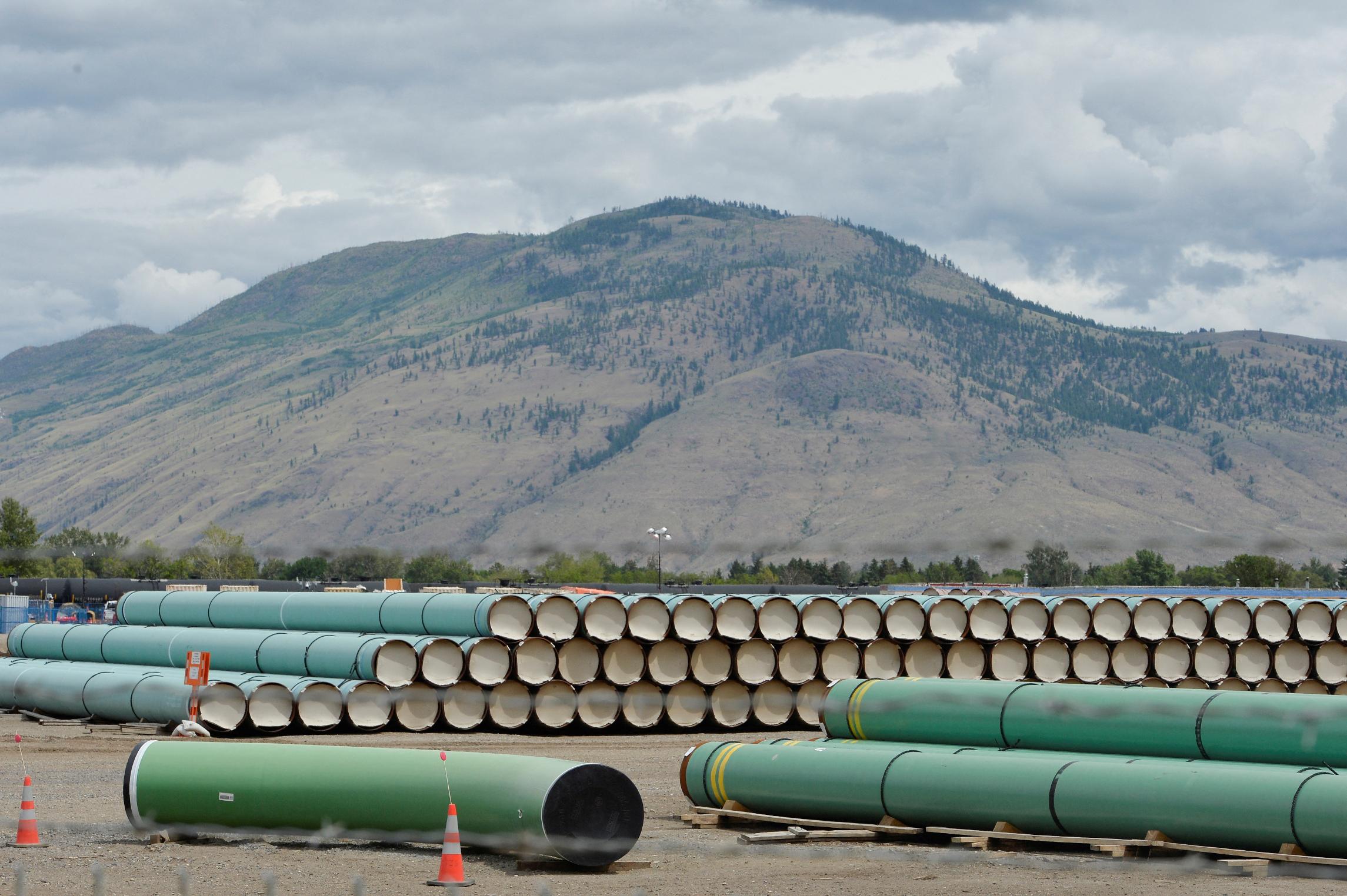
Dec 5 (Reuters) - Canadian oil producers are bracing for further potential delays to the Trans Mountain pipeline expansion (TMX) that could cost them millions of dollars in lost revenues in coming months after they ramped up production ready to fill the expanded line, meant to unlock access to Asia. Producers entered 2023 thinking the 590,000 barrel per day (bpd) expansion - nearly tripling the existing pipeline's capacity - from Alberta's landlocked oilfields to the Pacific Coast would be filling with oil by year-end - the last step before full operations commence. However, the project, about 95% completed, has been beset by construction issues in British Columbia, stoking concerns among traders and analysts that its start will be delayed beyond the current target of late March 2024. In October, TMX said linefill would start in the first quarter and take up to seven weeks. On Tuesday Canadian regulators denied a variance request, a move Trans Mountain said risked delaying the project's start date. That comes after changing some of its route and dealing with a work stoppage for environmental noncompliances. It is just the latest hurdle for the Canadian government-owned project after being plagued by years of regulatory delay, environmental opposition and massive cost overruns. While over the years the pipeline's start date has been moved further back, supply has kept coming. Further delays could force producers to accept lower prices for their crude and to put more barrels into storage to deal with a glut of oil stranded in Alberta while they wait for the pipeline to start. TMX's construction hold-ups already helped push the discount, or differential, on benchmark Western Canada Select (WCS) heavy crude to the U.S. benchmark crude futures close to $30 a barrel last month, the deepest level in a year. WCS was last at a $22 a barrel discount, roughly $7 wider than average, according to brokerage CalRock. Light synthetic crude from the oil sands, another key Canadian grade, is trading close to its deepest discount since 2020. With Canada exporting around 3.8 million bpd via pipelines, each additional dollar the discount widens amounts to millions in lost revenues for oil companies, analysts say. "There seems to be growing nervousness in the market that the start date will be later," said RBN Energy analyst Martin King. "More people are getting concerned that this is going to go beyond into the second quarter, maybe even the third." The blowout in WCS differentials also highlights how the troubled expansion, likely one of the last big oil pipeline projects to be built in Canada, continues to inflict pain even as it nears the finish line. TMX's construction budget has already quadrupled to C$30.9 billion ($22.75 billion), on which Canada is expected to have to take a significant write-down. "It's not just the cost of construction which is outrageous, but the impact on the Canadian economy of the (WCS) differential and oil production not getting to market," said Heather Exner-Pirot, special adviser to the Business Council of Canada. OUTPUT CLIMBS, NO RAIL TO THE RESCUE The concerns come as output in Canada, the world's fourth-largest oil producer, climbs toward record levels, outpacing capacity on existing pipelines to the U.S. Canada, produced 4.86 million bpd in 2022 and is forecast to hit 5.5 million bpd by 2030, according to Kevin Birn, chief analyst of Canadian oil markets at S&P Global. Oil companies are expected to add a combined 375,000 bpd in 2023 and 2024 alone, and the coming winter months are typically peak production season in Canada. Conventional oil and gas producers will drill 8% more wells in 2024 to take advantage of greater access to pipelines including Trans Mountain. As production climbs, space is increasingly being rationed, or apportioned, for all shippers on the 3.1 million bpd Enbridge Inc (ENB.TO) Mainline system, which ships the bulk of Canada's crude exports to the U.S. Apportionment hit 35% and 28% on light and heavy oil pipelines respectively in December, Enbridge said, meaning more than a quarter of all barrels are being turned back. In August Mainline apportionment was zero. In the past, Canadian companies have exported excess crude using railcars, despite the higher cost. Rail exports hit 145,000 bpd in September, nearly doubling from May, according to latest data from the Canada Energy Regulator. Wider crude differentials indicate crude-by-rail levels increased to about 250,000-300,000 bpd in November, said James Davis, head of upstream oil at energy consultant FGE. Crude-by-rail, however, is unlikely to bring big relief to Canadian producers. Jesse Jones, head of North American upstream at Energy Aspects, said rail will not be able to ship all the barrels being pushed off pipelines by high apportionment. Interviews with terminal operators and company filings also suggest the crude-by-rail industry has foundered in recent years and capacity will struggle to rise significantly. Smaller players especially will be reluctant to sign commitments with TMX around the corner, Jones said. "We're getting more enquiries, but we move substantially less than we moved a couple of years ago, everybody is moving less," said John Zahary, CEO of Altex Energy, a terminal operator shipping around 10,000 bpd. Shipments will be limited by a railcar shortage and uncertainty over the profitability of long-term crude-by-rail economics, said Kent MacDougall, chief commercial officer at Torq Transloading, which ships about 10,000 bpd. "It's challenging and it's cumbersome to do rail for spot deals," he said. ($1 = 1.3580 Canadian dollars) https://www.reuters.com/markets/commodities/canada-oil-firms-face-losses-booming-supply-runs-into-trans-mountain-delays-2023-12-05/
2023-12-05 18:29
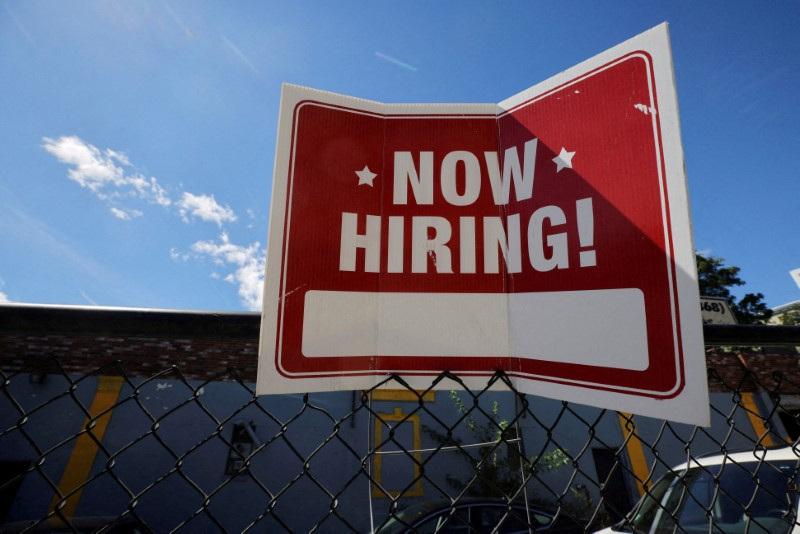
Job openings fall 617,000 to 8.733 million in October There were 1.34 job openings per every unemployed person Quits rate unchanged at 2.3% for fourth straight month WASHINGTON, Dec 5 (Reuters) - U.S. job openings fell to more than a 2-1/2-year low in October, the strongest sign yet that higher interest rates were dampening demand for workers, and boosting financial markets expectations the Federal Reserve's monetary policy tightening cycle was over. The Labor Department's Job Openings and Labor Turnover Survey, or JOLTS report, on Tuesday also showed that there were 1.34 vacancies for every unemployed person in October, the lowest since August 2021 and down from 1.47 in September. Fewer workers are resigning, which over time could help ease wage inflation. The larger-than-expected decline in unfilled jobs followed data last week showing inflation subsiding in October. The run of inflation-friendly reports has led financial markets to anticipate a rate cut as early as next March. "These data will be welcome news for policymakers," said Rubeela Farooqi, chief U.S. economist at High Frequency Economics in White Plains, New York. "The data support our view that rates are at a peak and the Fed's next move will be a rate cut, likely in second quarter of 2024." Job openings, a measure of labor demand, fell 617,000 to 8.733 million on the last day of October, the lowest level since March 2021 and down from 9.350 million in September, the Labor Department's Bureau of Labor Statistics said. Economists polled by Reuters had forecast 9.30 million job openings in October. The largest monthly decline in vacancies since May was led by the health care and social assistance sector, where unfilled jobs dropped by 236,000. Job openings decreased by 168,000 in the finance and insurance industry, while real estate, rental and leasing had 49,000 fewer positions. But job openings increased by 39,000 in the information sector. The job openings rate dropped to 5.3% from 5.6% in September. The decline in vacancies was in all four regions, with steeper decreases in the South and Midwest. Hiring slipped 18,000 to 5.886 million. Hiring dropped 110,000 in the accommodation and food services industry, which had been the biggest driver of job growth since the recovery from the pandemic. The hires rates dipped to 3.7% from 3.8% in the prior month. Resignations slipped 18,000 to 3.628 million. The quits rate, viewed as a measure of labor market confidence, was unchanged at 2.3% for the fourth month. Declining quits point to slower wage growth and ultimately price pressures in the economy. "The current state of the labor market suggests no further recalibration is necessary to bring the labor market back into balance," said Nick Bunker, director of economics research at Indeed Hiring Lab. Stocks on Wall Street were mixed. The dollar gained versus a basket of currencies. U.S. Treasury prices rose. FED ON HOLD The Fed is expected to leave rates unchanged next Wednesday. Since March 2022, the central bank has raised its benchmark overnight interest rate by 525 basis points to the current 5.25%-5.50%. Though the labor market is easing, it is doing so gradually. Layoffs rose 32,000 to a still-low 1.642 million in October, amid increases in the transportation, warehousing and utilities industry as well as the health care and social assistance sector. The layoffs rate was unchanged at 1.0%. "A far greater contribution to reducing the excess demand for labor is being made by a reduction in vacancies rather than an increase in unemployment," said Conrad DeQuadros, senior economic advisor at Brean Capital in New York. A separate report from the Institute for Supply Management showed services employment growing in November for the sixth consecutive month after contracting in May. The ISM said employers reported losing "employees due to normal attrition," and "are having issues backfilling these positions." They also described the labor market as remaining "very competitive," and "trying to get to full staff levels." The ISM's overall services PMI rose to 52.7 in November from 51.8 in October, posting its 11th straight month of expansion. Comments from businesses were mixed. Accommodation and food services industries expected restaurant sales and traffic trends to "pick up again in December." Healthcare and social assistance businesses reported "signs of recovery are on the horizon," while the construction sector said opportunities remain "strong." But businesses in the professional, scientific and technical services industry reported that "fourth-quarter revenues (are)lower than projected." Public administration businesses said "prices for most items (are) increasing, but only slightly." The government is expected to report on Friday that nonfarm payrolls increased by 185,000 jobs in November, according to a Reuters survey of economists, boosted by the return of about 33,000 striking United Auto Workers union members. Payrolls increased by 150,000 positions in October. November's anticipated job count would be below the average monthly gain of 258,000 over the prior 12 months. While economic activity is cooling in the fourth quarter, a recession is unlikely. Most economists are projecting tepid growth after the economy grew at a 5.2% annualized rate in the third quarter. "Many of the downside risks to the fourth quarter that economists were worrying about a few weeks ago, war in the Middle East, government shutdown and the UAW strike, look like they will exert only modest and short-lived headwinds to growth," said Bill Adams, chief economist at Comerica Bank in Dallas. https://www.reuters.com/markets/us/us-job-openings-october-lowest-since-2021-well-below-forecasts-2023-12-05/
2023-12-05 17:43
NEW YORK, Dec 5 (Reuters) - Global markets will experience greater volatility in 2024 as the Federal Reserve cuts benchmark interest rates fewer times than many investors are pricing in, strategists at the BlackRock Investment Institute said at a panel discussion on Tuesday. Nevertheless, BlackRock (BLK.N), the world's largest asset manager, continues to see opportunities in equities in AI stocks and technology, particularly in the memory sector, with opportunities also due to so-called quality factors such as stable earnings and high margins. The firm has a slight underweight to U.S. equities as a whole, though remains favorable on sectors such as industrials and health care. "Market pricing for rate cuts is a bit overdone in our view," said Wei Li, global chief investment strategist for BlackRock. "Rate volatility is here to stay." Markets are currently pricing in a greater than 50% chance that benchmark rates will fall more than 125 basis points by next December, according to CME's FedWatch Tool. Benchmark 10-year Treasury yields have fallen more than 80 basis points over the last month after signs of cooling inflation and weakness in the labor market, fueling a rebound in U.S. stocks that saw the S&P 500 (.SPX) crest a 2023 closing high last week. The index is up nearly 19% year-to-date. In 2024, shifting assumptions about interest rates will likely lead to a "windshield wiper market,” in which different sectors fall in and out of favor rapidly, said Tony DeSpirito, global chief investment officer of fundamental equities. He is particularly bullish on memory storage companies, which he believes will play a key role in the growth of AI capability. “You are buying into memory at the bottom of a cycle that has the potential to be a super cycle," he said. The firm remains bullish on short-term Treasuries, but cautioned it sees structurally higher inflation that will make it difficult for longer-duration bond yields to fall significantly from current levels. Instead, investors should prepare to reap more returns from yield than from appreciation, the firm said. "Income is back in a meaningful way for investing for next year," Li said. Among emerging markets, the firm said it is bullish on India and Mexico, and has a broad preference for emerging market assets over those in developed markets. While markets may be expecting too much in the way of Fed cuts, the central bank has likely already hit peak rates, making fixed income more attractive overall, said Kristy Akullian, senior investment strategist at the firm. The "greatest risk is holding too much cash," she said. https://www.reuters.com/markets/us/market-expectations-fed-cuts-overdone-volatility-jump-24-blackrock-says-2023-12-05/
2023-12-05 16:30
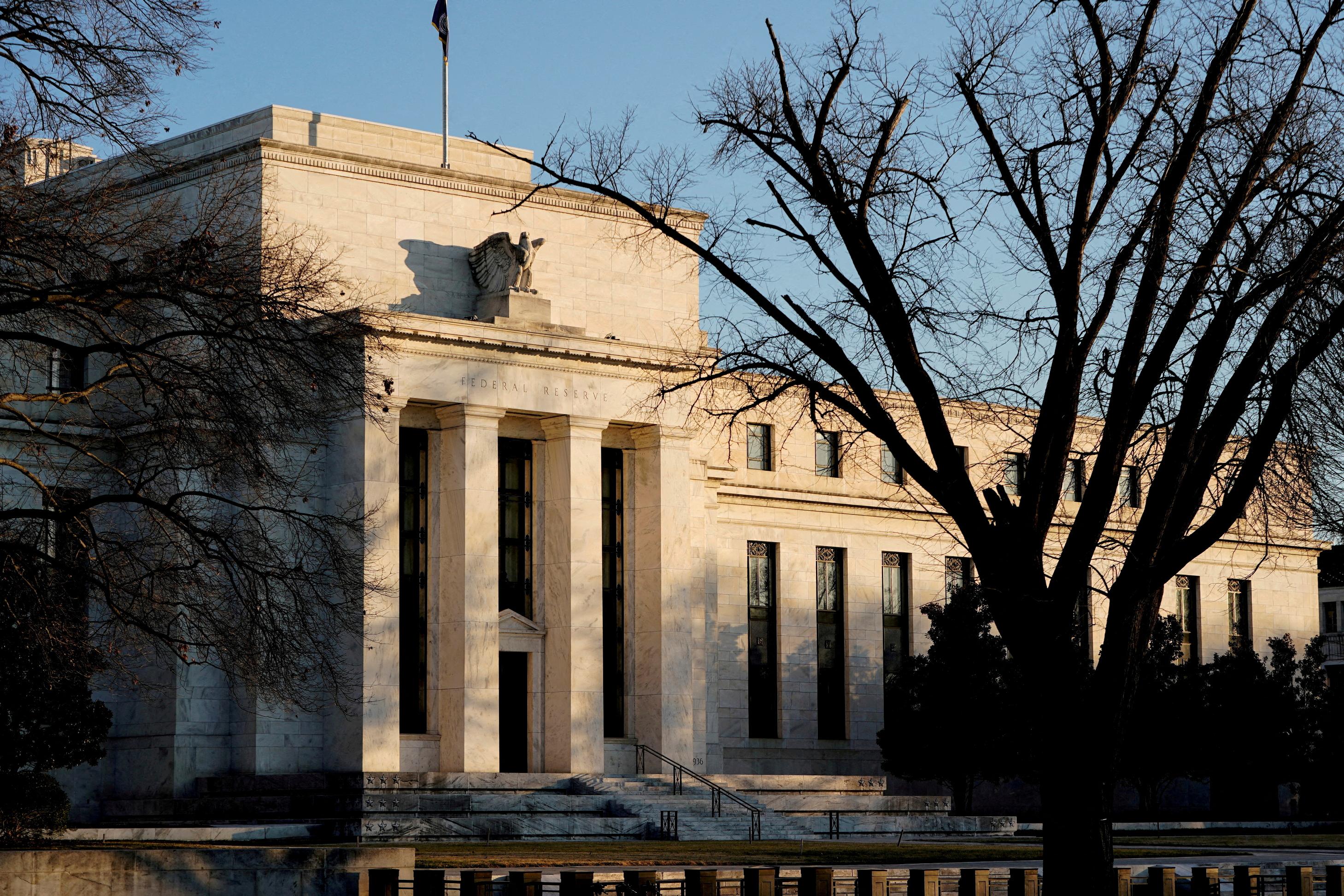
NEW YORK, Dec 5 (Reuters) - Major life insurers are accessing cheap funding at record levels from a U.S. government-backed financing system, sapping billions of dollars meant to help increase affordable housing, interviews with industry executives and regulatory disclosures show. When Federal Home Loan Banks (FHLBs) were created in 1932 in the aftermath of the Great Depression to finance firms that offer home loans, insurers were granted access to this system because they provided mortgages. They stopped providing mortgages in the following decades as they became an industry distinct from banking. Starting in 2008, they have been aggressively drawing on FHLBs, arguing they support housing because they invest in residential mortgages and related securities. The extent to which FHLBs finance insurers has not been previously reported. Reuters interviews with more than a dozen industry executives and regulators, a review of regulatory disclosures and data show this borrowing has not been matched by a rise in home loan affordability, with the cost of mortgages soaring to its highest in 23 years. The practice has been lucrative for insurance firms that have locked in billions of dollars in profits by investing the borrowed money in areas such as commercial real estate mortgages and corporate and government bonds. It has been predominantly used by life insurers, because they need to boost their investment returns with cheap funding to meet long-term liabilities. FHLBs typically have a lower cost of borrowing than what is otherwise commercially available, because these banks enjoy an implicit U.S. taxpayer-backed guarantee on their debt. They provide the cheap funding to banks and insurers in exchange for collateral to ensure they get their money back. A spokesperson for the Federal Housing Finance Agency (FHFA), which oversees the FHLBs, declined to comment specifically on insurers tapping FHLBs, but said the regulator was considering implementing new requirements for borrowing from FHLBs to ensure the support of housing and community development. They declined to provide more details. Ryan Donovan, president and CEO of the Council of Federal Home Loan Banks, a trade association for FHLBs, said the banks have "abided by the will of Congress" to provide liquidity and support affordable housing. BORROWING BILLIONS FHLBs lent a record $137.1 billion to life insurance firms last year, building on a trend that started around 2008, according to the FHLB Office of finance. Yet the industry's investments in home mortgages have dropped. National Association of Insurance Commissioners (NAIC) data shows that insurance companies have been buying fewer residential-backed mortgage securities (RMBS), which boost liquidity in the home mortgage market, while purchases of commercial-mortgage backed securities (CMBS) have been steady. In 2022, life insurance companies bought $193.1 billion worth of RMBS, down 6% from $205.3 billion in 2021, as soaring inflation soured their appetite to invest more. In contrast, their appetite for CMBS remained steady, with purchases totaling $203.6 billion in 2022, almost flat compared to $204.7 billion in 2021. Lawrence White, an economics professor at New York University who recently co-authored research about FHLBs, said insurers did not need to borrow from FHLBs to invest in mortgages in the first place. "It's an artifact of the 1930s that insurance companies are part of the FHLB system," White said. MetLife Inc (MET.N), Equitable Holdings Inc (EQH.N), TIAA, Corebridge Financial and Brighthouse Financial Inc (BHF.O) are among the insurance firms that are prolific users of FHLB funding, their regulatory filings show. MetLife, TIAA, Corebridge, Brighthouse and Equitable declined to comment. JUICING RETURNS Cynthia Beaulieu, a managing director and portfolio manager at Conning, which manages $205 billion in assets for investors such as insurance companies, said a majority of her clients use FHLB loans to generate extra returns because "the arbitrage was really attractive." Life insurers can lock in returns between 85 and 140 basis points by taking FHLB loans and investing the money in pools of loans such as collateralized loan obligations, Wellington Management, a Boston-based investment manager, said on its website in July. A percentage point is 100 basis points. Insurers are entitled to tap FHLB funding. Yet U.S. taxpayers are backstopping the insurance industry's profits with little to show, said Cornelius Hurley, a lecturer at the Boston University School of Law and a member of the Coalition for FHLB Reform, a group that calls for changes to the FHLB system to address unmet housing needs. "All (insurers) do is they happen to have some government securities and mortgage-backed securities in their investment portfolios. But they don’t provide any public benefit in return for that," Hurley said. AIDED BY REGULATORS To be sure, banks have also been stepping up their borrowing from FHLBs to tap cheap funding. An FHFA report published last month showed how some troubled regional banks, including Silicon Valley Bank and First Republic, were using FHLBs as lender of last resort, encouraging risk-taking that hastened their collapse. Insurers’ borrowing from FHLBs picked up in 2008 financial crisis, as those that spread themselves thin with aggressive investments scrambled for cash. Subsequent regulatory changes emboldened insurers to borrow more. The National Association of Insurance Commissioners (NAIC), which sets policy that many state insurance regulators follow, allowed insurers in 2009 to treat FHLB borrowing as "operating leverage" rather than debt, as long as they use the money for investments. This gives insurers more room to saddle themselves with more with debt, because borrowing from FHLBs weighs less on their capital ratios than commercial borrowing, FHLB officials, analysts and economists say. It can also give them a more favorable credit rating, allowing them to borrow more debt at cheaper rates. In 2018, the NAIC again made FHLB borrowing more attractive for insurance companies, by requiring them to hold less money aside for every dollar they borrow from FHLBs. The NAIC declined to comment. The reduced capital charges can more than double insurers’ return on investments from FHLB loans, according to FHLB Chicago. On its website, it gives examples of how insurers can borrow from it to invest in commercial mortgage securities, rather than residential mortgage securities that benefit the housing market directly. Michael Ericson, the president and CEO of FHLB Chicago, said the use of mortgages and mortgage-backed securities as collateral for FHLB loans helps maintain the FHLBs' nexus to housing finance. Insurers have lobbied to maintain the current arrangement. The American Council of Life Insurers (ACLI) and the Insurance Coalition wrote to the FHFA in letters reviewed by Reuters, arguing that curbing their FHLB borrowing would remove liquidity from the market for mortgages. They did not explain why insurers need FHLB funding to invest in mortgages. ACLI spokesman Jack Dolan said that life insurers' FHLB borrowings represented a small fraction of the $8.3 trillion in assets held by the industry, and that tapping FHLBs was "part of prudent, long-term risk management strategies." The Insurance Coalition did not respond to a request for comment. https://www.reuters.com/markets/us/life-insurers-binge-us-financing-aimed-helping-housing-2023-12-05/