2023-12-04 14:00
PANAMA CITY, Dec 4 (Reuters) - Panama is eyeing a sharp cut to its forecast for 2024 economic growth after a court ruling prompted the government to order the closure of Canadian miner First Quantum's (FM.TO) lucrative copper mine, a government official told Reuters. Gross domestic product (GDP) growth might be 1-2% next year, down from a previous estimate of 5%, Hernan Arboleda, director of public policies at the economy and finance ministry, said in an interview on Friday. President Laurentino Cortizo announced last week the government will move to shut First Quantum's Cobre Panama mine, which accounts for some 5% of the country's GDP, after the supreme court ruled that the contract was unconstitutional. Panamanians have protested vehemently against the mine since October, arguing the contract was too generous and First Quantum has since lost over half of its market capitalization. First Quantum said on Friday it has initiated international arbitration against Panama. Some experts calculate Panama would have to pay at least $50 billion if it loses the case, equivalent to nearly 70% of GDP. Cortizo's administration is reaching out to international rating agencies to assure them that Panama still has a sound legal framework that allows investors to do business. Ahead of the supreme court ruling, S&P revised Panama's outlook to negative from stable on potential risks to investor confidence and economic growth if the contract was found invalid. JPMorgan also warned the odds of Panama losing its investment-grade rating would increase significantly. Panama recently enacted a law banning all new mining concessions and expansions. Arboleda said the country still has other attractive investment opportunities but did not give specific examples. For First Quantum, the developments in Panama could be a repeat of its experience in the Democratic Republic Of Congo. The miner exited the African nation in 2012 after its mining contract was cancelled. https://www.reuters.com/world/americas/panama-may-slash-gdp-growth-view-due-suspension-first-quantum-mine-2023-12-04/

2023-12-04 11:46
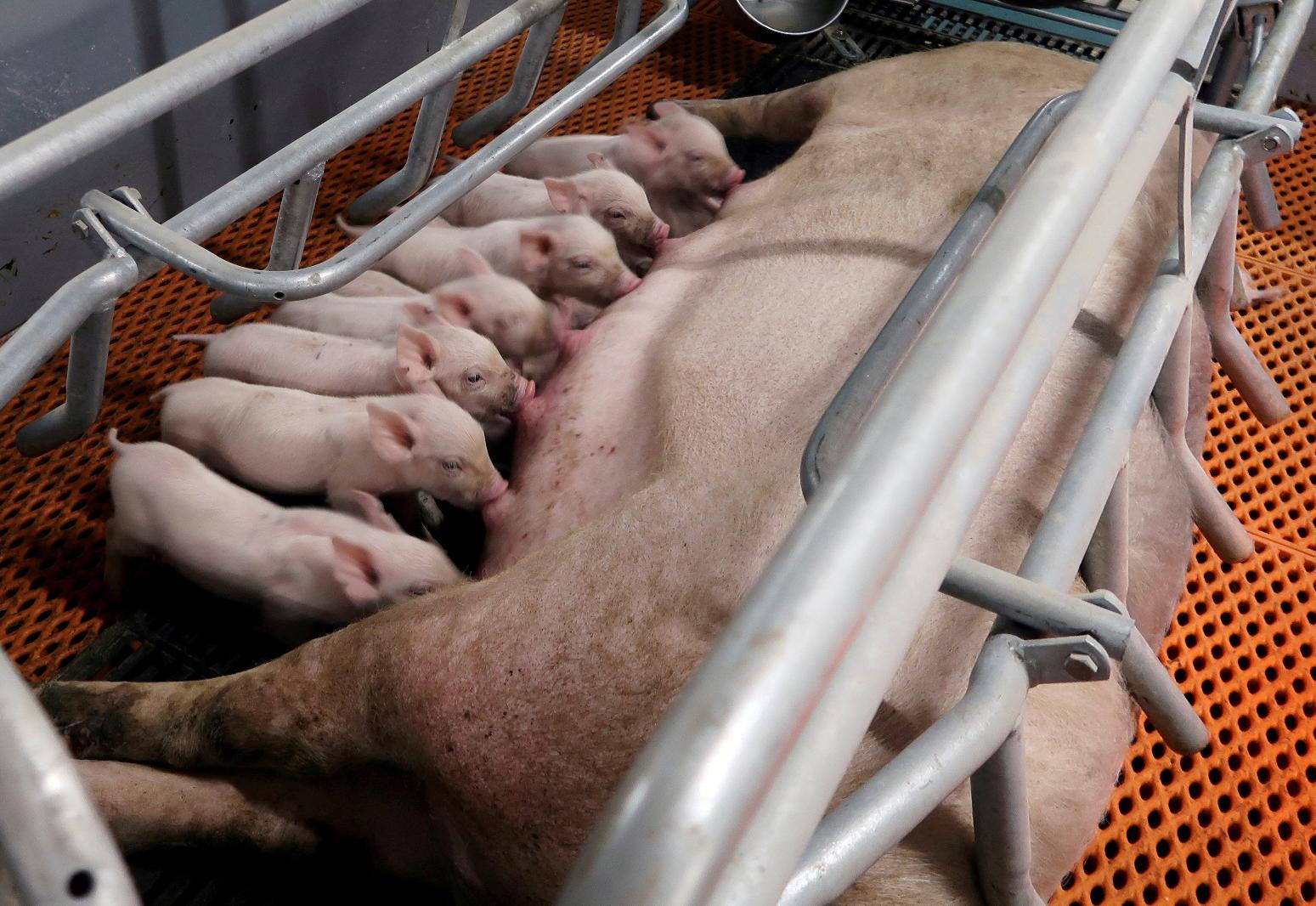
BEIJING, Dec 4 (Reuters) - The biggest pig breeders in China, consumer of fully half the world's pork, seem to have bitten off more than they can chew. Big agribusinesses have elbowed their way into the sector and are rapidly modernising it, but have expanded pig herds so aggressively that, with demand now in a downturn, their hog prices are falling, losses are mounting, and debt is rising. More huge losses are expected next year, putting China's pig enterprises under pressure to slim down their breeding herds and sell off farms, many of which are sitting empty. For now, however, they are digging in, hoping to wait out the market downturn and reap a bonanza when prices eventually recover. And that is raising the stakes, not just for themselves but for their overseas feed suppliers, genetics firms, and the struggling global pork trade. "It all comes down to how deep these companies' pockets are," said Lyle Jones, China sales director at U.S.-based Genesus Inc, which supplies breeding pigs to the leading producers. Hog farming, like other Chinese sectors from homebuilding to electric vehicles, has in recent years prioritised growth and market share over profits, creating a surplus that has driven pig prices lower and is now crowding out imports. China's cash hog prices have averaged well below even the most efficient producers' costs this year, for the first time in nearly a decade, and in the past three months alone have dropped 15% to 14.5 yuan per kilogram. The most-active live hog futures on the Dalian Commodity Exchange have tumbled 7.3% since the beginning of last week to 13,910 yuan ($1,949) per metric ton, the lowest since they began trading almost three years ago. The downdraft has defied both state efforts to prop up prices with token purchases for official reserves, and the start of the peak winter season for pork consumption. And it is squeezing a number of big producers in the $200 billion-a-year industry, with the top 10 producers alone recording a 13% increase in net debt this year as of end-September, according to state-run media. New Hope Liuhe (000876.SZ), China's third-largest producer and the world's fifth largest, sold off farms last year and told investors in July it wanted to sell more, while bringing in strategic investors to its poultry and food units. The company has made "some progress" on those fronts, it told investors on Friday, but gave no details. It also said a 7.35 billion yuan private share issue announced on Nov. 30 would help it to repay loans and rein in debt. Major producers Tech-Bank (002124.SZ) and Fujian Aonong (603363.SS) have been selling off stakes in themselves or in subsidiaries to raise cash, while Aonong's debt-to-equity ratio reached a hefty 8.26 in the third quarter according to LSEG data. Neither company responded to requests for comment about their current challenges and working capital requirements. EXPANDING DEBT Jiangxi Zhengbang Technology (002157.SZ), which became China's second-largest producer after a rapid expansion drive, was forced into a restructuring last year despite support from local government-run firms. Moreover, with debt levels swelling across the Chinese economy, banks and local governments have become less willing or able to offer support. "Over the past two years, banks could lend them a lot so these companies expanded very fast," said an analyst at an equity research firm, who was not authorised to speak to the media and declined to be named. But now, especially given the companies' high debt levels, the analyst said: "It's hard for them to borrow any money from the banks." Analysts say the biggest players - industry leader Muyuan Foods Co , a low-cost producer and one of the few generating cashflow, and No. 2 Wens Foodstuff Group Co (300498.SZ), which has reduced costs significantly - may be well-positioned for a shake-out. But challenges are mounting as China produces record volumes of pork, in part a legacy of past encouragement from Beijing, which fears food price volatility and urged a major expansion of sow herds after an African swine fever outbreak in the late 2010s killed half the country's pigs. Muyuan alone has more than tripled its sow herd since 2018, chasing after market share along with other big publicly listed firms, and now has three times as many sows as WH Group (0288.HK), which owns top U.S. producer Smithfield Foods. Analysts at Hua'an Securities forecast that hog output would jump 10% in the first half of 2024. That follows a 17% surge in the first nine months of this year at China's 15 big market-listed breeders even as they reported 200 billion yuan in combined net losses. To make matters worse, pork consumption in China has been hit both by slowing economic growth and by diners' changing preferences, as more health-conscious consumers - especially young people and urbanites - switch to poultry and other foods. And the costs of battling disease have risen substantially, with African swine fever now endemic and a constant threat to all farms. China's agriculture ministry has warned of heavier losses for the sector in early 2024 than a year ago and urged pig producers to cut output. While the big producers have slashed spending on new equipment and taken other cost-cutting measures, most remain reluctant to unload idle farms and reduce breeding herds. "Leading companies aggressively expanded in 2020-21, the capex was huge, and they're not willing to reduce capacity, even under the current weak price," said Flora Zhu, director of China Corporate Research at Fitch Ratings. ($1 = 7.1364 Chinese yuan renminbi) https://www.reuters.com/world/china/chinas-big-pig-breeders-dig-losses-debts-mount-2023-12-04/
2023-12-04 11:45
BRUSSELS, Dec 4 (Reuters) - Belgium and French utility group Engie (ENGIE.PA) have reached a deal on the extension of two nuclear reactors, Doel 4 and Tihange 3, according to the country's energy minister. "The deal with Engie has been completed. We have extended the two nuclear power plants that could be extended", Belgian energy minister Tinne Van der Straeten said on social media platform X on Sunday evening. The legal texts will now have to be approved by the entire government and Belgium's supreme administrative court before being sent to parliament and the European Union for approval, she added. Van der Straeten told Belgian broadcaster VRT that she hoped to complete the Belgian legislative process before the country's elections in June. Tihange is a 1,038 megawatt (MW) reactor in eastern Belgium, while Doel is a 1,039 MW reactor near the port city of Antwerp. The reactors, which entered service in 1985, make up 35% of the country's nuclear energy capacity. Asked to comment on the situation, a spokesperson for Engie replied that the texts were 'practically finalised' and now needed to go through the usual political process before a final, definitive signature on the deal was reached. https://www.reuters.com/business/energy/belgium-engie-reach-deal-extension-nuclear-reactors-energy-minister-2023-12-04/
2023-12-04 11:19
WASHINGTON, Dec 4 (Reuters) - U.S. Federal Reserve officials appear on track to end the year with interest rate hikes as a thing of the past but with a coming challenge over when and how to signal a turn to rate cuts that investors, politicians and the public may demand before the central bank is ready. The issue may seem distant. A closely watched gauge of underlying inflation remains at 3.5% year-over-year, significantly above the Fed's 2% target, policymakers still worry about its resurgence in a low-unemployment economy, and officials' rhetoric points more to an extended rates plateau or even another hike. But the hawkish tilt in their words is also a way to keep options open at a time of uncertainty even as the outlook has made Fed officials increasingly confident that the federal funds rate range of 5.25% to 5.5% in place since July is enough to take some steam out of the economy and lower inflation the rest of the way. Deciding that inflation has fallen enough to start cutting rates may be down to a matter of months, with the complications of presidential election-year politics, itchy financial markets, and hopes to limit any rise in the unemployment rate all coming into play. The first step toward that debate will occur at the Fed's final meeting of the year on Dec. 12-13, when in addition to deciding what to do with interest rates now officials must pencil in where they think rates likely are headed next year and beyond. "They will have a real awkward time in December," with the projections likely showing interest rate hikes at an end, but Fed officials not wanting that to be construed as a weakening of their commitment to 2% inflation or as a signal that cuts are imminent, said Vincent Reinhart, Dreyfus & Mellon chief economist and a former top Fed monetary policy official. Since June, the quarterly "dot plot" of policymakers' projections of the appropriate path of policy has shown rates rising another quarter point this year. "They'll have to remove a 'dot' without the headline being 'Fed won't raise as much'...Anything you say that hints at easing adds to the inherent bias" to cut rates, Reinhart said. Policymakers next week are expected to hold rates steady for the third meeting in a row and in a new policy statement take stock of data that has largely moved in line with a "soft landing" in which economic activity and job growth slow modestly as inflation steadily declines. One challenge will be reconciling that assessment with officials' desire to keep an open option for further rate increases if inflation does not behave as hoped. Even more telling: As they did in September, the updated projections are likely to show interest rates will be lower by the end of 2024, focusing attention on the fact that the next move more likely than not is a rate reduction, and triggering debate about when that becomes appropriate. 'GETTING WHAT WE WANTED' With a presidential election in November, the closer Election Day comes the more tangled in politics a rate cut may appear - particularly if former President Donald Trump, who was angered when the Fed raised rates on his watch, is the Republican nominee as most polls now predict. Investors will be eager for the boost a rate cut would give to markets, and consumers will be relieved by lower mortgage and credit rates. The December meeting is likely to "give you a dot plot that suggests 'okay, we're done hiking...and we're forecasting cuts,'" said Michael Gapen, U.S. economics chief at Bank of America. "It is tricky to communicate," since the aim of the cuts won't be an economic rescue, as rate cuts often are, but an effort to keep pace with falling inflation and steady the "real" cost of borrowing. Gapen expects the Fed to turn towards a "cautious, gradual easing cycle" once the Personal Consumption Expenditures Price Index, the inflation rate used to determine its 2% target, falls significantly below 3%, with three- or six-month annualized averages at around 2.5% or less. Indeed, in remarks last week Fed Chair Jerome Powell noted that over the last six months inflation had averaged around 2.5%. Investors, meanwhile, have become increasingly fixed on March as a starting point for rate cuts. The mistake of cutting too soon, before inflation is convincingly on its way back to 2%, is one that Powell has explicitly pledged not to make, citing the experience of Fed officials in the 1970s who loosened policy prematurely. That allowed higher inflation to become more embedded, and forced their successors to impose such strict monetary medicine that it pushed the economy into recession. "We are prepared to tighten policy further if it becomes appropriate to do so," Powell said Friday in final remarks before the Fed's traditional blackout period on public policy comments before each Federal Open Market Committee meeting. Yet the language has begun to shift, with even inflation hawks like Governor Christopher Waller last week outlining why he is confident inflation will continue to decline without further rate increases, and noting that three to six months more progress could be adequate to justify a lower policy rate. Powell, in an appearance at Spelman College in Atlanta, summed it up. Between falling inflation and a modest slowdown in growth, Powell said: "We are getting what we wanted to get." https://www.reuters.com/markets/us/fed-with-rates-peak-now-looks-hold-an-eventual-pivot-lower-2023-12-04/
2023-12-04 11:10
NEW YORK, Dec 4 (Reuters) - CLS, the largest multi-currency settlement system for FX trades globally, will decide in the first quarter of 2024 if it can delay settlement instructions for currency trades, potentially giving some reprieve to foreign asset managers at risk of failed transactions because of a U.S. stock market rule change. Currency trades funding securities transactions currently settle in two days. Investors must change their methods so those transactions are not left out of CLS, missing out on cost efficiency and risk mitigation, when the U.S. Securities and Exchange Commission rule change kicks in next May. CLS is entering the second phase of a study that began this summer to determine if its CLS Settlement service can accommodate later submissions for next-day FX settlement without destabilizing the markets, Lisa Danino-Lewis, chief growth officer at CLS told Reuters. Should it conclude the change is possible, a solution could be implemented likely after the May 28, 2024 deadline for settling U.S. equity transactions one day after the trade (T+1). "We need to make sure all members can implement any changes that we agree on," said Danino-Lewis. CLS's multilateral netting process requires all participants submit FX payment instructions by a pre-determined time. Multi-lateral netting enables them to only transfer the net amount of their combined payment obligations in each currency, which reduces the total funding required to settle each transaction. "We're as strong as our weakest link. If one of our banks fails to pay in, it impacts everyone." CLS has received responses from the majority of its 74 member banks asked about the impact of changing the current midnight CET deadline by either 30, 60, or 90 minutes. CLS is looking to see how that would affect, among other things, bank liquidity, funding, and timing when dealing with foreign asset managers. The SEC passed the T+1 rule change in February, prompting foreign asset managers to ask CLS to see what it could do to help ease the transition. CLS estimates about $65 billion per day worth of currency transaction from assert managers could miss its deadline. Some $7.5 trillion is transacted in currency market daily, of which CLS settles an average of $6.5 trillion. https://www.reuters.com/markets/currencies/cls-decide-whether-delay-fx-settlement-cutoff-q1-2023-12-04/
2023-12-04 11:07
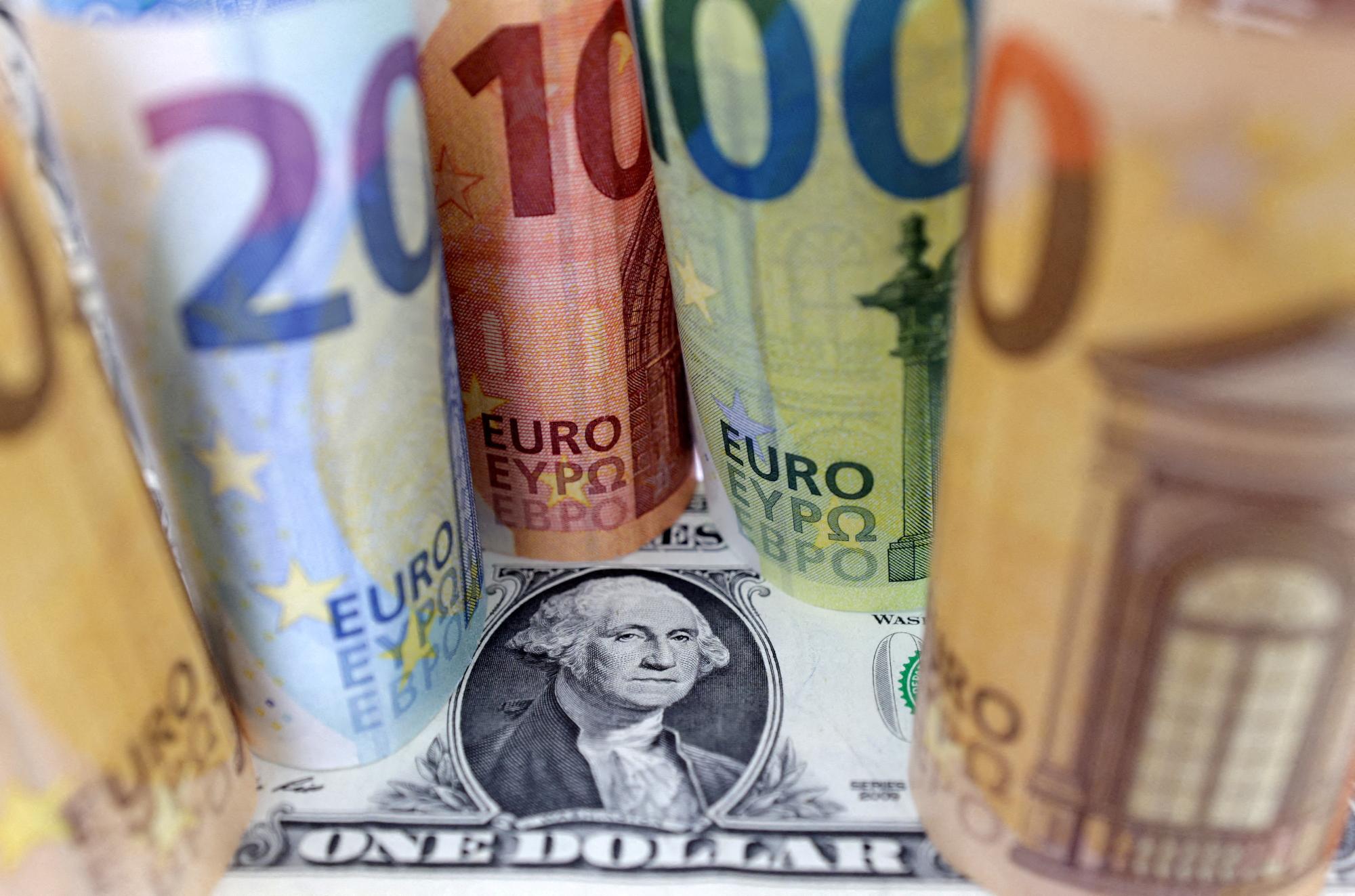
A look at the day ahead in U.S. and global markets from Mike Dolan After closing at their highest level of the year on Friday, U.S. stocks mostly hogged those gains into the new week - with 'peak rates' optimism, Friday's U.S. jobs report and falling oil prices jockeying with edgy geopolitics for attention. The S&P500 (.SPX) recorded its highest close since March 2022 on Friday - the month the Federal Reserve started its brutal five-percentage-point-plus interest rate squeeze. It's now just shy of a 20% gain for the year to date. The milestone was hit as Fed boss Jerome Powell, for many investors at least, gave his clearest signal yet that the rate campaign is over and the central bank was now weighing the effects and when it may be able to ease back. "We are getting what we wanted to get," Powell said during an event at Spelman College in Atlanta, noting the "full effects" of the Fed's rate hikes have not yet been felt. Powell added that "the risks of under- and over-tightening are becoming more balanced" and the data would guide them from here. Fed futures markets think a first cut may come as soon as March - with a quarter-point easing by then already two-thirds priced. Two-year Treasury yields hit their lowest since June on Friday and 10-year yields their lowest in three months, although they edged higher on Monday. Encouraging the disinflationary theme, oil prices extended declines, pressured by investor scepticism over the latest OPEC+ decision on supply cuts and uncertainty surrounding global fuel demand. U.S. crude hit its lowest in two weeks and is tracking year-on-year losses of almost 10%. With rate cuts expected at least as soon as the Fed in Europe and around the world, the dollar held up well. (.DXY) Attention turns squarely to the labor market this week, with a series of updates on jobs and hiring that culminates in the November payrolls report on Friday. Hiring is expected to have picked up last month, but with the jobless rate staying at 3.9%. Wall St stocks futures held the bulk of Friday's gains before the bell on Monday - giving back just 0.2%. Some concerns about the resumption of fighting in Gaza and attacks on commercial shipping in the Red Sea saw volatility levels pop marginally higher and gold prices briefly surged to a new record before giving back all of those gains. One of the worries about U.S. stock gains in the year to date has been the breadth, or lack of it, with a narrow leadership of megacap tech names. But that is widening into yearend as peak rate hopes encourage some rotation to smaller cap stocks. The S&P equal-weighted index (.EWGSPC) is now up 6% for 2023. World stocks were generally holding up too. But the relentless underperformance of China continued and the blue-chip CSI 300 Index (.CSI300) fell 0.7%. Tech giants listed in Hong Kong (.HSTECH) fell for a fifth straight session, sliding 1.9%. WuXi Biologics (2269.HK) plunged more than 20% on a disappointing earnings forecast and that weighed on Hong Kong markets generally - but the mood among foreign investors at least is dour. Chinese equities saw net outflows from long/short fund managers for a fourth successive month, mainly due to a reduction in long bets, Goldman Sachs' prime services team said in a report on Monday, without revealing the figure. The only positive was a near-10% jump in ailing Evergrande (3333.HK), which said it has been granted an adjournment of a court hearing into a liquidation petition to Jan. 29. In Europe, Greece's 10-year government bond yield dropped to its lowest level since June after ratings agency Fitch upgraded the country's sovereign credit rating to investment grade, citing the sharp downward trend in general government debt. Bitcoin joined gold's latest surge and broke above $40,000 for the first time since May 2022 as it rides a wave of momentum on peak interest rates. In corporate news, music streaming giant Spotify (SPOT.N) said it will lay off around 1,500 employees, or 17% of its headcount, to bring down costs, after letting 600 of its staff go in January, and 200 more in June. Key developments that should provide more direction to U.S. markets later on Monday: * U.S. Oct factory goods orders * European Central Bank President Christine Lagarde speaks * U.S. Treasury auctions 3-, 6-month bills * U.S. corporate earnings: GitLab, RGC Resources, Fusion Fuel Green, Joann https://www.reuters.com/markets/us/global-markets-view-usa-2023-12-04/