2023-12-04 06:19
CHENNAI, Dec 4 (Reuters) - At least two people died and the runway of one of India's busiest airports lay submerged due to torrential rain, as two southern states braced on Monday for a severe cyclone likely to hit in the next 24 hours. Cyclone Michaung was expected to make landfall on the coast of the southern Indian state of Andhra Pradesh on Tuesday morning, the country's weather office said, with sustained winds of 90-100 kph (56-62 mph), gusting to 110 kph. Two people were killed when a wall collapsed because of heavy rain in the Chengalpattu district of neighbouring Tamil Nadu state, joint director of the state disaster management department, C. Muthukumaran, told Reuters. In Tamil Nadu capital Chennai, the state's largest city and a major electronics and manufacturing hub, cars were swept away as floodwater flowed through the streets, while its airport, one of the busiest in India, shut down operations for the day citing severe weather. Media showed pictures of grounded planes with their wheels submerged in water as the rain pelted down. Several areas of the city were submerged in knee-deep water and there have been power outages since Monday morning, a Reuters witness said, evoking memories of December 2015 when around 290 people died after catastrophic floods. Authorities in both states were on high alert, evacuating thousands of people living in coastal areas, officials in both states said, with warnings issued to fishermen not to venture out to sea. Schools, colleges, offices and banks were closed on Monday and Tuesday in at least four districts of Tamil Nadu, including Chennai, because of weather conditions, a government notice said. Parts of Andhra Pradesh were likely to get more than 200 millimetres (8 inches) of rain over the next 24 hours, India's weather office said. In Andhra Pradesh, authorities had evacuated nearly 7,000 people in eight coastal districts and were preparing to evacuate a total of 28,000, depending on the cyclone's path and severity, a senior official in the state's disaster management department said. At least 800 people have been evacuated so far from Bapatla, the coastal town in Andhra Pradesh where the cyclone is expected to make landfall on Tuesday, P Ranjit Basha, district collector of Bapatla, said. https://www.reuters.com/world/india/india-shuts-schools-offices-evacuates-thousands-cyclone-michaung-nears-2023-12-04/

2023-12-04 06:16
MOSCOW, Dec 4 (Reuters) - Temperatures in parts of Siberia plummeted to minus 50 degrees Celsius (minus 58 degrees Fahrenheit) while blizzards blanketed Moscow in record snowfall and disrupted flights as winter weather swept across Russia. In the Sakha Republic, located in the northeastern part of Siberia and home to Yakutsk, one of the world's coldest cities, temperatures fell below minus 50 C, according to the region's weather stations. An abnormally early cold snap in Sakha pushed temperatures to even lower than minus 50 C in several areas of Sakha, a vast region just a little smaller than India. Almost all of Sakha is located in the permafrost zone. In the region's capital, Yakutsk, which lies some 5,000 km (3,100 miles) east of Moscow, the temperature was around minus 44 C to minus 48 C. Temperatures of minus 50 C have become less common in recent years because of climate change, with permafrost showing increasing signs of thawing. In the Russian capital, some of the biggest snowfalls ever seen caused delays at some airports on Monday, with runways covered in thick snow. At least 54 flights were delayed and five more were cancelled at the capital's three largest airports, the RIA news agency reported. Temperatures in Moscow were forecast to fall to about minus 18 C later this week. https://www.reuters.com/world/europe/temperatures-siberia-dip-minus-50-celsius-record-snow-blankets-moscow-2023-12-04/

2023-12-04 06:10
Major US averages fall Dollar rises Gold retreats after hitting record high Oil settles down more than 1% NEW YORK, Dec 4 (Reuters) - A gauge of global stocks was poised to snap a four-session winning streak on Monday while Treasury yields rose as investors awaited U.S. labor market data to indicate the likely route of the Federal Reserve's rate policy. Softening economic data and recent comments from Fed officials, including Chair Jerome Powell, have heightened expectations that the U.S. central bank has ended its interest-rate-hiking cycle and will begin to cut rates as soon as March. The next Fed policy meeting is scheduled to take place on Dec. 12-13. Expectations for a U.S. rate cut of at least 25 basis points (bps) in March are nearly 60%, according to CME's FedWatch Tool, up from about 22% a week ago. The increasing belief that the Fed will ease policy has helped fuel a strong rally in U.S. stocks. Each of the three major indexes on Wall Street capped a fifth straight week of gains on Friday, with the benchmark S&P index notching its highest close of the year. "There is a lot of chop around here that is not necessarily meaningful," said Tom Martin, a senior portfolio manager at GLOBALT Investments in Atlanta. "We have a really important Fed meeting coming up, and what makes it important is that all of a sudden, the market has decided that they're going to cut early next year." On Wall Street, the Dow Jones Industrial Average (.DJI) closed down 41.06 points, or 0.11%, to 36,204.44, the S&P 500 (.SPX) lost 24.85 points, or 0.54%, to 4,569.78 and the (.IXIC) lost 119.54 points, or 0.84%, to 14,185.49. U.S. labor market data will kick off on Wednesday with the ADP National Employment Report on the private sector and culminate on Friday with the government's wider payrolls report. Data on Monday showed new orders for U.S.-made goods fell more than expected in October, marking the biggest monthly drop in roughly three and a half years. U.S. Treasury yields moved higher, with the benchmark 10-year yield moving off three-month lows to stand 4 basis points higher at 4.261%. The two-year U.S. Treasury yield, which typically moves in step with interest rate expectations, rose 7 basis points to 4.633%. Stocks in Europe also edged lower, with the pan-European STOXX 600 index (.STOXX) closing down 0.09% after initial gains pushed it to a four-month high. MSCI's gauge of stocks across the globe (.MIWD00000PUS) was down 0.43% after hitting its highest level since Aug. 2 earlier in the day. Attacks on commercial vessels in the Red Sea on Sunday risked increasing investor worries about the potential for a widening of the war between Israel and Hamas, potentially complicating the outlook for a rally that saw U.S. stocks crest a fresh closing high for the year last week. Crude prices were lower as investor skepticism over the latest OPEC+ decision on supply cuts and uncertainty surrounding global fuel demand outweighed the risk of supply disruptions from the Middle East conflict. U.S. crude settled down 1.39% to $73.04 a barrel. Brent crude ended at $78.03 per barrel, down 1.08%. The dollar rebounded, bouncing after three straight weeks of declines. The dollar index (.DXY), which tracks the greenback against a basket of six currencies, gained 0.5%, to 103.62. The euro was down 0.42% at $1.0835. The bounce in the dollar weighed on gold, which pulled back after hitting a record high of $2,135.40 per ounce and was last down 2.05% to $2,028.42 an ounce. https://www.reuters.com/markets/global-markets-wrapup-1-2023-12-04/

2023-12-04 06:05
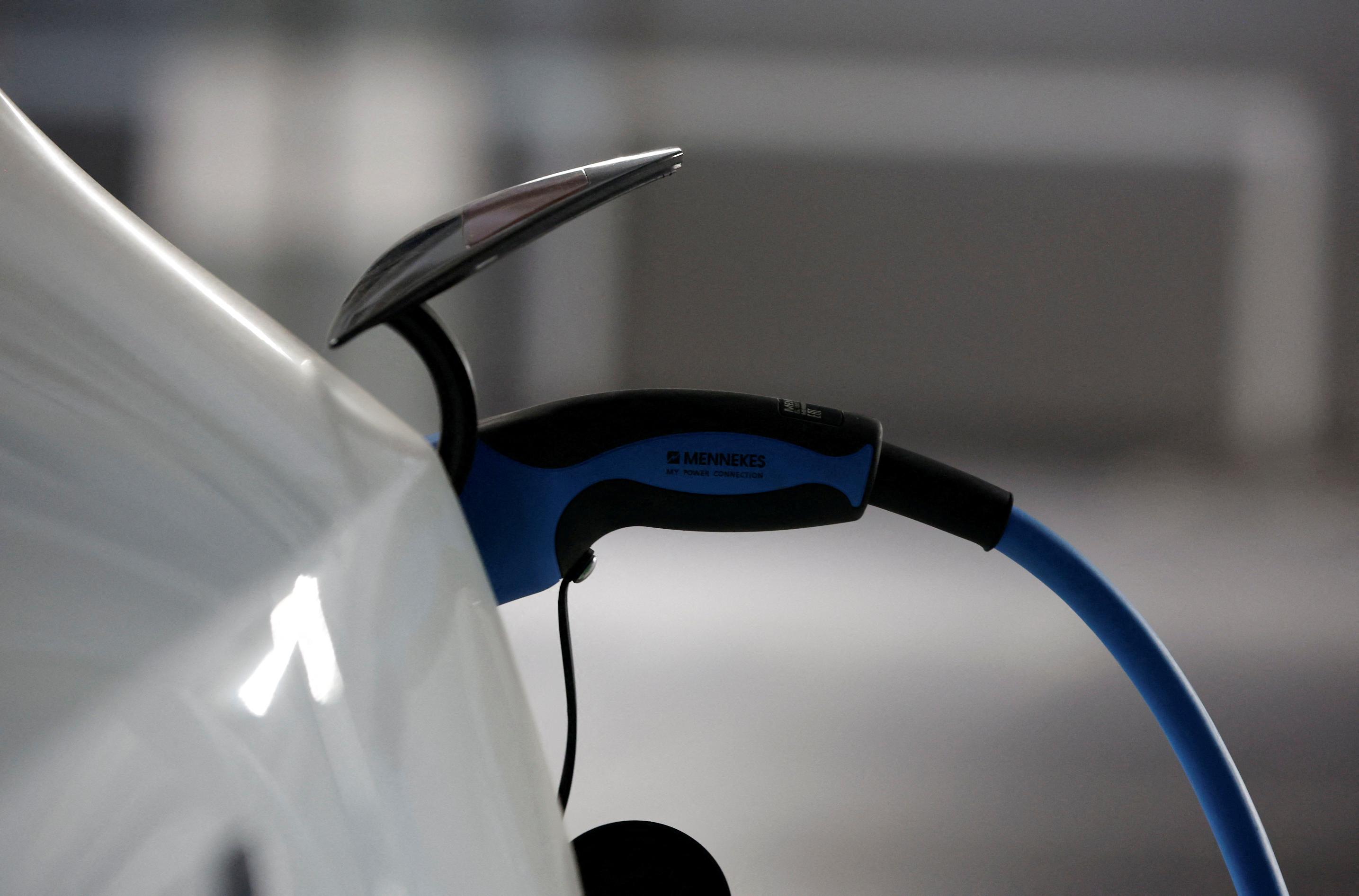
BRUSSELS, Dec 4 (Reuters) - Electric vehicle drivers hoping to top up their batteries at one of Repsol's (REP.MC) 1,600 Spanish charging stations might well be disappointed, with nearly half lying dormant because they have no power connection. Such gaps are evident across the European Union, where last week the European Commission announced plans to upgrade the bloc's power grids. These are due to be implemented in 18 months and include addressing EV charging station power shortages. But despite the declarations of its leaders, red tape preventing progress towards greener transport in the EU is on the rise, industry groups and energy companies told Reuters, with permitting one of the major roadblocks. The ease of building an EV charging hub varies considerably country by country. One industry source said that in Germany a hub was held up for months over rules protecting a single tree, while another located on a busy highway had to wait 10 months for a noise evaluation before it gained approval. "Although the work of installing a fast and ultra-fast charging point requires only two to three weeks of work, due to different administrative requirements in Spain, the complete process ... can last from one to two years," Repsol said. Industry group ChargeUp Europe said that while the Commission recognised permitting was a problem, it had not proposed any concrete tools or actions. Specific guidelines for member states to accelerate permitting are only expected at some point over the next two years, the plan's timeline shows. This is slowing down the rollout of charging hubs across the 27-member bloc, putting EU targets to phase out petrol and diesel vehicles, as well as its broader climate goals, in peril. "The time needed for connecting the EV recharging points to the grid can indeed be seen as a barrier to accelerate the uptake of EVs and needs to be tackled," a Commission spokesperson said in an emailed response. The process for setting up a fast EV station has risen to an average of two years from six months in the last few years, four EV charging companies and the industry's representative said, as firms wade through myriad rules from federal to municipal level. "It's Kafka meets the energy transition. We have so many things working against Europe but we could fix this," Lucie Mattera, secretary general of ChargeUp Europe, told Reuters. Mattera said the number of EVs will grow faster than the total number of public charging stations which ChargeUp Europe estimates will rise by nine times by 2030, with EVs by ten. The electrification of transport is one of the key pillars underpinning the EU's goal of reaching carbon neutrality by 2050. To do so, it will ban sales of CO2-emitting vehicles from 2035 and wants to develop a network of EV charging stations. That ambition has created bottlenecks for power companies and regulators unprepared for the surge in demand in the EU, where so far only 5.4% of passenger cars run on alternative fuels, including electric, out of a total 286 million. "It's up to the member states now to really step up," Miguel Stilwell de Andrade, CEO of Portuguese energy firm EDP, said, adding: "There's just an avalanche of projects". GRIDLOCK This year, the EU adopted a law to install fast chargers by 2030 every 60 kilometres along designated road networks for passenger cars and every 100 km for heavy-duty vehicles. But charging developers say obtaining basic data about potential hubs is a major challenge, making investments hard. This involves finding out whether an average roadside rest stop has a single lamppost or enough cabling that connects to the broader grid. Hubs often require an extra electricity sub-station, which converts high voltage power into smaller units. The process then involves requests to power distribution companies (DSOs) to install more capacity. "Sometimes we have to send physical mail," said Peter Badik, co-founder of EV charging firm Greenway Network, which has set up 1,300 EV chargers in Slovakia, Croatia and Poland. "Even when they say yes, you don't know when they will do the upgrade," Batik said, adding there was so far no way to track how quickly a power company was building up capacity. Industry executives said the EU targets were set low and were therefore likely to be met, but might not meet demand for the growing EV fleet of cars and especially trucks. There is a strong industry impetus to build hubs for electric cars, but not yet for long-haul trucks and buses. These account for more than 25% of greenhouse gas emissions from EU road transport, which as a whole is responsible for a fifth of the bloc's emissions. BP, which expects to roll out more than 100,000 car and truck charging stations globally by 2030, said that in Germany alone, it has to deal with around 800 grid companies to set up fast hubs for both cars and trucks. "Many have individual requirements which can significantly hinder progress," Stefan van Dobschuetz, vice president of BP Pulse Europe, said, adding that was before other types of permits concerning noise and archaeology are applied for. "There is a clear need for more standardisation (of requirements for charging hubs)," BP's van Dobschuetz added. That call was echoed by ChargeUp Europe's Mattera who said guidelines from the Commission would likely help EU members align as the rate of new projects varies across the region. https://www.reuters.com/business/autos-transportation/eus-electric-dreams-short-circuited-by-ev-charging-gridlock-2023-12-04/
2023-12-04 05:58
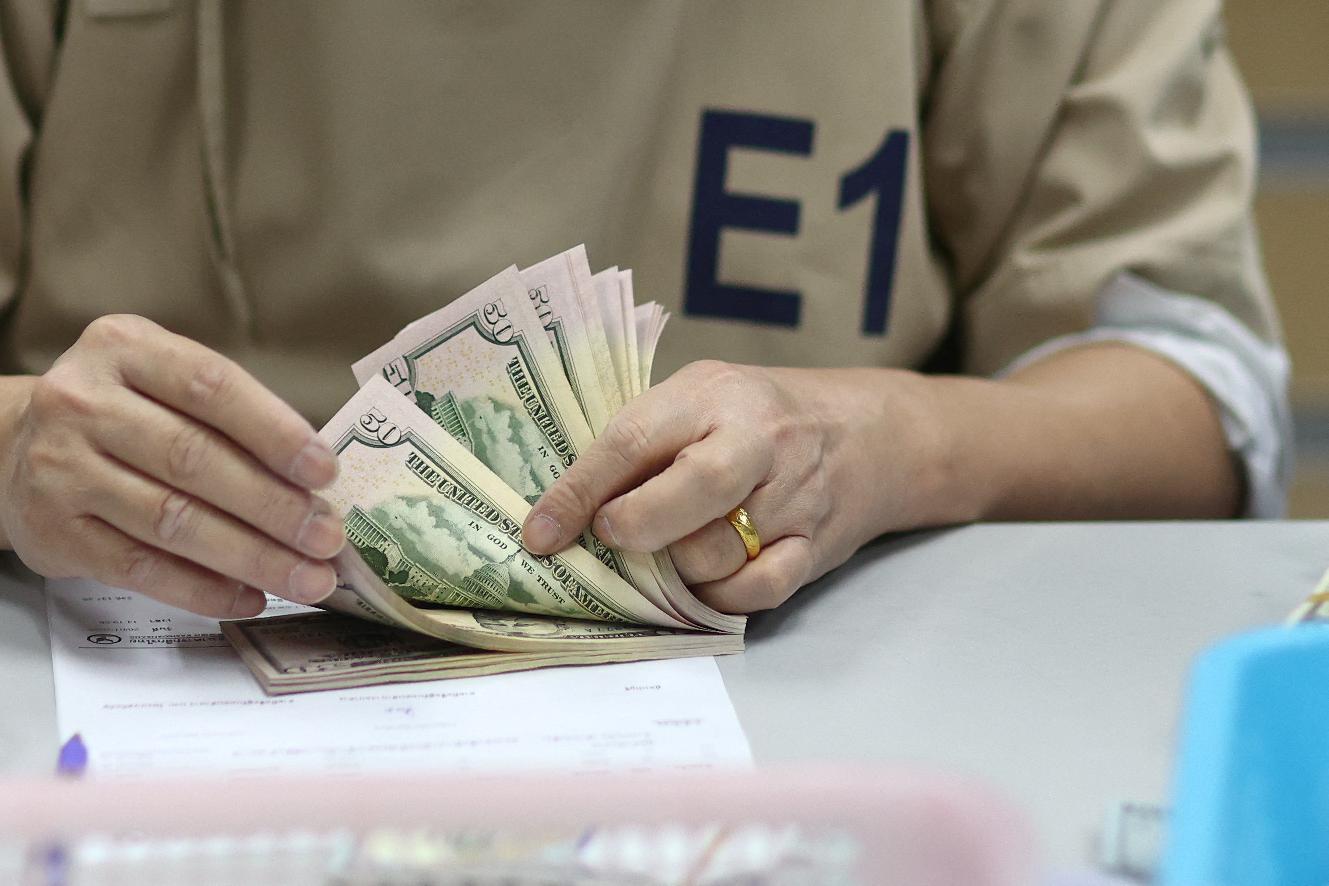
WASHINGTON, Dec 4 (Reuters) - The dollar ticked higher on Monday, regaining some ground after falling for three straight weeks on bets that the U.S. Federal Reserve will soon be cutting interest rates, while bitcoin breached $42,000 for the first time since early 2022. The dollar index, which tracks the currency against six major peers, rose by 0.54% to 103.67, while the euro was last down 0.49% to $1.0828 "We're kind of seeing a rebound and reshaping of expectations back to what we expected towards the end of the year," said Helen Given, FX trader, at Monex USA in Washington. Fed Chair Jerome Powell said on Friday that the central bank was prepared to tighten policy further if needed, but also said that interest rates were "well into restrictive territory" and were slowing inflation. "Yes, he said that interest rate hikes are done, but that was already kind of baked in the cake when it comes to the Fed," said Given. "The more important side of the coin that we saw was that he laid down the law and said that cuts are not coming anytime soon." In cryptocurrencies, bitcoin ripped to its highest since April 2022 at more than $42,100, buoyed by expectations that U.S. regulators will soon approve an exchange-traded bitcoin fund. It was last at $41,912. "An approval is expected to bring short-term capital influx from the traditional finance investors, fueling the uptrend, while a rejection might trigger a short-term negative price action due to high expectations of approval by market participants," said Matteo Greco, a research analyst at fintech investment firm Fineqia International, in a note. Investors' bets that the Fed's rate-hiking cycle is over have also boosted riskier assets in financial markets. The key data point for investors this week is the November U.S. jobs report, which is expected to show the American economy added 180,000 jobs last month, up from 150,000 in October. Last month, the euro rallied 3% against the dollar and hit its highest since August at more than $1.10 as data showed U.S. inflation was cooling rapidly. The dollar index dropped 3.1% in November in its biggest monthly fall in a year. "A lot of people are ... realizing that the strength of the euro, primarily because of the U.S. weakness to this point, is now potentially an inflection point," said Eugene Epstein, Moneycorp's head of structured products, North America. "The tone of the conversation seems to have shifted a little bit in that direction." Sterling was at $1.262, down 0.6% on the day, while the Australian dollar was 0.88% lower at $0.66140. The U.S. dollar also rose against the Swiss franc , last up 0.41%. The dollar was last down 0.33% against the yen at 147.300, after falling to 146.24 yen per dollar in the Asian session, its lowest since mid-September. Data on Monday showed that exports from Germany unexpectedly fell in October, denting hopes that Europe's biggest economy was stabilising. Euro zone retail sales data are due on Wednesday, ahead of Chinese trade figures on Thursday. https://www.reuters.com/markets/currencies/dollar-shaky-ground-fed-rate-cut-bets-strengthen-2023-12-04/
2023-12-04 05:53
Dec 4 (Reuters) - A look at the day ahead in European and global markets from Wayne Cole Asian stocks have made a hesitant start to the week, while gold hit a new peak and Treasuries ran into profit-taking on their recent stellar gains. Oil failed to sustain an early rally that followed news of attacks on commercial shipping in the Red Sea. Three vessels came under attack in international waters on Sunday, while Yemen's Houthi group claimed drone and missile attacks on two Israeli vessels in the area. The threat to such a major global shipping route could add to inflationary pressure, although the impact seemed limited so far. Notably, oil prices lost early gains and Brent eased around 57 cents to $78.31 a barrel amid doubts that OPEC+ would be able to maintain planned output cuts, particularly by some African countries. At the same time, U.S. oil output is at record levels above 13 million barrels a day and rig counts are still rising. That means the U.S. is producing more oil than Saudi Arabia right now. A commodity faring better is gold, which surged suddenly this morning to top $2,111 an ounce for the first time before paring the gains to $2,086. There was no obvious catalyst for the move, leaving dealers suspecting the hidden hand of trend-following CTAs and algo funds following the break of a triple-top around $2,107. Central banks have also been gold bugs, buying a net 800 metric tons in the year to September in a record for that period. Bulls are now touting chart targets at $2,240 and $2,400. Market pricing for early and aggressive rate cuts is clearly a positive for non-yielding gold, with Fed fund futures currently implying a 59% chance of a U.S. cut as early as March. A week ago that probability was around 20%. There are also 125 basis points (bps) of easing implied for all of 2024, up from 80 bps a couple of weeks ago. In addition, markets are pricing in an 80% chance of the ECB easing in March, although the hawkish head of Bundesbank pushed back against such prospects in an interview over the weekend. ECB President Christine Lagarde will have her chance to comment in a speech and Q&A later on Monday. Such extreme pricing leaves the market vulnerable to pullbacks, and both Fed funds and Treasuries ran into selling on Monday. Yields on U.S. two-year notes rose almost 4 bps, but that follows a drop of 40 bps last week. German two-year bunds also look susceptible to some profit-taking after yields dived 41 bps last week. Bonds really need U.S. November payrolls on Friday to be solid enough to support the soft-landing scenario, but not so strong as to threaten the chance of easing. Median forecasts are for payrolls to rise 180,000, keeping unemployment steady at 3.9%. Many analysts suspect risks are to the upside, with Goldman Sachs tipping 238,000, including a chunk of workers returning from strikes, and a jobless rate of 3.8%. Key developments that could influence markets on Monday: - Speech and Q&A by ECB President Christine Lagarde - Riksbank First Deputy Governor Anna Breman speaks, Riksbank publishes minutes from policy meeting - German trade data for Oct, Euro Zone sentiment index for Dec. Data on U.S. durable goods and auto sales https://www.reuters.com/markets/europe/global-markets-view-europe-2023-12-04/