2023-12-02 08:41
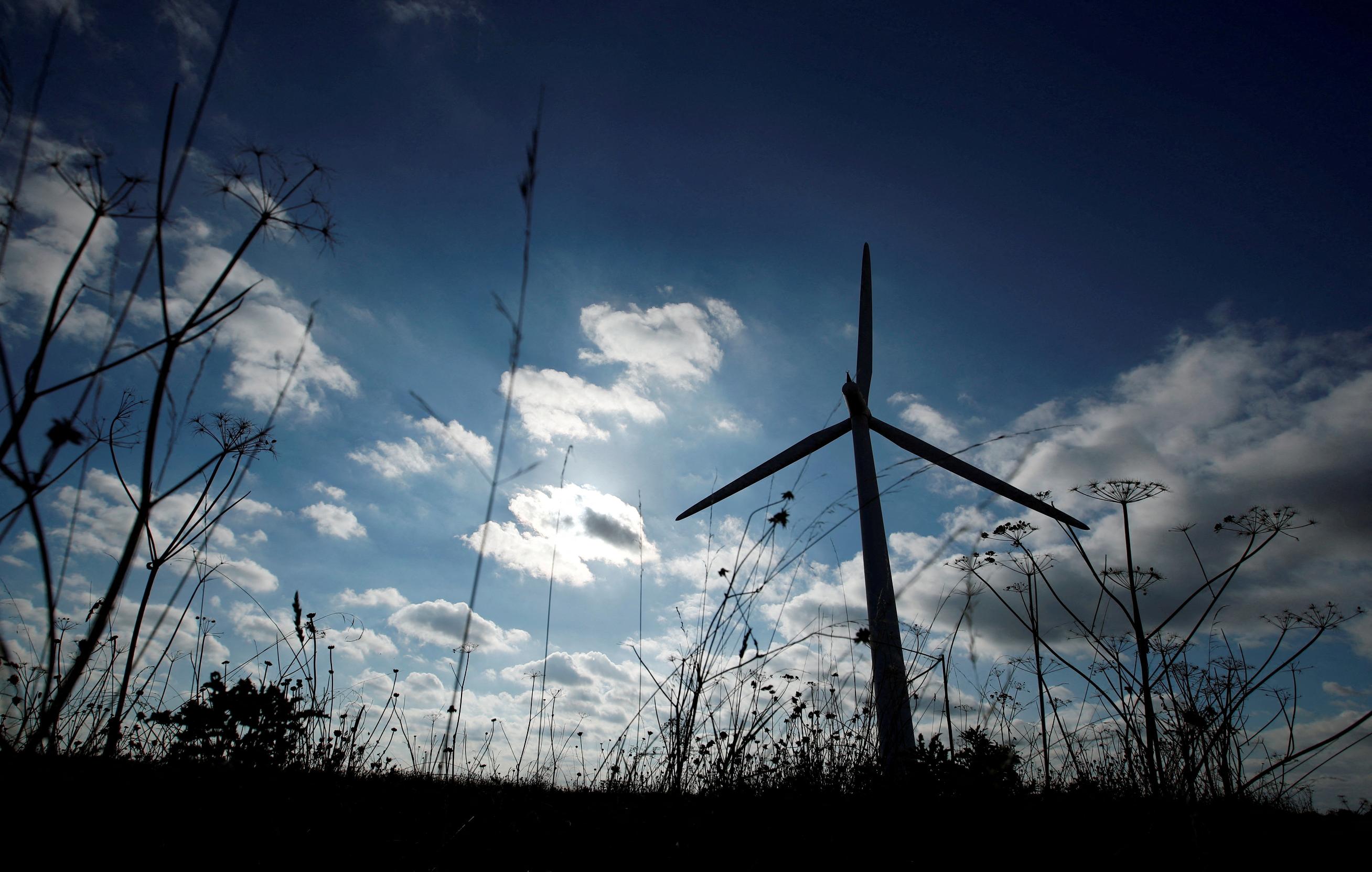
118 countries back pledge to triple world's clean power Goal would slash fossil fuel use this decade Smaller club of countries plan to scale up nuclear energy DUBAI, Dec 2 (Reuters) - Governments launched new initiatives on Saturday to bolster clean energy and to wean themselves off fossil fuels at the U.N. climate summit in Dubai, where countries are grappling with how to halt the non-stop rise in planet-warming emissions. In one of the most widely supported initiatives, 118 governments pledged to triple the world's renewable energy capacity by 2030 at the U.N.'s COP28 climate summit on Saturday, as a route to cut the share of fossil fuels in the world's energy production. The pledge was among a slew of COP28 announcements on Saturday aimed at decarbonising the energy sector - source of around three-quarters of global greenhouse gas emissions - that included expanding nuclear power, cutting methane emissions and choking off private finance for coal power. "This can and will help transition the world away from unabated coal," said Sultan al-Jaber, the United Arab Emirates' COP28 summit President. Led by the European Union, United States and UAE, the pledge also said tripling renewable energy would help remove CO2-emitting fossil fuels from the world's energy system by 2050 at the latest. Backers on Saturday included Brazil, Nigeria, Australia, Japan, Canada, Chile and Barbados. While China and India have signalled support for tripling renewable energy by 2030, neither backed the overall pledge on Saturday - which pairs the ramp-up in clean power with a reduction in fossil fuel use. Backers including the EU and UAE want the renewable energy pledge included in the final U.N. climate summit decision, to make it a global goal. That would require consensus among the nearly 200 countries present. The pledge, a draft of which was first reported by Reuters last month, also called for "the phase down of unabated coal power" and an end to the financing of new coal-fired power plants. It also included a target to double the global rate of energy efficiency by 2030. Climate vulnerable countries insisted that the goals must be paired with a deal among countries at COP28 to phase out the world's use of fossil fuels. "It is only half the solution. The pledge can't greenwash countries that are simultaneously expanding fossil fuel production," said Tina Stege, Climate Envoy for the Marshall Islands. While deployment of renewables like solar and wind has been surging globally for years, rising costs, labour constraints and supply chain issues have forced project delays and cancellations in recent months, costing developers like Orsted (ORSTED.CO) and BP (BP.L) billions of dollars in writedowns. Hitting the target for 10,000 gigawatts of global installed renewable energy by 2030 will also require governments and financial institutions to hike investments and address the high cost of capital that has stymied renewable energy projects in developing nations. "The mismatch still exists between our potentiality and our limitations to attract investment," said Najib Ahmed, a consultant at Somalia's climate ministry. Africa has received just 2% of global investments in renewable energy over the last two decades, the International Renewable Energy Agency said. NUCLEAR NUDGE More than 20 nations also signed a declaration on Saturday aiming to triple nuclear power capacity by 2050, with U.S. climate envoy John Kerry saying the world cannot achieve "net zero" emissions without building new reactors. "We are not making the argument that this is absolutely going to be the sweeping alternative to every other energy source," Kerry said during a launch ceremony at COP28. "But ... you can't get to net-zero 2050 without some nuclear, just as you can't get there without some use of carbon capture, utilisation and storage." Global nuclear capacity now stands at 370 gigawatts, with 31 countries running reactors. Tripling that capacity by 2050 would require a significant scaling up in new approvals - and finance. Other pledges took aim at coal, the most CO2-emitting fossil fuel. France said it would rally a group of nations to ask the OECD to measure the climate and financial risks attached to investing in new coal assets, to deter private financiers from backing projects. Coal users Kosovo and the Dominican Republic also agreed to develop plans to phase out their coal-fuelled power. Meanwhile, nearly 50 oil and gas companies including Exxon Mobil signed the Oil and Gas Decarbonization Charter, an initiative driven by COP President Sultan al-Jaber to cut operational emissions by 2050. The charter was criticised by environmental groups who said the commitments were merely a distraction from the COP28 process and fail to deal with the emissions caused by burning fossil fuels. "The pledge doesn't cover a drop of the fuel they sell, which accounts for up to 95% of the oil and gas industry's contribution to the climate crisis," said Melanie Robinson, Global Climate Program Director at the World Resources Institute. METHANE EMISSIONS The Biden administration on Saturday also unveiled final rules aimed at cracking down on U.S. oil and gas industry releases of methane, part of a global plan to rein in emissions that contribute to climate change. Meanwhile, several governments, philanthropic organisations and the private sector said they have mobilised $1 billion in grants to supports countries' efforts to tackle the potent gas. Two major emitters of methane, Turkmenistan and Kazakhstan, joined the Global Methane Pledge, a voluntary agreement by over 150 countries to slash their methane emissions by 30% by 2030. The World Bank on Saturday launched an 18-month "blueprint for methane reduction" that will set up 15 national programs aimed at cutting methane emissions from activities like rice production, livestock operations, and waste management. For daily comprehensive coverage on COP28 in your inbox, sign up for the Reuters Sustainable Switch newsletter here. https://www.reuters.com/sustainability/climate-energy/over-110-countries-set-join-cop28-deal-triple-renewable-energy-2023-12-02/
2023-12-02 07:10
BOGOTA, Dec 2 (Reuters) - Colombia has significantly modified the terms for its first-ever offshore wind energy auction, set to receive bids in August next year, with the aim of opening it to as many interested bidders as possible, Energy Minister Andres Camacho said in an interview. The minister spoke to Reuters on Wednesday ahead of announcing the definitive rules for the tender to license offshore wind blocks at the COP28 climate meeting in Dubai. The launch of the process has been delayed amid ministerial changes this year, and draft rules scheduled for publication in August were released at the end of October. Those specifications were met with criticism from companies and industry groups, who complained the barriers to entry would be too high for some companies and that the requirement that bidders team up with an unnamed state company caused too much uncertainty. "What we're launching now are the definitive specifications that include all those revisions (from interested bidders) and which will be the rules of the game for this process of assigning areas," Camacho said. Colombia has set its sights on being the first country in Latin America to develop offshore wind farms, part of the bigger goal by the country's first leftist President Gustavo Petro to wean the major regional coal and oil producer off its dependence on fossil fuels. "If we manage to have more foreign investment in this sector than in extractive sectors, we will consolidate the path to transition," Camacho said. Changes to the rules cover three key areas, Camacho said, including loosening certain requirements regarding company experience, removing charges for access to information and widening the selection of possible partners that have state involvement. In September, three sources told Reuters the government wanted to make majority state-owned oil company Ecopetrol (ECO.CN) a mandatory partner in offshore wind developments. The following month, the ministry published a draft of rules which confirmed bidders must have a shareholding agreement with a state company, without specifying which. Industry groups warned obligatory partnerships with only one state company would be unattractive because bidders' success would depend entirely on the Colombian partner's interest in any given development. Potential bidders will now be able to choose from a wide array of companies rather than just one, Camacho said. "It can be any public company, or company with state participation, from the energy sector and there we have a wide range," he said. He did not name individual companies but suggested Colombia's biggest state-run companies - among them Ecopetrol - could be most attractive for international businesses. The partnerships will not be subject to specific requirements on percentage stakes, he said, adding more flexibility will attract the greatest number of potential investors while ensuring a transfer of knowledge to Colombian state companies. "We're subject more to commercial agreements between companies and the business models they can form," he said. The government has also relaxed rules dictating which companies can make bids during the process, Camacho said, following comments from industry members. "We've made adjustments ... introducing some flexibility on experience, so that not just projects in execution are included, but that experience can also be considered for projects that are just starting execution," he said. The government's National Hydrocarbons Agency (ANH) is running the auction process. While the ANH has traditionally focused on developing fossil fuels only, new President Orlando Velandia - who assumed his role this week - will oversee the agency's transformation to focus on a range of energy sources, Camacho said. https://www.reuters.com/sustainability/climate-energy/colombia-makes-major-changes-auction-rules-offshore-wind-blocks-2023-12-02/

2023-12-02 05:34
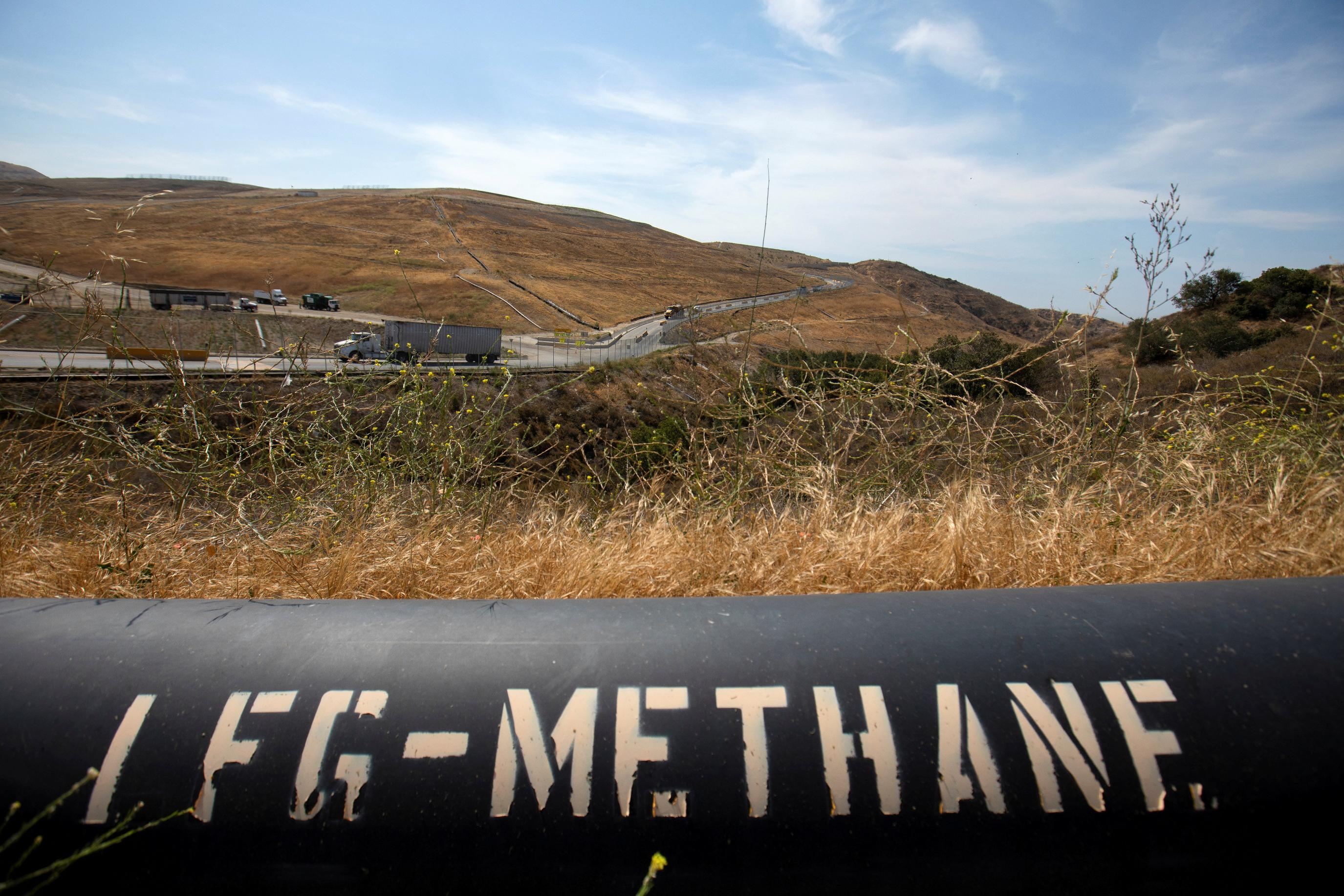
DUBAI, Dec 2 (Reuters) - Nearly a dozen deep-pocketed philanthropies announced on Saturday they will invest $450 million over the next three years to help countries launch national actions to tackle methane, the second-most prominent greenhouse gas, which has become a new focus of global climate negotiations. The philanthropies, which include the Bezos Earth Fund, Bloomberg Philanthropies and the Sequoia Climate Foundation, will help accelerate the phase-down of methane emissions and other non-carbon dioxide greenhouse gases. Their announcement comes as the United States, UAE and China prepare to make several announcements at the U.N. COP28 climate summit on Saturday on raising more finance to tackle methane, and countries step forward with new plans to curb those emissions. Climate experts say that including methane efforts in a legally binding summit agreement is a priority. While methane has more warming potential than carbon dioxide, it breaks down in the atmosphere within just years compared with decades for CO2. That means that reining in methane emissions can have a more immediate impact in limiting climate change. Methane is emitted from a variety of sources, including oil and gas production, agriculture, landfills and food waste. “With time short, we must be smart and decisive about how we stay below a 1.5-degree warmer world. One smart way will be for all to commit to ending methane leakages now and to regulate, urgently, all other super pollutants,” said Mia Amor Mottley, prime minister of Barbados. While more than 150 countries have promised since 2021 to slash their methane emissions 30% from 2020 levels by 2030 under the U.S.- and EU-led Global Methane Pledge, few have detailed how they will achieve this. Research firm Kayrros, which tracks methane emissions, said on Friday that despite the pledge, emissions of methane are not coming down, and in some places, they are even going up. “We’ve been calling for an outright ban on super-emitters. Rapid cuts in methane emissions from fossil fuels could lead to a reduction of 0.1°C in global temperature rise by mid-century," said Antoine Rostand, CEO of Kayrros. https://www.reuters.com/sustainability/climate-energy/cop28-sidelines-philanthropies-invest-450-million-help-tackle-methane-2023-12-02/
2023-12-02 05:03
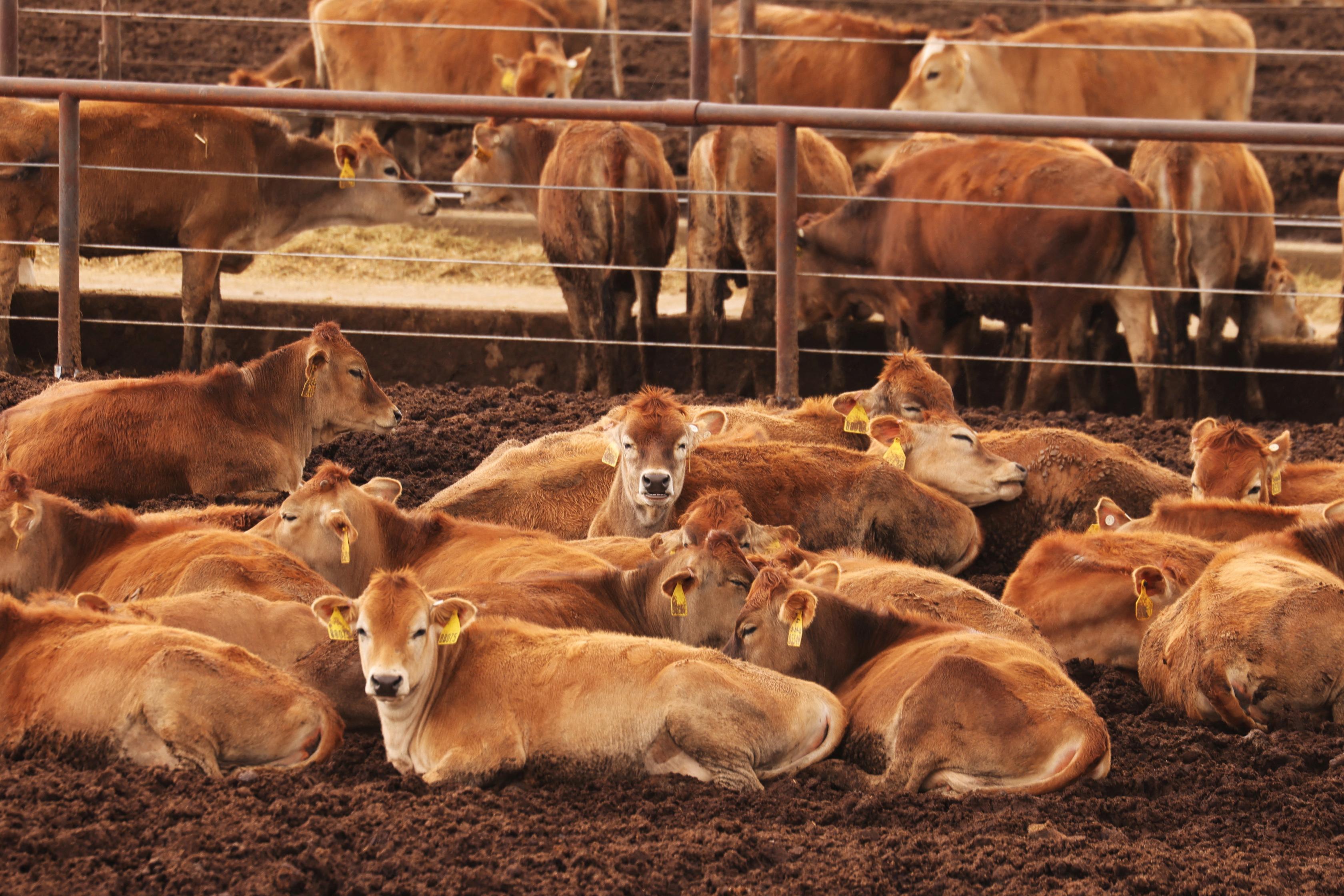
Dec 2 (Reuters) - Climate advocacy groups are pressuring world governments gathered at this year’s United Nation’s COP28 climate conference in Dubai to commit to cutting global food sector emissions, as the conference host promises to put agriculture in the spotlight. Global food systems- including farming and land use, livestock production, household food consumption and waste, and energy used in the farm and food retail sectors - account for 31% of human-made greenhouse gas (GHG) emissions, according to the United Nations' Food and Agriculture Organization (FAO). But few governments have ever published numeric targets for lowering those emissions, focusing instead mostly on the use of fossil fuels for power, transport and industry, according to climate advocates. "Business as usual food systems would use nearly the whole carbon budget for a 2-degree Celsius world. We need to implement food systems approaches throughout COP28," said Joao Campari, global leader of food practice at the World Wildlife Fund. A full day of the 28th Conference of the Parties (COP), Dec. 10, will be dedicated to food and agriculture - a first for any COP - and the United Arab Emirates host has said the event will be a "game-changer for food systems." Advocacy groups say countries should take the opportunity to commit to stronger action on food system emissions in their national climate plans, called Nationally Determined Contributions (NDCs). Many NDCs mention agriculture, but just 53 of 164 countries who had submitted NDCs to the U.N. as of September 2022 included quantified GHG goals for agricultural sub-sectors, according to CGIAR, a global food security research group. The United States, India, China and Canada are among the countries that did not have quantified mitigation goals. Advocates would see clearer accounting of food system emissions and targets to reduce them, as well as discussion of issues like biodiversity and healthy, sustainable diets. "That’s a minimum baseline to understand the role of food systems and its connection [to climate change]," said Patty Fong, program director for climate, health and wellbeing at the Global Alliance for the Future of Food. Doing so could also unlock financial investment in tackling food emissions, said Saswati Bora, global director for regenerative food systems at the Nature Conservancy. Food systems received just 4.3% of global climate finance in 2019 and 2020, according to the Climate Policy Initiative. "To have this increasing attention at the global level helps direct some of the support that’s needed for producers to transition food production to be more climate-friendly," Bora said. TACKLING METHANE A key goal for advocates is reducing methane emissions from food sectors like livestock production and food waste. Methane is about 20 times more potent than carbon dioxide over a 100-year period. Food systems generate 53% of the world's methane emissions and about two-thirds of agricultural methane is from livestock production, including cow burps and manure management, according to the FAO. Heightened awareness of livestock methane emissions should lead to global commitments to cut them, much in the same way the Global Methane Pledge launched at COP26 commits countries to reduce their methane emissions 30% by 2030, said John Tauzel, senior director of global agricultural methane at the Environmental Defense Fund. Wealthier countries should support farmers in implementing technology like biodigesters that capture manure emissions for energy production, while poorer countries should help farmers improve animal feed and livestock digestion, Tauzel said. Countries should also make stronger commitments in NDCs on food waste, said Liz Goodwin, director of food loss and waste at the World Resources Institute. Food waste generates half of all global food system emissions according to a March study published in the journal Nature Food. "That puts it clearly on their government agenda [and] it means they’ve got to actually do something about it," Goodwin said. The members of the U.N. pledged in 2015 to halve global food loss and waste by 2030, but the world has collectively made little progress towards the goal and some countries waste even more food now. https://www.reuters.com/world/cow-burps-food-waste-take-spotlight-cop28-agriculture-day-2023-12-02/
2023-12-02 04:58
Home sales in top cities climb 36% in July-Sept quarter Sales driven by rising incomes, housing shortage, govt subsidies Construction boom could continue for next 3-4 years -builder Nifty realty index has surged 67% this year NEW DELHI, Dec 2 (Reuters) - If India needed any more proof that it was in the midst of a huge housing boom, it got in this week's GDP data, heightening expectations that the industry will continue to power the economy for years to come. The construction sector grew 13.3% in July-September from a year earlier, up from 7.9% in the previous quarter and its best performance in five quarters, the data released on Thursday showed. That helped India expand at a forecast-beating 7.6%, making it one of the world's fastest-growing major economies. In contrast, Western economies have been squeezed by high interest rates and energy prices, while China has been hobbled by a debt crisis in its property sector. The long-awaited boom - which has created millions of jobs - comes after about six years of debt and pandemic-induced downturn before the construction sector began improving last year and hitting its stride this year. It has been driven by rising incomes for many Indians, a severe housing shortage in big cities and strong population growth. The world's most populous nation had an urban housing shortage of around 19 million units last year - and that is expected to double by 2030, according to government estimates. "The robust growth in construction has significantly contributed to the economic growth - and is likely to play the same role in next couple of quarters," said Sunil Sinha, an economist at India Ratings and Research, an arm of rating agency Fitch. Builders are bullish long-term with many saying the boom could last two to three years and some even more optimistic. "The housing market could continue to perform well for another three to four years," Sanjeev Jain, managing director at Parsvnath Developers, a leading real estate company, noting that India is in the initial stages of a housing growth cycle. Home sales in India's seven largest cities, including Mumbai, New Delhi and Bangalore, rocketed 36% in the July-September quarter from a year earlier to more than 112,000 units, despite an 8%-18% increase in prices, according to real estate consultancy Anarock. There was also a 24% increase in new residential projects being launched, data from the consultancy showed. "The home sales are driven by first-time buyers, and nearly 80% of the houses have been bought by end users," said Prashant Thakur, head of research at Anarock, adding that there was also strong demand from existing home owners to move to more spacious apartments. In Mumbai, for example, demand has been strong despite an increase in interest rates of about two percentage points, according to Jayesh Rathod, director of Mumbai-based Guardian Real Estate Advisory. His company has sold over 5,500 flats in Mumbai and on its outskirts in Thane so far this year, a jump of more than 50% compared to the same period a year ago, he said. Underpinning demand has been salary hikes for workers in big cities. Average hikes for sectors such as e-commerce, healthcare, retail and logistics have remained above 10% for a second straight year, according to EY estimates. Home prices in India are expected to rise faster than consumer inflation next year, according to a Reuters poll, with property analysts saying growth will be driven by higher earners snapping up newly built luxury residences in cities. Housing demand has also picked up significantly in smaller cities in the southern states of Tamil Nadu, Karnataka and Prime Minister Narendra Modi's home state of Gujarat, according to construction companies who say demand has been spurred by increases in incomes and the migration of workers from rural areas. The government is also trying to boost the availability of affordable housing by providing subsidies, which is encouraging construction in India's smaller towns and cities. Shares in property companies have naturally surged. The Nifty realty index (.NIFTYREAL) is up some 67% for the year to date compared with a 12% gain for the blue-chip Nifty 50 index. Notable gainers include Prestige Estates Projects (PREG.NS) which has jumped some 120%, DLF (DLF.NS) which has climbed 67% and Godrej Properties (GODR.NS) which is up 52%. ($1 = 83.3143 Indian rupees) https://www.reuters.com/world/india/indias-construction-sector-levels-up-housing-demand-spurs-economy-2023-12-02/
2023-12-02 04:04
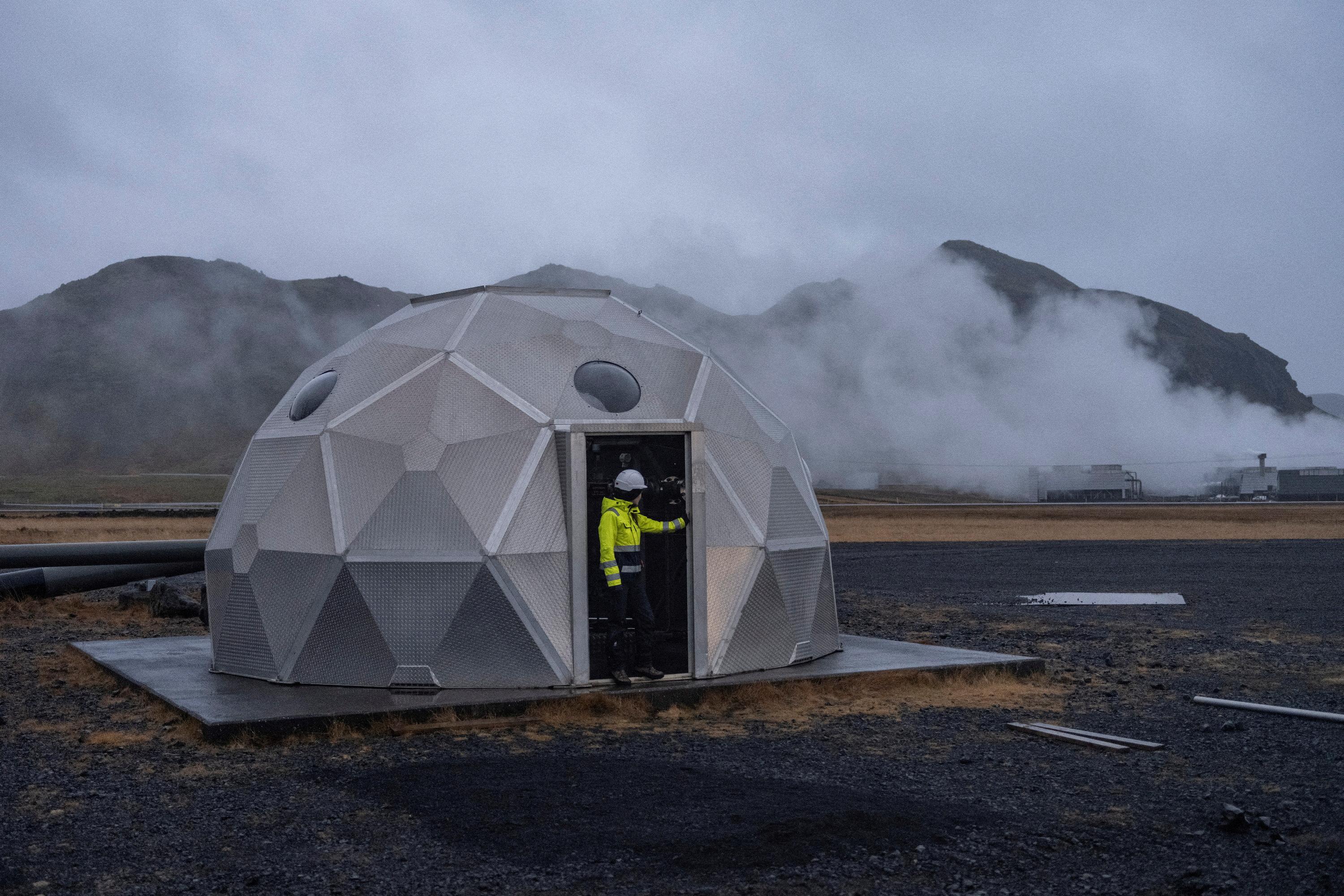
Dec 2 (Reuters) - Governments and investors are pouring billions of dollars into emerging technologies to combat global warming in long-shot bets that entrepreneurship can help lead the way to a climate-friendly world. As officials from nearly 200 countries seek to forge agreements at the U.N. COP28 climate summit in Dubai this month, they will also be considering deployment of the nascent technologies. The amount invested worldwide by venture capital and private equity into climate technology startups - in projects ranging from carbon capture and green hydrogen, to food waste reduction and cleaning up heavy industry - totaled $490 billion this year, according to a report by accounting firm PwC. While that's down 40% from 2022 as economic uncertainty, stubborn inflation and high interest rates bite, it marks a relatively healthy showing given the investments across all business sectors dropped 50% over the same period, PwC said. Here are some of the investment trends: CARBON REMOVAL The world emits around 37 billion metric tons of planet-warming carbon dioxide from fossil fuel and industry each year. One family of technologies, called carbon capture and storage, would tackle that by trapping those emissions before they reach the atmosphere, and storing them underground or using them to make products. A big question, though, is whether it can work given the costs and the amount of energy required. The International Energy Agency, the West's energy watchdog, said in November that the oil and gas industry is relying excessively on carbon capture, and called the approach an implausible "illusion". Even so, carbon removal is attracting loads of money. The United States this year, for example, announced it would grant more than $1 billion to two carbon removal projects, in Texas and Louisiana, that would suck more than 2 million metric tons of carbon emissions per year from the sky using a carbon removal technique called direct air capture. FUSION Fusion, can generate massive amounts of zero-emissions power by harnessing the energy produced from pushing atoms together, instead of splitting them apart. But the reaction is hard to produce, and harness any energy it generates to the grid. Investments in fusion slipped this year, part of the broader trend in declining venture investment. International fusion companies raised about $1.4 billion in mostly private money according to the Fusion Industry Association, down from about $2.83 billion in new investment last year. On the hopeful side for fusion, the number of companies getting investments rose to 43 from 33, spanning a dozen countries, according to the FIA, including the U.S. which has about 25 companies. Other countries pursuing fusion include Australia, China, Germany, Japan, and the UK. John Kerry, President Joe Biden's climate envoy, is expected to announce at COP28 a global strategy in nuclear fusion. GREEN HYDROGEN Hydrogen is a fuel that can be made by electrolyzing water, and which burns clean. If it is produced using renewables like wind or solar power, as opposed to fossil fuel generated power, it is called green hydrogen. If it is produced with nuclear power, its called "pink" or "purple" hydrogen. The U.S. is trying to kickstart clean hydrogen, and in October announced $7 billion in grants to seven "hydrogen hub" projects across the country. The U.S. Inflation Reduction Act also provides tax credits for hydrogen production. Governments and companies think green hydrogen could be a way to clean up hard-to-decarbonize industries like steel and cement-making and other industrial manufacturing. But like carbon removal, it is expensive and energy intense, meaning it is unclear if it is doable at scale. PwC said technologies like green hydrogen and reducing food waste have relatively high emissions reduction potential, but are receiving a small share of start-up investment. In 2023, green hydrogen got 3.9% of global climate-tech venture funding, while food waste got 0.7%, it said. OTHERS There are scores of other technologies in development that promise to be game-changers for the climate - if they survive. They include everything from lab-grown meat, to advanced batteries, to insects as a food source. Among them, lab-grown meat has made some advancements this year. In June, U.S. regulators cleared the first sales of chicken grown from cells in a vat. The meat was served in small portions at high-end restaurants. The industry says that if it manages to overcome high costs, challenges to scaling up production, and the 'ick-factor', it could revolutionize agriculture and eliminate the considerable emissions related to raising livestock. ASIA, AFRICA ON THE RISE Companies in the U.S. still get the most climate tech investment at around 49% of the global total, according to Deloitte, a professional services network. But other countries have been eating into that share. Funding in China, for example, was 22% from 2020 to 2023, up from 2% in 2010 to 2014, while it has also increased in France, the UK and India and in other countries in Asia and Africa. David Schatsky, a managing director at Deloitte, said investments in biofuels development has risen in Asia, while electric bike and motorcycle companies are doing well in Africa. "Entrepreneurship taking hold outside of the developed world has the potential to help attract more capital to these regions if an ecosystem around climate-related technologies can arise," Schatsky said. ___ For daily comprehensive coverage on COP28 in your inbox, sign up for the Reuters Sustainable Switch newsletter here. https://www.reuters.com/business/environment/can-technology-solve-global-climate-crisis-2023-12-02/