2023-12-01 19:56
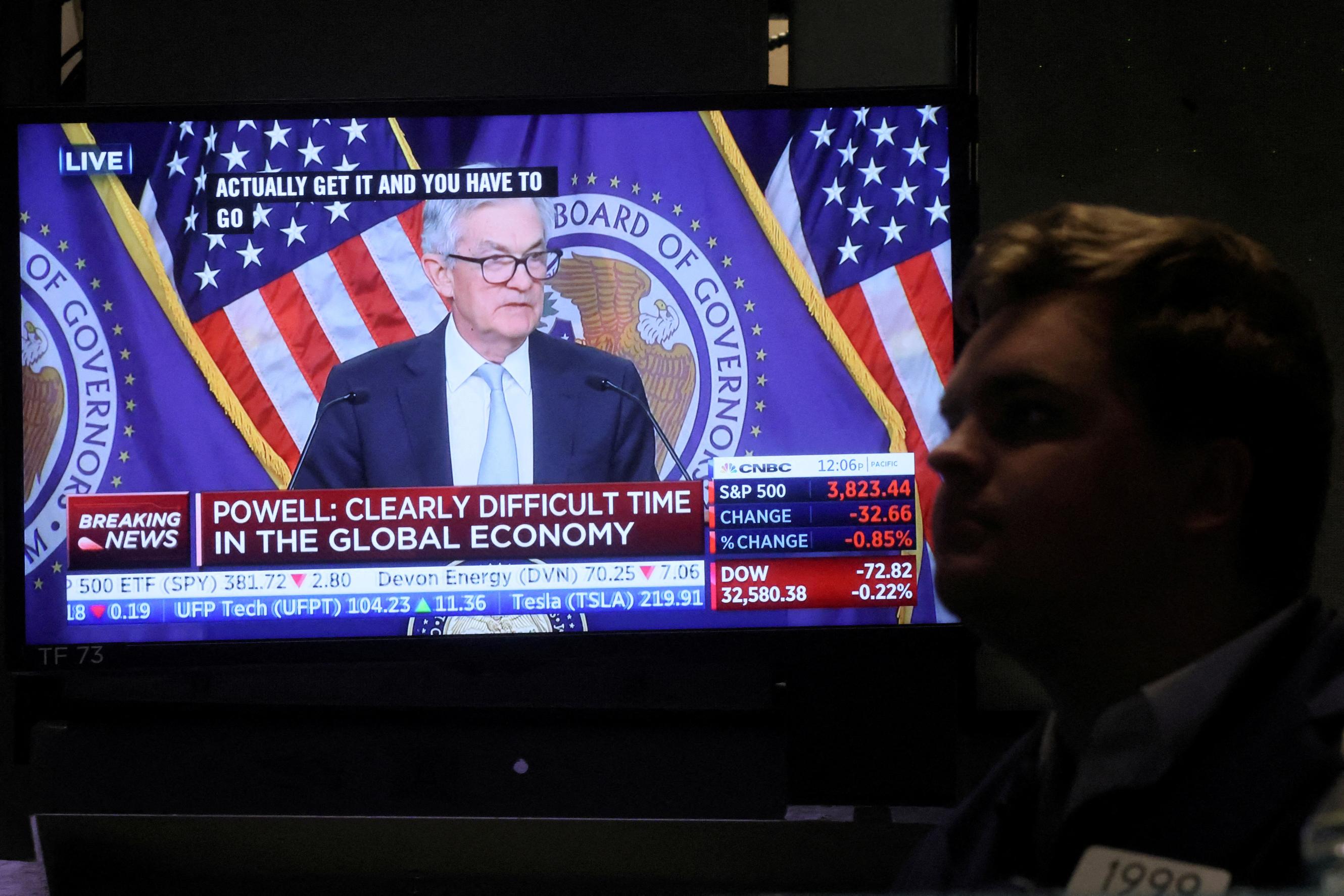
Dec 1 (Reuters) - Investors seeking justification for breathtaking rallies in stocks and bonds are finding hope in the words of Federal Reserve Chair Jerome Powell, even as the central bank insists the fight against inflation has a long way to go. Signs of easing inflation have ignited bets that the Fed will begin loosening its restrictive monetary policy earlier than expected, driving the S&P 500 (.SPX) to its biggest monthly gain for more than a year in November. Yields on the U.S. benchmark 10-year Treasury , which move inversely to prices, saw their steepest decline in more than a decade. Some investors believe Powell may have signaled an incremental shift to a more dovish outlook on Friday, when he said the risks of moving too far with interest rate hikes have become "more balanced" with those of not moving high enough to control inflation. The S&P 500 climbed nearly 0.7% and was on pace to finish at its highest closing level of the year after the comments - which were made ahead of a quiet period before the Fed’s Dec. 12-13 monetary policy meeting. Two-year Treasuries , which are sensitive to interest rate expectations, fell nearly 15 basis points to their lowest level since June. The Fed chair reiterated that the fight against inflation was far from finished and said the central bank was ready to further tighten monetary policy if necessary. “He provided balanced comments, both dovish and hawkish, and the markets are very much ignoring the hawkish comments and grabbing onto the dovish comments that the Fed is essentially done," said Paul Nolte, senior wealth advisor and market strategist at Murphy & Sylvest Wealth Management. Evidence of slowing inflation has piled up in recent weeks. On Thursday, data showed that the Fed's preferred inflation measure, the core PCE price index, eased in October, complementing other reports indicating cooling consumer prices and softer economic activity. Trader bets on Fed rate cuts starting in the first half of 2024 gained steam this week after Fed Governor Christopher Waller, an influential and usually hawkish policymaker, suggested rates cuts by then could be needed to keep policy from becoming overly restrictive in the face of easing inflation. Federal funds futures, a widely used security for hedging short-term interest rate risk, imply a Fed funds rate of 4.533% by the end of July, versus 5.121% expected three months ago for that period, according to LSEG data. Investors see a strong chance of the central bank delivering a rate cut as early as March 2024, LSEG data show. “Powell is essentially saying that inflation is coming down faster than we expected and now we can just coast and see what happens. That’s the message. And as a market participant I will always take that message as something that’s dovish,” said Ed Al-Hussainy, a senior analyst at Columbia Threadneedle Investments, who is positioning for rates to fall further. Of course, the market has misread the Fed and economic conditions several times in recent years and may be doing so again. In late 2022, for example, many expected a recession would hit this year, forcing the Fed to loosen monetary policy. The economy proved resilient while monetary policy stayed tight. “Clearly they are in a no man’s land here and the market hears what it wants to hear,” said James St. Aubin, chief investment officer at Sierra Investment Management, who runs a tactical trend-following portfolio. “Powell is trying to take a very measured approach to guidance and not giving anyone too much on one side or the other.” https://www.reuters.com/markets/us/bullish-investors-take-heart-powells-balanced-outlook-2023-12-01/
2023-12-01 19:42
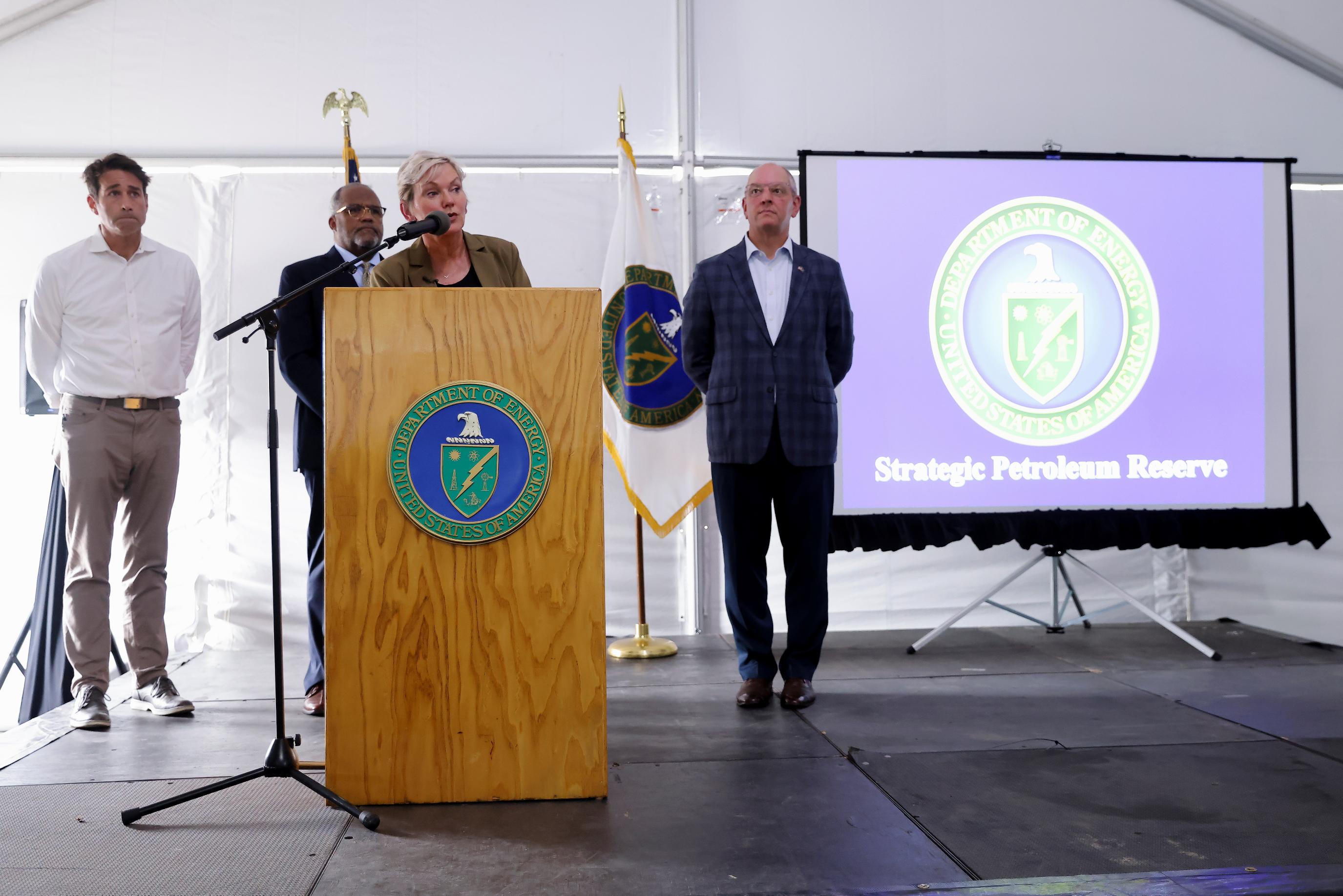
WASHINGTON, Dec 1 (Reuters) - The U.S. Department of Energy has sped up the return of 4 million barrels of oil to the Strategic Petroleum Reserve, from a previous exchange of crude to energy companies, as it seeks to replenish the stockpile after a record drawdown last year, it said on Friday. Oil companies will now return the 4 million barrels to the reserve by February instead of this summer, it said. The Energy Department said it aims to buy up to an additional 3 million barrels of oil by February for the reserve. The administration of President Joe Biden last year conducted the largest sale ever from the SPR of 180 million barrels in an effort to fight rising oil prices after Russia's invasion of Ukraine in February 2022. Since the beginning of 2023, the department said it has now bought back nearly 9 million barrels at an average price of $75 a barrel, about $20 lower than the $95 average price for last year's emergency sales. The return from the exchange means more than 12 million barrels will have been bought or returned through February, it said. The administration has a three-pronged strategy to help replenish the reserve that involves buying back oil, returning oil from previous exchanges, and working late last year to cancel congressionally mandated sales from the SPR of 140 million barrels from late 2023 through 2027. "The Administration’s ongoing three-part replenishment strategy to get the best deal for taxpayers while increasing SPR stocks is working," said Secretary Jennifer Granholm. Last year's 180-million-barrel-sale sank levels in the reserve to the lowest in 40 years, angering some Republicans who accused the administration of leaving the U.S. with a thin supply buffer to adequately respond to a future supply crisis. But Republicans in recent years had called for big sales from the reserve as domestic U.S. oil output has soared thanks to fracking and other drilling techniques. https://www.reuters.com/markets/commodities/us-speeds-up-return-oil-strategic-petroleum-reserve-energy-dept-2023-12-01/
2023-12-01 19:25
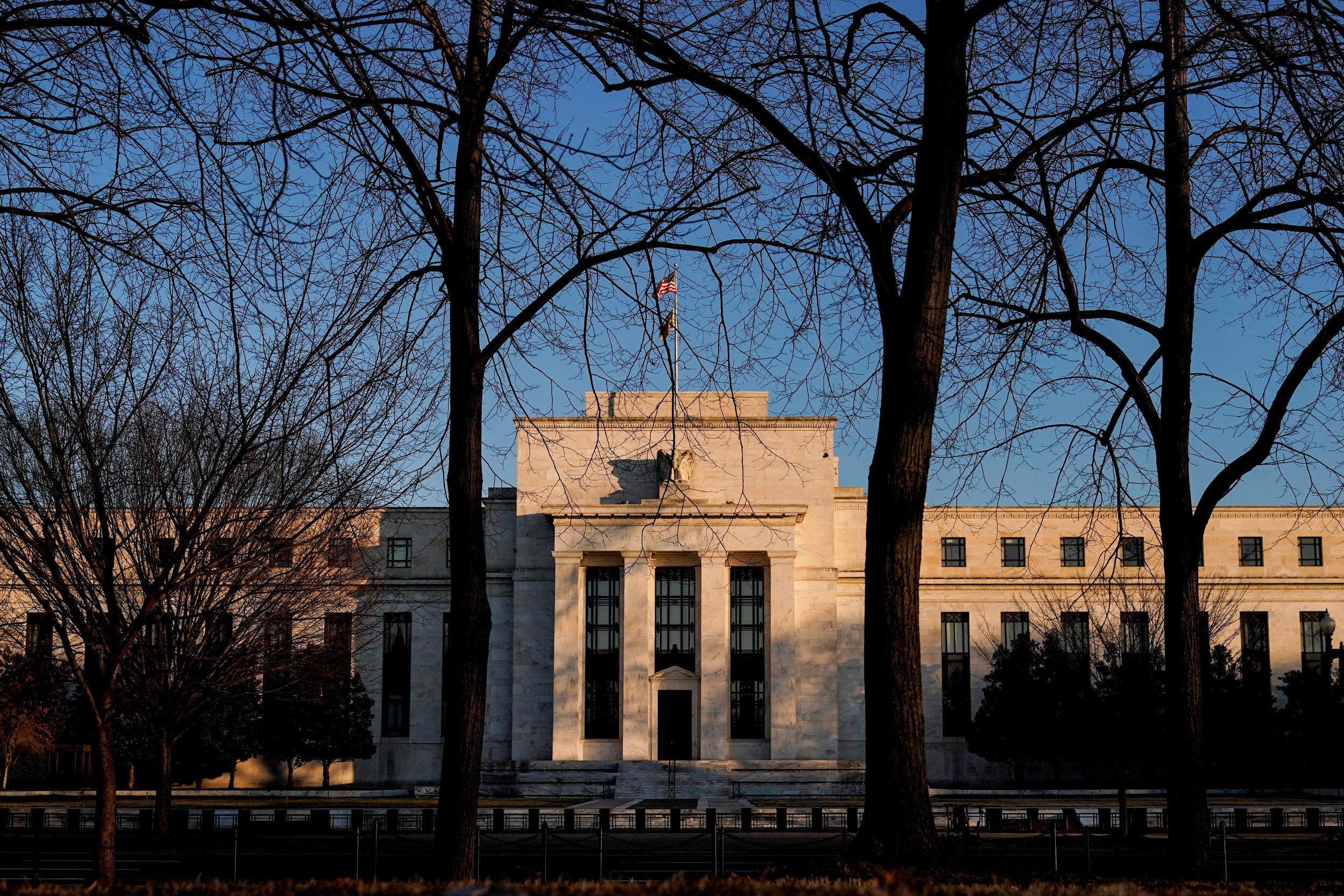
Dec 1 (Reuters) - The labels "dove" and "hawk" have long been used by central bank watchers to describe the monetary policy leanings of policymakers, with a dove more focused on risks to the labor market and a hawk more focused on the threat of inflation. The topsy-turvy economic environment of the coronavirus pandemic sidelined those differences, turning U.S. Federal Reserve officials at first universally dovish as they sought to provide massive accommodation for a cratering economy, and then, when inflation surged, into hawks who uniformly backed aggressive interest rate hikes. Now, as Fed policymakers note improvement on inflation and some cooling in the labor market, the risks are seen as more balanced and the choices more nuanced. All 12 regional Fed presidents discuss and debate monetary policy at Federal Open Market Committee (FOMC) meetings that are held eight times a year, but only five cast votes at any given meeting, including the New York Fed president and four others who vote for one year at a time on a rotating schedule. The following chart offers a look at how officials currently stack up on their outlooks for Fed policy and how to balance their goals of stable prices and full employment. The designations are based on comments and published remarks; for more on the thinking that shaped these hawk-dove designations, click on the photos in this graphic. Reuters over time has shifted policymaker designations based on fresh comments and developing circumstances - for an accounting of how our counts have changed please scroll to the bottom of this story. Note: Fed policymakers began raising interest rates in March 2022 to bring down high inflation. Their most recent policy rate hike, to a range of 5.25%-5.50%, was in July. Most policymakers as of September expected one more rate hike by the end of this year, but recently many have expressed more confidence that none will be needed. Neither Jeff Schmid, who has been the Kansas City Fed's president since August and will be a voter on the FOMC in 2025, nor Adriana Kugler, a permanent voter who was confirmed to the Fed's Board of Governors in September, have yet made any substantive policy remarks. The St. Louis Fed has begun a search to replace its former president, James Bullard, who took a job in academia; the new chief will be a voter on the policy-setting committee in 2025. Interim St. Louis Fed chief Kathleen O'Neill Paese appears to lean hawkish. Below is a Reuters count of policymakers in each category, heading into recent Fed meetings. https://www.reuters.com/markets/us/fed-hawks-doves-centrists-how-us-central-bankers-views-are-changing-2023-12-01/
2023-12-01 19:17
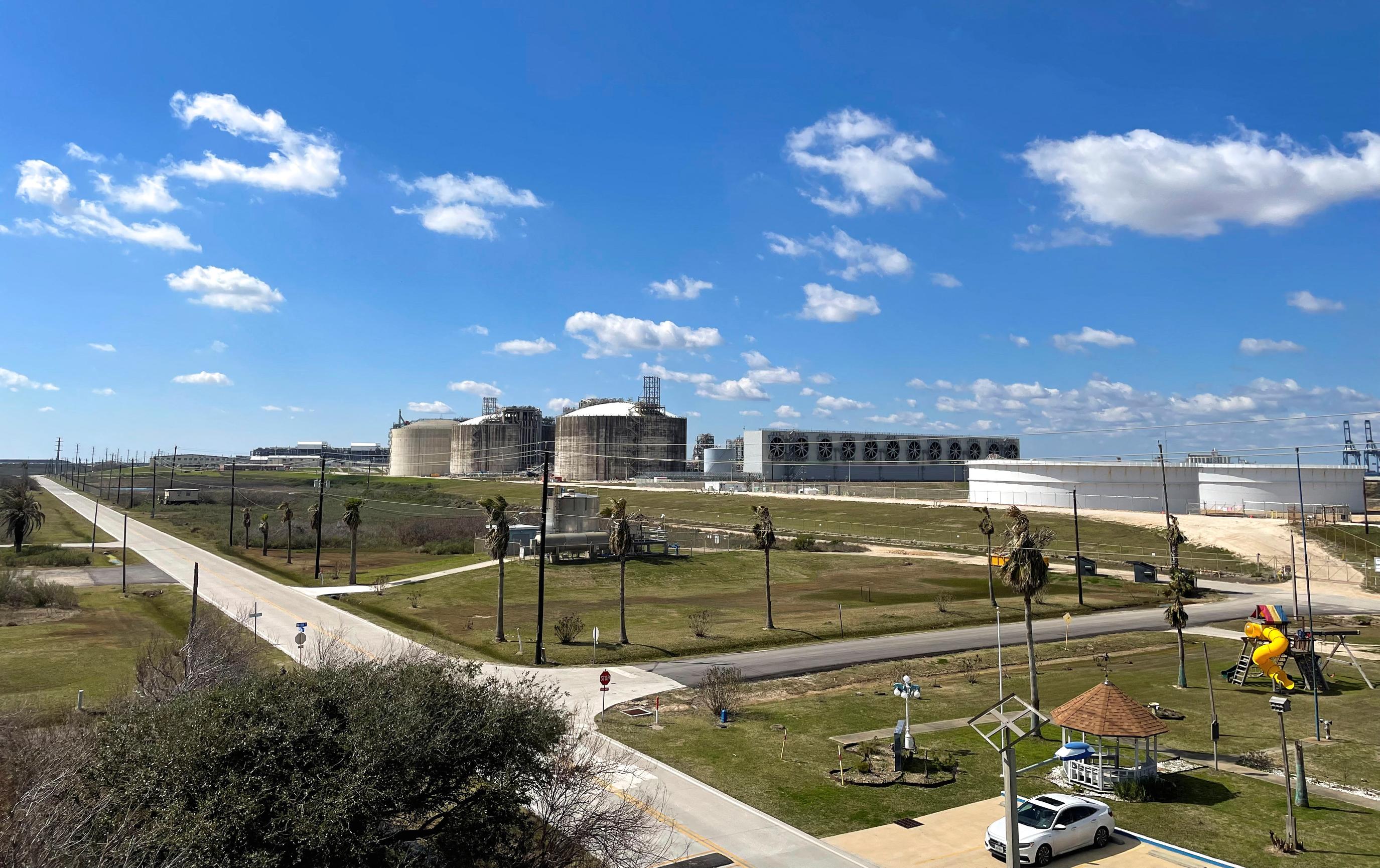
Dec 1 (Reuters) - Investors have been piling into an exchange-traded fund (ETF) designed to track U.S. natural gas prices, in spite of the commodity's dismal performance in 2023. The U.S. Natural Gas Fund's (UNG) (UNG.P) price, tied to the performance of futures contracts on the commodity, has plunged 60.7% so far this year, falling 27% in November alone. Nevertheless, the ETF has drawn inflows totaling nearly $220 million over the course of the last month, according to data from LSEG Lipper. That is the equivalent of about a quarter of the $946 million in inflows the fund saw in the first 10 months of the year. Analysts said the drop in the ETF's price came alongside a fall in the price of natural gas sparked by milder than usual weather across the United States in recent weeks. Investors betting that more typical weather patterns will kick in later in the season are likely taking advantage of the ETF's price slump, said Stacey Morris, head of energy research at VettaFi. "I think people are just playing the prices right now" in hopes that traditional seasonal pricing patterns will kick in, she said. Natural gas prices fell about 22% in November, the single largest monthly percentage drop since a 40% decline in January. Front-month gas futures for January delivery on the New York Mercantile Exchange were 0.5% higher, hitting $2.815 per million British thermal units (mmBtu)on the New York Mercantile Exchange as of early Friday afternoon. The U.S. Energy Information Administration (EIA) on Thursday said utilities added a surprise 10 billion cubic feet (bcf) of gas into storage during the week ended Nov. 24, when warmer-than-usual weather kept heating demand low. Morris noted that UNG saw big inflows in February when the commodity's price and that of the ETF had a similar swoon. https://www.reuters.com/business/energy/investors-flock-us-natural-gas-etf-despite-price-slump-2023-12-01/
2023-12-01 19:09
Manufacturing PMI unchanged at 46.7 in November New orders continue to decline, but at moderate pace Factory employment decreases as hiring slows down WASHINGTON, Dec 1 (Reuters) - U.S. manufacturing remained subdued in November, with factory employment declining further as hiring slowed and layoffs increased, more evidence that the economy was losing momentum after robust growth last quarter. The survey from the Institute for Supply Management (ISM) on Friday followed on the heels of data on Thursday showing moderate growth in consumer spending and subsiding inflation in October. Economic activity is cooling as higher interest rates crimp demand. Most economists, however, do not expect a recession next year and believe the Federal Reserve will be able to engineer the hoped-for "soft landing." Speaking during an event at Spelman College in Atlanta on Friday, Federal Reserve Chair Jerome Powell said "we are getting what we wanted to get" out of the economy. The ISM said that its manufacturing PMI was unchanged at 46.7 last month. It was the 13th consecutive month that the PMI stayed below 50, which indicates contraction in manufacturing. That is the longest such stretch since the period from August 2000 to January 2002. Some economists believed that the United Auto Workers strike, which ended in late October, continued to have an impact on the PMI. A rebound anytime soon is unlikely as manufacturers in the ISM survey mostly described inventories as bloated. "This implies the goods sector overestimated demand and production could slow further in the next few months, though that too could reflect lingering strike effects if auto parts piled up when production was idled," said Will Compernolle, macro strategist at FHN Financial in New York. Economists polled by Reuters had forecast the index creeping up to 47.6. According to the ISM, a PMI reading below 48.7 over a period of time generally indicates a contraction of the overall economy. The economy, however, continues to expand, growing at a 5.2% annualized rate in the third quarter. Three industries - food, beverage and tobacco as well as transportation equipment and nonmetallic mineral products - reported growth last month. The 14 industries reporting contraction included paper products, electrical equipment, appliances and components, computer and electronic products, machinery and miscellaneous manufacturing. Comments from manufacturers were mostly downbeat and cited the need to reduce inventory levels. Makers of computer and electronic products said the "economy appears to be slowing dramatically." Miscellaneous manufacturing firms said "customer orders have pushed into the first quarter of 2024, resulting in inflated end-of-year inventory." Producers of food, beverage and tobacco reported that "our executives have requested that we bring down inventory levels considerably, and it has started causing customer shortages." Makers of fabricated metal products said "automotive sales (are) still impacted by (the) UAW strike," adding they were "still waiting for orders to come in." The persistent decline in the PMI likely overstates the weakness in manufacturing, which accounts for 11.1% of the economy. Orders for long-lasting manufactured goods are up strongly on a year-on-year basis and factory production has held up, excluding the effects of the UAW industrial action. "We are not inclined to infer much deterioration from the ISM composite unless it clearly drifts outside of this year's range, from a low of 46.3 in March to a short-lived high of 49.0 in September," said Jonathan Millar, a senior economist at Barclays in New York. Stocks on Wall Street were trading higher. The dollar fell against a basket of currencies. U.S. Treasury prices rose. STRONG CONSTRUCTION SPENDING A separate report from the Commerce Department's Census Bureau showed construction spending rising solidly in October, fueled by single-family homebuilding. "Despite the emerging signs of a slowdown, investors should know there are opportunities in the markets," said Jeffrey Roach, chief economist at LPL Financial in Charlotte, North Carolina. "The current state of the housing market could bode well for homebuilders." The ISM survey's forward-looking new orders sub-index rose to a still-weak 48.3 last month from 45.5 in October. A measure of factory inventories remained depressed last month, but the gauge of stocks at customers increased to what the ISM described as the upper end of "just right." "Leading indicators in the report, particularly new orders and customer inventory levels, do not point to an upturn in activity in the immediate future," said Conrad DeQuadros, senior economic advisor at Brean Capital in New York. "However, neither does the report point to the pervasive weakness in manufacturing that is typically associated with recession." Prices for factory inputs were subdued, though they were no longer falling at the pace seen in prior months. The survey's measure of prices paid by manufacturers increased to 49.9, the highest reading in seven months, from 45.1 in October. Nevertheless, price pressures in the economy are subsiding. Annual inflation increased in October at its slowest pace in more than 2-1/2 years, the government reported on Thursday. Cooling inflation is fanning optimism that the Fed is probably done raising rates this cycle, with financial markets even anticipating a rate cut in mid-2024. Factory employment declined for a second straight month, with the ISM noting an increase in "attrition, freezes and layoffs to reduce head counts." The survey's gauge of factory employment dropped to 45.8 last month from 46.8 in October. This measure has not been a reliable predictor of manufacturing payrolls in the government's closely watched employment report. Manufacturing payrolls are expected to have rebounded in November as about 33,000 striking UAW members returned to work. Factory payrolls dropped by 35,000 jobs in October. Overall nonfarm payrolls are expected to have increased by 170,000 jobs last month after rising 150,000 in October, according to a preliminary Reuters survey of economists. The government is scheduled to publish November's employment report next Friday. https://www.reuters.com/markets/us/us-manufacturing-stays-depressed-november-ism-2023-12-01/
2023-12-01 18:02
ORLANDO, Florida, Dec 1 (Reuters) - Even as traders bring forward the expected timing of the Federal Reserve's first interest rate cut, the gap since the U.S. central bank's last hike will probably be one of the longest on record. Lengthy periods of economic and policy stability are surely preferable to the Fed regularly scrambling to cut rates only a few months after they have peaked, but they can foster complacency and leverage in financial markets. Monetary policy doesn't operate in isolation, and regulatory and fiscal policy influence investor behavior. But keeping rates on hold for longer risks narrowing the distribution of market expectations around growth, inflation and interest rates - essentially, complacency and groupthink creep in. That's more true when rates are kept lower for longer. But it's also a risk when they plateau for an extended period - look at what followed the longest peak policy pause on record, between June 2006 and September 2007. "Complacency leads to periods where distribution of market expectations narrows so much that when a shock comes, you can get blown out of the water," says John Silvia, founder of Dynamic Economic Strategy. There are no obvious signs of asset bubbles forming today similar to the U.S. housing market in the mid-2000s, but there is a growing optimism that the economy and markets will whether a prolonged period of peak cycle rates. The Fed last raised rates in July, and current futures market pricing has the first cut coming next May - potentially a gap of 10 months, the second longest policy "pivot" from tightening to easing since the 1950s. It would be significantly longer than the average gap of just three months over the last 18 cycles, almost double the average of 5.5 months since 1971, and still longer than the average of eight months seen over the past five cycles. Of course, the Fed could move sooner if the deterioration in the economic data merits swifter recession-fighting action. Or, it may hold off for longer if the slowdown doesn't seem too severe and inflation is not coming down as quickly as hoped. MODELS But there is a pattern forming that shows the pivot between the Fed's last rate hike in the tightening cycle to the first cut in the easing cycle is lengthening. This can be attributed to factors broadly rooted in the Great Moderation of the mid-1980s to the 2007-2009 Great Financial Crisis, the period marked by low and falling inflation, low market volatility, and longer economic expansions that reduced the need for "stop-start" monetary policy swings. To be fair to central banks too, they have gotten better at their jobs, if keeping a lid on inflation is the yardstick. Inflation targeting, more sophisticated financial markets, better and faster access to information, transparent central bank communications, and greater central bank autonomy should, in theory, help policymakers make more informed decisions. Central bankers should therefore have a greater degree of flexibility which, in theory, makes them more proactive than reactive, and better equipped to set policy for the longer term. Joe Lavorgna, chief U.S. economist at SMBC Nikko Securities America, says lengthening gaps between hiking and easing cycles only really matter to the extent that an economic "soft landing" is achieved and a nasty downturn is avoided. If the Fed is not quickly reversing course as it has frequently done in the past, there is less chance of a "stop-go" economy. Certainly, the recession that many people called almost as soon as the Fed started raising rates has not yet materialized. Every cycle is different. But perhaps the economy is more adaptable and less sensitive to interest rates today than it used to be, and maybe models that for decades guided the relationship between monetary policy and growth no longer apply as strongly. If so, everyone from policymakers to investors is kind of flying blind. "If the lags between tightening and easing are longer, it just makes it harder to predict things. Whenever the economy breaks, it moves faster than anybody thinks," Lavorgna says. (The opinions expressed here are those of the author, a columnist for Reuters.) https://www.reuters.com/markets/us/fed-policy-pivots-are-taking-longer-mcgeever-2023-12-01/