2023-11-29 11:00
LONDON, Nov 29 (Reuters) - With a rosy picture of stock and bond gains next year now the running consensus, forecasters are managing an impressive leap of faith over three main assumptions - soft economic landings, hefty interest rate cuts and above-target inflation. Too good to be true? Soft landings - at least in the broadest sense that may include moderate recession - seem a high bar after two years of brutal credit tightening. And yet, a holy grail for policymakers, such an outcome is now the glue that binds the upbeat forecasts and represents majority thinking among investors. But perhaps the greater epiphany in annual outlooks is the idea that central banks will be easing rates substantially through the year even with inflation still above 2% goals. Disinflation, but really not of the immaculate sort - as the now-tired jibe runs. For Europe's biggest asset manager Amundi, for example, U.S. and euro inflation will stay at 2.6% through next year - and remain above 2% in 2025. But it still thinks the Federal Reserve and European Central Bank will chop more than 100 basis points off rates in 2024 regardless. "Inflation will remain just above targets, but the central banks will tolerate that outcome and start to ease anyway," Amundi chief investment officer Vincent Mortier told reporters. Deutsche Bank sees U.S. inflation a bit lower at 2.1% next year, but still above target despite a forecast 'mild' recession - and it sees the Fed slashing rates by a whopping 175bps by the end of 2024. There is of course an intensely-debated and nuanced take on ebbing momentum in core inflation - a sense that post-pandemic supply-side bottlenecks are easing at last and expectations remain sufficiently in check to allow central banks to reverse. What's more, central banks can dial back borrowing rates but still leave them in relatively 'restrictive' territory above long-term averages for longer, as per their new-found mantra. And yet long-term market inflation expectations concur with the view that central banks may - quietly perhaps - just agree to live with slightly above-target inflation even as they insist otherwise - in part as a trade off for dodging painful recession. While relatively well behaved through the recent two-year inflation spike, five and 10-year inflation expectations embedded in the inflation-linked bond markets , remain at 2.2-2.3%. Five-year, five-year forward inflation-linked swaps are as high as 2.55%. The most recent Reuters poll of economists showed all 100 surveyed expect all the main measures of headline and core U.S. inflation to remain above 2% at least until 2025. And yet, 90% said the Fed was done hiking and almost 60% expected cuts to commence by midyear. In fact, almost a fifth of banks surveyed expect U.S. policy rates to be cut to below 4.0% by next December from the current 5.25-5.50%. FIGHTING THE FED? To be sure, Fed policymakers themselves don't see inflation back to target next year either - with their median core PCE gauge projection from the most recent quarterly forecasts at 2.6% through next year and still at 2.3% in 2025. But neither has the Fed, rhetorically at least, taken another hike off the table yet and is only projecting one quarter-point rate cut at most by the end of 2024. So what gives? Will almost sacrosanct central bank commitment to getting back to a promised land of 2% or lower inflation just be fudged at the last moment and quietly set aside? Goldman Sachs' U.S. economist Jan Hatzius trumpets success in supply-side dynamics that will rein central bank hawks, pointing to the fact that job openings have fallen without a significant rise in joblessness - as the so-called 'Beveridge curve' might have suggested - and allowing wage growth to ease back without a major recession. "Last year's disinflation does indeed have further to run," he said, characterising core inflation rates of 2-2.5% being 'broadly consistent' with targets but also seeing just one quarter point rate cut next year. "The most novel reason for optimism on growth is that because central banks don't need a recession to bring inflation down, they will try hard to avoid one," Hatzius wrote. And while Goldman may be one of the more cautious houses on the policy rate view, it's this hoped-for Fed pivot to the second of its mandates - to maximise employment - that likely encourages investors to look through rhetoric on a strict target. Harking back to the banking crash and recession of 2008, economists David Blanchflower - a former Bank of England policymaker - and Alex Bryson studied the best leading indicators of an oncoming recession and pointed out how Fed policymakers were wide of the mark 15 years ago. Fed meeting minutes from August 2008 suggested the central bank's next move was likely to be tightening - a month before Lehman Brothers crashed, forcing the Fed to slash rates again to 0.25% from 2% and launch an unprecedented bond buying campaign. What's more, recent renewed buzz around the so-called 'Sahm Rule' as a real-time U.S. recession indicator is well founded judging by history, Blanchflower and Bryson say, and may be a better guide to a pivot than Fed statements. Developed by Fed economist Claudia Sahm before the pandemic as a potential rule of thumb for triggering benefit payments, the formula suggests recession is underway when the three-month rolling average of the unemployment rate rises half a point above the low of the prior 12 months. Right now, it's running as high as 0.33 point - its highest in 2-1/2 years and up from near zero just six months ago. If the Fed's watching this as closely as markets seem to be now, then next week's November payrolls report may be an even bigger deal than usual and go some way to explaining some of the more aggressive rate cuts being pencilled in for next year. The opinions expressed here are those of the author, a columnist for Reuters https://www.reuters.com/markets/holy-trinity-2024-markets-that-requires-some-faith-mike-dolan-2023-11-29/

2023-11-29 10:16
HONG KONG, Nov 29 (Reuters) - Residents leaving Hong Kong for good withdrew a total of HK$2.213 billion ($283.72 million) from their Mandatory Provident Fund (MPF) pension accounts in the third quarter of 2023, up 1.7% from a year earlier, government data showed. A total of 8,700 claims were made in the July-September quarter, compared with the 8,600 claims taking out HK$2.177 billion during the same period in 2022, data from the Mandatory Provident Fund Schemes Authority (MPFA) showed on Wednesday. The number of claims was higher than the 7,300 for the April-June quarter and 6,700 claims in January-March that saw withdrawals of a respective HK$1.787 billion and HK$1.573 billion. Curbs to control the spread of COVID-19 were among the reasons for people leaving Hong Kong, which tracked China's strict zero-COVID-19 policy closely but began easing restrictions in August last year. The MPF is a compulsory retirement scheme for Hong Kong residents, with employees and their employers required to make contributions. Border checkpoints were reopened fully in February while all pandemic curbs were lifted from March 1 and authorities have been trying to restore business confidence and lure investors after more than three years of severe COVID-19 measures. The city's population increased by 152,000, or 2.1%, from the middle of last year, to 7,498,100 in June this year, marking the first significant uptick since a downward trend began in 2020 due to stringent COVID-19 measures. The Mandatory Provident Fund Schemes Authority said multiple claims for pension withdrawals are sometimes made by a single person as a scheme member may have more than one account. In the third quarter of 2023, the total number of claims - spanning all reasons including retirement - was 68,500, an increase of 18.9% from the previous quarter's 57,600 claims. ($1 = 7.7999 Hong Kong dollars) https://www.reuters.com/world/china/pension-withdrawals-by-residents-leaving-hong-kong-q3-up-17-year-2023-11-29/

2023-11-29 07:56
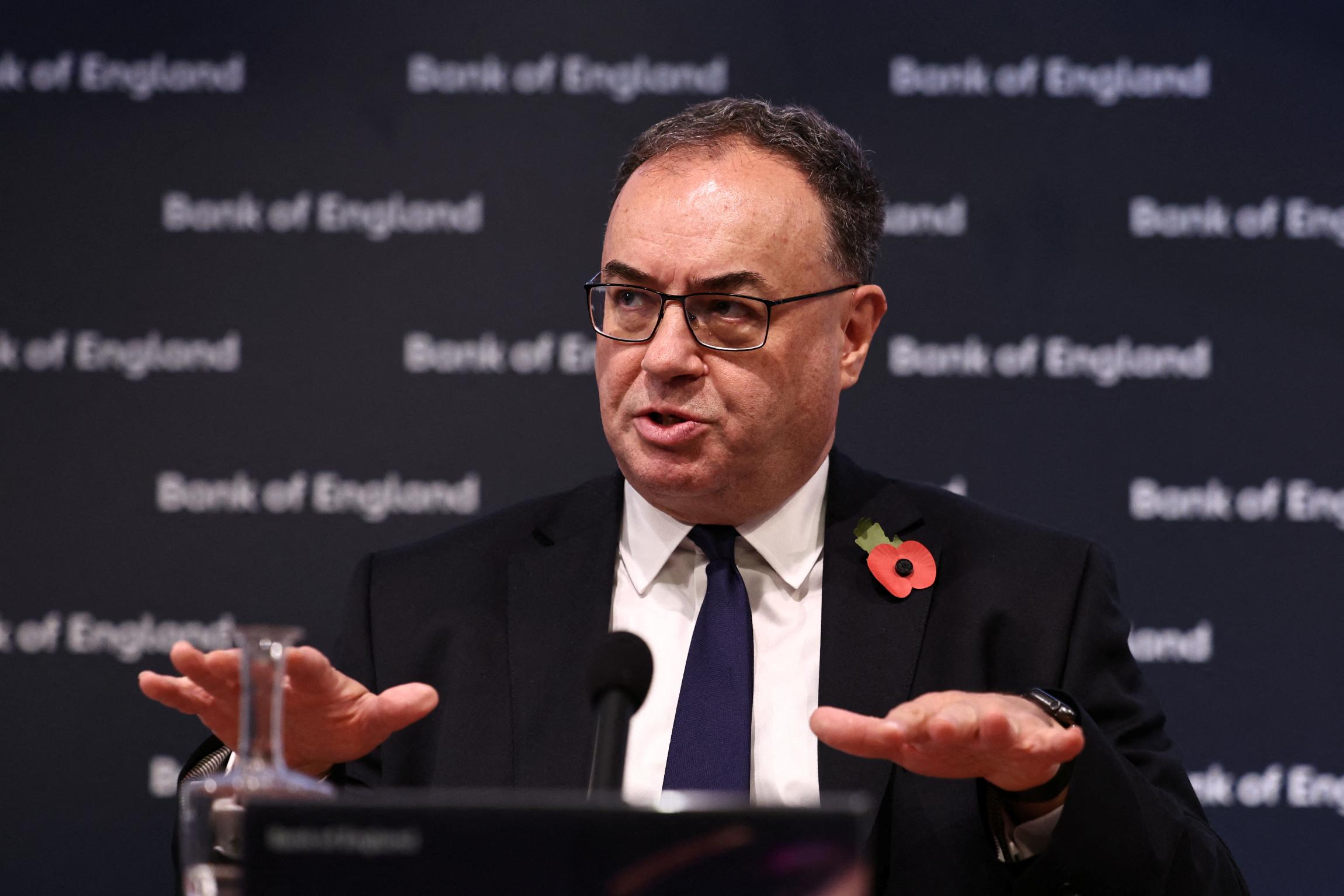
LONDON, Nov 29 (Reuters) - Bank of England Governor Andrew Bailey said on Wednesday that the central bank "will do what it takes" to get inflation down to its 2% target, adding that he had not yet seen enough progress towards that goal to be confident. Bailey and other top officials have sought to counter investor speculation about when the BoE might start to cut borrowing costs from their 15-year high after a slowing of the country's high inflation rate and signs of an economic slowdown. "Two percent is our target and we will do what it takes to get there," Bailey said in an interview with Daily Focus, a news service in central England. "We are not in a place now where we can discuss cutting interest rates – that is not happening." "We need to see how the final part of the journey down to 2% inflation plays out; we have not seen enough of that journey yet to be confident." Bailey said this week that getting inflation down to 2% will be "hard work" as most of its recent fall was due to the unwinding of the jump in energy costs last year. The central bank kept rates on hold for a second consecutive meeting this month after 14 increases in a row to tackle an inflation rate that peaked above 11% just over a year ago before falling to 4.6% last month. The country's budget watchdog downgraded its economic growth outlook for Britain last week to 0.7% for next year from the 1.8% it had estimated in March. Bailey acknowledged that there was "some weakening of economic activity," adding that it was a "realist view" not "ultra-pessimist" as some critics have alleged. "We’ve got to get on and bring inflation down to our target of 2%. That is the best thing we can do for growth in the economy – and we will do it." https://www.reuters.com/world/uk/boes-bailey-vows-do-what-it-takes-cut-inflation-2-2023-11-29/
2023-11-29 06:53
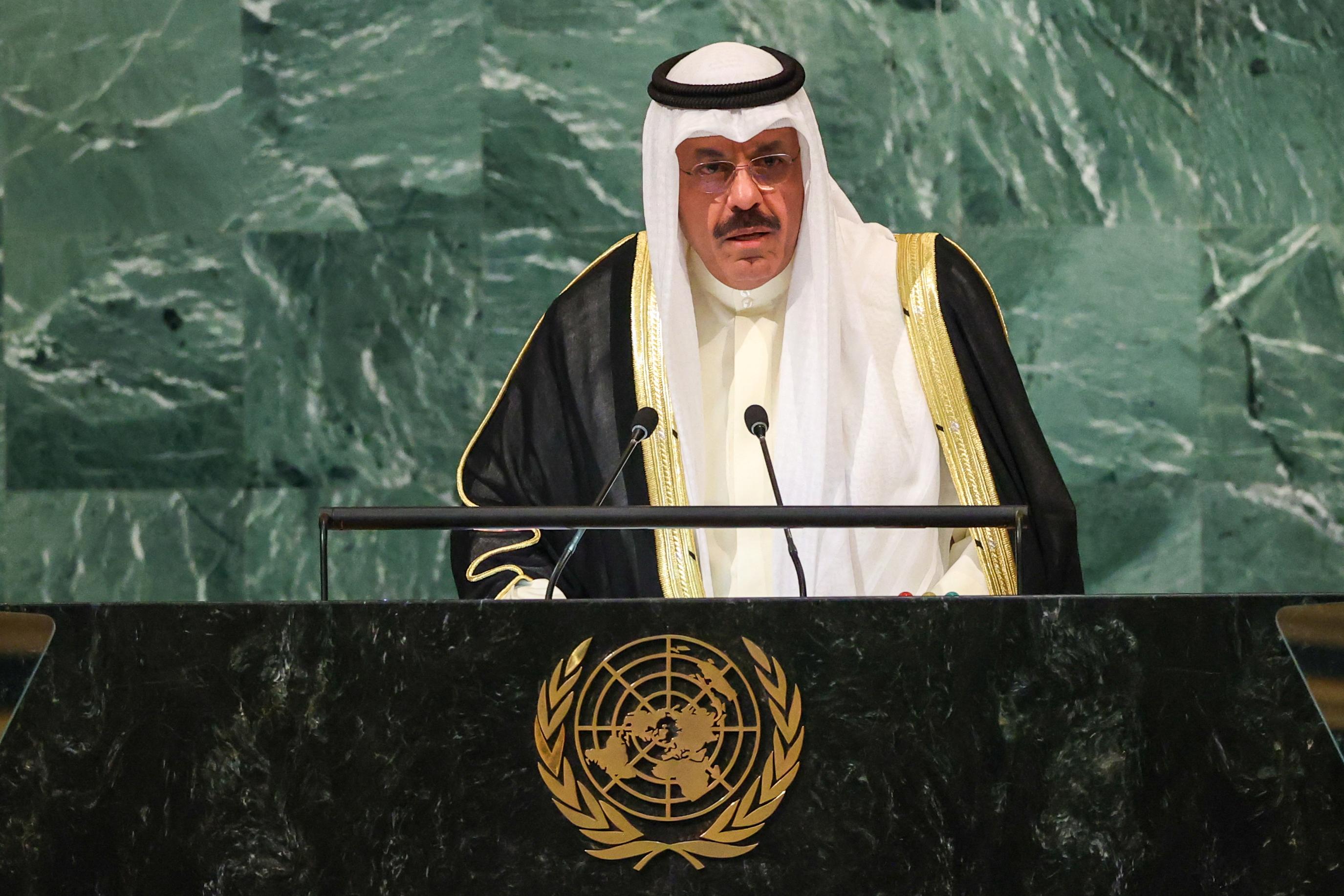
KUWAIT, Nov 29 (Reuters) - Kuwait's Emir Sheikh Nawaf al-Ahmad al-Sabah was admitted to hospital on Wednesday due to an emergency health problem and his condition is stable, the state news agency KUNA reported. https://www.reuters.com/world/middle-east/kuwaits-emir-admitted-hospital-condition-stable-state-news-agency-2023-11-29/
2023-11-29 06:53
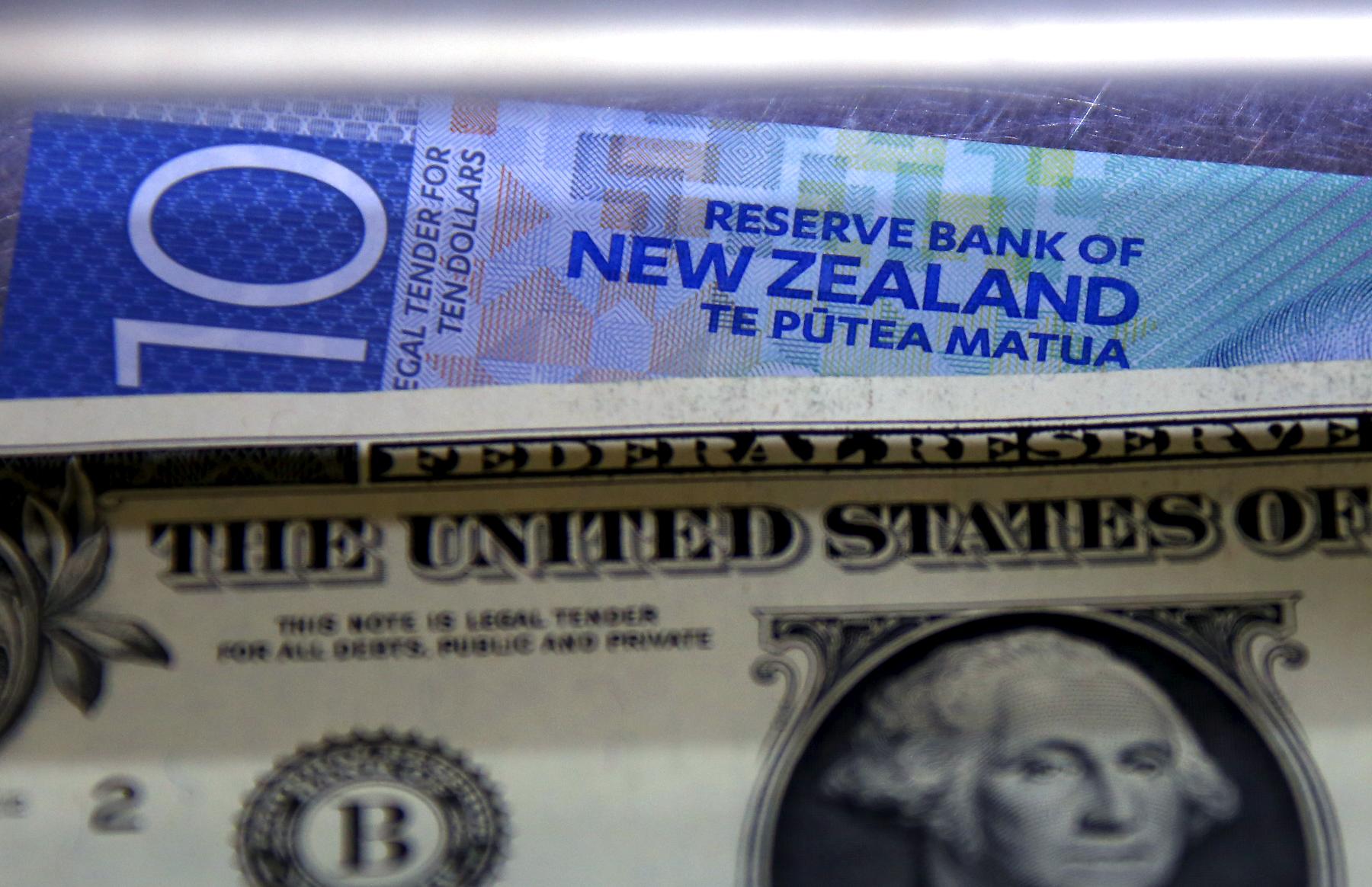
U.S. Q3 GDP rises more than expected U.S. rate cut bets for 2024 rise after GDP data German inflation slows in November New Zealand dollar rises after RBNZ rate decision NEW YORK, Nov 29 (Reuters) - The dollar climbed from more than three-month lows on Wednesday after data showing the U.S. economy grew faster in the third quarter than initially reported helped investors consolidate positions following four days of losses. The greenback rose against the euro and an index of six major peers, but remained on track to post its biggest monthly decline since November 2022 on growing expectations the Federal Reserve will cut interest rates in the first half of 2024. "Given how sharply the dollar has sold off the last few weeks, it's only natural that we could be seeing a bit of profit taking," said Paresh Upadhyaya, director of fixed income and currency strategy at Amundi US in Boston. But markets are waiting to see whether Fed Chair Jerome Powell will let stand comments by Fed Governor Christopher Waller on Tuesday flagging a possible rate cut in the months ahead. The remarks sent U.S. bond yields and the dollar sliding. "If the Fed believes that the markets misinterpreted his comments or feel uncomfortable to the degree that financial conditions have eased, there's an opportunity with Powell to set the record straight" on Friday, Upapdhyaya said. Powell is scheduled on Friday to participate in a fireside chat at Spelman College in Atlanta. The dollar rose on news that U.S. gross domestic product increased at a 5.2% annualized rate in the last quarter, faster than the previously reported 4.9%. It was the fastest expansion since the fourth quarter of 2021, the U.S. Commerce Department said in its second estimate of third-quarter GDP. Economists polled by Reuters had expected GDP growth would be revised up to 5.0%. "The GDP data helped the dollar a little bit. Investment was a little stronger, and that's a cyclical component," said Erik F. Nelson, macro strategist at Wells Fargo in London. Following the GDP data, futures increased bets of a rate cut starting in March to almost a 50% chance of easing, compared with nearly 35% late on Tuesday, the CME Group's FedWatch tool showed. In late afternoon trading, the dollar index , which tracks the U.S. currency against six others, was up 0.22% at 102.84, set for its largest daily gain in a week. Earlier in Asia, the dollar hit its lowest since early August at 102.46. The euro fell 0.17% versus the dollar to $1.0973 , pressured by inflation data from Germany showing price growth slowed to 2.3% year-on-year in November from 3% in October. Inflation in Spain also slowed sharply. The euro zone-wide inflation figure is due out on Thursday, before the Fed's preferred measure of U.S. inflation, the personal consumption expenditures index, or PCE, is released. The market's fixation on inflation will likely shift to labor data as the degree of the economic slowdown takes precedence over the pace of decelerating prices, Upadhyaya said. "Now the labor market is going be the big focus because it's the statistic that could lead to a Fed pivot from a pause to a cut," he said. New Zealand's dollar was last up 0.24% at US$0.6151, after the Reserve Bank of New Zealand held interest rates steady but warned further policy tightening might be needed. The currency had surged more than 1% earlier in the session to a four-month high of $0.6208. Japan's yen , which is particularly sensitive to U.S. bond yields, rose slightly on the day, with the dollar last down 0.09% at 147.30 after falling to a more-than-two-month low of 146.68 yen. China's onshore yuan finished the domestic session at 7.1246 per dollar, the strongest closing price since June 16. The dollar was last down at 7.1245. ======================================================== Currency bid prices at 3:35 p.m (2035 GMT) https://www.reuters.com/markets/currencies/dollar-slumps-fed-cuts-eyed-aussie-buoyant-ahead-inflation-data-2023-11-29/
2023-11-29 06:50
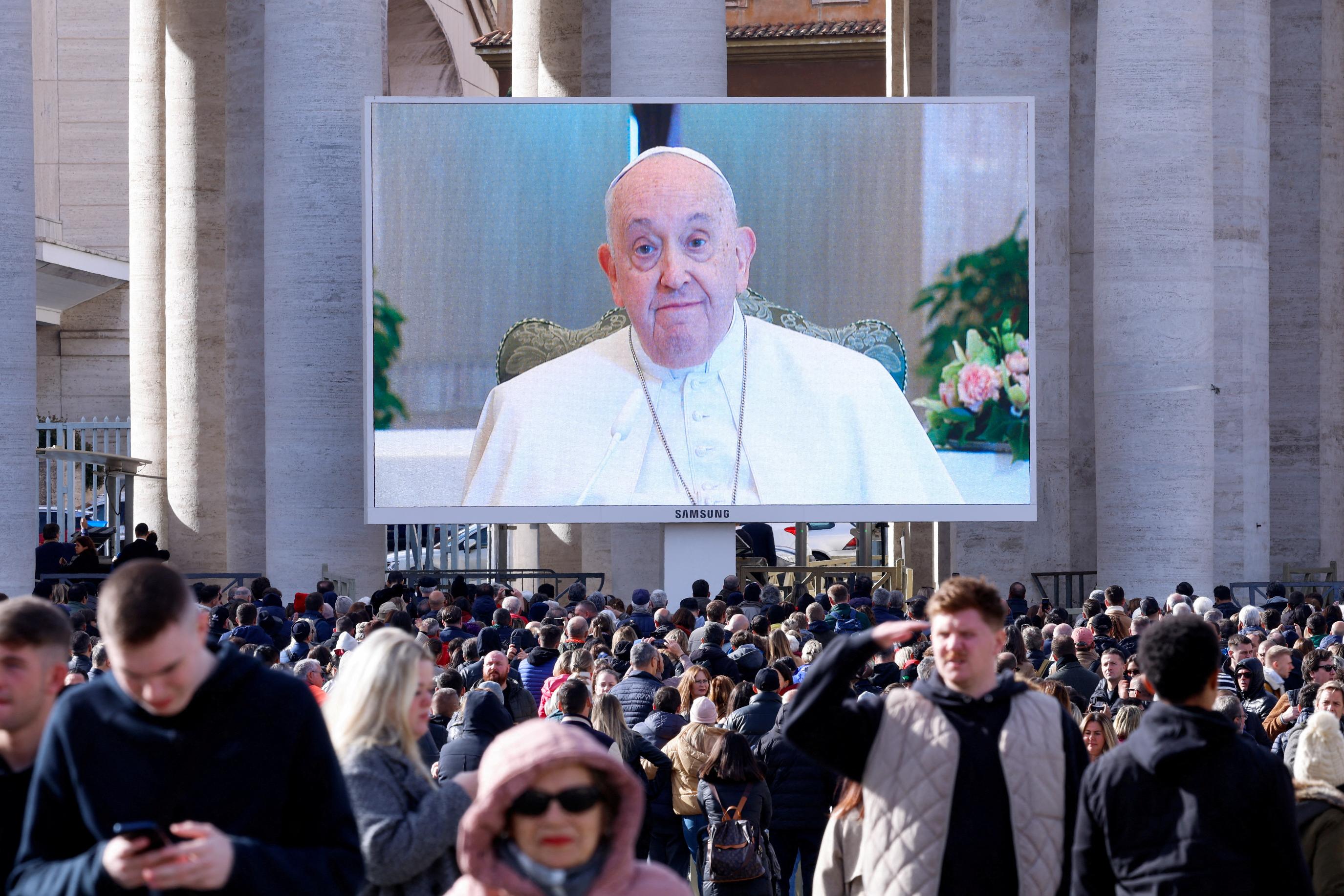
Nov 29 (Reuters) - Hundreds of Catholic institutions around the globe have announced plans to divest their finances of oil, gas and coal to help fight climate change since Pope Francis published his landmark encyclical on environmental stewardship in 2015 urging a break with fossil fuels. But in the United States, the world's top oil and gas producer and where about a quarter of the population is Catholic, not a single diocese has announced it has let go of its fossil fuel assets. U.S. dioceses hold millions of dollars of stock in fossil fuel companies through portfolios intended to fund church operations and pay clergy salaries, according to a Reuters review of financial statements. And at least a dozen are also leasing land to drillers, according to land records. The U.S. Conference of Catholic Bishops (USCCB), an assembly of the hierarchy of U.S. Catholic Church that sets policy guidance, told Reuters that its guidance on socially responsible investing was updated in 2021 to account for the pope's encyclical but confirmed that it does not require divestment from fossil fuels. Pope Francis had planned to attend the COP28 conference in Dubai this week, but canceled on Tuesday due to health concerns. The Vatican said it was weighing options to ensure a presence at the summit and Vatican sources said most likely a senior official would read the pope's speech for him in Dubai, or the pope would use a video link. "He's making another appeal," said Dan DiLeo, director of the Justice and Peace Studies Program at Creighton University in Nebraska. "This is a call and a plea for fidelity." The ongoing investments in the U.S. reflect a long-running rift between U.S. Catholic bishops and the pope on how to address global warming. The pope's Laudato Si encyclical urged immediate action against climate change, declaring that "highly polluting fossil fuels need to be progressively replaced without delay." Since then the Vatican has repeatedly, and explicitly urged Catholic institutions to divest. APSA, the department that manages the Vatican's portfolio, adheres to the policy of not investing in fossil fuels and makes "all possible checks" to ensure funds in which it has shares do not, according to a senior Vatican finance official. The Vatican bank, which is separate from APSA, also does not invest in fossil fuels, a bank official said. BIG OIL STOCK Some 354 Catholic institutions across more than 50 countries have divested of fossil fuels since the 2015 encyclical, including scores of dioceses in the UK, Ireland and Germany, according to the Laudato Si Movement, a Catholic environmental advocacy group tracking divestment. Notably absent are any dioceses in the U.S. Reuters reviewed the financial reports published by two dozen of the nation's more than 170 Catholic dioceses, including several of its largest, and found that few provide details on specific investments. The Archdiocese of Boston held over $6 million in energy stock in its Income Opportunity Fund and Collective Investment Partnership at the end of June, according to its annual reports. None of the reports identified the underlying companies, and a spokesman for the Archdiocese did not answer questions about the investments. The Boston diocese held around $2 million in gas and electric corporate bonds in another portfolio. The assets made up a small fraction of the archdiocese's roughly $240 million in total investments. Dioceses in Chicago, San Francisco and Erie, Pennsylvania, also listed energy assets, without providing details about the underlying companies. Financial reports of eight other dioceses examined by Reuters contained little or no information about which industries were represented in their investments. Reuters also examined a database of oil and gas leases in Texas and found a dozen U.S. dioceses – seven based in Texas and five from out of state – were involved in deals with drillers. The Texas dioceses included San Antonio, Austin, and Fort Worth. Erie and San Francisco dioceses also held leases. "We engage a third party to review our compliance with the USCCB guidelines, and these guidelines do not prohibit investments in fossil fuels," said Peter Marlow, a spokesman for the Archdiocese of San Francisco, in response to Reuters questions about its investments and lease deals. A spokeswoman for the Diocese of Erie confirmed it had "arrangements with two companies in Texas that provide minimal dividends, in the range of $15/year," and was seeking to have them terminated. "This effort will continue until we are successful," spokeswoman Anne-Marie Welsh said. The Archdiocese of Baltimore declined to comment on its investments but pointed to an open letter from Archbishop William Lori in October supporting the pope's message of environmentalism and listing initiatives including the archidiocese's use of solar and a program to plant 1,000 trees. Officials at other dioceses did not comment. "As a Church we need to walk the talk of Laudato Si," said Father Joshtrom Kureethadam, an official in the Vatican's Integral Human Development department, which formulates environmental policy. He called the enormous financial gains by oil companies "immoral profits." The American Petroleum Institute, which represents U.S. oil companies, said the industry was "committed to driving further innovation to accelerate global climate goals while providing the energy consumers around the world need." PRACTICAL GUIDANCE The USCCB investment guidance calls on dioceses to "consider divestment from those companies that consistently fail to initiate policies intended to achieve the Paris Agreement goals." The Paris Agreement is an international deal struck in 2015 to limit global warming to 1.5 degrees C above pre-industrial times to avert the worst consequences of climate change. "The 2021 update endeavored to provide a practical guidance for investments based on the teaching of Pope Francis," said Chieko Noguchi, a spokeswoman for the USCCB. Noguchi declined to answer follow up questions, including whether USCCB had identified any companies for divestment, or whether engaging directly in oil and gas leasing could be reconciled with the pope's call to shun fossil fuels. The USCCB's 2021 recommendations were guided by the Christian Brothers Investment Service (CBIS), a global investment manager serving Catholic investors and institutions, according to a press release issued at the time by the USCCB. The CBIS, which manages nearly $10 billion, has rejected wholesale fossil fuel divestment, arguing instead for active shareholder engagement to improve companies from within. The "Catholic Responsible Investment" funds that it offers to U.S. dioceses and other clients include major oil and gas companies like BP (BP.L), Shell (SHEL.L), Saudi Aramco (2223.SE), PetroChina (601857.SS) and ONGC India, according to LSEG data. "CBIS is leading shareholder engagements with the largest players in the oil and gas sector to influence the industry towards a transformation to a low carbon future," the investment service told Reuters. It added that it had introduced "targeted divestment from a subset of fossil fuel producers and users" that have the highest impact on carbon emissions, including those heavily involved in coal and oil sands. Sabrina Danielsen, a professor at Creighton University who has studied the engagement of U.S. bishops on the issue of climate change, said the U.S. Catholic hierarchy is rejecting the pope's calls for divestment in part because of its traditionally conservative leanings. Fewer than 1% of the more than 12,000 columns by U.S. bishops in official publications since 2014 mentioned climate change, Danielson found in a 2021 study, and many of those that did downplayed the urgency of global warming or described the topic as controversial. "I think bishops might be very afraid of upsetting politically conservative Catholics in their dioceses, and especially afraid of upsetting wealthy conservative donors," she said. The USCCB did not comment on her research. https://www.reuters.com/business/environment/defying-popes-calls-climate-action-us-catholic-bishops-cling-fossil-fuels-2023-11-29/