2023-11-29 06:13
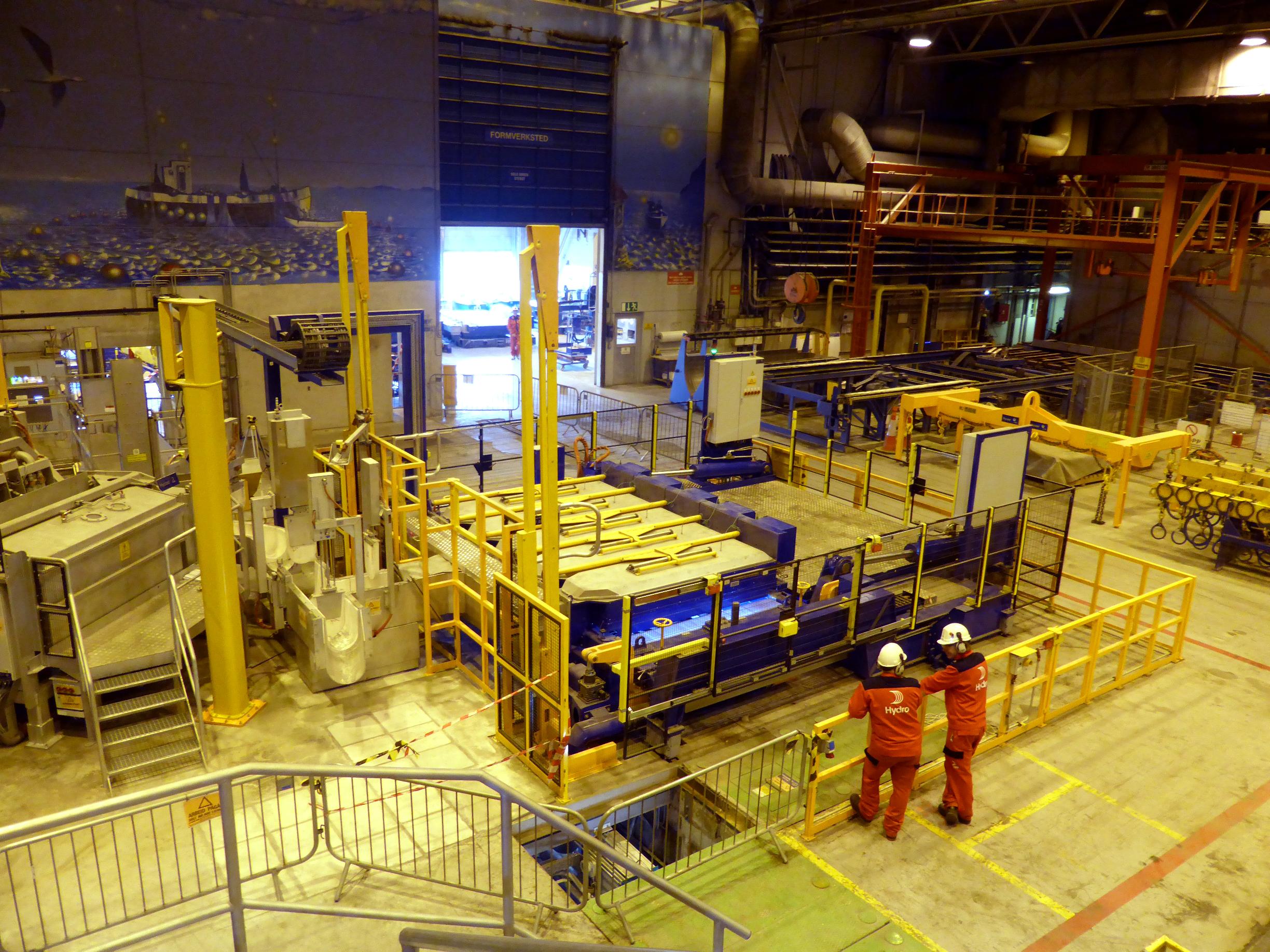
OSLO, Nov 29 (Reuters) - Norwegian aluminium maker Hydro (NHY.OL) said on Wednesday it had raised its long-term cost cutting and profit targets, but rising capital expenditure and a disappointing dividend outlook still weighed on the group's share price. Hydro in a strategy update said it was "shifting gears", raising its earnings goals for key units as it seeks to benefit from growing demand for metals made from low-emission production. "Towards 2030 we are stepping up growth ambitions in extrusions, recycling and renewable power generation aimed at capturing market opportunities emerging from the green transition," CEO Hilde Merete Aasheim said in a statement. The group, which recently secured a cash boost from a renewables venture with Macquarie Asset Management, forecast a "greener earnings uplift" of 2 billion Norwegian crowns ($188 million) per year by 2030. Shares in Hydro were down 1.4% at 1044 GMT, underperforming a 0.1% drop in the Oslo benchmark index (.OSEBX), and are down 14% year-to-date. Hydro now sees annual capex in 2024-2028 of 15 billion crowns, up from 12.5 billion forecast a year ago for 2024-2026, and plans to hand 50%-60% of 2023 profit to owners in dividends and share buybacks, compared to a 62% cash dividend for 2022. Analysts at JPMorgan in a note to clients said that although the higher long-term profit targets were positive, the 2024-2028 capex guidance was modestly higher than expected and the 2023 shareholder returns guidance below consensus. The extrusions business, which turns slabs of aluminium into car parts and other products, will aim for earnings before interest, tax, depreciation and amortisation (EBITDA) of between 10 billion and 12 billion crowns in 2030, up from 7 billion in 2022, Hydro said. The company now plans to reach annual cost reductions of 14 billion Norwegian crowns in 2030, compared to its previous target of cutting 11 billion crowns by 2027. Hydro also lifted its so-called commercial ambition from sales of low-emitting products to 6.1 billion per year by the end of this decade, up from a goal set last year of 3 billion annually by 2027. Aluminium for electric cars, refurbished electricity networks and solar panels will alone boost demand for the light-weight metal by some 15 million tonnes globally by 2030, Hydro estimated. ($1 = 10.6124 Norwegian crowns) https://www.reuters.com/markets/commodities/aluminium-maker-hydro-raises-profit-cost-cutting-goal-2023-11-29/
2023-11-29 06:10
WASHINGTON/BRUSSELS, Nov 29 (Reuters) - Delegates from nearly 200 countries will convene this week for the COP28 climate summit in Dubai, where conference host and OPEC member the UAE hopes to sell the vision of a low-carbon future that includes, not shuns, fossil fuels. That narrative, also backed by other big oil producer nations, will throw the spotlight on international divisions at the summit over the best way to combat global warming: countries are split over whether to prioritize phasing out coal and oil and gas, or scale up technologies like carbon capture to scrub away their climate impact. The annual United Nations summit from Nov. 30 to Dec. 12 is taking place as the world is poised to shatter another record for the hottest year in 2023, and as new reports confirm countries' current climate pledges are not enough to avert the worst impacts of global warming. Among the key decisions nations must make in Dubai - a gleaming high-tech city in a country awash in petrodollars - will be whether to agree, for the first time, to gradually "phase out" global consumption of fossil fuels and replace them with sources like solar, wind and others. Underscoring the rift, the International Energy Agency, the West’s energy watchdog, issued a report ahead of the conference defining its position. It called the idea of widespread carbon capture an "illusion", and said the fossil fuel industry must decide between deepening the climate crisis or shifting to clean energy. That report triggered an angry response from OPEC, which accused the IEA of vilifying oil producers. "This presents an extremely narrow framing of the challenges before us, and perhaps expediently plays down such issues as energy security, energy access and energy affordability," OPEC said in a statement. Greenhouse gas emissions from burning fossil fuels are the biggest cause of climate change. All eyes will be on the COP's incoming president, Sultan al-Jaber, whose day job as CEO of the UAE's national oil company ADNOC has led to questions of whether he can be an honest broker of a climate deal. Those concerns were further stoked on Monday after the BBC published a report based on leaked documents that said Jaber planned to discuss potential gas and other commercial deals with over a dozen governments ahead of the summit. A COP28 spokesperson told Reuters the documents were "inaccurate". "We have a world which has more fossil fuels than ever," said Ani Dasgupta, president of the World Resources Institute, a climate NGO. "What we should be looking for is a commitment to actually reduce fossil fuels." Jaber has said the phase-down of fossil fuels is "inevitable", but also argues the oil industry must be involved in the fight against climate change. He has been rallying support from companies for COP28 pledges aimed at reducing emissions from oil and gas operations. This year's gathering of 70,000 registered attendees will have more of a trade show feel than previous COPs, with organizers expecting a record 70,000 people - including the biggest participation from businesses for any U.N. climate summit yet. High profile figures like Indian Prime Minister Narendra Modi and Britain's King Charles also confirmed they will attend COP, though U.S. President Joe Biden, who has been pushing policies to decarbonize the U.S. economy by mid-century, will not. TAKING STOCK A big job for countries at COP28 will be to assess how far off track they are from meeting promises to limit global warming to 1.5 C above pre-industrial times. This process, known as the "global stocktake", should yield a high-level plan telling countries what to do to achieve that goal. It will then be up to governments to turn that global plan into national policies and targets, which they will have to submit to the U.N. in 2025. Leading up to the conference, the European Union, U.S. and UAE have rallied support for a deal to triple global renewable energy installed by 2030. Over 100 countries have backed this deal, officials told Reuters, but countries including China and India are not yet fully on board. U.S. officials and others are hopeful a recent climate deal between the U.S. and China may also set a positive tone for the talks. In that deal, the world’s two largest greenhouse gas emitters agreed to boost renewable energy and "accelerate the substitution for coal, oil and gas generation." Though that deal did not include a "phase down" of coal, a senior U.S. official said to expect a new linguistic "concoction" to capture this goal. The U.S.-China deal had called for the two to "accelerate the substitution for coal, oil and gas generation" that would lead to "meaningful" power sector emission reductions. CLIMATE FINANCE Another key task for the conference is to launch a world-first climate damage fund, dedicated to helping countries that have already suffered irreparable damage from climate change impacts like drought, floods and rising sea levels. Representatives from developed and developing countries have struck a tentative agreement on its design. All countries will review that deal and some could raise objections. That deal is not final until countries at COP28 approve it. Gayane Gabrielyan, Armenia's negotiator on the fund, told Reuters it is crucial the "loss and damage" fund agreement is approved now, ahead of elections next year in countries such as the U.S. that could shatter the political consensus. Another test is whether wealthy nations announce money for the fund at COP28 - to the tune of hundreds of millions of dollars. The EU and U.S. have already said they will contribute and are pressuring countries like China and the UAE to follow. "Speaking from previous experience, unfortunately most of the global agreements, most of the global climate related pledges went uncompleted," said Najib Ahmed, National Consultant at Somalia's Climate Ministry. “But again, we cannot lose hope.” https://www.reuters.com/business/environment/world-reckon-with-future-fossil-fuels-cop28-climate-summit-2023-11-29/

2023-11-29 06:01
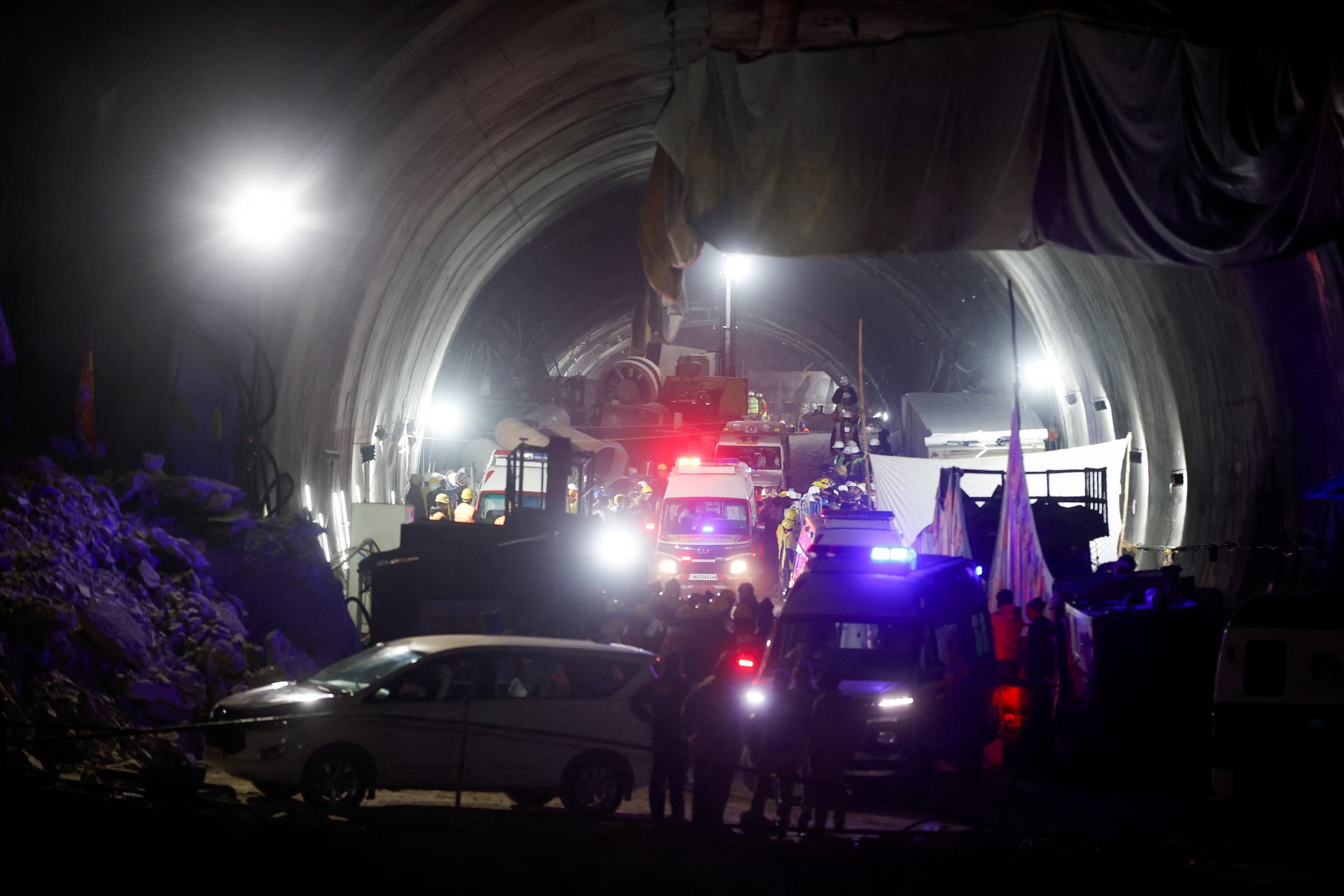
SILKYARA, India, Nov 28 (Reuters) - When heavy machinery broke down trying to break through the debris trapping 41 workers in a tunnel in the Indian Himalayas, authorities called in a group of people whose profession is effectively banned in the country - "rat-hole mining". While augur machines managed to horizontally drill through nearly three-quarters of the debris, it fell on half a dozen miners adept at burrowing in tight spaces to reach the trapped workers on Tuesday. Rescuers successfully pulled out the workers in wheeled stretchers through a wide pipe that was pushed through the debris after a 17-day ordeal. "It was a difficult task, but for us nothing is difficult," said a beaming Firoz Qureshi, one of the miners, standing with his fellow workers outside the tunnel, their faces patched with white dust after overnight drilling. The "rat miners" started working late on Monday after a second drilling machine also broke down with 15 metres out of 60 metres still left to reach the trapped men. They worked in two teams of three each, with one person drilling, the second collecting the debris and the third pushing it out of the pipe. They said they had worked for more than 24 hours. "When we saw them inside the tunnel after the breakthrough, we hugged them like they were family," said Nasir Hussain, one of the six miners. "Rat-hole" mining is a hazardous and controversial method used extensively in the northeastern state of Meghalaya to extract thin seams of coal before an environmental court in 2014 banned the practice because of environmental damage and many fatalities. Some of the miners involved in the rescue operation said they were not involved in coal mining and got their training in Delhi. The name comes from its resemblance to rats burrowing pits into the ground. The pits are sized just enough for the workers, often children, to descend using ropes or ladders to extract coal - often without safety measures and proper ventilation. At least 15 miners were killed in one such "rat hole" mine in Meghalaya after being trapped for more than a month until January 2019 - one of the many tragedies in the state where rights group say 10,000 to 15,000 have died in such mines between 2007 and 2014. The practice became illegal in the 1970s, when India nationalised coal mines and gave state-run Coal India a monopoly. Still, many small mine owners continued to employ short people or children to illegally extract coal and the federal government did not interfere, given the state's remote location and the low quality of its coal. https://www.reuters.com/world/india/rat-miners-rescue-how-trapped-india-tunnel-workers-were-saved-2023-11-28/
2023-11-29 05:33
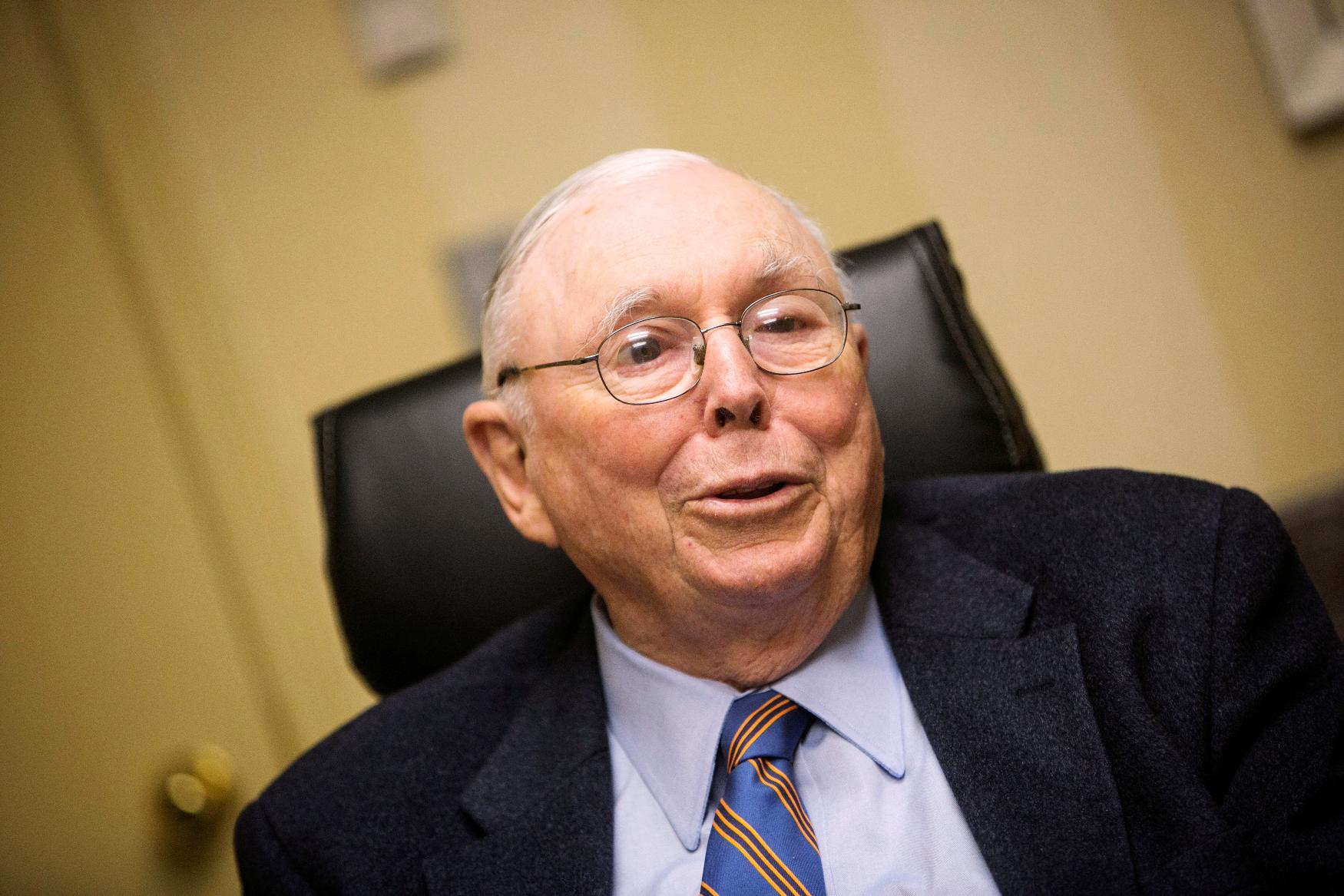
A look at the day ahead in European and global markets from Tom Westbrook An era has drawn to a close with the death of Charlie Munger, a month short of his 100th birthday. The union of Munger and Warren Buffett is among the most successful in the history of business, transforming Berkshire Hathaway into a multi-billion dollar conglomerate. Often handy with a one-liner Munger summed up his fame in 2010: "I think part of the popularity of Berkshire Hathaway is that we look like people who have found a trick," he said. "It's not brilliance. It's just avoiding stupidity." Buffet noted "Charlie's inspiration (and) wisdom" in a statement. Investors in Asia, meanwhile, took comments from erstwhile Federal Reserve hawk Christopher Waller as perhaps a signal of another era-shift, as he flagged that U.S. interest rates could be cut in the months ahead. A rally in bonds and slide in the dollar that has run for weeks in the afterglow of a benign U.S. inflation report extended in Asia in the wake of Waller's remarks. Two-year Treasury yields fell to a four-month low just below 4.70%. Ten-year Treasury yields hit a two-month low of 4.28%. Interest rate futures price more than 100 basis points of cuts next year and a 40% chance they begin as soon a March. The dollar's slide led to multi-month highs for the yen, euro, sterling and Swiss franc against the greenback and sent spot gold , in dollars, to its highest since May. German inflation data and Eurozone confidence surveys are the next major economic calendar items for traders to watch. In the Asia session Australian inflation came in below expectations, while New Zealand's central bank surprised investors with a warning that rate hikes may not be finished if price pressures do not ease. China's stockmarkets also stood out. With cheer that U.S. interest rates have peaked spreading across global markets, the MSCI index of world stocks (.MIWD00000PUS) is up 8.8% in November and heading for its largest monthly percentage gain in three years. Chinese blue chips (.CSI300) by contrast are down more than 2% this month and set for a fourth straight monthly drop. Hong Kong's Hang Seng (.HSI) is down 0.4% in November. Key developments that could influence markets on Wednesday: German and Spanish CPI, eurozone consumer confidence, Fed's beige book https://www.reuters.com/markets/europe/global-markets-view-europe-2023-11-29/
2023-11-29 04:37
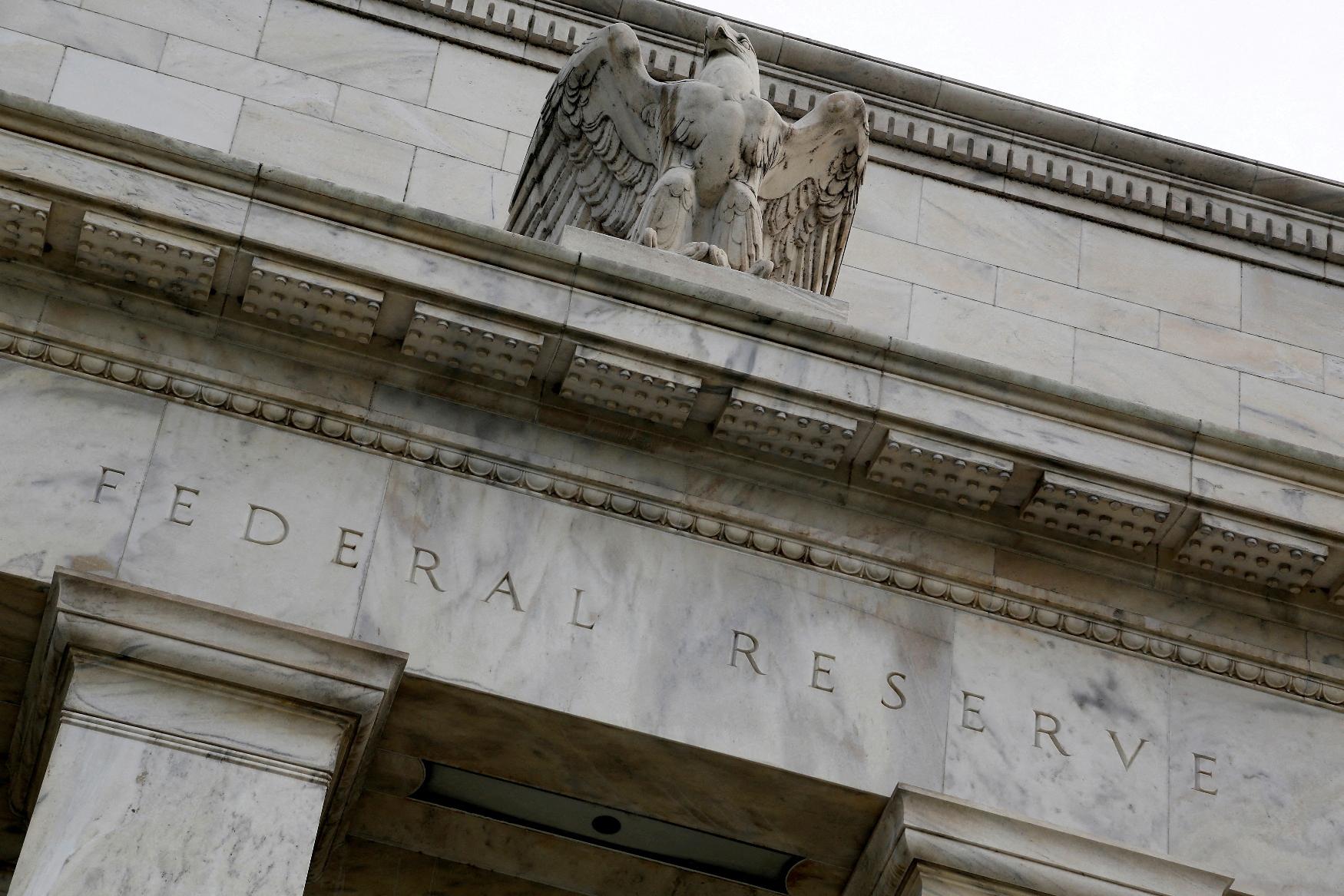
WASHINGTON, Nov 28 (Reuters) - Federal Reserve policymakers look increasingly comfortable closing out the year with U.S. interest rates on hold and the clock ticking on how soon to deliver a first rate cut as they try to engineer a "soft landing" for the economy. "Inflation rates are moving along pretty much like I thought," Fed Governor Christopher Waller, a hawkish and influential voice at the central bank, told the American Enterprise Institute think tank on Tuesday. "I am increasingly confident that policy is currently well positioned to slow the economy and get inflation back to 2%," he said, and also "reasonably confident" of doing so without a sharp rise in the unemployment rate, now at 3.9%. If the decline in inflation continues "for several more months ... three months, four months, five months ... we could start lowering the policy rate just because inflation is lower," he said. "It has nothing to do with trying to save the economy. It is consistent with every policy rule. There is no reason to say we will keep it really high." Additional Fed rate increases remain a possibility if upcoming data includes an unexpected resurgence of price pressures, he said. And an unforeseen shock could "blow up" the soft-landing scenario, he said. But overall it was a shift in tone that appeared to start a countdown on a long-expected pivot. "The reaction function to lower rates in response to lower inflation is not surprising," wrote Karim Basta of III Capital Management. "Putting a clear time frame on it is." Bond yields fell after the remarks, and traders moved to price rate cuts starting in May and dropping more than a full percentage point in 2024. The Fed held its benchmark overnight interest rate steady in the 5.25%-5.50% range at the end of its Oct. 31-Nov. 1 policy meeting, and analysts overwhelmingly expect the same outcome at the Dec. 12-13 meeting. Waller's comments included the caveats that are now standard in public appearances by Fed officials. "Inflation is still too high, and it is too early to say whether the slowing we are seeing will be sustained," he said. "There is still significant uncertainty about the pace of future activity, and so I cannot say for sure whether the (Federal Open Market Committee) has done enough to achieve price stability." This week marks the final chance for Fed policymakers to set out their views publicly before their usual pre-meeting communications blackout goes into effect. Fed Chair Jerome Powell will likely have the last word with remarks on Friday at Spelman College in Atlanta. DON NOT OVERCOOK THE TURKEY By the Fed's preferred measure, the personal consumption expenditures price index, inflation has dropped from a high of 7.1% last summer to a recent reading of 3.4%. The Fed targets 2% inflation, and policymakers chalk up the progress so far to a combination of improvements in the supply of both goods and labor after pandemic-era distortions, as well as to the restrictive effect of sharply higher borrowing costs after the Fed drove its policy rate up 5.25 percentage points over 18 months. To Chicago Fed President Austan Goolsbee, there is definitely some concern of overdoing it. "Once you believe that you are on the path to get inflation to target, then the amount of restrictiveness that you need to apply needs to be less," he said in an interview Tuesday with Marketplace. "Anybody who cooks a turkey knows that you've got to pull it out of the oven before it's to the point where you want it to be, because it's going to have residual heat." Speaking at a Utah Bankers Association meeting in Salt Lake City, Fed Governor Michelle Bowman sought to keep alive the possibility of another rate hike, raising a series of questions about the durability of progress on inflation. "My baseline economic outlook continues to expect that we will need to increase the federal funds rate further to keep policy sufficiently restrictive to bring inflation down to our 2% target in a timely way," Bowman said. But even Bowman stopped short of outright calling for a further increase in the policy rate. She said, like Waller and Goolsbee, that further Fed action will depend on economic data. New inflation data will be released on Thursday, and policymakers will also have a fresh monthly jobs report and other data in hand before they gather next month. Waller pointed to healthy recent data that have already moved in the Fed's direction, with consumer prices coming in flat in October, retail spending weakening, and a slow easing in wage growth. The job market remains "fairly tight" and bears watching, he said, while a recent drop in long-term market interest rates has tempered some of the credit tightening the Fed relies on to slow the economy. But long-term interest rates "are still higher than they were before the middle of the year, and overall financial conditions are tighter, which should be putting downward pressure on household and business spending," Waller said. https://www.reuters.com/markets/us/feds-waller-increasingly-confident-policy-is-right-spot-2023-11-28/
2023-11-29 04:23
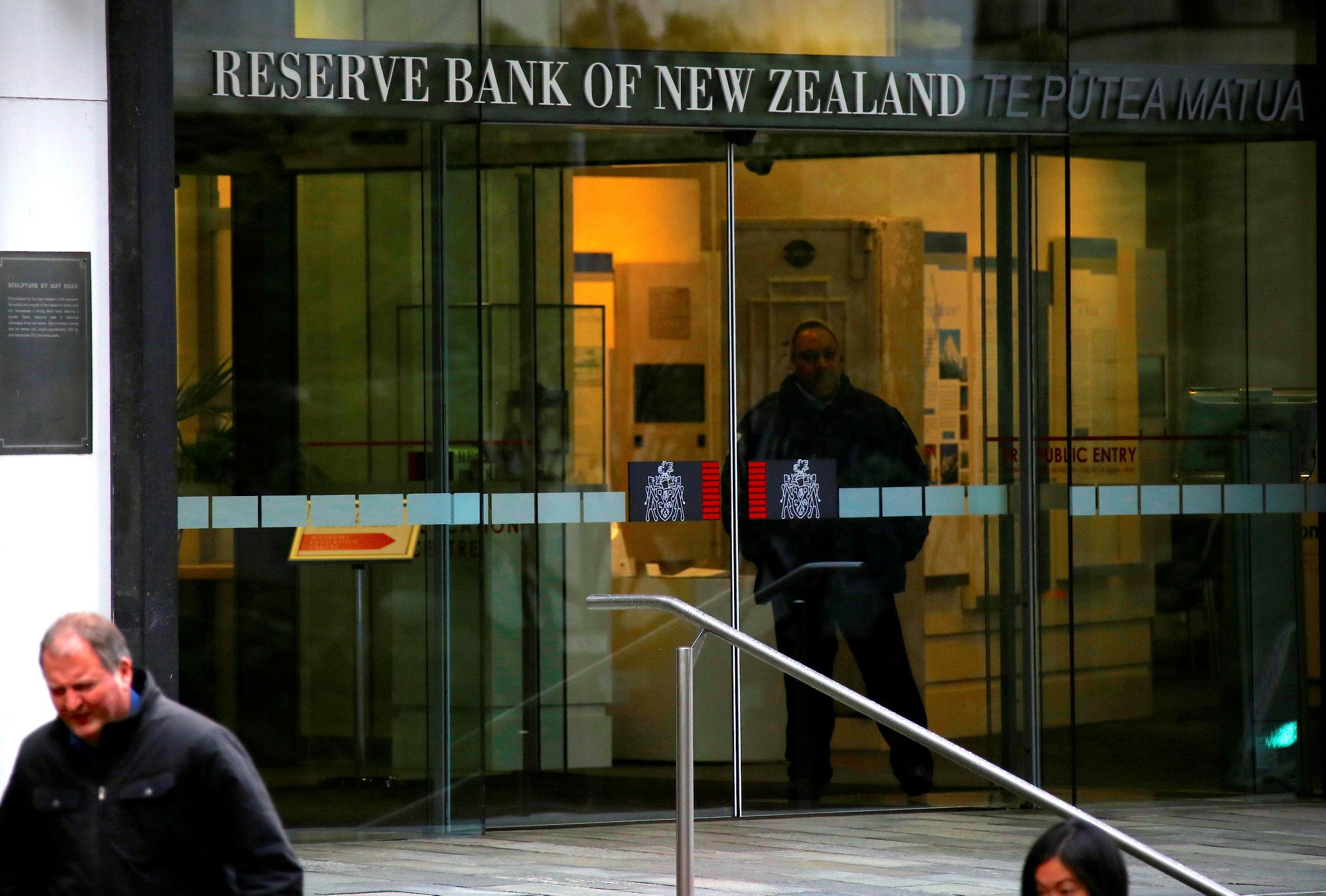
WELLINGTON, Nov 29 (Reuters) - New Zealand's central bank held the cash rate steady on Wednesday, but noted inflation remained too high and that further policy tightening might be needed if price pressures did not ease. The Reserve Bank of New Zealand (RBNZ) kept the official cash rate (OCR) at 5.5% as expected, but the hawkish tone of the statement surprised many in the market, pushing the New Zealand dollar and bond yields higher. While the central bank said it was confident the current level of rates was restrictive, persistent demand and price pressures were of concern given the elevated level of core inflation. "If inflationary pressures were to be stronger than anticipated, the OCR would likely need to increase further," it said in a statement. The RBNZ decision is the first since New Zealand elected a new government headed by Prime Minister Christopher Luxon last month, following a campaign in which the central bank came under heavy political scrutiny. The new centre-right government said on Wednesday it would start the legislative process to return the central bank to a single inflation targeting mandate in its first 100 days in office. That change would remove the requirement for the RBNZ to consider employment when setting the cash rate and focus solely on inflation. RBNZ Governor Adrian Orr told a media conference on Wednesday he had met with Luxon and new finance minister Nicola Willis on Tuesday, describing talks as "incredibly constructive" and focused. "The number one job in hand for us is to reduce inflation," he said. He added the bank had not been consulted on returning to a single mandate but expected it would be. New Zealand's annual inflation has come off in recent quarters and is currently 5.6%, with expectations that it will return to its target band by the second half of 2024. HAWKISH SURPRISE Markets and economists interpreted the central bank's commentary as hawkish. The kiwi dollar shot up 0.8% to $0.6187, two-year swap rates rose 12 basis points to 5.205% and bank bill futures down as much as 7 ticks, reflecting expectations that more rate hikes were coming. "The hawkish tilt comes despite recent data that on balance has gone the RBNZ’s way," said ANZ economists in a note. It added this might be in part a strategy to prevent the market running away with the idea that cuts are imminent, given talk of easing in other parts of the world. "But there does appear to be genuine concern that the bulk of the transmission of monetary policy is now in the rear-view mirror and core inflation and inflation expectations have not responded as hoped," ANZ said. The RBNZ raised its forecast cash rate peak to 5.7%. "Interest rates will need to remain at a restrictive level for a sustained period of time, so that consumer price inflation returns to target and to support maximum sustainable employment," the statement said. New Zealand's decision comes a day after central bankers from the UK, Australia and Spain also flagged the need for monetary policy to remain restrictive for now to defeat rampant inflation. That contrasts with far more dovish signals from the Federal Reserve, with investors now debating when the U.S. central bank might deliver its first rate cut and how soon others would follow suit. The RBNZ was one of the first central banks to withdraw pandemic-era monetary stimulus and has lifted rates by 525 basis points since October 2021 to curb inflation. It is the most aggressive tightening since the cash rate was introduced in 1999. The rate hikes have sharply slowed the economy but recent data showed it was tracking above central bank expectations. https://www.reuters.com/markets/rates-bonds/new-zealand-keeps-rates-hold-warns-hikes-may-not-be-over-2023-11-29/