2023-11-27 22:34
Nov 27 (Reuters) - New York has been awarded nearly $24 million in federal funding to strengthen and improve the state's electric infrastructure in order to minimize the effects of extreme weather and natural disasters, Governor Kathy Hochul said on Monday. The U.S. Department of Energy's Grid Resilience and Tribal Formula Grant under the Bipartisan Infrastructure Law will support projects that help ensure the reliability of the state's power sector infrastructure and access to affordable and clean electricity. The grant money will be administered over a two-year period by the New York State Energy Research and Development Authority(NYSERDA) to harden the power grid against storms, improve forecasting tools, reduce carbon emissions, and make electricity cheaper, the governor's statement said. More than half of the U.S. and parts of Canada, home to around 180 million people, could fall short of electricity during extreme cold again this winter due to lacking natural gas infrastructure, the North American Electric Reliability Corp (NERC) said earlier this month. U.S. energy regulators on Nov. 7 urged lawmakers to fill a regulatory blind spot to maintain reliable supply of natural gas during extreme cold weather that was highlighted by an inquiry into power outages during Winter Storm Elliott in December 2022. During Elliott, both electric and gas systems in much of the eastern portion of the U.S. encountered substantial stress, leading to unscheduled generation losses of roughly 90,500 megawatts, according to the inquiry. The state's grid operator last week postponed the retirement of four floating natural gas-fired power plants by two years to keep the power supply reliable in New York City. Earlier, New York Transco, a major developer of power lines, obtained permits from the state's utilities regulator for three transmission projects that would reduce grid congestion and meet clean energy requirements. https://www.reuters.com/business/energy/new-york-gets-24-mln-federal-funding-bolster-electric-grid-2023-11-27/
2023-11-27 22:08
Market awaits OPEC+ meeting postponed to Nov. 30 African nations had disagreed on supply cuts Analysts expect rollover of Saudi and Russia cuts at least US oil stocks fell by about 2 mln barrels last week - poll HOUSTON, Nov 27 (Reuters) - Oil prices fell on Monday, with the Brent benchmark dipping below $80 a barrel as investors awaited this week's OPEC+ meeting and expected curbs on supplies into 2024. Brent crude futures were down 60 cents, or 0.7%, at $79.98 a barrel. U.S. West Texas Intermediate (WTI) crude futures lost 68 cents, or 0.9%, to $74.86. Both contracts lost $1 in early trading. Last week, prices tumbled when OPEC+ - the Organization of the Petroleum Exporting Countries (OPEC) and allies including Russia - postponed to Nov. 30 a ministerial meeting to iron out differences on production targets for African producers. Since then the group, helmed by de facto leader Saudi Arabia, has moved closer to a compromise, four OPEC+ sources told Reuters on Friday. OPEC+ is looking at deepening oil production cuts despite its policy meeting being postponed to this Thursday, an OPEC+ source said on Monday. "Although there are headlines that Saudi has made progress reaching consensus, there is limited risk appetite to buy crude ahead of the formal announcement," said Rebecca Babin, senior energy trader at CIBC Private Wealth US. "Until we get clarity on how this plays out, expect crude to struggle to rally," she added. ING analysts said they expected Saudi Arabia to roll over its additional voluntary cut of 1 million barrels per day (bpd) into next year, and Russia to extend its own cuts. "Clearly, if we do not see this, it would put further downward pressure on the market," they said in a note. Estimated exports by OPEC countries have declined to 1.3 million bpd below levels in April, Goldman Sachs analysts said in a note, in line with the group's supply targets. "We still expect an extension of the unilateral Saudi and Russia cuts through at least the first quarter of 2024," the bank added. The United Arab Emirates, however, is poised to ramp up exports of Murban crude early next year, according to traders and Reuters data. Efforts by Iraq to resume northern crude exports via Turkey continue. Iraqi oil officials will meet representatives of international oil companies and Iraqi Kurdish officials in early December to discuss contract changes central to the issue, a deputy minister said. The International Energy Agency said it expects a slight surplus in global oil markets in 2024 even if OPEC+ nations extend their cuts into next year. Higher crude stockpiles in the United States have also put downward pressure on prices, analysts said. However, four analysts polled by Reuters estimated on average that crude inventories fell by about 2 million barrels in the week to Nov. 24. Meanwhile, mediator Qatar on Monday said a truce between Israeli and Hamas forces in Gaza had been extended by two days, continuing a pause in seven weeks of warfare. The Middle East crisis had impacted oil prices as investors worried about impacts on supply. Money managers cut their net long U.S. crude futures and options positions in the week to Nov. 21, the U.S. Commodity Futures Trading Commission said on Monday. https://www.reuters.com/business/energy/brent-holds-above-80bbl-ahead-opec-meeting-2023-11-27/
2023-11-27 21:51
Nov 28 (Reuters) - A look at the day ahead in Asian markets. Asian markets are lacking firm direction either way, but bulls will be hoping the combination of a weaker dollar, lower U.S. bond yields and softer oil prices on Monday will provide the impetus for a more positive session on Tuesday. Volatility across major asset classes is low - implied volatility on Wall Street is at its lowest in almost four years, global currency implied vol is the lowest since early last year, and U.S. bond vol is at a two-month low. There are few signs of market stress. But clear 'buy' signals aren't obvious either - the final trading week of November got off to a listless start, with the MSCI World and Asia ex-Japan indexes drifting 0.2% lower on Monday. On aggregate, Asian stocks have under-performed global benchmarks this year. China's markets, especially, have lagged, although Japanese stocks have outperformed thanks to the weak yen and a historic loosening of wider financial conditions. Financial conditions tightened a bit last week, according to Goldman Sachs calculations, but remain broadly supportive of risk appetite - aggregate emerging market conditions are almost 100 basis points looser than they were a month ago, in large part thanks to lower U.S. yields and a weaker dollar. Asia's economic, policy and corporate calendars are light on Tuesday. The main economic indicator will be Australian retail sales for October. Economists expect month-on-month growth to slow sharply to just 0.1% from 0.9% in September. The figures will be released just before Reserve Bank of Australia Governor Michele Bullock is scheduled to speak in Hong Kong on a panel jointly hosted by the Hong Kong Monetary Authority and Bank for International Settlements. Bullock is thought to be more hawkish than her predecessor Philip Lowe which, if true, should in theory lend support to the Australian dollar. The Aussie on Monday rose above $0.66 for the first time since Aug. 10 and was one of the biggest winners among major currencies along with the Japanese yen and New Zealand dollar. It has risen 5% in a month, broadly in line with other G10 currencies' gains against the greenback as traders have moved to price in the end of the U.S. tightening cycle and up to 100 basis points of Fed rate cuts in the second half of next year. But unlike all other G10 central banks - the Bank of Japan being the obvious exception - the RBA is not expected to ease policy in 2024. Bullock's remarks on Tuesday could shine a light on how much of an outlier the RBA will ultimately be. Here are key developments that could provide more direction to markets on Tuesday: - Australia retail sales (October) - RBA Governor Bullock speaks - Fed's Waller, Bowman, Goolsbee, Barr speak https://www.reuters.com/markets/asia/global-markets-view-asia-pix-2023-11-27/
2023-11-27 20:53
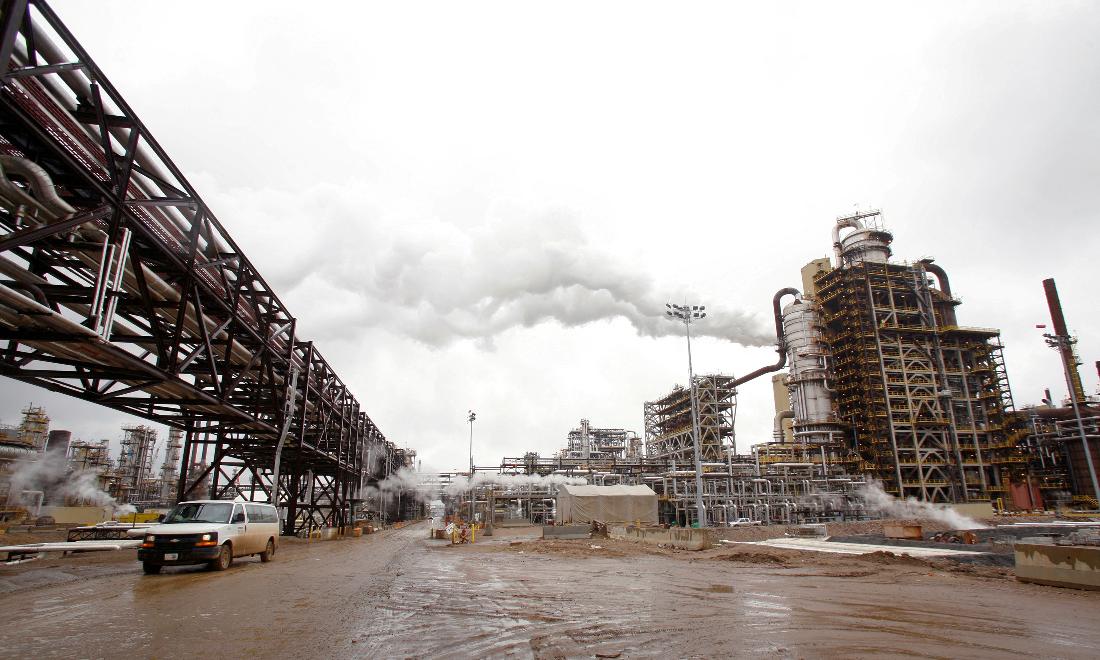
Nov 27 (Reuters) - Canadian oil sands producers will start making final investment decisions on their proposed C$16.5 billion ($12.03 billion) carbon capture and storage (CCS) project from mid-2025 onwards, the president of the Pathways Alliance said on Monday. Pathways, a consortium of the six biggest oil sands companies, plans to build a CCS hub to store emissions from 14 projects in northern Alberta. Oil sands production contributes more than 10% of Canada's total emissions, and CCS is a key part of the industry's plan to decarbonize. Some climate advocates, however, say the Pathways project, first announced in 2021, is moving too slowly to make a meaningful contribution to Canada's target of reducing emissions by 40%-45% below 2005 levels by 2030. Pathways President Kendall Dilling said the alliance expects to submit a project application to the Alberta Energy Regulator in the "next few months" and has allowed a year for the regulatory process, meaning the first final investment decisions would start in mid-2025. "We would go faster if we could but we have to work through the process with stakeholders," Dilling told Reuters in an interview. "Everything remains intact in terms of the 2030 timeline, but there's not much room for slippage." Pathways aims to be capturing and storing 22 megatonnes a year of carbon by 2030. Pathways has spent C$80 million on the CCS project and will spend possibly another C$1 billion next year, Dilling said, with most of the spending being made once the project is approved. Prime Minister Justin Trudeau's government is aiming to introduce a plan to cap oil and gas emissions by the end of this year, a regulatory move that would underpin the need for CCS in the oil sands. CONTRACTS FOR DIFFERENCE Ottawa will issue a 50% investment tax credit to support the CCS project while the Alberta government is expected to announce provincial tax credits this week, but Pathways has said a financial contract to help offset operating costs is also essential. The federal government announced last week that its Canada Growth Fund would start issuing contracts for difference, which help guarantee the future price of carbon credits, allocating up to C$7 billion to underwrite the contracts. Dilling said it was unclear whether C$7 billion would be enough to support the Pathways CCS project because of the large volume of credits it will generate, and the alliance is still in discussion with Canadian government officials on contracts for difference. The CCS project will require a 400-kilometre (249-mile) pipeline to transport captured carbon. Pathways is also consulting with Indigenous groups along its path about potential economic participation, such as taking an equity position in the project. "They are still working through whether they want to participate in that," Dilling said. ($1 = 1.3718 Canadian dollars) https://www.reuters.com/markets/carbon/canada-oil-sands-carbon-capture-project-make-final-investment-decision-mid-2025-2023-11-27/
2023-11-27 20:42
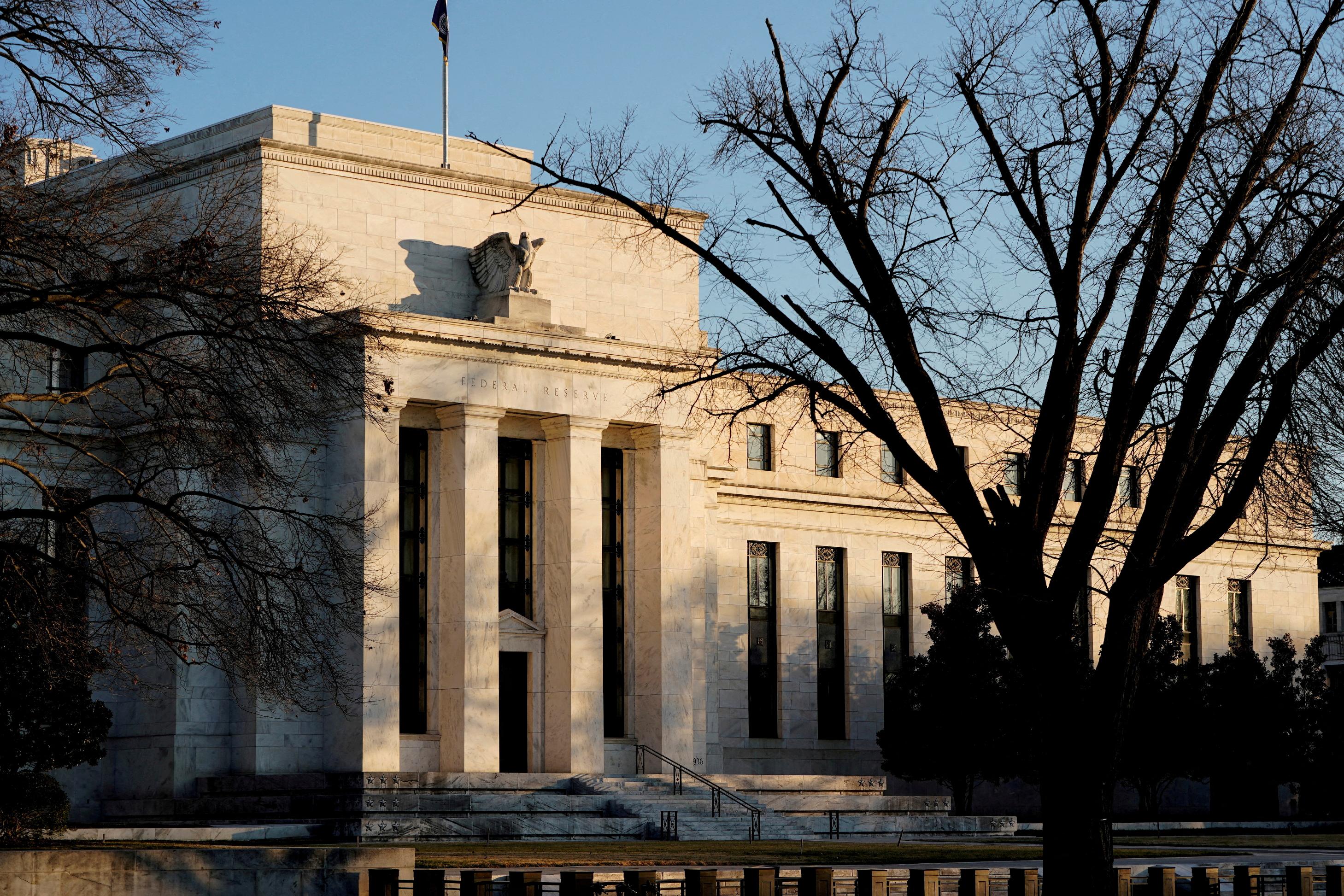
NEW YORK, Nov 27 (Reuters) - The Federal Reserve will cut rates more aggressively than markets are currently pricing in as a mild U.S. recession arrives in the first half of next year, economists at Deutsche Bank (DBKGn.DE) projected on Monday. In an outlook report, the Deutsche Bank economists projected 175 basis points in rate cuts in 2024. With the Fed rate currently at 5.25%-5.5%, that would reduce the rate to 3.5%-3.75% by the end of the year. Traders are currently pricing in a rate of 4.48% by December 2024, according LSEG data. Deutsche Bank expects two quarters of negative economic growth in the first half of 2024, which leads to a "pretty sharp rise" in the unemployment rate to 4.6% by the middle of next year from 3.9% now, said Brett Ryan, the bank's senior U.S. economist, in an interview with Reuters. “We see the economy hitting a soft patch in the first half of the year that results in a more aggressive cutting profile starting in mid year,” he said. At the same time, the bank expects that the economic weakness "eases inflationary pressures," Ryan said. In the report released on Monday, the bank said it expected a "mild recession" in the first half of 2024. DB expects an initial cut of 50 basis points at the Fed's June 2024 meeting, followed by 125 bps of additional cuts over the rest of the year. The U.S. economy so far has appeared to stave off predictions of a recession even as the Fed has hiked rates by 525 basis points since March 2022. Indeed, Ryan said, "if things firm up again going forward, the Fed would be cutting by far less." https://www.reuters.com/markets/rates-bonds/us-recession-will-prompt-175-basis-points-fed-cuts-next-year-db-economists-say-2023-11-27/
2023-11-27 20:41
Minister sees 27 billion euros in investments Italy wants to speed up works on new LNG terminals Rome also promotes carbon capture facilities ROME, Nov 27 (Reuters) - Italy on Monday approved a decree to boost its energy security and renewable power production, with the minister for ecological transition saying the package was expected to trigger 27.4 billion euros ($29.89 billion) in investments. The scheme was originally supposed to be announced in October, but it has been frozen for weeks due to internal disagreements within the ruling coalition and then scaled down in some parts. "We want to unlock the great potential of our country on renewables," Minister Gilberto Pichetto Fratin said. Among a raft of measures, the government will set aside 350 million euros per year until 2032 to fund projects aimed at overcoming local opposition against the installation of renewable plants. Rome also wants to select two maritime state-owned areas in Southern Italy that will be devoted to new off-shore wind projects. Other measures outline a framework to develop carbon capture and storage facilities (CCS), as energy group Eni (ENI.MI) and gad grid operator Snam (SRG.MI) press ahead with the set up of a CCS hub offshore the city of Ravenna. To increase supplies of natural gas, the legislation states that onshore LNG terminal projects represent "strategic interventions of public utility, non-deferrable and urgent". The provision would allow Italy to speed up work on two new onshore LNG terminals promoted by Enel (ENEI.MI) in Porto Empedocle and by Iren (IREE.MI) and Sorgenia in Gioia Tauro. Rome instead has decided to drop a plan to extend a special regime that helps households to purchase electricity from their suppliers at regulated prices, a government official said, as it was deemed as a source of potential contentious with Europe. That regime is currently set to expire in January as part of Italy's commitments to boost competition in the energy market under the post-COVID recovery plan. The decree is also not expected to include a regulation to extend concessions held by companies managing hydroelectric plants in exchange for more investments. Had it been adopted, the measure would have benefitted utilities including Enel, A2A (A2.MI) and Edison, which currently hold the concessions to manage many of the country's hydro power stations. A similar norm is however envisaged for the geothermal sector, as regional authorities may ask the holders of these business licences to propose a multi-year investment plan so as to prolong their concessions. Moreover, the decree allows territorial authorities to submit applications to host radioactive waste, in order to speed up identification of the storage areas. ($1 = 0.9168 euros) https://www.reuters.com/business/energy/italy-approves-measures-boost-energy-security-renewable-power-2023-11-27/