2023-11-27 12:01
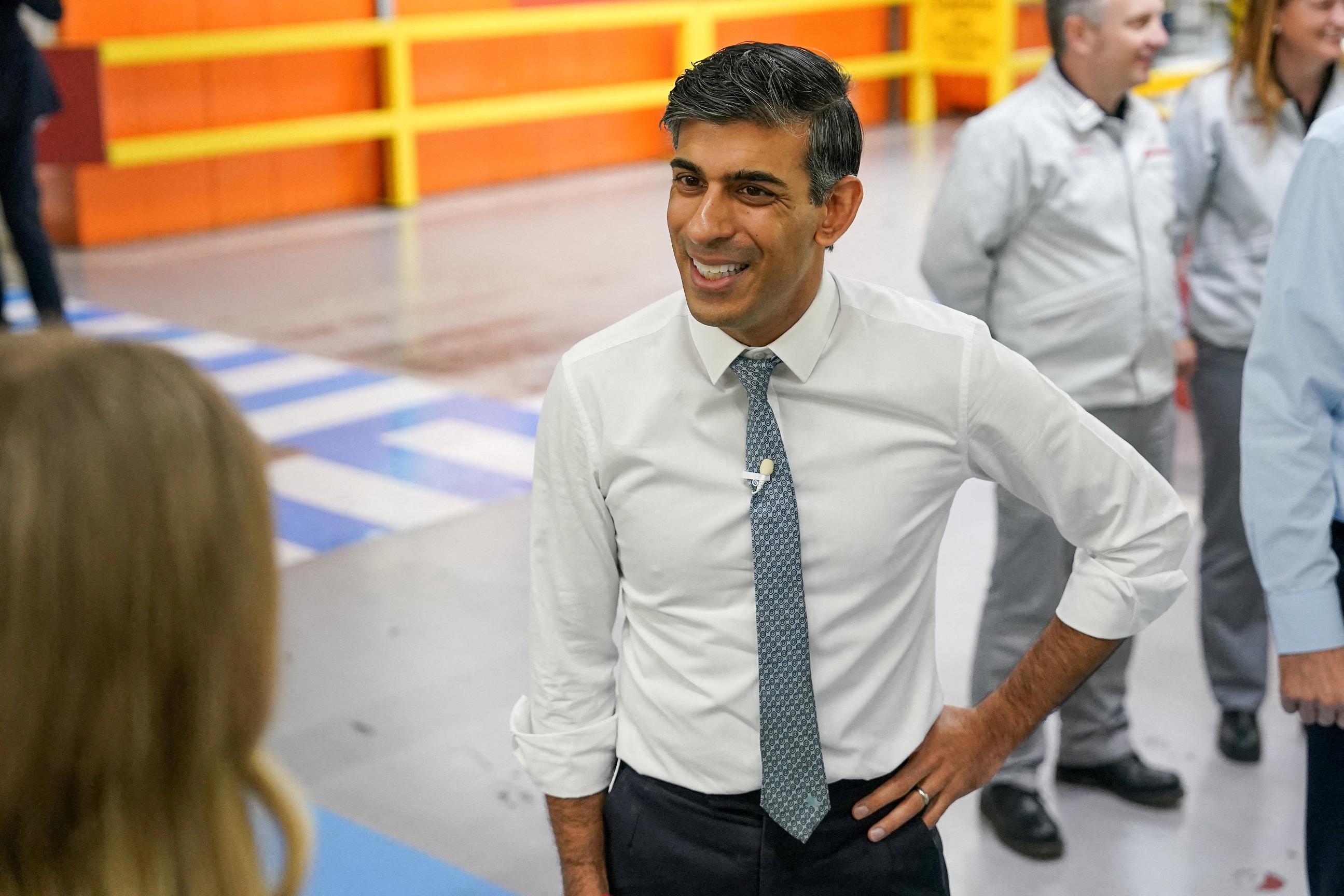
LONDON, Nov 27 (Reuters) - Prime Minister Rishi Sunak announced 29.5 billion pounds ($36.8 billion) of private sector investment in Britain at a gathering of global executives on Monday aimed at catapulting the country back to Europe's top spot as a destination for foreign money. After the government last week offered permanent tax breaks for businesses to modernise their plants and machinery, Sunak is hoping his wooing of foreign investors will help to speed up Britain's moribund economy. Australian funds IFM Investors and Aware Super will pump 10 billion pounds and 5 billion pounds, respectively, into projects ranging from infrastructure and energy transition to affordable housing, Sunak's Downing Street office said in a statement. It added that Spanish power giant Iberdrola (IBE.MC) would add 7 billion pounds to its investment plans in Britain, which include transmission and distribution electricity networks. Iberdrola said it would now be investing nearly 14 billion euros in Britain by 2028. Microsoft (MSFT.O) will also make a 2.5 billion-pound investment in artificial intelligence infrastructure. "Your decision to choose to invest in Britain is a huge vote of confidence in our country's future," Sunak said in his speech to address the investment summit at London's 16th-century Hampton Court palace. Britain, like many other countries, is seeking private sector investment to help overhaul its economy for the net-zero era and to build the kind of infrastructure that its stretched public finances cannot fund on their own. But several major investors have said the political and regulatory uncertainty triggered by the 2016 Brexit referendum vote, and the subsequent political turmoil, has diminished Britain's appeal while other countries have made themselves more attractive for foreign direct investment (FDI) flows. France has overtaken Britain as the European country with the highest number of new FDI projects. President Emmanuel Macron announced 13 billion euros ($14 billion) of investment commitments in France at a similar FDI gathering in May. Britain has emphasised the value of investments, rather than the number of projects. Sunak said new funding for industries such as clean energy, life sciences and advanced technology would create high-quality jobs across Britain. Britain's government acknowledges it needs to do more to compete as laid out by a review launched after the country missed out on some high-profile investments. Top financiers Stephen Schwarzman from Blackstone (BX.N), David Solomon from Goldman Sachs, Jamie Dimon from JP Morgan Chase and Aviva's (AV.L) Amanda Blanc were due to attend Monday's event. LAGGING UK Britain now lags France and Germany in perceived attractiveness for FDI, according to accountancy firm EY. "Despite a lot of nay-saying, people actually want to invest in the UK," business minister Kemi Badenoch told LBC radio. "They’re quite confident that this is a place where they can put their money and they will make good investments while helping us to grow our economy and deliver those jobs and wages that the people of the UK demand." Nissan (7201.T) said on Friday it would build electric cars at its plant in northeast England. Britain plans to set up a concierge service to help potential investors deal with the government, because business does not want to deal with multiple departments. "It wants to deal with one person," investment minister Dominic Johnson told Reuters, adding ministers could then have "very strong, frank discussions with the international investment community about how we can make the environment more investable". The 10 billion-pound investment plans for the UK of IFM represented an increase from an original announcement, made last year, of 3 billion pounds, while all the other projects announced by the government were new, a government official said. King Charles was due to host a reception for attendees of Monday's gathering at Buckingham Palace on Monday evening. ($1 = 0.9168 euros) https://www.reuters.com/world/uk/uks-sunak-hails-37-bln-investments-before-fdi-summit-2023-11-26/
2023-11-27 11:46
Nov 27 (Reuters) - Deutsche Bank on Monday forecast the S&P 500 (.SPX) to end next year 12% higher as it expects corporate earnings to remain resilient even if the United States experiences a mild and short recession. Deutsche Bank analysts expect the index to end 2024 at 5,100 points. The S&P 500 is up close to 19% so far this year. The bank forecast earnings for companies in the benchmark index to rise 10% after factoring in a "mild short" recession and a 19% increase if U.S. gross domestic product grows by 2%. Deutsche Bank's 2024-end S&P 500 target is 8.5% higher than the 4,700 median forecast of 33 strategists polled by Reuters. "If earnings growth continues to recover as we forecast, valuations will remain well supported around the top of the range as is typical on the pricing in of a pickup in earnings growth," the strategists said. Decline in core inflation to its pre-pandemic levels without growth having to slow could also support the benchmark index, as it would suggest the Federal Reserve would not cut rates unless a recession takes place, they added. As the effect of higher interest rates roll over, the brokerage expects a "mild" U.S. recession in the first half of next year, which it says will prompt the Fed to cut policy rates by 175 basis points. It forecasts the economy to expand by only 0.6% the year ahead. Last week, BofA Global Research said it expects the benchmark to end next year at 5,000 as macro concerns decline and the Fed puts rate hikes on hold. https://www.reuters.com/business/finance/deutsche-bank-sees-12-upside-sp-500-through-2024-end-2023-11-27/
2023-11-27 11:46
Nov 27 (Reuters) - Ancient Scythian artifacts from museums in Russian-occupied Crimea have been returned to Ukraine after a legal dispute over ownership rights during which they spent almost a decade in the Netherlands, a Ukrainian museum said on Monday. More than a thousand artifacts, including a solid gold Scythian helmet and golden neck ornament, were on loan to Amsterdam's Allard Pierson Museum when Russian troops seized and annexed the peninsula in 2014. Both Ukraine and the museums located on the Moscow-controlled territory claimed ownership rights when the exhibition ended. "After almost 10 years of court hearings, artifacts from four Crimean museums that were presented at the exhibition 'Crimea: gold and secrets of the Black Sea' in Amsterdam have returned to Ukraine. The Allard Pierson Museum handed them over to the National Museum of History of Ukraine," Ukraine's national museum said in a statement. It said the collection would be stored in the national museum until the de-occupation of Crimea. The Allard Pierson Museum said the artifacts had been returned to Kyiv on Sunday. "This was a special case, in which cultural heritage became a victim of geopolitical developments," said Els van der Plas, director of the Allard Pierson. "We are pleased that clarity has emerged and that they have now been returned." In June, the Dutch Supreme Court ruled the items should be returned to Ukraine. Kyiv sees the artifacts as part of its national heritage, while the Moscow-controlled museums said they had to return to the peninsula due to loan terms. Ukrainian customs services reported on Monday that a truck carrying "2.694 kg of cultural property" entered the 980 year-old Kyiv-Pechersk Lavra monastery complex, where a further identification process would take place. https://www.reuters.com/world/europe/scythian-artifacts-returned-ukraine-after-long-dispute-with-russia-2023-11-27/

2023-11-27 11:45
This content was produced in Russia where the law restricts coverage of Russian military operations in Ukraine MOSCOW, Nov 27 (Reuters) - The Russian central bank said on Monday it would resume interventions in the domestic foreign exchange market from January, but with an adjusted formula that analysts said would likely support the rouble. The central bank in August stopped buying foreign currency until the end of the year to avoid aggravating pressure on the rouble, which tumbled past 100 to the dollar in August and September. Capital controls have since helped it recover to 88.5. In announcing the resumption, the central bank added a crucial caveat that its interventions calculations would include the difference between FX purchases deferred from Aug. 10 to Dec. 31 and the volume of rainy day fund spending on financing the government's budget deficit for 2023. "This is very unexpected news," said CentroCreditBank economist Yevgeny Suvorov, anticipating that National Wealth Fund (NWF) expenditures would be higher than the amount of deferred purchases. "Therefore, from the start of 2024, the central bank will not buy foreign currency (that it did not buy in August-December), but will increase its sales," Suvorov said. "This is very good news for the rouble." The rouble did not react on Monday, continuing to hover near a more than five-month high it hit last week. Analysts tended to agree that the central bank would engage in net sales in early 2024. Dmitry Polevoy, head of investment at Locko Invest, estimated deferred purchases at around 1.7-1.8 billion roubles ($19-$20.1 million) and NWF expenditures on financing the budget deficit at 3.46 billion roubles. "The difference will amount to 1.65-1.75 billion roubles of net currency sales," Polevoy said. It was not yet clear over what timeframe the central bank would spread its interventions. The final calculations, to be announced in late December, will also include the net volume of NWF investments in rouble financial assets and the volume of regular operations under Russia's budget rule. Under its budget rule, Russia sells foreign currency from the NWF to make up for any shortfall in revenue from oil and gas exports, or makes purchases in the event of a surplus. The central bank conducts those operations on behalf of the finance ministry, which resumed its interventions in January after a hiatus of several months, shunning what it terms "unfriendly" Western currencies in favour of China's yuan. But on the back of recovering energy revenues, the finance ministry switched from sales to purchases in August, heaping more pressure on the rouble and causing the central bank to halt its usual mirroring of the finance ministry's operations to try and limit rouble volatility. ($1 = 89.7230 roubles) https://www.reuters.com/business/finance/russian-central-bank-resume-domestic-fx-market-interventions-january-2023-11-27/
2023-11-27 11:38
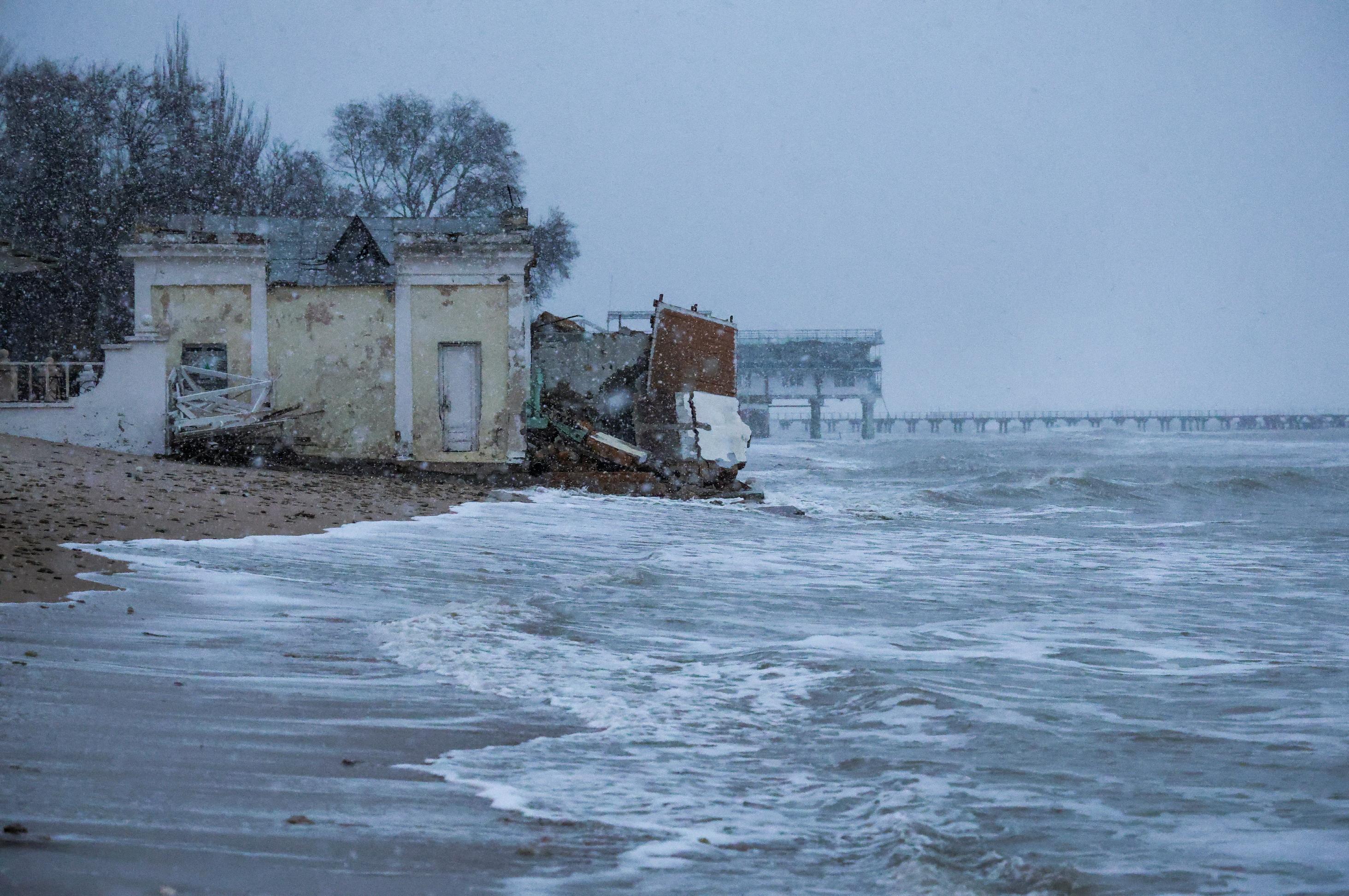
MOSCOW, Nov 27 (Reuters) - Fierce storms killed three people on the Russian and Crimean Black Sea coast on Monday, with hundreds evacuated. State news agency TASS reported that one person had been killed in the resort city of Sochi, another on the Russian-held Crimean peninsula, and a third person onboard a vessel in the Kerch Strait, which separates Crimea from the Russian mainland. Storms have been raging in the Black Sea since Friday. Video published online showed large waves sweeping over the seafront in Sochi, and carrying away cars. In the Crimean town of Yevpatoriya, streets were flooded. The Russian-installed governors of Crimea and Sevastopol, both of which Moscow seized and unilaterally annexed from Ukraine in 2014, declared states of emergency. Russia's emergency services ministry said it had evacuated more than 350 people. And the Energy Ministry said bad weather had left about 1.9 million people without electricity on Monday morning in the southern Russian regions of Dagestan, Krasnodar and Rostov, as well as Crimea and the regions of Ukraine that Russia unilaterally said it had annexed last year. In the Russian port of Novorossiysk, the Caspian Pipeline Consortium and Russia's Transneft state oil pipeline company announced a halt to loadings due to weather conditions. https://www.reuters.com/sustainability/climate-energy/three-dead-storm-hits-crimea-russias-black-sea-coast-2023-11-27/
2023-11-27 11:30
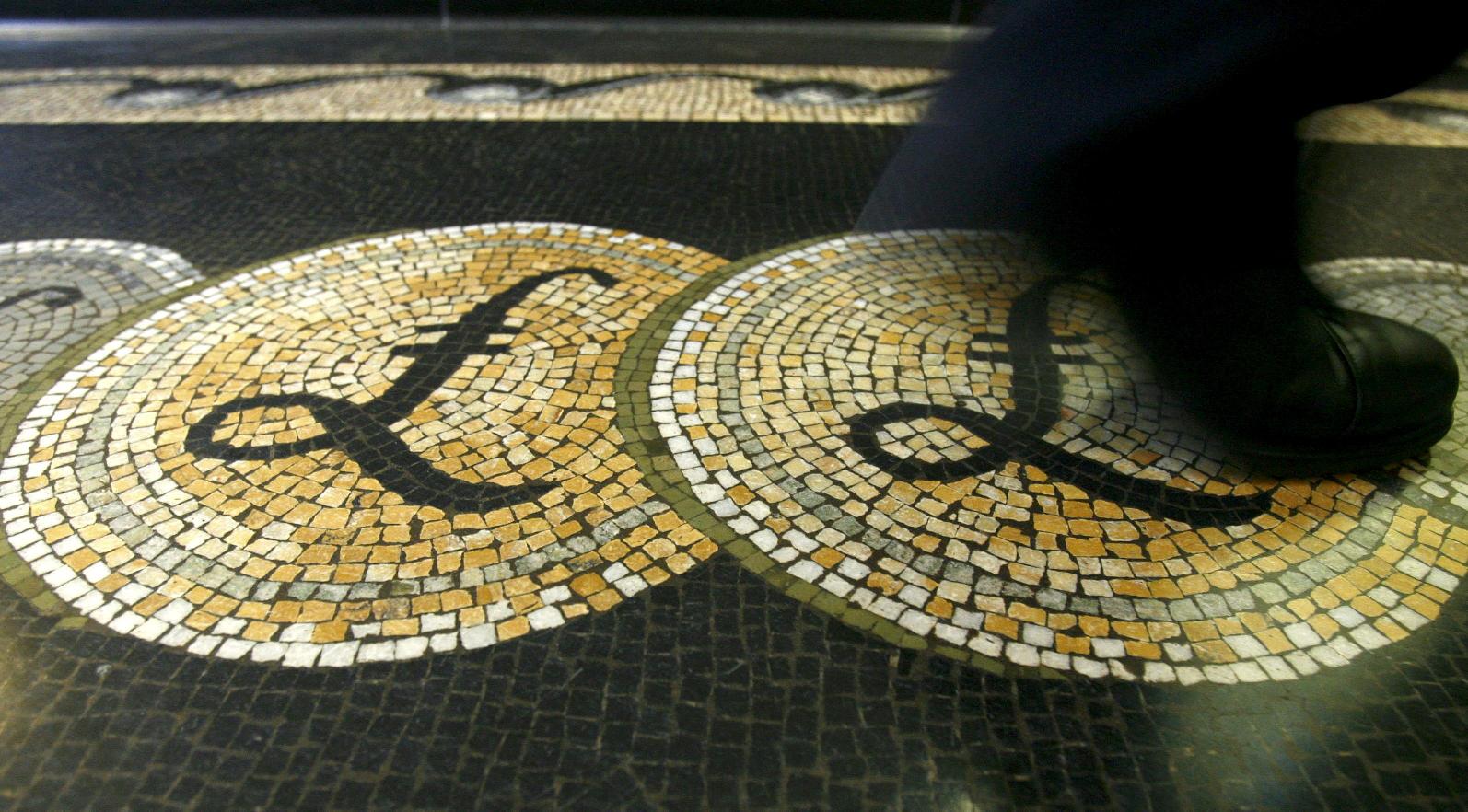
LONDON, Nov 27 (Reuters) - The pound gained for a third day on Monday and was on track for its largest monthly rise versus the dollar in a year, largely a result of investors ditching the greenback ahead of what many believe will be a rapid shift to U.S. rate cuts in 2024. Separately, in a potential longer-term boost for sterling, Prime Minister Rishi Sunak announced a raft of foreign investments in Britain ahead of a gathering of business leaders. Sterling has gained nearly 4% versus the dollar this month, but has fared less well against the euro or the Chinese yuan, with declines in November of 0.3% and 3.6%, respectively. On a trade-weighted basis, the pound is heading for its first monthly gain since June . Money market traders expect the Bank of England to keep interests higher for longer than either the Federal Reserve or the European Central Bank in 2024, which has helped give sterling an edge recently. Less than two weeks ago, traders had priced in around 70 basis points in UK rate cuts next year. Following a number of data releases including business activity and inflation, that expectation has been brought back to around 60 bps. "The developments should help to provide more support for the pound in the near-term in so far as short-term yield spreads are moving back in favour of the UK. However, we remain sceptical that the recent upward adjustment for UK rates will be sustained," MUFG strategist Lee Hardman said. Sterling was last up 0.15% at $1.2624, nearing three-month highs, and was flat against the euro at 86.77 pence. BoE Governor Andrew Bailey said in an interview published on Monday that getting inflation down to the central bank's 2% target will be "hard work" as most of its recent fall was due to the unwinding of the jump in energy costs last year. "Governor Andrew Bailey already seems to be playing around with language on forward guidance, where restrictive monetary policy will be retained for an 'extended period' or, most recently, 'for quite some time'," ING strategist Chris Turner said. SUNAK FLAGS INVESTMENT Meanwhile, Sunak, who is hosting global executives this week outside London in his bid to restore the country as Europe's top foreign direct investment (FDI) destination, announced 29.5 billion pounds ($36.76 billion) of private-sector investments in Britain on Monday. Years of political churn - with five prime ministers and a non-stop ministerial carousel since the 2016 Brexit vote - have shaken Britain's reputation for stability among investors. Accountancy firm EY estimates total FDI projects into Britain fell by 6.4% to 929 last year, putting it second in Europe behind France on 1,259. It slipped to third for perceived attractiveness, behind Germany and France. Britain has changed course on key policies including its rate of corporation tax, its net zero timetable, a major high-speed rail project and its offshore and onshore wind policies. In a note earlier this month, Deutsche Bank head of G10 currency strategy Alan Ruskin laid out the extent to which FDI has declined in Britain. Net FDI flows as a percentage of gross domestic product is running at -3.5% in the UK in the fourth quarter. This isn't the biggest net outflow among the world's wealthiest economies - that goes to Sweden with -3.8%. But it is the worst relative to its 10-year average of a net inflow of 1.7%. This includes Russia, where net FDI flows as a percentage of GDP are averaging -1.2% in the fourth quarter versus a 10-year average of -0.6%, according to Deutsche Bank's numbers. "Relative to trends over the past two decades, the UK has shifted from a sizable net recipient of FDI to a net exporter," Ruskin said in a note dated Nov 13. "There is now some persistence to the net FDI deficit over the last three years and weaker FDI project numbers since 2017, that will add to concerns that they relate to Brexit." https://www.reuters.com/markets/currencies/pound-gets-lift-rate-outlook-sunak-heralds-fdi-boost-2023-11-27/