2024-08-14 19:10
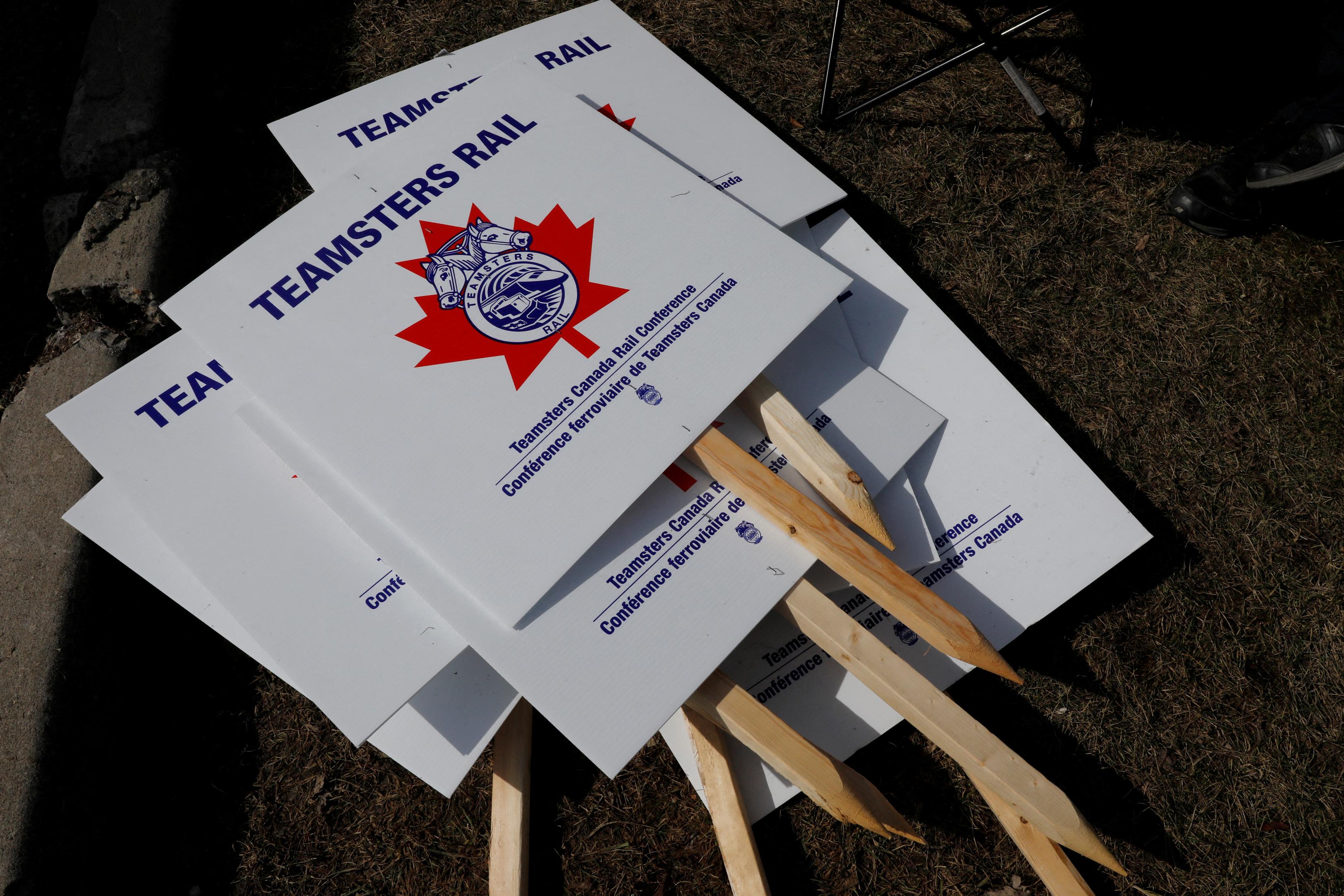
Talks between rail companies and Teamsters deadlocked, each side accuses other of bad faith Industry groups urge Trudeau's government to prevent stoppage, citing economic impact U.S. rail operator Norfolk Southern embargoes hazardous cargoes to/from CN and CPKC networks OTTAWA, Aug 14 (Reuters) - North American industry groups and shippers are bracing for an unprecedented simultaneous stoppage at both of Canada's main railway companies that could inflict billions of dollars' worth of economic damage. Canada is the world's second-largest country by area and relies heavily on trains to transport grain, beans, automobiles, potash, coal and other goods. "It's a catastrophe. Literally nothing would move," said Greg Northey, vice president of public affairs at Pulse Canada. Talks between Canadian National Railway (CNR.TO) , opens new tab and Canadian Pacific Kansas City (CP.TO) , opens new tab on one hand and the Teamsters union on the other have deadlocked, with each side accusing the other of bad faith. The rail companies say they will start locking out workers on Aug. 22 if they cannot reach a labor deal, while the union says it is ready to call a strike for that date. Industry groups want the Liberal government of Prime Minister Justin Trudeau to prevent a stoppage, noting Canada's railways transport around C$380 billion ($277 billion) worth of goods annually. "Factoring in the millions of Canadian jobs that would be impacted, the magnitude of the disruption is daunting," the Business Council of Canada lobby organization said in an open letter to Trudeau and Labour Minister Steven MacKinnon. U.S. FREIGHT TRAFFIC IMPACTED A stoppage would also hit the United States, given the degree of integration between the two economies. Canada sends around 75% of all goods exports south of the border. The networks of the two Canadian rail operators, CN and CPKC, connect with several key U.S. rail and shipping hubs such as Chicago, New Orleans, Minneapolis and Memphis. CPKC's network also extends further south connecting with ports on both the east and west coast of Mexico. CN said on Tuesday it was putting in place an embargo on any new reservations for movement of hazardous materials, security-sensitive cargoes or refrigerated containers originating in Canada, starting on Thursday. It also announced it was embargoing all intermodal traffic originating from over half a dozen U.S. hubs with which its network connects, starting on Friday. Separately, U.S. rail operator Norfolk Southern (NSC.N) , opens new tab on Tuesday advised customers that it was embargoing all hazardous and security-sensitive cargoes to or from CN and CPKC's networks effective immediately. It said additional embargoes may come in case of any work stoppages at the Canadian rail operators. Some U.S. companies find it more efficient to use Montreal or Vancouver for imports and exports. U.S. logistics firm C.H. Robinson (CHRW.O) , opens new tab, which manages more than 650,000 loads across the border a year, said it was lining up extra trucking capacity on both sides of the border. "When all trains serving the entire country could literally be stopped on their tracks, that's another whole level of disruption," said Scott Shannon, a senior executive at C.H. Robinson. PRESSURE MOUNTS Industry groups say MacKinnon has the power to refer the dispute to the country's labor relations board and thereby head off a stoppage. MacKinnon has so far said he wants the two sides to strike a deal at the negotiating table. Pressure on Ottawa looks set to mount in the coming days as industry groups hammer home the potential costs of a stoppage. Earlier this week, Morgan Stanley in a note to clients said that each week of shipment disruptions could dent the earnings before taxes of mining giant Glencore (GLEN.L) , opens new tab by an estimated $100 million, or more, as a rail shutdown would disrupt coal shipments from its majority-owned unit, Elk Valley Resources. The Chemistry Industry Association of Canada said chlorine shipments would soon become unavailable, hitting the quality of drinking water within two weeks. "There are very large municipalities that - if the strike goes on - are going to be under boil water advisories," CEO Bob Masterson said by phone, noting that the industry moved more than 500 rail cars a day. "There is no plan B ... to transport this kind of volume you will need 2,000 trucks, roughly. There aren't 2,000 trucks, and there aren't 2,000 drivers," he said. ($1 = 1.3721 Canadian dollars) Sign up here. https://www.reuters.com/business/autos-transportation/industry-shippers-brace-canada-rail-stoppage-fear-catastrophe-2024-08-14/
2024-08-14 19:06
BUENOS AIRES, Aug 14 (Reuters) - Argentina's monthly inflation rate stood at 4.0% in July, official data published on Wednesday showed, in line with a Reuters forecast and returning to slowdown after speeding up in June. Inflation in the 12 months through July stood at 263.4%, still the highest recorded in the world, a tick above the poll forecast of 263%. Sign up here. https://www.reuters.com/markets/argentina-inflation-slows-4-july-after-spiking-month-earlier-2024-08-14/

2024-08-14 15:04
BRASILIA, Aug 14 (Reuters) - A Brazilian Senate committee on Wednesday once again postponed a vote on a constitutional amendment proposal to grant financial autonomy to the central bank, which is backed by conservative lawmakers but opposed by President Luiz Inacio Lula da Silva. The vote had already been delayed in July and the proposal's sponsor, Senator Plinio Valerio, said on Wednesday that the government had not approached him in the meantime to discuss the text. Congress granted the central bank operational and political autonomy in 2021, separating the central bank governor's term from that of the president. Financial autonomy would further increase the bank's independence from the executive branch. Sign up here. https://www.reuters.com/markets/brazil-senate-committee-again-postpones-vote-central-bank-financial-autonomy-2024-08-14/

2024-08-14 14:28
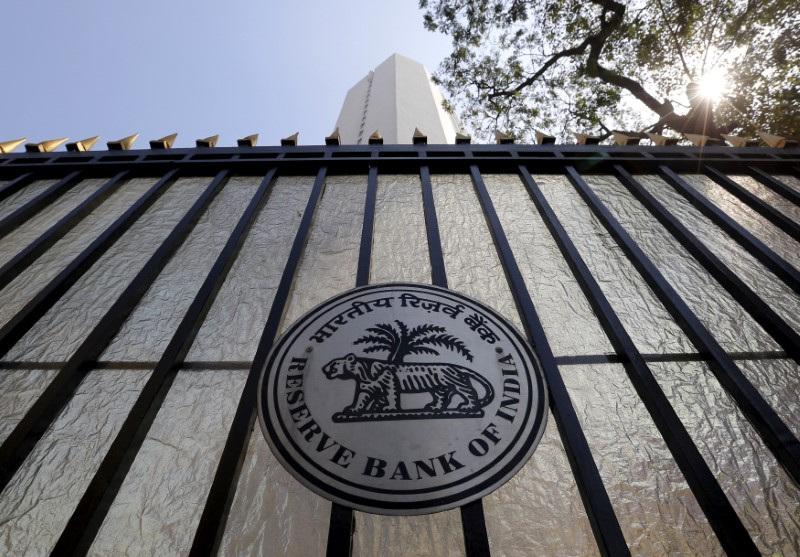
NEW DELHI, Aug 14 (Reuters) - The Indian and Russian central banks have renewed discussions to set a mechanism to expand local currency trade, in a move to iron out payment issues after a surge in bilateral trade since the war on Ukraine in 2022, a government source said. The discussions between the two central banks involve setting a reference rate between two local currencies for trade instead of determining the value of currencies against the U.S. dollar, the Indian government source said on Wednesday. Indian central bank officials are in Russia this week to discuss settlement of payments between the country for their bilateral trade, a second banking industry source said. Russia has emerged as the second biggest exporter to India, after China, with exports growing to $23.78 billion in the first four months of the current fiscal year starting in April, up 20.3% from a year ago. India's imports from Russia, mainly crude oil, have surged after the start of the Russia-Ukraine war, with imports touching $61.43 billion in 2023/23, up 33% compared to the previous fiscal year. To have a reference rate between the two local currencies, the currencies need to be traded over an exchange for a prolonged time, which the two countries are yet to agree on, the source said. "If we have a direct exchange rate, we do not have to peg it to any currency, including dollar. But that would require rupee, and rouble to be traded in the same currency exchange platform for a much larger quantity and for a longer duration," the source said. Both central banks will have to work out the modalities of identifying the exchange rate, the source said. Russian central bank declined to comment while the Reserve Bank of India did not immediately respond to an email seeking comment. Officials of both central banks are also looking into the accumulation of the rupee by Russian companies in Indian bank accounts due to current trade imbalance between the two nations. The government source said the accumulated Indian rupees by Russian firms has dropped to a "few million dollars" from varying estimates of multi-billion dollars as the surplus was used to make payments to the Indian exporters. India's exports Russia rose over 35% year-on-year to $4.3 billion in 2023/24. Sign up here. https://www.reuters.com/markets/currencies/india-russia-central-banks-renew-talks-mechanism-expand-local-currency-trade-2024-08-14/
2024-08-14 14:09
MEXICO CITY, Aug 14 (Reuters) - Bank of Mexico Deputy Governor Jonathan Heath said on Wednesday a recent rise in headline inflation could hit other prices, adding that he viewed the central bank's recent interest rate cut as premature. Heath, in an interview with local outlet El Universal, said he thought "it is premature to lower (the rate) now. When I see visible results, then we can lower it." The Bank of Mexico, also known as Banxico, cut its key interest rate by a quarter of a percentage point to 10.75% last week, with Heath and Deputy Governor Irene Espinosa voting to hold the rate. Consumer price data for July showed annual headline inflation rose to 5.57%, surpassing June's rate of 4.98%, as a result of a significant increase in the non-core component. Banxico Governor Victoria Rodriguez told Reuters on Sunday she believed the jump to be fleeting. But Heath said the rise could have a "contagion effect" on other prices, which happened in 2017 with gas prices. The balance of risks for inflation remains biased toward the upside, he added. Heath also said the U.S. Federal Reserve's monetary policy decision in September would not have an effect on his vote. The Fed is expected to cut interest rates at its Sept. 17-18 meeting. "That's not going to weigh on my decision," he said. "I'm going to be looking at inflation, headline inflation, services inflation, and what (inflation) estimates look like for the end of this year and next." The central bank's inflation target is 3%, plus or minus one percentage point. It expects to reach that target by the fourth quarter of 2025. Sign up here. https://www.reuters.com/markets/mexico-cenbanker-warns-rise-headline-inflation-could-hit-other-prices-2024-08-14/

2024-08-14 13:00
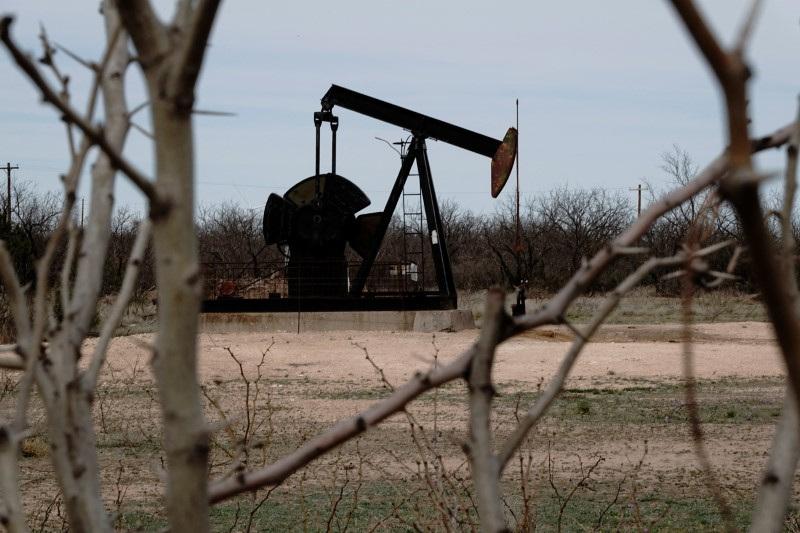
LONDON, Aug 13 (Reuters) - U.S. petroleum refiners have trimmed crude processing rates in response to a rise in fuel inventories and a decline in refining margins since the start of the second quarter of 2024. Refiners’ gross inputs of crude and unfinished oils slowed to 16.6 million barrels per day (b/d) over the seven days ending on Aug. 2, according to data from the U.S. Energy Information Administration. Gross inputs were the slowest for the time of year since the first wave of the coronavirus pandemic in 2020 and before that 2014. Refiners utilised just 90.5% of their operable capacity, down from 93.6% at the same time last year and the lowest rate since the pandemic’s first wave. Top refiners Marathon, Valero and Phillips 66 have all announced reductions in processing rates during recent earnings calls with investors. MINI BOOM Processing rates have slowed sharply since the first few months of the year, when refiners accelerated them to the highest for almost five years. Gross inputs climbed to an average of 19.2 million b/d in May, which was the highest for the time of year since 2019. Refiners were reacting to a persistent depletion of gasoline, distillate fuel oil and jet fuel inventories and a rise in gross refining margins. The run down in stocks was partly driven by the unplanned shutdown of BP’s refinery at Whiting in Indiana in February and March following a site-wide electricity failure. Chartbook: U.S. refining margins and crude processing , opens new tab Combined stocks of the big three fuels had fallen 18 million barrels (-4% or -0.76 standard deviations) below the prior ten-year seasonal average by March. In response, gross refining margins for producing two barrels of gasoline and one barrel of distillate fuel oil from three barrels of U.S. crude climbed to more than $31. Gross margins or “crack spreads” were in the 75th percentile for all months since 2010, after adjusting for inflation. RETREAT Since April, however, fuel inventories have been climbing and spreads narrowing in response to the increased amount of refining activity. By July, combined fuel stocks were just 7 million barrels (-2% or -0.26 standard deviations) below the ten-year average. Inventories have continued trending upward. Stocks of both gasoline and distillate fuel oil had climbed to the highest for three years in the first week of August. Unsurprisingly, gross refining margins have retreated to around $24 per barrel, exactly in line with the long-term inflation-adjusted average. Refiners have been forced to dial down processing rates to forestall any further accumulation of inventories and erosion in margins. SOFTER PRICES The unusual slowdown in crude intake since the start of July, a time when it would normally be rising to meet peak summer driving demand, has contributed to the softness in crude prices and spreads over the same period. U.S. crude futures prices for deliveries in September have retreated from almost $83 per barrel near the start of July to a low of just $73 in early August before recovering to just under $80. Some of this has been driven by broader concerns about the outlook for the global economy, which have hit multiple commodities and asset classes. But the sudden slowdown in refinery crude consumption at a time of year when it is normally strongest has been an additional headwind for oil prices. It also underscores the risks if OPEC+ proceeds with its previously announced but provisional plan to increase crude production from the start of October. Related columns: - U.S. refining margins slump as fuel stocks climb (June 13, 2024) - Investors abandon bullish case for U.S. gasoline(May 15, 2024) - Renewable fuels take bite out of U.S. diesel consumption(May 10, 2024) Sign up here. https://www.reuters.com/business/energy/us-refiners-scale-back-crude-intake-fuel-stocks-swell-kemp-2024-08-13/