2024-08-14 06:15
BENGALURU, Aug 14 (Reuters) - India's PC Jeweller (PCJE.NS) , opens new tab swung to a profit in the first quarter on Wednesday as promotions and discounts drove demand. It reported a consolidated net profit of 1.56 billion rupees ($18.6 million), compared with a loss of 1.72 billion rupees a year earlier, snapping six straight quarters of losses. Revenue from operations surged nearly six-fold to 4.01 billion rupees. Additionally, the company, which has struggled with a liquidity squeeze due to disputes with some of its lenders, said it is in the process of offering one-time settlements to the banks. For further results highlights, click [Full story]. KEY CONTEXT Indian jewellery retailers are responding to higher gold prices by either raising the selling prices of their products or providing discounts to attract customers. However, fewer wedding days during the quarter, heightened competition from regional players, and lower footfall due to widespread heatwaves in the country dampened demand for jewellery. Larger rival Titan (TITN.NS) , opens new tab missed quarterly profit estimates as higher gold prices dampened demand, while Kalyan Jewellers (KALN.NS) , opens new tab reported higher profit owing to better sales. PEER COMPARISON * Mean of analysts' ratings standardised to a scale of Strong Buy, Buy, Hold, Sell, and Strong Sell ** Ratio of the stock's last close to analysts' mean price target; a ratio above 1 means the stock is trading above the PT APRIL-JUNE STOCK PERFORMANCE -- All data from LSEG -- $1 = 83.9075 Indian rupees Sign up here. https://www.reuters.com/markets/commodities/indias-pc-jeweller-swings-q1-profit-robust-demand-2024-08-14/

2024-08-14 06:08
LONDON, Aug 14 (Reuters) - And just like that... it was gone. It may be a wee bit premature to wave goodbye to the above-target inflation rates that have blighted western economies for the past three years. But it looks increasingly wide of the mark to argue that the episode has firmly entrenched expectations of higher inflation. If expectations have been firmly "re-anchored", a large part of the central banks' recent battle has been won and the only risk is that they now leave it too late to ease credit again. On Monday, the New York Federal Reserve's latest household survey , opens new tab showed that the median 3-year inflation outlook has fallen to the lowest point in the 11-year history of the series. It is now just 2.3%. To be sure, inflation forecasts over other time horizons were nearer to 3%, but the whole survey is basically eliciting the same responses that it was in the years before the pandemic. This may suggest that the "old normal" has returned to some degree. Declining cost pressures on small businesses also indicate the price pain may be dissipating even as confidence in the wider economy improves. While July's NFIB survey showed high inflation remains the single most important problem among small firms, it also noted that the net number of them planning price rises has fallen to the lowest point since April 2023. The number of owners expecting to raise employee compensation is also at the lowest level in three years. And financial markets have virtually pulled the plug on above-target inflation expectations as well. "Breakeven" inflation assumptions embedded in Treasury-protected securities subsided to within a whisker of the Fed's 2.0% target last week on both 5- and 10-year trajectories , . That was the lowest in more than three years. True, pricing in the so-called TIPS market can get distorted by the ebb and flow of bond market speculation or demand-related over-valuation. But the 5-year-forward inflation-linked swaps showed a similar-sized drop last week as well. At 2.44%, the swap has lost 15 basis points this month alone and is some 35 bps below the long-term inflation reading it suggested as recently as April. HOT AND COLD Bank of America's latest global fund manager survey showed a rapid reduction in managers identifying higher inflation as the biggest risk to portfolios. While as many one-in-three said it was the biggest "tail risk" in July, only one-in-eight thought so this month. Could energy prices shift the whole dial again? There is little doubt about the power of oil and gas prices to affect inflation and fears of it. That much was clear after the 2022 Ukraine invasion. But crude prices have been down on a year-on-year basis for the first sustained period since February. And those base effects will bear down on headline inflation for months to come. Also, an energy-driven spike in inflation seems highly unlikely if there is parallel fear of recession sapping oil demand. While the number of BofA survey respondents expecting a "hard landing" for the economy over the next 12 months remains low, it crept up this month to 13% - its highest point since January. So one of the big questions is whether all the hoopla about a post-pandemic "Great Inflation" or world economies "running hot" for years was just hot air itself? University of California, Berkeley professor Brad DeLong recently puzzled over why the market's implied inflation picture changed so suddenly. "The marginal TIPS-nominal Treasury arbitrageur looks to be taking the 'economy runs too hot over the next five years' scenarios off the table," DeLong wrote in a blog , opens new tab. Going further, he suggests the Fed may actually face the risk of undershooting its inflation target for much of the next five years, if implied inflation rate in markets at around 2% is an average and over that time and with current rates still between 2.5% and 3.0%. If investors really do think the Fed now faces years of potentially undershooting its target again, then must also be entertaining the chance of some return of the "secular stagnation" theme that haunted the pre-pandemic era. And if that is correct, then the Fed may well have kept things too tight for too long already. On one hand, last week's spike in market volatility showed how changeable markets can be with even a minor catalyst. But even accepting market twists and turns, there is clearly little in public or corporate surveys to suggest high future inflation is seen a major problem. The opinions expressed here are those of the author, a columnist for Reuters. Sign up here. https://www.reuters.com/markets/great-expectations-inflation-fears-subside-mike-dolan-2024-08-14/

2024-08-14 06:03
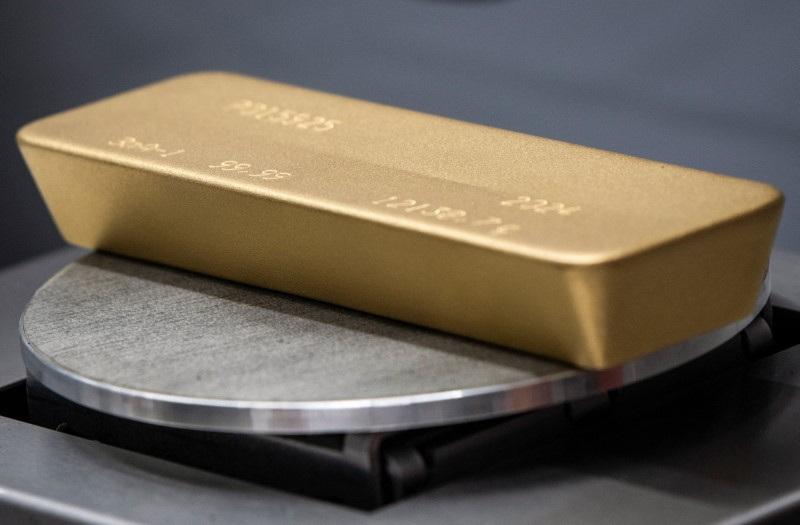
U.S. CPI data due at 1230 GMT U.S. producer prices rise less than expected in July Aug 14 (Reuters) - Gold prices hovered near record highs on Wednesday, steered by expectations of a Federal Reserve rate cut and persistent Middle East tensions, while the spotlight shifted to U.S. inflation data. Spot gold was up 0.4% to $2,474.04 per ounce by 1051 GMT, shy of the record high of $2,483.60 scaled last month. U.S. gold futures rose 0.2% to $2,513.20. U.S. producer prices increased less than expected in July, data showed on Tuesday, ahead of U.S. consumer price index data due later at 1230 GMT. Economists expect consumer prices to have risen 0.2% month-on-month in July, with year-on-year core inflation seen slowing slightly to 3.2%. If the data confirms the slowdown in U.S. price growth, bets of a 50 bp rate cut in September will increase and it is very possible that the price of gold will reach an all-time high, said Ricardo Evangelista, senior analyst at ActivTrades. Markets currently see a 55.5% chance of 50 basis point U.S. rate cut in September, according to the CME FedWatch Tool. Bullion is traditionally considered a hedge against geopolitical and economic risks, and lower interest rates reduce the opportunity cost of holding the asset. "I think that economic indicators will continue to drive Western investors towards the asset of gold," said World Gold Council market strategist Joseph Cavatoni. In the Middle East, Iran has vowed a severe response to the killing of the leader of Hamas late last month. Israel has neither confirmed or denied its involvement. Concerns about the fallout of a potential Iranian strike on Israel is playing into investors’ minds and feeding demand for safe-haven gold, Evangelista added. Spot silver gained 0.3% to $27.92 and platinum rose 0.7% to $942.65. Palladium gained 0.5% at $943.58. Sign up here. https://www.reuters.com/markets/commodities/gold-prices-inch-lower-us-inflation-data-looms-2024-08-14/
2024-08-14 05:43
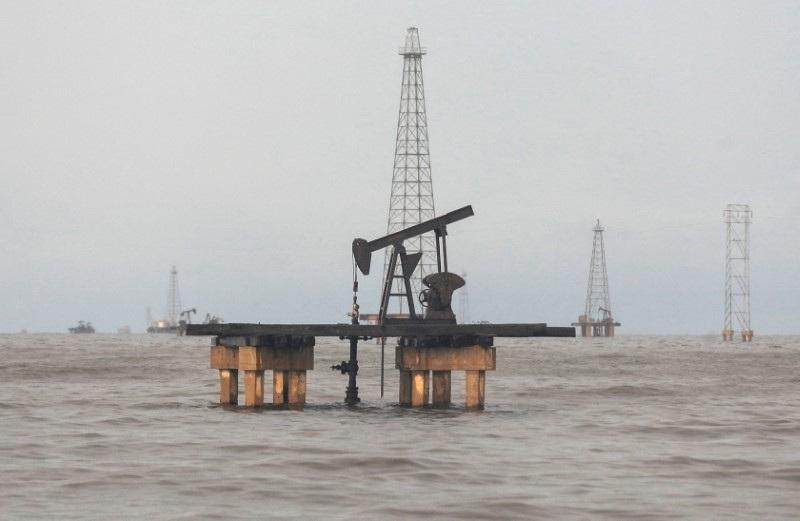
LONDON, Aug 14 (Reuters) - Oil prices were broadly steady on Wednesday, as concerns that conflict may spread in the Middle East and threaten production in one of the world's major regions for crude production eased slightly. Brent crude futures slipped 10 cents, or 0.1%, to $80.59 a barrel by 1057 GMT. U.S. West Texas Intermediate crude futures were down 19 cents, or 0.2%, to $78.16 per barrel. After hitting a seven-month low of $76.30 at the beginning of last week, Brent rose more than 3% on Monday to cap a five-day run of gains, closing at $82.30 a barrel. "The recent rally in crude came to a halt yesterday with prices falling back as fears of a retaliatory attack on Israel by Iran receded, with the risk premium slashed," said Ashley Kelty, an analyst at Panmure Liberum. Iran had vowed a severe response to the killing of the leader of Hamas late last month. Three senior Iranian officials have said that only a ceasefire deal in Gaza would hold Iran back from direct retaliation against Israel for the assassination. Israel has neither confirmed nor denied its involvement but it is fighting in Gaza against Hamas after the group attacked Israel in October. To counter Iran, the United States Navy has deployed warships and a submarine to the Middle East. "The extent of Iran's reprisal, as well as Israel's response, will likely determine whether the current conflict in the Middle East broadens into a regional conflict," said Vivek Dhar, an analyst at Commonwealth Bank of Australia. Also hindering oil price gains, the International Energy Agency trimmed on Tuesday its 2025 estimate for oil demand growth, citing the impact of a weakened Chinese economy on consumption. That came after OPEC cut expected demand for 2024 for similar reasons. Signs of healthier U.S. demand had supported prices in earlier trading. "The American Petroleum Institute reported a significant drawdown in U.S. crude inventories of 5.2 million barrels, far more than a forecasted decline of 2 million. The data signalled that oil demand remains healthy," said Danish Lim, investment analyst at Phillip Nova. Official U.S. government data from the Energy Information Administration is due later on Wednesday. (This story has been refiled to correct the spelling of 'last' in paragraph 3) Sign up here. https://www.reuters.com/business/energy/oil-strengthens-fall-estimated-us-crude-inventories-2024-08-14/
2024-08-14 05:22
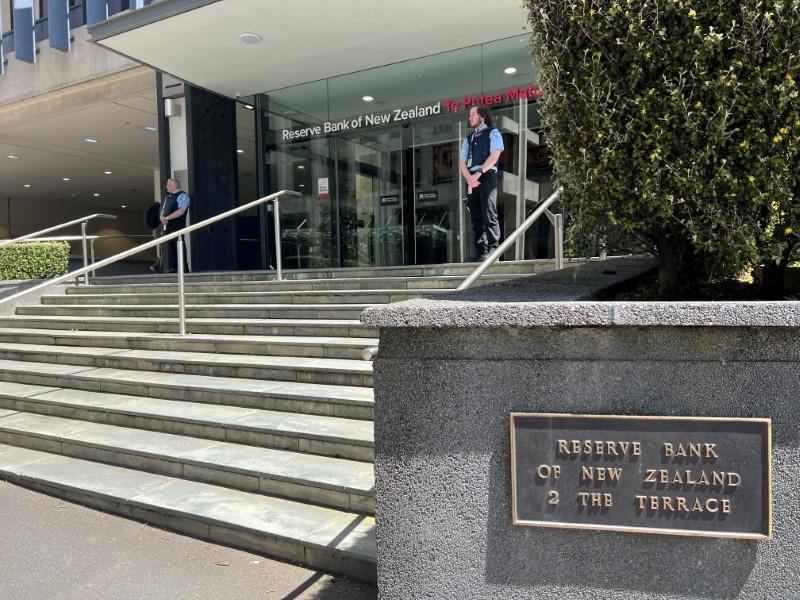
RBNZ cuts rates by 25 bps to 5.25%, first easing in over 4 yrs RBNZ flags more cuts ahead, taking rate to 3.85% end-2025 Kiwi dlr tumbles as markets bet on more aggressive easing path Market pricing sees policy rate near 3.0% by end of 2025 WELLINGTON, Aug 14 (Reuters) - New Zealand's central bank slashed its benchmark rate for the first time since March 2020 and flagged more cuts over coming months, saying inflation was nearing its 1% to 3% target in a sharp dovish tilt that sparked a sell-off in the kiwi dollar. The decision to reduce rates by 25 basis points to 5.25% came almost a year ahead of the Reserve Bank of New Zealand's (RBNZ) own projections, taking some market players by surprise and prompting bets of an aggressive easing path through to the end of 2025. Markets had priced in almost a 70% chance of a quarter-point reduction following a string of softer economic data, but the cut defied most economists' expectations, with 19 of 31 economists in a Reuters poll having forecast the RBNZ to hold steady as it has since May 2023. "The Committee agreed to ease the level of monetary policy restraint by reducing the OCR (official cash rate)," the central bank said in its statement, and signalled more cuts ahead depending on how inflation evolves. Investors reacted by knocking the kiwi dollar down 1% to $0.6015 , erasing most of the 1% gains made overnight as soft U.S. producer price data slugged the U.S. dollar. Swaps shifted to imply another 32 basis points of easing by October and 71 basis points of easing by year end. Rates are seen near 3.0% by the end of 2025, well below the RBNZ's projection. Bank bill futures also jumped. ASB Bank chief economist Nick Tuffley said he expects the RBNZ will continue steadily cutting the cash rate by 25 basis points in consecutive meetings. “If inflation pressures evaporate faster than expected, the RBNZ may need to hasten the return to a more neutral setting of around 3.25%,” Tuffley added. ASB Bank along with Kiwibank, Westpac and ANZ bank announced cuts to their mortgage lending rates. The central bank did strike a note of caution, emphasising that policy will need to remain restrictive for a further period, but it still forecast the cash rate at 3.85% by end-2025. "Although the Bank seemed to strike a cautious tone about further policy easing, we think it will cut rates more aggressively than many are anticipating," said Abhijit Surya, economist at Capital Economics. The market's views on further rate reductions reflected the central bank's own gloomy economic projections. RBNZ Governor Adrian Orr told a post-policy press conference that growth has weakened since May and concerns around pricing expectations have dissipated. "It's a good news story of pricing behaviours changing rapidly," Orr said. The central bank expects New Zealand to tip back into a technical recession - two consecutive quarters of economic contractions - this year after suffering a similar slump in both 2023 and 2022. NZ JOINS GLOBAL EASING The RBNZ's forward guidance suggested at least three more cuts by the middle of next year, projecting the cash rate at 4.9% in the fourth quarter of 2024 and 4.4% in the second quarter of 2025. Previously, it had not expected to start cutting rates until the middle of 2025. New Zealand joins a global impulse to ease rates. The European Central Bank, the Bank of England, Canada, Sweden and Switzerland have all cut interest rates and an increasing number of analysts are now pencilling in a half-a-percentage-point rate cut for the Federal Reserve's September meeting. New Zealand's neighbour Australia, however, is an exception to the global easing trend, with the Reserve Bank of Australia last week ruling out near-term rate cuts. The RBNZ minutes of the meeting, released alongside its statement, said the Committee observed that the balance of risks has progressively shifted since the May Monetary Policy Statement. “With a broad range of indicators suggesting the economy is contracting faster than anticipated, the downside risks to output and employment that were highlighted in July have become more apparent,” the minutes added. A global front-runner in withdrawing pandemic-era stimulus, the RBNZ lifted rates 525 basis points since October 2021 to curb inflation in the most aggressive tightening since the official cash rate was introduced in 1999. New Zealand's annual inflation has come off in recent months and is currently running at 3.3% with expectations that it will return to the central bank's target band in the third quarter of this year. Kiwibank chief economist Jarrod Kerr said the focus now is on the magnitude of rate cuts needed. "They're cutting back to neutral," Kerr said. "We are going to see 250 basis to 300 basis points of rate cuts in this cycle and that's what's going to get the attention of businesses and that's what's going to get the attention of households." Sign up here. https://www.reuters.com/markets/new-zealand-central-bank-cuts-cash-rate-by-25-bps-525-2024-08-14/

2024-08-14 04:33
Aug 14 (Reuters) - A look at the day ahead in European and global markets from Stella Qiu The Reserve Bank of New Zealand is known for a tendency to surprise, and this time is no different. On Wednesday, the RBNZ cut interest rates by 25 basis points to 5.25%, surprising the majority of economists polled by Reuters. It was its first policy easing since March 2020 and a year earlier than its own projections. As recently as May it was seriously warning of more hikes, so the abrupt reversal was a head turner. RBNZ chief Adrian Orr explained in a presser that "when the facts change, so do we". It is the latest major central bank to ease policy, following policymakers in Europe, Canada and Britain, and could perhaps be a signal for those that are still holding steady in the face of sticky inflation. Yes, looking at you, the Reserve Bank of Australia who all but ruled out any rate cuts this year. The RBNZ seems confident inflation in New Zealand, which ran at 3.3% last quarter, will be back in the target band of 1-3% this quarter, and it does not need to wait for the actual Q3 number to act. In particular, it also projected a cash rate of 4.92% by December, meaning they see room to cut maybe two more times by Christmas. Markets agree, having already fully priced in another easing in October, with some chance of a 50-basis-point move. The kiwi dollar duly slumped 1%, while key two-year swap rates fell 11 basis points to the lowest since mid-2022. Elsewhere, most Asian stocks are cheering data showing U.S. producer prices rose less than expected, which stirred hopes that consumer price inflation would be benign later in the day. European futures point to a higher open ahead of inflation figures from the UK, where the annual core rate is seen slowing even as the headline number ticks up. EUROSTOXX 50 futures rose 0.2% and FTSE futures gained 0.3%. Adding to the busy news flow in Asia was that Japanese Prime Minister Fumio Kishida would step down in September, ending a three-year term marked by rising prices and marred by political scandals. The yen strengthened slightly and the benchmark Nikkei (.N225) , opens new tab gave up gains to be off 0.2%, a modest reaction to political uncertainty. Key developments that could influence markets on Wednesday: -- UK inflation data for July -- U.S. CPI data for July -- Euro zone GDP, industrial production data -- Fed Atlanta President Raphael Bostic speaks Sign up here. https://www.reuters.com/markets/global-markets-view-europe-2024-08-14/