
2024-08-13 15:55
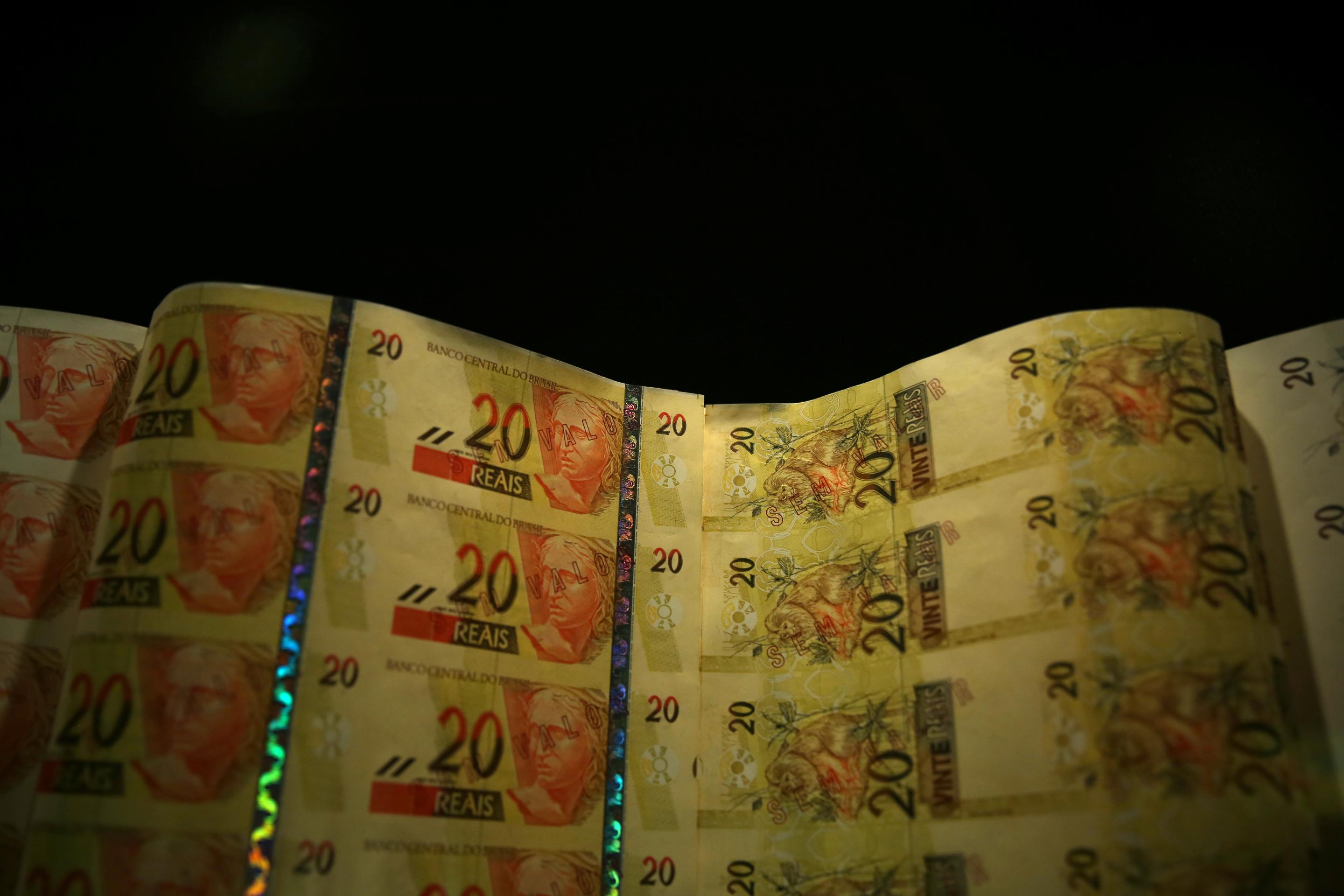
BRASILIA, Aug 13 (Reuters) - The Brazilian real has recently experienced "accelerated" weakening, but central bank chief Roberto Campos Neto said on Tuesday that policymakers did not intervene in the foreign exchange market as no dysfunctions were observed. Speaking at a congressional hearing, Campos Neto said specific Brazil-related factors caused this greater depreciation, amid heightened risk perceptions. The currency of Latin America's largest economy has weakened by nearly 12% against the U.S. dollar this year, though it has shown some relief since last week amid the central bank's firm messaging that an interest rate hike is on the table to battle inflation. Campos Neto said the central bank's disinflation process has minimally impacted economic activity, which has consistently surprised on the upside. But he warned that "perseverance" is still needed, as disinflation has slowed and inflation expectations have drifted away from the official 3% target. Asked about the central bank's lack of intervention in the exchange rate market, Campos Neto said the currency floats to absorb shocks and avoid impacts on relative prices that could lead to resource misallocation in the economy. "In these times of stress, we discuss all the time whether interventions should be made," he said, adding this is a collective decision at the monetary authority. "The central bank has large foreign exchange reserves and will intervene if necessary." Campos Neto added that the central bank's monetary policy director, Gabriel Galipolo, is responsible for overseeing the foreign exchange market and was appointed to the role by the government. Galipolo is widely seen as the leading candidate to head the central bank after Campos Neto's term expires at the end of this year. To lawmakers, Campos Neto also emphasized that the central bank only intervenes in the exchange rate when it identifies dysfunction in the market, which has not been observed recently. Sign up here. https://www.reuters.com/markets/currencies/brazils-central-bank-had-no-reason-intervene-fx-amid-accelerated-weakening-2024-08-13/
2024-08-13 15:39
MOSCOW, Aug 13 (Reuters) - The Russian rouble weakened to a 10-month low against the dollar during the trading session on Tuesday following Ukraine's unexpected attack a week ago on Russia's Kursk region but then rebounded to the day's opening level. By 1500 GMT, the rouble was flat at 90.99 to the dollar, according to LSEG data, after falling to 96.60, the lowest level since Oct. 20, 2023. It has lost 6.2% since the start of the attack on Aug. 6. Trading in major currencies shifted to the over-the-counter (OTC) market, obscuring pricing data, after Western sanctions on the Moscow Exchange and its clearing agent, the National Clearing Centre, were introduced on June 12. One-day rouble-dollar futures, which trade on the Moscow Exchange and serve as guidance for the OTC market rates, were down 0.4% on Tuesday to 89.60. During the previous day's trading, the futures lost 2.5%. The central bank's official exchange rate, which it calculates using the OTC data, was set at 92.65 for Wednesday, a 3% jump from the rate set for Tuesday. The weakening of the rouble against the dollar and euro has continued despite support from higher oil prices and increased net daily sales of yuan by the central bank and finance ministry. According to an analysis of the OTC market, by 1500 GMT the rouble had weakened by 1.3% to 12.07 against the Chinese yuan, which has become the most traded foreign currency in Moscow. During the trading the rouble touched 12.11 to yuan, its weakest since June 24. It was down 0.2% at 99.70 against the euro , according to LSEG data. The central bank's official exchange rate stood at 96.69 roubles to the euro. Brent crude oil , a global benchmark for Russia's main export, was down 1.0% at $81.24 a barrel as markets saw reduced risk of a wider war in the Middle East. Sign up here. https://www.reuters.com/markets/currencies/russian-rouble-touches-10-month-low-vs-dollar-following-kursk-attack-2024-08-13/

2024-08-13 15:32
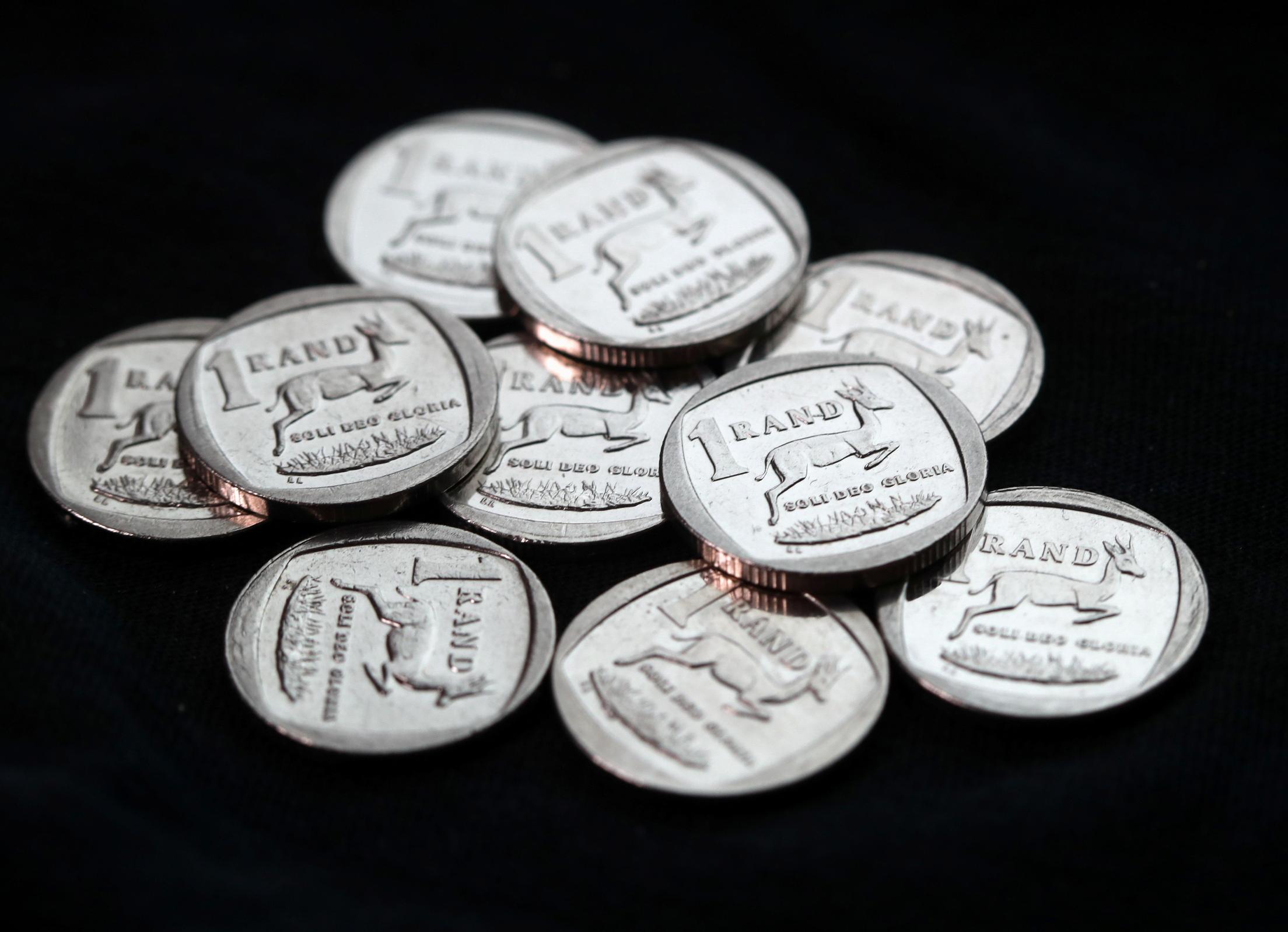
JOHANNESBURG, Aug 13 (Reuters) - The South African rand gained against a weaker dollar on Tuesday, shrugging off lacklustre domestic mining and unemployment data. At 1511 GMT, the rand traded at 18.1450 against the U.S. dollar , about 0.55% stronger than its closing level on Monday. The dollar index was last trading down about 0.2% against a basket of currencies after data showed U.S. producer prices increased less than expected in July. On the domestic front, economists said the outlook for South Africa's job market remained uncertain despite economic conditions improving since the start of the year. South Africa's official unemployment rate rose for the third quarter in a row, reaching 33.5% in April-June of this year, Statistics South Africa data showed. "A more meaningful recovery is likely to occur next year as inflation dips towards 4.5% and the (central bank) reduces interest rates more significantly, creating space for faster growth in domestic demand and job creation," Nedbank economists said in a research note. South Africa's total mining output fell 3.5% year-on-year in June compared with a revised increase of 1.3% in May, data showed. On the stock market, the Top-40 (.JTOPI) , opens new tab index closed up over 0.5%. South Africa's benchmark 2030 government bond was stronger, with the yield down 9.5 basis points to 9.265%. Sign up here. https://www.reuters.com/world/africa/south-african-rand-shrugs-off-lacklustre-mining-jobless-data-2024-08-13/
2024-08-13 15:20
SAO PAULO, Aug 13 (Reuters) - Services activity in Brazil grew more than expected in June to hit an all-time high, eclipsing a record that had been set in December 2022, data from statistics agency IBGE showed on Tuesday. The service sector, which accounts for about 70% of all activity in Latin America's largest economy, grew 1.7% in June from the previous month, IBGE said, exceeding the 0.8% expected by analysts polled by Reuters. All of the five main groups surveyed by the agency posted positive results in the period, with an 1.8% expansion in transportation notably offsetting a negative reading in the previous month, IBGE said. "The result is largely due to air transport, driven by a drop in air ticket prices," IBGE research manager Rodrigo Lobo said. Services activity was also up 1.3% in June from a year earlier, according to IBGE, again beating the 0.8% expected by economists in the Reuters poll. The sector now stands 0.5% above the previous record high in the IBGE data series, which had been set in late 2022, the statistics agency added. "Our assessment indicates that Brazil's economic activity continues to perform well," said PicPay economist Igor Cadilhac, highlighting a strong labor market. "We expect this scenario to continue throughout the year, despite recent deterioration in inflation and the need to keep interest rates high for longer." Brazil's central bank recently flagged greater caution in its monetary policy stance and said it would raise interest rates if needed to control inflation. The country's benchmark interest rate Selic currently stands at 10.5%. Claudia Moreno, economist at lender C6, said that a slowdown in activity as a whole is expected for the second half of the year, "which should make the services sector move sideways." She still believes, however, that the sector will contribute to Brazil's gross domestic product growth in 2024. Private sector economists expect Brazil's economy to expand 2.20% this year, according to a weekly central bank survey. Sign up here. https://www.reuters.com/world/americas/brazils-service-sector-beats-forecasts-hits-record-high-june-2024-08-13/

2024-08-13 13:41
BENGALURU, Aug 13 - U.S. Treasury yields will rise modestly over the coming months on expectations financial markets have once again overestimated how much the Federal Reserve can slash interest rates this year, according to a Reuters poll of bond strategists. The benchmark U.S. 10-year Treasury yield , which moves inversely to prices, touched a 14-month low of 3.67% in early August following a safe-haven rally on fears a possible recession in the world's largest economy would force rapid rate cuts from the Fed. Inflation trending towards the U.S. central bank's 2% target and recent signs of weakness in the labor market also pushed interest rate futures last week to price in about 120 basis points of Fed rate cuts in 2024. However, investors have since attributed the recent spike in market volatility to the unwinding of large leveraged positions causing a sudden rise in the Japanese yen and a plunge in the Tokyo stock market early last week, rather than major concerns about the U.S. economy. Wall Street's barometer of investor anxiety, the Cboe Volatility index (.VIX) , opens new tab, swiftly receded after reaching a four-year high last week, while stocks made a roaring comeback following the year's most dramatic plunge. This rapid cooldown was accompanied by tempering rate cut pricing to about 100 bps, although still double the amount predicted just a month ago. Those bets are likely to face disappointment in a lack of policy follow-through, according to medians in an Aug. 7-13 Reuters poll of bond strategists, who stuck to markets' earlier view of 50 bps of Fed rate cuts by end-year. "The Treasury market is pricing in too draconian an economic scenario - the recession probability priced into the rates market, specifically, is too high," said Vishal Khanduja, co-head of broad markets fixed income at Morgan Stanley Investment Management. "What's priced in until the end of the year? We don't think the Fed will be able to cut so many times. We see two, maybe three cuts by January," Khanduja added. Only two of 31 respondents said the Fed would cut by as much or more than current market pricing of 100 bps in the three remaining FOMC meetings this year. The 10-year Treasury note yield, currently around 3.90%, was forecast to move very little in coming months. The yield will rise modestly to about 4.00% in a month and trade around that level until at least end-January, according to median forecasts from nearly 45 bond strategists in the survey. It will then fall only 10 bps to 3.90% in a year. A three-fourths majority of poll respondents, 15 of 20, also said it was more likely the 10-year note yield goes lower than they expect by end-year, instead of higher. The interest rate-sensitive 2-year Treasury yield , currently 4.00%, and down roughly 30 bps since the start of August, will rise marginally to 4.20% in three months, according to survey medians. It will then plummet 20 bps to 4.00% by end-January and then a further 30 bps to 3.70% in a year. If realized, the "inverted" spread between 2-year and 10-year Treasury yields, historically a reliable indicator of a U.S. recession, will fully revert to zero by end-January, before turning positive 20 bps in a year. "The market is in dip-buying mode and risky assets are beginning to show signs of nervousness. We're expecting the Treasury market will consolidate in and around current ranges and the front end of the curve will continue to drift lower in rates," said Ian Lyngen, head of U.S. rates strategy at BMO Capital Markets. Sign up here. https://www.reuters.com/markets/rates-bonds/us-treasury-yields-continue-ascent-markets-overhype-fed-rate-cuts-2024-08-13/

2024-08-13 12:26
SINGAPORE, Aug 13 (Reuters) - An Adani Power (ADAN.NS) , opens new tab coal-fired power plant under contract to sell all its output to Bangladesh can now supply the domestic market after an amendment to India's power export rules, helping the company hedge against political risks in Bangladesh. An internal federal power ministry memo, dated Aug. 12 and seen by Reuters, amends 2018 guidelines governing generators supplying electricity "exclusively to a neighbouring country". Currently only one plant in India - Adani Power's 1,600 megawatt (MW) Godda plant in eastern Jharkhand state - is under contract to export 100% of its power to a neighbouring country. The memo says "the government of India may permit connection of such generating station to the Indian grid to facilitate sale of power within India in case of sustained non-scheduling of full or part capacity". The move, which happened nearly a week after longtime Prime Minister Sheikh Hasina fled Bangladesh amid deadly protests triggered by quotas for government jobs, could also benefit future projects where all output is locked into export contracts. Bangladesh is battling anarchy and vandalism, with a caretaker government vowing that improving law and order was its top priority. The amendment by the Indian government also allows sale of power to the local grid if there is a delay in payments. The conglomerate called the plant a "shining example of India-Bangladesh cooperation" in July 2023, shortly after its billionaire Chairman Gautam Adani met Hasina following full-load commissioning of the plant. On Tuesday, an Adani Group spokesperson said the amendment would help increase the overall availability of power in India, and "help cater to the soaring electricity demand across the country." Sign up here. https://www.reuters.com/business/energy/adani-plant-allowed-sell-bangladesh-bound-power-india-after-rules-amended-2024-08-13/


