2024-08-13 12:22
BENGALURU, Aug 13 (Reuters) - The European Central Bank will cut its deposit rate twice more this year, in September and December, according to an over-80% majority of economists polled by Reuters, fewer reductions than markets currently expect. Since April, economists in Reuters surveys have remained consistent in predicting a total of three cuts this year including the one already delivered in June. By contrast, interest rate futures are pricing a total of four cuts by end-year. An unexpected rise in euro zone inflation in July, near record-low unemployment and still-steady economic activity in the common currency bloc give ECB policymakers cause to be cautious. Over 80% of economists, 66 of 81, in a Aug. 8-13 Reuters poll predicted the ECB's Governing Council will deliver two more 25 basis point rate cuts this year, in September and December, taking the deposit rate to 3.25%. That majority view was broadly in line with the last two Reuters surveys. Five respondents expected just one more reduction this year while eight predicted three. "The latest developments, particularly on the inflation front, are relatively hawkish," said Fabio Balboni, senior European economist at HSBC. "We don't think the ECB will necessarily feel the urgency to rush towards cutting faster." The majority of forecasters looking for two more ECB rate cuts this year has held steady despite financial market volatility earlier this month. Following a weaker-than-expected July U.S. jobs report and inflation trending towards the Federal Reserve's 2% target, U.S. rate futures markets priced in as much as 120 basis points of Fed rate reductions in 2024 last week compared with 50 beforehand. It is roughly 100 now. Although many banks, including some primary dealers to the Fed, have changed their Fed outlook, most of those same banks haven't changed their ECB rate view. The Fed is widely expected to start cutting rates at its September meeting, just days after the ECB next meets. Euro zone inflation, which unexpectedly rose to 2.6% last month from 2.5% in June, will average 2.4% this year, the poll showed, and not reach the ECB's 2% target until the second half of 2025. That outlook was slightly more optimistic than projections the ECB made in June, but some are bracing for the central bank's staff projections to worsen in September. "I expect the ECB to slightly revise upward its inflation projections and it's strange then to continue cutting rates," said Carsten Brzeski, chief euro zone economist at ING. "Without the market turmoil it would not have been clear the ECB is really going to cut in September." The central bank is expected to reduce the deposit rate four times next year, according to poll medians, reaching 2.25% by end-2025. The euro zone economy, which was expected to have grown 0.3% last quarter, will average 0.7% growth this year, the poll showed, before expanding by 1.3% in 2025 and 1.4% in 2026. (Other stories from the Reuters global economic poll) Sign up here. https://www.reuters.com/markets/rates-bonds/ecb-lower-rates-sept-dec-inflation-refuses-budge-2024-08-13/

2024-08-13 12:00
LAUNCESTON, Australia, Aug 13 (Reuters) - OPEC's modest cut to its global crude oil demand forecast for 2024 still leaves the producer group with an estimate that will require an extraordinarily strong fourth quarter. The Organization of the Petroleum Exporting Countries (OPEC) lowered its forecast for demand growth this year to 2.11 million barrels per day (bpd) in its monthly market report released on Monday. This was down 140,000 bpd from its previous estimate, and OPEC referred to "softening expectations for China's oil demand growth in 2024." But the detail of OPEC's latest forecast still shows that it expects China's demand growth to be far stronger for the whole of 2024 than it has been so far this year. OPEC expects China's oil demand will rise by 700,000 bpd in 2024, which means that the world's largest crude importer will account for one-third of the global increase. The August forecast for China's demand growth is just 60,000 bpd below OPEC's previous estimate. This is a relatively small adjustment and means that if OPEC is to be proved correct, China's demand will have to rise sharply in coming months. This is because China's imports of crude oil have been weaker over the first seven months of the year. Official data released last week showed crude oil imports dropped to 9.97 million bpd in July, the lowest on a daily basis since September 2022, and down from June's 11.3 million bpd. For the first seven months of the year crude imports were 10.90 million bpd, down 2.9% from the 11.22 million bpd over the same period in 2023. This means that China's oil imports are about 320,000 bpd lower in the first seven months of 2024 compared with the same period last year. It's hard to reconcile the drop in oil imports with OPEC's still relatively bullish forecast for China's 2024 oil demand growth. Of course, imports aren't the only factor in total demand, the others including domestic oil production, movements in inventories and net exports of refined fuels. But imports form the major part of China's total demand and it will be their performance that determines whether OPEC's forecast can be met. China doesn't disclose movements in crude oil and product inventories, but an estimate can be made by subtracting the volume of crude processed from the total oil available to refineries from imports and domestic output. On this basis China has added about 900,000 bpd to inventories in the first half of this year, which means it isn't drawing on them to meet demand growth. Domestic oil production was 4.39 million bpd in the first six months of 2024, up 1.9% or about 150,000 bpd from the same period last year. However, the increase in domestic oil output will exacerbate the supply-demand imbalance stemming from the softness in China's crude sector. CHINA RECOVERY? The question is whether a recovery for the remainder of the year is likely. China's economy is still not firing on all cylinders, with the key construction sector struggling, manufacturing indexes showing contraction and retail sales growth easing. While the fourth quarter may finally see some economic acceleration on the back of Beijing's stimulus efforts, it's unlikely to be enough to boost oil demand to the level of OPEC's expectations. If OPEC's modest cut to its global demand forecast for 2024 isn't enough, it becomes more likely it and its allies in the wider OPEC+ group will defer their plans to wind back some of their output cuts from October onwards. OPEC+ last month confirmed a plan to start unwinding the most recent layer of output cuts of 2.2 million bpd from October, but also emphasised that this process may be paused or reversed if needed. Unless China's oil demand does surprise to the upside in coming months, it's likely that OPEC+ will decide to exercise its caveat on the planned increase in production from October. The opinions expressed here are those of the author, a columnist for Reuters. Sign up here. https://www.reuters.com/business/energy/opecs-modest-cut-2024-oil-demand-doesnt-reflect-weak-china-russell-2024-08-13/

2024-08-13 11:52
Aug 13 (Reuters) - Global managed volatility funds saw their first net inflows for more than a year last month, as markets reacted to growing concerns over the economic outlook, uncertainty around monetary policy, and bubble-like valuations in the technology sector. According to LSEG Lipper data, managed volatility funds, which aim to minimize risks and provide stable returns during periods of uncertainty, recorded their first net inflows in 14 months, attracting $601 million in July. Analysts expect further inflows into these funds in the coming months, as market jitters, triggered this month by worries over U.S. labour markets and an unwinding of billions of dollars of yen-funded carry trades, deepen. Managed volatility funds typically put money into low-volatility stocks, or use strategies such as options arbitrage, to exploit price and volatility discrepancies across the options market. Earlier this month, Wall Street's "fear gauge," the CBOE Volatility Index (.VIX) , opens new tab, reached its highest level in more than four years, while the bond volatility index, the ICE BofA MOVE Index (.MOVE) , opens new tab, spiked. Although both indexes have since settled lower, lingering economic worries and uncertainties about U.S. rate cuts continue to feed concerns that markets may experience another round of extreme volatility in the coming months. "The demand for managed volatility funds is expected to remain high through the end of the year. This is due to the upcoming U.S. elections and potential economic instability, which only increase market fluctuations," said Julia Khandoshko, CEO at international broker Mind Money. "Investors tend to use these funds as hedging tools and to protect their portfolios in similar conditions of uncertainty." According to LSEG data, the Invesco S&P 500 High Dividend Low Volatility ETF, JPMorgan Nasdaq Equity Premium Income ETF and Fidelity SAI US Low Volatility Index Fund had the most inflows last month, securing approximately $774.58 million, $588.77 million and $395.61 million respectively. This month, the iShares Edge MSCI World Minimum Volatility UCITS ETF USD A, JPMorgan Managed Income Fund L and Invesco S&P 500 Low Volatility ETF have garnered $137.25 million, $119.49 million and $87.2 million respectively in flows. Sign up here. https://www.reuters.com/markets/global-markets-volatility-2024-08-13/

2024-08-13 11:39
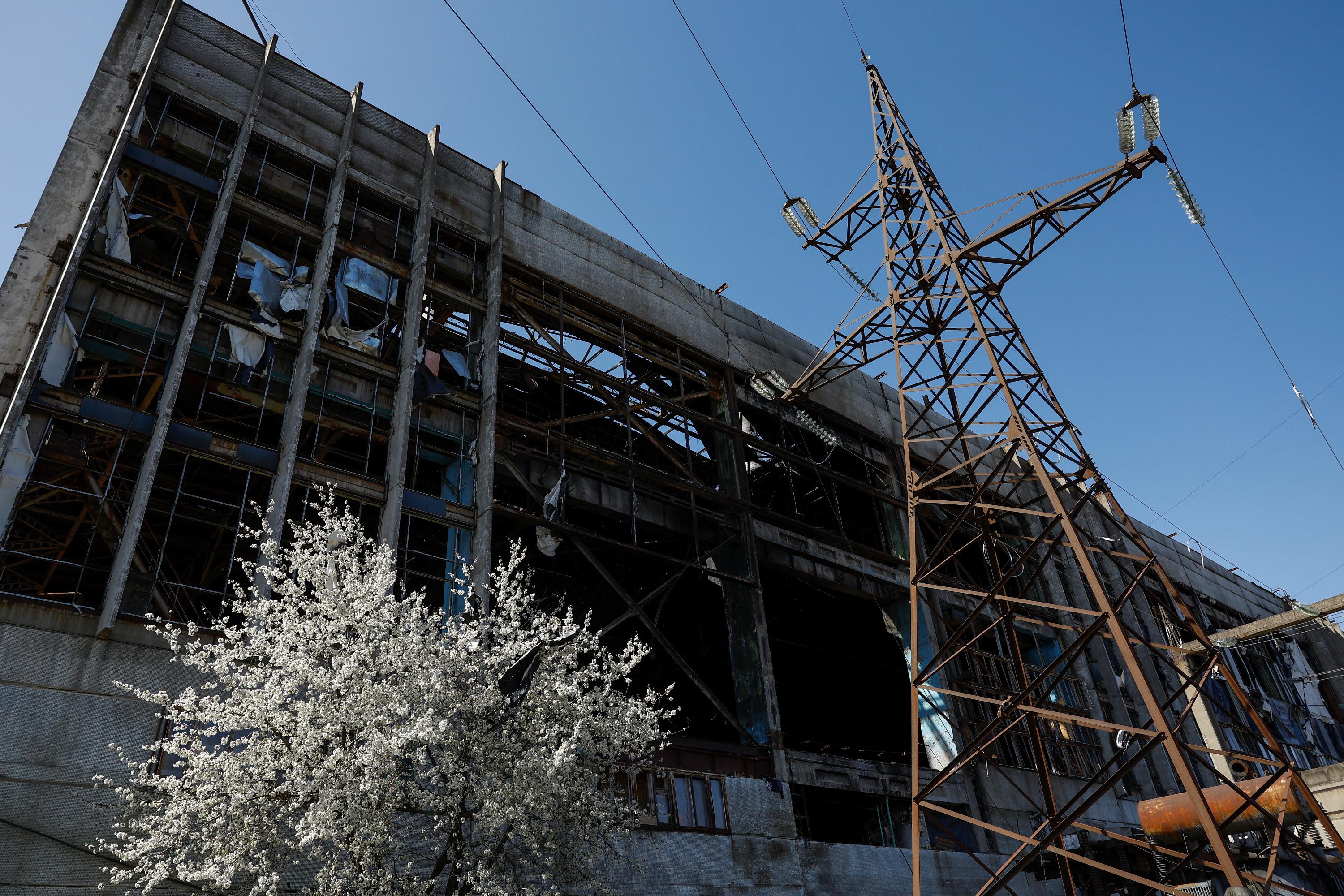
KYIV, Aug 13 (Reuters) - Ukraine will need $20 billion in investments to develop its renewable power sector under a plan which seeks to boost its share in the country's energy mix to 27% by 2030, the government said on Tuesday. The country's energy sector has lost half of its generating capacity as a result of Russian missile and drone attacks, which intensified in spring 2024, forcing it to rely on its nuclear plants as well as solar and wind generation. The plan approved by the government aims to add around 10,000 megawatt of new generation facilities. The share of renewable energy in heat and cold supply systems should reach 33%, in electricity generation 29% and in the transport sector 17% in 2030, the government said. It did not say what the current share of renewables in the energy mix was. Local media reported that it accounted for 10%. The government also said it would announce several tenders for the construction of new generating capacities of 700 megawatts and 5 to 80 megawatts. The new facilities are to be operational by the end of 2027. Nuclear is Ukraine's largest source of low-carbon energy, but its plants have become the site of safety fears during the war with Russia. Sign up here. https://www.reuters.com/sustainability/ukraine-approves-20-bln-plan-increase-renewable-energy-production-by-2030-2024-08-13/
2024-08-13 11:39
Aug 13 (Reuters) - Uranium Energy (UEC.A) , opens new tab said on Tuesday it has restarted uranium production at its Christensen Ranch operations in Wyoming, with shipments expected in November or December. Uranium is the most widely used fuel for nuclear energy. With a global push for clean energy, nuclear generation could roughly double by 2050, and so should supply, according to the International Energy Agency. With a rebound in uranium prices, miners are planning to restart defunct mines to boost the domestic supply for the nuclear reactor fuel at a time when the country gets most of its fuel from Russia , opens new tab. "U.S. production has been virtually non-existent for many years ... This situation is changing by way of successive and unprecedented bipartisan U.S. government programs designed to stimulate growth of domestic uranium production as the foundation of a robust nuclear fuel supply chain," said Uranium Energy's CEO Amir Adnani. The recovered uranium from the Christensen Ranch will be processed at the Irigaray Central Processing Plant, which is under regulatory review to increase capacity to 4 million pounds of triuranium octoxide - a uranium compound - from 2.5 million pounds, the company said. Sign up here. https://www.reuters.com/markets/commodities/uranium-energy-restarts-uranium-production-wyoming-2024-08-13/

2024-08-13 11:37
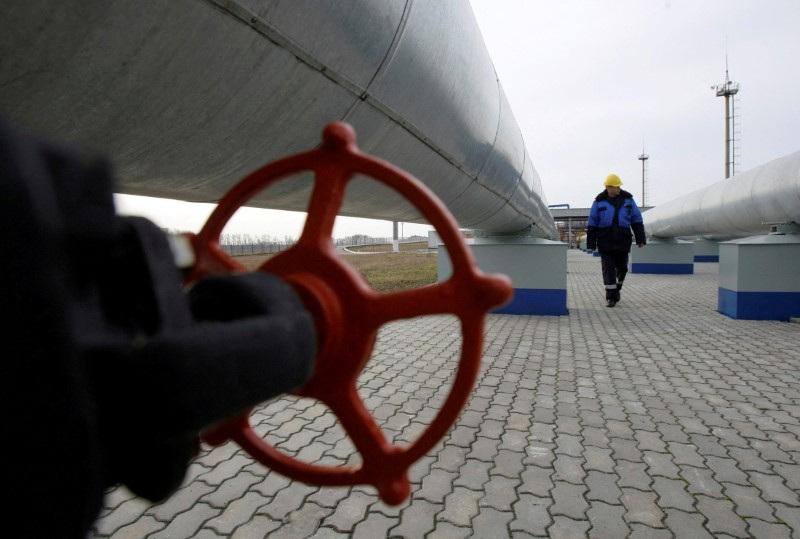
VIENNA/PRAGUE, Aug 13 (Reuters) - Intense fighting between Ukrainian and Russian forces near a pipeline Russia uses to supply European countries with gas has not disrupted supplies, network operators and gas companies said on Tuesday. The European Union drastically reduced its reliance on Russian gas after the Ukraine war began in 2022, leaving Austria the EU country most reliant on Russian supplies. "We are not aware of any pressure fluctuations, all nominations are going according to plan and there are no indications of any irregularities," Gas Connect Austria spokesperson Armin Teichert said. Russia's Gazprom also said on Tuesday it was still pumping gas to Ukraine through Sudzha, just over the border from Ukraine. It was unclear which side was in control of the Russian town of Sudzha, through which Russia pumps gas from Western Siberia through Ukraine and on to Slovakia and other European Union countries. In a statement on Aug. 3, the Austrian energy regulator E-Control said that even if Russian gas supplies were halted, the country has enough gas in store for the peak demand European winter. Austrian energy group OMV (OMVV.VI) , opens new tab said it could fulfil its natural gas supply obligations in any supply scenario. Most recipients of gas via Ukraine have said they have been preparing for the stoppage of flows at the end of this year anyway when a transit deal between Ukraine and Russia expires as Ukraine has said it does not want to renew it. Eight entry points connect Ukraine with Slovakia, Poland, Romania and Hungary, through which Russian flows can reach the EU. Currently, two are used - at Polish and Slovakian interconnection points - and then the volumes can be transmitted to other countries in central and eastern Europe, according to Kpler Insight analysts. They estimate that Slovakia's implied use of Ukrainian flows were nearly 80% in 2023. "This dependency could increase if inflows from Hungary decrease and a cold winter occurs as no Russian gas would be available for refilling storage levels," they said. Slovak gas company SPP said it has been preparing for the risk of a halt in Russian gas supply for several years and has commercial contracts in place with non-Russian suppliers. Hungary gets around 1 billion cubic metres of Russia gas a year via a pipeline from Austria and a spokesperson at the Hungarian pipeline operator said gas was still flowing. Sign up here. https://www.reuters.com/business/energy/russian-gas-flows-austria-despite-fighting-regulator-says-2024-08-13/