
2024-08-12 16:34
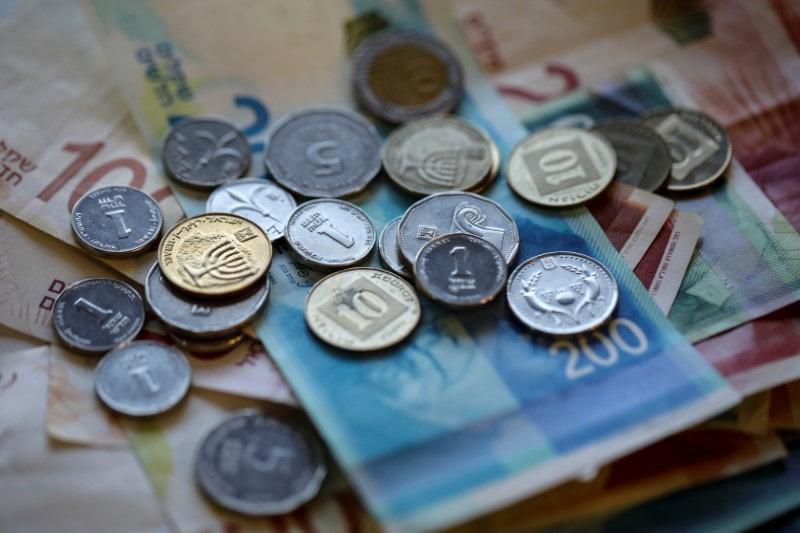
JERUSALEM, Aug 12 (Reuters) - Israel's shekel slipped as much as 1.7% against the dollar on Monday and Tel Aviv stocks shed more than 1% with investors becoming increasingly worried over a possible attack on Israel from Iran and Hezbollah. The shekel slumped to 3.7860 per dollar by 1556 GMT, a decline that saw the currency suffer its worst daily drop since Oct. 9, when it dropped more than 2.5% in the wake of the Hamas attack on Israel on Oct. 7. The shekel had closed at 3.72 on Friday. "We mostly remain elevated on Iran, with that also generating some of the volatility," said Mizrahi Tefahot Bank chief strategist Yonie Fanning. Israel shekel implied volatility gauges have risen sharply in recent days, with the three month measure hitting 11%, its highest level since November, data from Fenics showed. Monday's decline in the shekel nearly wiped out all of last week's 2% gains. The currency has weakened 5% over the past 12 months. Emerging market currencies have struggled more widely this year against a broadly stronger dollar. "The shekel is struggling to hold on to last week's gains amid rising market concerns that an attack by Iran on Israel could be imminent, based on comments from various officials from both sides," said Piotr Matys, senior FX analyst at InTouch Capital Markets. Israel's currency has been on a rollercoaster ride since the start of the month. It had weakened to 3.85 per dollar on Aug. 6 following concerns that Iran and its proxy Hezbollah in Lebanon would retaliate for Israel killing senior Hezbollah and Hamas officials, but the shekel moved back to 3.72 last week on efforts by the United States, Britain, France and Germany to prevent attacks. On Friday, an Iranian Revolutionary Guards deputy commander was quoted as saying by local news agencies that Iran was set to carry out an order by Supreme Leader Ayatollah Ali Khamenei to "harshly punish" Israel over the assassination on July 31 of the leader of Palestinian militant group Hamas in Tehran. Israeli Defence Minister Yoav Gallant told U.S. Defense Secretary Lloyd Austin on Sunday that Iran was making preparations for a large-scale military attack on Israel, according to an Axios reporter, citing a source with knowledge of the call. "Expectations of a ceasefire are low and declining and the spectre of an Iranian retaliation remains," said Hasnain Malik, head of equity research at Tellimer. Tel Aviv share indices were down between 1.3% and 1.5%. Sign up here. https://www.reuters.com/markets/currencies/israel-shekel-stumbles-iran-hezbollah-attack-concerns-2024-08-12/
2024-08-12 12:21
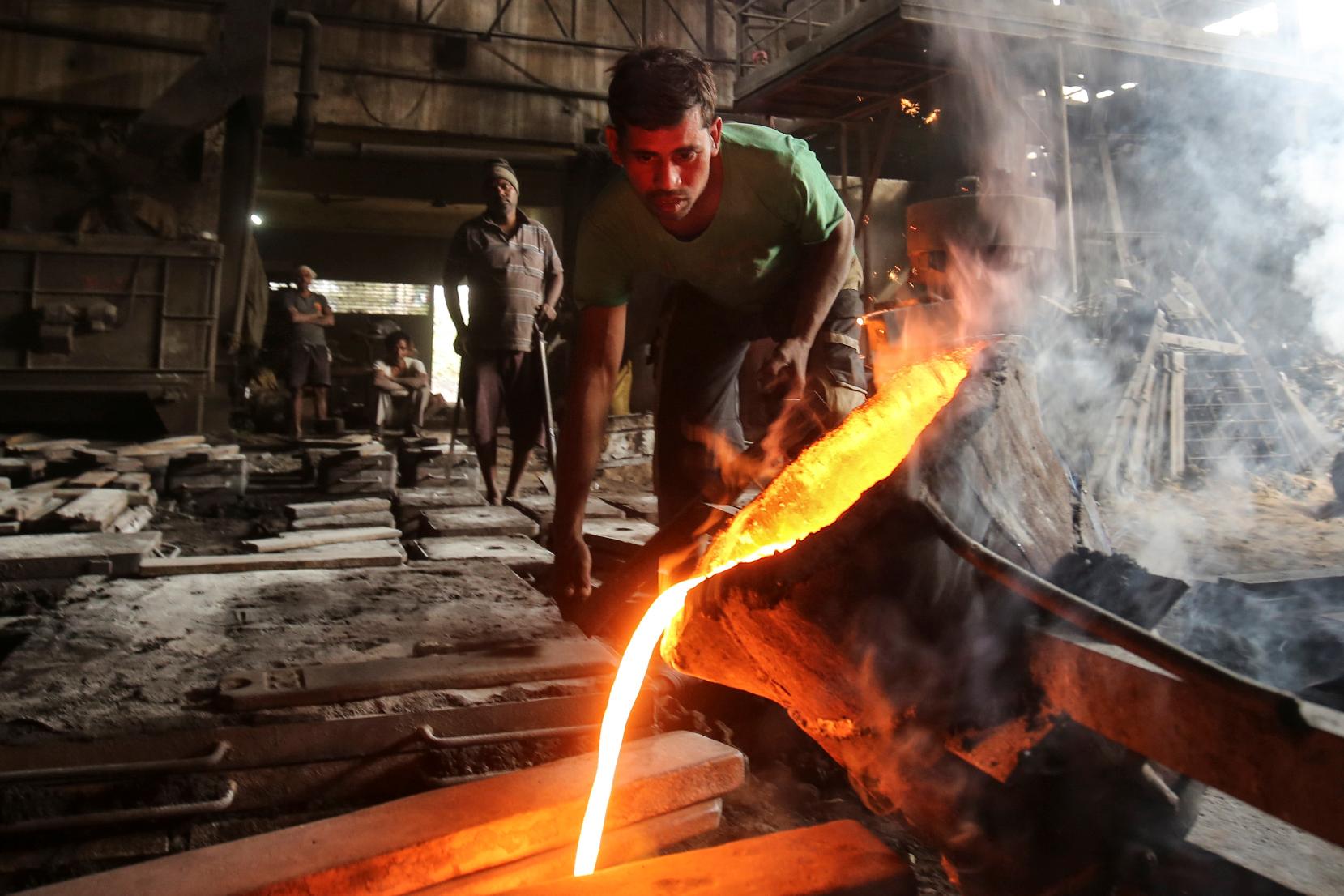
NEW DELHI, Aug 12 (Reuters) - India's industrial output (INIP=ECI) , opens new tab grew at a lower-than-expected 4.2% year-on-year in June, hurt by weaker manufacturing growth, government data showed on Monday. Economists polled by Reuters had expected growth of 5.5%. Industrial output growth was revised to 6.2% in May. Manufacturing output rose 2.6% in June, compared to a 3.5% rise a year ago. Electricity generation was up 8.6%, compared to a 4.2% rise last year, while mining activity grew 10.3% as against a 7.6% increase last year. For the April-June period, however, industrial output jumped 5.2%, against a 4.7% rise a year earlier. Sign up here. https://www.reuters.com/world/india/indias-industrial-output-up-42-yy-june-2024-08-12/
2024-08-12 12:20
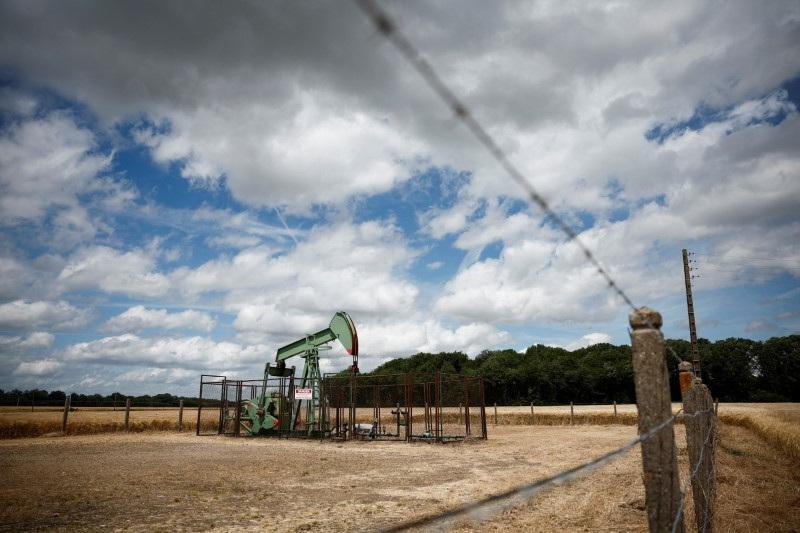
LONDON, Aug 12 (Reuters) - Investors cut their petroleum positions to the lowest level for at least a decade early last week, part of a broad-based retreat from risk amid rising concerns over a global economic slowdown. Hedge funds and other money managers sold the equivalent of 110 million barrels in the six most important petroleum futures and options contracts over the seven days ending on Aug. 6. Fund managers had been net sellers in each of the five most recent weeks, reducing their combined position by a total of 372 million barrels since the start of July. By Aug. 6, the combined position had been slashed to 152 million barrels, the lowest in records dating back to 2013. The most recent week saw sales across the board in Brent (-53 million barrels), NYMEX and ICE WTI -31 million), European gas oil (-13 million), U.S. diesel (-9 million) and U.S. gasoline (-5 million). Position changes were fairly evenly divided between the liquidation of former bullish long positions (-60 million) and initiation of fresh bearish shorts (+50 million). Chartbook: Oil and gas positions , opens new tab The sell-off was the fastest since January and February 2020, when traders were bracing for the spread of the coronavirus epidemic from China to the rest of the world. As a result, fund managers held a record low position in Brent, and near-record low positions in the rest of the petroleum complex. The speed, scale and breadth of selling was consistent with a broad risk-off move across asset markets as well as concerns about a slowdown in the major economies and deterioration in the outlook for oil consumption. In recent weeks, oil traders have focused more on the future consumption threat rather than the slow depletion of global inventories. But the extremely bearish positioning in Brent and other contracts has created a potentially attractive entry point for new bullish long positions – provided a slowdown is averted. Front-month Brent futures prices have bounced back above $80 per barrel from a low of just $75 per barrel at one point on Aug. 5. With positions now extremely bearish, the recession-on trade in the oil market has become crowded and vulnerable to reversal. The price bounce is consistent with fund managers repurchasing some short positions to take profits and perhaps establishing some fresh bullish long positions to anticipate the short-covering rally and a fading recession risk. U.S. NATURAL GAS Portfolio managers made few changes to their broadly neutral position in U.S. natural gas as inventories continued to deplete slowly despite ultra-low prices encouraging maximum summer consumption by power generators. Hedge funds and other money managers sold the equivalent of 40 billion cubic feet (bcf) of futures and options linked to the price of gas at Henry Hub in Louisiana, reversing purchases of 30 bcf the week before. The net position was basically unchanged at a net long of 332 bcf, in the 41st percentile for all weeks since 2010, best characterised as neutral verging on moderately bearish. Working gas inventories accumulated by just 71 bcf over the four weeks ending on Aug. 2, the smallest seasonal increase in data going back to 2010, as generators continued to binge on cheap gas. The unusually small accumulation of inventories this summer has helped narrow the record surplus inherited from winter 2023/24. Inventories are 441 bcf (+16% or +1.35 standard deviations) above the prior ten-year seasonal average, down from a surplus of 664 bcf (+40% or +1.47 standard deviations) on March 15. Even so, with the airconditioning season more than half over, it is virtually certain inventories will still be above average when the 2024/25 winter heating season starts on Nov. 1. After multiple frustrated attempts over the last year to build a bullish position anticipating a normalisation of inventories, the persistence of plentiful stocks is enforcing a more cautious approach for the time being. Related columns: - Oil traders ignore dwindling stocks to focus on economy(August 8, 2024) - Oil prices tumble as investors brace for global slowdown(August 5, 2024) - Oil bulls retreat as inventories stay plentiful (July 29, 2024) - U.S. crude oil prices retreat amid doubts about further stock draw(July 25, 2024) John Kemp is a Reuters market analyst. The views expressed are his own. Follow his commentary on X https://twitter.com/JKempEnergy , opens new tab Sign up here. https://www.reuters.com/business/energy/oil-investors-cut-positions-record-low-amid-financial-market-meltdown-kemp-2024-08-12/
2024-08-12 12:02
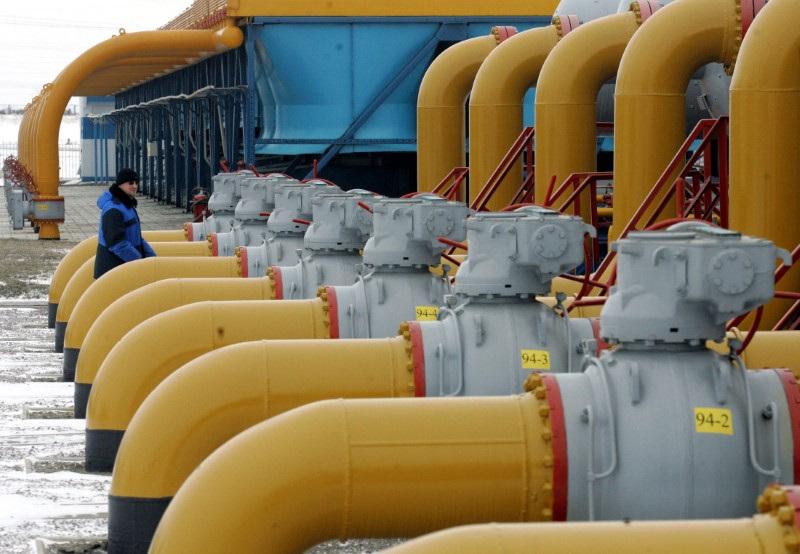
MOSCOW, Aug 12 (Reuters) - Russia is still pumping natural gas to Europe via the war zone in Ukraine. Why? WHERE DOES THE PIPE GO? The Soviet-era Urengoy-Pomary-Uzhgorod pipeline brings gas from western Siberia via Sudzha in Russia's Kursk region. It then flows through Ukraine in the direction of Slovakia. In Slovakia, the gas pipeline is divided, one of the branches goes to the Czech Republic, the other to Austria. The main buyers of gas are Hungary, Slovakia and Austria. About 14.65 billion cubic metres (bcm) of gas was supplied via Sudzha in 2023, or about half of Russian natural gas exports to Europe. EU gas consumption fell to 295 bcm in 2023. Sudzha, just over the border from Ukraine, is the focus of intense battles between Ukrainian and Russian forces. It is unclear who controls the town. Gazprom's gas metering point Sudzha is located a few miles out of the town, closer to Russian-Ukraininan border. Russia's Gazprom said it would send 39.6 million cubic metres(mcm) of gas to Europe via Ukraine on Monday compared to 39.3 mcm on Sunday. HOW MUCH DOES RUSSIAN SUPPLY TO THE EU? Russia used to supply a little under half of the European Union's gas before the 2022 Ukraine war. But Europe has turned away from Russian gas while as yet unexplained attacks on the Nord Stream pipeline have reduced Russian supplies. Russian gas has been replaced by liquefied natural gas (LNG) imports: the United States has increased its slice of the EU gas market to 56.2 bcm in 2023 , opens new tab from 18.9 bcm in 2021 while Norway grew its share to 87.7 in 2023 from 79.5 bcm in 2021. Other suppliers were North African countries, Britain and Qatar. No one has taken responsibility for the September 2022 Nord Stream blasts, which occurred off the Danish island of Bornholm and ruptured three out of four lines of the system that delivers Russian gas to Europe. Russia says that the United States and Britain were behind the blasts but has presented not evidence. The New York Times and The Washington Post have reported that Ukraine - which has repeatedly denied involvement, was behind the attack. Russia supplied a total of around 63.8 bcm of gas to Europe by various routes in 2022, according to Gazprom data and Reuters calculations. That volume decreased, by 55.6%, to 28.3 bcm last year. At their peak in 2018-2019, annual flows to the European region reached between 175 bcm and 180 bcm. WHY DOES RUSSIA STILL SEND GAS VIA UKRAINE? About half of Russia's natural gas exports to Europe go through Ukraine. The main reasons are money and history. Gazprom, which holds about 16% of global gas reserves and employs nearly half a million people, was once one of Russia's most powerful corporate empires - so powerful it was known as "a state within the state". But it has fallen on hard times due to the loss of the European gas market. The company plunged to a net loss of 629 billion roubles in 2023, its first annual loss in more than 20 years, amid dwindling gas trade with Europe, once its main sales market. Ukraine, once an integral part of the Soviet Union, also earns money from the transit. WILL THE TRANSIT CONTINUE? In December 2019, Moscow and Kyiv signed a long-term five-year agreement for the transit of Russian gas via Ukraine: 45 bcm in 2020 and 40 bcm per year in 2021-2024. The agreement on Russian gas transit to Europe through Ukraine expires in 2024, and Kyiv has said it has no intention of extending it or concluding a new deal. Russia is ready to continue gas supplies to Europe via Ukraine after the current transit agreement expires at the end of 2024, Russian state news agencies reported last month, citing Deputy Prime Minister Alexander Novak. In May 2022, Ukraine stopped receiving transit gas through the Sokhranovka station with a capacity of 30 million cubic meters per day, citing force majeure and proposing to transfer all transit volumes to Sudzha. The only other operational pipeline route to Europe is Turkstream under the Black Sea. Sign up here. https://www.reuters.com/business/energy/is-it-end-russian-gas-supplies-europe-via-ukraine-2024-08-12/
2024-08-12 11:33
LONDON, Aug 12 (Reuters) - The share of available aluminium stocks of Russian origin in warehouses approved by the London Metal Exchange rose to 65% in July from 50% in June while the share for Indian origin fell to 33% from 40%, LME data showed on Monday. On-warrant aluminium stocks in LME-registered warehouses of all origins fell by 23% in July, with Monday's data showing that the majority of that outflow was Indian metal. Russian aluminium stocks on LME warrant - a title document conferring ownership - edged up to 233,775 metric tons last month from 232,350 in June, the data showed. Stocks of Indian origin fell to 119,575 tons from 188,800 tons. The LME banned from its system all Russian aluminium, copper and nickel produced from April 13 to comply with U.S. and British sanctions imposed over Russia's 2022 invasion of Ukraine. Sign up here. https://www.reuters.com/markets/commodities/share-russian-aluminium-lme-warehouses-rose-65-july-2024-08-12/

2024-08-12 11:25
Aug 12 (Reuters) - Canada's Tourmaline Oil (TOU.TO) , opens new tab said on Monday it will acquire Crew Energy (CR.TO) , opens new tab in a C$1.3 billion ($947.52 million) all-stock deal, which includes debt, to boost its presence in the Montney shale play in Alberta. The shale formation, which spans northern Alberta and British Columbia, accounts for roughly half of Canada's gas production, and is one of the country's most attractive energy-producing regions due to its strong economics. Crew Energy shareholders will receive 0.114802 Tourmaline shares for every share of Crew Energy held, valuing the deal at about C$6.69 per Crew share, representing a premium of around 72% over Friday's closing prices. The company said the acquisition, which is expected to close in early October, will add over C$200 million to Tourmaline's projected 2025 free cash flow. The Crew assets are immediately adjacent to Tourmaline's existing South Montney-operated complex. The deal includes existing low decline average base production of 29,000-30,000 barrels of oil equivalent per day (boepd), and proved and probable reserves of 473.2 million barrels of oil, Tourmaline said. The company said it has raised its average production outlook for the current year to 582,500-592,500 boepd from 575,000- 585,000 boepd if the deal closes as expected. The Calgary, Alberta-based company also authorized an increase in the quarterly dividend to 35 Canadian cents per share in the third quarter, from 33 Canadian cents per share. ($1 = 1.3720 Canadian dollars) Sign up here. https://www.reuters.com/business/energy/tourmaline-oil-acquire-crew-energy-947-million-2024-08-12/


