2024-08-12 06:04
Finding $21 bln for transmission is proving a challenge Donors won't lend to state power company without guarantees EDF, Aker, Acciona involved in big renewable projects Burning coal has put South Africa in top 15 emitters PRETORIA, Aug 12 (Reuters) - South Africa's plan to expand its power grid, now the biggest bottleneck to replacing coal with renewables, has hit a snag: finding investors to lend the necessary $21 billion to a near-bankrupt state monopoly. Since May's election brought a coalition government to power, there has been a policy shift favouring renewables, after years of bureaucratic delays and contradictory messages about South Africa's willingness to give up coal, which provides 80% of its power. But as private providers - including Mainstream Renewable (owned by Aker Horizons (AKH.OL) , opens new tab), EDF Renewables and Acciona SA (ANE.MC) , opens new tab - prepare to transform the sector, many face another problem: how to get power from sunny and windy outposts to energy-hungry urban centres. Six officials told Reuters over the past month they were considering options for financing some 14,000 kilometers (8,700 miles) of power lines and pylons, but hadn't yet found a solution. "Our quest to decarbonise ... relies heavily on our ability to expand the grid," new Energy Minister Kgosientso Ramokgopa told Reuters at his office in Pretoria late last month. "But raising 390 billion rand ($21.30 billion), the state doesn't have the balance sheet to roll out that size of capital investment." Meanwhile, donors offering a total of $11.6 billion mostly in loans to fund climate-related projects are reluctant to lend the needed cash to state power firm Eskom without sovereign guarantees, which the government cannot currently provide, two donor country sources and a South African source involved in the programme, told Reuters. That is because of its high debt levels - Eskom owes over 400 billion rand, even after receiving billions in government debt relief. Broke municipalities also owe the utility 78 billion rand, which Ramokgopa calls an "existential threat". Representatives of the German and French partners in the donor-funded program did not respond to emailed questions, while British partners declined to officially comment. "SIMPLY NO WAY" Burning coal has rendered South Africa among the world's top 15 greenhouse gas emitters - above Italy, France and Britain. It is seen as a test case for aid to developing countries to switch to green energy, alongside Vietnam and Indonesia. But years of blackouts from aging power stations have also ravaged Africa's most industrialised economy, and Eskom only ended them earlier this year by firing up its coal burners to full capacity, most likely increasing emissions. A bidding process to bring in independent producers to generate power and sell it to Eskom last year failed owing to insufficient grid capacity, Rudi Dicks, head of project management at President Cyril Ramaphosa's office, said. The core issue is that the grid stems from the northeastern coal belt, but the sun beats down hardest on the semi-desert Northern Cape, while coastal Eastern Cape gets the best winds. "You really need to reconfigure the entire grid ... (but) they are chugging along building at less than 10% the pace that's needed," Crispian Oliver, head of the Presidential Climate Commission, told Reuters. Eskom's plan involves building 1,400 kilometres of transmission lines every year for at least 10 years. Last year, it managed 74 km (45 miles). "There's simply no way Treasury can put out (sufficient) ... guarantees," Oliver told Reuters, remarks echoed by Ramokgopa. "The alternative is to ... get the private sector to take on large portions of the risk," Oliver said, via mezzanine finance. "WE NEED TO BUILD NOW" A Treasury spokesperson did not respond to a request for comment, but the two donor sources said options included escrow accounts - in which a neutral third party holds the funds and releases them when both sides have met their obligations - and offtake agreements with private firms that would fund construction in exchange for future earnings. The latter could unlock cash from the United States, which currently doesn't fund transmission as it will not work with public institutions. "Should a framework involving private entities be established, we would be open to exploring partnerships," Emilia Adams, a U.S. embassy spokesperson, said. Eskom CEO Dan Marokane told Reuters that to attract private companies into transmission, the regulator still needed to overhaul tariffs "because investors want to know with certainty what their return expectations can be". He hoped this would happen by year-end. Dicks, meanwhile, said the Treasury had agreed in principle to fund some grid buildout on a case-by-case basis, and that work was underway to get private firms involved. "But that's 18 months away," he said. "And we need to build right now". Officials had agreed to adopt engineering procurement and construction financing (EPC) and independent power transmission funding (IPT) methods, Dicks said, with the latter opening up the possibility of getting China, which last year signed a raft of energy deals with South Africa, involved. A spokesperson for The State Grid Corporation of China could not be reached for comment. ($1 = 18.4847 rand) Sign up here. https://www.reuters.com/world/africa/south-africa-battles-fund-vital-grid-upgrade-green-energy-2024-08-12/

2024-08-12 05:39
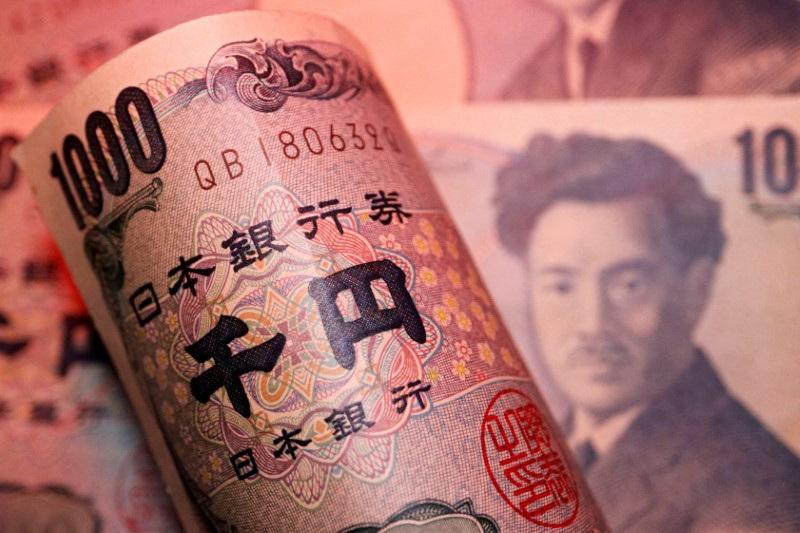
NEW YORK, Aug 12 (Reuters) - The yen fell against the dollar on Monday in calmer currency market trading as investors weighed the odds of a deep Fed interest rate cut next month ahead of a slew of U.S. economic data after volatile moves last week. The respite follows a tumultuous week that began with a massive sell-off across currencies and stock markets, driven by worries over the U.S. economy and the Bank of Japan's hawkishness. Last week ended calmer, with Thursday's stronger-than-expected U.S. jobs data leading markets to pare bets for Federal Reserve rate cuts this year. "All they're really looking at is to see whether the inflation narrative is going to revive with this week's (consumer price index), or we're going to continue with the new narrative of is the economy headed for a recession, typified by what's going on with the labor market in nonfarm payroll," said Joseph Trevisani, senior analyst at FXStreet.com in New York. Still, investors are pricing 100 basis points of Fed cuts by year-end, according to the CME Group's FedWatch , opens new tab tool, and U.S. producer and consumer prices numbers due on Tuesday and Wednesday could shift market perceptions. "We're looking at which way the Fed's attention is going to go. Right now, it's back on the labor market. That could switch if you get something unexpected in the inflation, CPI numbers, especially if those numbers tick up," Trevisani said. The dollar was trading at 147.10 yen , up 0.33%, and was flat on the Swiss franc, at 0.8661. The euro eased up 0.16% to $1.0933 , while the dollar index fell to 103.10. Sterling stayed flat at $1.2763. A week ago, the euro rose as far as $1.1009 for the first time since Jan. 2. CARRY TRADES UNWIND Markets, in particular Japan's, were rocked last week by an unwinding of the hugely popular yen carry trade, which involves borrowing yen at a low cost to invest in other currencies and assets offering higher yields. The violent sell-off in the dollar-yen pair between July 3 and Aug. 5, sparked by Japan's intervention, a Bank of Japan rate rise and then the unwinding of yen-funded carry trades, caused it to fall 20 yen. Leveraged funds' position on the Japanese yen shrank to the smallest net short stance since February 2023 in the latest week, U.S. Commodity Futures Trading Commission and LSEG data released on Friday showed. The yen reached its strongest level since Jan. 2 at 141.675 per dollar last Monday. It is still down around 4% versus the dollar so far this year. "Comments this morning from an ex-BoJ official summarizing why the BoJ is unlikely to be in a rush to hike rates again has undermined the JPY," said Jane Foley, head of FX strategy at Rabobank in London. "That said, with volatility likely to be higher into the end of the year in view of the U.S. election and the likelihood of Fed rate cuts, the market is unlikely to plow back into carry trades." Sign up here. https://www.reuters.com/markets/currencies/yen-slips-markets-brace-us-inflation-data-2024-08-12/
2024-08-12 05:07
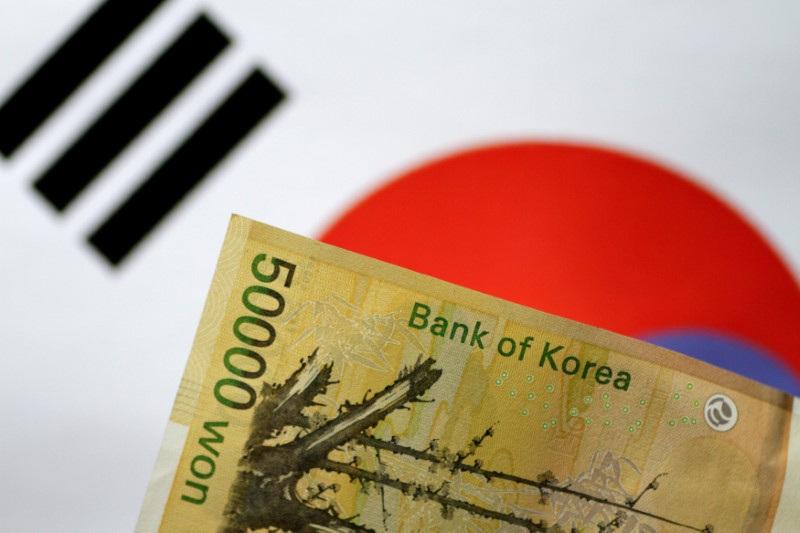
SEOUL, Aug 12 (Reuters) - The Bank of Korea and the Central Bank of the Republic of Turkey have agreed to renew a currency swap agreement for up to 2.3 trillion won ($1.68 billion), South Korea's finance ministry said in a statement on Monday. The agreement will be effective for three years. Sign up here. https://www.reuters.com/markets/currencies/south-korea-turkey-renew-currency-swap-agreement-three-years-2024-08-12/
2024-08-12 04:35
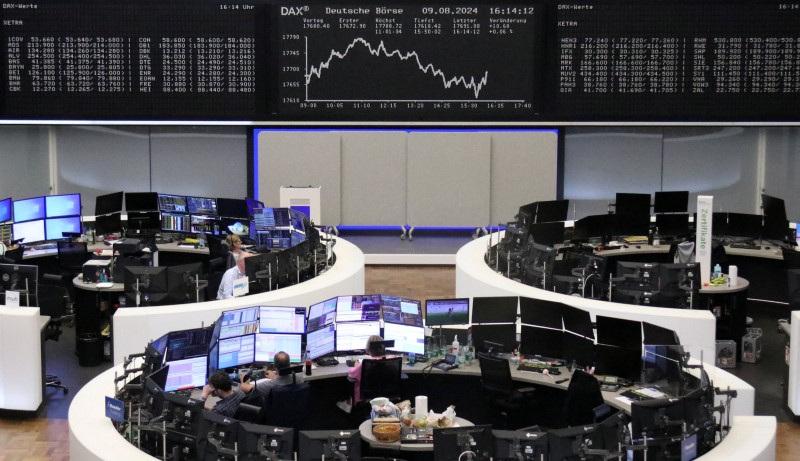
A look at the day ahead in European and global markets from Wayne Cole It's been a blessedly quiet start to the week in Asia with Japan taking a much-needed holiday for Mountain Day, after the Nikkei tumbled down a mountain of its own last week and sent global markets reeling. If Tokyo were open, futures suggest the Nikkei would be trading 400 or so points higher but still not back to where it was before last Monday's record plunge. Most other Asian stock markets are firmer, led by a 2% jump in Taiwan, while Wall Street futures are flat. The dollar was dithering around 147.00 yen, with the unravelling of the yen carry trade seemingly over for now. IMM data out last week showed net short USDJPY positions now at 11,354, down from 184,000 in early July. Treasury futures are also little changed while Fed fund futures imply a 49% chance of a half-point rate cut in September, after touching 100% at one point a week ago. Fed officials have effectively pushed back on chatter of an inter-meeting cut, with Fed Governor Michelle Bowman noting on the weekend that inflation was still uncomfortably above target. She did soften her typically hawkish tone enough to concede that rates will need to fall gradually if inflation continues to slow. Markets will know more about that when U.S consumer price data is released on Wednesday, with forecasts tipping annual core inflation to fall a tick to 3.2%, the lowest since April 2021. An even lower number would have pundits again warning the Fed was behind the curve on cutting. Note: July retail sales on Thursday could surprise on the high side given the median forecast is +0.3% but the range is 0.0% to +0.9%. Results from Walmart and Home Depot this week will offer more colour on the state of demand. Weekly jobless claims could also move markets more than usual given the unexpectedly sharp fall reported last week. In geopolitics, the Middle East remains a tinder box with Israeli Defense Minister Yoav Gallant telling U.S. Defense Secretary Lloyd Austin that Iran was getting ready for a large-scale attack on Israel. The Pentagon made the rare decision to publicly report that Austin had ordered the deployment of a nuclear-powered guided missile submarine to the Middle East. The Pentagon added that Austin had also ordered the Abraham Lincoln strike group to accelerate its deployment to the region. Key developments that could influence markets on Monday: - German Economy Minister Robert Habeck, RWE Chief Executive Markus Krebber speak Sign up here. https://www.reuters.com/markets/europe/global-markets-view-europe-2024-08-12/
2024-08-12 04:34
LONDON, Aug 12 (Reuters) - Catherine Mann, an external member of the Bank of England's Monetary Policy Committee, said in a podcast released on Monday that goods and services prices were set to rise again and wage pressures in the economy could take years to dissipate. Mann voted against this month's cut in interest rates and said in the Financial Times podcast that she put her hawkishness at 7 out of 10, down from 10 out of 10 earlier this year when she voted to raise rates further from their 16-year high of 5.25%. "There is an upwards ratchet to both the wage setting process and the price process and ... it may well be structural, having been created during this period of very high inflation over the last couple of years," she said. "That ratchet up will take a long time to erode away," she added. British inflation returned to its 2% target in May but data this week is likely to show it rose back above it to 2.3% and the BoE has forecast it will reach about 2.75% later this year as the effect of last year's fall in energy prices fades. Mann said she saw upward pressure on wages from the fact that wages had risen fastest for the lowest paid, compressing pay scales and creating a potential demand over the coming years from better-paid workers to restore the earnings premium they previously enjoyed. Britain's new Labour Party government has said it will continue the previous Conservative government's goal - achieved last year - of keeping the minimum wage at two thirds of median earnings, one of the highest in the world. Some businesses too would seek to match competitors' past price rises and solid demand also meant they would feel less pressure to pass on cost savings from recent strengthening of sterling, she added. Figures out on Monday from the Chartered Institute of Personnel and Development showed that employers expected to raise pay by 3% over the coming year, the lowest amount in two years and below the 4.1% in a similar BoE survey. Sign up here. https://www.reuters.com/world/uk/boes-mann-says-uk-wage-growth-still-concern-inflation-ft-reports-2024-08-12/

2024-08-12 03:09
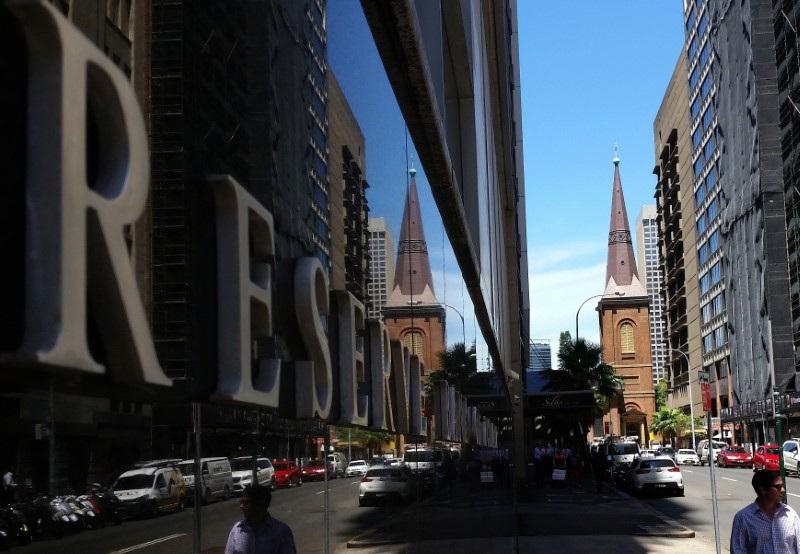
SYDNEY, Aug 12 (Reuters) - Australia's central bank said on Monday economic forecasts were subject to huge uncertainty, one reason that policymakers have stayed the course on interest rates while waiting for more data. Reserve Bank of Australia (RBA) Deputy Governor Andrew Hauser, in a speech in Brisbane, said inflation had been sticky in part due to there being less spare capacity in the economy than previously thought, though again estimates were subject to error. That was why the RBA's latest forecasts showed core inflation, which ran at 3.9% in the June quarter, was only expected to ease back to the target band of 2-3% by the end of 2025, more than a year away. However, Hauser noted that the change in the assumption was tiny relative to the huge range of uncertainty over these forecasts. "As humans, we are all prone to overconfidence, particularly when forecasting the future. In many cases, the answer we ought to give is that we simply do not know," Hauser said. "In some cases, uncertainty may induce you to be less activist – as you wait for more data, or try to avoid triggering tail risks through your own actions." He added there was a risk that unemployment could rise faster than expected and that consumption could pick up more strongly in response to an expected increase in household wealth. The RBA has held its policy steady since November, judging the current cash rate of 4.35% - up from the 0.1% during the pandemic - is restrictive enough to bring inflation to target while preserving employment gains. Some analysts had argued that rates were not high enough, but the reluctance from the RBA to hike further had most economists looking for a rate cut early next year, trailing other major central banks. Markets are now wagering on an easing by the year-end, having only recently implied there was a risk of a further hike. "Beware anyone who claims it is obvious what to do – for they are false prophets!" Hauser said. Sign up here. https://www.reuters.com/markets/australias-central-bank-underlines-uncertainty-about-economy-policy-forecasting-2024-08-12/