2024-08-12 00:40
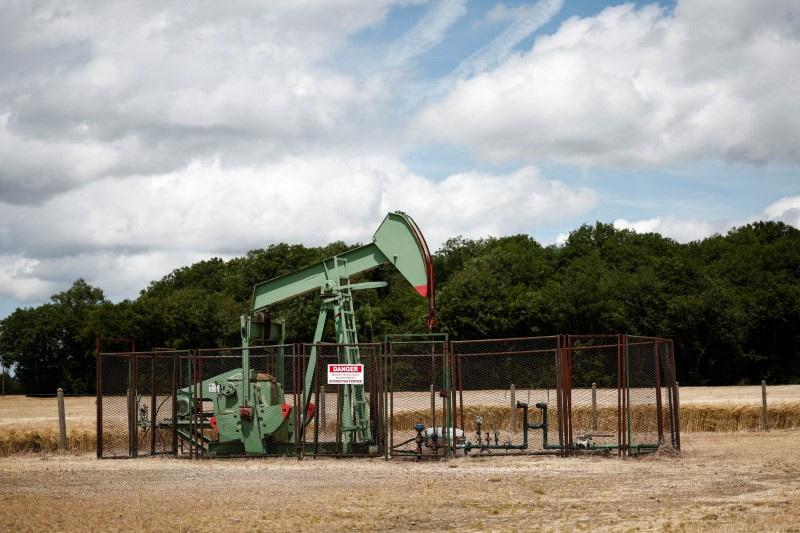
Brent benchmark saw the biggest percentage gain this year US to send guided missile submarine to Middle East Wider war could lead to US embargos on Iranian crude: analyst NEW YORK, Aug 12 (Reuters) - Oil prices jumped by more than 3% on Monday, rising for a fifth consecutive session on expectations of a widening Middle Eastern conflict that could tighten global crude oil supplies. Global benchmark Brent crude futures settled higher at $82.30 a barrel, gaining $2.64, or 3.3%. U.S. West Texas Intermediate crude futures settled at $80.06 a barrel, up $3.22, or 4.2%. Brent saw its biggest percentage gain for a single trading session this year. The U.S. Defense Department said over the weekend that it will send a guided missile submarine to the Middle East as the region braces for possible attacks on Israel by Iran and allies. "We're piling assets one on top of the other and giving the impression that, if this turns hot, it could also turn ugly," said Bob Yawger, director of energy futures at Mizuho in New York. Iran and Hezbollah have vowed to retaliate for the assassinations of Hamas leader Ismail Haniyeh and Hezbollah military commander Fuad Shukr. An attack could widen the Middle Eastern conflict, while tightening access to global crude supplies and boosting prices. Such an assault could lead the United States to place embargos on Iranian crude exports, potentially affecting 1.5 million barrels per day of supply, Yawger said. Meanwhile, Israeli forces continued operations near the southern Gaza city of Khan Younis on Monday following an airstrike over the weekend on a school compound that killed at least 90 people, according to the Gaza Civil Emergency Service. Israel said the death toll was inflated. Hamas cast doubt on its participation in new ceasefire talks on Sunday. "The market is increasingly concerned about a region-wide conflict there," said John Kilduff, partner at Again Capital in New York. A broadening war could lead Israel to target Iranian oil and hamper crude output from other significant producers in the area, including Iraq, Kilduff said. Brent gained 3.7% last week while WTI rose 4.5%, buoyed by stronger-than-expected U.S. jobs data that fed hopes for an interest-rate cut in the world's biggest consumer of crude oil. "Support is coming from last week's better-than-expected U.S. data, which eased fears of a U.S. recession," said IG markets analyst Tony Sycamore. Three U.S. central bankers said last week that inflation appeared to be cooling enough for the Federal Reserve to cut interest rates as soon as next month. Rate cuts tend to raise economic activity, which increases the use of energy sources such as oil. Investors were looking ahead to U.S. consumer price index data for July on Wednesday, which is expected to show month-on-month inflation ticked up to 0.2% after a minus-0.1% reading in June. Oil prices drew support when consumer prices in China, the biggest global oil importer, rose faster than expected in July. On Monday Russia evacuated civilians from parts of a second region next to Ukraine after Kyiv increased military activity near the border only days after its biggest incursion into sovereign Russian territory since the start of the war in 2022. Sign up here. https://www.reuters.com/business/energy/oil-holds-last-weeks-gains-buoyed-by-mideast-tensions-economic-data-2024-08-12/
2024-08-12 00:24
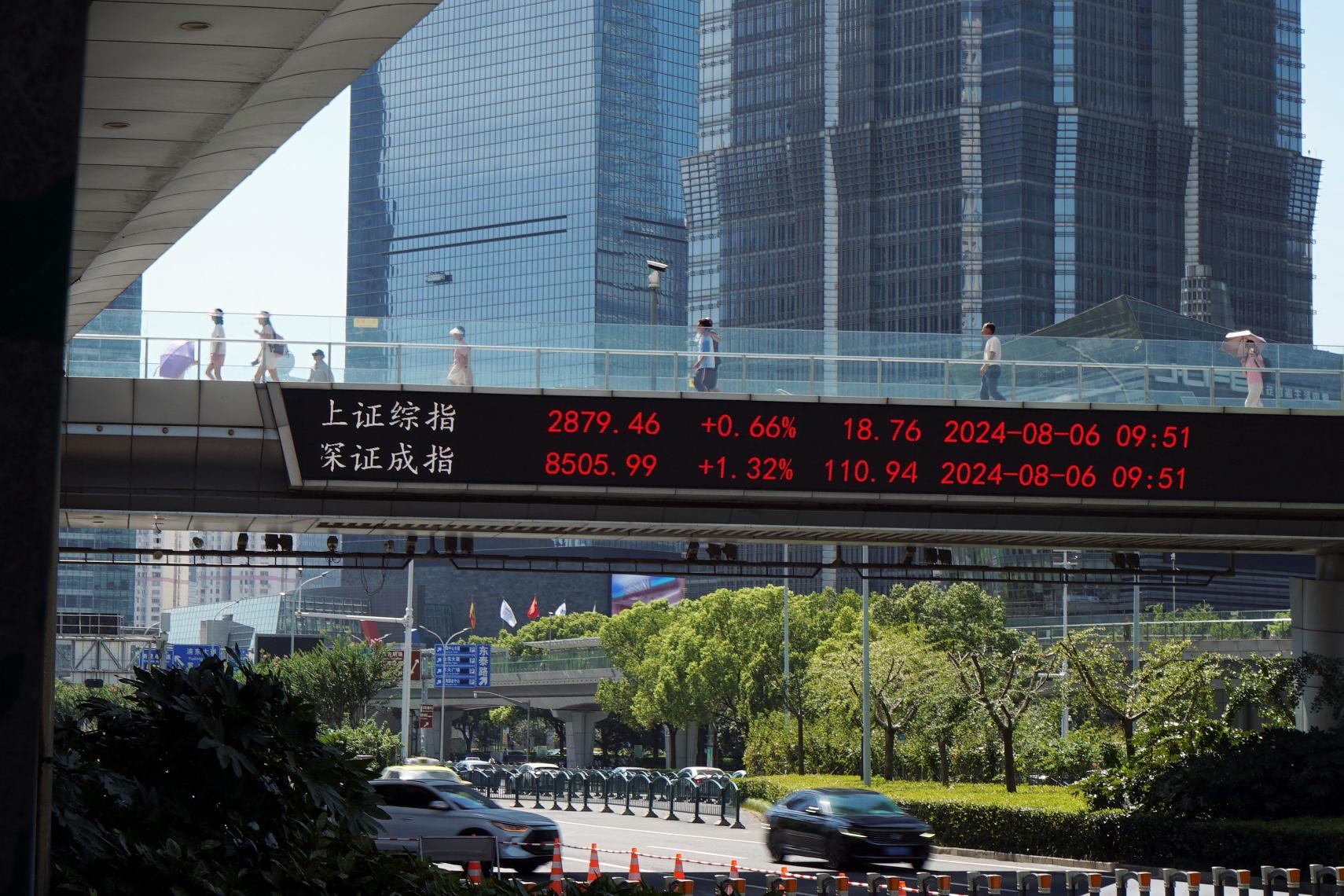
U.S. CPI, retail data to refine outlook for rates Dollar rises against yen, carry trade steadies Oil jumps on concerns of widening Mideast war curbing supply NEW YORK/LONDON, Aug 12 (Reuters) - World stocks edged higher on Monday while the yen slipped as a holiday in Japan removed one source of recent volatility, with investors looking ahead to U.S. and Chinese economic data. Investors were looking ahead to U.S. consumer price index data for July on Wednesday, which is expected to show month-on-month inflation ticked up to 0.2% after a minus 0.1% reading in June. Retail sales data is due on Thursday. On Wall Street, the S&P 500 (.SPX) , opens new tab finished flat, and the Nasdaq Composite Index added 0.2%, while the Dow Jones Industrial Average (.DJI) , opens new tab slipped 0.4%. MSCI's gauge of stocks across the globe (.MIWD00000PUS) , opens new tab also ended flat. Stock markets had a wild ride last week, driven by a plunge in Japan, on the back of weak U.S. jobs numbers and the unwinding of a highly popular Japanese yen trading strategy. Yet some stronger-than-expected U.S. data helped allay fears of a global slowdown and stocks recovered almost all of their losses by Friday. "We have been winding risk down during the recent market move globally," said Robert Both, a senior macro strategist at TD Securities. "Our preferred positioning is dovish with moderate risk allocated at the moment." In Europe, the STOXX 600 index (.STOXX) , opens new tab was little changed. Germany's DAX index (.GDAXI) , opens new tab was flat and Britain's FTSE 100 (.FTSE) , opens new tab was 0.5% higher. For now, some investors said Wednesday's U.S. inflation report will set the tone for markets this week. "It's a pretty benign expectation," said Timothy Graf, a senior macro strategist at State Street. "Inflation is really not the problem it once was." "The balance of risks is that policy has been too tight for too long. Now you're starting to see that show up in the labour market." Japan's yen slipped, with the dollar up 0.4% at 147.26 yen . The dollar index was little changed at 103.16 while the euro rose 0.1% to $1.0928. MUCH QUIETER A sharp rally in the Japanese currency in July and August has wrong-footed investors, forcing them to unwind so-called carry trades in which they borrow in Japanese yen to buy dollars and other currencies to invest in higher-yielding assets. Data on Friday showed that leveraged funds - typically hedge funds and various types of money managers - closed their positions in the yen at the quickest rate since March 2011. "It has been a much quieter start to this week than last week," said Lee Hardman, currency strategist at MUFG. "The sharp reduction in short yen positions held by leveraged funds ... has likely provided some reassurance as well that the unwind of yen-funded carry trades is now more complete." Japanese markets were closed for a holiday on Monday, leading to a calm Asia session which saw MSCI's non-Japan Asia stock index tick 0.41% higher (.MIAPJ0000PUS) , opens new tab. China issues figures on retail sales and industrial production on Thursday, which are expected to show the economy continuing to underperform, potentially exacerbating some investors' fears about global growth. The yield on the 10-year Treasury note , which sets the tone for borrowing costs around the world, slipped to 3.9035% after climbing 15 bps last week in its biggest rise since April. Yields move inversely to prices. Oil prices jumped by more than 3%, rising for a fifth consecutive session on expectations of a widening Middle East conflict threatened supplies. Israeli Defense Minister Yoav Gallant spoke on Sunday with U.S. Defense Secretary Lloyd Austin and told him Iran's military preparations suggest Iran is getting ready for a large-scale attack on Israel. Brent futures settled 3.3% higher at $82.30 a barrel, while U.S. crude ended at $80.06, up 4.2%. To read Reuters Markets and Finance news, click on https://www.reuters.com/finance/markets Sign up here. https://www.reuters.com/markets/global-markets-wrapup-1-2024-08-12/
2024-08-12 00:20
Aug 12 (Reuters) - Shell (SHEL.L) , opens new tab plans to invest in the second phase of development at joint venture Arrow Energy's Surat gas project in Queensland, Australia, the global energy giant said on Monday. The second phase of development will include up to 450 production wells, new pipeline and road and infrastructure upgrades, Shell said in a statement. The gas from the project owned by Arrow Energy, a joint venture between Shell and PetroChina (601857.SS) , opens new tab, will be supplied to Shell-operated QCLNG liquefied natural gas facility near Gladstone. The second phase of development at the project is expected to contribute around 22,400 barrels of oil equivalent per day at peak production and first gas is expected in 2026, Shell said. Shell declined to comment when Reuters contacted for further details. Sign up here. https://www.reuters.com/business/energy/shell-invest-phase-2-surat-gas-project-australia-2024-08-12/
2024-08-11 23:56
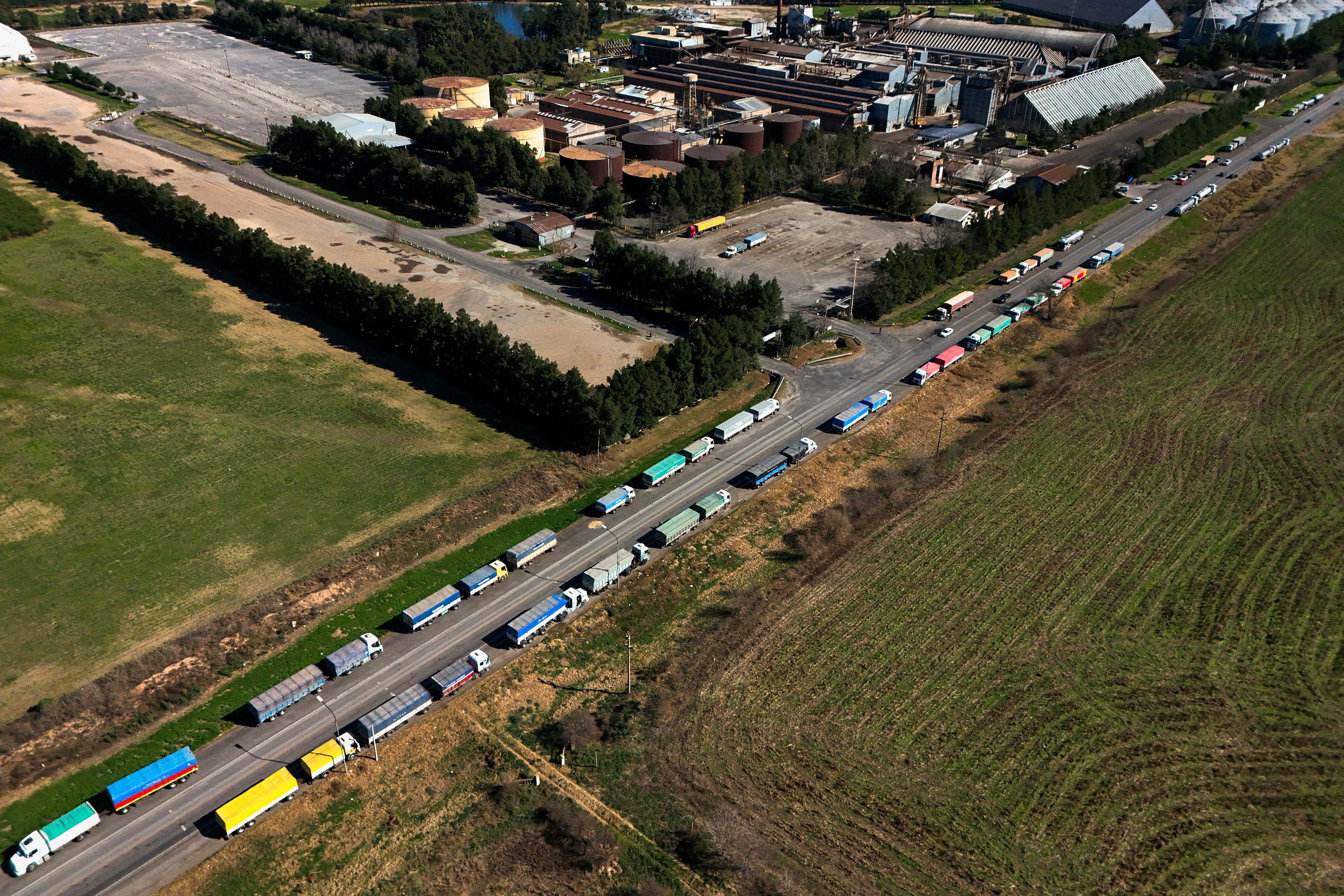
BUENOS AIRES, Aug 11 (Reuters) - An oilseed workers' strike in Argentina is set to carry on into its seventh day on Monday as wage negotiations with firms remained stalled, affecting shipments from one of the world's major grain exporters. "We will continue with the strike," Martin Morales, union secretary for the San Lorenzo Department Oilseed Workers and Employees Union (SOEA) told Reuters on Sunday. "Tomorrow we will evaluate again (whether or not to continue)." Two industrial unions kicked off the strike as workers demanded that salaries stay ahead of high inflation. Morales said that the companies affected had yet to reach out to the unions to negotiate. The strike has mainly affected terminals located north of Rosario along the Parana River, where more than 80% of Argentina's agricultural and agro-industrial exports are shipped. At least three dozen ships were still delayed on Sunday near Rosario, one of the most important agro-export hubs in the world. In June, the federal government had forced SOEA to suspend a strike by calling it to mandatory reconciliation talks, forcing the union and firms back to the negotiating table. Argentina is a major grains producer and is a top exporter of soybean oil and soybean meal. The country's economy heavily relies on the foreign-exchange funds brought in by grains exports, as the government works to shore up scarce central bank reserves. Sign up here. https://www.reuters.com/markets/commodities/argentina-oilseed-workers-strike-nears-one-week-mark-2024-08-11/
2024-08-11 23:09
Aug 12 (Reuters) - Insurers paid out a record-high 1.4 billion pounds ($1.78 billion) in claims in the UK during the second quarter, primarily due to weather-related catastrophes such as fires and flooding, the Association of British Insurers said on Monday. The average price of home insurance in the country rose by 6% from the previous quarter to £396 in the three months ended June, while the average premium for a combined policy increased by 19% compared to the same period in 2023. Homeowners and businesses alike are struggling with damages from storms, heavy rain, and frozen pipes. Claims for damages to homes reached £144 million in the period, marking the fifth consecutive quarter weather-related claims have exceeded £100 million, the ABI reported. Increased flooding in Britain from overflowing rivers and blocked drains is causing insurers to pull back from offering coverage, particularly for commercial properties and residential landlords, according to industry representatives. The industry body said a much-needed reform to the planning system, with a focus on prevention measures, is essential to better fortify the country against climate change. "Urgent government action to tackle surface water flooding and maintain flood investments and maintenance will also help reduce the future impact of flooding,” Louise Clark, Policy Adviser at the ABI said. London was among the cities hit by flash floods last week after torrential summer rain, while several southeastern U.S. states have been inundated by Tropical Storm Debby, providing a sobering reminder to insurers of the growing risks from climate change and urbanisation. ABI said second-quarter insurer payout increased 5% from the first quarter of 2024. ($1 = 0.7850 pounds) Sign up here. https://www.reuters.com/world/uk/uk-insurers-pay-out-record-claims-weather-related-claims-surge-industry-body-2024-08-11/

2024-08-11 21:50
Aug 12 (Reuters) - A look at the day ahead in Asian markets. A week is not just a long time in politics. Seven days ago a huge unwind in the yen carry trade and selloff in megacap U.S. tech triggered a wave of volatility that sent global markets reeling and investors running for the safety of U.S. Treasuries. As the new trading week gets underway in Asia on Monday, that seems a long time ago - many assets have recovered much of these losses, volatility has subsided, and traders have heavily scaled back their rate cut expectations. The question now is whether that momentum can be sustained. Some investors will seize upon lower equity volatility to push up risky assets again; others will be wary of potential aftershocks in any corner of the market, especially in mid-August when liquidity is much thinner than usual. Monday's Asian calendar is light. Indian consumer price inflation is the main event, leaving markets at the mercy of global forces. If that's the case, Monday should be relatively calm. Wall Street rose on Friday, meaning the Nasdaq and S&P 500 ended last week essentially flat. Treasury yields fell on Friday but registered their biggest weekly rise in months. Stronger-than-expected U.S. economic data suggesting recession fears are overblown, and a couple of poorly-received U.S. debt auctions, pushed yields higher. No bad thing, perhaps, if you think the previous week's plunge was excessive. Asian markets' rebound last week was pretty impressive. After the Nikkei registered its second biggest fall on record and its third largest ever rise in the space of 24 hours, the index ended the week down only 2.5%. Other benchmark indices fared even better - the MSCI Asia ex-Japan and MSCI World index both ended flat, and the MSCI Emerging Market index rose 0.2%. In currencies, U.S. futures market data on Friday showed that hedge funds slashed their net short yen position in the week to Aug. 6 by 62,000 contracts. That is the biggest yen-bullish weekly swing since the Fukushima disaster in February 2011, and third biggest since comparable data started in 1986. If this is representative of the broader FX market, the short yen 'carry trade' has been mostly wiped out. Do traders begin shorting the yen and putting on carry trades again, or not? Indian inflation is the main data point in Asia and comes after the Reserve Bank of India last week kept its key interest rate unchanged at 6.50%, dismissing the market turbulence and focusing on getting inflation down to its 4% medium term target. The consensus in a Reuters poll is for annual consumer inflation in July to fall to 3.65% from 5.08% in June. That would be the first time in five years below the RBI's medium-term target. Here are key developments that could provide more direction to Asian markets on Monday: - India interest rate decision - India industrial production (June) - Germany wholesale inflation (July) Sign up here. https://www.reuters.com/markets/asia/global-markets-view-asia-graphic-pix-2024-08-11/