2024-08-09 06:23
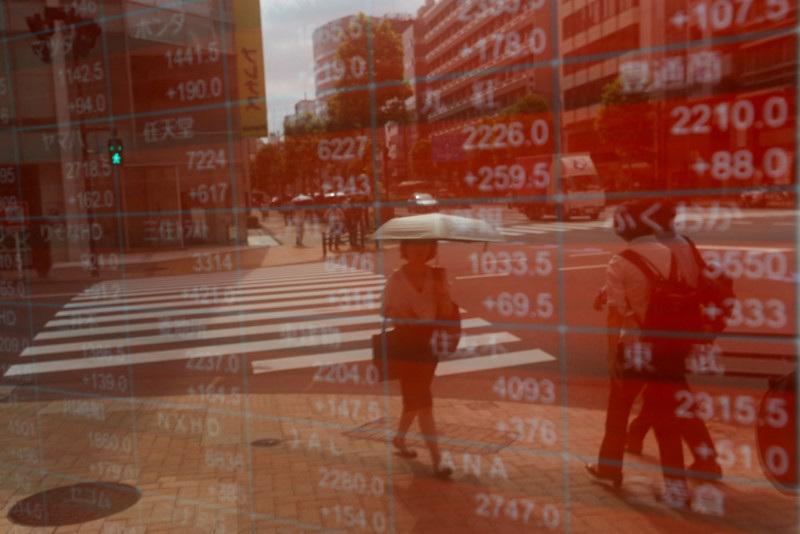
NEW YORK, Aug 9 (Reuters) - The closely watched global equities index advanced on Friday, ending a volatile week unchanged after starting it with a massive sell-off, while the dollar slipped slightly and oil prices ended higher on supply concerns over the Middle East conflict. A trio of Federal Reserve policymakers had indicated Thursday that they were more confident that inflation is cooling enough to cut rates. Their comments - along with a bigger-than-expected fall in U.S. jobless claims data - had helped to reassure investors enough to underpin the stock market recovery. On Wall Street, the three main indexes closed higher after a choppy morning. All three had tumbled on Monday, when the S&P 500 lost 3% amid a global sell-off that started in Japan as investors unwound a popular trade and worried about the prospects for a U.S. recession. With Friday's lack of new economic catalysts, Robert Phipps, director at Per Stirling Capital Management in Austin, Texas, said investors focused on hopes the S&P 500 would surpass its recent trading range of 5135 to 5346. "We finished at the top of the range but were unable to break out of it,” said Phipps, noting that this likely indicated that investors were still trying to make their mind up about the U.S. economy. "This was a relief rally, not where things were good but they were not as bad as expected. There wasn't a substantial enough economic data set during the week to break us out of the trading range." On top of economic concerns, Phipps pointed to fears "the Middle East might still erupt into a broader conflict over the weekend when markets are closed and unable to react." Investors will look for fresh evidence on the chances of a soft landing for the American economy in next week's readings on the consumer prices and retail sales for July. But in a sign of relative calm on Friday, the CBOE volatility index (.VIX) , opens new tab index, known as Wall Street's 'fear gauge,' fell 3.42 points to close at 20.37, in a far cry from its intraday spike on Monday to 65.73. On Wall Street, the Dow Jones Industrial Average (.DJI) , opens new tab rose 51.05 points, or 0.13%, to 39,497.54, the S&P 500 (.SPX) , opens new tab gained 24.85 points, or 0.47%, to 5,344.16 and the Nasdaq Composite (.IXIC) , opens new tab gained 85.28 points, or 0.51%, to 16,745.30. But for the week, the S&P 500 fell 0.04%, the Nasdaq declined 0.18%, and the Dow shed 0.6%. Meanwhile, MSCI's gauge of stocks across the globe (.MIWD00000PUS) , opens new tab rose 5.39 points, or 0.69%, to 787.16 but was virtually unchanged for the week, down 0.01%. Earlier, Europe's STOXX 600 (.STOXX) , opens new tab index closed up 0.57%. In Asia, Japan's Nikkei (.N225) , opens new tab stocks benchmark closed 0.56% higher on the day but finished with a weekly loss of nearly 2.5%. It had fallen 12.4% on Monday. In currencies, the dollar index , which measures the greenback against a basket of currencies including the yen and the euro, fell 0.12% to 103.16. Against the Japanese yen , the dollar weakened 0.42% to 146.66. The euro was down 0.03% at $1.0915. Oil prices settled higher as fears of a widening Middle East conflict persisted, with U.S. crude gaining 0.85% to end at $76.84 a barrel while Brent advanced to $79.66 per barrel, up 0.63% for the day. In U.S. Treasuries, yields slipped after a volatile week while investors eyed the next week's key inflation data for fresh clues on the potential size of a September rate cut. The yield on benchmark U.S. 10-year notes fell 5.7 basis points to 3.94%, from 3.997% late on Thursday. The 30-year bond yield fell 6.5 basis points to 4.2205% from 4.286%. The 2-year note yield, which typically moves in step with interest rate expectations, rose 0.9 basis points to 4.0531%, from 4.044% late on Thursday. Gold prices were a touch firmer, with spot gold adding 0.12% to $2,429.60 an ounce. U.S. gold futures gained 0.29% to $2,429.20 an ounce. Sign up here. https://www.reuters.com/world/china/global-markets-wrapup-1-2024-08-09/
2024-08-09 06:17
Chinese, US demand seen lagging forecasts Not clear if Q3 demand is growing fast, two OPEC sources say Worries of US recession add to pressure on oil LONDON, Aug 9 (Reuters) - Global oil demand growth needs to accelerate in coming months or the market will struggle to absorb an increase in oil supply that OPEC+ is planning to make from October, according to data, analysts and industry sources. Oil demand growth in the first seven months of the year from top consumers the United States and China had failed to meet some expectations even before renewed fears of a U.S. recession triggered a global stock and bond sell-off this week. If the economy slows further, oil demand growth will likely slow with it. That will mean OPEC+ would either have to delay plans to pump more oil or accept lower prices for higher supply, analysts said. "In current circumstances of significant risk of recession, it is unlikely OPEC+ would move forward with the planned October increases," said Gary Ross, CEO of Black Gold Investors and a veteran OPEC-watcher. The price of oil has fallen below $80 per barrel in August – less than most members of OPEC+, or the Organization of the Petroleum Exporting Countries and allies such as Russia, need to balance their budgets. "Oil demand definitely has a downside risk," said Neil Atkinson, an independent analyst who previously worked at the International Energy Agency, citing concern about Chinese and U.S. economies. "It's very difficult to see how prices can rise significantly if demand is slower than we thought" he said, adding that he expected OPEC+ to hit pause on its output increase. For the first seven months of 2024, China's crude imports totalled 10.89 million barrels per day, down 2.4% on the year, official data showed on Wednesday. China's slumping consumption of diesel, as use of LNG-powered trucks grows, is weighing on domestic fuel demand, as is a sluggish economy hobbled by a prolonged crisis in the property sector. In the United States, oil consumption through July has risen by 220,000 bpd on the year to average 20.25 million bpd, according to Reuters calculations based on government estimates. Demand will need to accelerate to reach the government's 2024 forecast of 20.5 million bpd. Whether or not global demand hits the heights needed to absorb additional supplies this year is difficult to gauge because of a record variation in where the world's most respected oil demand analysts at OPEC and the IEA measure demand to date. There is a time lag on oil consumption data, and preliminary figures are often revised. That leaves forecasters including best estimates in some of their demand figures. OPEC pegs global demand growth at 2.15 million bpd in the first half of 2024, while the IEA estimates it was 735,000 bpd. The IEA advises industrialised countries on energy policy. OPEC's estimate of first-half demand growth is little changed from what it was at the start of the year. The IEA has cut its estimate of first-half demand growth from 1.19 million bpd forecast in January. The IEA estimated China's consumption contracted in the second quarter, while OPEC estimates it rose by over 800,000 bpd. China is one of the main reasons for the difference in outlooks for the full year, as well as for the first half. Global growth would need to accelerate a little in the second half if OPEC estimates on first-half demand were correct. But if the IEA is right, demand would need to accelerate rapidly. The second half is typically the period of highest consumption as the simple fact of global economic growth increases oil demand and because it includes the peak driving season, Northern Hemisphere harvest and purchases to prepare for winter. For demand growth to hit OPEC's full-year prediction, it would need to accelerate to an average of 2.30 million bpd in the second half, according to Reuters calculations. Demand needs to grow by 1.22 million bpd in the second half to reach the IEA's full-year prediction. OPEC and the IEA are scheduled to update their demand forecasts next week. OPEC+ SUPPLY INCREASE OPEC+ last week confirmed its plan to start raising production from October with the caveat that it could be paused or reversed if needed. The increase is predicated on demand hitting OPEC's forecast, which would increase the need for oil from the producer group and its allies. OPEC+ pumps more than 40% of the world' s crude. Should OPEC's demand prediction be realised, the demand for crude from OPEC+ countries is forecast to reach 43.9 million bpd in the fourth quarter, up from production of 40.8 million bpd in June, in theory allowing room for extra output. OPEC+ still has a month to decide whether to start releasing the oil from October, and the group will study oil market data in the coming weeks, a source close to the group said. Saudi Aramco (2222.SE) , opens new tab CEO Amin Nasser said on Tuesday he expected growth of between 1.6 million and 2 million bpd in the second half of the year. Two OPEC sources said it was unclear if demand was rising as rapidly as needed to meet OPEC's third-quarter forecast. OPEC did not respond to a request for comment. U.S. DEMAND NOT CLEAR The IEA says that slower economic growth and a shift towards electric vehicles in China has changed the paradigm for the world's second-largest economy, which for years has driven global rises in oil consumption. OPEC sees strong growth persisting. Early indications of China's August crude imports, such as from data intelligence firm Kpler, point to a small rebound from July. Two traders dealing in China's purchases of West African crude said demand for August- loading oil had been soft. Global jet demand is expected this year to surpass 2019 levels, according to the International Air Transport Association, although IATA said in June that international travel in Asia remained subdued especially in China. "The big levers everyone pointed to for demand growth were jet demand and China," said a source with an oil trading company. "Chinese demand hasn't been great and jet demand is decent in Europe but has not fully recovered (from the pandemic)." In top oil consumer the United States, gasoline demand has proven hard to gauge: revisions to official data last week showed May demand at the highest level since August 2019. Earlier estimates and independent trackers pegged demand below last year. Dour economic data from the United States could also spell trouble for oil markets, especially for diesel. U.S. diesel demand was about 4% lower in the first five months of this year than in 2023, according to EIA data. Sign up here. https://www.reuters.com/business/energy/global-oil-demand-needs-rise-faster-absorb-opec-hike-2024-08-09/

2024-08-09 06:11
LONDON, Aug 9 (Reuters) - What looks like a financial market in disarray may instead just be normalization that will ultimately help insulate investment portfolios rather than sending them to the ground. There's little doubt that a bubble has been burst in the wild swings of the past week. But that bubble was mostly in high-octane trades that not only hinge on low market volatility but can also help keep volatility low - at least for a while. So what we may be seeing now is volatility returning rapidly, if noisily, to historically familiar levels. And regular investors should take some comfort in the way most traditional mixed asset portfolios behaved in the upheaval. For the past year, stock and bond prices have mostly ebbed and flowed in tandem. Such positive correlation has long been a big fear for many, as it reduces the benefit of holding both asset types. But what we just saw is a switch back. Bonds and equities once again functioned more as natural hedges for each other, partly insulating plain vanilla "60/40" equity/bond mixes in the process. As the S&P 500 (.SPX) , opens new tab index plunged by as much as 8% from the start of the month to Monday's trough, Treasury bond price indexes , jumped about 4%. That's still an overall hit for a traditional 60/40 investor, but much less painful than the damage such extreme stock moves could have caused. This is critical in avoiding the type of fearful "de-risking" of investment portfolios that could well fuel the very economic downturn it seeks to sidestep. In other words, the "good news is bad news" trading bias has flipped again. For the past two years of high inflation and interest rate rises, anything that aggravated that picture tended to hit borrowing costs, bonds and stock prices at the same time. But that seems to have changed now that inflation is almost back near the U.S. central bank's target and Federal Reserve Chair Jerome Powell's hands are untied. Periodic worries about economic growth - like the surprisingly large jobless rate increase seen last week - may weigh on pricey equities but also lift bond prices because they raise the chance of Fed easing. What's more, we also seem to be seeing the normalization of the pivotal "fear index" - Wall Street's VIX index (.VIX) , opens new tab of equity volatility. It appears to be reverting to its historical norms following Monday's explosion after staying well below normal for nearly 18 months. And trading of VIX futures that expire at the end of this year has calmed following the record one-day rise in the index itself. They have settled back at levels almost exactly at the 30-year average. As GAM Investments strategist Julian Howard commented on Thursday: "Market volatility goes with the territory and is not a reason for mass hysteria." HISTORIC OR HYSTERIC? This rapid reset offers few clues about the likelihood of recession ahead or the sustainability of the heady valuations of Big Tech megacap stocks and their new AI toys. But it helps recalibrate markets away from the type of extreme positioning that makes shocks more likely when there are challenges to consensus thinking. The most recent such assumption, of course, is the idea that we would see an everlasting economic expansion that low-volatility trades could continue to binge on. On the recession score, consider that JPMorgan's latest take is that there is a roughly one-in-three chance of a U.S. recession over the coming year. That somewhat bearish call still assumes that the most likely outcome is a "soft landing" in which inflation is tamed without triggering a painful recession or sharp rise in unemployment. And remember there's normally a 20% probability of a recession for any given year ahead. With the Atlanta Fed's real-time "GDPNow" model still tracking U.S. growth as high as 2.9% for the current quarter, recession next year remains a brave outside call. What seems more certain is that the Fed will start cutting rates next month regardless, mainly as it deems its current "real" policy rate to be too restrictive for a softening labor market now that inflation is back under control. The extent of that easing cycle may be less than what's suggested by the freefall in Treasury yields and money market bets this week. But the Fed's ability to head off the downturn with lower rates packs a punch for equities either way. Franklin Templeton Institute's Stephen Dover points out that the average one-year stock market return after the first Fed rate cut is almost 5% even when a recession occurs. And it's 16.6% when the cuts come without a recession. On the other hand, pricey stock valuations and doubts about artificial intelligence in an environment with more normal volatility and increased recession fears may make investors holding mixed asset funds rebalance away from equities. If that shift unfolds, it could whip up a big headwind for stocks. JPMorgan analysts point out that despite the past week's share price plunge, equity allocations globally remain well above average. If these valuations were just to return to the average of the past decade, they posit that stock prices could fall another 8%. And big volatility explosions always run the risk of having ripple effects, not least because jittery investors may start asking a basic question: "what if it happened again?" "The biggest takeaway from this week's price action is that all risk managers will now have to model a 50-point rise in the VIX within two business days, forcing every sensible investor to deleverage," Societe Generale's Jitesh Kumar and Vincent Cassot observed. Then again, maybe risk managers should always have suggested such extremes were possible. So despite all the sound and fury of recent days, the noisy return of more "normal" market behaviour may well leave investors with a safer and more sustainable environment all around. The opinions expressed here are those of the author, a columnist for Reuters. Sign up here. https://www.reuters.com/markets/us/markets-may-be-waving-not-drowning-mike-dolan-2024-08-09/

2024-08-09 06:11
Aug 9 (Reuters) - Speciality chemicals maker Lanxess (LXSG.DE) , opens new tab reported a 5.6% drop in its second-quarter sales on Friday, below market expectations, citing lower selling prices as it passed on reduced raw material and energy costs. Lanxess's quarterly core profit beat expectations in mid-July, as the German company managed to cut costs and better utilise its production plants after reducing inventories in 2023. Quarterly sales declined to 1.68 billion euros ($1.83 billion) from 1.78 billion in the previous year, missing analysts' forecast of 1.72 billion in a poll , opens new tab by Vara Research. The company, which said it continued to focus on reducing debt and increasing cash flow in the second quarter, reported a free cash flow of 83 million euros after generating no cash flow in the same quarter of the previous year. Net debt declined by 11% to 2.55 billion euros as of June 30, compared to 2.86 billion euros at the same time last year, Lanxess said. Shares indicated 2.3% higher in pre-market trade at Lang & Schwarz. The company confirmed its forecasts for earnings before interest, taxes, depreciation and amortisation (EBITDA) pre-exceptionals to grow by 10% to 20% in 2024. While it still expects the figure to be close to or up to the level of the second quarter for the July-September period, it said it anticipated a more muted performance in the last three months of the year as a result of the regular seasonal development. ($1 = 0.9158 euros) Sign up here. https://www.reuters.com/markets/commodities/lanxess-sales-drop-56-q2-2024-08-09/

2024-08-09 05:41
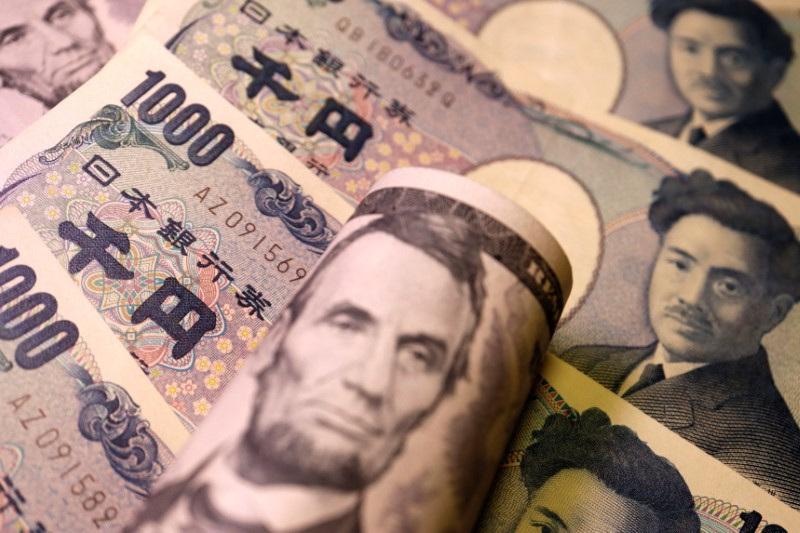
NEW YORK, Aug 9 (Reuters) - The dollar was off a one-week high against other major currencies on Friday, capping off a turbulent few days as traders digested a drop in U.S. jobless claims and the prospect of a looming economic downturn. The U.S. currency was down against the Japanese yen following a three-day rebound, as Thursday's firmer-than-expected employment data spurred a paring back in bets for Federal Reserve interest rate cuts later this year. The yen and the Swiss franc - another safe haven currency - hung near one-week lows as major stock markets rose and Treasury yields dipped. Markets have endured a chaotic week, triggered in large part by surprisingly soft U.S. payrolls figures a week ago that sent global stocks tumbling, while demand for the safety of assets such as the yen and the franc sent those currencies surging to their highest since the start of the year on Monday. The dollar was last down 0.39% at 146.675 yen , but still on course for its first weekly rise in six weeks. "There's been a major desire by market to finally use the yen as a complete source of a safe haven to the chaos and the conflict that's going on around the world," said Juan Perez, director of trading at Monex USA in Washington. The dollar index , which measures the currency against six others, was down 0.136% at 103.14 following three days of gains. Against the Swiss franc, it eased 0.18% to 0.865 franc but still on track for a weekly advance. "The prospect of having a pure risk-on environment, pro carry for FX, for the second half of this year, is much less interesting given our forecasts are more conservative on the dollar/yen and the euro/Swiss franc," said UBS FX strategist Yvan Berthoux. "We don't expect more significant unwind to come. The washout has been quite clear in this environment." Data on Thursday showed the number of Americans filing new applications for unemployment benefits fell more than expected last week, calming fears the labour market was unravelling and reinforcing that a gradual softening remains intact. The odds of the Fed cutting interest rates by 50 basis points at its next policy meeting on Sept. 17-18 fell to 52%, from 69% a day earlier, with a 25 basis point cut now seen as having a 49% probability, according to the CME Group's FedWatch Tool. UNWINDING OF SHORT YEN DONE? The yen had shot higher this month, reaching the strongest since Jan. 2 at 141.675 per dollar on Monday, as an unwinding of short positions snowballed, following a surprise rate hike by the Bank of Japan amid weakness in U.S. economic indicators. U.S. Commodity Futures Trading Commission figures will give a clearer indication later on Friday of the extent of yen buying that has taken place. The euro was flat at $1.0919, but little changed compared with a week ago. On Monday, it rose as high as $1.1009 for the first time since Jan. 2. Sterling rose to $1.2756, after a 0.5% rally overnight that yanked it back from a more than one-month low. The Aussie slipped 0.29% to $0.657, while the New Zealand dollar reached a three-week high of $0.6035 before retreating. It was last at 0.5998. Sign up here. https://www.reuters.com/markets/currencies/dollar-near-one-week-high-jobs-relief-yen-sags-2024-08-09/
2024-08-09 05:08
BEIJING, Aug 9 (Reuters) - Extreme rainfall and severe flooding in China led to a near doubling in economic losses from natural disasters in July from a year earlier, the government said. China suffered 76.9 billion yuan ($10.1 billion) in economic losses from natural disasters last month, with 88% of those losses caused by heavy rains, floods or their effects, according to the Ministry of Emergency Management. It was the biggest amount of losses for the month of July since 2021, ministry data showed. Natural disasters during the month affected almost 26.4 million people across China, with 328 either dead or missing, the ministry said. During the month, 1.1 million people were relocated, 12,000 houses collapsed and 157,000 more were damaged. Some 2.42 million hectares of crop area were also affected. Extreme rainfall poured over vast areas such as the Sichuan Basin, Yellow River, Huai River and parts of the North China Plain, breaking precipitation records at 33 weather stations in Henan, Hunan and Shandong provinces. Swollen major rivers that were slow to recede after bouts of flooding also worsened the impact of the rains, the ministry said. In central Henan, one of the country's main commercial crop production areas, more than 1.13 million hectares were affected with some harvests lost from soaked fields. In the south, Typhoon Gaemi had the most impact in Hunan. Thunderstorms, winds and hail also damaged crops and greenhouses in Inner Mongolia and Xinjiang. ($1 = 7.1747 Chinese yuan) Sign up here. https://www.reuters.com/world/china/chinas-rains-floods-led-near-doubling-natural-disaster-losses-july-2024-08-09/