2024-08-08 23:04
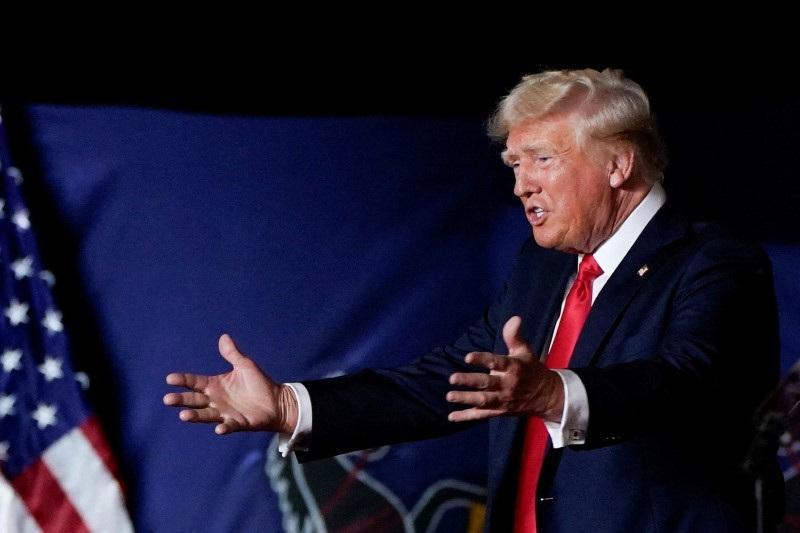
WASHINGTON, Aug 8 (Reuters) - Republican candidate Donald Trump said on Thursday that U.S. presidents should have a say over decisions made by the Federal Reserve, the most explicit indication so far of his interest in infringing on the central bank's independence should he regain the White House. "I feel the president should have at least (a) say in there," the former president told reporters at his Mar-a-Lago residence in Florida. "I think that in my case, I made a lot of money, I was very successful, and I think I have a better instinct than in many cases, people that would be on the Federal Reserve or the chairman." Trump allies have drafted proposals that would attempt to erode the Fed's independence if he wins, the Wall Street Journal reported in April. The Trump campaign distanced itself from the report at the time. But his remarks on Thursday indicate he is squarely aligned with one of the proposals' main thrusts: If he becomes president, Trump should be consulted on interest rate decisions, and Fed banking regulation proposals should be subject to White House review. The Fed chair and the other six members of its board of governors are nominated by the president, subject to confirmation by the Senate. But the Fed enjoys substantial operational independence to make policy decisions that wield tremendous influence over the direction of the world's largest economy and global asset markets. Among the pegs supporting the U.S. dollar's stature as the world's reserve currency, for instance, is the Fed's ability to set monetary policy on its own without political oversight. That status in turn is key to granting the U.S. government a nearly unchecked ability to borrow on global bond markets at relatively low interest rates despite having a $35 trillion debt load, dubbed the "exorbitant privilege." 'FOUGHT HIM VERY HARD' The next president - Trump or Democratic candidate Kamala Harris - will have a chance to select the next Fed chair within the first two years of their term. One path for intruding on the Fed's independence would be to select - and win confirmation for - a nominee willing to be compliant with Trump's wishes to hold sway over the central bank. Economists worry that could result in the type of policy missteps that occurred in the early 1970s, when Fed Chairman Arthur Burns was pressured by President Richard Nixon - who had appointed him - to maintain expansionary monetary policy ahead of the 1972 election despite evidence of inflationary pressures building. By 1974, inflation was running above 12% and would remain a persistent problem for the next decade until it was brought under control by Fed Chairman Paul Volcker through crushing interest rate increases that caused two recessions in the early 1980s. Current Fed Chair Jerome Powell's term as chief expires in 2026, while his seat on the Fed board expires in 2028. Powell was first appointed to the Fed board by former President Barack Obama, but it was Trump who picked him to lead the central bank, a post Powell assumed in early 2018. Trump turned against him soon after, railing against the interest rate hikes that the Fed delivered during Powell's first year at the helm. "I used to have it out with him, I had it out with him a couple of times very strongly," Trump said in his remarks on Thursday. "I fought him very hard." Indeed, Trump went so far as to discuss firing the Fed chief, although Mick Mulvaney - a former chief of staff to the president - later said Trump came to the conclusion that he likely did not have the power to do so. That did not stop Trump from continuing to threaten Powell throughout his presidency, a practice President Joe Biden, Trump's successor, has refrained from during his term. In a Bloomberg interview published last month, Trump said he would not try to oust Powell if he becomes president. Sign up here. https://www.reuters.com/world/us/trump-says-president-should-have-say-fed-decisions-2024-08-08/
2024-08-08 22:33
RIO DE JANEIRO, Aug 8 (Reuters) - Brazil's state-run oil company Petrobras has obtained environmental licenses to expand production in two offshore fields, and could have one vessel start production earlier than expected in one field, three people with knowledge of the matter told Reuters. The licenses will allow Petrobras (PETR4.SA) , opens new tab to increase production in the Mero and Buzios fields, with Buzios benefiting from the early start-up of FPSO (floating production storage and offloading) vessel Almirante Tamandare. Both fields are in the Atlantic Ocean's Santos Basin. Petrobras and Brazil's environmental agency Ibama did not immediately comment on the licenses. In a statement, Petrobras said the FPSO is still slated to start production in 2025. The licenses have been obtained despite an ongoing strike at Ibama that has slowed the issuing of permits this year. The two permits should add 66,000 barrels per day (bpd) to Brazil's production, with 46,000 in Mero and 20,000 in Buzios. That should add around 36,000 bpd to Petrobras' production portfolio, with the remaining output going to its partners and state-run firm PPSA, said the sources. FPSO Almirante Tamandare is expected to arrive in Brazil in October, and could start production this year, the sources said. The vessel has a 225,000-bpd capacity. In its strategic plan, Petrobras expects to produce 2.8 million barrels of oil equivalent per day (boepd) in 2024, with a potential variation of 4% up or down. Petrobras produced a daily average of 2.7 million boepd between April and June, up 2.4% compared to the same period in 2023. Sign up here. https://www.reuters.com/markets/commodities/petrobras-obtains-environmental-licenses-increase-brazil-oil-production-sources-2024-08-08/
2024-08-08 22:25
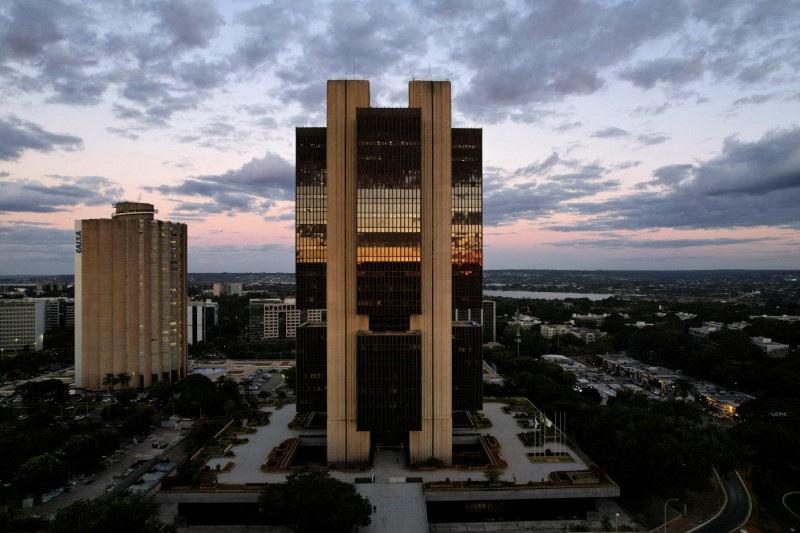
SAO PAULO, Aug 8 (Reuters) - Brazil's central bank will do "whatever is necessary" to control inflation, monetary policy director Gabriel Galipolo said on Thursday, adding that risks appeared to be to the upside of its 3% target. At an event in Belo Horizonte, Galipolo said minutes from the July 30-31 meeting of the central bank's rate-setting committee, known as Copom, made it clear that all policymakers are willing to do whatever it takes to control inflation, including those appointed by rate-hike averse President Luiz Inacio Lula da Silva. Galipolo was appointed by Lula and previously worked as Finance Minister Fernando Haddad's right hand as his executive-secretary. Copom said in the meeting's minutes that its members would be open to raising rates if needed, but Galipolo said that this should not be seen as guidance on its next moves. Galipolo said there has been no signal from Copom on what it will decide in future meetings, as the monetary authority is still "totally data-dependent." Inflation projections in Latin America's largest economy have been climbing and now stand at 4.12% for 2024 in the central bank's latest weekly survey of economists. The current scenario is still very "uncomfortable" for the central bank to reach its 3% inflation target, Galipolo said, especially amid global uncertainties, de-anchored inflation expectations and positive surprises in economic growth. Galipolo said he now sees Copom's risk balance as asymmetric, with upside risks for inflation. He also underscored higher-than-normal market volatility, highlighting the impact on inflation from foreign exchange moves. Still, Galipolo said it would be a mistake to establish a "mechanical" relationship between currency moves and monetary policy. Brazil's real has fallen nearly 13% so far in 2024, pressured by a strong U.S. dollar and by domestic fiscal concerns. Sign up here. https://www.reuters.com/markets/brazil-cenbank-will-do-whatever-is-necessary-control-inflation-director-says-2024-08-08/
2024-08-08 21:47
Aug 9 (Reuters) - A look at the day ahead in Asian markets. Asia is set for a positive end to a turbulent week on Friday after a rip-roaring U.S. equity rally on Thursday, although Chinese inflation could temper any optimism if the data shows that the world's second largest economy is still in the clutches of deflation. Wall Street's resilience was notable given that U.S. bond yields rose again after yet another poorly received Treasury auction, this time 30-year notes. That's two sales this week that have drawn weak demand, with investors only taking down the paper in return for higher yields. But the Nasdaq clocked its best day in six months and the S&P 500 its best day since November 2022. Broader indices in Asia and tech in particular should grab the baton and run with it on Friday. The MSCI Asia ex-Japan index is currently down 1.6% on the week, China's blue chip CSI300 index down 1.2%, the Hang Seng tech index down 0.6% and Japan's Nikkei down 3%. Can they muster a rally strong enough on Friday to close the week in the green? It would represent a remarkable turnaround, especially in Japan where currency- and rates-related volatility earlier in the week triggered some of the biggest stock market moves on record. The U.S. tech shakeout that began on July 11 is losing steam. The broad S&P Information Technology index and 'FANGS' index of Big Tech shares both fell around 20% in the three weeks to Aug. 5 but have rebounded as much as 9% from these lows. U.S. tech got a boost on Thursday from Meta Platforms' earnings, and tech stocks in Asia could take their cue next week from Taiwanese chipmaker TSMC's sales figures on Saturday. TSMC, the world's largest contract chipmaker and major supplier to Apple and Nvidia, on Saturday gives its latest monthly sales update. Sales have been falling in recent months - to T$207.9 billion in June from T$229.6 billion in May, which was down from T$236 billion in April. Indeed, Taiwan's exports rose less than expected in July as weak demand from China offset record orders from the United States, which underscored the island's essential role as a supply hub for the booming artificial intelligence (AI) industry. Weak demand from China seems par for the course these days, and continues to keep inflation in check. Figures on Friday are expected to show the annual rate of consumer inflation edged up in July to 0.3% from 0.2%, and the monthly rate climbed to 0.3% from -0.2%. The annual rate of producer deflation is expected to have accelerated slightly to -0.9% from -0.8%. A positive surprise would be welcome - China's economic data has been consistently undershooting expectations for months. Here are key developments that could provide more direction to Asian markets on Friday: - China inflation (July) - Indonesia retail sales (June) - Malaysia industrial production (June) Sign up here. https://www.reuters.com/markets/asia/global-markets-view-asia-graphic-pix-2024-08-08/
2024-08-08 21:00
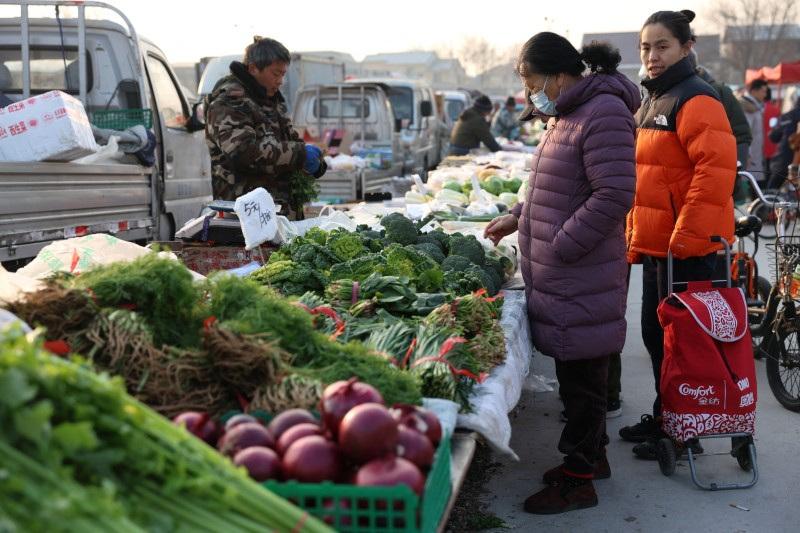
NEW YORK, Aug 8 (Reuters) - German coffee trader Neumann Kaffee Gruppe (NKG), one of the world's largest coffee merchants, said on Thursday it has opened a subsidiary in China, looking to meet surging demand for the beans in Asia's fastest growing coffee market. The company's new Chinese operation is headquartered in downtown Shanghai, where it has also built a cupping lab for coffee quality control, it said in a statement. NGK said it has set up coffee warehouses and distribution operations at the bonded areas of Kunshan and Yangshan. "This initiative aligns with the rapid growth in coffee consumption in China, driven by an increasing demand for high-quality coffee products," the company said. Coffee demand has been growing by double digits in China recently, with a surge of interest for the beverage particularly among young Chinese professionals, who are switching away from the centuries-old tradition of tea drinking in the country. The number of coffee shops increased by more than 50% in China last year as chains such as Luckin Coffee (LC0Ay.MU) , opens new tab and Starbucks (SBUX.O) , opens new tab opened hundreds of new outlets. Chinese coffee imports from top grower Brazil increased by more than 180% last year, Brazilian exporters association Cecafe said. Sign up here. https://www.reuters.com/markets/commodities/coffee-trader-nkg-expands-into-china-tap-surging-demand-2024-08-08/

2024-08-08 20:50
Aug 8 (Reuters) - The U.S. Department of Energy said on Thursday it had made a conditional loan guarantee commitment of up to $1.45 billion to South Korea's Qcells to support the company's solar manufacturing plant in Cartersville, Georgia. The agency's Loan Programs Office said the funding would help Qcells build a $2.5 billion facility that will produce solar panels and inputs including cells, ingots and wafers. The factory could produce enough solar panels per year to supply half a million American households, the department said. The announcement is a win for Qcells, which has warned that tough competition from a flood of cheap imports is threatening U.S. solar factories. The company, a division of South Korea's Hanwha, is among dozens that are seeking to take advantage of incentives in President Joe Biden's Inflation Reduction Act that seek to bolster U.S. production of clean energy components. Qcells' Cartersville plant has already started producing solar panels since April and the company is on track to produce the subcomponents by the end of the year, Qcells spokesperson Marta Stoepker told Reuters. The facility will have nearly 2,000 jobs once it is fully operational. The company already has a plant in Dalton, Georgia, that opened in 2019. "There is an oversupply of artificially cheap panels in our warehouses and it's definitely putting a strain on domestic producers in the United States. So this one is really helpful in terms of navigating some of those headwinds," Stoepker said. The DOE said the company must satisfy certain financial, legal and other requirements before the loan is finalized. Sign up here. https://www.reuters.com/business/energy/us-offers-15-bln-conditional-loan-guarantee-qcells-solar-facility-georgia-2024-08-08/