2024-08-08 18:43
LONDON, Aug 8 (Reuters) - Like thousands of Nigerians and millions of others across the developing world, higher fuel costs have irked Antonia Arosanwo. "I am angry," the 46-year-old mother of five said at a bus stop in Lagos, the teeming commercial capital of Africa's most populous nation. Her journey from Ojuelegba, a bustling suburb just 8 miles north of Lagos's business district, has more than doubled in price to 700 naira (45 U.S. cents) since the government announced an end to fuel subsidies last year - allowing petrol prices to triple. Arosanwo's anger mirrored that of thousands of other Nigerians, whose nationwide protests last week demanding protection from rocketing inflation, spreading hunger and dwindling jobs rattled the government. Nearly all had one core complaint: fuel prices. Across Africa - and a string of other emerging market nations - debt-laden governments trying to shed costly fuel subsidies are running headlong into angry populations reeling from years of increasing living costs. Egypt and Malaysia this year boosted prices to cut subsidy spending, while Bolivia's President Luis Arce, who fended off an attempted coup in June, called this week for a referendum on fuel subsidies. The government expects gasoline and diesel subsidies to cost Bolivia some $2 billion this year. Arce, like others, faces dollar shortages and a flagging economy. "Difficult moments require firm, mature, thoughtful decisions and human beings who do not falter in the face of adversity, and this is precisely a moment of this nature," Arce said in a speech in the Bolivian city of Sucre. But the smoke of protests is clouding governments' hopes of ending fuel subsidies, as the same stagnating economic growth that's punching a hole in budgets is making life harder for citizens. Leaders in Angola and Senegal are, like Nigeria, struggling to cut them. "In a situation of cost-of-living crisis and high inflation, (more expensive fuel) becomes even unbearable," said Bismarck Rewane, chief executive of the Financial Derivatives Co in Lagos and a government economics adviser. Removing the subsidy, he said, must be phased in according to two principles - "one, what the government can afford (and) two, what the people can afford?" INTO THE FIRE Nearly every nation on earth has some form of energy subsidy, costs of which hit a record $7 trillion in 2022 - a whopping 7.1% of GDP - according to the International Monetary Fund. Experts slam subsidies as blunt-force tools that give more to wealthy car owners than to the poor - and that they are prone to corruption and bad for the environment. The biggest spenders, according to the International Energy Agency, are Russia, Iran, China and Saudi Arabia - countries that can, broadly, afford the costs. But for emerging countries, saddled with costly debt and still-high global interest rates, financing these is more punishing. "It's acute now, because countries have fiscal problems," said Chris Celio, senior economist and strategist with ProMeritum Investment Management. "And so then the question is, why do you have fiscal problems? Well, one reason is because you have this hole in your budget going to something that's inefficient ... and you're having problems financing it." Nigeria's President Bola Tinubu announced an end to subsidies after taking office last year. But when pump prices tripled, he froze them. And when the naira currency crashed, subsidies crept back - despite higher pump prices. UNPOPULAR POLICIES Now, leaders mulling further price hikes are also nervously eyeing revolts elsewhere over unpopular economic policies. Bangladesh's prime minister resigned after hundreds died protesting job quota changes, while Kenya's president fired his cabinet and backtracked on tax hikes after deadly demonstrations in June. "If there was a reluctance to increase fuel prices prior to the events in Kenya ... that reluctance, if anything, is probably even higher," said Goldman Sachs senior economist Andrew Matheny. "Politicians around the world are tuned to this cost of living crisis ... that probably does limit the willingness of policymakers to undertake reforms that, at least in the short term, might prove to be unpopular." That could further strain budgets. Nigeria's subsidies cost 3% of GDP, Matheny said, and its oil company owes billions for imports. Senegal's electricity and fuel subsidies hit 3.3% of GDP last year, while Angola's 1.9 trillion kwanza ($2.1 billion) subsidy bill in 2022 was more than 40% of spending on social programmes, according to the IMF. Angola has pledged to scrap fuel-price supports by the end of next year, though five people died in protests over price hikes last year. Celio of ProMeritum said a sustainable budget is key to attracting the investor cash these countries need. In a post on X, Tinubu appealed for patience and promised social support, such as access to affordable education. "I urge you all to look beyond the present temporary pain and aim at the larger picture," he said, without commenting on whether he would further hike fuel costs. But Rewane noted that "shock therapy" of higher fuel costs could have even greater consequences for Nigeria than Kenya's proposed tax hikes did. Arosanwo, for one, questioned why she should "stop talking", or protesting, with doubled transportation costs and as she struggles to feed her family. "The government has a political will," Rewane said. "But ... time is something that is not a friend of everybody right now." ($1 = 1,550.0000 naira) ($1 = 889.5000 kwanzas) Sign up here. https://www.reuters.com/world/africa/deluge-protests-fuel-subsidies-prove-hard-abolish-2024-08-08/

2024-08-08 18:30
Judicial reform to include staggered election of judges, technical committee selection Judicial workers' trust funds to be protected, calming tensions with government Reform adjustments consider 2026 USMCA review to ensure legal and commercial stability MEXICO CITY, Aug 8 (Reuters) - Mexico's ruling party is considering changes to a proposed judicial reform in a bid to calm market concerns, including making the election of judges a staggered process over many years to reduce fears of a political takeover of the judiciary, sources familiar with the discussions said. The original proposal by outgoing President Andres Manuel Lopez Obrador rattled investors on concerns the changes would weaken Mexico's checks and balances by introducing the election of nearly 1,600 judges - including to the Supreme Court - by popular vote. President-elect Claudia Sheinbaum, who takes office in October, also of the ruling Morena party, has defended the proposal, saying she believes judges should be elected. Morena, however, will adjust the reform so that the election of judges is staggered and participants are selected by a technical committee after undergoing suitability tests, said four party sources with knowledge of the discussions. In addition, the sources said, the lucrative trust funds of judicial workers will be protected. Last year, Mexico's Senate voted to terminate 13 trusts held for the judiciary, ratcheting up tension between the government and judicial authorities, though the Supreme Court later reversed the decision. Mexico's peso plummeted 8% the week after the June 2 elections, which also ushered in a super-majority in the lower house of Congress for Morena. Lopez Obrador has denied that the market volatility is linked to the judicial reform. The outgoing president has pushed the reform, which also proposes reducing the number of Supreme Court judges to nine from 11, as a necessary transformation of a justice system which he said "is not at the service of the people." Critics argued the election of judges by popular vote would politicize the justice system in favor of Morena and its allies. Spokespeople for Lopez Obrador, Sheinbaum and Morena did not immediately respond to a request for comment. TRADE PACT WORRIES The four Morena sources said the new modifications also considered an upcoming 2026 review of the United States-Mexico-Canada Agreement, the trade pact which took effect in 2020. The popular election of judges without strict conditions, as originally proposed, was seen by the sources as a potential stumbling block to the functioning of Mexico's labor courts which were created to comply with swift resolutions of labor-management conflicts under the USMCA. Legislators decided to adjust Lopez Obrador's reform so that it does not affect the "clear, transparent and predictable" legal and commercial framework, as stipulated in the USMCA. Senator Ricardo Monreal, who is expected to lead Morena in the lower house when the new Congress begins in September, said it was the role of legislators to incorporate "issues that can improve, enrich or modify the presidential proposal." "We will respect all expressions, points of view; we will resist internal and external pressures, and we will maintain our principles and our commitments," Monreal said in an interview. Sign up here. https://www.reuters.com/world/americas/mexicos-ruling-party-looking-changes-judicial-reform-calm-markets-sources-say-2024-08-08/

2024-08-08 16:42
BOGOTA, Aug 8 (Reuters) - Colombia's economy is forecast to have grown 2.2% in the second quarter of 2024 from the same period a year earlier, picking up pace from the first three months, a Reuters poll showed on Thursday. If the median estimate from 10 analysts is realized, it would represent a significant acceleration from Colombia's 0.1% annual GDP growth in the second quarter of 2023 and the 0.7% recorded in the first quarter of 2024. It would also be higher than the central bank's forecast of 1.8% for the three months to end-June. Analysts' estimates ranged from 1.10% to 3%. "In general, the economy seems to have bottomed out and we have a very gradual recovery," said Sergio Olarte, chief economist for Colombia at Scotiabank, adding that the agricultural sector's performance and increased government spending may have contributed to the growth. The government's DANE statistics agency will publish second-quarter GDP data on Aug. 15. "However, we aren't thinking that this data from the second quarter will continue to be seen for the rest of the year," Olarte cautioned, citing "defensive" household spending and flat investment. Colombia's economic growth has been affected by a high benchmark interest rate, currently 10.75%, as well as by stubborn inflation, which stood at 7.18% for the 12 months to end-June, well above the central bank's 3% target. The economy was forecast to expand 0.81% in the second quarter of 2024 versus the first. Analysts now see Latin America's fourth-largest economy growing by 1.5% this year, up from 1.3% in the previous survey. For 2025, analysts continue to see GDP growth at 2.6%. Sign up here. https://www.reuters.com/world/americas/colombia-q2-economic-growth-seen-22-year-earlier-period-2024-08-08/

2024-08-08 16:21
NEW YORK, Aug 8 (Reuters) - The average rate on the popular U.S. 30-year mortgage plunged to its lowest level since May 2023 this week, following days of market turbulence resulting from last week's softer-than-expected employment report. The 30-year fixed-rate mortgage averaged 6.47% during the week ending Aug. 8, down from 6.73% in the prior week, mortgage finance agency Freddie Mac said on Thursday. It averaged 6.96% during the same period a year ago. "The decline in mortgage rates does increase prospective homebuyers’ purchasing power and should begin to pique their interest in making a move," Freddie Mac Chief Economist Sam Khater said in a statement. The drop comes on the heels of a week of financial market volatility that drove yields on the Treasury securities that are used as a benchmark for mortgage rates sharply lower and after the Federal Reserve indicated it could start cutting interest rates at its next meeting in September. "This drop in rates is already providing some existing homeowners the opportunity to refinance, with the refinance share of market mortgage applications reaching nearly 42%, the highest since March 2022,” said Khater. Sign up here. https://www.reuters.com/markets/us/us-30-year-fixed-rate-mortgage-plunges-lowest-since-may-2023-freddie-mac-says-2024-08-08/

2024-08-08 16:16
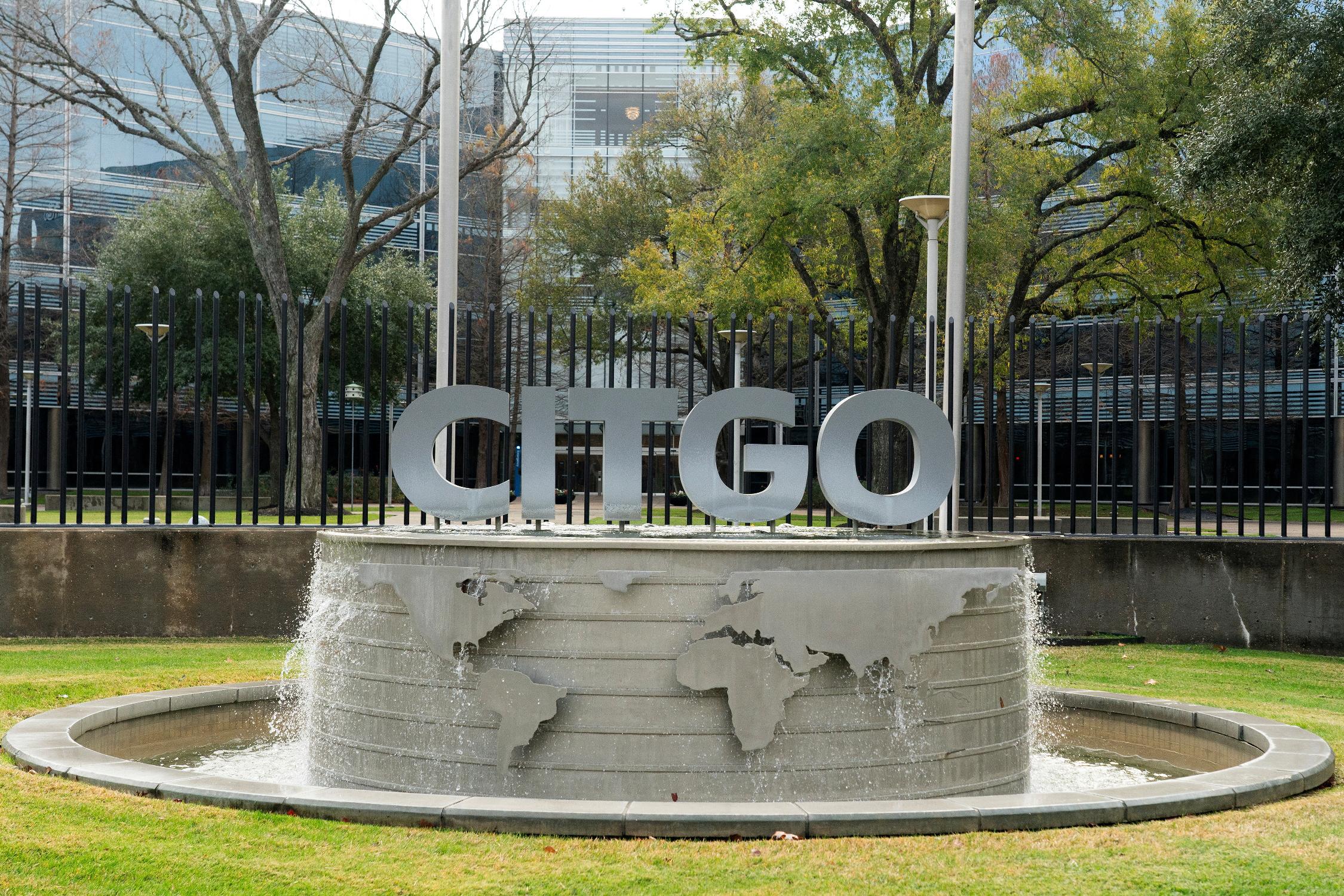
HOUSTON, Aug 8 (Reuters) - U.S. oil refiner Citgo Petroleum (PDVSAC.UL) on Thursday reported a net loss of $25 million in the second quarter following unfavorable market conditions and refinery maintenance and upgrades, compared with income of $410 million in the quarter immediately prior. A U.S. federal court is auctioning shares of one of the parents of the Venezuela-owned company, which is the seventh- largest U.S. refiner, in order to pay up to $21.3 billion in claims from debt defaults and expropriations in the South American country. Citgo's crude processing fell to 678,000 bpd with an average crude utilization of 84% due to turnaround and maintenance activities, compared with crude runs of 769,000 bpd and utilization of 95% in the previous quarter. Citgo had net income of $2 billion last year. "Our second quarter earnings reflect a lower margin environment and the impact of extensive turnaround and maintenance activities at our refineries," Citgo Chief Executive Carlos Jorda said in a release. Citgo's 463,000-bpd refinery in Lake Charles, Louisiana, underwent works to improve utilization of certain units, while the company's other two refineries, the 177,000-bpd facility in Lemont, Illinois, and the 167,000-bpd one in Corpus Christi, Texas, optimized heavy crude processing. The company has dedicated about $1 billion so far this year to capital expenditures, turnarounds and catalysts, it said. Quarter-end liquidity fell to $3.8 billion from $4.5 billion at the end of the first quarter, a key metric companies participating in the court-organized auction of shares have been monitoring to calculate their bids. Marketing sales volume rose to 424,000 bpd in the second quarter, from 394,000 bpd the previous quarter, the largest quarterly increase in branded sites in the last two decades. The company reported an unbranded gasoline sales record in June and new jet fuel sales contracts signed. U.S. refiner CVR Energy (CVI.N) , opens new tab, backed by activist investor Carl Icahn, and a group of creditors holding claims against Venezuela are competing in the last mile of the auction for Citgo's parent, sources told Reuters earlier this month. By Aug. 22, a winner must be selected by a court officer overseeing the auction in Delaware, while Oct. 30 was set for the sales process' final hearing. Sign up here. https://www.reuters.com/business/energy/citgo-reports-25-mln-loss-q2-over-unfavorable-market-conditions-2024-08-08/
2024-08-08 13:42
Aug 8 (Reuters) - A drop in the number of Americans applying for unemployment benefits last week relieved markets that had been in a near panic about prospects for a recession and how aggressive the Federal Reserve would have to be in easing policy. Initial claims for state unemployment benefits fell 17,000 to a seasonally adjusted 233,000 for the week ended Aug. 3, the Labor Department said on Thursday, the largest drop in about 11 months. Economists polled by Reuters had forecast 240,000 claims for the latest week. The data suggested fears the labor market is unraveling were overblown and the gradual softening in the labor market remains intact. The government's monthly nonfarm payrolls report on Friday showed job gains slowed markedly in July and the unemployment rate rose to 4.3%, raising fears in markets that the labor market may be deteriorating at a pace that would call for strong action from the Fed. MARKET REACTION: STOCKS: S&P 500 E-minis extended gains and were up 0.76% BONDS: The yield on benchmark U.S. 10-year notes rose to 3.99%, the two-year note yield jumped to 4.044% FOREX: The dollar index turned 0.27% higher COMMENTS: PAUL NOLTE, SENIOR WEALTH ADVISOR AND MARKET STRATEGIST, MURPHY & SYLVEST, ELMHURST, ILLINOIS "The numbers are pretty much in line with what we've been thinking. The non-seasonally adjusted numbers on a year-over-year basis are right in line with where they were in 2016, '17, '18, '19 - prior to the pandemic, within one or two thousand. The labor market at that point was fairly strong. So our reading on this is the labor market continues to be OK... I think the recession fears at this point are probably a little overblown." GENNADIY GOLDBERG, HEAD OF U.S. RATES STRATEGY, TD SECURITIES, NEW YORK “I do think this is a very positive print for markets overall. It reinforces the fact that labor market momentum is not slowing to the same extent that was represented by the payroll report, and it also reinforces the absence of very significant layoffs in the economy as well. What it confirms is that we're seeing the unemployment rate rise due to new entrants into the labor force rather than a very large amount of layoffs.” “For markets it's fairly encouraging. We'll see if that's enough, obviously. I think that we'll always want more, but I suspect that in the absence of data to the contrary, we'll continue to see the pricing for September rate cuts decline, and yields move higher across the curve.” WASIF LATIF, PRESIDENT AND CHIEF INVESTMENT OFFICER, SARMAYA PARTNERS, PRINCETON, NEW JERSEY “Jobless claims are less than what was expected and so the markets seemed to be rejoicing. At least the bulls in the market are rejoicing that the horse may have passed and this might be a sign of a soft landing. This is not a huge impactful number because the big number is going to be the actual unemployment rate that we saw this past Friday and the one we’re going to get month. This is a single data point and the market, especially the momentum traders and algos, they’re probably grasping onto it and running with it.” THOMAS HAYES, CHAIRMAN, GREAT HILL CAPITAL LLC, NEW YORK "Since the jobs report on Friday, everyone's been nervous about a recession with the Sahm Rule triggered. The initial jobless claims came in lower than expected, alleviating some of the fear that the labor market was completely rolling over." "We have a reasonably robust economy and not an imminent recession, so we can wait a few more weeks for that final first cut from the Fed." IAN LYNGEN, HEAD OF US RATES STRATEGY, BMO CAPITAL MARKETS (emailed note) "The drop in initial filings was larger-than-anticipated and the resulting price action suggests the update is being interpreted as evidence that the labor market remains on solid footing despite the July BLS report. Overall, the lack of information suggesting a further deterioration of the employment landscape was the most relevant takeaway from the final data release of the week." MARC CHANDLER, CHIEF MARKET STRATEGIST, BANNOCKBURN GLOBAL FOREX, NEW YORK “When it comes to the labor market, it's multi-dimensional. There's not one number. And so I think that the weekly jobless claims is one of those numbers. Today is a little bit softer, I think, than people expected, but the four-week moving average still moves higher.” “The talk of an imminent recession seems wide of the mark.” Sign up here. https://www.reuters.com/markets/us/view-weekly-jobless-claims-fall-relieve-recession-wary-markets-2024-08-08/