2024-08-08 09:40
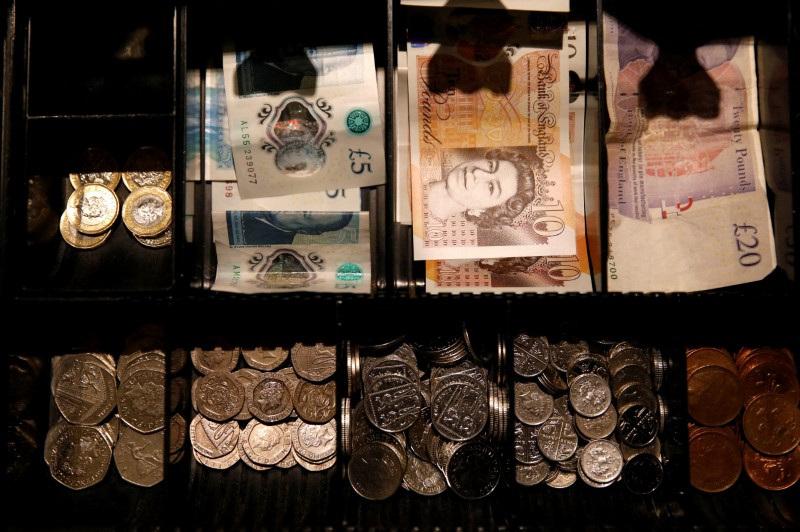
LONDON, Aug 8 (Reuters) - The British pound edged up on Thursday, but remained close to this week's one-month lows against the dollar, as a sense of stability returned to markets after an intensely volatile start to the week. Sterling was last up 0.1% on the day at $1.27025, but still headed for a fourth weekly decline, having fallen nearly 1% so far this week, marking its longest stretch of weekly losses in almost a year. The euro , which hit its highest against the pound since late April on Thursday, was up 0.1% at 86.15 pence. The Bank of England's knife-edge decision to cut interest rates last week dented the pound. But since then, concern about a hard landing for the U.S. economy, among other factors, has triggered a selloff in risk assets, sweeping sterling lower along with other global markets. On Thursday, however, the dollar side of the currency pair was under more pressure. Traders are currently pricing in a full percentage point in Federal Reserve rate cuts this year, compared with around 45 basis points for the BoE, which in theory gives the pound an advantage. Sterling is only down around 0.2% this year, still the best performance from a major currency against the dollar, compared with a 1% drop in the euro - the runner-up - or the 6.4% drop in the Norwegian crown , the worst performer. That said, with the BoE now in rate-cutting mode and risk appetite looking fragile, sterling could struggle to make further headway, Chris Beauchamp, a market strategist at IG, said. "After being knocked back from its gains yesterday, the price has moved higher," he said. "However, while a higher low is still a possibility here, it will need more than one day of gains. Sterling has been unable to manage this over the past month, with intraday bounces failing to carry over into the new session. Until this changes, the sellers remain in control." Sign up here. https://www.reuters.com/markets/currencies/sterling-inches-up-still-near-one-month-lows-2024-08-08/
2024-08-08 08:37
Aug 7 (Reuters) - Ripple Labs has been ordered by a Manhattan court judge to pay the U.S. Securities and Exchange Commission about $125 million in penalties over charges of improperly selling the cryptocurrency XRP, according to a court filing. WHY IT'S IMPORTANT The SEC had been seeking fines and penalties totaling $2 billion in its case against Ripple Labs, its chief legal officer Stuart Alderoty said in March. This penalty would qualify only for a fraction of that amount. The SEC previously sued Ripple, its CEO Brad Garlinghouse and co-founder Chris Larsen in 2020, accusing them of illegally raising more than $1.3 billion in an unregistered securities offering by selling XRP. The SEC dropped its remaining claims against Garlinghouse and Larsen in October. The case had been highly watched, as it is among the biggest brought by the SEC in the cryptocurrency space. THE RESPONSE "We respect the court's decision and have clarity to continue growing our company," Ripple CEO Brad Garlinghouse said in a post on X. "As court after court has stated, the securities laws apply when firms offer and sell investment contracts, regardless of the technology or labels that they use,” a SEC spokesperson said in reaction to the ruling. Sign up here. https://www.reuters.com/legal/ripple-ordered-pay-125-million-penalty-improperly-selling-xrp-tokens-2024-08-08/

2024-08-08 07:42
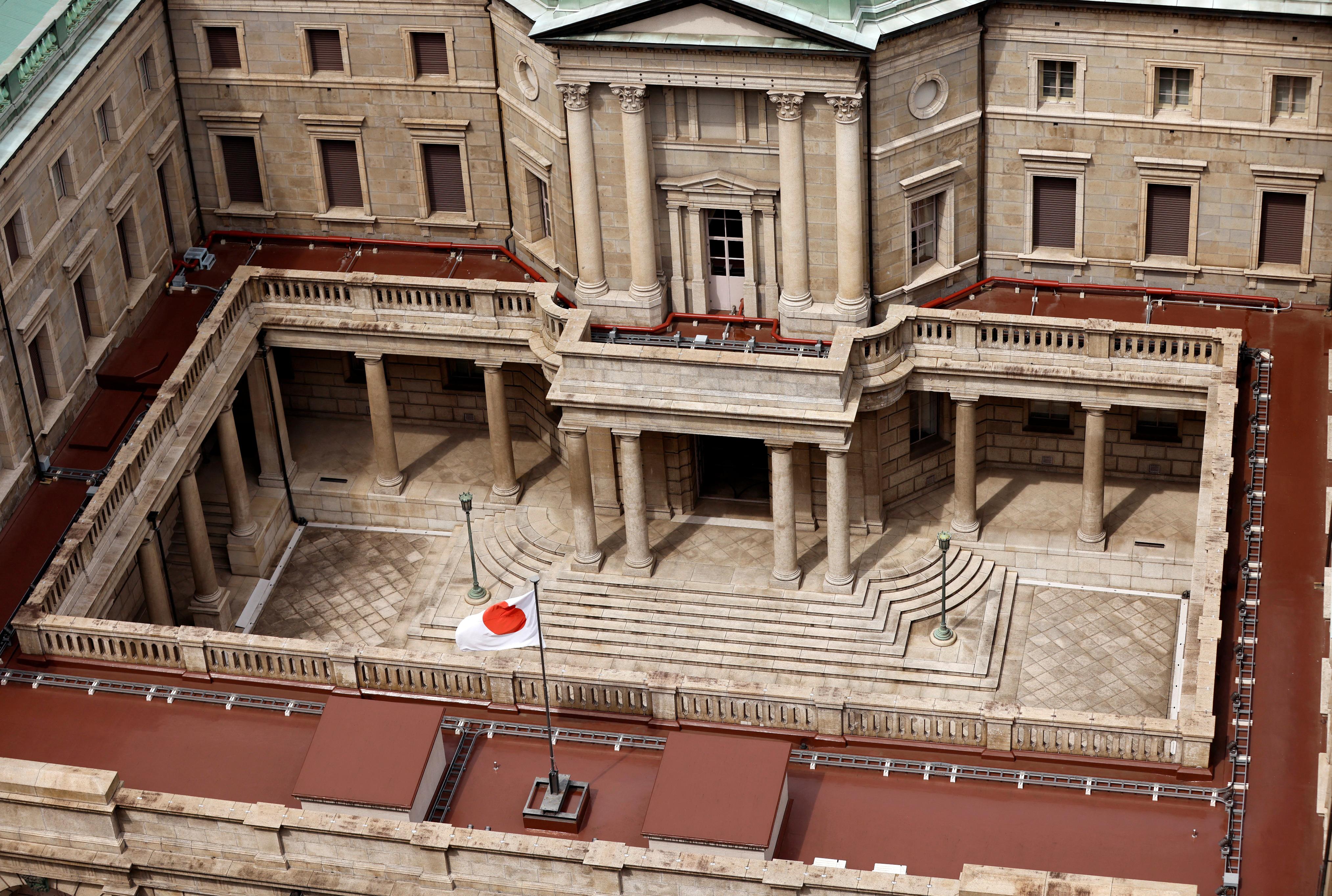
TOKYO, Aug 8 (Reuters) - The Bank of Japan managed to calm investor nerves during global market turmoil this week by reversing a calibrated strategy to communicate steady interest-rate rises, but the flip-flop tests the bank's resolve to phase out decades of radical stimulus. If the central bank, scarred by missteps and reversals going back a quarter century, is at the mercy of markets, it may be constrained in moving away from what it has called excessive support for the world's fourth-biggest economy. The yen spiked and Tokyo shares plummeted last week as the BOJ unexpectedly raised its policy rate from essentially zero to the highest in 15 years and Governor Kazuo Ueda signalled further steady rate hikes, a path the central bank had been trying to suggest for months. Ueda's influential deputy helped stabilise sentiment on Wednesday by saying the BOJ would not raise rates when markets were unstable, but confusion resumed on Thursday, when a summary of the discussion at the bank's July 30-31 meeting showed policymakers focussed on a series of rate hikes to keep inflation from overshooting. "The BOJ hiked interest rates because it didn't like the weak yen. Now it appears to be suggesting a pause in rate hikes because it doesn't like stocks falling," said Takuya Kanda, an analyst at Gaitame.com Research Institute. "If the BOJ is watching markets so much in setting policy, there's a chance it won't be able to raise rates that much." The Japanese currency skyrocketed on Monday and the Nikkei stock average (.N225) , opens new tab plunged the most since 1987 after the BOJ raised its short-term policy target to 0.25% from a zero-to-0.1% range, followed by Ueda's hawkish comments. Investors were also rattled by signs the Federal Reserve would soon cut rates to buoy a slowing U.S. economy. BOJ Deputy Governor Shinichi Uchida said on Wednesday the rout was cause for pause, as it might affect the bank's inflation projections and rate trajectory. "As we're seeing sharp volatility in domestic and overseas financial markets, it's necessary to maintain current levels of monetary easing for the time being," he said, adding that Japan could afford to wait on hikes as inflation remained moderate. While steadying markets, Uchida's about-face "also ended up magnifying market swings", said Kazutaka Maeda, an economist at Meiji Yasuda Research Institute. "It's undesirable for BOJ communication to cause so much volatility." DEJA VU Now, said economist Yoshimasa Maruyama at SMBC Nikko Securities, "the chance of a near-term rate hike is gone. In fact, the chance of another hike this year has diminished significantly." The central bank did not respond to a request for comment on Thursday to criticisms that it is responding to market moves rather than data in setting policy. Uchida on Wednesday insisted the BOJ was focussed on the economy. "If the market volatility changes our projection, risks and view on the likelihood of hitting our price target, then market moves would affect our decision," Uchida told a press conference after addressing business leaders. "Obviously, our goal is to achieve price stability and through that, healthy economic development. We'll pay heed to economic developments in setting policy." Japan's ruling and major opposition parties have agreed to summon Ueda to a special parliament session this month to explain the rate hike. In a rare public chiding, ruling Liberal Democratic Party executive and former finance ministry official Satsuki Katayama urged the BOJ on Wednesday to communicate better with markets, saying the LDP will likely discuss whether the July hike was a mistake. The BOJ has been here before. It raised rates from zero in August 2000, ending a then-novel experiment despite government objections. Ueda, then a policy board member, voted against ending zero rates. Next, the U.S. tech bubble burst, hitting Japan's export-reliant economy. Eight months later the BOJ reversed course, rolling out a new experiment, quantitative easing: flooding the market with yen to support the economy and fight deflation. By February 2007 it had raised rates to 0.5% when the global financial crisis pushed Japan into recession and forced the bank to cut rates back near zero. In both cases, the BOJ drew fierce political criticism for phasing out stimulus too hastily. 'PREOCCUPIED' WITH ANGER OVER YEN This time few politicians are demanding the BOJ loosen monetary policy. Days before the July hike, Prime Minister Fumio Kishida said the BOJ's policy normalisation would support economic revitalisation. Shigeru Ishiba, a leading candidate seeking to replace Kishida in a September LDP leadership election, told Reuters he welcomed the BOJ's plan to gradually raise interest rates. Politicians, who had long pressured the BOJ to ease policy to weaken a soaring yen to help exporters, have switched in the past two years as the currency's falls 38-year lows threatened to push inflation above the bank's 2% target. The BOJ may pay a price if its hawkish turn is seen as succumbing to government pressure, some analysts say. "Recent data all pointed to a weak economy, so it didn't make logical sense for the BOJ to turn so hawkish on the future rate hike path," said former BOJ official Nobuyasu Atago. "Its communication with markets could have been better." Complicating the BOJ's task, it would be raising rates just as the Fed likely starts cutting, potentially heightening volatility in the dollar/yen exchange rate and hurting Japanese business sentiment. The BOJ has historically avoided moving in the opposition direction to the Fed for fear of hurting exports and causing disorderly market moves, said former BOJ board member Takahide Kiuchi. "This time, the BOJ may have been too preoccupied with public and political anger over excessive yen falls," he said. "The very timing of the BOJ's exit makes it extremely challenging to pull off in the first place." Sign up here. https://www.reuters.com/markets/asia/bojs-communication-about-face-may-haunt-future-rate-moves-2024-08-08/
2024-08-08 07:38
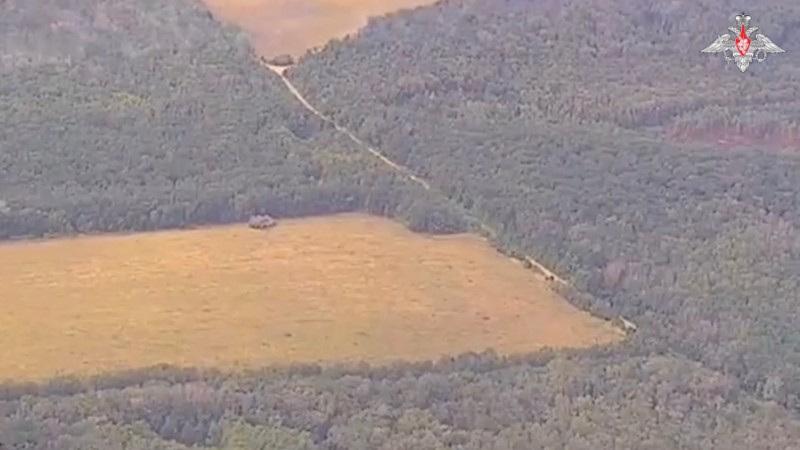
Russia still battling Ukrainian troops in Kursk Ukraine may have control of Sudzha - bloggers Putin: this is a major Ukrainian provocation Ukraine remains silent about situation White House: we had no prior knowledge of attack MOSCOW, Aug 8 (Reuters) - Russian forces were battling Ukrainian troops for a third day on Thursday after they smashed through the Russian border in the Kursk region, an audacious attack on the world's biggest nuclear power that has forced Moscow to call in reserves. In one of the biggest Ukrainian attacks on Russia since the war began in February 2022, around 1,000 Ukrainian troops rammed through the Russian border in the early hours of Aug. 6 with tanks and armoured vehicles, covered in the air by swarms of drones and pounding artillery, according to Russian officials. Heavy fighting was reported near the town of Sudzha, where Russian natural gas flows into Ukraine, raising concerns about a possible sudden stop to transit flows to Europe. The incursion has come as a shock to Russia, nearly 2-1/2 years after President Vladimir Putin sent his army into Ukraine. Putin has cast the Ukrainian offensive as a "major provocation". Sergei Mironov, the leader of a Kremlin-loyal political party, called it a "terrorist attack" and "the invasion of an internationally recognised foreign territory". Kursk's regional acting governor, Alexei Smirnov, said thousands of residents had been evacuated. The White House said the United States - Ukraine's biggest backer - had no prior knowledge of the attack. Pentagon spokesperson Sabrina Singh said Ukraine's move on the Kursk region was consistent with U.S. policy. "They are taking actions to protect themselves from attacks that are coming from a region that are within the U.S. policy of where they can operate, our weapons, our systems, our capabilities," Singh told reporters. She said Ukraine's move was not escalatory because "Ukraine is doing what it needs to do to be successful on the battlefield." Russia's defence ministry said on Thursday that the army and the Federal Security Service (FSB) had halted Ukraine's advance and were battling Kyiv's units in the Kursk region. "Units of the Northern group of forces, together with the FSB of Russia, continue to destroy armed formations of the Armed Forces of Ukraine in the Sudzhensky and Korenevsky districts of the Kursk region, directly adjacent to the Russian-Ukrainian border," the ministry said. The Ukrainian military has remained silent on the Kursk offensive, though President Volodymyr Zelenskiy praised the Ukrainian army on Thursday for its ability "to surprise" and achieve results. He did not explicitly reference Kursk. Some Russian bloggers said Ukraine's forces were pushing towards the Kursk nuclear power station, which lies about 60 km (37 miles) northeast of Sudzha. Yuri Podolyaka, a popular Ukrainian-born, pro-Russian military blogger, said that there were intense battles about 30 km from the Soviet-era nuclear plant, which supplies a large swathe of southern Russia with power. CRITICAL JUNCTURE Ukraine's energy minister said gas transit via Sudzha was functioning, despite reports of hostilities there. Most EU nations have reduced dependence on Russian gas, but Austria still receives most of its gas via Ukraine. The Center for Information Resilience (CIR), a non-profit open-source analysis organisation, said it was unable to visually confirm any damage to the gas metering station as a result of the incursion, but had verified significant damage to the border checkpoint about 500 metres (550 yards) to the south. "This, combined with footage verified by CIR of several Russian soldiers surrendering to Ukrainian soldiers near the entrance of the gas metering plant, makes it likely that the plant has been affected by the Ukrainian incursion, however, the level of damage cannot be verified at this time," it said. The battles come at a crucial juncture in the conflict, the biggest land war in Europe since World War Two. Kyiv is concerned that U.S. support could weaken if Republican Donald Trump wins the November presidential election. Trump has said he would end the war, and both Russia and Ukraine are keen to gain the strongest possible bargaining position on the battlefield. Ukraine wants to pin down Russian forces, which control 18% of its territory, though the strategic significance of the border offensive was not immediately clear. Former Russian President Dmitry Medvedev said the Ukrainian attack was an attempt to force Moscow to divert resources from the front and to show the West that Ukraine could still fight. As a result of the Kursk attack, Medvedev said, Russia should expand its war aims to include taking all of Ukraine. He said Moscow's "Special Military Operation" should acquire an "openly extraterritorial character", with Russian troops moving on Odesa, Kharkiv, Dnipro, Mykolayiv, Kyiv "and beyond". Sign up here. https://www.reuters.com/world/europe/russia-battles-ukrainian-troops-third-day-after-major-incursion-2024-08-08/
2024-08-08 07:33
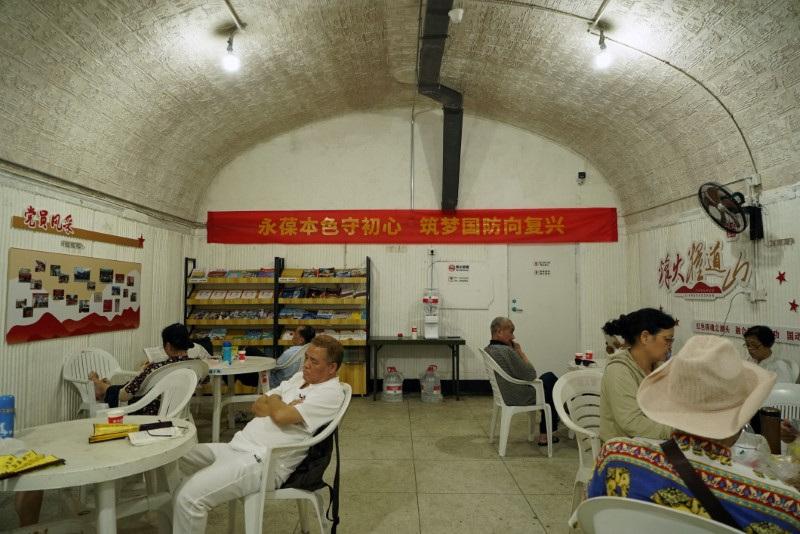
BEIJING, Aug 8 (Reuters) - At least two people have died from heat-stroke in one Chinese city, and many more have fallen ill, as temperatures hovered around 40 degrees Celsius (104 degrees Fahrenheit) for the eighth day on the eastern seaboard. Over the next three days, most areas south of the Yangtze River, which empties into the sea in Shanghai, are expected to bake in 37C-39C heat, with temperatures in parts of Anhui, Jiangsu and Zhejiang provinces exceeding 40C, forecasters said on Thursday. After sweltering in its hottest July in observed modern history, China has been hit by extreme heat, particularly in the east and south of the country. Zhejiang's provincial capital Hangzhou recorded a 41.9C historical high on Aug. 3. Emergency services in Shenzhen, a city of 18 million people in Guangdong province, said it had made 88 emergency house calls due to heat-related illnesses from Aug. 1-6. Two men, one in his 50s and the other in his 60s, later died, according to a statement released late on Wednesday. China does not give a tally of heat-related deaths, although domestic media occasionally report fatalities, citing local authorities. In 2022, China was hit by the worst heat waves since 1961, with many parts of the country enduring a 79-day hot spell from June 13 to Aug. 30. No official death tally has been disclosed. China's Ministry of Emergency Management said 554 people died or went missing that year "due to natural disasters". Heat-related deaths can be hard to categorise, as a fatality owing to a heat-stroke could be classified differently if the cause of death was a heart attack or organ failure. In a 2023 report published in the medical journal The Lancet , opens new tab, heat wave-related mortality in China was estimated at 50,900 deaths in 2022, doubling from 2021. Sign up here. https://www.reuters.com/world/china/china-discloses-first-heat-stroke-fatalities-amid-record-temperatures-2024-08-08/
2024-08-08 07:25
BRUSSELS, Aug 8 (Reuters) - Last month was the second hottest July for the planet on record, breaking a 13-month period when each month was warmest, which had been in part fuelled by the warming El Nino weather pattern, the European Union's Copernicus Climate Change Service said on Thursday. The month was 1.48 degrees Celsius (2.7 degrees Fahrenheit) above the pre-industrial reference of 1850-1990, Copernicus said in a monthly report, while the last 12 months were 1.64 C above the pre-industrial average due to climate change. July also recorded the two hottest days on record. Copernicus attributes the high temperatures largely to greenhouse gas emissions from fossil fuel-based industries and noted that oceans not normally impacted by El Nino saw an unusual rise in temperatures. "This El Nino has ended but this magnitude of global temperature rises, the big picture is quite similar to where we were a year ago," Julien Nicolas, a climate researcher with Copernicus, told Reuters. "We are not done with temperature records causing heatwaves ... We know this long-term warming trend can be with a very high level of confidence related to the human impact on climate." Above-average temperatures were recorded in southern and eastern Europe, the western United States, western Canada, most of Africa, the Middle East, Asia and eastern Antarctica. Near or below-average temperatures were seen in northwestern Europe, western Antarctica, parts of the United States, South America and Australia. July 2024 was also wetter than average in northern Europe and southeastern Turkey while drought warnings persisted in southern and eastern Europe. Arctic sea ice was down more than in 2022 and 2023 at 7% below average though not as severe as the record 14% drop in 2020. Antarctic sea ice was the second lowest extent for July at 11% below average compared with 15% below in July last year. Global sea temperatures remain at near record highs with this July only 0.1 C below July last year, ending a 15-month consecutive new record streak. "What we saw was surprising in terms of how much warmer it has been. That raises the question of what is happening to the ocean outside this natural climate pattern like El Nino or La Nina events. Are there shifts in the ocean currents?" Nicolas said. Sign up here. https://www.reuters.com/business/environment/second-hottest-july-breaks-13-month-record-streak-eu-scientists-say-2024-08-08/