2024-08-08 00:21
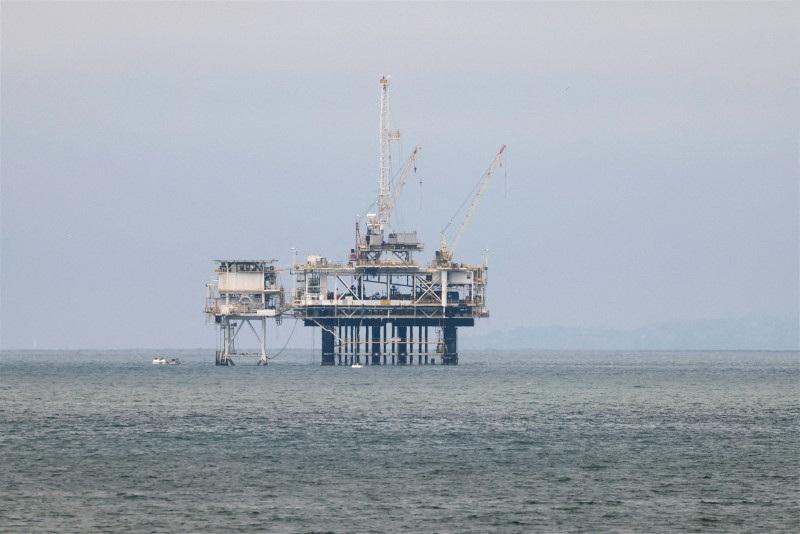
Aug 7 (Reuters) - Oil prices could rise to the low-to-mid-$80's, bouncing up from a recent sell-off, Citi Research said in a note on Wednesday, citing factors including geopolitical tensions and weather. Fundamentals, weather, geopolitics and financial flows could all give oil prices temporary support, it said. On Wednesday, Brent crude futures settled up $1.85, or 2.42%, at $78.33 a barrel. U.S. West Texas Intermediate crude CLc1 gained $2.03, or 2.77%, to $75.23. WHY IT'S IMPORTANT Brent slumped on Monday to its lowest since early January and WTI touched its lowest since February, as a global stock market rout deepened on concerns about a potential recession in the U.S. after weak jobs data. Commodities including oil joined the global sell-off as fears of a U.S. recession stoked worries over demand. KEY QUOTES "There is a possibility of a bounce in prices to the low-to-mid-$80s again for Brent, at which point we would again recommend selling strength," Citi said. "Oil prices have mostly brushed off (geopolitical) risks for now, perhaps seeing a narrow path from conflict to actual physical oil disruptions ... Still, miscalculations could potentially lead to unforeseen escalation and contagion across the region." CONTEXT The Middle East is bracing for a possible wave of attacks by Iran and its allies following last week's killing of senior members of militant groups Hamas and Hezbollah, with concern rising that conflict in Gaza could turn into a wider war. Libya's National Oil Corp declared force majeure on Wednesday for Sharara oilfield, a day after saying it would decrease output from the field due to protests. Tropical Storm Debby brought unrelenting rain to the U.S. Southeast as it drifted off the Carolinas, threatening the region with dangerous flooding. Sign up here. https://www.reuters.com/markets/commodities/citi-sees-possible-bounce-oil-prices-low-to-mid-80s-2024-08-08/
2024-08-07 23:52
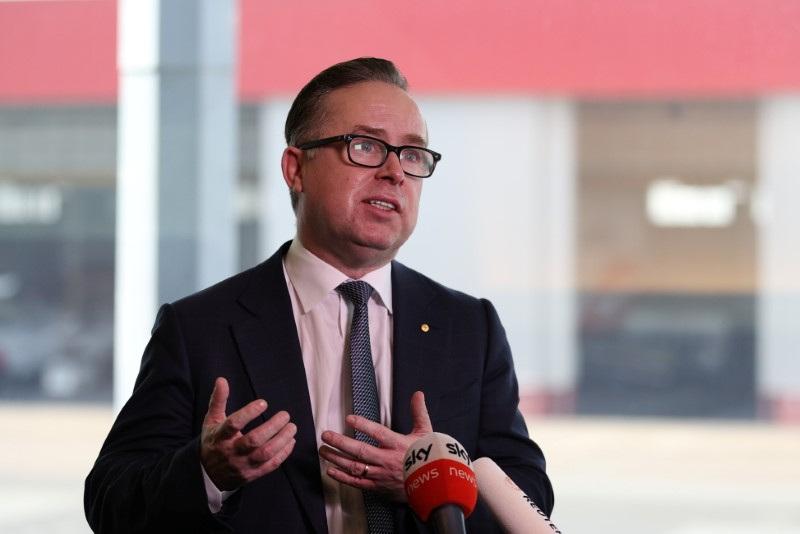
Aug 8 (Reuters) - Australia's Qantas (QAN.AX) , opens new tab said it was cutting its former CEO's exit bonuses by A$9.3 million ($6 million) after an external review found him responsible for measures alienating travellers, employees and shareholders in the COVID era and beyond. The decision marks a gloomy footnote to the 15-year rein of Alan Joyce at Australia's dominant airline, who brought forward his retirement to last September under a cloud of lawsuits alleging unfair pandemic sackings and selling tickets to cancelled flights. Qantas was one of Australia's top brands for years even as Joyce leaned into controversy. In 2011, he grounded its entire fleet over a union dispute, but the sacking of 1,700 groundstaff in 2020 while collecting COVID stimulus payments, followed by a surge of flight cancellations and lost luggage once COVID border restrictions lifted, prompted analysts to warn the cost of repairing the airline's reputation may hurt profit. Joyce's final compensation totalled A$21.4 million including bonuses, but the company said at the time it reserved the right to withhold some pending an external review of how the airline which sells nearly two-thirds of Australian domestic fares was run. Qantas published the review on Thursday, which blamed the company's reputational crisis on a "command and control" leadership style, and said it was cutting Joyce's final package to just over half the original amount. "There was too much deference to a long-tenured CEO who had endured and overcome multiple past operational and financial crises," said the report by McKinsey & Co senior adviser Tom Saar. "(Qantas) had a 'command and control' leadership style with centralised decisions and an experienced and dominant CEO," the report added. "This contributed to a top-down culture, which impacted empowerment and a willingness to challenge ... decisions of concern. That cultural characteristic underpinned some of the events that affected the group's reputation." The Qantas board had "limited visibility or appreciation of the manifestation of this cultural characteristic", the report noted, adding that the company had already replaced some directors and top managers. The company was also re-setting its relationships with external stakeholders, the report said, in light of an "adversarial approach to engagement" under Joyce. And the airline had brought in a stricter internal approval process for CEO share sales, the report said, noting Joyce's sale of A$17 million of Qantas shares in June 2023, a few months before his scheduled retirement, contributed to a loss of trust among stakeholders. Qantas agreed in May to pay A$120 million to settle a regulator lawsuit over the sale of thousands of tickets on already cancelled flights. The airline, which reports full-year results on Aug. 29, is still waiting to learn how much it must pay after losing a separate lawsuit which found it illegally fired 1,700 ground staff in 2020 to stop them from taking industrial action like strikes. ($1 = 1.5349 Australian dollars) Sign up here. https://www.reuters.com/business/aerospace-defense/qantas-board-decides-cut-former-ceo-alan-joyces-2023-pay-2024-08-07/
2024-08-07 22:52
Weak demand in Treasury auction Disney shares fall 4.5% Indexes: Dow down 0.6%, S&P 500 down 0.8%, Nasdaq down 1.1% NEW YORK, Aug 7 (Reuters) - U.S. stocks ended lower on Wednesday, with the Nasdaq falling 1% as technology shares declined and weak demand in a 10-year Treasury auction stoked investor jitters in choppy trade. Indexes started the day higher with a surge in tech shares, and both began to lose steam in afternoon trading. With investors still nervous after a recent steep selloff in global stocks, equities pared gains further after the Treasury auction. All three indexes went red, and losses steepened just before the close. The S&P 500 technology index (.SPLRCT) , opens new tab ended down 1.4% and was the biggest drag on the benchmark index. "There's just a lot to worry about over the next eight weeks or so, so I'm expecting more volatility. I wouldn't be surprised if after a few days of rally you have another small selloff," said Peter Tuz, president of Chase Investment Counsel in Charlottesville, Virginia. Investors have been worried about a possible U.S. recession and weaker forecasts from some big U.S. companies, among other factors. The Dow Jones Industrial Average (.DJI) , opens new tab fell 234.21 points, or 0.6%, to 38,763.45, the S&P 500 (.SPX) , opens new tab lost 40.53 points, or 0.77%, to 5,199.5 and the Nasdaq Composite (.IXIC) , opens new tab dropped 171.05 points, or 1.05%, to 16,195.81. Lindsey Bell, chief strategist at 248 Ventures in Charlotte, North Carolina, said investors also may be taking profits after Tuesday's rebound in stocks. "You don't just have the fall we had on Monday and it's done. You typically test the lows again before we can move out of this downtrend," she said. On Monday, the Nasdaq and S&P 500 fell at least 3% each. Stocks got early support Wednesday following comments from Bank of Japan (BOJ) Deputy Governor Shinichi Uchida that the central bank would not raise rates when financial markets are unstable. The BOJ's surprise rate hike on July 31 to a level unseen in 15 years had sparked a global stocks rout as investors unwound their sharp yen carry trade positions following a surge in the low-yielding currency, widely used for acquiring high-yielding assets. Shares of Walt Disney (DIS.N) , opens new tab fell 4.5% as it predicted a "moderation in demand" at its theme park business in the coming quarters. Super Micro Computer (SMCI.O) , opens new tab shares dropped 20.1% after it reported quarterly adjusted gross margins below estimates. Rival Dell Technologies (DELL.N) , opens new tab dropped 4.9%. Markets await more commentary on monetary policy from U.S. central bank officials next week, in the run-up to the Jackson Hole, Wyoming, event where Fed Chair Jerome Powell is scheduled to speak. Volume on U.S. exchanges was 12.93 billion shares, compared with the 12.63 billion average for the full session over the last 20 trading days. Declining issues outnumbered advancing ones on the NYSE by a 1.48-to-1 ratio; on Nasdaq, a 2.08-to-1 ratio favored decliners. The S&P 500 posted 16 new 52-week highs and 9 new lows; the Nasdaq Composite recorded 34 new highs and 195 new lows. Sign up here. https://www.reuters.com/markets/us/futures-rally-big-tech-extends-recovery-2024-08-07/

2024-08-07 22:13
Aug 7 (Reuters) - Atmos Energy (ATO.N) , opens new tab posted a rise in third-quarter profit on Wednesday, as the natural gas utility benefited from higher tariffs and customer additions. The company said its distribution operating earnings were boosted by $30.6 million due to higher rates than last year, while a higher number of customers lifted earnings by $5.33 million. Atmos delivers natural gas to about 3 million distribution customers across eight U.S. states. The company, which also operates about 5,700 miles of transmission pipelines in Texas, said its operating earnings in its pipeline and storage operating earnings rose 40.6% to $137.2 million. A surge in production as well as capacity constraints have boosted demand for natural gas pipelines in the U.S. Its costs for gas purchases at its distribution segment declined by 12.9%, as U.S. gas prices have plunged this year due to milder-than-expected weather and storage buildups. The Dallas, Texas-based company's net income was at $165.6 million, or $1.08 per share, in the quarter ended June 30, compared with $137.8 million, or 94 cents per share, a year earlier. Sign up here. https://www.reuters.com/business/energy/atmos-energys-quarterly-profit-rises-higher-rates-customer-growth-2024-08-07/

2024-08-07 21:51
Ottawa to provide C$12 million over 10 years for Fort Chipewyan Health Study Communities report higher rates of cancer, autoimmune diseases, skin irritations, and severe arthritis Pollution concerns intensify after tailings water leak from Imperial Oil Aug 7 (Reuters) - Canada will fund an Indigenous-led study into how oil sands development impacts the health of local communities, the government said on Wednesday, following a tailings water leak from an Imperial Oil (IMO.TO) , opens new tab site that heightened pollution concerns. Environment Minister Steven Guilbeault said Ottawa would provide C$12 million ($8.71 million) over 10 years for the Fort Chipewyan Health Study, which may include an assessment of whether there are heightened risks of cancer for communities downstream of the oil sands region. Fort Chipewyan is one of several Indigenous communities in remote Northern Alberta that last year learned that tailings water - a toxic mix of bitumen, sand and residual bitumen - had been seeping for months from Imperial's nearby Kearl mining site. For years those communities have reported higher rates of cancer and other health issues including autoimmune diseases, skin irritations and severe arthritis, Chief Allan Adam of the Athabasca Chipewyan First Nation told reporters on a conference call. He added that his community first called for a health study in 1992. If the study points to impacts on communities from the oil sands it would force the federal and provincial governments and companies to put stronger environmental and health measures in place, Guilbeault told reporters on the call. "That would be the only reasonable course of action," he said. "I have heard first-hand how the Kearl mine spill affected the communities but also how these concerns are not new." Around two-thirds of Canada's 5 million barrels per day of crude output come from the oil sands, and Imperial is one of the largest producers alongside Suncor Energy (SU.TO) , opens new tab and Canadian Natural Resources Ltd (CNQ.TO) , opens new tab. "Imperial reiterates its support and our willingness to participate in the health study announced today by the federal government to improve understanding and build confidence in our communities regarding our industry," an Imperial spokesperson said in a statement, adding the company regrets the Kearl seepage. Pathways Alliance, a group of Canada's six biggest oil sands producers, said in a statement it respected the leaders' desire to seek information on the health of their community and the region. The goal of the study is to develop robust data examining the health and environmental impacts of the oil sands, with specific objectives to be developed by the communities. Guilbeault said Ottawa had invited the Alberta government to help fund the study but had not received any response. He added that an independent assessment of the risks from tailings ponds would be useful. The Alberta government did not immediately respond to a request for comment. The health study is long overdue, Chief Billy-Joe Tuccaro of the Mikisew Cree First Nation, said on the conference call. "From the time they put the first shovel in the ground all this should have been taken care of ... but now we are playing catch-up 30 or 40 years on as people have died," he said. ($1 = 1.3779 Canadian dollars) Sign up here. https://www.reuters.com/business/healthcare-pharmaceuticals/canada-fund-health-study-how-oil-sands-impact-indigenous-communities-2024-08-07/

2024-08-07 21:47
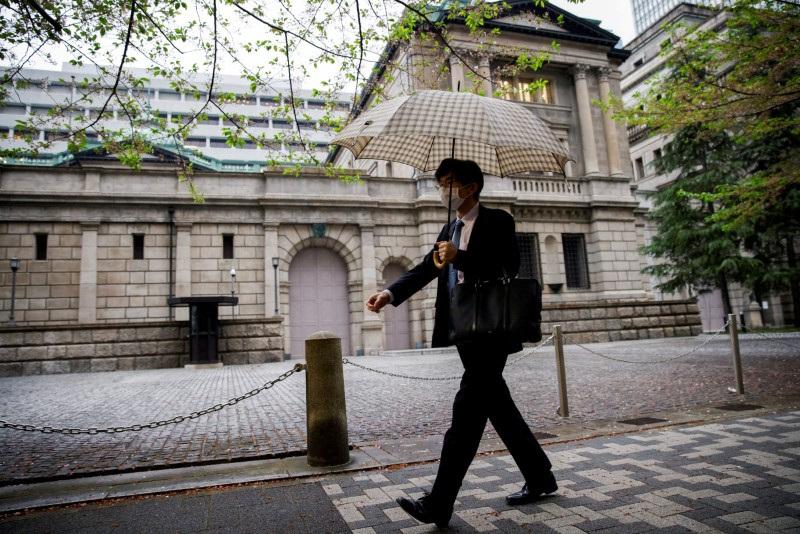
Aug 8 (Reuters) - A look at the day ahead in Asian markets. Asian assets are in for a rocky ride on Thursday after soothing words from the Bank of Japan's deputy governor about recent yen volatility were overtaken by a negative turn in U.S. markets, a reminder that market conditions remain challenging. Wednesday's U.S. session saw the dollar, bond yields and stock market volatility rise and Wall Street fall. Amongst all, that was a weak $42 billion auction of 10-year Treasury bonds. The auction was a big disappointment. Its 'tail' - how much higher the yield at sale was relative to where it traded before - was a massive 3 basis points, and demand was 2.32 times the amount of debt on offer, the weakest since December 2022. Also, bear in mind that MSCI's benchmark Asian and emerging market stock indexes chalked up strong gains on Wednesday of 1.8% and 1.9%, respectively, their best performance in two months. They may struggle to maintain much momentum on Thursday. There is a decent sprinkling of regional event risk in Asia with Philippines GDP, Japanese current account, Taiwan trade numbers and a Reserve Bank of India policy decision all on tap. The BOJ also releases the summary of opinions from its instantly historic July 30-31 policy meeting that some analysts say contributed to the current market turbulence. Investors are still mulling BOJ Deputy Governor Shinichi Uchida's remarks on Wednesday that the central bank won't raise interest rates when financial markets are unstable, and that recent market turbulence is "clearly a downside risk to the economy." This helped lift the Nikkei and slammed the yen - in late U.S. trading the currency was down 1.8% against the dollar for its biggest daily fall in 18 months. Implied yen volatility eased a little on Wednesday but remains elevated across the curve. The wild gyrations of the last few days may have passed, but traders are understandably maintaining a cautious and defensive stance. One-week volatility is notably higher than one-month volatility, an indication that investors still expect quite a bit of churn in the yen in the coming days. India's central bank is widely expected to hold rates steady at 6.50% for a ninth straight meeting, but investors are hoping for a more dovish tone that could open the door for an October rate cut. At this juncture, an October cut seems unlikely. Current money market pricing attaches roughly a one-in-five chance of a cut in October and suggests a quarter-point rate cut is only fully priced by February next year. Taiwan's July trade figures, meanwhile, will be closely scrutinized for clues on the strength of AI-related demand for microchips. Exports in June soared 23.5% from a year earlier thanks to "strong business opportunities in new technology applications", the finance ministry said then. Here are key developments that could provide more direction to Asian markets on Thursday: - India interest rate decision - Taiwan trade (July) - BOJ summary of opinions Sign up here. https://www.reuters.com/markets/asia/global-markets-view-asia-graphic-pix-2024-08-07/