2024-08-07 12:22
NEW DELHI/BENGALURU, Aug 7 (Reuters) - Indian conglomerate Reliance Industries (RELI.NS) , opens new tab is ready for its next stage of growth and aims to become the largest developer of renewable energy projects in the country, the company said in its annual report issued on Wednesday. "Reliance has consolidated its balance sheet after the previous round of capex and is ready for the next level of growth," Chairman Mukesh Ambani said in the report. The company continues to monitor financial markets to seize suitable opportunities for capital-raising to support its growth plans, it said. The oil-to-telecoms conglomerate, which operate the world's biggest refining complex at Jamnagar in western Gujarat state, in 2021 announced $10 billion of investments to develop its green energy portfolio and achieve its 2035 net zero carbon goal. Another Indian conglomerate, Adani Group (ADEL.NS) , opens new tab, is also investing billions of dollars , opens new tab to expand its green energy offerings and aims to boost non-fossil fuel capacity, including solar and wind, to 500 gigawatts (GW) by 2030. Reliance, which seeks to establish 100 GW of renewable energy (RE) installations by 2030, will start production of ingots and wafers - used to make low-cost solar cells and modules - at its 10 GW solar photovoltaic (PV) giga factory in Jamnagar by December. The company aims to double the capacity of the PV factory by 2026. "Over the next 12 months, our focus is to bring new energy manufacturing facilities on-stream, operate them efficiently, and start developing RE generation projects," Reliance said, adding it wants to develop a local supply chain to cut imports. Reliance said it would partner with global players to obtain technologies in the new energy space for building end-to-end integrated renewable energy manufacturing facilities, including projects for green hydrogen, green chemicals and energy storage. Sign up here. https://www.reuters.com/sustainability/indias-reliance-ready-next-level-renewables-focused-growth-2024-08-07/
2024-08-07 12:16
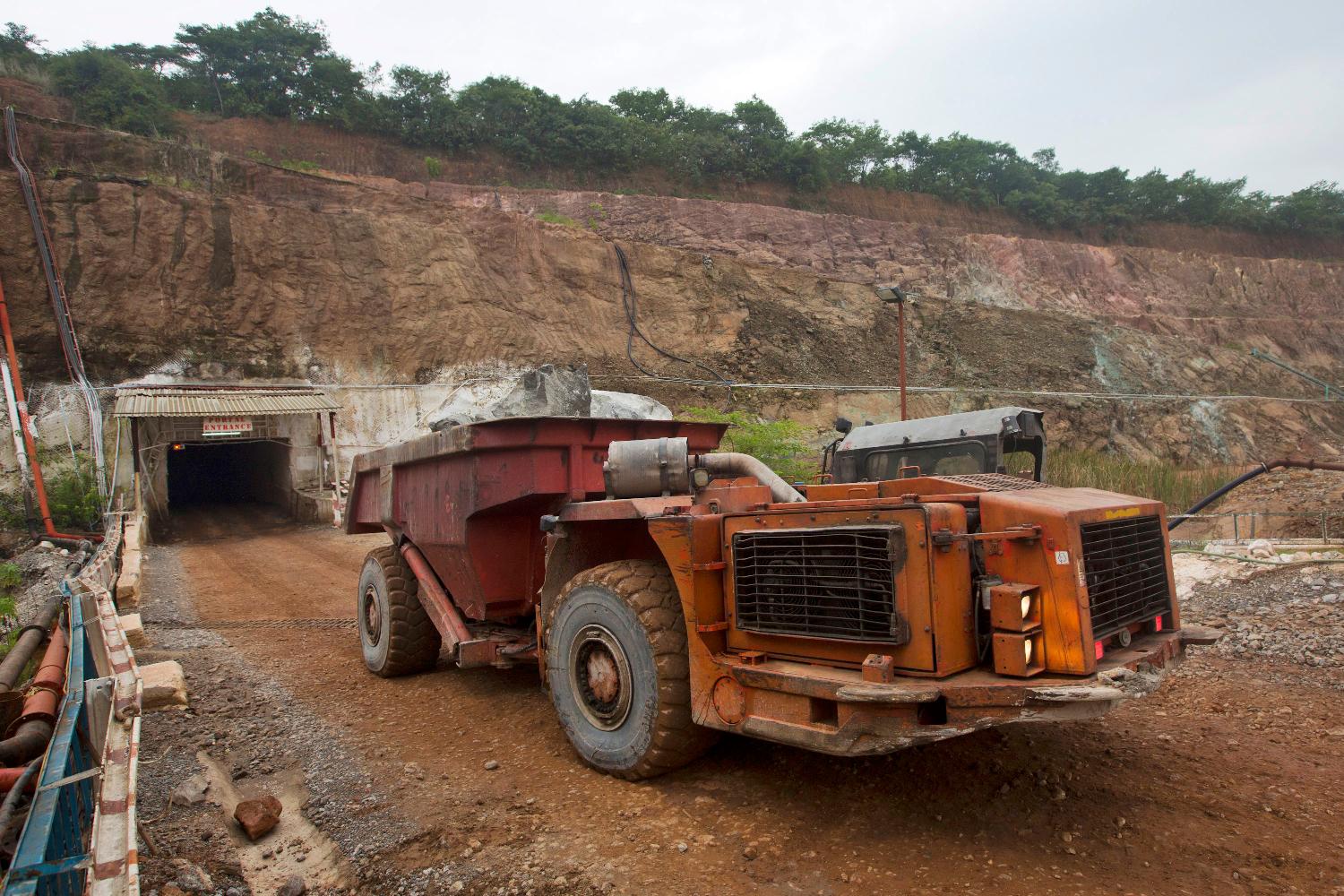
LUSAKA, Aug 7 (Reuters) - Zambia's proposed minerals regulation law could deter investment and deliver a "fatal blow" to its goal of raising annual copper output to 3 million metric tons, two mining bodies said on Wednesday. Zambia, Africa's second biggest copper producer, is proposing a Minerals Regulation Commission Bill that would allow the government to acquire a shareholding in exploration areas before licences to search for minerals including copper are granted to investors. The proposed law, seen by Reuters on Wednesday, seeks to give the nation's minister of finance the right to maintain a shareholding in a mining license on behalf of the government if minerals are discovered. But Zambia's Chamber of Mines (ZCM), the main mining industry body, and the Association of Zambian Mineral Exploration Companies (AZMEC) said in a joint statement some parts of the proposed law "will drive up the perception of investment risk" in the country. "(With) the prospect of forced 'free carry' acquisitions by the state of stakes in new ventures, this Bill will seriously undermine property rights," the mining industry bodies said. Zambia's mines ministry was not immediately available to comment. President Hakainde Hichilema's government is seeking to attract more investors to boost copper output to about 3 million tons over the decade. Copper output slumped to 698,000 tons in 2023 from 763,000 tons the previous year, according to data from the ZCM. Barrick Gold (ABX.TO) , opens new tab and First Quantum Minerals (FM.TO) , opens new tab are among investors that have outlined major expansion plans to boost copper output in Zambia. Sign up here. https://www.reuters.com/markets/commodities/zambias-proposed-mining-law-bad-investment-miners-say-2024-08-07/
2024-08-07 12:00
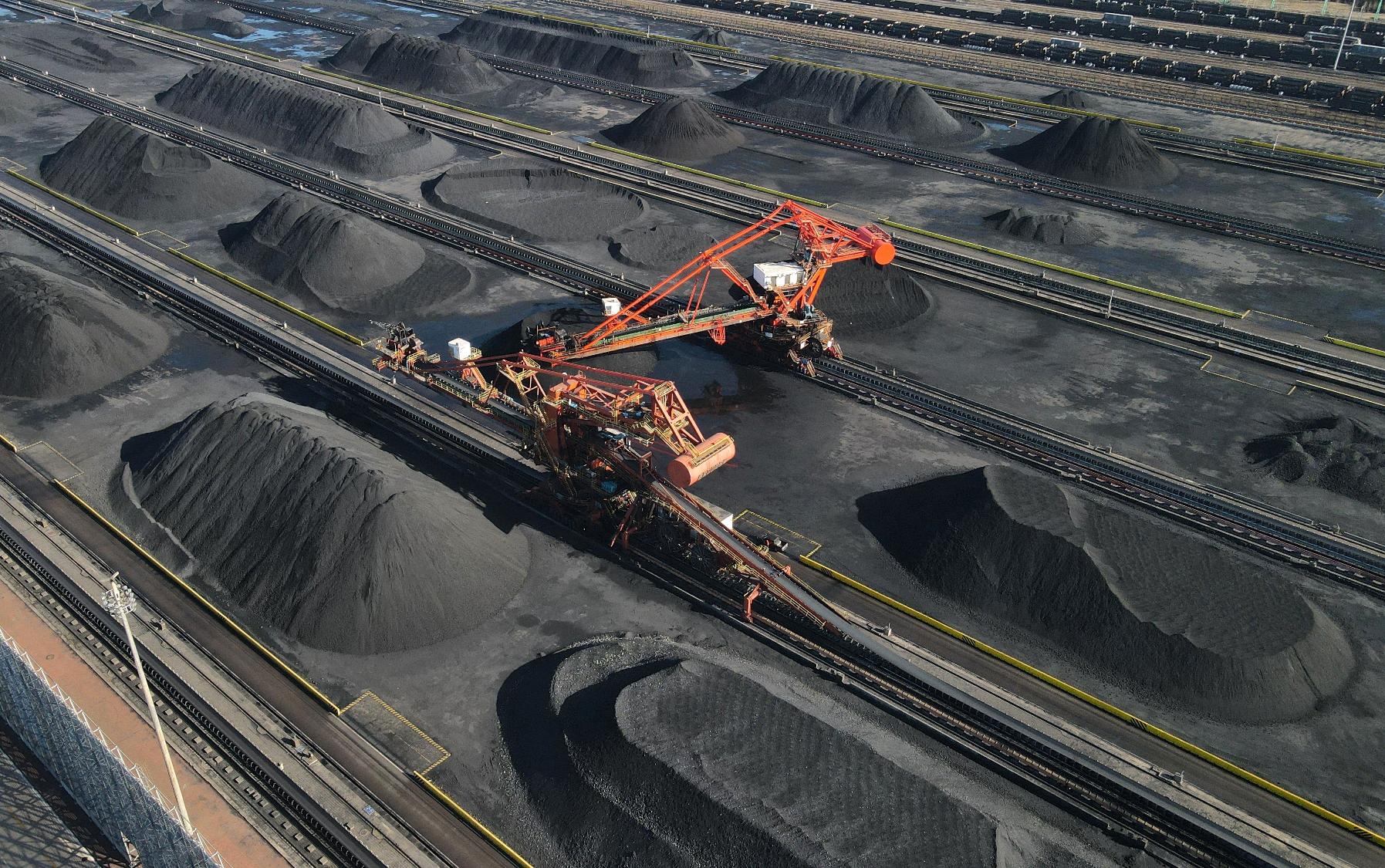
LAUNCESTON, Australia, Aug 7 (Reuters) - China's imports of major commodities continued to lose momentum in July, with crude oil arrivals slumping to the weakest in nearly two years, while those of iron ore, coal, copper and natural gas were largely steady. The headline-grabber in Wednesday's official data release was the drop in crude oil imports to 9.97 million barrels per day in July, the lowest on a daily basis since September 2022. China, the world's biggest importer of crude, has seen arrivals slump this year, with imports of 10.90 million bpd in the first seven months of the year, down 2.9% from the 11.22 million bpd over the same period in 2023. Crude oil imports are down about 320,000 bpd in the first seven months of 2024, a figure that stands in sharp contrast to the demand growth forecasts from leading industry groups like the Organization of the Petroleum Exporting Countries (OPEC) and the International Energy Agency (IEA). OPEC's July monthly oil market report stuck to the group's forecast that China will lead global demand growth this year, with an increase of 760,000 bpd. The IEA's view on China is less optimistic, but the agency still expects China will account for about 40% of this year's global increase in crude demand, which equates to 388,000 bpd. With China's imports actually falling in the first seven months of the year, it would take an extraordinary turnaround for the remaining five for the OPEC and IEA forecasts to be realised. With crude oil imports looking anaemic, it's worth looking at imports of other major commodities. At first glance the picture doesn't necessarily look that weak, with imports of iron ore, coal, copper and natural gas all posting increases in July from the previous month. But convert imports to a per-day basis, and July looks considerably less impressive. STEADY IMPORTS Iron ore imports were 102.81 million metric tons, up 5% to the 97.61 million recorded in June, but on a daily basis July arrivals were 3.32 million tons, just higher than June's 3.25 million. They were also in line with the 3.29 million tons per day from may, and down from the 3.39 million in April. The overall picture for China, which buys about three-quarters of global seaborne iron ore, is that imports of the key steel raw material are steady, with little variation in recent months. This is despite the benchmark Singapore Exchange futures price trending lower since its high so far this year of $143.60 on Jan. 3, to the close of $102.66 on Tuesday. Imports of unwrought copper showed a similar trend to iron ore, with July arrivals of 438,000 tons being just above the 436,000 in June. But on a daily basis July's arrivals were 14,130 tons, below the 14,530 from June. For natural gas, imports of both liquefied natural gas and pipeline supplies in July were 10.86 million tons, which is 350,300 tons per day, while June saw arrivals of 10.43 million, or 347,700 per day. In May, natural gas imports were 365,500 tons per day and in April they were 343,300 per day. The one possible exception to the soft commodity imports is coal, where July imports of 46.21 million tons were the highest since December. But even with coal, the per day figures show a relatively steady pattern, with July's 1.49 million tons being the same as for June. May's coal imports were weaker at 1.41 million tons per day, but April's were stronger at 1.51 million. Putting the import data together shows that arrivals of iron ore, copper, natural gas and coal have been largely steady in recent months. The opinions expressed here are those of the author, a columnist for Reuters. Sign up here. https://www.reuters.com/markets/commodities/chinas-commodity-imports-show-economy-struggling-momentum-russell-2024-08-07/
2024-08-07 11:56
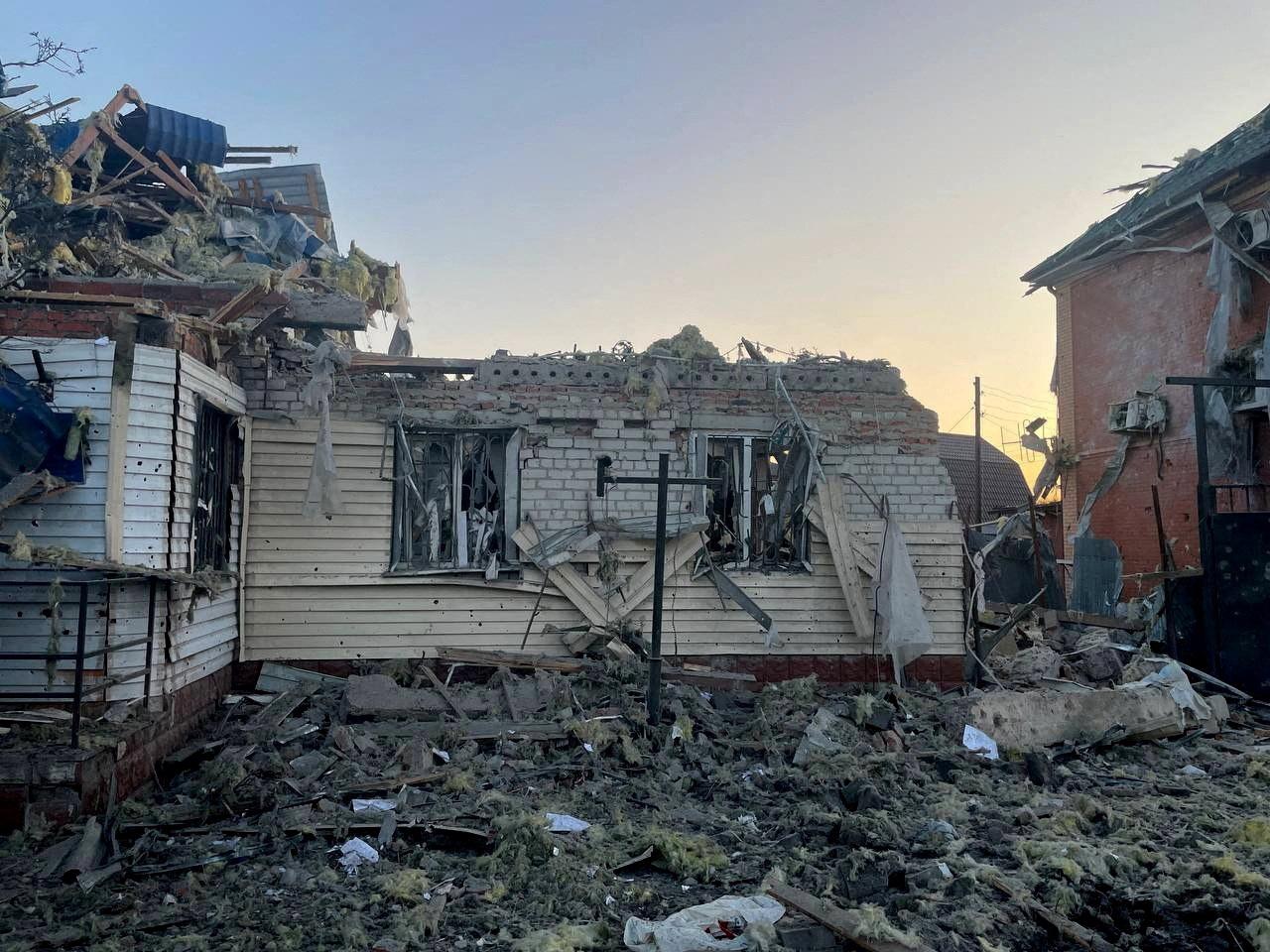
Ukraine pierces Russian border near Kursk Putin says attack is a major provocation Russia says major battles under way Fighting rages near major gas transit point National guard boosts security at nuclear plant MOSCOW, Aug 7 (Reuters) - Russia said on Wednesday it was fighting intense battles against Ukrainian forces that had penetrated its southern border near a major natural gas transmission hub, in one of the largest incursions into Russian territory since the war began. The acting governor of Kursk region, Alexey Smirnov, said he had introduced a state of emergency in the border region. Regional officials said that meant restricting access to specific areas. Russia's health ministry said 31 civilians, including six children, had been wounded. Smirnov said on Tuesday that five people had been killed. No information on military casualties was available. Russia's National Guard said it had beefed up security around the nearby Kursk nuclear power station and its four reactors. Russia has advanced this year after the failure of Ukraine's 2023 counteroffensive to achieve major gains, and has taken 420 square km (162 square miles) of territory from Ukrainian forces since June 14, Russian officials say. Ukraine struck back on Tuesday, and battles continued through the night into Wednesday as Ukrainian forces pushed to the northwest of the border town of Sudzha, 530 km (330 miles) southwest of Moscow, Russia's defence ministry said. "The Kyiv regime has launched another major provocation," President Vladimir Putin told members of the Russian government, referring to the attack in Kursk region. NEARLY 1,000 UKRAINIAN SOLDIERS The chief of Russia's general staff, Valery Gerasimov, told Putin that Russian forces had halted a thrust by up to 1,000 Ukrainian soldiers - more than three times the figure that Russia's defence ministry had stated on Tuesday - and would push them back to the border. The advance was stopped by "the actions of the units covering the state border together with border guards and reinforcement units, with airstrikes, missile and artillery fire," Gerasimov said in televised comments. The Ukrainian military appeared to have adopted a strategy of strict silence. President Volodymyr Zelenskiy, in his nightly video address on Wednesday, made no reference to the attack, while exhorting Kyiv's soldiers to press on and weaken Russian forces. Ukraine's General Staff also made no acknowledgment in its daily battlefield update. In a late evening report, it said fighting had intensified in Sumy region -- across the border from Russia's Kursk region. The General Staff said Russian forces had deployed aircraft, helicopters and heavy weapons in the area "but made no headway and suffered significant losses". 'NO VIOLATION' OF RULES ON WEAPONS, WASHINGTON SAYS In Washington, White House spokesperson Karine Jean-Pierre said the United States was seeking an understanding from Ukraine of the incursion, and said it had had no advance knowledge of it. State Department spokesperson Matthew Miller said U.S. rules on Ukrainian use of U.S. weapons - authorised in areas over the Russian border - remained in effect, but that Ukraine's actions were "not a violation of our policy." The Russian ambassador to Washington, Anatoly Antonov, said on Telegram that U.S. statements on the Ukrainian action were "outrageous...not a word criticising their clients, not a regret about the victims of the tragedy". There was fighting around Sudzha, the last operational trans-shipping point for Russian natural gas to Europe via Ukraine. The Urengoy–Pomary–Uzhhorod pipeline carried about 14.65 billion cubic metres of gas in 2023, about half of Russia's gas exports to Europe. Ukraine's gas transmission operator said Russian gas was transiting to European consumers normally. Just 60 km to the northeast lies the Kursk nuclear power station. The battles around Sudzha come at a crucial juncture in the conflict, the biggest land war in Europe since World War Two. Kyiv is concerned that U.S. support could drop off if Republican Donald Trump wins the November presidential election. Trump has said he would end the war, and both Russia and Ukraine are keen to gain the strongest possible bargaining position on the battlefield. Ukraine wants to pin down Russian forces and show the West it can still mount major battles. Russian military bloggers depicted the situation in Kursk region as more serious than the official accounts, with some suggesting that Ukraine had opened a new front. Russia has sent reserves to help shore up its defences. Some bloggers suggested that Ukraine might be planning an advance on the Kursk nuclear plant. Both Kyiv and Moscow say they do not target civilians in the war, triggered by Russia's full-scale invasion in February 2022. Russian Telegram channels carried unverified footage of shelled houses. Forces describing themselves as voluntary paramilitaries fighting on Ukraine's side penetrated parts of Kursk and the adjacent Belgorod region earlier this year, triggering a push by Russian troops to set up a buffer zone in Ukraine's northeast. Sign up here. https://www.reuters.com/world/europe/ukraine-keeps-up-air-attacks-russias-kursk-regional-governor-says-2024-08-07/
2024-08-07 11:39
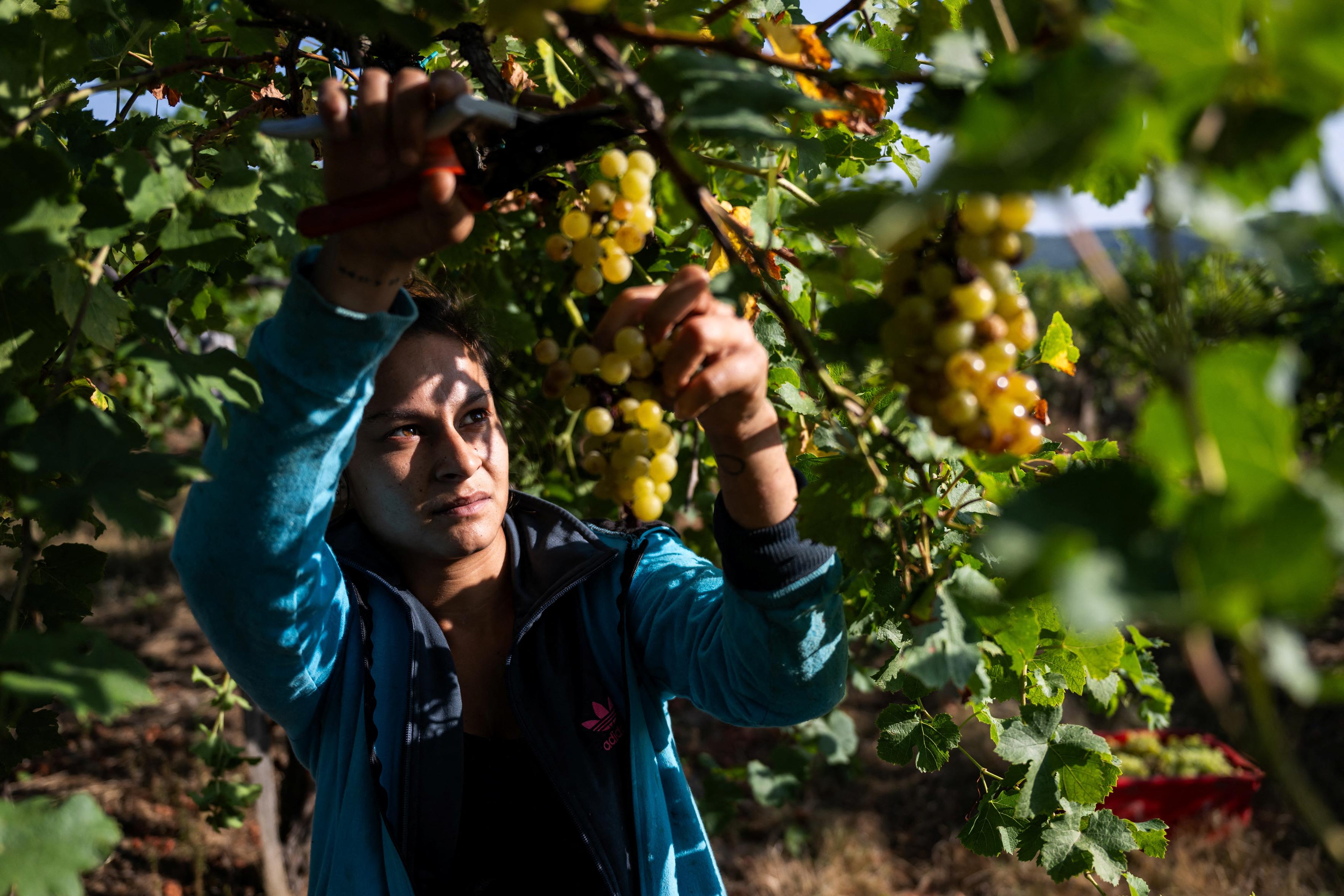
BUDAPEST, Aug 7 (Reuters) - Hungary's hottest July on record has forced some of the country's winemakers to start harvesting grapes in early August, up to a month earlier than usual. Climate change is having a severe impact on Hungary's acclaimed winemaking industry, as rising temperatures could make the country too hot for producing white wine, including the renowned Tokaji, scientists say. "I do not remember ever harvesting this variety of grape this early... we are at least a month early," said Laszlo Kerek, a 35-year-veteran of grape growing in Balatonlelle, south of Lake Balaton in western Hungary. Kerek, who was harvesting grapes with his family in early August by hand, attributes the early harvest to "nothing else but climate change." A National Meteorological Service report revealed that this July was Hungary's hottest since temperature tracking began in 1901. Hungary's winemaking regions have seen an increase of 25% in growing degree days, a metric denoting heat accumulation until crops reach maturity, according to Peter Szabo, a climate scientist at Eotvos Lorand University. "Our models show that growing degree days will keep rising, and Hungary's climate will then no longer be ideal for white wine," Szabo said. He suggested that Hungarian wine producers, over two-thirds of whom produce grapes for white wines, may need to adapt and switch to producing red wine, a variety more suitable for warmer climates. Hungarian winemakers, however, think that they will be able to adapt to the changing climate and keep producing traditional white wines with a few changes in the coming decades. "It looks like we will be the new Mediterranean region... so, this shift might not necessarily be unwelcome for Hungarian winemaking, but we need to adapt," said Peter Varga, owner of the Varga Winery in Badacsonyors, also by Lake Balaton. His winery, which sells 15 million bottles annually, is already implementing strategies to minimize direct sunlight exposure for grapes and considering planting new vines on east-facing slopes instead of south-facing ones. Winemakers in the Tokaj region in eastern Hungary, famous for its signature sweet, late-harvest Tokaji wines, are also concerned about hotter summers. Cool and humid October mornings are vital for their grape growing, Andras Kanczler, winemaker at the small Basilicus winery said. However, he added, "the risk posed by unpredictable fall weather can be a bit lower if grapes ripen earlier." Sign up here. https://www.reuters.com/business/environment/hungarys-white-wine-under-threat-heatwave-forces-early-harvest-2024-08-07/
2024-08-07 11:38
LONDON, Aug 7 (Reuters) - Glencore (GLEN.L) , opens new tab has stopped stockpiling electric vehicle battery material cobalt, its CEO Gary Nagle said on Wednesday, adding though that the market was likely to remain in surplus for another 18 to 20 months. In August last year, the London-listed miner said it had stockpiled cobalt in the first half of 2023, cutting supplies to the market to support prices of the metal. Glencore did not say at the time how many tons cobalt it had stockpiled and on Wednesday Nagle declined to comment on the current level of those stocks. Large surpluses of cobalt created by accelerating production of the metal over the last year in top producer Democratic Republic (DRC) of Congo have pushed cobalt prices , to around $12 a lb, the lowest since 2016. "Our best guess now is it will probably take 18 to 24 months to work through this surplus," Nagle said at a briefing, adding that demand from the aerospace and defense industries was strong. "We're not really stockpiling anymore, in fact we've actually sold down a bit of our stocks." China's CMOC Group (603993.SS) , opens new tab is ramping up cobalt production at its mines in Congo where it forecasts output to reach about 100,000 tons by 2028. According to Darton Commodities, Congo produced 77% of global cobalt supplies or more than 170,000 tons last year. The cobalt market could see be remain in surplus by about 28,000 tons and 24,000 metric tons this year and in 2025 respectively, according to Macquarie. "We should look at this as a short-term mismatch rather than a structural change in the market," Nagle said. "There isn't another big copper cobalt mine coming on ... It does give the market a chance to rebalance." However, cobalt prices are unlikely to return to heady heights of 2018 and 2022 as demand from the electric vehicle sector is likely to keep sliding due to new battery technologies that exclude cobalt. Sign up here. https://www.reuters.com/markets/commodities/glencore-not-stockpiling-battery-material-cobalt-any-more-2024-08-07/