2024-08-07 11:08
MANILA, Aug 7 (Reuters) - The Philippine agriculture department is seeking emergency procurement of African swine fever (ASF) vaccines to address a provincial outbreak, its chief said on Wednesday. Agriculture Secretary Francisco Tiu Laurel also said the local governments of affected areas in Batangas province may need to place their municipalities under a state of emergency to facilitate a response and release of funds for vaccines purchase. The Department of Agriculture may need to purchase at least 10,000 doses of ASF vaccines for the emergency response, Dante Palabrica, agriculture assistant secretary, said. To contain the spread of ASF, Tiu Laurel said the department was coordinating with the police and military to enforce checkpoints. Sign up here. https://www.reuters.com/world/asia-pacific/philippines-seeks-emergency-procurement-swine-flu-vaccines-tackle-outbreak-2024-08-07/

2024-08-07 10:20
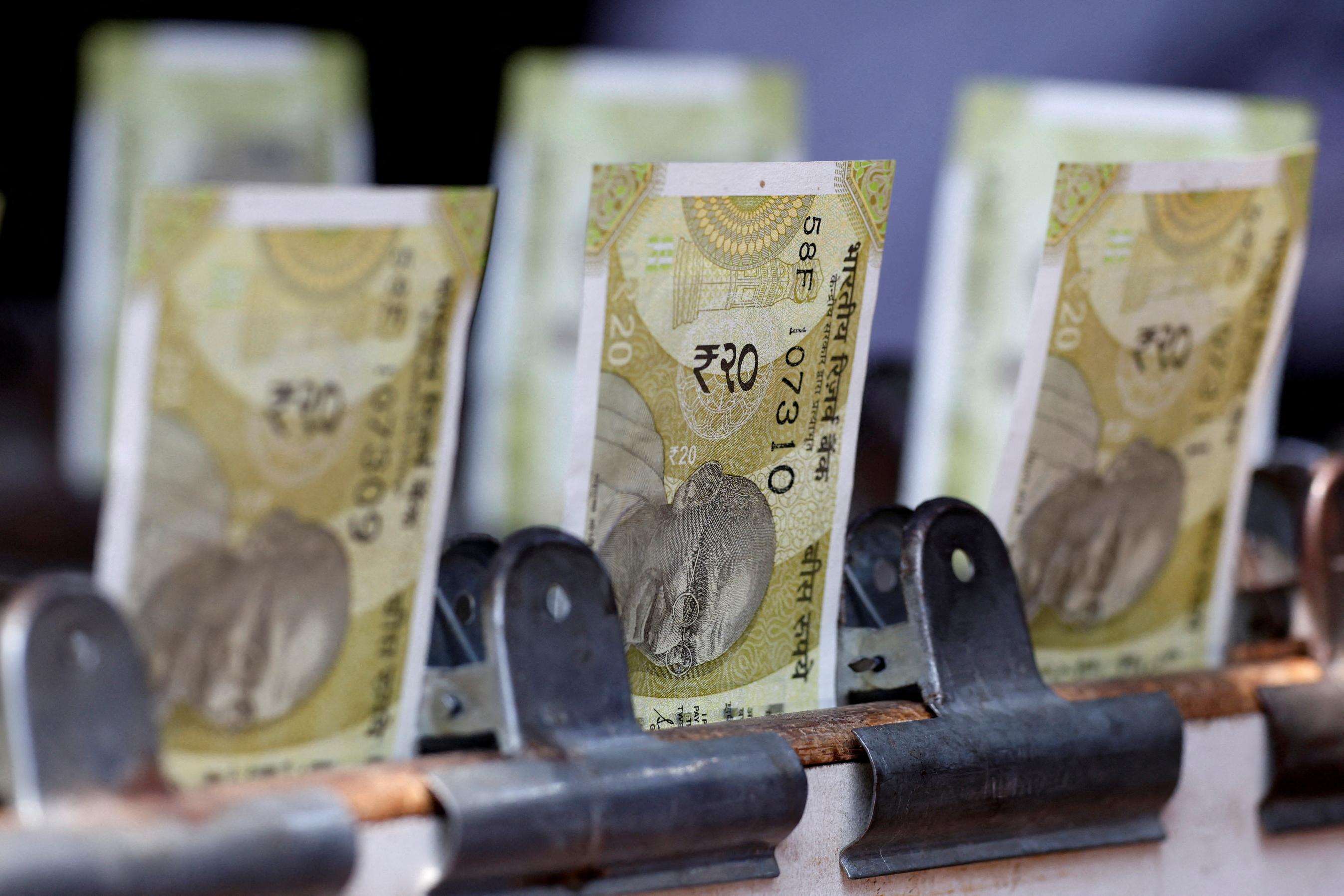
MUMBAI, Aug 7 (Reuters) - The Indian rupee weakened to yet another all-time on Wednesday, hurt by the continued unwinding of carry trades and on dollar demand from local importers. The rupee fell to its record low of 83.9725 to the dollar before closing at 83.9550, its weakest closing level ever. The currency has hit record lows for four straight sessions, prompting intervention from the central bank as well as instructions to select large banks to avoid excessive speculation against the rupee. The Reserve Bank of India likely sold dollars on Wednesday, helping limit losses, traders said. "A run up to 84 (on USD/INR) may create slight panic in the market which is likely why RBI is not allowing it to jump higher," a foreign exchange trader at a private bank said. The local currency has been hit by investors exiting carry trades that used the Chinese yuan and the Japanese yen to fund long bets on the rupee. This has likely led to persistently strong bids on the dollar-rupee pair in the non-deliverable forwards market, a Singapore-based fund manager said. The fund manager expects the rupee to stay under pressure in the near-term but said the RBI is unlikely to allow sharp declines. The dollar index rose 0.3% to 103.3 and U.S. bond yields ticked higher with the 10-year Treasury yield up 4 basis points at 4.02%. The Japanese yen and the offshore Chinese yuan declined 2% and 0.4%, respectively, amid a mixed performance by Asian currencies. While volatility in global markets has eased, "a return to a low macro and FX volatility regime may not be possible, given the risk of a broader slowdown in the US economy, monetary policy divergence, and geopolitical tensions in the Middle East," MUFG Bank said in a note. Sign up here. https://www.reuters.com/markets/currencies/rupee-slips-record-low-pressure-carry-trade-unwind-lingers-2024-08-07/
2024-08-07 10:17
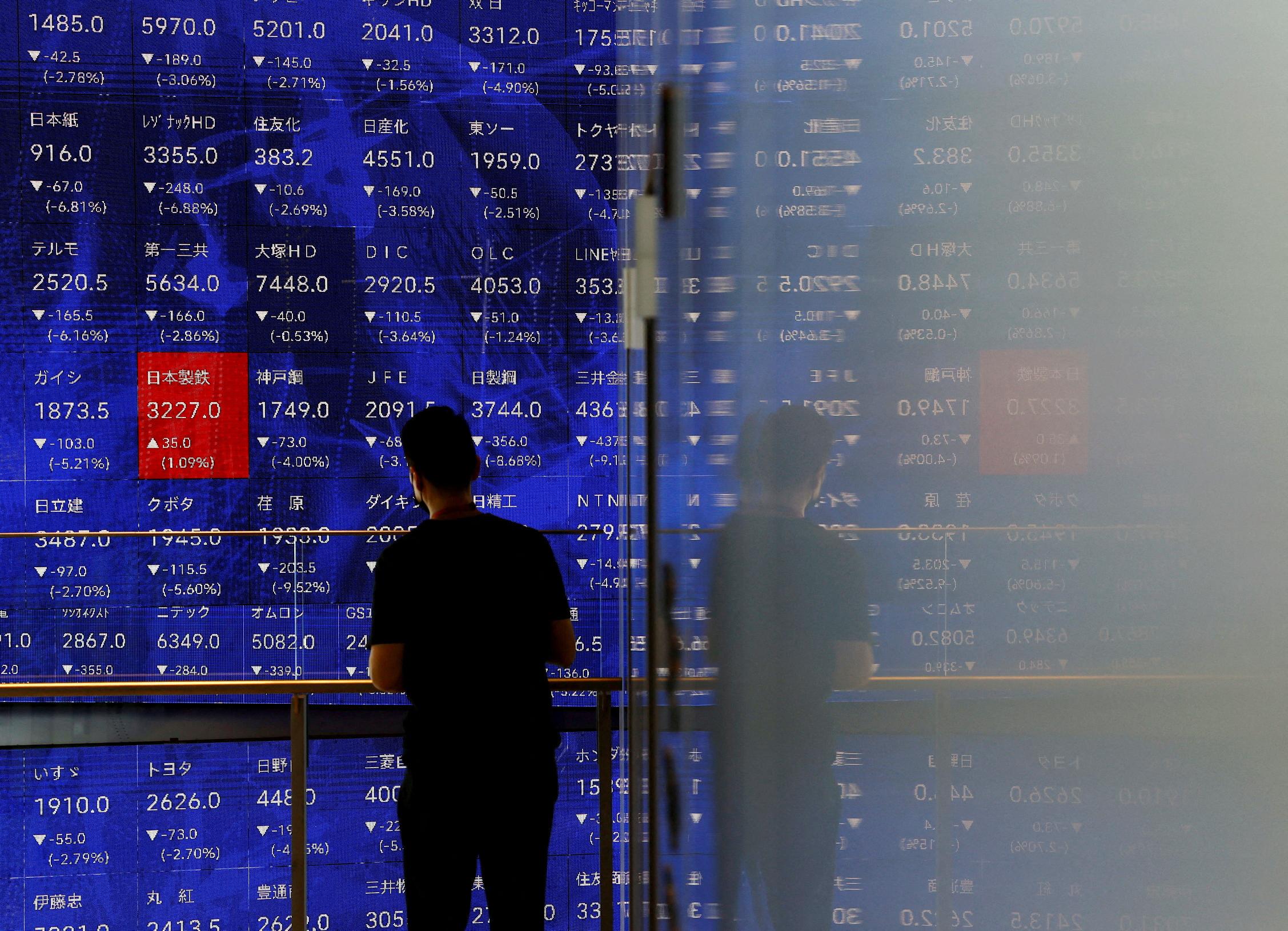
Romanian central bank seen cutting rates by 25 bps Outlook for CEE currencies mixed: Reuters Poll Bangladesh c.bank officials resign due to protests - sources Aug 7 (Reuters) - Emerging market stocks rose on Wednesday, as global shares bounced back from a brutal sell-off at the start of the week, while a strengthening dollar weighed on local currencies. Elsewhere, Romania's leu was little changed against the euro ahead of the central bank's August monetary policy decision. Analysts polled by Reuters expect Romania's central bank to cut rates by 25 basis points, the second rate cut in the current easing cycle. The gains came as European and Asian share markets rose, led by another bounce in the Nikkei, as the Bank of Japan unexpectedly turned cautious on rate hikes amidst market volatility. The unravelling of the yen carry trade, coupled with a softer-than-expected U.S. jobs report last week, and fears of a U.S. recession sparked a global sell-off earlier this week with investors dumping riskier assets and moving to safe-havens. "It's unclear how long this current bout of heightened volatility will last, yet we've seen global equity markets correct this violently before and never in the past have they not eventually rebounded to new highs," said John Christofilos, chief trading officer, at AGF Investments. Bourses in Prague (.PX) , opens new tab, Budapest (.BUX) , opens new tab and Turkey (.XU100) , opens new tab all gained over 1%. Polish stocks (.WIG20) , opens new tab underperformed with a 0.2% fall. However, markets are still assessing the likelihood of a slowdown in the United States and what it means for the Federal Reserve outlook, while growing worries about China's economic strength continue to overshadow emerging market assets. Data on Wednesday showing Chinese export growth slowed in July added to concerns about the country's manufacturing sector. The dollar rose against the yen on Wednesday, which dropped after an influential Bank of Japan official played down the chances of a near-term rate hike. The greenback's rise weighed on emerging market currencies, with MSCI's EM currency index (.MIEM00000CUS) , opens new tab standing flat on the day. The Indian rupee fell to an all-time low against the dollar ahead of India's central bank policy decision on Thursday. The South African rand jumped to 18.352 against the dollar, rising for a second day, while stocks (.JTOPI) , opens new tab firmed 0.6%. Currencies across central Europe were broadly steady to stand lower against the euro. Hungary's forint slipped 0.3%, the Polish zloty fell 0.1%, while the Czech crown was flat. Central European currencies are facing diverse outlooks for the next 12 months, according to a Reuters poll, with the zloty and crown expected to rise over the next year while the forint and leu are seen falling. The Kenyan shilling was little changed against the dollar, a day after the central bank cut rates by 25 basis points. Kenya's central bank governor said the country had no plans for a $1 billion bond buyback before the year's end, while forecasting economic growth of 5.5% in 2025, similar to 2024's 5.4%. Elsewhere, sources told Reuters that protests had forced the resignations of four deputy governors of Bangladesh's central bank. HIGHLIGHTS: ** GRAPHIC-Foreign inflows into Asian equities slow sharply in July, hit by tech slump ** India cenbank asks top banks to refrain from large trading bets against rupee, sources say ** IMF reports progress in El Salvador talks, flags Bitcoin risks For TOP NEWS across emerging markets For CENTRAL EUROPE market report, see For TURKISH market report, see For RUSSIAN market report, see Sign up here. https://www.reuters.com/markets/stocks-track-global-shares-higher-dollar-gains-weigh-fx-2024-08-07/
2024-08-07 10:08
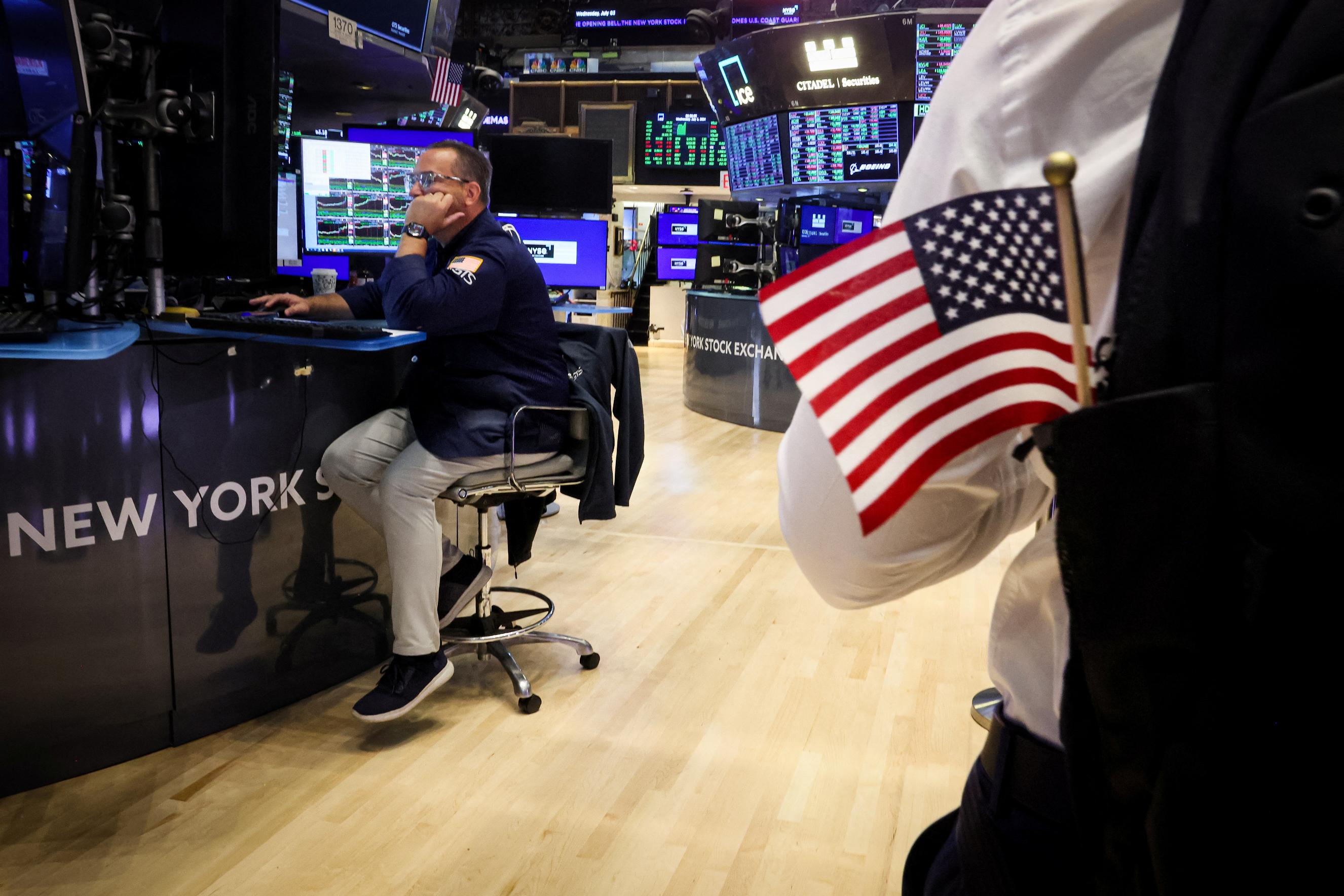
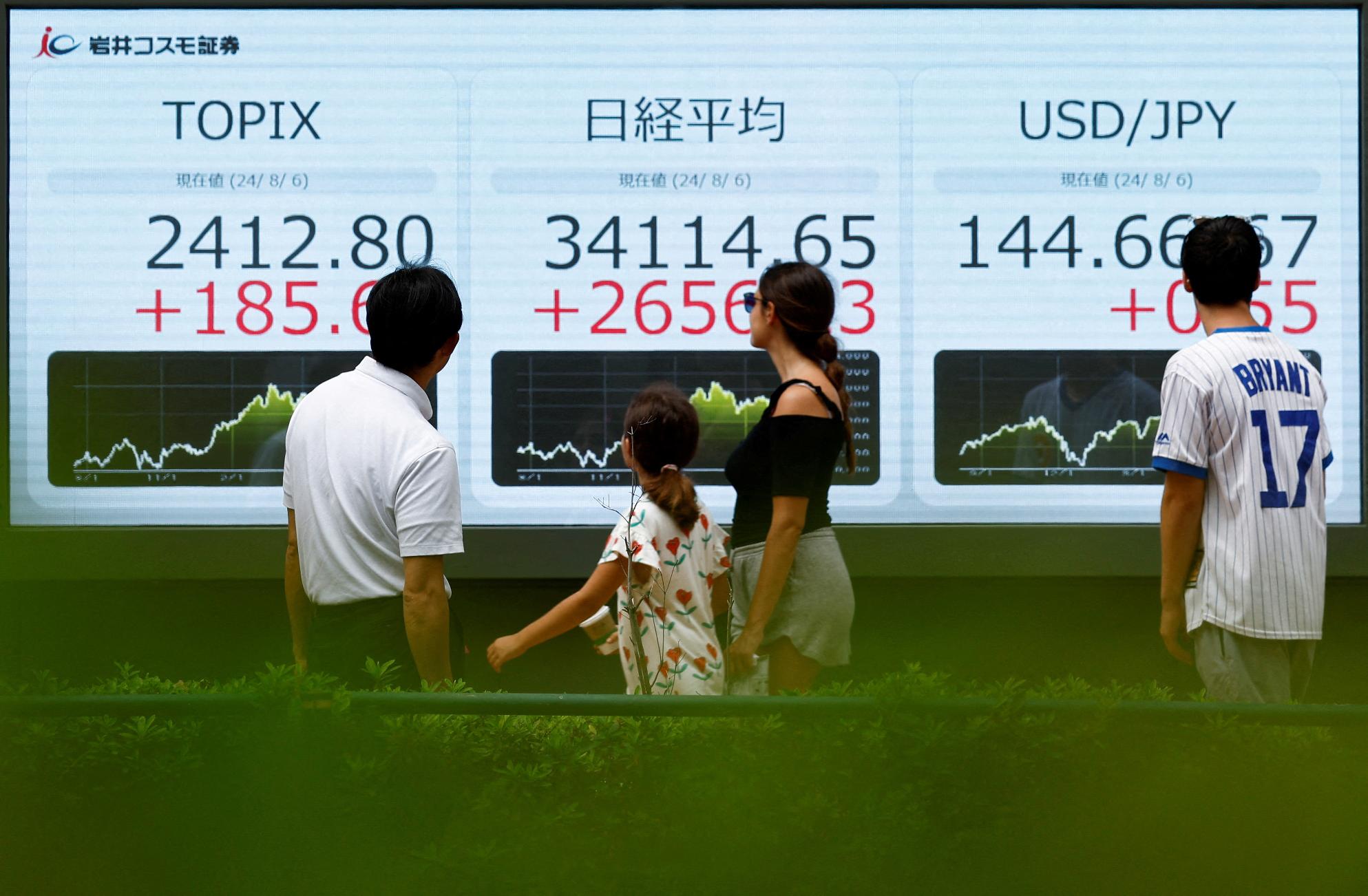
A look at the day ahead in U.S. and global markets from Mike Dolan In an extraordinary round trip over the past week, world markets have rebounded sharply from days of turbulence - thanks in part to Bank of Japan almost apologising on Wednesday for its role in the ruckus - and traders now try to figure out what's next. Japan's benchmark Nikkei stock index (.N225) , opens new tab returned to Friday's close at one point earlier - completing a near 5,000 point, 12% roundabout in just three days and ending Wednesday's session about 1% higher. As volatility gauges subsided back toward long-term averages, the BoJ's influential deputy governor Shinichi Uchida underscored the market recovery by saying the burst of market volatility that followed last week's interest rate rise and promise of more may in turn force the central bank to hold back. "As we're seeing sharp volatility in domestic and overseas financial markets, it's necessary to maintain current levels of monetary easing for the time being," Uchida said in a speech to business leaders in the northern Japanese city of Hakodate. At the heart of the problem over the past week was that the BoJ move seemed to puncture an estimated half trillion dollar yen-funded currency 'carry trade', catapulting the currency higher in the process. About two-thirds of those short yen positions may have already been unwound, according to estimates by JPMorgan. The dollar/yen exchange rate has now rebounded 4% from Monday's 7-month low to reclaim a foothold above 147. The VIX 'fear index' of U.S. stock market volatility has now returned to 23 - almost a third of Monday's peak and back closer to its historic average of 19.3. Along with more sober assessments of the likelihood of U.S. recession any time soon, Wall Street's recovery looks set to continue later today - with futures for all major indexes , , all up more than 1% ahead of the bell. To the extent that global growth jitters were part of the market hiccup of the past week, Chinese trade numbers for July also helped settle things down a bit. Although Chinese export growth missed forecasts, imports were ahead of expectations. Attention then switches back to the fundamentals of the earnings season and supercharged Federal Reserve rate cut bets. If worries about pricey tech stocks and a reappraisal of the artificial intelligence theme was another reason for last week's upheaval, then Super Micro Computer's (SMCI.O) , opens new tab miss overnight may keep nerves jangling in that sector. Super Micro's gross margins came in below estimates as high costs tied to the production of servers with the latest AI chips weighed on profits and sent its shares down 14%. The read-across to other major chipmakers was limited so far - with AI torchbearer Nvidia (NVDA.O) , opens new tab still up 1.5% in pre-market trading on Wednesday. What's more, overall second-quarter earnings remain impressive. Aggregate annual S&P500 profit growth is tracking 13.7% - more than two points higher than pre-season estimates, according to LSEG data. And there are some big winners despite the recent tech wobble. Uber's (UBER.N) , opens new tab results beat Wall Street estimates on Tuesday on the back of steady demand for its ride-sharing and food-delivery services, lifting its shares 5%. In interest rate markets, the broader stock market stabilisation has tempered the Fed view somewhat. But a hefty 41 basis points of cuts next month is still priced by futures market and more than 100bps is still in the mix by the yearend. Tuesday's $58 billion three-year Treasury auction went off without a hitch and some $42 billion of benchmark 10-year goes under the hammer later today. With a yield of 3.93%, Treasury is getting 10-year funding more than 20bp cheaper than if the auction was held this time last week. As to recession worries more generally, there's little on Wednesday's diary to shift the dial on that - with tomorrow's jobless claims data likely to be a focus given the sudden bout of angst about labor market weakness. For most investors, a 'soft landing' remains the best guess and stepped-up Fed rate cuts will only underscore that. Franklin Templeton Institute's Stephen Dover points out that the average one year stock market return after the first Fed rate cut is almost 5% even when a recession occurs - but it's 16.6% when the cuts come without a recession materialising. In Europe, pharma giant Novo Nordisk (NOVOb.CO) , opens new tab trimmed its full-year profit outlook after a sub-forecast sales update for its popular weight-loss drug Wegovy - stirring worries among investors about stiffening competition from Eli Lilly. Elsewhere, politics dominated. Democratic presidential nominee Kamala Harris and her newly selected vice presidential running mate, Minnesota Governor Tim Walz, campaigned for the first time together on Tuesday in Philadelphia. The tailwind behind Harris' campaign has national opinion polls showing her slightly ahead of challenger Donald Trump, but betting markets have cut the odds of her taking the White House. The PredictIt site now puts her chances of victory at some 57% - almost 10 points clear of Trump. Key developments that should provide more direction to U.S. markets later on Wednesday: * US June consumer credit * Bank of Finland governor and European Central Bank policymaker Olli Rehn speaks * US corporate earnings: Walt Disney, Warner Bros Discovery, Marathon, Occidental Petroleum, Mckesson, Atmos Energy, Emerson Electric, CVS Health, Monster Beverage, Ralph Lauren, Hilton Worldwide, Zimmer Biomet, Corpay, Global Payments, Equinix, CF Industries, Bio-Techne, Charles River Laboratories, NiSource etc * US Treasury sells $42 billion of 10-year notes Sign up here. https://www.reuters.com/markets/us/global-markets-view-usa-2024-08-07/
2024-08-07 09:06
SINGAPORE, Aug 7 (Reuters) - Global stock and bond markets, in particular Japan's, are being rocked by an unwinding of the hugely popular yen carry trade. That trade, which involves borrowing yen at a low cost to invest in other currencies and assets offering higher yields, is being wrecked by Japan's rate increases, a volatile yen and imminent rate cuts in the United States and other economies. Here is a deeper look at the yen carry trade. HOW DOES THE CARRY TRADE WORK? It involves borrowing the yen , or any other currency with similar super-low interest rates, then using it to buy currencies with better yields. The yen has been the funding currency of choice for carry trades in U.S. dollars, Mexican pesos , New Zealand dollars and some others. The trade involves buying the higher-yielding currency with the borrowed yen to invest in bonds or other money market instruments in that currency. At the end of a usually short-term trade, the investor converts the dollars or pesos back into yen, and repays the loan. Annualised returns typically can be around 5% to 6% on dollar-yen carry trades, which is the difference between U.S. and Japanese rates, with a scope for more gains were the yen to depreciate during that term. WHAT IS THE GENESIS OF THE YEN CARRY TRADE? If defined broadly as using a low-yielding yen to buy higher-yielding foreign assets, then its origins can be traced back to 1999 when Japan struck policy rates down to zero after its asset price bubble burst. The Japanese turned to international markets to get anything better than the zero yields at home, ploughing trillions of dollars into foreign markets and thus turning Japan into the world's biggest creditor nation. The carry trade as we know today, which involves yen borrowing by largely international investors, kicked off in 2013 under Prime Minister Shinzo Abe's quantitative and qualitative easing that coincided with rising rates in the United States and a depreciating yen. Those trades reached new, gargantuan proportions over the course of 2022 and 2023 as the Federal Reserve raised rates rapidly to rein in inflation even as the Bank of Japan (BOJ) kept its short term rates negative, and as the yen swooned. HOW LARGE IS THE YEN CARRY TRADE? No one is quite sure. Using the narrowest definition of a pure currency carry trade, analysts point to the $350 billion of short-term external loans by Japanese banks as one estimate of yen-funded trades in the world. That number could be an exaggeration if some of those loans are commercial transactions between banks or loans to foreign businesses needing yen. But it could be also understating the actual size of yen carry trades because there could be billions of yen the Japanese themselves have borrowed to invest in markets at home. Actual positions could be amplified because of how hedge funds and computer-driven funds use leverage. Add to that the massive investments Japanese pension funds, insurers and other investors have made abroad. Japan's foreign portfolio investments were 666.86 trillion yen ($4.54 trillion) at the end of March, Ministry of Finance data shows - more than half in interest rate-sensitive debt assets, albeit most of it long term. WHY IS THE YEN CARRY TRADE UNRAVELLING? To be sure, the BOJ has only started raising rates and its overnight rate is just at 0.25% while dollar rates are roughly 5.5%. But carry trades are more sensitive to currency moves and rate expectations than the actual level of rates, analysts say. The mere talk of further rate rises in Japan and Fed rate cuts by September has driven the yen up 13% in a month and narrowed the yield gap, completely wiping out the slim gains in pure yen-dollar carry trades. And as the big leveraged investors cut their billions of loss-making yen carry positions, they are being forced to de-leverage and shed other stock and bond holdings. ($1 = 146.8600 yen) Sign up here. https://www.reuters.com/markets/asia/what-is-yen-carry-trade-2024-08-07/
2024-08-07 07:08
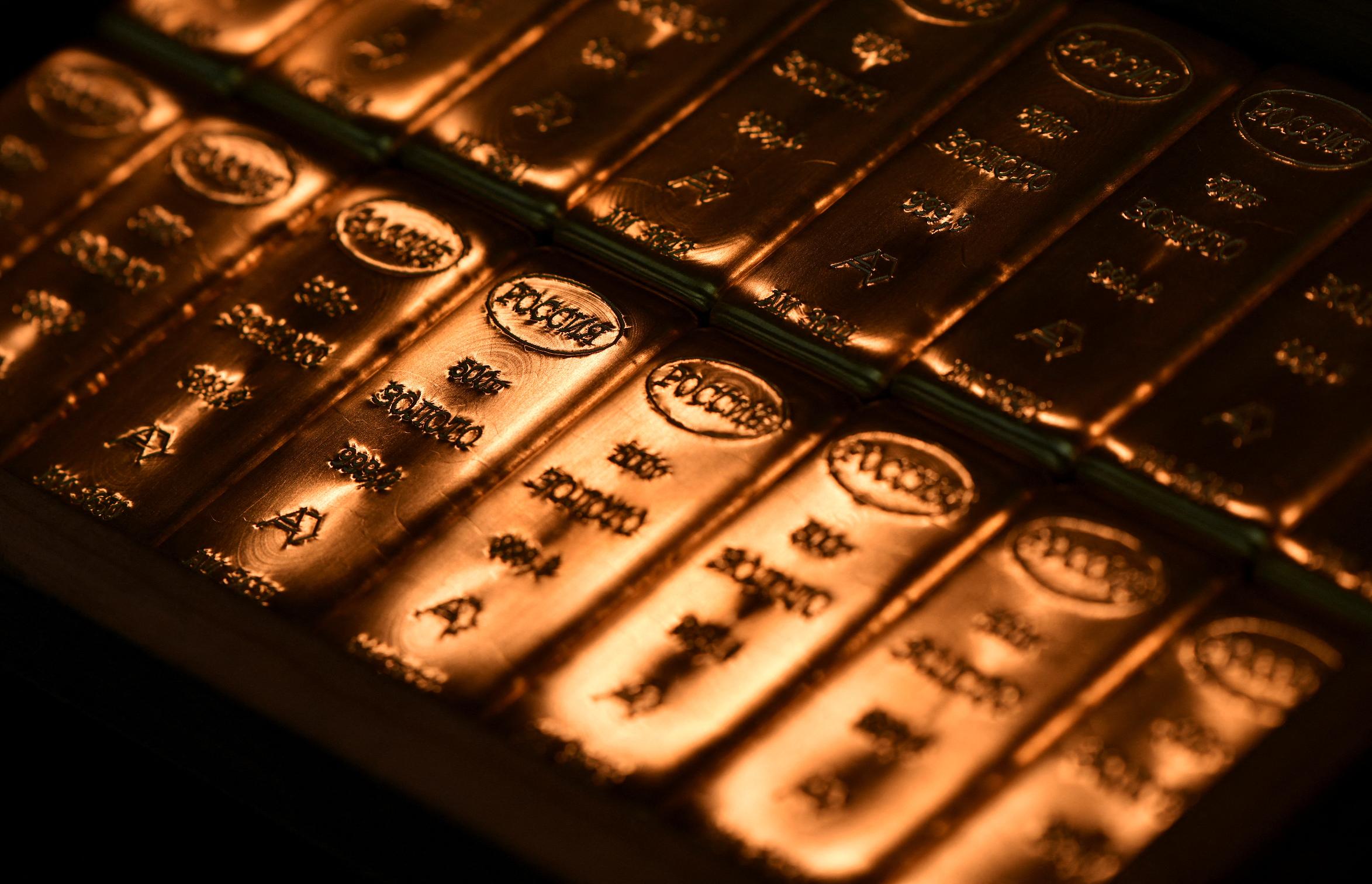
Dollar up 0.2% against its rivals Traders see a 100% chance of rate cut in September US initial jobless claims data due on Thursday Aug 7 (Reuters) - Gold prices pared gains on Wednesday as the U.S. dollar and Treasury yields edged higher, although mounting bets of U.S. interest rate cuts in September and rising geopolitical tensions in the Middle East underpinned bullion. Spot gold was flat at $2,388.16 per ounce, as of 2:12 p.m. ET (1812 GMT), after rising as much as 0.7% earlier in the session. U.S. gold futures settled mostly unchanged at $2,432.40. The U.S. dollar (.DXY) , opens new tab rose 0.2% against its rivals, while benchmark 10-year Treasury yields also rose, putting pressure on bullion. "I do think a correction is most likely if economic data shows that the recession fears are justified... gold will probably hit a new all time high in the coming months," said Everett Millman, chief market analyst with Gainesville Coins. Last week's soft jobs report has led traders to expect nearly 105 basis points of rate cuts by year-end, with a 100% chance of a September rate cut, according to the CME FedWatch Tool , opens new tab. On Tuesday, the leader of Hezbollah pledged a "strong and effective" response to the killing of its military commander by Israel last week, no matter the consequences. Bullion is considered a hedge against geopolitical and economic uncertainties and tends to thrive in a low interest rate environment. "Jobless claims on Thursday is something markets will be looking for confirmation of slowing economic numbers, particularly employment," said Bart Melek, head of commodity strategies at TD Securities. Meanwhile, China's central bank held back on buying gold for its reserves for a third straight month in July, official data showed on Wednesday. "There has been some improvement in the appetite for gold in the West, but really China does lead the way in this regard and if they're not buying as much, then that's going to have a bigger impact on the aggregate global gold demand," Millman added. Spot silver fell 1.5% to $26.64 per ounce. Platinum rose 0.6% to $917.38 and palladium was up 1.1% to $884.00. Sign up here. https://www.reuters.com/markets/commodities/gold-prices-inch-lower-us-dollar-yields-rebound-2024-08-07/