2024-08-07 06:48
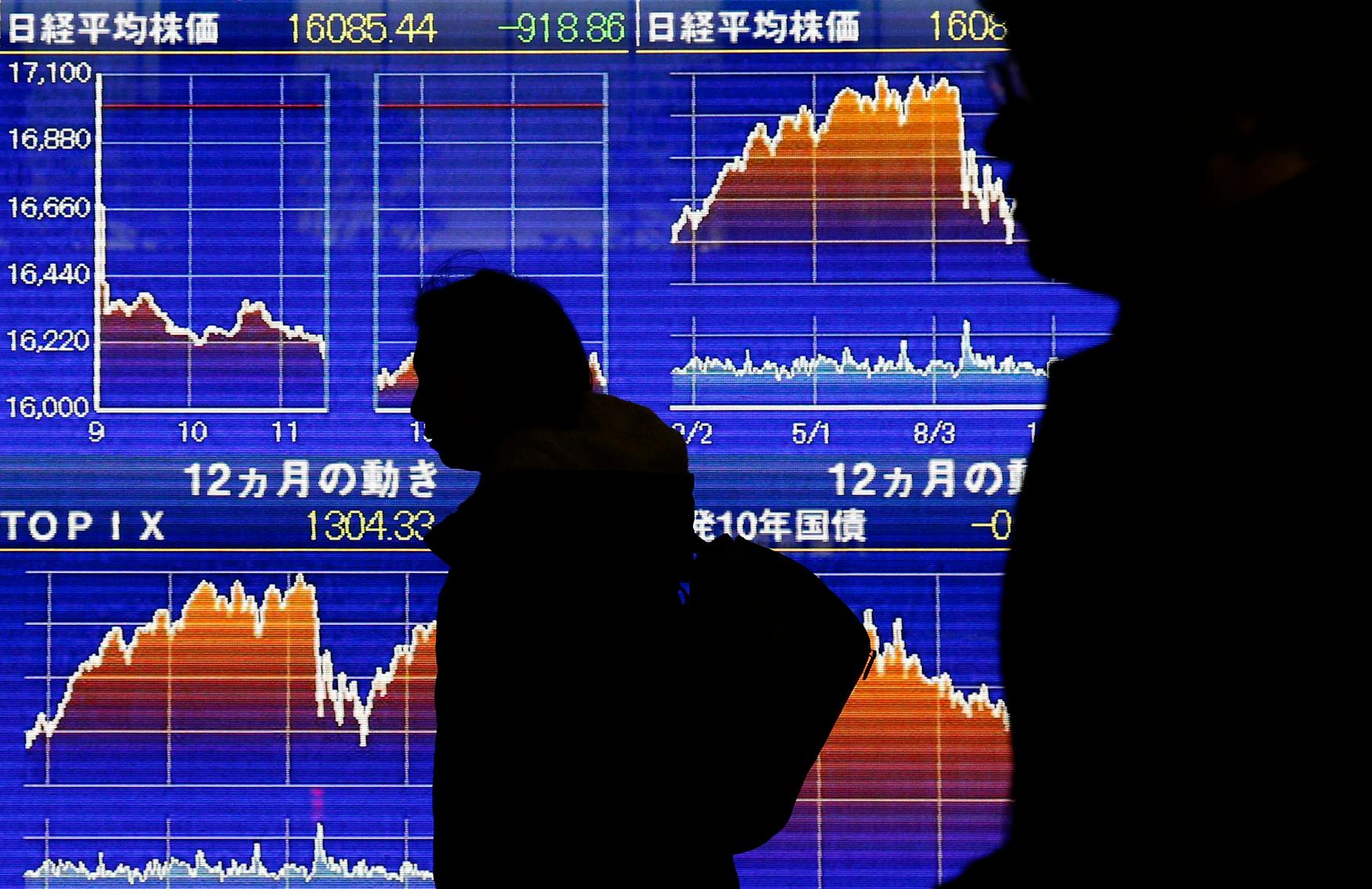
LONDON, Aug 7 (Reuters) - Glencore (GLEN.L) , opens new tab could consider buying more steelmaking coal assets at right price, good quality and in the right location, the London-listed miner's Chief Executive Gary Nagle said in a briefing on Wednesday. Glencore also said on Wednesday it would not spin off its coal business after securing backing from the majority of its investors who see lucrative earnings from the fossil fuel after the commodities giant's recent acquisition of Teck Resources' (TECKb.TO) , opens new tab coking coal assets. Sign up here. https://www.reuters.com/markets/commodities/glencore-could-buy-more-steelmaking-coal-assets-right-price-2024-08-07/

2024-08-07 06:43
Aug 6 (Reuters) - A wind-driven wildfire on a hillside above the southern California city of San Bernardino burned several homes and forced evacuations before it was brought under control on Tuesday, firefighters reported. Video from local TV station KTLA 5 showed at least five residences had burned after the fast-moving brush fire jumped into up-market homes overlooking the city of 220,000 located around 55 miles (88 km) east of Los Angeles. The fire began Monday and burned 100 acres (40 hectares)before it was largely contained, the California Department of Forestry and Fire Protection or CAL FIRE reported. The cause of the blaze was under investigation. Warmer than usual temperatures and abundant vegetation after a wet winter and spring have led to ideal burning conditions in the most populous U.S. state. Climate change has led to more severe and longer heatwaves, according to experts. Another fire, in the forested mountains north of Sacramento, has grown into California's fourth largest on record, burning an area larger than the city of Los Angeles across two counties. The blaze known as the Park fire took off on Monday, burning through more than 12,000 acres and prompting more evacuations in the Mill Creek area, Cal Fire reported. Tinder-dry forests, high temperatures and steep canyons have made it difficult to fight the blaze which has destroyed around 640 homes and other structures. The fire had torched 414,042 acres as of Tuesday morning and was 34% contained. Sign up here. https://www.reuters.com/world/us/wildfire-torches-hillside-homes-southern-california-2024-08-06/

2024-08-07 06:37
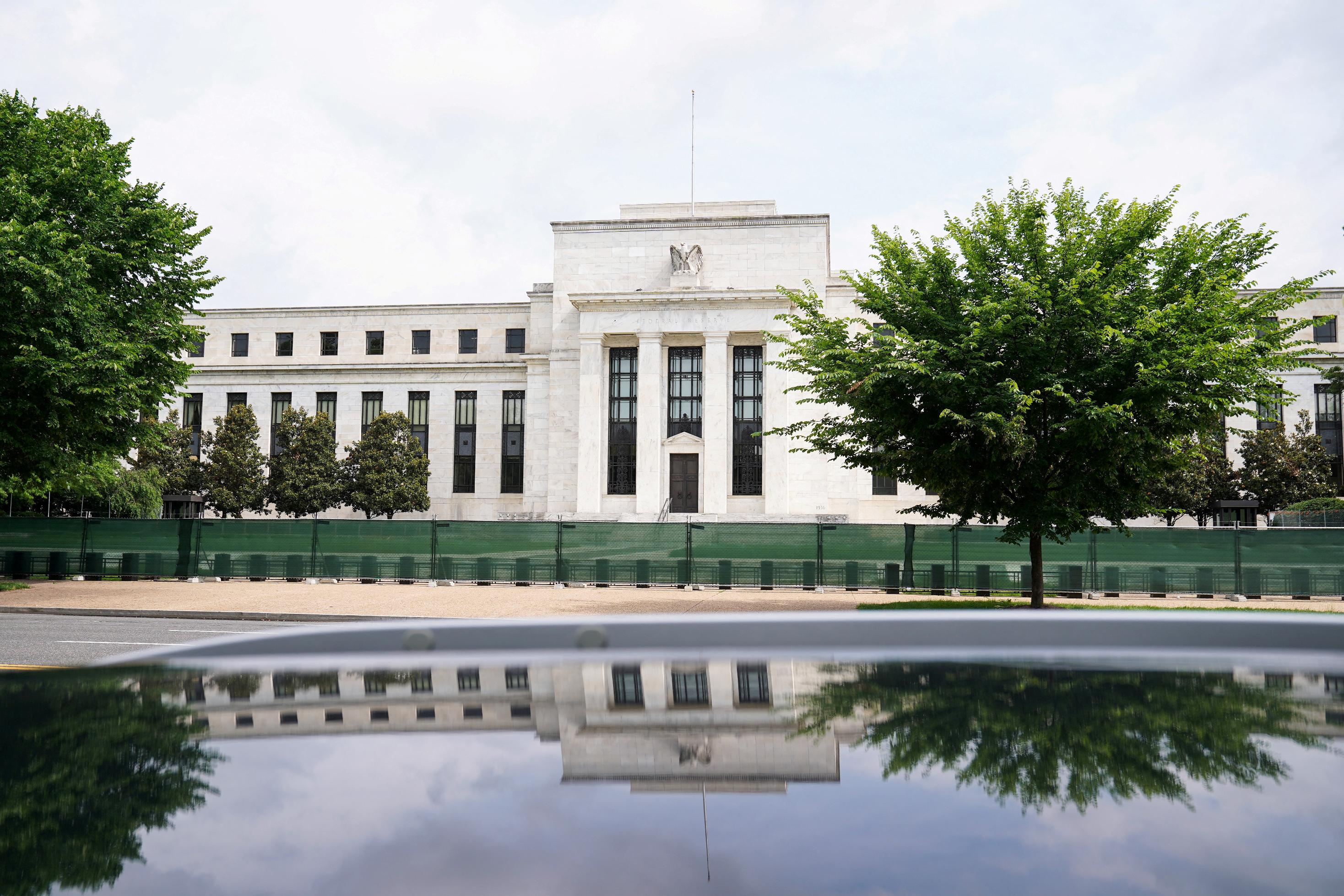
Aug 7 (Reuters) - West Africa-focused Tullow Oil (TLW.L) , opens new tab posted a higher profit for the first six months of 2024, helped by higher crude prices. Crude prices have edged higher in the first six months of the year, getting a boost from an OPEC+ production cut extension, supply worries from escalating tensions in the Middle East and expectations of interest rate cuts from the U.S. Federal Reserve. Tullow said its realised oil price after hedging for the reported period was $77.7 per barrel, higher than $73.3 per barrel last year. Total production for the first-half of the year rose marginally to 63.7 thousand barrels of oil equivalent per day (kboepd), from last year's about 62 kboepd. The company posted a profit of $196 million for the six months ended June 30, higher than the $70 million it posted last year. Sign up here. https://www.reuters.com/markets/commodities/tullow-oil-reports-higher-profit-first-half-2024-2024-08-07/
2024-08-07 06:33
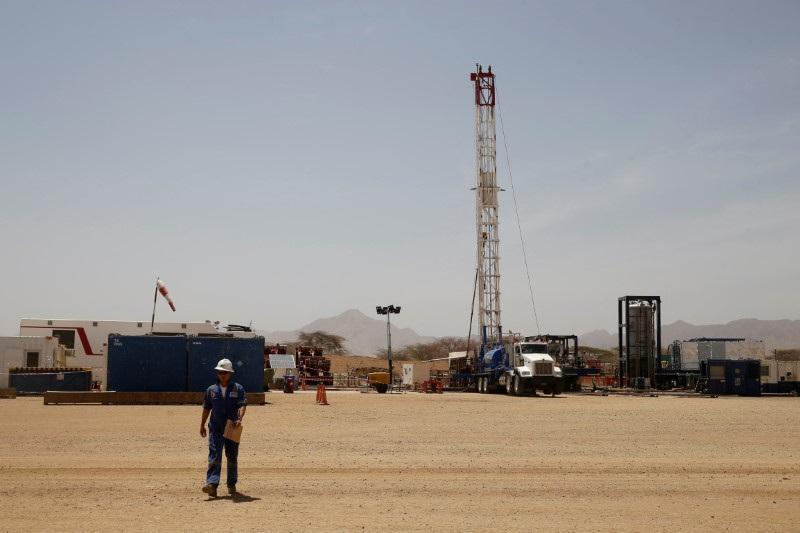
LONDON, Aug 7 (Reuters) - The Federal Reserve may be a bit late cutting interest rates, but it's not yet behind the curve in forestalling a U.S. recession. For all the wild financial swings and furious trading of the past week, markets have yet to price in a Fed monetary policy stance that would actively stimulate the economy at any point over the coming two-year cycle. While that could highlight investors' lingering concerns about sticky inflation, it more likely reflects their doubts that some deep recession is in fact brewing. And what it indicates most clearly is that the Fed only has to lift its foot off the brake to keep the expansionary ride going. Markets were clearly spooked by the surprisingly sharp rise in the U.S. jobless rate last month - and further aggravated by the Big Tech stock shakeout. As volatility spiked, markets have raced to price a series of deep Fed rate cuts over the months ahead. Just one month ago, futures prices indicated that barely two quarter-point cuts were anticipated over the remainder of the year, but now they show expectations of twice that - some 115 basis points at last count on Tuesday. Most notable among a series of hastily revised forecasts, U.S. investment bank JPMorgan now projects that we will see two half-point cuts in both September and November, followed by a quarter-point cut in December. Not for the first time, this may seem a little overcaffeinated. And it certainly reflects the market volatility present right now in a holiday-thinned August. But what's happened further out the curve is perhaps more instructive about what investors expect to see in the full easing cycle ahead. There's little doubt now the Fed will start cutting next month: its signalling about that was crystal clear at last week's meeting. But where the cutting stops is less obvious. Looking at futures and money market pricing on Monday, the so-called terminal rate over the next 18 months never got below 2.85%, even during the most extreme part of the day's turbulence That's a long way down from the current policy mid-rate of 5.38%. But it's still above where Fed policymakers see the long-term 'neutral' rate - widely seen as their proxy for the fabled 'R*' rate that neither stimulates or reins in economic activity. That median long-run rate is currently 2.8% - after being pushed up 30 basis points by Fed officials this year. So, if anxious money markets don't think the Fed will be forced to go below that, then the slowdown ahead can't be expected to be that bad - despite all the hand wringing of recent days. At the very least, it suggests markets remain equivocal about recession and think the removal of policy 'restriction' may be enough by itself to hold the line. MEAN REAL Another way to look at it is to view the 'real' inflation-adjusted Fed policy rate, which is currently 2.5%. That's the highest level in 17 years. It has risen steadily from zero since April 2023 as disinflation has set in. If the Fed's full easing cycle turned out to be the 250 bps suggested by markets this week - and consumer price inflation were to remain as high as 3% through that period - then the real policy rate would merely return to zero at its lowest. Bear in mind that the average real policy rate over the past 15 years was -1.4%, so a reversion to zero is not suggesting the Fed is heading for anything like emergency mode. All conjecture? The Fed has a busy six weeks ahead to clear it all up. Fed officials speaking this week suggest they're not too worried about recession yet but everything is still on the table policy-wise. They also insist that they will continue to have meeting-by-meeting assessments and that one month of data or market upheaval won't change their minds unduly. Perhaps cryptically, San Francisco Fed chief Mary Daly said the central bank "is prepared to do what the economy needs when we are clear what that is." Part of what set recession talk rumbling was the triggering last week of the so-called Sahm Rule, which posits that a 0.5 percentage point rise of the three-month average jobless rate over the low of the prior year typically presages recession. But even the rule's author, ex-Fed economist Claudia Sahm, downplayed the latest trigger due to pandemic and weather- related distortions still plaguing the jobs data. And yet, with the labor market softening either way, the Fed still seems set for a September rate cut - a move that will also be accompanied by an update of policymakers projections, including that long-run neutral rate. And before then, the Kansas City Fed's annual Jackson Hole symposium takes place on Aug. 22-24 - where longer-term Fed thinking tends to get sketched out in more detail. "It was a mistake that the Fed didn't cut rates last week, but I don't believe it will cause irreparable damage to the economy," reckoned Invesco strategist Kristina Hooper. "This sell-off (in stocks) is a very emotional market reaction that is overestimating the potential for recession." And the rates market may not even be pricing in recession at all. The opinions expressed here are those of the author, a columnist for Reuters. Sign up here. https://www.reuters.com/markets/us/feds-not-yet-behind-curve-mike-dolan-2024-08-07/
2024-08-07 06:32
US crude stocks draw for sixth week in a row, EIA says Libya's National Oil Corp declared force majeure in Sharara oilfield Tensions in the Middle East stoke supply concerns China's crude oil imports fell to the lowest since Sept 2022 NEW YORK, Aug 7 (Reuters) - Oil prices gained more than 2% on Wednesday, bouncing back from multi-month lows, after data showed a bigger-than-expected draw in U.S. crude stockpiles, even as worries about weak oil demand in China persisted. Brent crude futures settled up $1.85, or 2.42%, at $78.33 a barrel. U.S. West Texas Intermediate crude gained $2.03, or 2.77%, to $75.23. U.S. crude stocks fell for a sixth week in a row, dropping by 3.7 million barrels to 429.3 million barrels last week, government data showed, more than analysts' expectations in a Reuters poll for a 700,000-barrel draw. "The story here really is that demand is stronger than people thought and overall supplies are tighter," said Phil Flynn, an analyst at Price Futures Group. "Crude supply is below average for this time of year." Industry data from the American Petroleum Institute on Tuesday had shown an unexpected build in crude and gasoline inventories. On Monday, Brent slumped to its lowest since early January and WTI touched its lowest since February, as a global stock market rout deepened on concerns about a potential recession in the U.S. after weak jobs data. Both oil benchmarks broke a three-session declining streak on Tuesday. "The recovery we have gotten from the large downturn on Monday shows it was a very short-lived temper tantrum and not a market crash," said Tim Snyder, chief economist at Matador Economics. Lower production at Libya's 300,000 barrel-per-day (bpd) Sharara oilfield is also adding to concerns about supply shortages. Libya's National Oil Corp declared force majeure in its Sharara oilfield from Aug. 7, the company said on Wednesday. NOC had said on Tuesday it would start to gradually decrease production at the field due to protests. Tensions in the Middle East continued to stoke supply concerns. The Middle East is bracing for a possible new wave of attacks by Iran and its allies following last week's killing of senior members of militant groups Hamas and Hezbollah, with concern rising that the conflict in Gaza is turning into a wider Middle East war. Iran-aligned Houthi militants on Wednesday targeted a container ship in the Red Sea and two U.S. destroyers in the adjacent Gulf of Aden. Attacks on vessels passing through the region have forced tankers to choose longer alternate routes. "Any escalation of the conflict in the Middle East could see a greater risk of disruptions to supplies from the region," ANZ analyst Daniel Hynes said. Supporting the bearish demand view, Chinese trade data showed that July daily crude oil imports fell to the lowest level since September 2022. China is the world's largest crude importer. Sign up here. https://www.reuters.com/markets/commodities/oil-edges-lower-surprise-build-us-crude-gasoline-stocks-2024-08-07/
2024-08-07 06:27
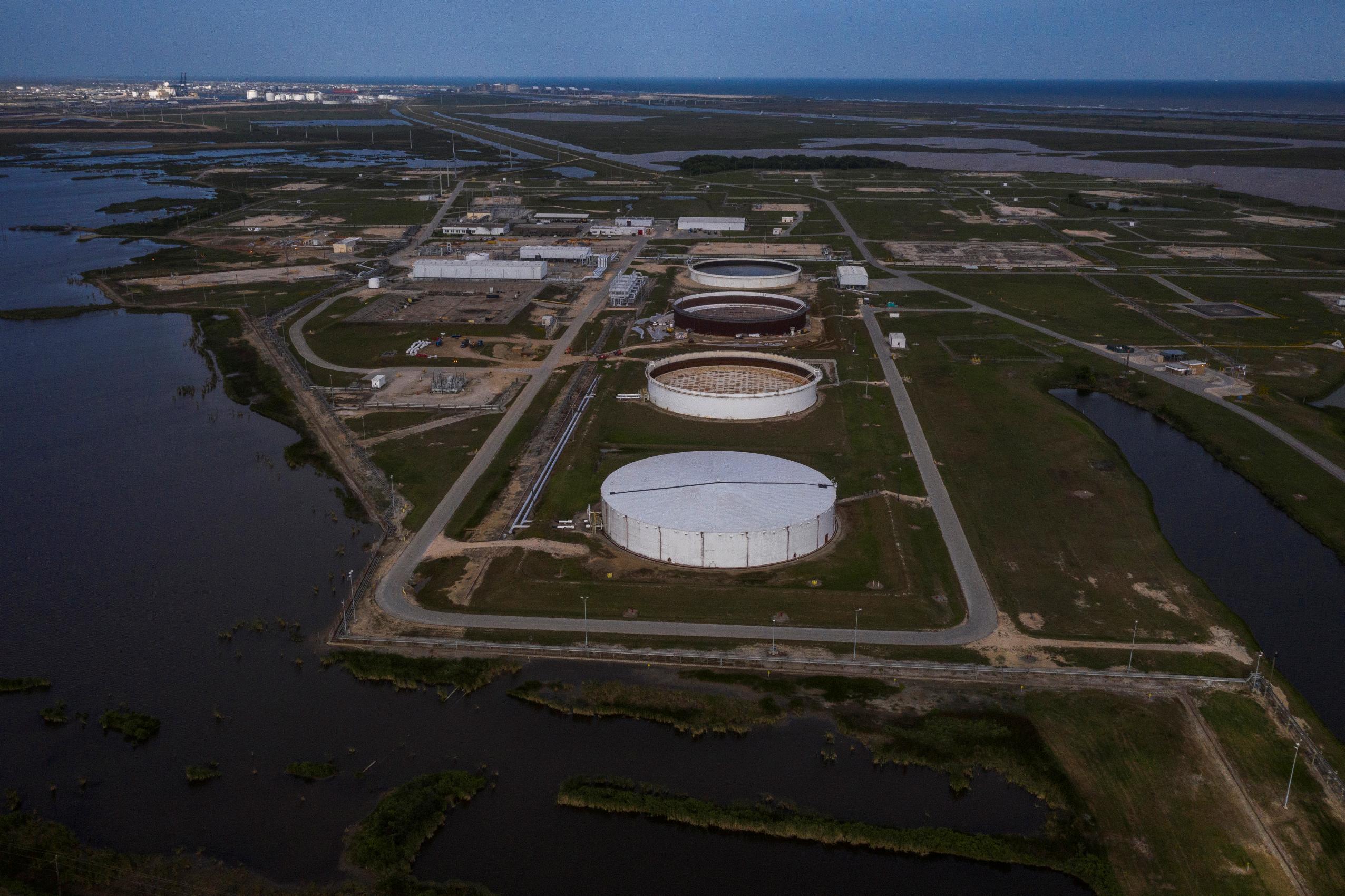
NEW YORK/LONDON, Aug 7 (Reuters) - Wall Street equity indexes closed lower after Wednesday's choppy session while a bond auction pushed Treasury yields higher and the dollar rose against the yen after cautious central banker comments. Oil prices rose after a bigger-than-expected draw in U.S. crude stockpiles and on potential escalation in the Middle East, even as investors worried about weak demand in China. Earlier, Bank of Japan Deputy Governor Shinichi Uchida said the central bank will not raise interest rates while financial markets are unstable, pushing the yen down. But in equities, the Nikkei (.N225) , opens new tab rose 1%, adding to Tuesday's 10% rebound from Monday's sell-off. The Nikkei's 12.4% plunge had started a global stock rout as investors went into risk-off mode. After opening higher on Wednesday, Wall Street's benchmark S&P 500 started losing ground in the late morning and fell further following a U.S. 10-year Treasuries auction. "It's a little more than a weak 10-year auction, which I'm sure contributed," said Lindsey Bell, chief strategist at 248 Ventures in Charlotte, NC. "You don't just have the fall we had on Monday and it's done. You typically test the lows again before we can move out of this downtrend." She also noted that some investors are "taking advantage of short-term pops in stocks" to take profits. On Wall Street, the Dow Jones Industrial Average (.DJI) , opens new tab fell 234.21 points, or 0.60%, to 38,763.45, the S&P 500 (.SPX) , opens new tab lost 40.53 points, or 0.77%, to 5,199.50 and the Nasdaq Composite (.IXIC) , opens new tab lost 171.05 points, or 1.05%, to 16,195.81. MSCI's gauge of stocks across the globe (.MIWD00000PUS) , opens new tab fell 0.35 points, or 0.05%, to 770.64 after earlier rising to a session high of 783.83. Europe's STOXX 600 (.STOXX) , opens new tab index had closed up 1.5%. In currencies, the yen dropped after the BoJ comments on rate increases, which soothed investors' concerns about volatility in the Japanese currency, which had soared against the dollar on Monday on fears of a U.S. recession, causing a broader market rout. Against the Japanese yen , the dollar strengthened 1.75% to 146.83. The dollar index , which measures the greenback against a basket of currencies including the yen and the euro, gained 0.2% at 103.19, with the euro down 0.08% at $1.0921. U.S. government bond yields rose after the Treasury Department saw soft demand for a $42-billion sale of 10-year notes and as companies rushed to sell debt with risk appetite improving. Supply was the main focus as traders were waiting on fresh economic data for clues about the strength of the U.S. economy. The yield on benchmark U.S. 10-year notes rose 7 basis points to 3.958%, from 3.888% late on Tuesday. The 30-year bond yield rose 8.1 basis points to 4.2579%. The two-year note yield, which typically moves in step with interest-rate expectations, fell 0.2 basis points to 3.9827%, from 3.985% late on Tuesday. In energy markets, U.S. crude settled up 2.77% at $75.23 a barrel and Brent rose to $78.33 per barrel, up 2.42% on the day. In precious metals, spot gold lost 0.2% to $2,384.59 an ounce. U.S. gold futures fell 0.05% to $2,387.80 an ounce. Sign up here. https://www.reuters.com/markets/global-markets-wrapup-1-2024-08-07/