2024-08-07 06:19
Glencore could add more steelmaking coal assets, CEO says CEO says ESG concerns on fossil fuel moderating lately Glencore swung to a net loss of $233 mln in first-half JOHANNESBURG/LONDON, Aug 7 (Reuters) - Glencore (GLEN.L) , opens new tab will keep its coal business after securing backing from a majority of its investors who see lucrative earnings from the fossil fuel, its CEO said on Wednesday, adding the company could acquire more steelmaking coal assets. Glencore, which had been consulting investors on possibly spinning-off coal assets, also reported a first-half net loss of $233 million, after booking $1.7 billion of one-off items, including about $1 billion of impairment charges. The London-listed miner is "comfortable" maintaining a primary listing in London but would consider other options if there were fundamental changes and a reason to move to another exchange, CEO Gary Nagle added. Company valuations are generally higher in the United States. Glencore recently concluded the purchase of Teck Resources' (TECKb.TO) , opens new tab coking coal assets, and Nagle said support from the firm's European investors to retain coal had been overwhelming. Lack of investment in new coal assets and the prospect of the fossil fuel remaining part of the energy mix for years to come is likely to underpin tight supplies and high prices, which will continue to boost Glencore's profits. The coal businesses generate "huge amounts of cash and we can use that cash both to pay back shareholders through buybacks and through dividends as well as," Nagle said. Investors' environmental concerns have moderated over the past nine-to-12 months, he added. Glencore could also add more steelmaking coal capacity, Nagle said, but declined to say whether it would consider Anglo American's (AAL.L) , opens new tab Australian steelmaking coal assets, which are up for sale. "At the right price, in the right geography, in the right quantity, there's no reason why we wouldn't consider additional acquisitions of steelmaking coal." Glencore shares were up 1.5% at 1113 GMT. OPTIONS Cash from coal could help Glencore build a war chest to deliver returns to its investors while financing deals, "including possibly an acquisition of some or all of Anglo's for sale steelmaking coal assets," Jefferies analysts said in a note. However, more coal exposure could put further downward pressure on Glencore's equity valuation, it said. "Glencore could benefit from moving its primary listing to the U.S., in our view, as U.S.-listed coal equity valuations have significantly re-rated over the past two years." Glencore had been canvassing investors on whether to keep its combined coal assets or spin them off after it completed a deal to buy the majority of Teck's steelmaking coal business last month. Retaining the coal assets "offers the lowest risk pathway to create value for Glencore shareholders today," Glencore Chairman Kalidas Madhavpeddi said. First-half core earnings, or EBITDA, slumped 33% to $6.3 billion, hit by a decline in prices for key commodities. Adjusted EBIT for Glencore's marketing division at $1.5 billion was down 16% from a year earlier and is tracking an annualised $3 billion, Glencore said, adding that the number reflected a lower contribution from energy. The Swiss-based company is guiding marketing EBIT at between $3.0 and $3.5 billion this year. Sign up here. https://www.reuters.com/markets/commodities/glencore-decides-against-coal-spin-off-after-talking-investors-2024-08-07/
2024-08-07 06:13
Free cash flow pre tax now seen at 1.0 bln to 1.5 bln euros Q3 sales at 8.8 bln euros vs 8.6 bln LSEG poll Shares +2.2% pre-market FRANKFURT/DUESSELDORF, Aug 7 (Reuters) - Siemens Energy (ENR1n.DE) , opens new tab on Wednesday raised its free cash flow outlook for the second time in three months, citing stronger demand for its power grid technology and gas turbines as the group recovers from a major crisis at its wind division. The company, which provides equipment and services to the utility sector, was forced to seek help from the German government last year in the form of project guarantees to tackle severe quality problems at its wind turbine business. Its shares have more than doubled since the beginning of the year, making Siemens Energy, which was spun off from Siemens AG (SIEGn.DE) , opens new tab in 2020, the best performer in Germany's blue-chip index (.GDAXI) , opens new tab. "The rapidly growing electricity market requires a wide range of our products. Especially our grid and gas turbine businesses are benefiting from this momentum," Siemens Energy CEO Christian Bruch said. The group said it now expects free cash flow before tax of 1 billion to 1.5 billion euros ($1.1 billion to $1.6 billion) in 2024, from up to 1 billion previously. Siemens Energy shares were indicated 2.2% higher in pre-market trade following the news. The firm also slightly narrowed the outlook for its struggling wind turbine division Siemens Gamesa, forecasting a loss before special items of up to 2.0 billion euros, while it previously did not rule out that the loss could exceed that level. Model updates for its 4.X and 5.X wind turbine classes affected by the quality issues had no material impact, it said. Peer GE Vernova (GEV.N) , opens new tab lifted its outlook last month, helped by increased demand for power equipment, as markets around the world are expanding their renewable exposure and upgrading existing grid infrastructure. Siemens Energy's third-quarter sales rose 18.5% to 8.8 billion euros, beating the analyst consensus of 8.6 billion euros as per LSEG data. ($1 = 0.9164 euros) Sign up here. https://www.reuters.com/business/energy/siemens-energy-raises-free-cash-flow-outlook-after-solid-q3-2024-08-07/
2024-08-07 05:59
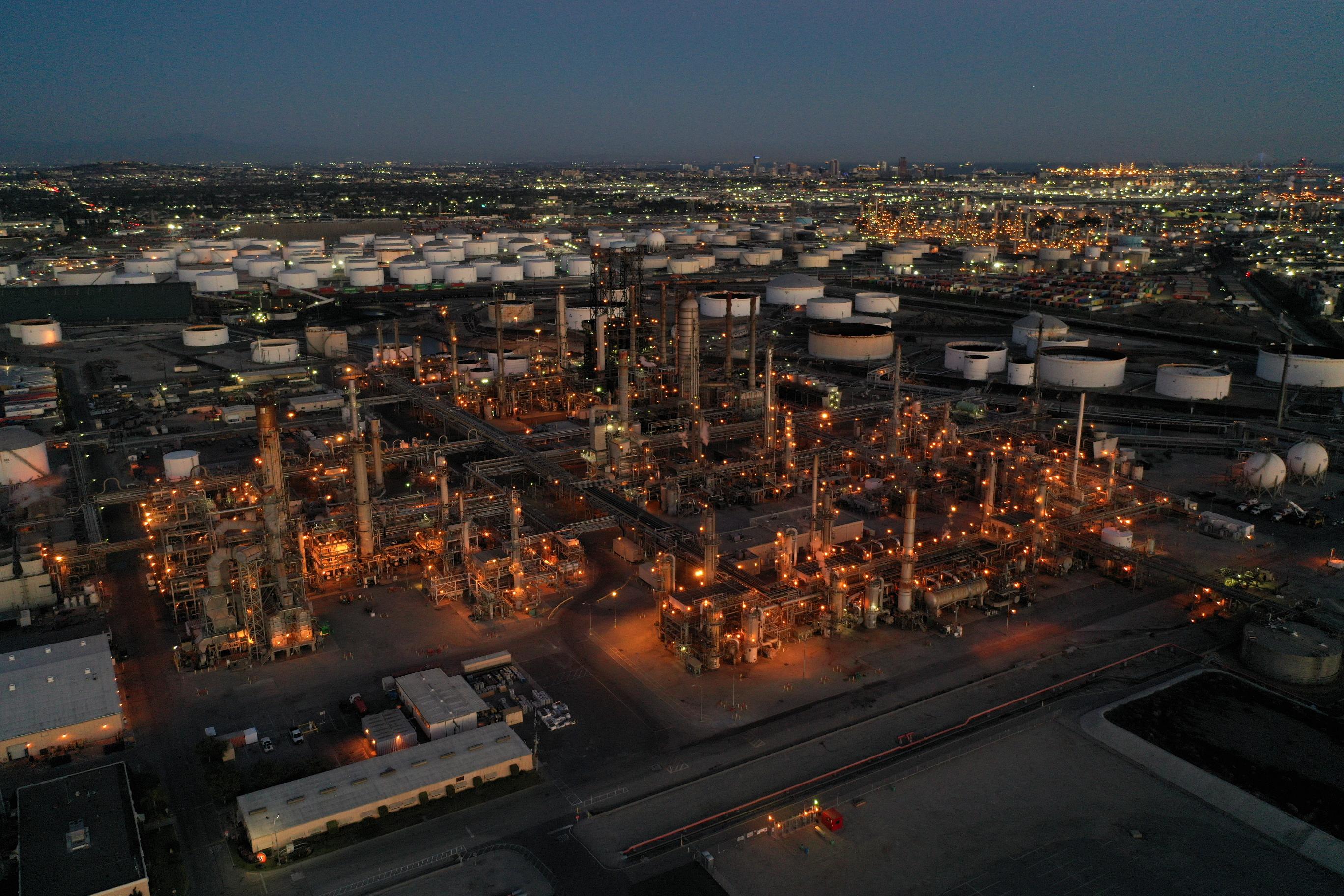
LONDON, Aug 6 (Reuters) - U.S. oil and gas production show further signs of flattening out or turning down, a delayed response to the decline in prices over the last two years after the initial shock caused by Russia's invasion of Ukraine in early 2022. Total crude and condensates production from the Lower 48 states, excluding federal waters in the Gulf of Mexico, averaged 11.0 million barrels per day (b/d) in May up from 10.6 million b/d in the same month a year earlier. The seasonal increase was the smallest since the first wave of the coronavirus pandemic in 2020 and before that the aftermath of the volume war fought between U.S. shale producers and Saudi Arabia in the mid-2010s. Production growth compared with the prior year slowed to just 0.4 million b/d from as much as 0.8 million to 1.0 million b/d in early in 2023, according to data from the U.S. Energy Information Administration (EIA). Drilling activity typically responds to a change in prices with a delay of 4-5 months reflecting the time needed to contract rigs, move them to the drilling site, set up the equipment and start boring. Production typically responds with an additional lag of 7-8 months reflecting the time needed to hydraulically fracture and complete wells, connect them to the pipeline gathering system and start commercial oil flows. So the current slowdown in both drilling rates and deceleration in production growth reflects the decline in oil prices from their peak in the middle of 2022 and especially since the middle of 2023. Chartbook: U.S. oil and gas production , opens new tab After adjusting for inflation, front-month U.S. crude futures prices have fallen to average of $74 per barrel so far in August 2024 from $84 in August 2023 and a high of $124 in June 2022. In real terms, prices have retreated to only the 44th percentile for all months since the turn of the century from the 82nd percentile just over two years ago. Lower prices have removed much of the incentive to increase output and encouraged exploration and production firms to focus on improving efficiency instead. The number of rigs drilling for oil averaged just 479 in July 2024 down from 534 a year earlier and a peak of 623 in December 2022. Over the same period, the number of rigs drilling primarily for gas has declined even more sharply, reducing growth in condensates recovered from gas wells. As a result, lower prices and slower growth in U.S. shale production have created conditions for Saudi Arabia and its OPEC⁺ allies to increase their own output by rescinding previous cuts and regain some market share. Instead, however, prices have tumbled even further recently, as traders become increasingly concerned about an economic slowdown in the major economies and associated deceleration in oil consumption growth. If the consumption slowdown fails to materialise, however, the deceleration in shale production has created conditions for OPEC⁺ to enjoy some combination of higher production and/or prices later in 2024 and in 2025. U.S. GAS PRODUCTION With no equivalent of OPEC⁺ to coordinate a cut in production and support prices, U.S. gas futures prices, drilling activity and output have fallen much more sharply than for oil. Dry gas production averaged 101.3 billion cubic feet per day (bcf/d) in May down from 103.6 bcf/d in the same month a year earlier, EIA data show. The seasonal decline in output was the largest since the first wave of the pandemic in May 2020 and before that May 1999. In recent months, inflation-adjusted front-month gas futures prices have slumped to around $2 per million British thermal units, which was at or close to some of the lowest levels on record. The number of rigs drilling for gas has fallen to around 100 per month from a post-invasion high of 162 in September 2022. Lower production will eventually deplete inventories and push prices higher again. So far, the adjustment has been repeatedly postponed by a relatively cool summer in 2023 (which depressed airconditioning demand) followed by a mild winter in 2023/24 (which cut heating demand). In addition, the Freeport LNG's liquefaction facility has experienced multiple interruptions, slowing the growth in gas exports and making it harder to clear surplus stocks. As a result, prices have remained lower for longer to encourage gas-fired power generators to use as much gas as possible. Despite these setbacks, the adjustment process is well underway and inventories are likely to revert to more normal levels by the end of winter 2024/25, unless it proves to be another exceptionally mild one. Related columns: - Oil prices tumble as investors brace for global slowdown(August 5, 2024) - U.S. power producers binge on ultra-cheap gas (July 30, 2024) - U.S. oil output growth slows, gas begins to fall (July 2, 2024) - U.S. gas surplus will be eliminated before end of winter 2024/25(May 8, 2024) John Kemp is a Reuters market analyst. The views expressed are his own. Follow his commentary on X https://twitter.com/JKempEnergy , opens new tab Sign up here. https://www.reuters.com/business/energy/us-oil-gas-output-curbed-by-lower-prices-kemp-2024-08-06/
2024-08-07 05:50
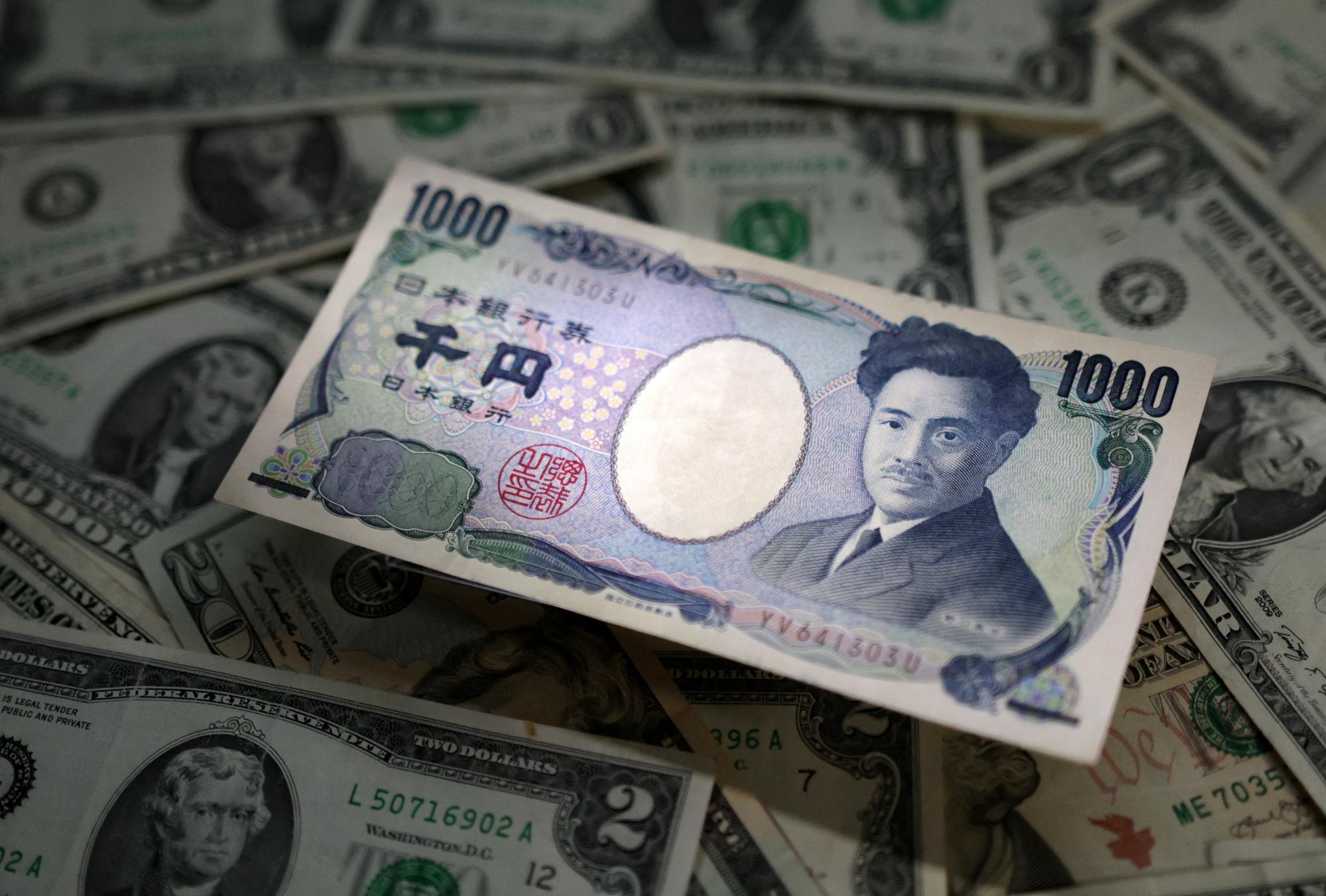
NEW YORK, Aug 7 (Reuters) - The yen dropped on Wednesday after an influential Bank of Japan official played down the chances of a near-term rate hike, soothing investors' concerns that a further jump in the Japanese currency could again rock global markets. The yen fell about 2.5% to a session low of 147.94 per dollar following the comments from BOJ Deputy Governor Shinichi Uchida. The dollar was last up 1.74% at 146.850 yen. "As we are seeing sharp volatility in domestic and overseas financial markets, it's necessary to maintain current levels of monetary easing for the time being," Uchida said. His remarks, which contrasted with Governor Kazuo Ueda's hawkish comments made last week when the BOJ unexpectedly raised interest rates, sent Japanese stocks higher (.N225) , opens new tab, leaving them effectively flat for the week. The BOJ's hike last week, along with intervention from Tokyo in early July, led investors to bail out of once-popular carry trades in which traders borrow the yen at low rates to invest in assets that offer higher returns. The carry unwind combined with weak U.S. jobs data and fears about an artificial intelligence bubble to send global stocks tumbling this week, started by a 12% crash in Japanese equities on Monday. "I think we're still going through a little bit of an unwind from what was, at least thematically from a market perspective, a little bit of an overreaction," said Marvin Loh, senior global macro strategist at State Street in Boston. The U.S. dollar index , which measures the currency against six rivals, rose 0.214% to 103.2, inching further above the seven-month low of 102.15 it touched on Monday. "The drama - the sturm und drang - of these kind of moves in equities are great stories, but they don't necessarily... signal a greater economic catastrophe. I just don't see it," said Joseph Trevisani, senior analyst at FX Street in New York. CARRY TRADES The yen's decline was broad based, with the Mexican peso, New Zealand dollar and Australian dollar - all carry trade investment candidates - surging against the currency. The Swiss franc , another currency that was used to fund carry trades, like the yen, was down around 1.18% to 0.862 per dollar. The euro was down 0.09% at $1.092, below an eight-month high of $1.101 hit on Monday as the dollar dropped. Sterling was 0.06% lower at $1.268. Traders ramped up their bets on Federal Reserve rate cuts on Monday following an unexpected jump in the unemployment rate on Friday, at one point pricing in more than 125 basis points of reductions this year. Those bets have gradually come down, and traders on Wednesday were expecting 100 bps of easing this year and a 62% chance of a 50 basis point cut in September, having priced it as a near certainty on Monday. “I think you start to see people saying, hey, let's go more and more through the details of what's going on in the labor market, and really come to the conclusion that things are really not falling apart lightning quick in the United States," said Stephen Miran, senior strategist at Hudson Bay Capital. In other currencies, the Australian dollar was 0.01% lower at $0.652, a day after the central bank ruled out the possibility of an interest rate cut this year, saying core inflation is expected to come down only slowly. The Aussie has struggled in recent days, sinking to an eight-month low on Monday in the wake of the global market meltdown, but perked up on the day following the BOJ comments. The New Zealand dollar was up 0.63% at $0.599 following strong jobs data. Sign up here. https://www.reuters.com/markets/currencies/dollar-steady-yen-wobbles-traders-consider-rate-cut-bets-carry-2024-08-07/
2024-08-07 05:32
Arcadium weighs cuts at Australian Mount Cattlin mine China spodumene prices at three-year low Goldman Sachs sees lithium prices falling further in 2025 MELBOURNE, Aug 7 (Reuters) - Arcadium Lithium (ALTM.N) , opens new tab on Wednesday joined a growing list of producers reviewing lithium operations in Australia amid a rout in prices for the battery raw material that is expected to result in more production cuts. The lithium market is reeling from rapid supply growth that has outpaced strong projections for demand from several years ago as uptake of electric vehicles has been slower than expected. Arcadium is reassessing its Mount Cattlin operations in Western Australia given high costs and falling prices of raw material spodumene, CEO Paul Graves said on Wednesday as the miner announced a round of cost cuts to its global business. That comes a week after top lithium producer Albemarle (ALB.N) , opens new tab announced job cuts at its lithium hydroxide plant in the state, where it paused an expansion as part of a "comprehensive review" of its global cost and operating structure. Reflecting compressed margins for producers, spot prices for spodumene in top consumer China are hovering around $940 a metric ton, the lowest in almost three years. Goldman Sachs expects spodumene prices to average $800 over the next year. Australia which supplies a little less than half of the world's lithium, and is higher cost than South American brine producers, is likely to bear the brunt of the next round of production cuts, analysts said. In places like China and Africa, high cost supply has already closed, except for integrated mines owned by chemical or battery producers that have been able to turn profits elsewhere in their business. That leaves Australia where mines are not fully integrated, which means their owners are more exposed to a downturn in prices, said analyst Glyn Lawcock of investment bank Barrenjoey. "If we don't get any more announcements, no more closures, and the ramp ups that are underway continue, then it does feel like there's probably a few quarters of tough footy for the lithium space," he said. Supply is still growing in some quarters from single asset companies that have no choice but to continue building and because it's their only source of cash flow, he added. That would apply to Australia's Liontown Resources (LTR.AX) , opens new tab which has just started production at its 500,000 tons per year Kathleen Valley project while Pilbara Minerals (PLS.AX) , opens new tab has also just completed an expansion. High cost mines in Australia include Mt Marion, Wodgina and Bald Hill, owned by diversified miner Mineral Resources (MIN.AX) , opens new tab, which declined to comment. MinRes shipped just under 500,000 dry metric tons of the raw material in the financial year ended in June. Mount Cattlin shipped around 205,000 tons in the 2023 financial year. Mineral Resources said in its quarterly report last month that it would continue to "closely watch the market", as it flagged a delay to a planned expansion at its Wodgina mine. "The current market is not as strong as we had thought. Prices have been impacted by softer EV demand from U.S. and Europe," investor relations manager Chris Chong said on a call to analysts. Sign up here. https://www.reuters.com/markets/commodities/australias-lithium-industry-seen-bearing-brunt-supply-cuts-2024-08-07/

2024-08-07 04:38
A look at the day ahead in European and global markets from Stella Qiu. Is the Bank of Japan taking the mantle of market saviour from the Fed? Nikkei investors sure hope so. After falling 3% early in the day, the Nikkei rebounded 2.8% and was almost back where it started before Monday's 13% crash. BOJ Deputy Governor Shinichi Uchida saved the day, and perhaps the fate of the yen carry trade, by saying the central bank wouldn't hike interest rates when markets are so volatile. The dollar surged 2% on the yen, Japanese yields slipped, and markets pared the probability of a BOJ October rate rise to just a one-in-four chance. That was a marked turn from last week when the BOJ hiked rates by 15 basis points and flagged more tightening ahead, which led to a surge in the yen and the unravelling of the yen carry trade - where investors borrow the currency at low rates to buy higher-yielding assets. Global investors reacted positively to the BOJ's new guidance. European stock markets are set to rally sharply when they open, with EUROSTOXX 50 futures STXEc1 firming 1.3% and FTSE futures adding 1.2%. Nasdaq futures turned 1.1% higher, having edged lower earlier in the day on a 12% dive in AI darling Super Micro Computer (SMCI.O) , opens new tab after it missed earnings estimates. Pretty much everything rose. Even trade data from China contained a pleasant surprise on the strength of domestic demand as imports beat expectations. Export growth missed forecasts, but were still up solidly. Key developments that could influence markets on Thursday: -- Earnings from Glencore, Coca Cola, Puma, Nova Nordisk -- Trade data from Germany, UK house prices for July -- ECB board member Elizabeth McCaul appears in a panel discussion, ECB's Olli Rehn gives opening speech at Bank of Finland seminar Sign up here. https://www.reuters.com/markets/europe/global-markets-view-europe-2024-08-07/