2024-08-07 03:31
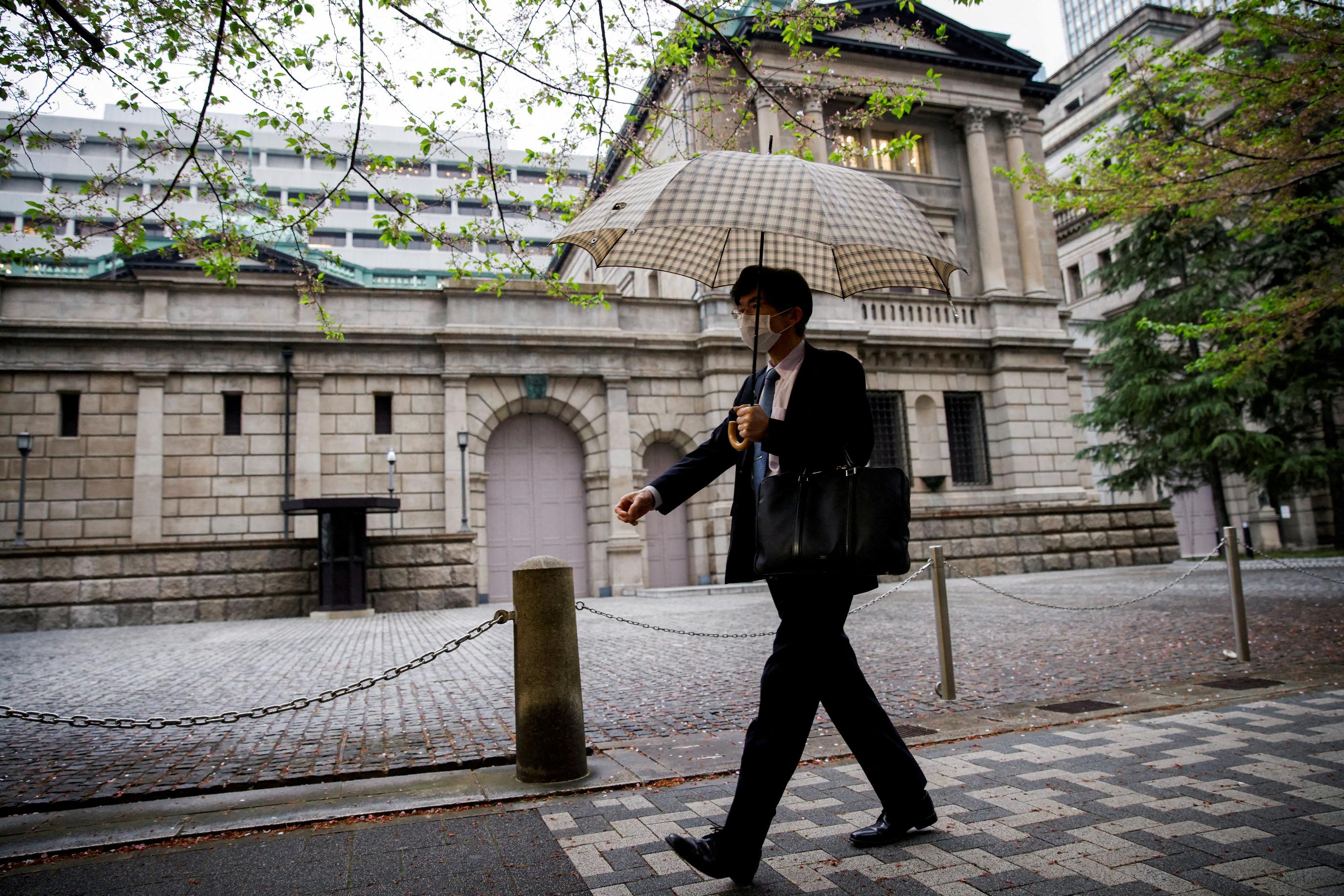
BOJ will not hike rates when markets unstable, Uchida says Market volatility could 'obviously' affect BOJ rate decisions More factors emerging that warrant caution in raising rates Uchida's remarks boost Nikkei, send yen falling HAKODATE, Japan, Aug 7 (Reuters) - The Bank of Japan's influential deputy governor said on Wednesday the central bank will not hike interest rates when markets are unstable, playing down the chance of a near-term hike in borrowing costs. The remarks by Shinichi Uchida, which contrasted with Governor Kazuo Ueda's hawkish comments made last week when the BOJ unexpectedly raised interest rates, boosted Japan's Nikkei share average and sent the yen sharply lower. Uchida said the intense market volatility in the past week could "obviously" change the BOJ's rate hike path if it affects the central bank's economic and price projections and the likelihood of Japan durably achieving its 2% inflation target. "As we're seeing sharp volatility in domestic and overseas financial markets, it's necessary to maintain current levels of monetary easing for the time being," Uchida said in a speech to business leaders in the northern Japanese city of Hakodate. "Personally, I see more factors popping up that require us being cautious about raising interest rates," Uchida, a career central banker seen as a mastermind of the BOJ's policy making, told a news conference after the speech. The remarks came in the wake of signals from Governor Ueda last week that more rate hikes will be forthcoming, which some traders blamed for causing a huge unwinding of yen carry trades. "Uchida's dovish comments balanced out the governor's hawkish tone last week," said Hiroshi Kawata, senior economist at Mizuho Research & Technologies. "Market volatility is so high now that it won't subside soon, which means the hurdle for an October rate hike is now quite high," he said. Uchida said the recent strengthening of the yen would affect the BOJ's policy decision-making because it reduces upward pressure on import prices, and therefore overall inflation. Stock market volatility would also influence its decisions by affecting corporate activity and consumption, he added. "Unlike U.S. and European central banks, we're not in a situation where we would end up being behind the curve unless we hike interest rates at a set pace," Uchida said. "We won't raise interest rates when financial markets are unstable," he said in the speech. The dollar surged to a session high of 147.50 yen and was last up 1.8% at 146.84 on Uchida's remarks, while the 10-year Japanese government bond (JGB) yield fell 1 basis point to 0.875%. The Nikkei average (.N225) , opens new tab rose 1.2% following Tuesday's 10% rally, suggesting investors were finding their footing after the recent market rout that saw the index plunge 13% on Monday. U.S. OUTLOOK KEY Last week, the BOJ raised interest rates to levels unseen in 15 years and unveiled a detailed plan to slow its massive bond buying, taking another step towards phasing out a decade of huge stimulus. Governor Ueda said the BOJ will keep raising rates if the economy and prices move in line with its projection, signalling the chance of steady hikes in coming years. The hawkish remarks, as well as weak U.S. labour data that stoked fears of recession in the world's largest economy, helped contribute to a global market rout that sent the yen soaring and Japan's Nikkei average plunging on Monday. Markets have whipsawed since then, partly as traders reassessed the timing and pace of future BOJ rate hikes. While stressing the need to keep monetary policy loose for the time being, Uchida said Japan's economy was likely to keep recovering with the United States seen achieving a soft landing. He also said he had no set level in mind on how far the BOJ could eventually raise interest rates. "Uchida's comments are clearly dovish. Unless market sentiment recovers rapidly, the chance of the BOJ hiking rates either in September or October is low," said Toru Suehiro, an economist at Daiwa Securities. "But if U.S. recession fears subside around year-end, the BOJ will likely raise rates in December," he said. Sign up here. https://www.reuters.com/markets/asia/boj-wont-raise-rates-when-markets-unstable-deputy-governor-says-2024-08-07/
2024-08-07 03:05
MUMBAI, Aug 7 (Reuters) - The Reserve Bank of India has asked some large banks to not add to their existing positions against the rupee in a bid to support the currency which has fallen to all-time lows for three straight days, four bankers told Reuters. Officials from the RBI's financial markets regulation and operations department rang big banks on Tuesday, when the currency was at risk of breaching the 84/$ level in the spot market, the bankers, who declined to be identified since they are not authorised to speak to the media, said. The RBI did not immediately respond to a mail requesting comment. Reuters could not ascertain the full list of banks the RBI called. The Indian rupee turned into the worst-performing Asian currency over the last month, pressured by the unwinding of trades that used the Chinese yuan to fund long bets on the local currency. To slow the depreciation, the RBI has intervened across the spot, futures and non -deliverable forwards segments. On Tuesday, RBI officials asked us to “consider the existing position size the risk limit,” a senior treasury official at a large foreign bank said. This meant that the RBI did not want them to add to their existing trading positions on the rupee, he said. The Indian central bank often uses such informal calls to prod banks to manage excessive volatility. Lenders typically comply. The rupee on Tuesday dropped to a lifetime low of 83.96 to the U.S. dollar, and would have likely depreciated more if not for RBI’s instructions and direct intervention. The central bank likely sold about $1.5 billion in the non-deliverable forward market before the spot market opened, a currency trader at a bank said. This intervention prevented the rupee from falling past the psychological 84 level. The RBI has asked banks "to not aggressively bid (on USD/INR) for speculative positions," another senior banker at a foreign bank said. The bankers said the central bank had not asked them to trim their existing positions, nor they had issued specific instructions regarding positions in the non-deliverable forwards market. Sign up here. https://www.reuters.com/markets/currencies/india-cenbank-asks-top-banks-refrain-large-trading-bets-against-rupee-sources-2024-08-07/
2024-08-07 02:14
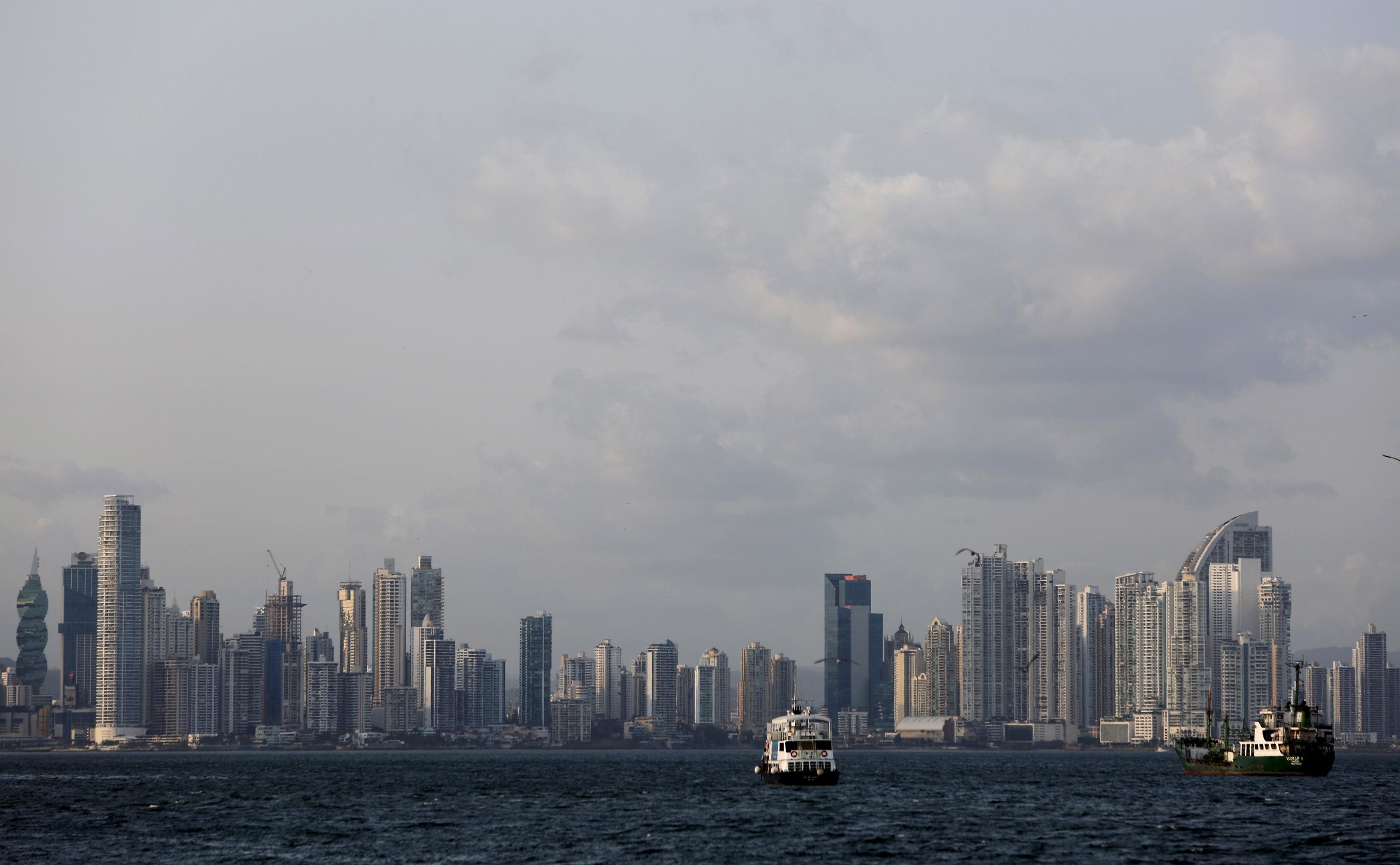
PANAMA CITY, Aug 6 (Reuters) - Panama's government passed two decrees on Tuesday allowing the economy ministry to seek a cumulative $9 billion in financing, Panama's council of ministers said in a statement. The first decree permits the issuance of treasury notes on the local market for up to $6 billion, with maturities between two and 10 years. The second allows the economy ministry to subscribe to financing schemes with local and international institutions for up to $3 billion. Sign up here. https://www.reuters.com/world/americas/panama-govt-opens-door-financing-up-9-billion-2024-08-07/
2024-08-07 01:07
BENGALURU, Aug 7 (Reuters) - The outlook for the Indian rupee has barely changed from last month as the Reserve Bank of India's interventions keep the currency, deemed expensive compared with its peers, in a tight range, according to a Reuters poll of foreign exchange analysts. A sharp fall in global equities related to sudden liquidation of carry trades, where investors borrow in cheap currencies to invest in higher yielding assets elsewhere, pushed the rupee to an all-time low of 83.96 per dollar on Tuesday. The RBI's likely intervention in the FX market limited the currency's fall to 0.25%. That trend was unlikely to change anytime soon as analysts in an Aug. 1-6 poll have barely changed their forecasts from a poll in July. Median forecasts showed the rupee will trade at 83.55/$ and 83.40/$ by the end of October and end of January, respectively, from about 83.95/$ on Tuesday. It was forecast to gain about 1% to 83.00/$ in a year. Fiona Lim, senior FX strategist at Maybank, said the rupee/dollar was a rather tricky pair to predict. "This is likely due in part to RBI's penchant to lean against the wind to reduce volatility." "The main risk that threatens our forecasts (is) ... if there is too much scrutiny, possibly by the U.S. Treasury on the rupee (being) kept artificially weak. While that's not likely, a combination of higher-for-longer inflation and poorer (economic) growth outcomes for India could also threaten our outlook," Lim said. The rupee's trade-weighted real effective exchange rate (REER) was 106.54 in June, according to the RBI's monthly bulletin, suggesting the currency is overvalued by more than 6%. The partially-convertible currency has been the most expensive relative to its trading peers since December 2017. "Domestic policy focus is to boost manufacturing and exports, for which one of the things that we may require is a slightly cheaper currency, but current account deficit trends have favoured a less undervalued currency," said Dhiraj Nim, a FX strategist at ANZ. "It is now in an overvaluation zone so the effect of policy intervention is to prevent further overvaluation of the currency now. As long as the RBI is keen on building up those reserves and occasionally utilising them to smoothen out the volatility, this process might very well continue." (For other stories from the August Reuters foreign exchange poll click here) Sign up here. https://www.reuters.com/markets/currencies/rbis-firm-grip-keep-rupee-anchored-narrow-range-2024-08-07/

2024-08-07 00:48
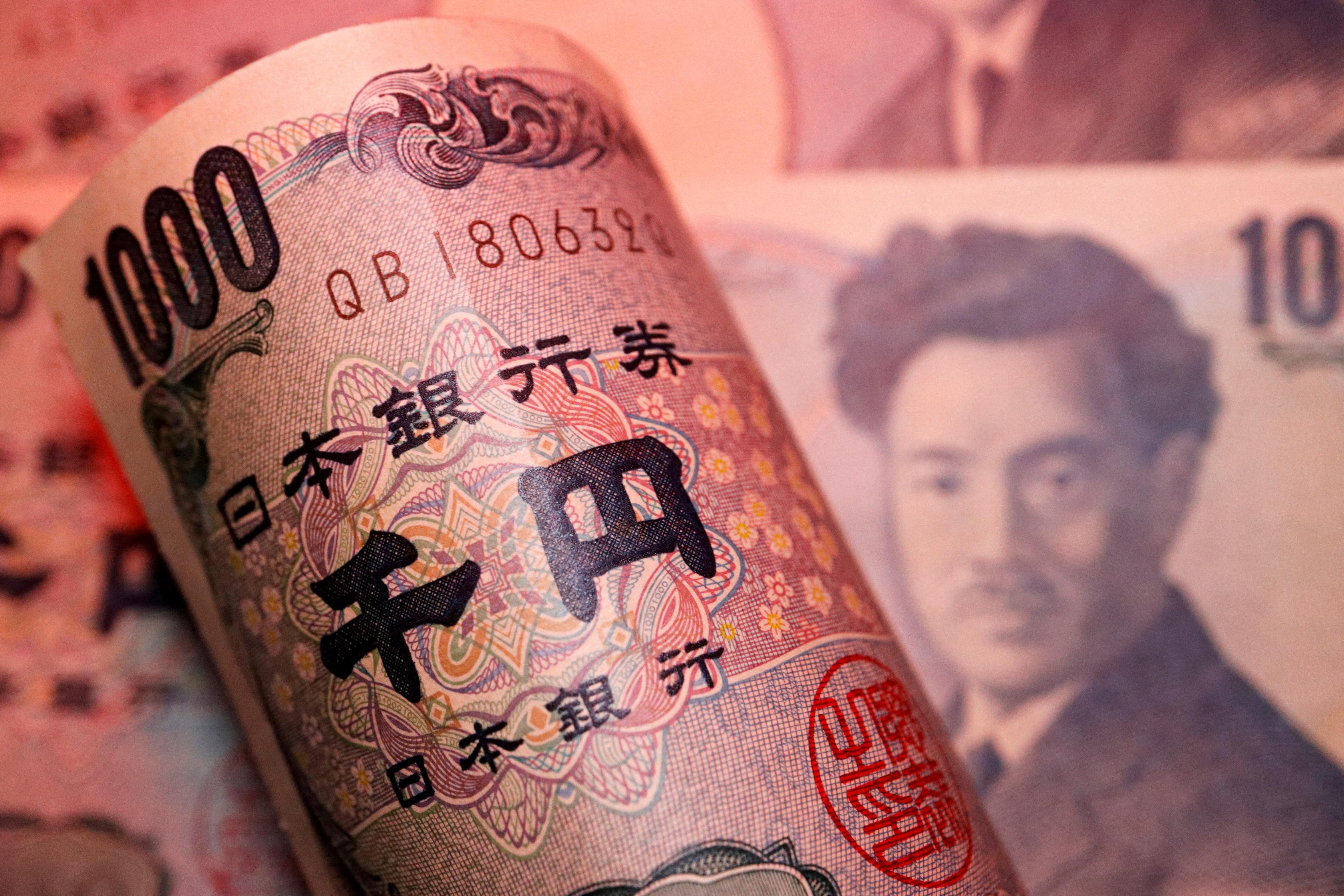
TOKYO, Aug 7 (Reuters) - Japan said on Wednesday that it conducted a record single-day yen-buying intervention in April, selling 5.92 trillion yen ($40.83 billion) worth of dollars in a fight against a falling yen at that time. Quarterly data from the Ministry of Finance (MOF) showed that Japan spent a record 5.92 trillion yen on a single-day yen-buying intervention on April 29 and a further 3.87 trillion yen on May 1. The previous single-day record for such intervention was 5.62 trillion yen spent on Oct. 21, 2022, according to MOF data available since 1991. The latest data represent a detailed daily breakdown of the previously revealed 9.79 trillion yen intervention made during the period from April 26 through May 29. The two rounds of massive dollar-selling intervention helped push up the yen by 5% from a 34-year low of 160.245 per dollar, but failed to reverse the yen's longer-term weakness. The yen resumed its downturn and slid to a 38-year low of 161.76 per dollar in July, prompting Tokyo to intervene again and spend another 5.53 trillion yen to support its currency. Later in July, the yen staged a sharp rally as traders aggressively unwound carry trades after a slew of economic data raised the prospect of a U.S. economic downturn and bigger rate cuts from the Federal Reserve. Separate data from the finance ministry on Wednesday showed that Japan's foreign reserves fell to $1.22 trillion at the end of July, down $12.4 billion from a month earlier, largely due to a drop in foreign securities holdings. The decline in reserves reflect the sale of its U.S. Treasury holdings to finance the dollar-selling, yen-buying intervention, analysts said. Japanese authorities would not reveal the make-up of the country's foreign reserves, but most of the foreign securities holdings are believed by economists to be in U.S. Treasuries. ($1 = 144.9800 yen) Sign up here. https://www.reuters.com/markets/currencies/japans-april-yen-buying-intervention-sets-new-daily-record-2024-08-07/
2024-08-07 00:34
SAO PAULO, Aug 6 (Reuters) - Brazil's Itau Unibanco (ITUB4.SA) , opens new tab, Latin America's largest private lender, on Tuesday posted second-quarter profit that was up 15.2% from a year earlier, boosted by higher revenues and lower cost of credit. Itau posted a 10.07 billion real net recurring profit ($1.8 billion) for the quarter ended in June, slightly more than the 9.99 billion reais estimated by analysts polled by LSEG. Return on equity, a gauge of profitability, stood at 22.4%, up from 20.9% a year earlier. Although net profit was mostly in line with estimates, analysts welcomed the results. "An overall healthy print by Itau Unibanco," analysts at Citi said in a note. "The bank maintains strong momentum across the board and continues accumulating capital, which should bode well for investors' total returns in the mid-term." Itau's main rivals Bradesco and Santander Brasil have both reported net income above market expectations. Itau's net recurring profit increase was helped by a 6.4% annual rise in net interest income, a measure of loans minus deposit costs and its largest source of revenue. The performance was boosted by a nearly 6% rise in the bank's credit portfolio from the previous quarter to 1.25 trillion reais, with Itau accelerating credit growth following recent mild quarters. The bank in the last two years has implemented a strategy to revise the credit given to highly indebted customers, which slowed its portfolio growth, but executives had said Itau would now start to accelerate credit again to reach its 2024 guidance. Analysts at J.P. Morgan called it a "good" quarter, highlighting loan growth acceleration. "Consistency continues to summarize Itau with another good quality result," they wrote. Itau's delinquency rate for loans more than 90 days overdue came in at 2.7%, in line with the previous quarter and 0.3 percentage point down year-on-year. Itau's net recurring profit also benefited from its cost of credit, which fell almost 7% from a year earlier to 8.8 billion reais. Itau maintained its 2024 guidance. ($1 = 5.6572 reais) Sign up here. https://www.reuters.com/business/finance/brazilian-lender-itau-unibancos-net-recurring-profit-rises-18-bln-second-quarter-2024-08-06/