2024-08-06 06:54
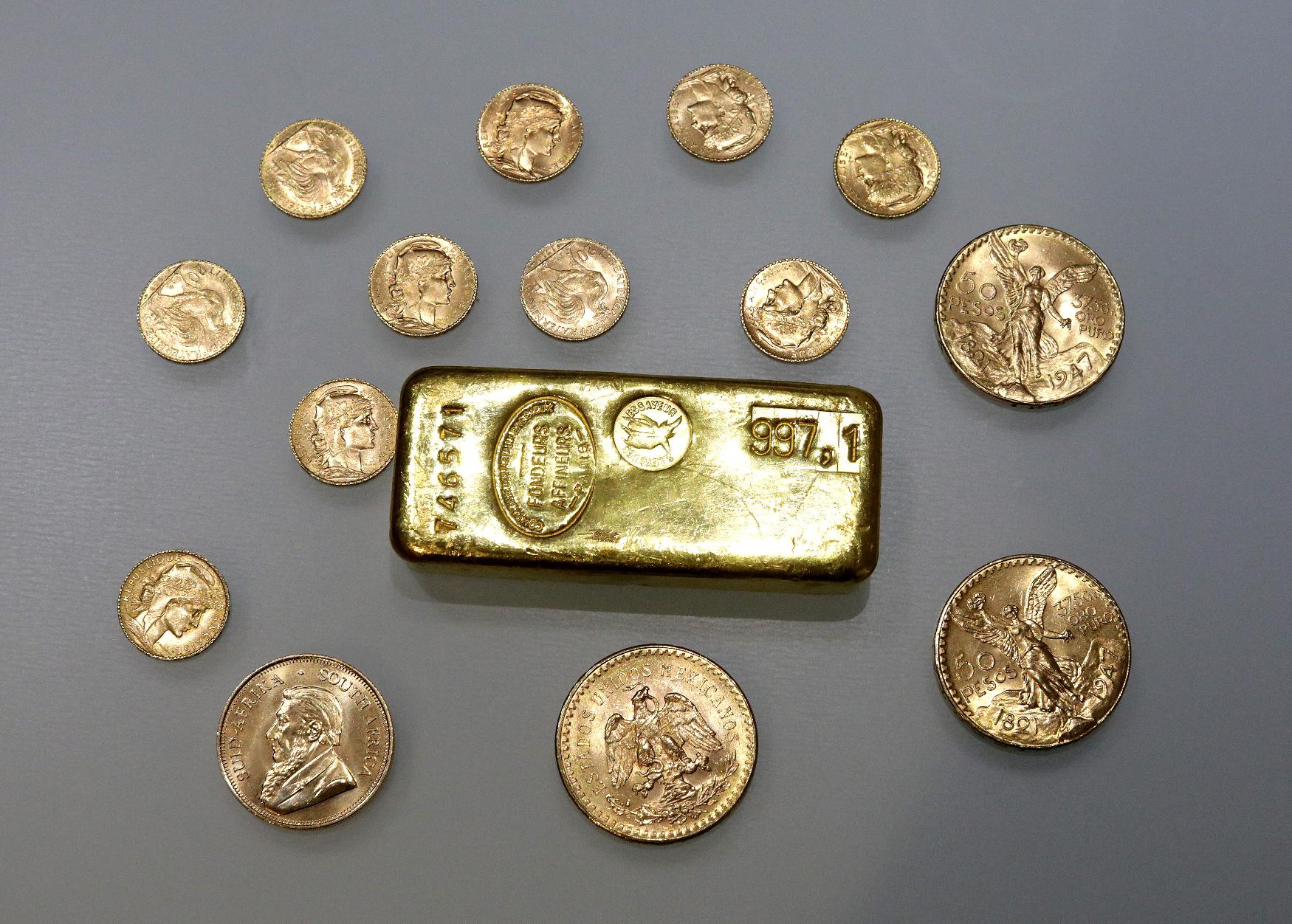
Fed policymakers signal rate cuts ahead, but not recession Traders see a 113 bps of easing this year from Fed Palladium fell to lowest level since 2017 on Monday Aug 6 (Reuters) - Gold prices inched up on Tuesday and analysts noted that the non-yielding metal's outlook remains positive as latest commentary from Federal Reserve officials and data point towards bigger U.S. interest rate cuts. Spot gold rose 0.3% at $2,413.90 per ounce by 1134 GMT. Bullion fell as much as 3% in the previous session, caught in a global sell-off driven by fears of a U.S. recession. U.S. gold futures gained 0.5% to $2,455.30. Fed policymakers pushed back against the notion that weaker-than-expected July jobs data means the economy is in recessionary freefall, but also warned that rate cuts will be needed to avoid such an outcome. "Gold has been volatile in recent days due to the high liquidity of the yellow metal. Margin calls in other asset classes likely resulted in some gold holdings having been sold to cover losses in other positions," UBS analyst Giovanni Staunovo said. "We retain our positive outlook for gold, targeting a price of $2,600 by the end of the year. The next move higher in gold will come by when the Fed starts its rate cut cycle." Traders see a 113 basis points (bps) of easing this year from the Fed, with a 81% chance of 50 bps cut in September versus over 10% last week. Bullion is considered a safe asset amid geopolitical and economic uncertainties and tends to thrive in a low interest rate environment. Elsewhere, India's gold industry, with the support of the World Gold Council, has established a self-regulatory organisation. Spot silver fell 0.7% to $27.09 per ounce while platinum rose 0.7% to $912.40. Palladium gained 0.3% to $852.57 after hitting its lowest levels since 2017 on Monday on recession fears. "Palladium shorts continue to be a recession proxy within precious," Nicky Shiels, head of metals strategy at MKS PAMP SA, wrote in a note. Sign up here. https://www.reuters.com/markets/commodities/gold-nudges-higher-mounting-us-rate-cut-bets-2024-08-06/
2024-08-06 06:35
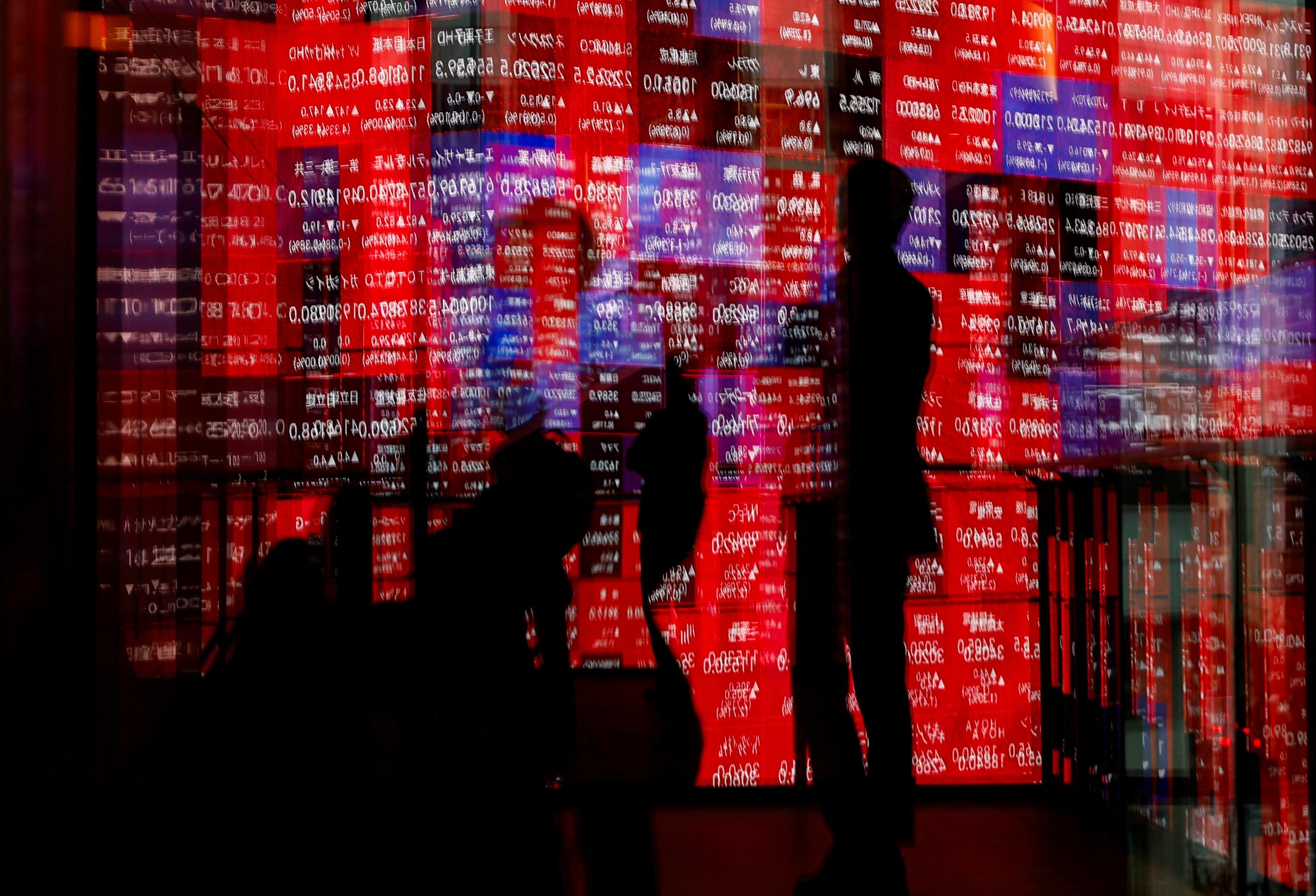
Aug 6 (Reuters) - Global stocks rallied on Tuesday, partly reversing some of the previous day's steep declines, while the Japanese yen took a breather, after central bank officials said all the right things to soothe investor nerves. Japan's Nikkei (.N225) , opens new tab soared more than 10% after plunging 12% on Monday in its biggest one-day percentage drop since October 1987. In Europe, the STOXX 600 (.STOXX) , opens new tab rose 0.6%, recouping some of Monday's 2.2% decline thanks to a pickup in banking stocks and travel and leisure shares. Currency markets remained on edge, with the yen down nearly 1% after rising for five straight sessions to a seven-month high on Monday. QUOTES MOHIT KUMAR, CHIEF ECONOMIST FOR EUROPE, JEFFERIES, LONDON: "Some normalcy has started to return to the markets. We do not think the Fed will cut inter meeting, or will deliver a 50 bps cut in September. We do not think that the U.S. economy (or Europe) is headed for a hard landing. The aggressive market reaction over the last few sessions was due to combination of heavy positioning, unwind of carry trades, summer illiquidity and geopolitical concerns which amplified the shift in market perception of the U.S. economy." SEO SANG-YOUNG, ANALYST, MIRAE ASSET SECURITIES, SEOUL "The market was in extreme shock initially, although an economic recession has not even started. There will be some recovery in the near term, but volatility will continue to grow because the economy is slowing after all. "There is not much downside left for the market after yesterday’s sharp drops, but at the same time, there are not many upward factors seen either. The market will likely start to price in recession as we move on to the fourth quarter and go through correction. Economic data is becoming more important than ever." JOHN MILROY, PRIVATE WEALTH ADVISOR, ORD MINNETT, SYDNEY "It has been a long while since we have seen these outsized moves. I’m not sure if the bounce is sustainable, but these moves are reflective of a market that is trading expensively. There is still a sizable amount of cash sitting on the sidelines so I wouldn’t expect further big falls to last too long, but I note that the VIX has been edging higher over the last month." WONG KOK HOI, FOUNDER AND CO-CIO, APS ASSET MANAGEMENT, SINGAPORE "The sell-off was scary especially of certain stocks like Intel, Nvidia, etc and therefore the euphoria which had driven up markets like the U.S. and Japan would likely take a pause. Sanity and rationality should return somewhat. What is less certain is the extent of the leveraged carry trades and quant strategies and the losses suffered. Inevitably, some would get hurt badly yesterday and may not even survive this vicious rout." RYOTA ABE, ECONOMIST, SMBC, SINGAPORE "The size of sell-offs seen thus far is too much and fears of recession in the U.S. economy have eased. Market sentiment will improve with some higher caution on the global economy and the geopolitical risks than before. "And the U.S. economic data which will be available in quarters ahead will likely suggest the economy will continue slowing, which may bring a view that the economy will someday be going to enter recession. In a word, optimistic cautiousness will be always there in markets." VASU MENON, MANAGING DIRECTOR OF INVESTMENT STRATEGY, OCBC, SINGAPORE "At this juncture, it is too early to call the market bottom given multiple moving parts and the momentum of selling. However, the key question to ask would be whether the economic and earnings outlook has changed materially and for now, it’s too early to jump the gun. We will have to monitor economic data in the coming weeks to see if recession fears are indeed warranted. "With stock markets plunging around the world, traders are talking up the prospect of an emergency interest-rate cut from the Fed after it passed up the opportunity to ease policy last week. This seems unlikely. The market sell-off is due to an unwinding of yen carry trades and AI concerns and not because the U.S. economy is broken and in dire straits. So, there is no reason for the Fed to step in and mitigate losses for equity investors." CHARU CHANANA, HEAD OF CURRENCY STRATEGY, SAXO, SINGAPORE "There seems to be some calm in the markets, probably because the selloff was too fast. Perhaps markets could reassess its calls for an intermeeting rate cut from the Fed without anything having broken really. "However, recession concerns will likely remain easy to trigger as the U.S. growth slowdown broadens, and the market will likely remain fragile as it continues to look for some sort of a response from the Fed." RAY SHARMA-ONG, HEAD OF MULTI-ASSET INVESTMENT SOLUTIONS FOR SOUTHEAST ASIA, ABRDN, SINGAPORE "Fundamentally, nothing significant has changed for the Japanese economy. It is the unwinding of the carry trade driving a lot of the momentum sells. "The Japanese market tends to overshoot on the downside during periods of aggressive selling. Over the past 10 years, there were three corrections where the TOPIX sold off more than -10% (May 2013, Jan 2014, Sep 2014), with the market recovering shortly after each." MATT SIMPSON, SENIOR MARKET ANALYST, CITY INDEX, BRISBANE "The Nikkei's enjoying a decent retracement against Monday's plunge, as comments from the Fed's (Mary) Daly and a stronger-than-expected ISM services report soothed fears of a panic Fed cut next week. But this is not exactly a risk-on rally. And we're not yet sure if this is just a breather between water-boardings or there is more pain to follow. "But with the VIX futures curve in backwardation, I suspect price action to remain choppy and fickle until the dust truly settles. And with so many burned fingers to contend with, it is hard to see a risk-on rally materialising any time soon. Right now, a pause will do." RON SHAMGAR, HEAD OF AUSTRALIAN EQUITIES, TAMIM ASSET MANAGEMENT, SYDNEY "My view is that this market turmoil is mostly driven by the yen carry trade being partly unwound. That’s happened on the same day where U.S. jobs numbers came in slightly weaker than expected and a potential imminent attack by Iran on Israel. "Combine those factors with a market that so far hasn’t seen the usual and bi-annual pullback or correction of 5-10% this calendar year - and you had a so-called rug pull. We think volatility will persist over the next few weeks and stock prices direction will be dictated by the upcoming results season in Australia and the U.S. during late August." GARY NG, SENIOR ECONOMIST FOR NATIXIS, HONG KONG "It is hard to say the worst is behind us ... pressure might linger a little bit." "There are many moving parts, with three key concerns come from the outlook of the U.S. economy, the unwinding of investors' trades in Japan and geopolitical risks in the Middle East ... particularly the last one, which has not been fully realised for now. As for the U.S. recession outlook, we see some sectors in the economy like consumption still holding up, and datasets in the coming weeks might come out not as bad as the surface looks, and it may help stabilise things." ANDREW JACKSON, HEAD OF FIXED INCOME, VONTOBEL, LONDON "Last week’s soft U.S. jobs data has continued to wreak havoc across markets, with many asset classes, sectors and regions suffering major declines. The first step of this price correction was in line with our expectations based on the recent data; but we are likely now entering an overshoot territory. "That said, the fact remains that markets are generally still at or near highs, so the severity of the correction remains unclear. Corporate bonds remain well insulated from the market shock, so any outflows, which could be a catalyst for further declines in already stressed markets, are likely to be muted and we even see a possibility for inflows." ROB ALMEIDA, GLOBAL INVESTMENT STRATEGIST AND PORTFOLIO MANAGER, MFS INVESTMENT MANAGEMENT, BOSTON "It is hard to know what the stress point for the sell-off was. We think it’s a combination of many factors that have led to too many leveraged trades heading for an exit that can’t fit all of them. "Many wonder whether the market is overreacting. Price is what you pay and value is what you get. The price of risk assets was too high and value (i.e., returns on equity) we believe was below what people have been expecting. Volatility is the market adjusting for incorrect assumptions, which brings us back to the prior question, the market’s expectations about incomes, we think, was too high. While profits or earnings have yet to crash, markets discount it before it happens via tangential evidence – which is perhaps what it got last week." Sign up here. https://www.reuters.com/markets/asia/global-markets-quotes-2024-08-06/
2024-08-06 06:34
MOSCOW, Aug 6 (Reuters) - Russia had suspicions that Ukraine planned to attack Russia during the Navy Day parade which was attended by President Vladimir Putin last month and Moscow contacted Washington about its concerns, Russian state television reported. Russian television said that the details were a state secret and provided no further details. Ukraine's foreign ministry did not immediately respond to a request for comment on the report. The report cited Deputy Foreign Minister Sergei Ryabkov as saying that the concerns were so great about the suspected attack that Defence Minster Andrei Belousov contacted U.S. Defense Secretary Lloyd Austin about the suspicions. Reuters was unable to immediately verify the report. The New York Times reported that Austin had taken a call from Belousov , opens new tab on July 12 about a covert Ukrainian operation planned against Russia that Moscow believed had the blessing of the United States. The Times cited two unidentified U.S. officials as saying that Pentagon officials were surprised by the Russian allegation and unaware of any such plot. Still, the Russian concerns were taken seriously enough for Washington to contact Ukraine and caution Kyiv that if it was planning such an operation then it should not carry it out. Sign up here. https://www.reuters.com/world/europe/russia-suspected-ukrainian-attack-navy-day-parade-state-tv-says-2024-08-06/

2024-08-06 05:50
NEW YORK, Aug 6 (Reuters) - The dollar recovered ground against most major peers on Tuesday and the Japanese yen steadied around seven-month highs against the U.S. currency, as some of the more striking moves of recent days reversed somewhat and a semblance of calm returned to markets. The dollar was last at 145.01 yen, up 0.54% on the day, after tumbling against the Japanese currency for five straight sessions. The greenback has fallen nearly 6% against the yen over the last five trading days. A reassessment was also taking place across equity markets, with Japan's benchmark Nikkei index gaining 10% on Tuesday after a 12% fall the day before, while shares in Europe also tried to recover. "I wouldn't be surprised if the volatility in the market isn't over yet, but ,clearly, the very substantial moves we had yesterday have somewhat normalized," said Axel Merk, president and chief investment officer of Merk Investments. The yen's recent gains were driven by an uptick in volatility, causing investors to bail out of once-popular carry trades, reinforced by the Bank of Japan raising interest rates on Friday. So-called carry trades, which involve investors borrowing from economies with low interest rates such as Japan or Switzerland to fund investments in higher-yielding assets elsewhere, rely on lower volatility. "It looks as if some of the moves over the last couple of days were overdone," Karl Schamotta, chief market strategist at Corpay. "We are seeing safe haven demand dissipating, and flows sort of reverting back to normal across most of the major currency pairs," he said. The dollar index was last up 0.087% at 102.96. The Swiss franc was little changed on the day against the dollar after advancing about 4% since July 29. Like the yen, the Swiss franc - another favored funding currency for carry trades - strengthened sharply since mid-July as those trades were unwound, with gains reinforced by safe haven flows on Monday. The carry trade unwind combined with softer-than-expected U.S. job data on Friday, and disappointing earnings from major tech firms triggered a global equity sell-off, further reinforcing the unwind. On Tuesday, the dollar also regained ground on the euro and pound, with the common currency off 0.21% at $1.0928, having hit a seven-month high of $1.1009 during Monday's turmoil. Sterling was down 0.64% at $1.2697, its lowest in five weeks, as the Bank of England's rate cut last week undermined one of the pillars of its strength earlier in the year. Also underpinning currency market moves are traders' attempts to price U.S. Federal Reserve policy in the coming meetings. Traders now expect 110 basis points (bps) of easing this year from the Fed, pricing in a nearly 70% chance of a 50 bps cut in September, down from 85% on Monday, according to the CME FedWatch tool. U.S. central bank policymakers pushed back on Monday against the notion that weaker-than-expected July job data means the economy is in recessionary freefall, but also warned that the Fed will need to cut rates to avoid such an outcome. The Australian dollar was last up 0.55% at $0.6533, after comments from Reserve Bank of Australia Governor Michele Bullock, who suggested rate cuts were still far away. Australia's central bank held interest rates steady on Tuesday as expected, while reiterating that it was not ruling anything in or out to control inflation. In cryptocurrencies, bitcoin was up 4.26% at $56,725, rebounding from a near six-month low of $49,445 touched on Monday. (This story has been refiled to correct the day to Tuesday in paragraph 1) Sign up here. https://www.reuters.com/markets/currencies/squeeze-carry-trades-leave-currency-markets-edge-2024-08-06/
2024-08-06 05:39
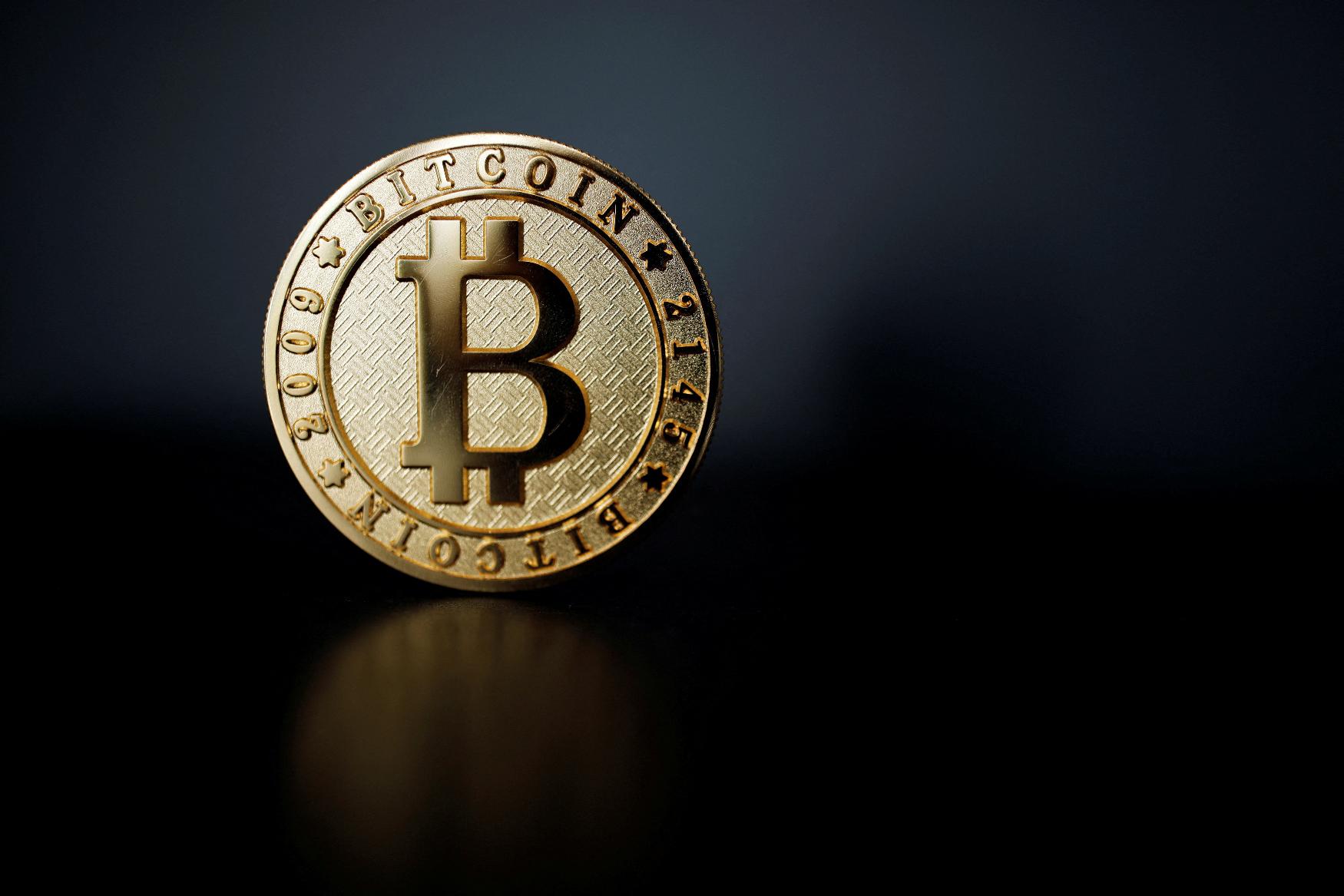
Aug 6 (Reuters) - (This Aug. 6 story has been refiled to correct to 'Rahul,' not 'Raoul,' in paragraph 19) "Never sell your bitcoin," Donald Trump told a cheering crowd at a crypto convention in Nashville, Tennessee in late July. The Republican presidential candidate's speech was the latest overture in his effort to court crypto-focused voters ahead of November's election and offered a bevy of campaign promises, including a plan for a state bitcoin reserve. "If elected, it will be the policy of my administration to keep 100% of all the bitcoin the U.S. government currently holds or acquires into the future," Trump said, adding the funds would serve as the "core of the strategic national bitcoin stockpile." Indeed, Trump isn't the only one with such a proposal. U.S. Senator Cynthia Lummis , opens new tab has introduced legislation that would see the U.S. government purchase one million bitcoin, around 5% of total supply, while independent candidate Robert F Kennedy Jr has suggested a government stockpile of four million bitcoin. A strategic reserve would be one use for the massive amount of bitcoin held by the U.S. government. The jury's out on what it would be used for, whether it's feasible, or if it's even welcome for the broader crypto market, though. The U.S. government holds a bumper cache of crypto: around $11.1 billion worth which includes 203,239 bitcoin tokens, according to data firm Arkham Intelligence which said the pile came from criminal seizures, including from online marketplace Silk Road, which was shut down in 2013. At current levels, the U.S. holds about 1% of overall global bitcoin supply - which stands at about 19.7 million tokens, according to Blockchain.com. Bitcoin's total supply is capped at 21 million coins. To compare against big non-state investors, Michael Saylor's Microstrategy (MSTR.O) , opens new tab holds about 226,500 bitcoin tokens, as per second-quarter results. BlackRock's iShares Bitcoin Trust (IBIT.O) , opens new tab and Grayscale Bitcoin Trust (GBTC.P) , opens new tab hold 344,070 and 240,140 tokens respectively, according to data site BitcoinTreasuries. A government bitcoin stockpile could shore up bitcoin's price. "It would have a positive impact on price. It would have to because we've never had such a limited supply commodity, albeit digital, assume a new state of a reserve asset," said Mark Connors, head of global macro at Onramp Bitcoin. Yet such a reserve also means fewer tokens for crypto investors to trade with and could leave them exposed if the government ever sold part of its reserves. "RFK talked about having 19% of bitcoin, the same amount of the gold supply - I can't imagine a single bitcoiner would be happy about that," Connors added. Governments besides the United States also boast bumper hoards of bitcoin, with BitcoinTreasuries reporting China is the second largest government holder, with 190,000 coins. 'A LOT TO FIGURE OUT' While the prospect of a national bitcoin reserve is uncertain, crypto watchers are nonetheless pondering what form it could take. Connors suggested the Federal Reserve could manage the reserves for the Treasury Department, as it does with gold. On the other hand, the stockpile could be more akin to the Strategic Petroleum Reserve, where both the president and Congress have varying amounts of control, according to Frank Kelly, senior political strategist at asset manager DWS Group. "There's a lot to parse and figure out there," Kelly said. There's also an irony that jars with many true bitcoin believers: the digital asset intended to be decentralized and free of government control becoming part of a state reserve. Regardless of what happens with a bitcoin stockpile, many market players are happy enough to see crypto becoming a significant campaign talking point. "There's a general view in the industry that both parties are paying much more attention to digital assets," said Rahul Mewawalla, CEO of Mawson Infrastructure Group (MIGI.O) , opens new tab which operates data centers for bitcoin mining. "The expectation is that will continue post November." Sign up here. https://www.reuters.com/technology/cryptoverse-trumps-bitcoin-stockpile-plan-stirs-debate-2024-08-06/
2024-08-06 05:39
ATHENS, Aug 6 (Reuters) - Greek authorities have confiscated cocaine valued at more than 1 million euros ($1.10 million) that was hidden in a sea container for bananas, the coast guard said. The drugs, seized from a vessel in Piraeus port on Monday, were found with the help of the Homeland Security Investigations unit of the U.S. embassy in Athens, the coast guard added in a statement. Authorities found about 35 kgs (77 lb) of cocaine in 30 packages hidden in the cooling system of the container which was filled with a shipment of bananas from Ecuador. South American production of cocaine has surged over the past decade, with Balkan traffickers helping to turn Europe into the world’s biggest market for the drug. In May, Greek authorities said they had dismantled an international criminal group trafficking cocaine in shipping containers from Latin America to Europe. Days later, they confiscated more than 109 kg (240 pounds) of cocaine hidden in a container with frozen squid aboard another vessel that was inspected at Piraeus port. ($1 = 0.9129 euros) Sign up here. https://www.reuters.com/world/europe/greek-coast-guard-seizes-1-mln-cocaine-hidden-banana-cargo-2024-08-06/