2024-08-06 00:52
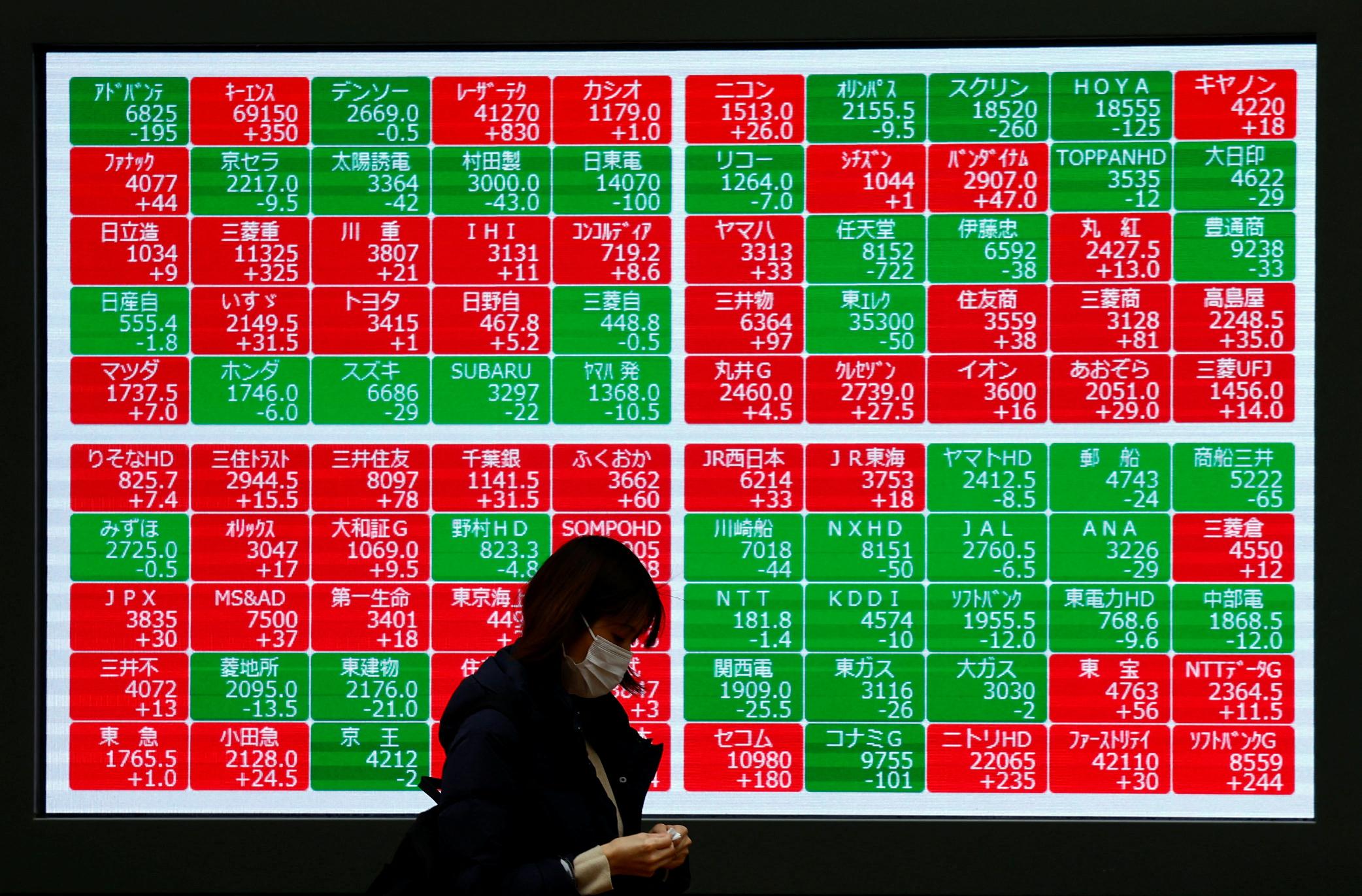
NEW YORK/LONDON, Aug 6 (Reuters) - Equities around the world rebounded on Tuesday from the previous day's aggressive sell-off while Treasury yields rose and the dollar was slightly higher as investors ventured back into risk assets and central banker comments soothed recession fears. Oil prices settled higher on Tuesday after hitting multi-month lows on Monday, as investor attention turned to supply tightness while financial markets bounced back, easing worries about the outlook for energy demand. Earlier the Nikkei's (.N225) , opens new tab roughly 10% rebound in Tokyo brought some relief after the index's 12.4% drop on Monday kicked off a global rout with the Japanese benchmark's biggest one-day sell-off since the 1987 Black Monday crash. The S&P 500 .SPX had lost 3% on Monday, while the Nasdaq (.IXIC) , opens new tab slumped 3.43%, extending a recent sell-off as fears of a possible U.S. recession spooked global markets. U.S. Federal Reserve policymakers pushed back on Monday against the notion that weaker-than-expected July jobs data means the economy is in a recessionary freefall. Late on Monday San Francisco Fed President Mary Daly said the jobs report leaves "a little more room for confidence that we're slowing but not falling off a cliff." But she said it was "extremely important" to keep the jobs market from falling over. "The question investors are grappling with is whether we're hitting an economic air pocket or whether it's a head fake ... It was a single monthly jobs report so you'd want to be careful about reading too much into it," said Scott Helfstein, head of investment strategy at Global X. "In the absence of economic data this week, what the market has to work through is whether we keep bouncing around or do we settle in and be patient for more information," he added. On Wall Street the Dow Jones Industrial Average (.DJI) , opens new tab rose 294.39 points, or 0.76%, to 38,997.66, the S&P 500 (.SPX) , opens new tab gained 53.70 points, or 1.04%, to 5,240.03 and the Nasdaq Composite (.IXIC) , opens new tab gained 166.77 points, or 1.03%, to 16,366.86. MSCI's gauge of stocks across the globe (.MIWD00000PUS) , opens new tab rose 8.91 points, or 1.17%, to 770.99, below its 777.81 session high. This was after the index fell more than 3% on Monday for its third straight day of losses. Europe's STOXX 600 (.STOXX) , opens new tab index earlier closed up 0.29% in a volatile session during which it fell as much as 0.54%. In currencies, the dollar recovered against major peers and the Japanese yen steadied around 7-month highs against the U.S. currency as some of the most striking moves of recent days reversed somewhat and a semblance of calm returned to markets. The dollar index , which measures the greenback against a basket of currencies including the yen and the euro, gained 0.07% at 102.94. Against the Japanese yen , the dollar strengthened 0.4% to 144.74 while the euro was down 0.2% at $1.093. U.S. Treasury yields rose as fears that the U.S. economy is quickly entering a recession were seen as overdone, while safe-haven demand for U.S. bonds also ebbed as stocks recovered. The yield on benchmark U.S. 10-year notes rose 12 basis points to 3.903%, from 3.783% late on Monday. The 30-year bond yield rose 12.1 basis points to 4.1924%. The 2-year note yield, which typically moves in step with interest rate expectations, rose 10.9 basis points to 3.9936%, from 3.885% late on Monday. Oil prices recovered after selling off on Monday. U.S. crude settled up 0.36% at $73.20 a barrel while Brent finished at $76.48 per barrel, up 0.24% on the day. In precious metals, gold prices fell as the dollar firmed and bond yields rose, although expectations of a U.S. rate cut in September and escalating Middle East tensions limited losses. Spot gold lost 0.82% to $2,387.88 an ounce. U.S. gold futures fell 0.37% to $2,392.70 an ounce. Sign up here. https://www.reuters.com/markets/global-markets-wrapup-1pix-2024-08-06/
2024-08-06 00:43
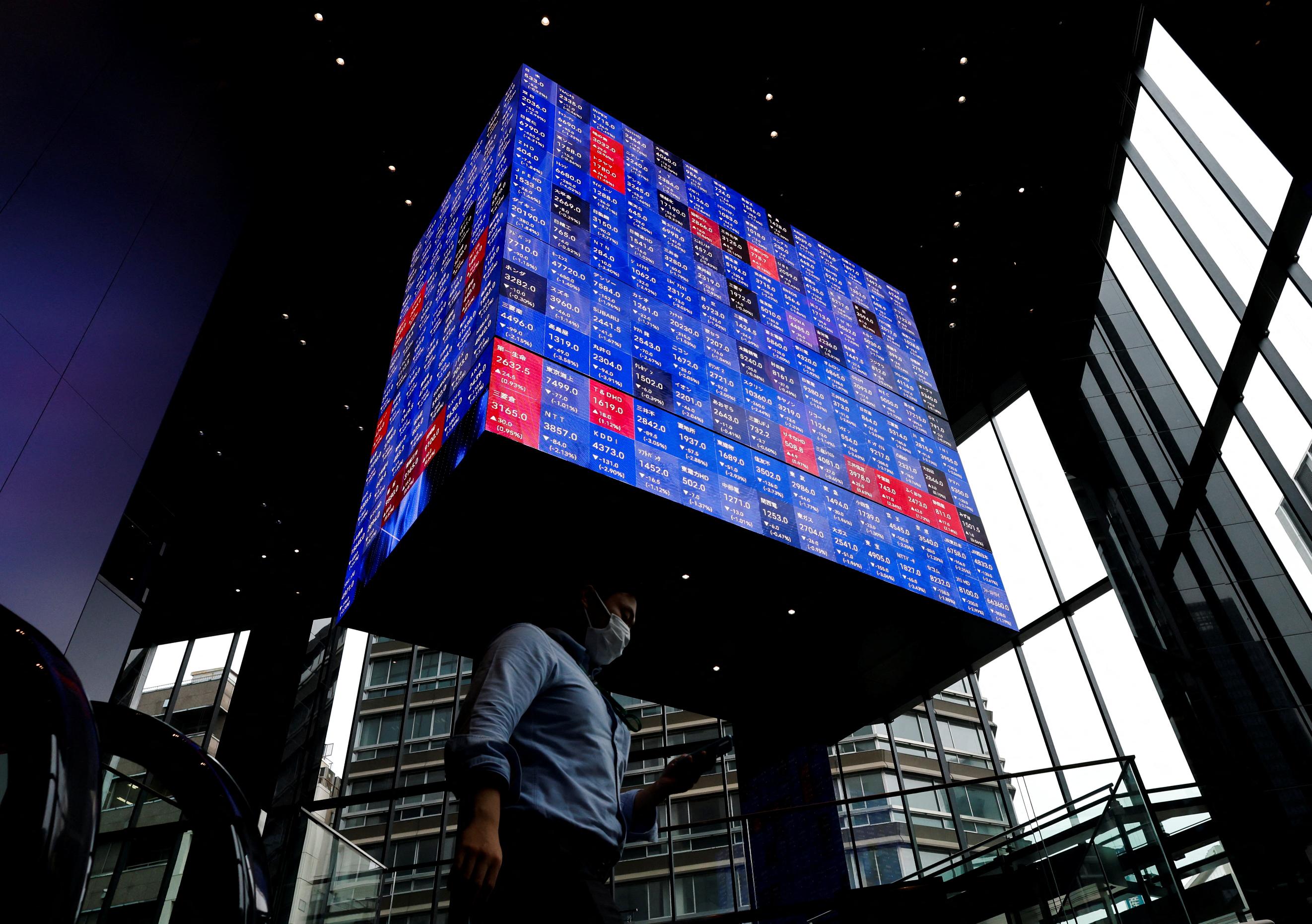
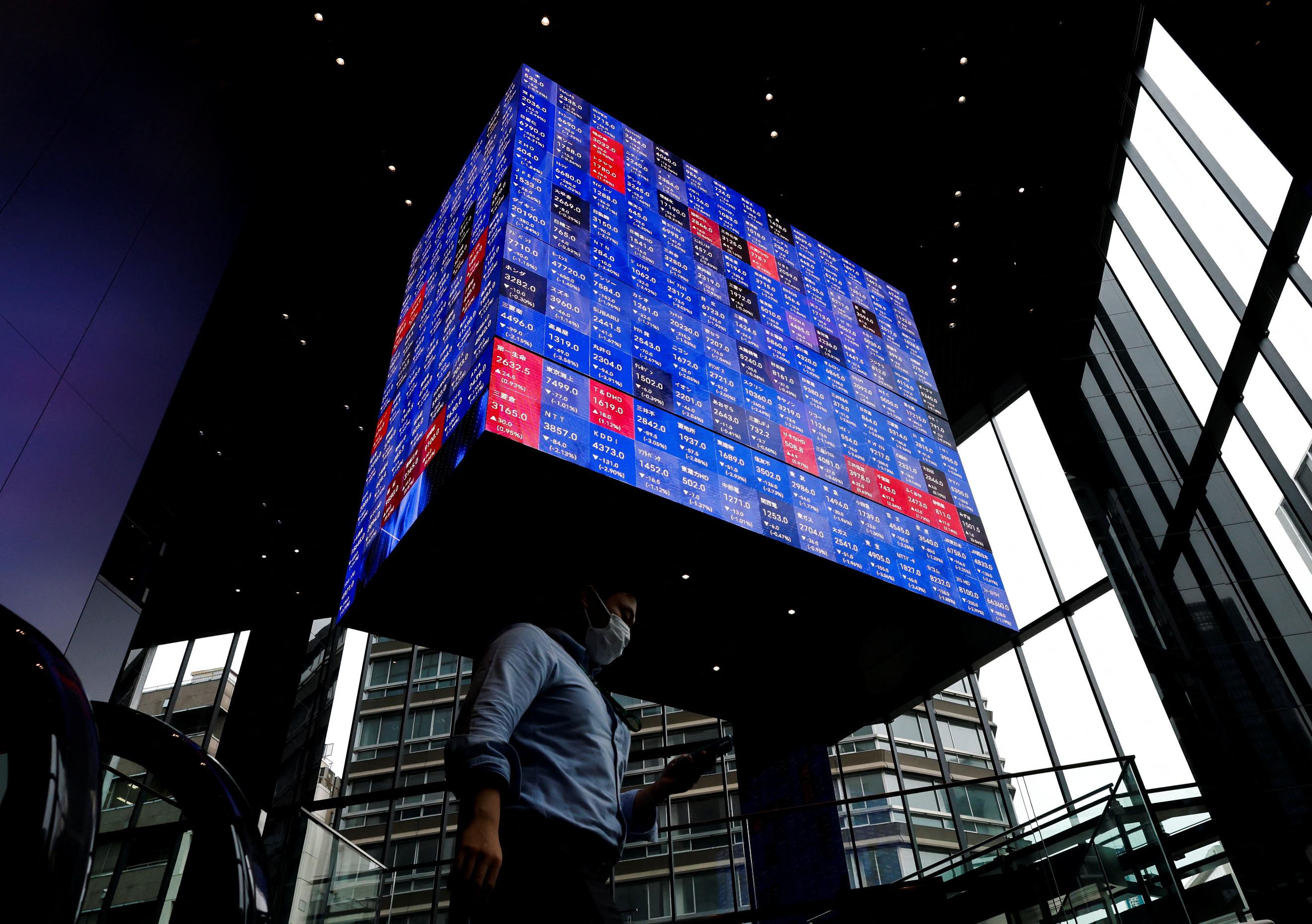
TOKYO, Aug 6 (Reuters) - Japanese stocks rebounded sharply on Tuesday from the previous session's searing sell-off and double-digit losses as Federal Reserve comments and data gave investors pause in their concerns over equity valuations and a possible U.S. recession. The benchmark Nikkei's rally, after the market's biggest single day rout since the 1987 Black Monday crash, came as the yen reversed its gains, indicating the carnage in yen-funded global carry trades too was easing. In a turbulent day of trading, the Nikkei (.N225) , opens new tab closed up 10.2% at 34,675.46, after plunging 12.4% on Monday, leaving investors feeling whip-lashed. The index finished up 3,217.04 points, notching its largest ever single-day point gains. It was also the Nikkei's biggest daily percentage rise since October 2008. The broader Topix (.TOPX) , opens new tab climbed 9.3% to 2,434.21. Investors had been shaken by last week's plunge in global stock markets, U.S. recession risks, and worries investments funded by a cheap yen were being unwound, triggering a sell-off in Japanese equities on Monday. Traders said they now appeared to be reconsidering the severity of their initial response, buying back shares on the dip. "Fundamentally, nothing significant has changed for the Japanese economy. It is the unwinding of the carry trade driving a lot of the momentum sells," said Ray Sharma-Ong, head of multi-asset investment solutions for Southeast Asia at abrdn. The Nikkei rally helped lift other Asian stock markets. Overnight, safe-haven U.S. yields too had risen from lows in a sign the panic was abating. But uncertainties remained, with analysts pointing to the possibility of more volatile market moves in the near-term. "We're not yet sure if this is just a breather between water-boardings or there is more pain to follow," said Matt Simpson, senior market analyst at City Index. Japanese officials meanwhile scrambled to calm markets, with Prime Minister Fumio Kishida urging caution and calling on market participants to stay calm. An emergency trilateral meeting of the Ministry of Finance, Financial Services Agency and the Bank of Japan was held at 0600 GMT to discuss markets. BOJ IN A HURRY? Khoon Goh, head of Asia research at ANZ, noted that the Nikkei also rebounded to varying degrees after the three previous occasions when it experienced double digit declines, including in the wake of the global financial crisis in 2008 and Tohoku earthquake in 2011. "But it took a while before the Nikkei clawed back all those losses," he said. From July 11 to Monday's close of 31,458.42, the Nikkei has seen 113 trillion yen ($792 billion) wiped off its peak market value. Monday's collapse was a "reminder that it is next-to-impossible to diversify equity risk by region (or by sector or style) during major corrections or bear markets," said Stephen Dover, chief market strategist and head of Franklin Templeton Institute at Franklin Templeton. "Opportunity will arise, but in our view, it is premature to step in at this point." Last week, the BOJ raised interest rates to levels unseen in 15 years, a hawkish move that analysts also say spooked the market especially given fears of a possible U.S. recession. "The market was afraid (the BOJ) may tighten too fast," said Kenji Abe, chief strategist at Daiwa Securities. BlackRock Investment Institute said on Tuesday that they see a "greater risk of a BOJ policy misstep" and are reviewing their Japan overweight position. On Tuesday, big name shares like chip-related stocks Tokyo Electron (8035.T) , opens new tab, up over 16%, and Advantest (6857.T) , opens new tab, rising 15.5%, surged to give the Nikkei a sizeable boost. AI-focused startup investor SoftBank Group (9984.T) , opens new tab jumped 12.1%, and Uniqlo parent firm Fast Retailing (9983.T) , opens new tab gained 7.8%. Circuit breakers were triggered multiple times before and during the sessions, causing the temporary suspension of trading in Topix and Nikkei futures. Sign up here. https://www.reuters.com/markets/asia/japanese-shares-rebound-sharply-opening-trade-after-rout-2024-08-06/
2024-08-06 00:24
Aug 6 (Reuters) - Singapore's Sembcorp Industries (SCIL.SI) , opens new tab on Tuesday forecast its annual net profit to be "fairly stable" as higher earnings from its gas and related services segment are likely to offset lower contribution from the renewables division. Earnings from renewables business are expected to fall in the second half of 2024, the utilities company backed by state-owned investor Temasek Holdings said, flagging that the decline was due to a seasonality reason. China's weak macro-economic situation and financial downturn could also negatively affect demand for renewable energy, the Singapore-based energy producer said. Still, completion of a planned maintenance for the co-generation plant in Singapore is expected to support earnings growth for the operations. Sembcorp also proposed an interim dividend of 6 Singapore cents per share, compared with 5 cents in the year-earlier period. "Macroeconomic uncertainty remains and geopolitical tensions, as well as potential policy changes could impact the global economy and impact business performance," Sembcorp said. The firm's attributable profit from continuing operations for the six-month period ended June 30 came in at S$540 million ($407.76 million), compared with S$608 million a year earlier. ($1 = 1.3248 Singapore dollars) Sign up here. https://www.reuters.com/business/energy/singapores-sembcorp-posts-11-drop-half-yearly-profit-2024-08-05/

2024-08-05 23:35
Aug 5 (Reuters) - U.S. central bank policymakers pushed back on Monday against the notion that weaker-than-expected July jobs data means the economy is in recessionary freefall, but also warned that the Federal Reserve will need to cut rates to avoid such an outcome. Many of the latest job report's details leave "a little more room for confidence that we're slowing but not falling off a cliff," San Francisco Fed President Mary Daly said at an event in Hawaii. "Our minds are quite open to adjusting the policy rate in coming meetings," she said. When and by how much will depend on incoming economic data, of which there is a lot before the Fed's next meeting in mid-September, she said, adding, "it's extremely important that we not let (the job market) slow so much that it tips itself into a downturn." U.S. stocks fell steeply on Monday amid fears the U.S. central bank has waited too long to begin cutting interest rates. Interest-rate futures contracts at the day's end reflected overwhelming bets that the Fed will start cutting borrowing costs next month with a bigger-than-usual 50-basis-point reduction to its policy rate. Speaking earlier on Monday, Chicago Federal Reserve President Austan Goolsbee cautioned against taking too much of a signal from the global market sell-off, noting it stemmed in part from the Bank of Japan's decision last week to raise rates, as well as increasing geopolitical tensions in the Middle East. "The law doesn't say anything about the stock market; it's about the employment and it's about price stability," Goolsbee said in an interview with CNBC, referring to the Fed's dual goals set by Congress, as he noted how prone financial markets were to volatility. Nonetheless, Fed policymakers need to be aware of the possibility that markets are signaling a change in the economy's direction, he said. "If the market moves give us an indication over a long arc that we're looking at a deceleration of growth, then we should react to that," Goolsbee said. "As you see jobs numbers come in weaker than expected but not looking yet like recession, I do think you want to be forward-looking at where the economy is headed for (in) making the decisions." Fresh data on Monday showed that the vast U.S. services sector rebounded from a four-year low last month, with a measure of services employment rising for the first time since January. The U.S. services data "aligns with our view of an economy in transition rather than one on the brink of collapse," said Matthew Martin, a U.S. economist at Oxford Economics. "Expectations for aggressive rate cuts in September are overdone." INTER-MEETING CUT The Fed kept its benchmark interest rate unchanged in the current 5.25%-5.50% range last week and signaled it was on course to begin cutting rates in September, but that decision was followed by worrying signs the labor market might already have turned. The number of Americans filing new applications for unemployment benefits increased to an 11-month high while job gains markedly slowed in July and the unemployment rate rose to 4.3%. The data cast doubt on Fed Chair Jerome Powell's assertion directly after the latest policy meeting that the labor market appeared to be normalizing gradually, which would allow the central bank to take a bit more time before cutting rates to ensure inflation was fully quelled. Instead, economists and traders honed in on Powell's other comments that the Fed would respond if there was an unexpected deterioration in the labor market. Asked about the possibility of an inter-meeting rate cut, Goolsbee said "everything is always on the table" from rate increases to cuts as the Fed maintains its focus on employment, inflation and financial stability. "If the conditions collectively start coming in on the through line that there's deterioration on any of those parts, we're going to fix it," Goolsbee said. Inter-meeting cuts are typically reserved for emergencies, however, and so far neither Goolsbee nor Daly signaled that's what they are seeing. Last week marked a shift in the Fed's communications to focus on its full employment mandate as much as its price stability mandate, Daly said, and that shift has sparked a downward move in market-determined borrowing costs like mortgage rates. "The communication itself is a policy adjustment," she said. Sign up here. https://www.reuters.com/markets/us/us-doesnt-look-like-its-recession-feds-goolsbee-tells-cnbc-2024-08-05/

2024-08-05 23:27
Asian stock markets : Nikkei futures point to 2,000 point bounce S&P 500 futures rise 0.9%, Nasdaq up 1.1% Yen off highs, dollar up 0.8% at 145.24 yen SYDNEY, Aug 6 (Reuters) - Asian share markets were hoping for a relief rally on Tuesday as futures pointed to an opening bounce on the hard-hit Nikkei and central bank officials said all the right things to soothe market nerves. Nikkei futures were trading at 33,640, suggesting the cash market could open around 2,000 points higher from its 31,458 close on Monday. The index had shed 12.4% in its worst selloff since the 1987 Black Monday crash. Wall Street also looked steadier with S&P 500 futures rebounding 0.9% in early trade, while Nasdaq futures rose 1.2%. The S&P 500 (.SPX) , opens new tab had lost 3.00% over Monday, with the Nasdaq Composite (.IXIC) , opens new tab down 3.43%. "After the breathtaking and historic moves seen across Asian markets yesterday, driven predominantly by a significant liquidation of margin positions, we look for a solid counter rally on open today," said Chris Weston, head of research at broker Pepperstone. However, he cautioned that the level of implied volatility for the Nikkei was at a stratospheric 70%, suggesting fireworks were likely for some time yet. "After such a furious shake-out of leveraged positioning, with Japanese banks absolutely taken to the cleaners, it will take the bravest of investors to buy with any conviction." Currencies were also calmer as the dollar edged up to 144.24 yen , having sunk 1.5% on Monday to as deep as 141.675. The yen has shot higher in recent sessions as investors were squeezed out of carry trades, where they borrowed yen at low rates to buy higher yielding assets. The dollar pared its losses on the safe-haven Swiss franc, holding at 0.8526 francs from a low of 0.8430. "The fact that there was such a strong unwind in the dollar/yen, in turn forced investors to take some profits where they've been hiding out this year, which has been mostly big tech," said Kevin Gordon, senior investment strategist at Schwab. "It's become the biggest target because it was the best performer and that's probably the easiest spot for traders to take their profits." Treasury yields had also come off their lows, in part in reaction to a rebound in the U.S. ISM services index to 51.4 for July. In particular, it employment index jumped 5 points to 51.1, suggesting last week's payrolls report may have overstated the weakness in the labour market. Yields on 10-year Treasury notes were back at 3.804%, having been as low as 3.667% at one stage. Federal Reserve officials did their best to reassure markets with Fed San Francisco President Mary Daly saying it was "extremely important" to prevent the labor market tipping into a downturn. Daly added that her mind was open to cutting interest rates as necessary and policy needed to be proactive. The comments underpinned market expectations that the Fed would cut by 50 basis points at its September meeting, with futures implying an 87% chance of such an outsized move. The market has around 115 basis points of easing priced in for this year, and a similar amount for 2025. In precious metals, gold failed to get a safe haven bid amid talk investors were taking profits to cover losses elsewhere. Spot gold stood at $2,409 an ounce after losing 1.52% overnight. In energy markets, oil prices bounced early Tuesday as news that several U.S. personnel were injured in an attack against a military base in Iraq stoked fears of a wider conflict. U.S. West Texas Intermediate crude futures CLc1 climbed $1.18, or 1.6%, to $74.12 per barrel. Sign up here. https://www.reuters.com/markets/global-markets-wrapup-1pix-2024-08-05/
2024-08-05 23:07
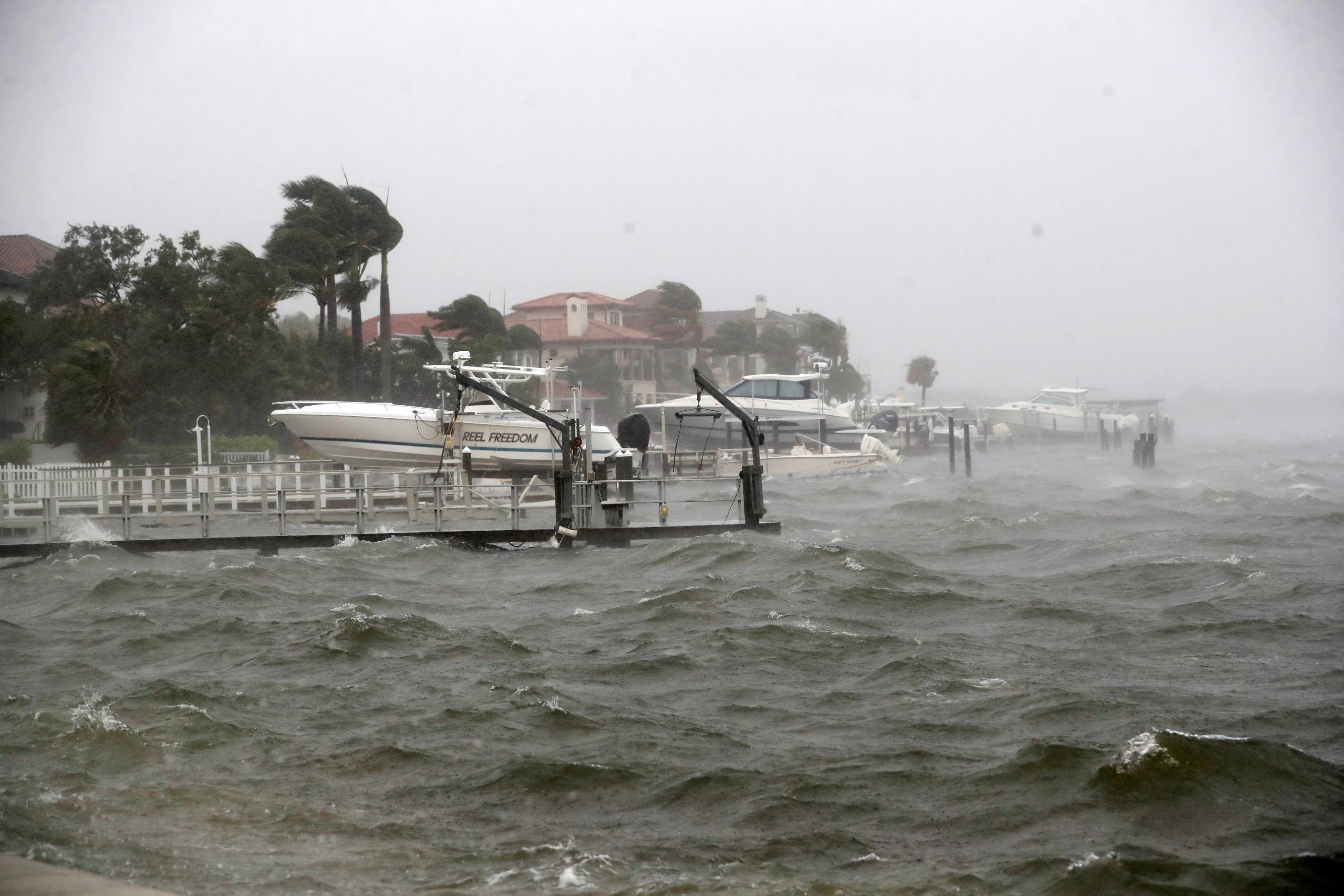
Aug 6 (Reuters) - More than 133,000 homes and businesses in Florida were still without power early on Tuesday, a day after Hurricane Debby slammed into the state's Gulf Coast, according to data from PowerOutage.us. The number was down from a peak of 350,000 outages on Monday. Debby, now a tropical storm, drenched northern Florida and killed several people as it churned toward Georgia and the Carolinas, threatening a week of torrential downpours and flooding across the region. The utility with the most customers hit was Duke Energy (DUK.N) , opens new tab, which had about 44,000 clients still without power. It said 3,000 out-of-state crews were assisting its Florida team with outage restoration. It was followed by Suwannee Valley Electric Cooperative, with 23,042 customers cut off in the state. Here are the major outages by utility in Florida: Sign up here. https://www.reuters.com/world/us/hurricane-debby-cuts-power-235000-florida-customers-2024-08-05/