2024-08-05 20:15
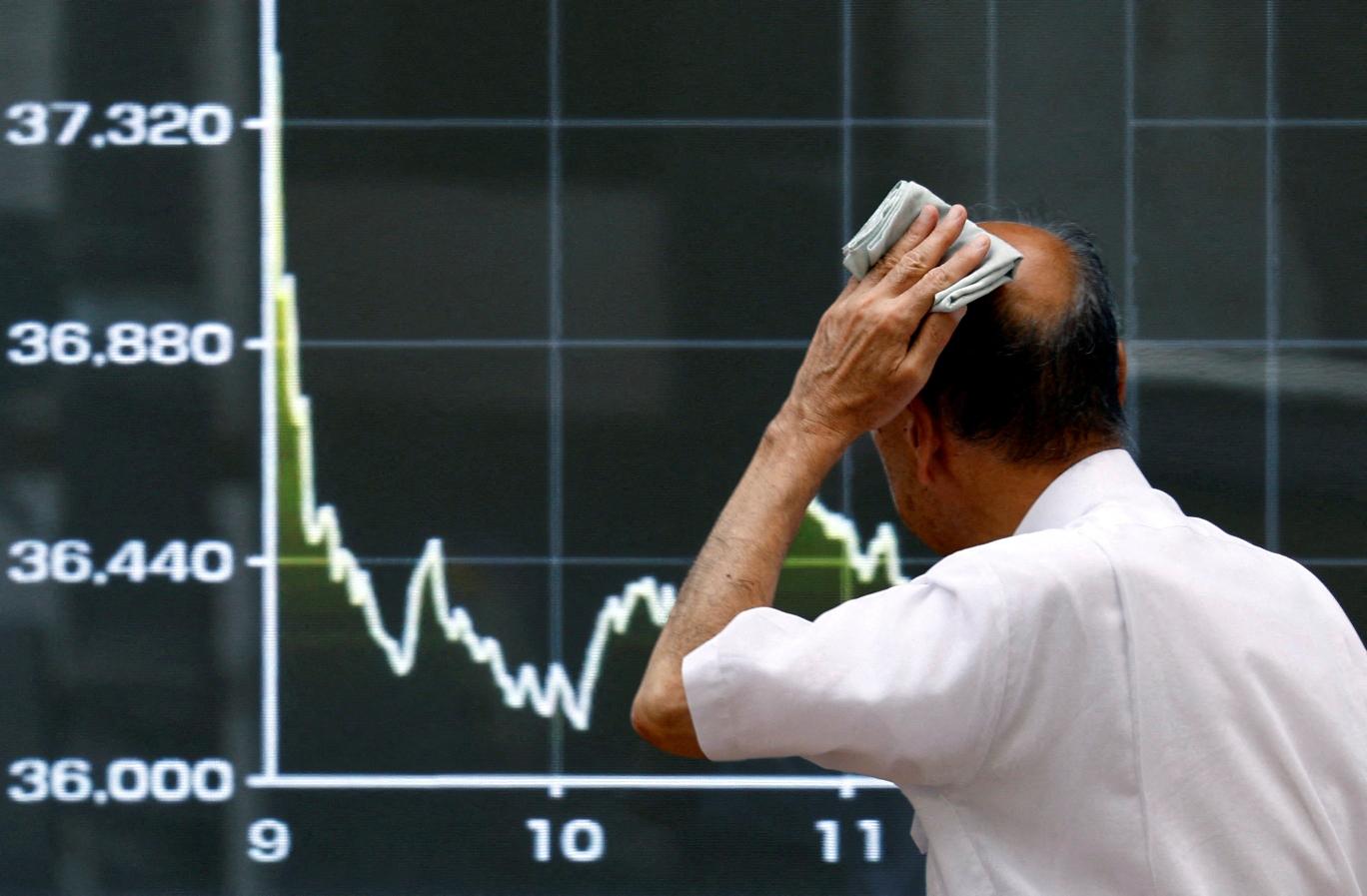
Aug 5 (Reuters) - Share markets around the world tumbled and bonds rallied on Monday as fears the United States could be heading for recession sent investors rushing from risk assets while wagering interest rates will have to fall rapidly to rescue growth. Japan's Nikkei (.N225) , opens new tab shed a staggering 12% to hit nine-month lows, entering bear market territory and marking its biggest one-day percentage drop since October, 1987. Europe's broad STOXX 600 index fell 2.17% (.STOXX) , opens new tab. The S&P 500 (.SPX) , opens new tab closed down 3.06%. U.S. Treasury yields fell sharply then steadied after strong ISM service sector data. The 2-year/10-year yield curve briefly disinverted, steepening to 1.5 basis points before inverting again to -12 basis points. The yen hit a 7-month peak. QUOTES: ERIC BEYRICH, CHIEF INVESTMENT OFFICER, SOUND INCOME STRATEGIES, FORT LAUDERDALE "Big issues such as the election, tight Fed monetary policy and geopolitical instability typically wash out over time, but these factors tend to be good for creating volatility that can make for attractive entry and exit points. We are telling our advisors to help clients recognize it is more of an incremental time to add than panic and sell. Data shows that retail investors tend to react too emotionally for their good, more often buying when stocks are running higher and selling when they are falling. These emotional momentum trades are the opposite of what long-term value investors recommend." "BRENT CHAPPELL, CHAPPELL WEALTH MANAGEMENT, THE WOODLANDS, TEXAS "A stock market decline is not the primary risk of being an investor but rather the price of admission for higher expected returns. Declines happen periodically and usually without warning. That said, it’s been very quiet thus far. Our clients are armed with relevant historical data and have been inoculated against outsized reactions to short-term market swings." NEVILLE JAVERI, HEAD OF EMPIRIC LT EQUITY, ALLSPRING, WASHINGTON, DC “The sell-off started off with the jobs data last week and it clearly led to the belief that the Fed needs to start being more proactive around where those unemployment numbers are going. It clearly continued over the weekend, the carry trade in Japan and now today we’re seeing a sell off as an extension of that anxiety that was felt last week” “I doubt the Fed is going to cut rates before September because the market is selling off. The Fed has a dual mandate, which is inflation and stable employment. That’s what they’re looking for. So I don’t expect an emergency cut. They’ll wait and watch until September” “Despite the sell-off, It doesn’t look like there’s any sort of stress at this point in the financial market.” TIM COURTNEY, CHIEF INVESTMENT OFFICER, EXENCIAL WEALTH ADVISORS, OKLAHOMA “While the market has had several issues to focus on over the last several years (inflation, AI, potential recession, etc.) it has always had one eye squarely fixed on Fed interest rates. To me, this feels very similar to late 2019, when the yield curve had inverted, and the market threw a severe fit that lasted for weeks when it thought the Fed should have lowered rates. The economy is weakening to be sure, but there have been signs of that happening for months. Rather than a signal of recession, I think it more likely a reaction to the Fed keeping rates where they were after investors thought inflation had been tamed. The fact that the AI part of the market had gotten way extended over the last two years has made the reaction even more volatile.” “Many areas of the market – small caps and international – had already been priced as though a recession were imminent. This part of the market has gotten somewhat cheaper over the last week, and for disciplined investors represents an opportunity to rebalance and buy assets with bad news priced in...Many investors will be shocked that such a pullback in the S&P 500 stacked with successful tech mega caps could happen, but this is what happens when so many investors are all on one side of a trade.” ERIC WALLERSTEIN, CHIEF MARKETS STRATEGIST, YARDENI RESEARCH, LOS ANGELES “It’s really a confluence of things. You have the rapid unwind in yen funded trades and geopolitical tensions in the Middle East. Both the shekel and the Israeli stock market are down and you had a lot of crowded positioning in tech. And then we had kind of a weak employment report along with some weakish earnings. So it's like 5 things hitting it once. But yeah a lot of the big sell off in Japan is clearly tied to the yen. The yield curve is reflecting the market starting to price in rapid cuts from the Fed, like 50 bps in the next couple meetings and then a series of cuts thereafter. I mean, we're not calling for a recession and we don't think one is here necessarily. But historically, what you see is the market prices in before a recession that these rapid cuts are coming mostly because they see a financial crisis. So that's why the yield curve un-inverts. Do I think that necessarily means there's a recession? No, just like the inverted curve didn't signal recession for the past couple of years, but that's kind of what happens and it's happening again. “We've only had Friday which was really the only sharp day of selling so far and then the overnight session abroad like Thursday was great, right? Stocks were up like 3%. When volatility spikes to these levels, you can get a lot of selling from the volatility control community, from risk parity funds, from CTAs who have triggers with volatility levels and we'll start to deleverage and de-net their exposures. So something can certainly happen, whether it's mechanically triggered funds or its retail waking up and seeing myriad headlines and saying, it's time to de-risk a bit. Sell off can happen and they can be pretty painful, especially when there's like leveraged trades out there. It doesn't necessarily stop midday today, but we'll see how it progresses the next couple days.” WILL RHIND, CEO, GRANITESHARES, NEW YORK “Global markets are falling heavily this morning sparked by last week's decision by the Bank of Japan (BOJ) to raise interest rates by 0.15% which has had the effect of crashing the infamous yen carry trade…In the US, calls for a Fed rate cut, even an emergency one, are now getting louder as signs are that the economy is now slowing as a result of rates staying too high for too long. Volatility as measured by the VIX index has exploded higher and is now trading at a level last seen in the COVID crash of 2020.” “What does this all mean? Q2 earnings have been a bit of a mixed bag but on the whole have been good, especially for some of the large tech companies. It’s too early to say the economy is really slowing down but perhaps the market rout has now given the Fed the cover its needs to start cutting rates aggressively to stabilize the market. A lot of the volatility today is a natural function of the yen carry trade unwinding and may present a buying opportunity for stocks, especially the highest quality tech names.” QUINCY KROSBY, CHIEF GLOBAL STRATEGIST, LPL FINANCIAL, CHARLOTTE, NORTH CAROLINA "What's happened now is that the narrative has broadened. It's not just about the labor market. It is now including Berkshire Hathaway announcing another tranche of selling in Apple... and what that always says is: What are they seeing in terms of the economy, in terms of the market? Then, Nvidia this morning, with a glitch with one of the chips they're preparing to sell. That has pushed Nvidia down markedly. So what you have is a selloff that began as an overbought market waiting for a catalyst. The catalyst was it looks as if the employment landscape is weakening at a faster pace and the Fed finished its meeting suggesting the soft landing narrative remains intact. Thursday morning it was that the Fed is behind the curve. Because the next meeting is September 18, that is a long way to go if we continue to see a weakening in the labor market... so the question now is how do they see it? Do they believe it's necessary to come in with a rate cut in between meetings or are they going to come out with the FOMC speakers due out this week with a kind of orchestrated verbal intervention?" JOHN LYNCH, CHIEF INVESTMENT OFFICER, COMERICA WEALTH MANAGEMENT, CHARLOTTE, NORTH CAROLINA (emailed note) "When investors turned their calendars to August, they may have flipped the narrative on the economy at the same time. "It’s been less than two weeks since the second quarter GDP report surprised to the upside, with equity markets hovering near record levels, yet there is growing sentiment is that the Fed has waited too long to cut interest rates and is now behind the curve. "While we’re not completely sold on the new narrative, the one thing that seems certain is that there is more volatility ahead." JIM CARON, CIO, CROSS-ASSET SOLUTIONS AT MORGAN STANLEY INVESTMENT MANAGEMENT, NEW YORK “We’ve had exposure to high quality fixed income like everyone else. For Treasuries, we’re certainly not looking at these levels to add exposure. In corporate bonds, we are seeing some spread widening. The question is, is this the start of something much bigger where there’s a stop in economic activity and difficulty accessing credit? We don’t see that happening. Spreads are wider but not at levels that scream great opportunity, so we’re going ride out the fixed income wave for the time being.” “It's become much more possible for the Fed to justify a 50 basis point cut. It depends on the August payroll number, if it’s similarly weak (to July) then there’s a good case for a bigger cut.” JAMIE COX, MANAGING PARTNER, HARRIS FINANCIAL GROUP, RICHMOND, VIRGINIA "Sell-offs that manifest themselves through wild swings in the currency markets are sharp and swift, but usually very short lived. Markets are clearly nervous about the divergent paths central banks are taking, leading to lots of volatility. Couple that with a potential escalation of hostilities in the Middle East and a Presidential election cycle that is rife was craziness, things are ripe for negativity. Some say this is overdue, I say use this downturn to pick up some deals. HARVEY SCHWARTZ, CHIEF EXECUTIVE OFFICER, CARLYLE “Sentiment can extend itself into problematic ways. It's way too early to extrapolate that.” “Portfolio performance looks good, market opportunity feels good, exits still feel good, pending announcements feel good…We'll see what happens over the next several weeks in terms of market environment, but if anything, I think this will encourage the Fed to take action, which is really what the market is looking for.” “The trajectory for GDP, the expected Fed rate cuts this year, all the dynamics still tell us the underlying fundamentals support improving activity across our platform for the balance of the year.” SAMY CHAAR, CHIEF ECONOMIST, LOMBARD ODIER, GENEVA "There are two things impacting pricing, one is the recession risk and that's the main worry but on top of that there is a bit of anxiety around geopolitics and the expected retaliation from Iran and Hezbollah after the Israeli strikes." "On the first, it does feel that American economic conditions are still acceptable, we're not seeing a pick up in lay offs, in job cuts. OK the data Friday was poor, but we need to be open to the possibility next month we get job growth number around 150,000 170,000." "It's a game of ping pong. Positioning goes a bit far on one side and then reverses, and market moves have been extreme because positioning has been extreme. We're going a bit far to the extremes, 3.70% seems a bit far on the U.S. 10 year yield. It was a good buy at 4.50% it is a good sell at 3.70%." MOHIT KUMAR, CHIEF ECONOMIST FOR EUROPE, JEFFERIES, LONDON "First of all we would argue that positioning has been a big driver of recent market moves. U.S. equities, particularly the tech sector, was over owned and some froth needed to be cleared." "Our view on the U.S. employment picture has not changed. We have been on the camp of a modest weakening but not a disaster scenario." "We do not see the correction in risky assets as a start of a downturn. In our view, correction and clean up of positions does make sense." JIM REID, GLOBAL HEAD OF MACRO RESEARCH AND THEMATIC STRATEGY, DEUTSCHE BANK, LONDON "Markets were on edge before Friday but a weak payrolls has really escalated a profound move across the globe. However the reality is that although payrolls was disappointing it's hard to know how disappointing given the distortions from Hurricane Beryl. It's like the market has added up 2+2 and made 9. It's easily possible we'll get the additional 3 and 2 to make up the total but we're certainly not there yet. It's hard to believe such market moves would have occurred in any other month." BEN BENNETT, HEAD OF INVESTMENT STRATEGY FOR ASIA, LGIM, HONG KONG "Looks like a lot of trades that have done well in the first half of the year are unwinding, some more rapidly than others. I don't think the rate hike by the Bank of Japan or the US employment report on Friday justify such a big reaction, so I suspect we're seeing traders being stopped out of positions as volatility spikes." RICHARD KAYE, PORTFOLIO MANAGER, COMGEST, TOKYO "The sudden narrowing of the Japan-U.S. yield gap has provoked the partial normalization of the yen, and the mistaken foreign hot money flows to banks and yen plays are being rightly sold off, which is at the centre of today's and Friday's move. Domestic demands SMIDs - GMO Payment, Fast Retailing, are significantly outperforming, and up in absolute terms in dollars for the month, ahead of major global indices. "In short, not only the currency but the entire 'value' trade in Japan which had hijacked our market for two years is being unwound - and great news for serious investors who are most of the market participants, the silent majority eclipsed by recent hot money moves." KYLE RODDA, SENIOR FINANCIAL MARKET ANALYST, CAPITAL.COM, MELBOURNE "The markets are in meltdown and it's a sea of red across the world. The rapid move in the yen is putting downward pressure on Japanese equities, but it's also driving an unwind of a major carry trade - investors had leveraged up by borrowing in yen to buy other assets, chiefly U.S. tech stocks. We are basically seeing a mass deleveraging as investors sell assets to fund their losses. The rapidity of the move has caught a lot of investors off guard; there's a lot of panic selling now, which is what causes these non-linear reactions in asset prices to pretty straightforward fundamental dynamics." DANIEL TAN, PORTFOLIO MANAGER, GRASSHOPPER ASSET MANAGEMENT, SINGAPORE "In our view, five Fed rate cuts by the end of 2024 seem unlikely. More plausible are two cuts - one in September and one in November - with a total of up to 75 basis points by the end of the year. This suggests potential opportunities to increase duration in upcoming months. Overall, we believe emerging market bonds will perform well by the end of the year in a gradually declining interest rate environment. "There may still be room for the recent sell-off in equities to continue, given the significant rally in technology stocks earlier this year and investors seeking to sell assets to cover losses." GEORGE BOUBOURAS, HEAD OF RESEARCH, K2 ASSET MANAGEMENT, MELBOURNE "Markets are clearly concerned with the recent weaker economic data. However, extrapolating last Fridays Payrolls data appears an over-reaction as it is only one monthly reading. The rolling 3-month will be a better guide. It is clear the recent data momentum in the U.S. has slowed. Given the Fed is expected to begin rate cuts (Implied Futures) before the U.S. election (Nov. 5), that may be seen as problematic optically despite the rational that conditions warrant a rate cut. This may add to some pre-election volatility." RYOTA ABE, ECONOMIST, SMBC, SINGAPORE "I think USD/JPY will shift to 140-145 zone because of worse-than-expected NFP (U.S. non-farm payroll report) and the Middle East tensions. And the two reasons will likely weigh on Asian markets as market players will hesitate to take risks in this situation. "Stronger yen will also weigh on Nikkei index as corporate margins will fall, as many corporates did not expect such a sharp and sudden rise of the Japanese yen at all." MASAFUMI YAMAMOTO, CHIEF CURRENCY STRATEGIST, MIZUHO SECURITIES, TOKYO "There's a risk that dollar-yen will fall further. The near term at the support will be 144.50, where the 90-week moving average is. If that is, I think the next target will be 140. "But I would say that this the market pricing of a 50 basis rate cut by the Fed in the September meeting is too much. The U.S. economy is showing signs of slowdown, but it's not as bad as market is pricing in." CHARU CHANANA, MARKET STRATEGIST, SAXO MARKETS, SINGAPORE "U.S. economic data remains in the driving seat now and the more the U.S. soft landing assumption gets questioned, the further pullback we can see in equity and carry strategies where positioning has also been stretched. "However, markets have gone a bit too far expecting the Fed rate cuts and four rate cuts priced in for this year seems a stretch considering that the June dot plot showed only one cut and the structural inflation forces in play." Sign up here. https://www.reuters.com/markets/global-markets-selloff-quotes-6-2024-08-05/
2024-08-05 20:06
SANTIAGO, Aug 5 (Reuters) - Australian miner BHP has requested mediation by the Chilean government with the union representing workers at its Escondida mine, the company said on Monday, a move aimed at avoiding a potential strike at the world's largest copper project. BHP noted in a statement that the mine is operating normally and that the mediation would aim to achieve a contractual agreement for the mine's workers. BHP owns more than half of Escondida, while Rio Tinto and JECO Corp control minority stakes. Once the mediation is confirmed, the parties will have five working days to continue negotiations, according to the statement. Last week, Escondida workers rejected an offer for a new collective bargaining agreement, according to the union. The union has demanded that 1% of dividends to be distributed equally among workers, but declined on Monday to comment on the company's request for mediation. Sign up here. https://www.reuters.com/markets/commodities/miner-bhp-requests-state-mediation-with-escondida-union-chile-2024-08-05/

2024-08-05 19:35
Aug 5 (Reuters) - Charles Schwab (SCHW.N) , opens new tab and Fidelity Investments have resolved technical issues with their apps, the online brokerages said on Monday, on a day users rushed to trade as markets slumped on rising fears of a U.S. recession. Some customers struggled to log in to their accounts, the companies had said earlier in the day, without elaborating. Wall Street's main indexes plunged at the open as weak economic data, drab quarterly earnings from technology behemoths and geopolitical tensions dampened hopes of a soft landing before recouping some of the losses. The Cboe volatility index (.VIX) , opens new tab, Wall Street's fear gauge, was at a two-year high after hitting its highest since March 2020 earlier in the session. "What's scaring people more than the fact that the market is selling off is that Fidelity's and Schwab's trading platforms crashed today," said Jason Britton, president and chief investment officer at Reflection Asset Management. "Those are the things that cause real panic - when people can't see what their portfolios are doing." Bouts of extreme market volatility can sometimes trigger technical problems, which also raise questions about the capacity of brokerages to handle high volumes. Such glitches have often drawn the ire of retail investors, who may be looking to "buy the dip" or unwind their positions. Several users took to social media platform X on Monday to complain of the disruption, with some promising to seek alternatives. SEC SCRUTINIZING The Securities and Exchange Commission was tracking the developments, a spokesperson for the regulator told Reuters. "We are actively monitoring for the orderly functioning of markets," the spokesperson said. At peak, Schwab was down for nearly 14,500 users while more than 3,600 users reported problems with Fidelity, according to outage tracking website Downdetector.com. Downdetector tracks outages by collating status reports from several sources including users. Earlier in the day, Robinhood Markets (HOOD.O) , opens new tab, the platform of choice for several retail investors, said it had resumed overnight trading after a pause. Vanguard, another popular brokerage, also reported disruption of services. Rival Interactive Brokers (IBKR.O) , opens new tab had seen no system-wide outage, said Steve Sanders, its executive vice president of marketing and product development. "As of 11 a.m. ET, we have executed 5 million trades, and on Friday, we had 5.9 million trades, which was already a busy day," Sanders said. Sign up here. https://www.reuters.com/business/finance/online-trading-platforms-down-thousands-users-downdetector-shows-2024-08-05/
2024-08-05 19:02
U.S. data doesn't support scale of market meltdown - analysts Huge carry trade unwind a better explanation Further pain likely short-term LONDON, Aug 5 (Reuters) - A meltdown in world equity markets in recent days is more reflective of a wind-down of carry trades used by investors to juice their bets than a hard and fast shift in the U.S. economic outlook, analysts say. While Friday's weaker-than-expected U.S. jobs data was the catalyst for the market sell-off, with Japan's blue-chip Nikkei index on Monday suffering its biggest one-day rout since the 1987 Black Monday selloff, the employment report alone wasn't weak enough to be the main driver of such violent moves, they added. Instead, the answer likely lies in a further sharp position unwind of carry trades , opens new tab, where investors have borrowed money from economies with low interest rates such as Japan or Switzerland, to fund investments in higher-yielding assets elsewhere. They have been caught out as the Japanese yen has rallied by more than 11% against the dollar from 38-year lows hit just a month ago. "In our assessment a lot of this (market sell-off) has been down to position capitulation as a number of macro funds have been caught the wrong way around on a trade, and stops have been triggered, initially starting with FX and the Japanese yen," said Mark Dowding, chief investment officer at BlueBay Asset Management, referring to pre-determined levels that trigger buying or selling. "We don't see evidence in data that's saying we're looking at a hard landing," he added. One Asian-based investor, who asked not to be identified, said that some of the biggest systematic hedge funds that trade in and out of stocks based on signals from algorithms, started selling equities when last week's surprise Bank of Japan rate hike sparked expectations for further tightening. While exact numbers and the specific positioning shifts underlying the moves are hard to come by, analysts suspected that crowded positions in U.S. tech stocks, funded by carry trades, explain why they are suffering the most. By 1423 GMT on Monday, the tech-heavy U.S. Nasdaq stock index (.IXIC) , opens new tab was down over 8% so far in August, versus 6% for the broader S&P index (.SPX) , opens new tab. Carry trades, boosted by years of ultra-easy Japanese monetary policy, prompted a boom in cross-border yen borrowing to fund trades elsewhere, ING said. Bank for International Settlements data suggests cross-border yen borrowing has increased by $742 billion since the end of 2021, the bank noted. "It's a yen-funded carry unwind and Japanese stock unwind," said Tim Graf, head of macro strategy for Europe at State Street Global Markets. "Our positioning metrics show investors overweight Japanese stocks. They were underweight yen. They're no longer underweight yen." Speculators have cut bearish bets against the yen aggressively in recent weeks, bringing the net short position in the yen to $6.01 billion, its smallest since January, down from April's seven-year high of $14.526 billion, most recent weekly data from the U.S. markets regulator shows. "You can't unwind the biggest carry trade the world has ever seen without breaking a few heads," said Societe Generale's chief currency strategist Kit Juckes. HEDGE FUND PAIN As hedge funds typically fund their bets through borrowing, their adjustments are exacerbating market moves, some investors said. Banks give hedge funds leverage, essentially a loan to fund investing, which amplifies hedge fund returns but can also increase losses. A note sent by Goldman Sachs to clients on Friday showed that gross leverage from Goldman Sachs prime brokerage, or the total amount that hedge funds have borrowed, declined in June and July, but still sits near five-year highs. Last week marked the third consecutive week that hedge funds' bets that stocks will fall outpaced the addition of bets that they will rise, Goldman said in a separate note, saying one long position was added for every 3.3 short bets. It added on Monday that as of the Asian close, Japan-focused hedge funds were down 7.6% in the past three trading sessions. While macro funds may have been involved in currency trades relating to the yen, many stock-trading hedge funds, because of a June short selling ban in South Korea and regulatory headwinds against the same practice in China, had moved focus to Japan, investors said. Analysts added there was room for further short-term pain as positions are unwound, but the market shake-up would be limited. Traders now expect over 120 basis points of U.S. rate cuts by the end of the year, versus around 50 bps at the start of last week, and fully price in a hefty 50 bps September rate cut. Such expectations may be overdone if upcoming data suggests the U.S. economy is likely to avoid a hard landing. "We think it's really wrong to start fundamentally reassessing your view on the outlook here. Doing so is simply fitting a narrative to match the price action," said BlueBay's Dowding. Sign up here. https://www.reuters.com/markets/us/global-markets-rout-positioning-analysis-pix-2024-08-05/
2024-08-05 18:07
Aug 5 (Reuters) - Mortgage financing firms Fannie Mae and Freddie Mac are set to impose stricter rules for commercial property lenders and brokers, following a budding regulatory crackdown on fraud in the multi-trillion dollar market, the Wall Street Journal reported , opens new tab on Monday. Lenders would have to independently verify financial information related to borrowers for apartment complexes and other multifamily properties, the report said, citing people familiar with the preliminary plans. Additionally, lenders could face tougher requirements for confirming whether a property borrower has adequate cash and verifying their source of funds, according to the report. The Federal Housing Finance Agency, which serves as the primary regulator for Fannie Mae and Freddie Mac, declined to comment. Sign up here. https://www.reuters.com/business/finance/fannie-mae-freddie-mac-set-tighten-real-estate-lending-rules-wsj-reports-2024-08-05/

2024-08-05 16:49
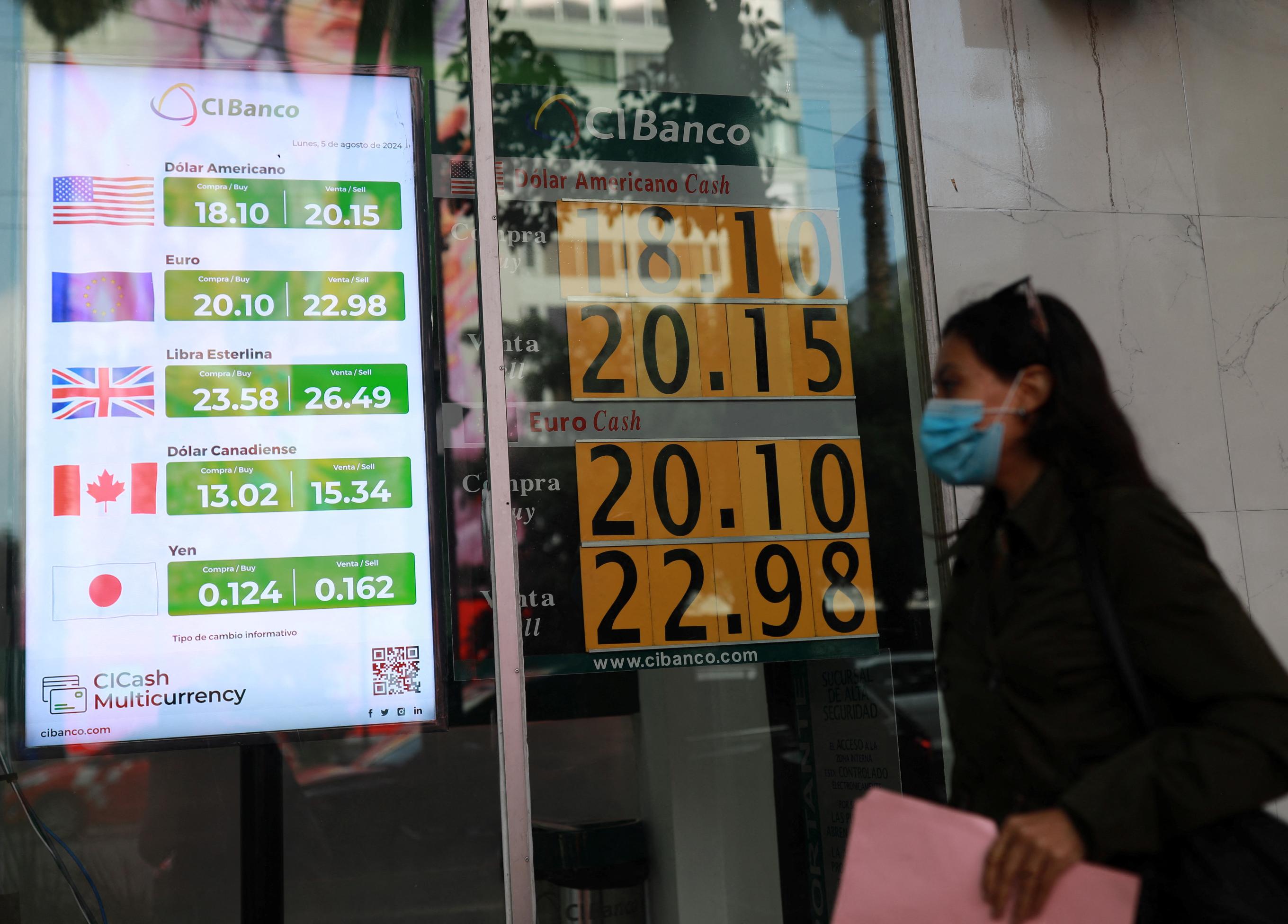
MEXICO CITY/NEW YORK, Aug 5 (Reuters) - The Mexican peso touched its weakest against the U.S. dollar in nearly two years before paring much of the losses back, as concerns the U.S. economy could be headed for a recession added to recent peso weakness as a popular global trade unwinds. The Mexican currency was trading at 19.37 pesos per greenback, down about 1.1% from the Friday close. The peso's overnight fall in foreign operations was of as much as 4.4%, when the currency surpassed the psychological barrier of 20 pesos per dollar, a level not seen since October 2022. The peso was dragged down by a wave of liquidations in global markets, particularly in Asia. The Japanese yen rose to a seven-month high against the dollar as traders unwound their "carry trade" positions, one of the factors that had sustained the peso's strength until recently. The trade involves funding in low-interest currencies like the yen while investing in higher yielding currencies like the peso, to pocket the yield difference. "As in any domino effect where there is panic, everything moves towards safe-haven assets and leaves assets considered risky, such as the Mexican peso," said Gabriela Siller, director of analysis at local firm Banco Base. Down about 1% Monday, the Mexican currency has accumulated losses of 4% against the dollar since the close on Wednesday. The selloff was triggered by the release of data last Thursday showing U.S. manufacturing activity fell to its lowest level in eight months. "There are simply too many uncertainties on both the US and Mexican sides," said Commerzbank FX analyst Michael Pfister in a Monday note, citing political uncertainty on both sides of that border as well as the possibility of a rate cut this week in Mexico even as inflation remains a concern. "We could imagine that the peso could benefit somewhat in the coming weeks and recoup some of last week's losses," he added, but until early next year "we see worse times ahead." A weak U.S. employment market report on Friday added to the outlook of a slowing U.S. economy, as the unemployment rate jumped to near a three-year high of 4.3% in July. Mexico is highly sensitive to economic developments in the U.S., its top trading partner and the destination for more than 80% of its exports. Sign up here. https://www.reuters.com/markets/currencies/mexican-peso-leads-global-currency-losses-us-recession-fears-2024-08-05/