2024-08-05 15:03
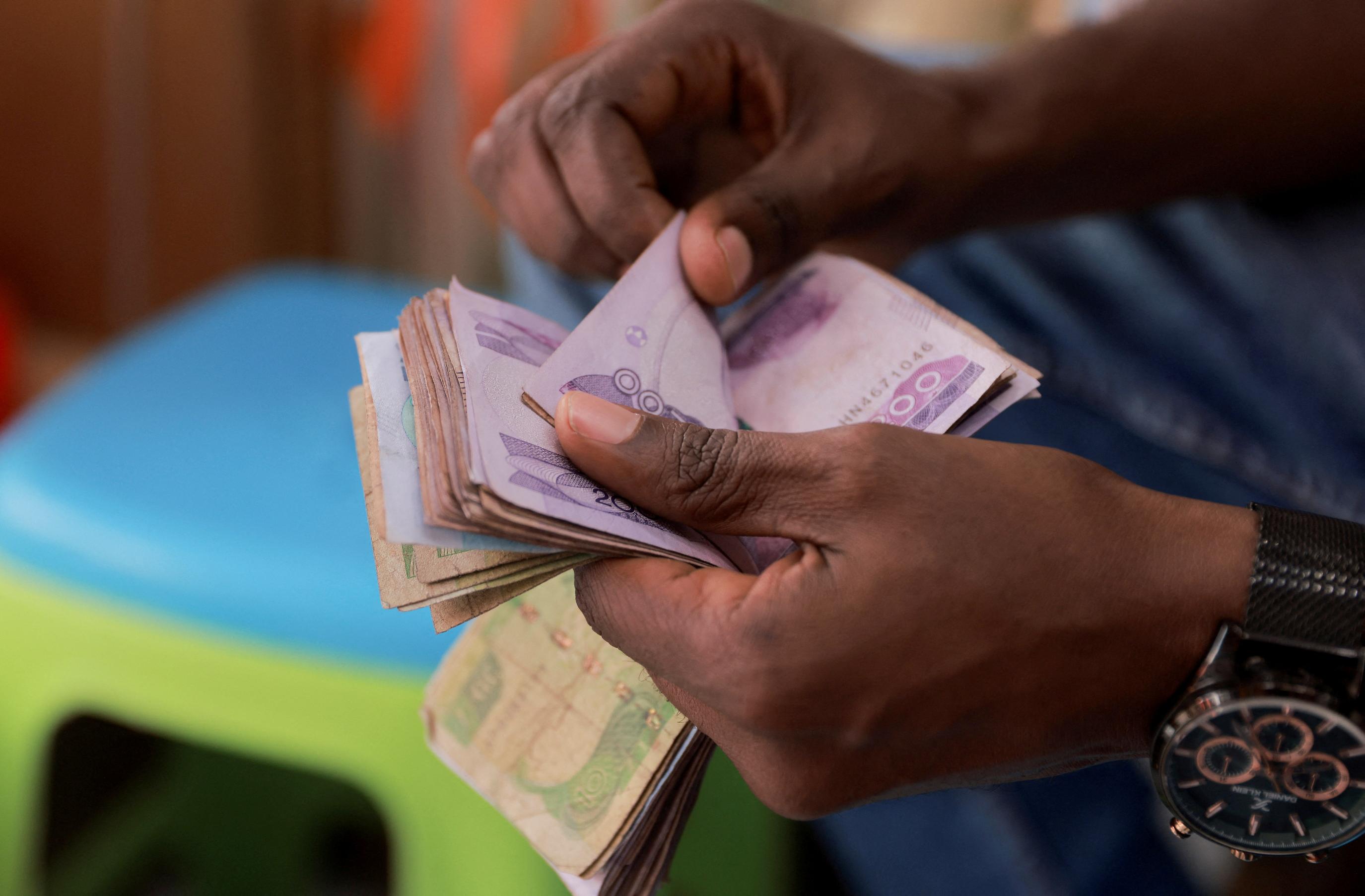
ADDIS ABABA, Aug 5 (Reuters) - Ethiopia has imported 14 million litres of cooking oil to ensure sufficient supplies of the basic commodity, its trade minister said, after the country's central bank floated the national currency last week to help secure international support. The Ethiopian birr slipped against the dollar last week after the National Bank of Ethiopia adopted a market-determined foreign exchange rate to secure a new International Monetary Fund (IMF) lending programme and to make progress on a long-delayed debt restructuring. It clinched an IMF deal worth $3.4 billion and funding from other creditors including the World Bank shortly after. On Monday, the birr was down 40% against the dollar to trade at 95.69 per greenback, the country's biggest lender Commercial Bank of Ethiopia said, while at some private banks one dollar was being traded for more than 100 birr. Traders in the capital Addis Ababa said the price of cooking oil had gone up by around 25% following the central bank's move. Kassahun Gofe, Ethiopia's minister for Trade and Regional Integration, said on Sunday that businesses which increase prices on basic goods would face temporary closure or see their licenses revoked. The ministry closed more than 2,000 stores for "unjustified price hikes and hoarding" after the new exchange rate policy was put in place, it said on Saturday. Sign up here. https://www.reuters.com/markets/commodities/ethiopia-imports-cooking-oil-after-currency-float-2024-08-05/
2024-08-05 14:45
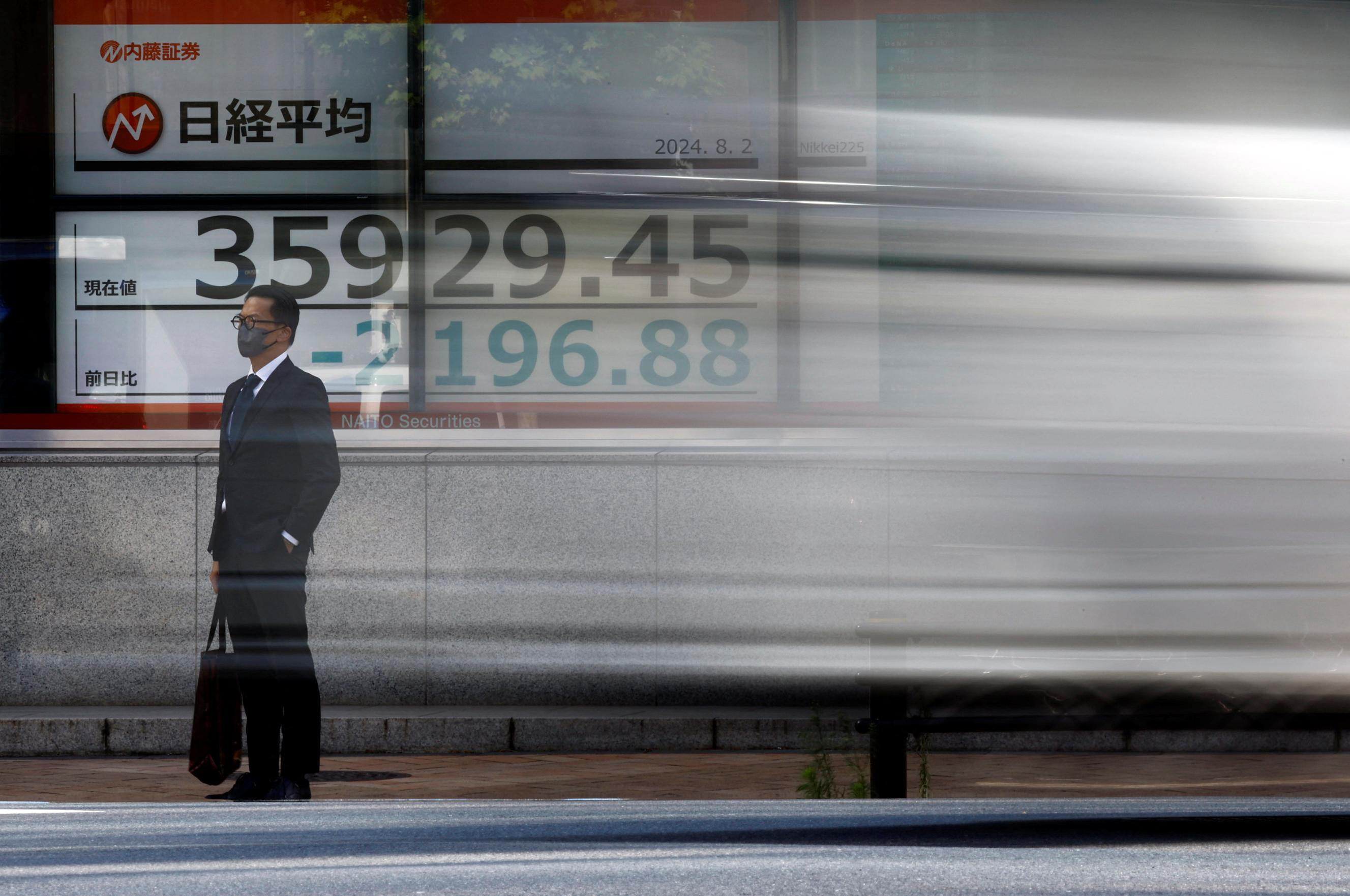
LONDON, Aug 5 (Reuters) - Global markets have kicked off the week in full selloff mode, with measures of volatility shooting up by the most on record in a single day, while equity futures and cryptocurrencies plummet, reviving memories of past crises. There is no lone trigger for these moves, but data on Friday that showed the U.S. economy did not generate as many jobs as expected in July has been a major catalyst. A rise in Japanese interest rates on July 31 has made bets on a cheap yen - many of which funded purchases of assets with better returns - less profitable. The unwinding of these trades has accelerated the decline across global stocks. Tokyo's Nikkei index (.N225) , opens new tab finished Monday with a 12% loss, the largest one-day drop since the aftermath of "Black Monday" in October 1987, when a stock market crash stripped nearly 15% off this index and 20% off the S&P 500 (.SPX) , opens new tab. The excess volatility and the brutal nature of the selloff have prompted a number of comparisons with past market storms, - the 1987 Black Monday stock market crash, the global financial crisis of 2008, and the panic that the onset of COVID-19 lock-downs unleashed in 2020. A VOLATILE SITUATION The VIX index (.VIX) , opens new tab, which reflects changes in implied volatility on options on the S&P, is starting to signal distress. The index has shot up by 170% since Friday, set for its biggest one-day rise on record, after February 2018's 115% gain on the back of spiking bond rates and the threat of a surge in inflation. The measure, often referred to as "Wall Street's fear index", did not rise that much in a day during the March 2020 COVID crisis - when it posted several 40%-plus daily jumps - or even during the depths of the global financial crisis, when it rose 35% a few days after the U.S. government stepped in to bail out Wall Street. TAKING STOCK The S&P 500 (.SPX) , opens new tab and the Nasdaq Composite (.IXIC) , opens new tab are down around 3% and 3.7% in early trading, respectively. Futures on the two indices , fell between 4% and 5% before the market open. Monday's drop marks a fairly hefty daily decline for the two indexes. The S&P has already lost 9% since hitting a record high on July 16, while the Nasdaq has shed 14% since its record high on July 11. On Oct. 19, 1987 - the Black Monday - the S&P lost 20% in a day, while the Nasdaq shed 11.5%. During the COVID crisis, the S&P lost 12% at one point, while the tech-heavy Nasdaq fell 12%. So the market is a long way from repeating what it has done during past bouts of turmoil. THE HEART OF THE MATTER The Japanese yen is the star of the currency markets right now. Years of rock-bottom interest rates in Japan encouraged investors to borrow in it in order to fund other positions in a multi-trillion dollar bet known as "carry trades". Now that Japanese rates are rising, many of those positions are getting closed, meaning that the cash the carry trades generated to buy other assets is now exiting those markets - the technology sector is one of the standout casualties, along with cryptocurrencies. The yen has its own thing going on, thanks in part to authorities in Tokyo stepping in to prop it up when it hit its weakest in 38 years in late July, at 161 to the dollar. It now trades around 142, having strengthened by over 7% in a week. It has also been a traditional safe-haven asset and strengthened around 7% on a weekly basis in both 2008 and in 1998, at the height of the Asian financial crisis. But the current move is likely more linked to an interest-rate play than down to risk appetite. The Swiss franc , a carry-trade funding currency and also a safe haven, has strengthened 4.2% since last Monday. But this kind of move is not uncommon in the currency. GOLD, OR SILVER LINING? Gold has come under pressure, even if it is perceived to be a safe haven. The price has risen by 16.5% so far this year and hit successive record highs. Typically, a lower U.S. rate environment favours gold, but intense volatility means it can get swept lower along with everything else. Back in 2020, gold had been down by 3% on multiple days, while during the financial crisis, it fell by more than 7% in October 2008, as failed bank Lehman Brothers finally imploded. Silver often moves in synch with gold, but lacks the same safe-haven appeal. It is down 5% on Monday, but, much like stocks and gold, this is a relatively modest decline compared with numerous double-digit down-days in 2020 and a near 16% fall in a single day in October 2008. Sign up here. https://www.reuters.com/markets/us/global-markets-milestones-graphic-2024-08-05/
2024-08-05 12:57
Aug 5 (Reuters) - Glencore (GLEN.L) , opens new tab said on Monday that Swiss and Dutch investigations against the company have been closed, resolving legal matters related to bribery of a Congolese public official by a business partner in 2011. Glencore International AG has been fined 2 million Swiss francs ($2.36 million) and Office of the Attorney General of Switzerland imposed a compensation claim of about $150 million, the company said. ($1 = 0.8478 Swiss francs) Sign up here. https://www.reuters.com/markets/commodities/glencore-says-swiss-dutch-investigations-have-been-resolved-2024-08-05/
2024-08-05 12:42
ATHENS, Aug 5 (Reuters) - A container vessel that was hit by Houthi militants off Yemen on Saturday in the first such attack in two weeks, has arrived safely in Djibouti and the strike caused no injuries or water ingress, its Greek manager said on Monday. Yemen's Iran-aligned Houthis said on Sunday that they targeted the Liberia-flagged MV Groton in the Gulf of Aden with ballistic missiles, claiming their first attack on shipping lanes since Israel carried out a retaliatory airstrike in Hodeidah port on July 20. The MV Groton was hit by a missile 60 nautical miles off the coast of Yemen, while en route from Dubai to Jeddah, Conbulk Shipmanagement Corporation said in a statement. After the strike, it was diverted to Djibouti where it arrived on Sunday, the company said. "No injuries nor pollution have been reported and there is no water ingress caused by the hit," the company said, adding that the safety of the crew was a top priority. "Full evaluation of the damage will be made ... followed by the necessary repairs." Following the strike, fire broke out in the cargo holds that were hit and in containers on the main deck, the company said. The blaze was extinguished by the crew. The attack is the first since an apparent lull following Israel's attack on Hodeidah, which occurred a day after a drone launched by the Iranian-backed group hit Israeli economic hub Tel Aviv. The Houthi militants have launched attacks on international shipping near Yemen since last November in solidarity with Palestinians in the war between Israel and Hamas. The attacks have drawn U.S. and British retaliatory strikes and disrupted global trade as ship owners reroute vessels away from the Red Sea and Suez Canal to sail the longer route around the southern tip of Africa. Sign up here. https://www.reuters.com/world/first-vessel-hit-by-yemens-houthis-two-weeks-arrives-djibouti-manager-says-2024-08-05/

2024-08-05 12:38
LONDON, Aug 5 (Reuters) - Investors abandoned many of their remaining bullish petroleum positions last week amid growing concerns about lacklustre consumption and a worsening outlook for the global economy. Hedge funds and other money managers sold the equivalent of 117 million barrels in the six most important futures and options contracts over the seven days ending on July 30. Fund managers had sold petroleum in each of the most recent four weeks, cutting their net position by a total of 262 million barrels since the start of July. The most recent week saw sales in Brent (-68 million barrels), NYMEX and ICE WTI (-31 million), U.S. gasoline (-9 million) and European gas oil (-9 million) though essentially no change in U.S. diesel. The combined position had been halved to just 262 million barrels (4th percentile for all weeks since 2013) from 524 million barrels (40th percentile) on July 2. Chartbook: Oil and gas positions , opens new tab Fund positions had become very bearish across Brent (3rd percentile), U.S. gasoline (5th percentile), U.S. diesel (14th percentile) and European gas oil (16th percentile). There was slightly less bearishness towards WTI (28th percentile), based on low stocks around the NYMEX delivery point at Cushing and potential for a squeeze. Bearishness across the complex rather than isolated contracts indicates traders are anticipating weaker global consumption as the major economies lose momentum. Recent manufacturing surveys from the United States, the eurozone and China have all shown activity stalling in the second and third quarters after a brief rebound at the start of the year. The expected depletion of global petroleum inventories has been pushed back multiple times this year; now it looks like it has been deferred again. As a result, front-month Brent futures contracts have slumped below $76 per barrel, the lowest since the turn of the year, and below the long-run inflation adjusted average. U.S. NATURAL GAS Investors made few changes to their basically neutral view on the outlook for gas prices in the United States as inventories remained well above average despite ultra-low prices and record gas-fired power generation. Hedge funds and other money managers purchased the equivalent of 30 billion cubic feet (bcf) of futures and options linked to the price of gas at Henry Hub in Louisiana over the seven days ending on July 30. Fund managers have purchased a total of 182 bcf in the two most recent weeks after selling a total of 980 bcf over the four previous weeks. The combined net long position of 371 bcf was in the 42nd percentile for all weeks since 2010, broadly neutral or slightly bearish. Working gas inventories were still 462 bcf (+17% or +1.36 standard deviations) above the prior 10-year seasonal average on July 26. The U.S. storage injection season has passed the half-way point so it is virtually certain inventories will start winter 2024/25 above average. Ultra-low gas prices have driven record gas consumption by power generators but that has been offset by the continued strength in production and repeated disruption of LNG exports. After rallying during May and June, inflation-adjusted gas futures prices have retreated back towards the multi-decade lows set between February and April. From a price and positioning perspective, the balance of risks is strongly weighted to the upside, which has encouraged many fund managers to maintain bullish long positions. But the same has been true for more than a year, and the anticipated depletion of stocks and surge in prices has been repeatedly delayed, which has enforced a cautious approach. Related columns: - U.S. power producers binge on ultra-cheap gas(July 30, 2024) - Oil bulls retreat as inventories stay plentiful (July 29, 2024) - U.S. crude oil prices retreat amid doubts about further stock draw (July 25, 2024) John Kemp is a Reuters market analyst. The views expressed are his own. Follow his commentary on X , opens new tab Sign up here. https://www.reuters.com/business/energy/oil-prices-tumble-investors-brace-global-slowdown-kemp-2024-08-05/
2024-08-05 12:18
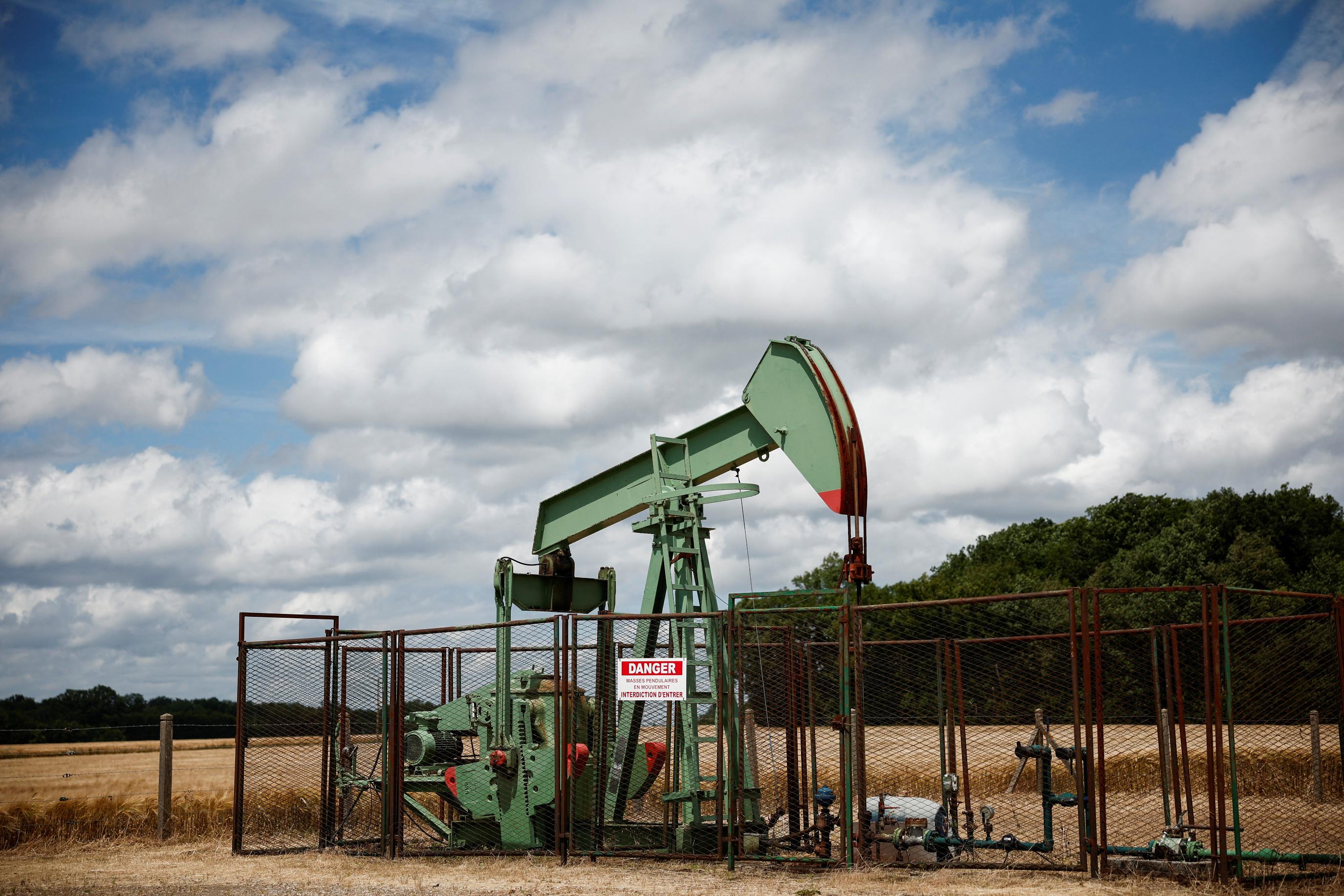
SAO PAULO, Aug 5 (Reuters) - Brazilian state-owned oil company Petrobras (PETR4.SA) , opens new tab said on Monday that it has confirmed a natural gas discovery at the Uchuva-2 well off Colombia's coast. The natural gas discovery was made during the fourth drilling phase of the Uchuva-2 well, according to Petrobras. "This well adds relevant information for the development of a new area of exploration and production in Colombia, reinforcing the volumetric potential for gas in the region," the oil giant said in a securities filing. The Uchuva-2 well is located in deep water. Natural gas had already been discovered in the nearby Uchuva-1 well, drilled in 2022. The promising area off Colombia's coast could justify a large project to supply natural gas to the Andean country and for exports, a Petrobras executive said earlier this year. Petrobras operates the asset in partnership with Ecopetrol (ECO.CN) , opens new tab. The companies will maintain operations to complete drilling at the Uchuva-2 well, Petrobras said. They expect to carry out a formation test by the end of 2024. Sign up here. https://www.reuters.com/business/energy/brazils-petrobras-confirms-gas-discovery-colombia-2024-08-05/