2024-08-05 12:15
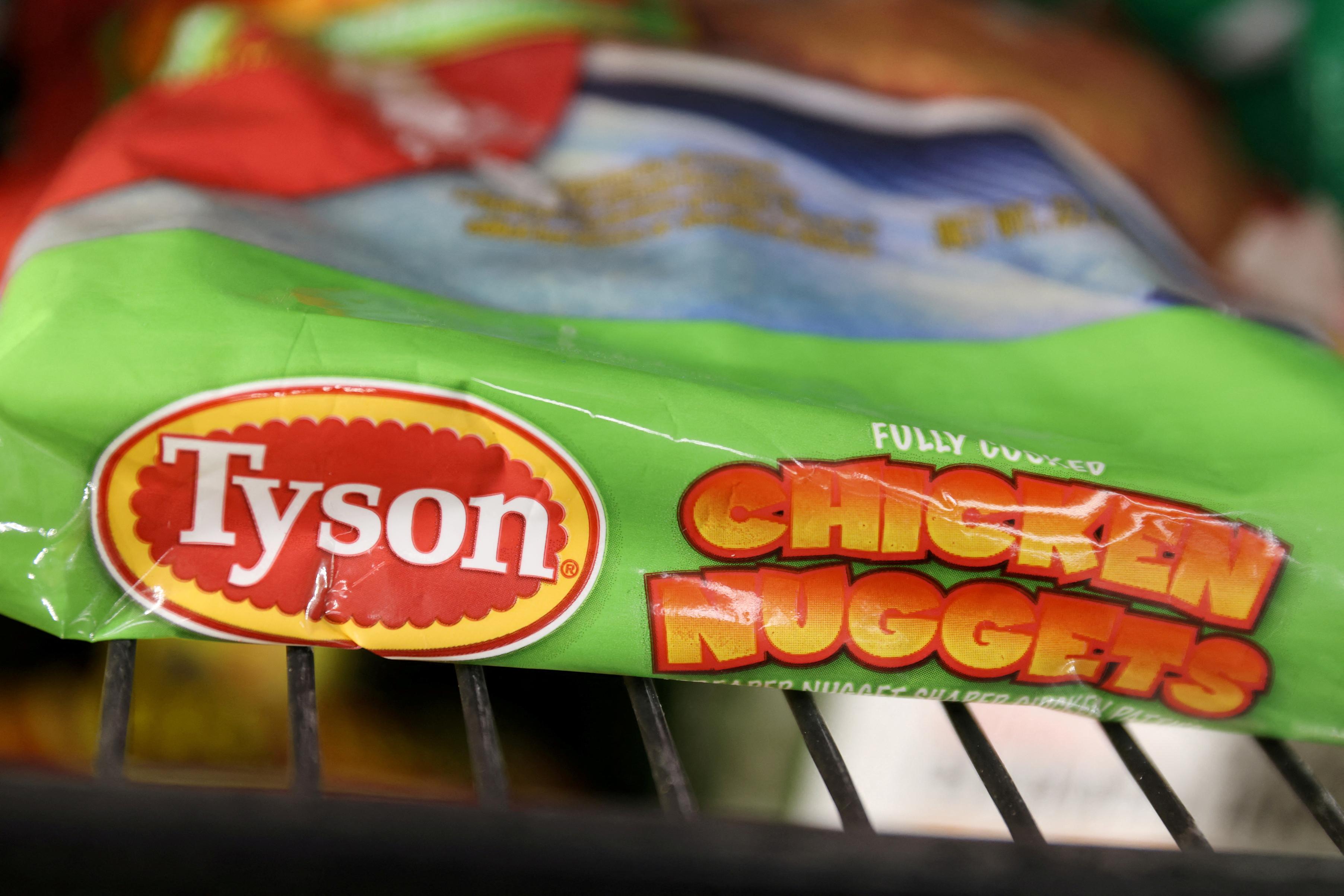
Aug 5 (Reuters) - Tyson Foods (TSN.N) , opens new tab surpassed Wall Street expectations for third-quarter revenue and profit on Monday as sales of meat products rebounded while lower grain prices reduced costs for animal feed. The company's sales fell in 2023, but it has been helped by some customers buying more at grocery stores as higher costs for dining out push people to cook more meals at home. The U.S. meat packer's net sales rose 1.6% to $13.35 billion in the quarter, compared with analysts' estimates of $13.24 billion. It continues to expect full-year revenue to be flat compared to fiscal 2023. The company's beef segment - its largest - saw volumes up 4.4%, building on the last quarter's 2.8% growth driven by higher average carcass weights. Prices in the segment also rose 1.4% as it continued to grapple with limited cattle supply. Still, sales in Tyson's chicken segment, which struggled with an excess of supply during 2023, were down 3.2% in the quarter, while prices also dropped 3.7%. Previously, Tyson said it had lowered production to align supplies with consumer demand. Tyson raised its forecast for adjusted operating income from chicken to $850 million to $950 million for fiscal 2024 from a previous forecast of $700 million to $900 million. U.S. corn and soy futures prices have fallen near four-year lows due to ample supplies, making it less expensive for Tyson to fatten poultry. Tyson also raised its projection for adjusted operating income in its pork business after the unit reported a 10.4% rise in quarterly sales. Volumes increased by 1.2%, compared to a 2.9% increase in the second quarter, when the company saw more hog supplies. The company has sold off a poultry facility, shuttered six U.S. chicken plants, said it would close a pork plant, and eliminated jobs to grow profit margins. Tyson posted adjusted earnings of 87 cents per share, topping estimates of 65 cents, according to LSEG data. The company's shares, which have risen nearly 14% this year, rose about 2.5% in premarket trade. Tyson suspended finance chief John R. Tyson, great-grandson of the company's founder, in June after he was arrested for intoxicated driving. Sign up here. https://www.reuters.com/business/retail-consumer/tyson-foods-tops-quarterly-estimates-meat-sales-rebound-2024-08-05/
2024-08-05 12:07
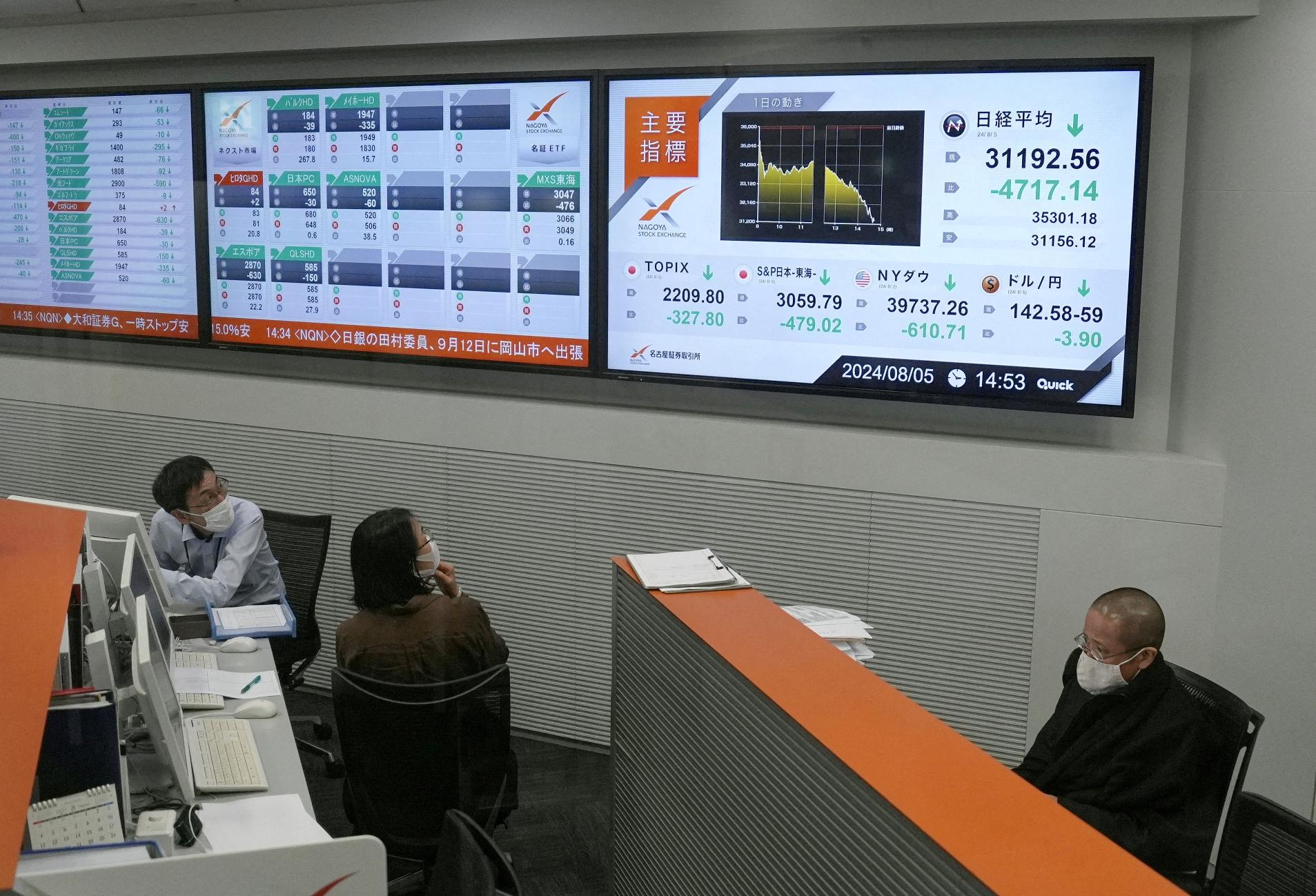
TOKYO, Aug 5 (Reuters) - A resurgent yen helped bring Japanese stocks crashing back to earth on Monday, leaving investors scrambling to gauge the potentially diminished outlook for earnings, and snuffing out a months-long dramatic run by the Tokyo market. In just three trading sessions the Nikkei share average (.N225) , opens new tab has lost a fifth of its value. On Monday it tumbled 12.4%, marking its second-largest decline on record and its biggest since the Black Monday crash of October 1987. In part, the sell-off has been driven by the recent turnaround in the yen after the Bank of Japan began to raise rates for the first time in decades, most recently last week. Now investors are forced to size up Japan Inc's prospects without the extra cushion from the currency, which has helped many heavyweight exporters. Up until a few days ago, the Japanese stock market was seen as a global stand-out, having gained almost 30% last year and touching a lifetime high last month. "All the benefits, all the tailwinds from forex that have been propping up Nikkei 225 stocks and exporters, multinationals, it's all gone," said Amir Anvarzadeh of Asymmetric Advisors, a Japan-focused equity advisory firm. Now, companies now will have to do well on their own merits, he said. A weaker yen drives up cost for small businesses and households, but it is largely positive for big exporters, such as Toyota Motor (7203.T) , opens new tab, because it makes their products cheaper overseas and boosts profits when foreign earnings are brought home. The yen traded around its strongest level in seven months on Monday, at 142 to the dollar. It has gained about 14% over the last month, recovering after months of losses. To get a sense of the size of the potential disruption for Japan's industrial giants, one need look no further than Toyota. The world's largest automaker says every 1 yen change against the dollar means a difference of 50 billion yen ($350 million) in profit. At Toyota's latest quarterly earnings, announced last week, the currency contributed 370 billion yen to operating profit. The selling has spread beyond exporters, with banks and other industries also shredded, casting a cloud over the Japanese market's recent comeback, which was seen as a triumphant revival after years in deflationary doldrums. FUNDAMENTALS SOLID While corporate Japan's fundamentals remain largely solid, analysts said, the sell-off is a reminder that markets - at least in the short-term - do not always reflect fundamentals. With many exporters assuming a yen exchange rate of 140 or 145 to the dollar, investors had been expecting to see stronger earnings ahead given the yen traded at 160 a few weeks ago, said Kei Okamura, a portfolio manager at Neuberger Berman in Tokyo. "A lot of global investors have been looking for Japanese companies to announce upward revisions" due to the currency, he said. "That's why from some people's perspective the upward revisions might not be there, but from our perspective, the fundamentals still look okay." Exporters' shares were also hit by concerns about a slowdown in the United States, one of Japan's biggest export markets, and one absolutely vital to its auto industry. "If the U.S. economy slows down, cars won't sell," said Takatoshi Itoshima, a strategist at Pictet Asset Management Japan. Automakers are also heavyweight components of the Nikkei and the broader Topix (.TOPX) , opens new tab index, Itoshima said, something that adds to the overall pain for markets. Subaru, which reported that almost 80% of its revenue came from North America in the first quarter, on Monday said it was sticking by its forecast for a 142 yen exchange rate for the full year. Chief Financial Officer Katsuyuki Mizuma told an earnings briefing the automaker would have to take a look at the incentives it offers in the United States. Every 1 yen increase in the exchange rate meant a shift in 10 billion yen of operating profit, he said. Printer maker Epson last week said it was revising its exchange rate assumption to 151 yen to the dollar from 144 yen previously - and lifting its profit outlook as a result, which now may look in doubt. The market turmoil may come with a silver lining for investors who look beyond a group of Japan's export champions. The yen's reversal could offer relief to the broader economy after its months-long decline has pushed up consumer prices, raising deep concerns about the outlook for spending in Japan. The yen's decline has even prompted the founder of Uniqlo parent Fast Retailing to warn there was "no merit" to a weaker yen, given that Japan imports raw materials from all over the world before manufacturing and exporting. "A stronger yen might not be good for the Nikkei 225 stocks and the foreigners owning it," said Anvarzadeh of Asymmetric Advisors. "But it's good for the country, it's good for the economy." ($1 = 142.7500 yen) Sign up here. https://www.reuters.com/markets/asia/resurgent-yen-brings-high-flying-japan-inc-back-earth-2024-08-05/
2024-08-05 12:03
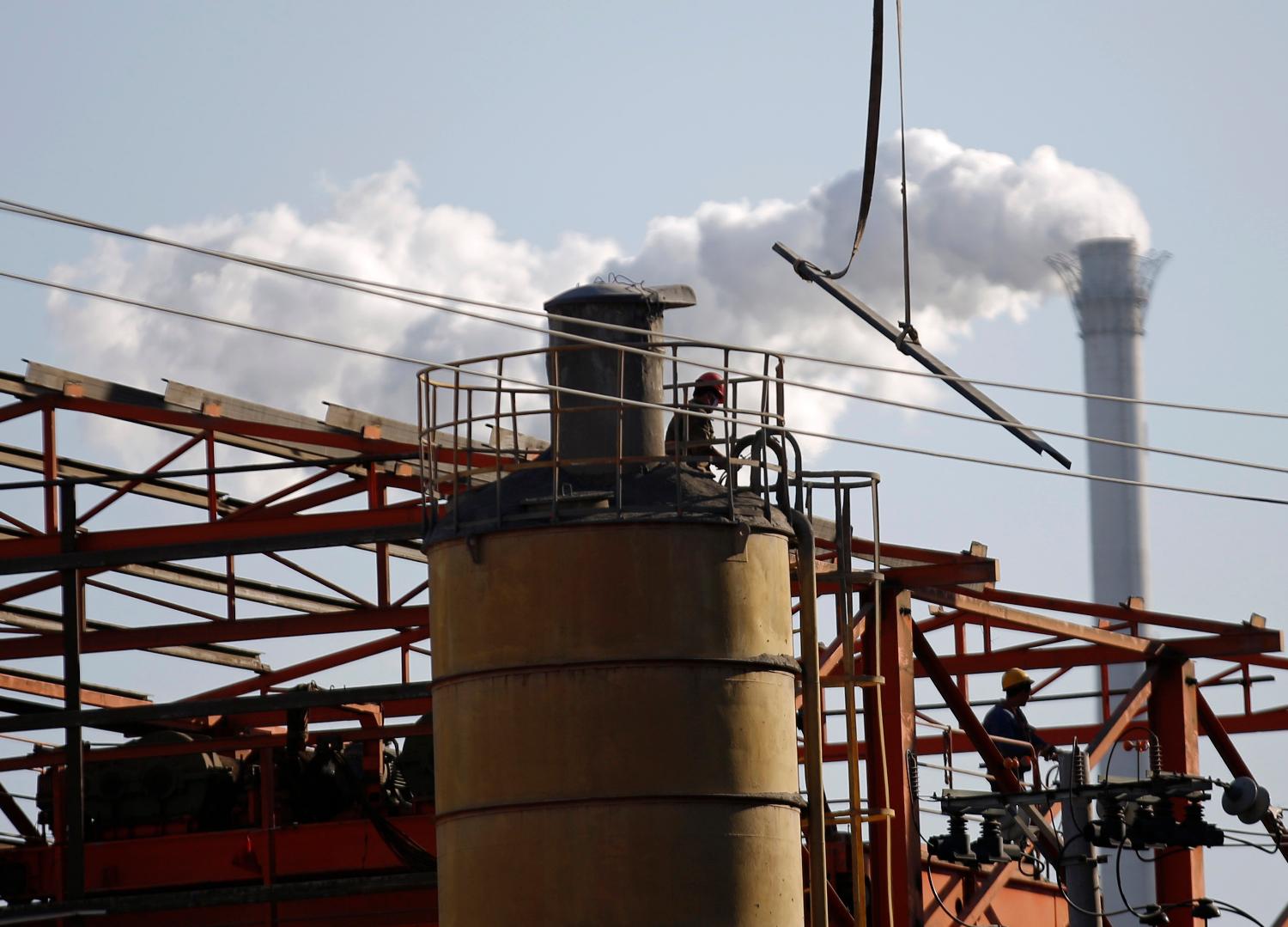
BEIJING, Aug 2 (Reuters) - China will accelerate the development of a carbon emissions control system to help it achieve its goal of reaching a peak in the emissions of the climate-warming gases by 2030, the cabinet said on Friday. Beijing's energy policies have so far focused on "energy and carbon intensity" - energy and emissions involved in producing a unit of economic output - effectively tying its targets to overall economic growth. Under a work plan announced by the State Council, a "dual-control" system will come into force during the 2026-2030 five-year plan period. Over that time intensity will remain the main measure, but total emissions controls will supplement it, and the focus will shift to emission controls thereafter. Greenpeace welcomed Friday's move as a step towards decoupling of climate targets from economic growth. "China is setting for the first time a hard emissions cap, which will start guide emissions reduction after 2030," said Yao Zhe, global policy advisor for Greenpeace East Asia in Beijing. "China is now gradually extricating emissions reductions from economic growth," Yao said. Carbon budgets will be created by China's provinces and municipalities, and the budgeting system will be tested before the end of 2025, the cabinet said in a statement. The plan also calls for an improvement in the statistical and accounting system for carbon emissions by 2025, with a focus on key industries such as power, steel, metals, building materials, and petrochemicals. Carbon emissions quotas will be incorporated into national economic and social development planning, while energy conservation assessments of fixed asset investment projects will have to take those emissions into account, the State Council said. In June, Beijing also announced a plan to better measure the carbon footprint of its products, which is due to go into effect in 2027. Sign up here. https://www.reuters.com/world/china/chinas-state-council-issues-plan-create-carbon-control-system-2024-08-02/
2024-08-05 11:35
Aug 5 (Reuters) - Tyson Foods (TSN.N) , opens new tab surpassed Wall Street expectations for third-quarter revenue and profit on Monday, indicating that demand was rebounding for its meat products, while lower grain prices reduced costs for animal feed. After sales declined in 2023, Tyson Foods is now starting to see some of its customers return to stores to purchase its products as higher costs of dining out push people to cook more meals at home. The U.S. meat packer's net sales rose 1.6% to $13.35 billion in the quarter, compared with analysts' estimates of $13.24 billion. It continues to expect full-year revenue to be flat compared to fiscal 2023. The company's beef segment - its largest - saw volumes up 4.4%, building on the last quarter's growth of 2.8% that was driven by higher average carcass weights. Prices in the segment also rose to 1.4% as it continued to grapple with limited cattle supply. Still, sales in Tyson's chicken segment - which struggled with an excess of supply during 2023 - were down 3.2% in the quarter, while prices also dropped 3.7%. Previously, Tyson said it had lowered production to align its supplies with consumer demand. Similarly, while its pork segment reported a 10.4% rise in quarterly sales, its volumes increased only by 1.2% that were sequentially lower than 2.9% seen in the second quarter, when the company saw more hog supplies. Meanwhile, Tyson Foods has also undertaken a vigorous cost-control plan under which it has sold off a poultry facility, shuttered six U.S. chicken plants, said it would close a pork plant and had cut jobs to grow profit margins. Lower grain prices and raw material expenses have helped Tyson Foods post adjusted earnings of 87 cents per share, topping estimates of 65 cents. The company's shares, which have risen nearly 14% this year, rose about 1% in premarket trade. Sign up here. https://www.reuters.com/business/retail-consumer/tyson-foods-tops-quarterly-estimates-demand-rebounds-costs-begin-fall-2024-08-05/

2024-08-05 11:20
Aug 5 (Reuters) - Hurricane Debby has made a landfall near Steinhatchee Florida, in the Florida Big Bend, the U.S. National Hurricane Center (NHC) said on Monday. The hurricane was about 70 miles (115 km) south-east of Tallahassee, Florida, packing maximum sustained winds of 80 mph (130 kph), the NHC said. Sign up here. https://www.reuters.com/business/environment/hurricane-debby-makes-landfall-near-steinhatchee-florida-us-nhc-says-2024-08-05/

2024-08-05 11:19
CHENNAI/BENGALURU, Aug 5 (Reuters) - India's Marico (MRCO.NS) , opens new tab, which owns the Saffola and Parachute packaged oil brands, reported a slightly bigger-than-expected increase in first-quarter profit on Monday, helped by steady demand and said its earnings would grow this year. The company's consolidated net profit rose 8.7% to 4.64 billion rupees ($55.4 million) in the April-June quarter, just above analysts' average estimate of 4.63 billion rupees, according to LSEG data. Total revenue from operations increased 6.7% to 26.43 billion rupees, marking its biggest growth in more than two years. Revenue from India, which made up three-fourths of total revenue, climbed 7.4%. For Marico, sales volumes for both cooking and hair oils increased in the quarter. While the Parachute hair oil business was helped by higher prices, its Saffola cooking oil business benefitted from price cuts. Revenue growth will "trend upwards" on higher sales volumes, including in the international business, with earnings also increasing this financial year, Marico said in an investor update. The company's shares were up 2.1% at 676.6 rupees at 14:05 IST, taking their gains for the year to more than 23%. Branded cooking oil sellers in India, including Fortune-owner Adani Wilmar (ADAW.NS) , opens new tab and Ruchi Gold-owner Patanjali Foods (PAFO.NS) , opens new tab, typically book higher profits when edible oil prices are stable, according to industry executives. Last month, both companies posted solid profits, also citing a stability in edible oil prices. Overall, though, consumer goods makers have posted mixed results. Dove soap-maker Hindustan Unilever (HLL.NS) , opens new tab reported higher earnings as price cuts boosted demand, while KitKat-maker Nestle India (NEST.NS) , opens new tab reported its slowest growth in eight years as price hikes drove consumers away. ($1 = 83.8220 Indian rupees) Sign up here. https://www.reuters.com/markets/asia/indias-marico-beats-q1-profit-estimates-cooking-hair-oil-demand-2024-08-05/